
What to know about refinancing a multi-family home
This article is for informational purposes only and is not intended to provide legal, financial, or tax advice. Consult a qualified professional about your situation.
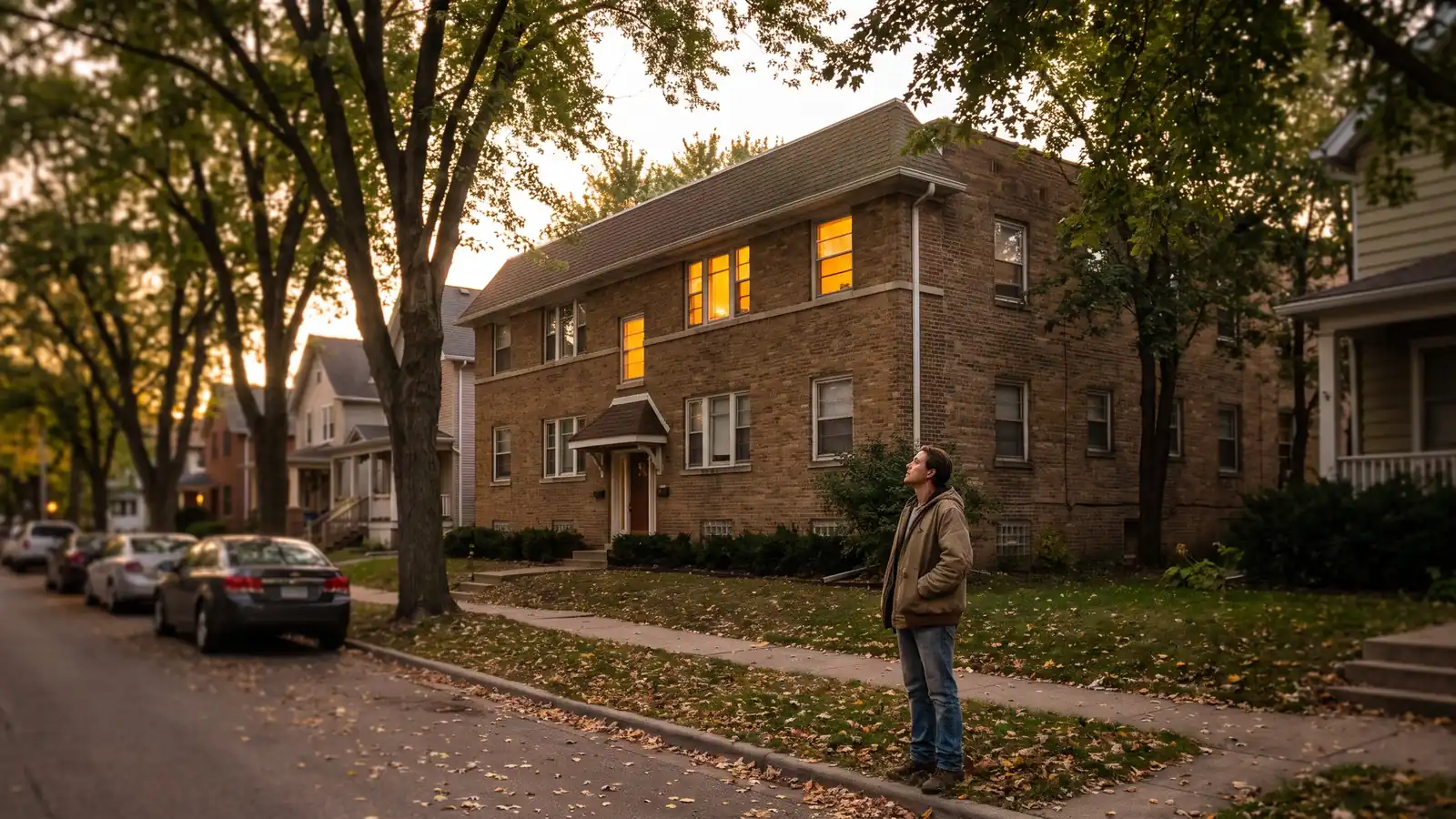
Refinancing a multi-family home runs on the same mechanics as any other refinance right up to the moment a lender measures your equity, and that is where the rules change: Freddie Mac caps a cash-out refinance on a two- to four-unit investment property at 70% loan-to-value, against 80% on a one-unit primary residence. On a duplex that appraises at $500,000, that is a $350,000 new loan instead of $400,000, before a single fee is counted.1
Everything downstream follows from that number. Lenders underwrite the property as a business, not just the borrower: they read the rent roll, the leases and the operating statements, they count rental income at 75 cents on the dollar, and lenders in Align’s network want a debt service coverage ratio of at least 1.25x before issuing terms. Budget 30 to 45 days to close, and refinance closing costs Freddie Mac puts at 3% to 6% of loan principal.
Learn how a multi-family refinance differs from a house refinance, how much equity each program requires, which loan options fit a two- to four-unit building, and what to gather before you apply. For the wider picture, start with our refinancing and home equity guide.
Key takeaways:
- Equity is the gate, not your credit score: Freddie Mac’s grid caps cash-out at 70% LTV on a two- to four-unit investment property, 75% on a rate-and-term refinance of that same building, and 75% on a cash-out of an owner-occupied two- to four-unit home.
- Rental income counts at 75 cents on the dollar: Fannie Mae has lenders multiply gross monthly rent by 75%, with the remaining 25% absorbed by vacancy losses and maintenance, so a building grossing $8,000 a month contributes $6,000 of qualifying income.
- Reserves and seasoning set your calendar: Plan on six months of principal, interest, taxes, insurance and association dues in reserves, at least six months on title before a conventional cash-out, and a first mortgage that is already 12 months old measured note date to note date.
How is refinancing a multi-family home different from refinancing a house?
The difference is underwriting posture. A lender refinancing your house underwrites you; a lender refinancing your four-unit underwrites you and the building, and the building can fail on its own. That shows up in five places: maximum LTV, the income counted, reserves, the appraisal form, and the paperwork required before anyone quotes.
| Underwriting item | One-unit primary residence | Two- to four-unit property |
|---|---|---|
| Maximum cash-out LTV | 80% | 75% owner-occupied, 70% investment |
| Maximum rate-and-term LTV | Up to 95% | Up to 95% owner-occupied through automated underwriting, 75% investment |
| Income the lender counts | Your wages and self-employment income | Your income plus 75% of gross rents |
| Reserves required | Often none; Desktop Underwriter sets the requirement | Six months of PITIA, plus 2% of the balances on other financed properties |
| Appraisal | Single-family form | Small residential income property report with a rent schedule and operating income statement |
| Documents | Pay stubs, W-2s, bank statements | All of that plus leases, rent roll, Schedule E and operating statements |
None of that makes a multi-family refinance harder to approve, only slower to document. The file that closes in 30 days is the one where the rent roll, the leases and the tax returns already agree. Our walkthrough of how to refinance an investment property covers the same sequence on a single rental.
How much equity do you need to refinance a multi-family property?
Plan on 25% to 30% equity, closer to 30% for cash out of an investment property. Freddie Mac publishes the ceilings conventional lenders work from, and they move with two variables: whether you live in one of the units, and whether you are taking money out.
| Property and occupancy | Rate-and-term (no cash-out) maximum | Cash-out maximum |
|---|---|---|
| One-unit primary residence | 95% | 80% |
| Two-unit primary residence | 95% through automated underwriting, 85% manually underwritten | 75% |
| Three- and four-unit primary residence | 95% through automated underwriting, 80% manually underwritten | 75% |
| One-unit investment property | 85% | 75% |
| Two- to four-unit investment property | 75% | 70% |
Two facts sit behind that table. First, the appraisal decides which row you land on, and a short value can drop you a full tier; refinancing with a low appraisal covers the reconsideration-of-value process before you reorder. Second, there is no agency rescue program waiting if you are underwater. Fannie Mae states plainly that acquisition of high LTV refinances is currently paused, and HARP ended December 31, 2018, which leaves loan modification, principal paydown or patience as the real options in a negative equity refinance.
Size matters too. A conforming loan on a two- to four-unit building runs to its own ceiling, not the one-unit figure: for 2026 the baseline is $1,066,250 on a duplex, $1,288,800 on a triplex and $1,601,750 on a fourplex, against $832,750 on a single-family home, with higher amounts in designated high-cost counties. Check the conforming loan limits for two- to four-unit properties in your county before you assume a building is too expensive to finance conventionally.
What loan options can refinance a two- to four-unit property?
Four routes cover almost every two- to four-unit refinance, and the dividing line is whether you occupy a unit. Government-backed programs require it; conventional and portfolio money does not.
Conventional conforming
This is the default for both landlords and owner-occupants, and it carries the LTV grid above. Cash-out adds two seasoning tests: at least one borrower must have been on title for six months before the new loan disburses, and any existing first mortgage being paid off must be at least 12 months old, measured note date to note date. A rate-and-term refinance skips both, but limits your cash back at closing to the greater of 1% of the new loan amount or $2,000.
FHA, for owner-occupants only
FHA will insure a refinance on a two- to four-unit building only when you occupy one of the units as your principal residence, with one exception: a Streamline Refinance of a mortgage that is already FHA-insured.2 The cash-out maximum is 80% of adjusted value, and the property must have been owned and occupied by you for the 12 months before the case number is assigned. Three- and four-unit files add a self-sufficiency test: principal, interest, taxes and insurance divided by net self-sufficiency rental income may not exceed 100%, where the net figure is the appraiser’s fair market rent for every unit, including yours, minus the greater of the appraiser’s vacancy and maintenance estimate or 25% of that rent. An FHA Streamline is the low-documentation alternative, with its own seasoning: at case number assignment you must have made six payments on the loan being refinanced, six full months must have passed since its first payment due date, and 210 days must have passed from its closing date. FHA limits are also not the conforming limits: FHA’s low-cost area floor is set by statute at 65% of the conforming loan limit value, which for 2026 works out to $693,050 on a duplex and $1,041,125 on a fourplex.
VA, for eligible veterans in an owner-occupied building
A veteran who occupies one unit can refinance a two- to four-unit property with VA financing.3 There is no 90% program cap on a VA cash-out: VA will not guarantee a refinance where the loan-to-value exceeds 100%, and the 90% figure quoted around the industry is a lender overlay, which is exactly the kind of restriction that varies from lender to lender in our network. A VA Interest Rate Reduction Refinancing Loan carries statutory seasoning measured differently from FHA’s: it cannot be guaranteed until the later of the date you have made six consecutive monthly payments on the loan being refinanced and the date 210 days after that loan’s first payment due date.
DSCR, portfolio and commercial
When the file does not fit an agency box, because title sits in an LLC or your tax returns understate the building’s performance, DSCR and portfolio products qualify off the property’s cash flow instead of your income. Past four units the property stops being residential at all and moves to commercial multifamily underwriting, a separate market where FHFA sets an annual loan purchase cap for each Enterprise and requires a share of it to go to mission-driven affordable housing. Two- to four-unit buildings never touch that market, which is why keeping a fourplex under conforming rules is usually the cheaper path.
How do lenders count your rental income?
At 75% of gross, in most cases. Fannie Mae’s instruction is explicit: multiply the gross monthly rents by 75%, because the remaining 25% will be absorbed by vacancy losses and ongoing maintenance expenses. On a two- to four-unit property, the appraiser’s small residential income property report supplies the market rents, and your most recent federal tax return with Schedule E supplies the history. Lenders generally want to see a track record of managing the property, which the return demonstrates through fair rental days.
That fixed haircut is why an owner’s spreadsheet almost always shows more income than the underwriter does. It is not a judgment about your building.
How does debt service coverage ratio work?
Debt service coverage ratio is annual net operating income divided by annual debt service on the new loan, and lenders in Align’s network generally look for 1.25x or better on a multi-family refinance. Net operating income is gross rents minus operating expenses, before your mortgage payment. Say a four-unit grosses $115,200 a year and runs $19,200 in taxes, insurance, maintenance and management, leaving $96,000 in net operating income. If the new loan’s payments total $72,000 a year, the ratio is $96,000 divided by $72,000, or 1.33x, comfortably above a 1.25x threshold with 25 cents of cushion on every dollar of debt.
The ratio also explains why vacancy is so expensive at application. Lose one of those four units for the year and net operating income falls toward $67,000, dropping coverage under 1.0x and stalling the file regardless of your credit. Our guide to investing in multi-family properties works through the same math from the acquisition side.
Can you refinance a multi-family home after you move out of your unit?
Yes, but once you live somewhere else, a conventional lender reads your building from the investment rows of Freddie Mac’s maximum LTV grid: the cash-out ceiling falls from 75% to 70%, and the rate-and-term ceiling from as high as 95% to 75%.
Hypothetical example, not an offer. On a three-unit building that appraises at $600,000, the rate-and-term ceiling moves from $570,000 while you live there to $450,000 after you move out, and the cash-out ceiling from $450,000 to $420,000.
The government programs split. VA’s cash-out refinance requires that you will live in the home you are refinancing, according to VA’s cash-out refinance page (updated January 7, 2026), so a veteran who has moved out cannot use it on the old building. FHA cash-out also requires occupancy, but according to the FDIC’s guide to the FHA Streamline Refinance, non-owner-occupied investment properties with an existing FHA-insured mortgage can use the Streamline program.
Your old unit also changes category. Per Fannie Mae’s general rental income topic, Selling Guide B3-3.8-01 (dated September 2, 2026), rent from the unit the borrower occupies in a two- to four-unit property generally cannot be used to qualify, and positive rental income can be used for qualifying only when the borrower has at least 12 months of property management experience. Our guide to becoming a landlord covers the leases a lender will ask for.
How many financed properties can you own and still refinance conventionally?
Ten, on an investment property or second home underwritten through Desktop Underwriter, according to Fannie Mae’s Selling Guide B2-2-03 (dated November 5, 2025). The count is properties, not units or loans: a two-unit building counts as one property, a financed principal residence counts, and jointly financed properties count once. Buildings with more than four units, commercial real estate, timeshares and vacant lots are not counted even when you are personally obligated on them. A refinance of the home you live in has no financed-property limit, except on a HomeReady loan, where the limit is two.
The count also sets your reserves. On top of six months of PITIA for the building being refinanced, Fannie Mae’s minimum reserve topic (dated August 7, 2024) adds a percentage of the unpaid balances on your other financed properties: 2% with one to four financed properties, 4% with five or six, and 6% with seven to ten. Balances on the subject property, your principal residence, properties sold or pending sale, and accounts paid off at closing are left out of that total.
Hypothetical example, not an offer.
| Financed properties you own | Balances on your other rentals | Percentage | Added reserves |
|---|---|---|---|
| 4 | $500,000 | 2% | $10,000 |
| 6 | $900,000 | 4% | $36,000 |
| 9 | $1,500,000 | 6% | $90,000 |
Source: reserve percentages and excluded balances, Fannie Mae Selling Guide B3-4.1-01, Minimum Reserve Requirements (08/07/2024); financed property count, Fannie Mae Selling Guide B2-2-03 (11/05/2025). Added reserves are on top of six months of PITIA on the subject property.
Buildings of five units or more are financed in a separate multifamily market. For that market, FHFA set the 2026 loan purchase cap at $88 billion for each Enterprise, $176 billion combined, required at least 50 percent of the Enterprises’ multifamily business to be mission-driven affordable housing, and excluded loans that finance workforce housing from the limits, according to its November 24, 2025 release. See tips for managing multiple rental properties and financing investment property.
Can you refinance a multi-family building held in an LLC?
For a Fannie Mae cash-out refinance, the building has to come out of the LLC first. The cash-out refinance topic B2-1.3-03 (dated December 10, 2025) says that when an LLC the borrower majority owns or controls held the property, the time the LLC held it may be counted toward the six-month ownership requirement, but ownership must be transferred out of the LLC and into the name of the individual borrowers. The 12-month seasoning on an existing first mortgage being paid off still applies.
The same topic’s delayed financing exception covers buildings bought through an entity: a borrower who purchased within the past six months can take cash out when the buyer was an LLC or partnership in which the borrowers have 100% ownership, provided the exception’s other requirements are met. If title has to stay in the LLC, look at the DSCR and portfolio products described earlier; our guide to non-conforming loans explains how they differ from agency loans. In Michigan, moving title in either direction is also a property tax question, covered in the Michigan section below.
What documents do you need to refinance a multi-family home?
Lenders in our network typically ask for the package below, and assembling it before you apply is the biggest lever you have on the 30 to 45 day timeline.
- Personal and business tax returns: Two years is standard on conforming loans; commercial and portfolio lenders commonly ask for three, plus year-to-date financials.
- Schedule E for every rental you own: This is where the underwriter reconciles reported rents against the leases, so mismatches here cause more delays than anything else on the list.
- Current rent roll and signed leases: Unit by unit, with rent amounts, lease start and end dates, and deposits held.
- Operating statements: Twelve months of income and expenses for the property, separated from your personal accounts.
- Mortgage statement and payoff: Plus proof of taxes and insurance, and evidence of on-time payments if the loan is not reporting on your credit.
- Reserve documentation: Statements showing six months of PITIA on the subject property, plus 2% of the aggregate unpaid balance on your other financed properties.
- Entity documents when title is not personal: Operating agreement, articles of organization and an EIN letter if the building is held in an LLC.
If you are still shopping rather than refinancing, our guide to buying a multi-family home covers the purchase side of the same document set.
What does a multi-family refinance cost, and when does it pay off?
Freddie Mac tells homeowners to expect 3% to 6% of loan principal in refinance closing costs, which on a $350,000 loan is roughly $10,500 to $21,000 in origination, appraisal, title, recording and underwriting charges. The appraisal alone costs more on a two- to four-unit than on a house, because the appraiser produces a rent schedule and an operating income statement alongside the value opinion.
Break-even settles whether the refinance is worth doing: divide total closing costs by the monthly payment reduction. $14,000 in costs against $180 of monthly savings breaks even at about 78 months, or six and a half years. If you expect to sell or complete a 1031 exchange before then, a rate-and-term refinance probably is not the move; a cash-out funding a better-returning acquisition still can be, because the test shifts from savings to return on the equity you pulled.
Be skeptical of a “no closing cost” refinance on rental property. As Freddie Mac puts it, there is no such thing as a free loan: the costs are recovered through a higher rate, a larger loan amount, or both. On a building you plan to hold for 20 years, buying that convenience with rate is usually the expensive choice.
Tax treatment is its own conversation. Cash-out proceeds are borrowed money rather than income, but how the interest is treated depends on what you do with the funds, and refinancing changes your interest deduction going forward. Read the IRS rules on residential rental property income and expenses and run your specific plan past a CPA before you close.4 Our overview of refinance situations maps which scenario you are actually in.
What should you check before using cash-out to renovate units?
Start with the year the building went up. The EPA’s lead renovation program page (updated June 17, 2026) requires certified renovators for paid work on paint in pre-1978 housing. In a rental, your tenants get notice too: under 40 CFR 745.84, the firm gives an adult occupant of each rented unit the EPA lead pamphlet, and before hallway or stairwell work it notifies each affected unit in writing or posts signs. Plan the work around your leases before you size the cash-out.
In Michigan, the type of work also matters to the tax bill. MCL 211.27 tells the assessor not to count the increase in true cash value from normal repairs, replacement and maintenance until the property is sold, and lists outside painting and repairing or replacing siding, roofs, porches, steps, sidewalks or drives as normal maintenance when they are not part of a structural addition. An added unit or addition is not on that list. See how home improvements affect property taxes, the pros and cons of cash-out refinancing and how a HELOC works.
What changes when you refinance a multi-family home in Michigan?
Does refinancing uncap your Michigan taxable value?
No. MCL 211.27a(7)(j) lists “a transfer for security or an assignment or discharge of a security interest” among the transfers that are not a transfer of ownership, so the new mortgage and the discharge of the old one leave the building’s capped taxable value alone. Title changes are different. Under subsection (6) of the same section, a conveyance by deed is a transfer of ownership, and so is the conveyance of more than 50% of the ownership interest in a limited liability company; under subsection (3), taxable value for the year after a transfer becomes the state equalized valuation. Before you deed a building out of an LLC to meet Fannie Mae’s rule, or into one after closing, ask the local assessor whether one of subsection (7)’s exclusions, such as transfers among commonly controlled entities, applies. Align’s Michigan Property Tax Uncapping Study shows how large the reset can be.
How does the principal residence exemption work on a duplex you live in?
Only your own unit is exempt. MCL 211.7dd defines a principal residence in a multiple-unit dwelling as “only that portion of a dwelling or unit in a multiple-unit dwelling that is subject to ad valorem taxes and that is owned and occupied by an owner,” and according to Michigan Treasury, the exemption covers the local school operating millage, up to 18 mills. The rented units pay those mills. If you move out, the City of Bloomfield Hills assessor’s exemption FAQ explains that the exemption must be rescinded within 90 days of moving and stays in place until December 31 of the year the use changes, so budget the higher bill in the operating statement you hand the lender. As the CFPB’s Loan Estimate explainer notes, property taxes are set by your local or state government, not by the lender, so check the tax line on a refinance Loan Estimate against your own bill. See how property tax assessments work.
What do Michigan’s security deposit rules mean for your rent roll?
The deposits column on your rent roll is regulated money. Under MCL 554.602, part of 1972 PA 348, a security deposit may not exceed 1 1/2 months’ rent, and MCL 554.604 requires deposits to be held in a regulated financial institution unless the landlord files a cash or surety bond with the secretary of state securing the entire deposits up to $50,000 and 25% of any amount above $50,000. A deposit above one and a half months’ rent, or deposits mixed into an account you list as reserves, is worth fixing before an underwriter reads the file. See our rental management guide.
What does recording cost at the county register of deeds?
Under MCL 600.2567, as the Legislature’s site showed it on November 1, 2026, the county register of deeds charges $30.00 for entering and recording a document, regardless of the number of pages. A refinance typically records the new mortgage and the discharge of the old one, plus a subordination agreement if a second lien stays behind the new first, and each is its own document. Those fees sit with the other third-party charges in your refinance closing costs.
How Align handles a hard refinance
Low equity, a credit setback or an unusual property can make a refinance look impossible at one lender and workable at another. Lenders add their own rules on top of the program's.
Samantha takes your file to the wholesale lender whose rules fit it, and if waiting is the better move, she tells you that instead.
Already have an offer from your current servicer or one of the big national lenders you see advertised? Bring us the Loan Estimate. We will compare it line by line and show you what each line costs and which ones to ask the other lender about.
FAQ: Refinancing a multi-family home
Here are answers to common questions about refinancing a multi-family home.
How much equity do I need to refinance a multi-family property?
Plan on 25% equity for a rate-and-term refinance of a two- to four-unit investment property and 30% for a cash-out, since Freddie Mac caps those at 75% and 70% LTV. Owner-occupants get more room, with cash-out allowed to 75%. If rents have risen since you bought, a new appraisal may create more usable equity than you expect, and refinancing with a low appraisal covers what to do if it does not.
Can I use rental income to qualify for a multi-family refinance?
Yes, and on an investment property the rents usually carry the qualification. Lenders review your rent roll and signed leases, then apply a 25% vacancy and maintenance factor before crediting the income, so $8,000 in gross monthly rent contributes $6,000. Your most recent tax return with Schedule E establishes the history, as our guide to refinancing an investment property details.
What is the difference between a rate-and-term and a cash-out multi-family refinance?
A rate-and-term refinance replaces your existing balance and closing costs only, caps cash back at the greater of 1% of the new loan or $2,000, and allows a higher LTV: 75% versus 70% on a two- to four-unit investment property. A cash-out pulls equity out as usable capital, prices higher and adds seasoning tests, as our breakdown of refinance situations explains.
Can I refinance a multi-family property with vacant units?
It is harder but possible. Vacancy cuts net operating income, which cuts your coverage ratio directly, and a four-unit that loses one tenant for a year can fall from 1.33x to under 1.0x. Lenders may accept appraiser-estimated market rent on a vacant unit when the building is otherwise stabilized, but filling units first almost always produces better terms, as our guide to investing in multi-family properties explains.
Does an FHA Streamline on a two- to four-unit property need an appraisal?
No. HUD’s Single Family Housing Policy Handbook 4000.1 (last revised August 12, 2026) states that appraisals are not required on Streamline Refinances, and the FDIC’s guide to the program adds that there are no LTV or combined LTV limits, so a softer value does not block it. The trade-off, per the FDIC guide, is that no cash may be taken out. Our guide to FHA Streamline refinance loans covers the rest.
Is interest on a cash-out refinance of a rental property deductible?
Partly, depending on how you use the cash. IRS Publication 527, written for 2025 returns, says that when you refinance a rental for more than the previous outstanding balance, the portion of the interest allocable to loan proceeds not related to rental use generally can’t be deducted as a rental expense. Track where every dollar of the cash-out goes, and have a CPA allocate the interest on your return.
Can a VA IRRRL refinance a multi-family home I no longer live in?
Yes, when the current loan is VA-backed. VA’s IRRRL page (updated January 7, 2026) asks you to certify that you currently live in or used to live in the home, so a fourplex you have moved out of still meets VA’s occupancy test. If a second mortgage sits on the building, its holder must agree to make the new VA-backed loan the first mortgage. See VA interest rate reduction refinance loans.
What VA funding fee applies to a cash-out refinance of a multi-family home?
VA’s funding fee page (updated October 5, 2026) lists 2.15% for a first-use cash-out refinance and 3.3% after first use, against 0.5% on an IRRRL, and says refinance fee rates don’t change based on your down payment amount. A cash-out also needs a new appraisal, which the lender orders, according to VA’s cash-out page. Our guide to refinancing a VA loan compares the two.
The bottom line on refinancing a multi-family home
Refinancing a multi-family home is a normal refinance with a higher equity bar and a thicker file. Freddie Mac caps cash-out at 70% LTV on a two- to four-unit investment property and 75% on an owner-occupied one, rental income counts at 75 cents on the dollar, six months of PITIA in reserves is standard, and a conventional cash-out requires six months on title plus a first mortgage at least 12 months old. Expect 30 to 45 days and closing costs of 3% to 6% of loan principal, and let break-even decide whether the deal is worth doing.
If you’re ready to see what your building actually qualifies for, talk to Align Lending. We’ll shop your scenario across our lender network and put competing terms in front of you side by side. Call 248-506-5727 or start online.
Footnotes:
1. Example figures in this article are hypothetical and for educational purposes only; they do not constitute an advertisement of credit terms or a rate quote under federal or state lending laws. Your loan amount, rate, closing costs and break-even point depend on your application, your property’s appraised value and income, your program, and market conditions. Return to text.
2. Align Lending is not acting on behalf of or at the direction of FHA or HUD. FHA loan-to-value maximums, occupancy and seasoning requirements, the self-sufficiency test and nationwide mortgage limits are set by HUD in Single Family Housing Policy Handbook 4000.1 and its mortgagee letters, and are subject to change. Return to text.
3. Align Lending works with VA-approved lenders and is not endorsed or sponsored by the Dept. of Veterans Affairs or any government agency. VA eligibility, entitlement, occupancy and seasoning rules are set by VA and by statute; individual lenders may apply stricter overlays than VA requires. Return to text.
4. This is general information, not tax advice. The treatment of refinance proceeds, mortgage interest and rental expenses depends on your individual circumstances and how the funds are used. Consult a qualified tax professional about your situation. Return to text.
Sources: maximum LTV/TLTV/HTLTV ratios of 70% for a cash-out and 75% for a no-cash-out refinance on a two- to four-unit investment property, 75% cash-out and 95%/85%/80% no-cash-out on two- to four-unit primary residences, 80% cash-out on a one-unit primary residence and 85% no-cash-out on a one-unit investment property, Freddie Mac Single-Family, Maximum LTV/TLTV/HTLTV Ratio Requirements for Conforming and Super Conforming Mortgages. Cash-out seasoning of six months on title and a 12-month-old existing first mortgage measured note date to note date, Fannie Mae Selling Guide B2-1.3-03. Limited cash-out refinance cash back capped at the greater of 1% of the new loan amount or $2,000, Fannie Mae Selling Guide B2-1.3-02. Rental income multiplied by 75%, with the remaining 25% absorbed by vacancy losses and maintenance, and Form 1025 plus Schedule E documentation on two- to four-unit properties, Fannie Mae Selling Guide B3-3.8-01. Six months’ reserves on two- to four-unit principal residence and investment property transactions, and 2% of the aggregate unpaid principal balance of other financed properties, Fannie Mae Selling Guide B3-4.1-01. High LTV refinance acquisitions currently paused, Fannie Mae Selling Guide B5-7-01; HARP extended through and ending December 31, 2018, Federal Housing Finance Agency. 2026 conforming loan limit values of $832,750 one-unit, $1,066,250 two-unit, $1,288,800 three-unit and $1,601,750 four-unit in baseline counties, and a one-unit high-cost ceiling of $1,249,125, FHFA, Conforming Loan Limit Values and the 2026 county loan limit file. FHA maximum cash-out LTV and CLTV of 80% of adjusted value, HUD Mortgagee Letter 2019-11. FHA cash-out permitted only on owner-occupied principal residences owned and occupied for the 12 months prior to case number assignment; three- to four-unit self-sufficiency test capping PITI divided by net self-sufficiency rental income at 100%, with vacancy and maintenance deducted at the greater of the appraiser’s estimate or 25% of fair market rent; and Streamline seasoning of six payments, six full months from the first payment due date and 210 days from the closing date of the mortgage being refinanced, HUD Single Family Housing Policy Handbook 4000.1. FHA low-cost area (floor) forward mortgage limits set at 65 percent of the conforming loan limit value, 12 U.S.C. § 1709(b)(2) and HUD Single Family Housing Policy Handbook 4000.1, applied to the 2026 conforming loan limit values above for a 2026 floor of $693,050 two-unit and $1,041,125 four-unit. VA refinance loan seasoning at the later of six consecutive monthly payments and 210 days after the first payment due date of the loan being refinanced, 38 U.S.C. § 3709(c). VA will not guarantee a refinancing loan where the loan-to-value exceeds 100%, VA Circular 26-19-5. Refinance closing costs of 3% to 6% of loan principal and the statement that a no-cost refinance is not a free loan, My Home by Freddie Mac, Understanding the Costs of Refinancing. Annual multifamily loan purchase caps for each Enterprise and the mission-driven affordable housing share requirement, FHFA. Deductibility and reporting of residential rental income and expenses, IRS Publication 527. Debt service coverage ratio thresholds, credit score expectations, documentation packages and the 30 to 45 day timeline reflect requirements observed across lenders in Align Lending’s wholesale network and are not set by any government agency.
This article is for informational purposes only and is not intended to provide legal, financial, or tax advice. Loan-to-value limits, loan limits, seasoning rules, reserve requirements and program guidelines change and vary by lender, property and occupancy; confirm your figures with your Loan Estimate and Closing Disclosure and consult a qualified professional about your situation. Figures shown are illustrative, are not a rate quote or an offer of credit, and are subject to change. Align Lending is an independent Michigan mortgage broker, NMLS #2041154.
Sources
Every outside source this guide links to, in the order it appears. How we choose and check sources
- Freddie Mac caps a cash-out refinance on a two- to four-unit investment property at 70% loan-to-valueFreddie Mac
- Fannie Mae states plainly that acquisition of high LTV refinances is currently pausedFannie Mae Selling Guide
- Conforming loan limits for two- to four-unit propertiesFederal Housing Finance Agency
- FHA’s low-cost area floor is set by statute at 65% of the conforming loan limit valueU.S. Department of Housing and Urban Development
- VA will not guarantee a refinance where the loan-to-value exceeds 100%Electronic Code of Federal Regulations
- It cannot be guaranteed until the later of the date you have made six consecutive monthly payments on the loan being refinancedlaw.cornell.edu
- FHFA sets an annual loan purchase cap for each EnterpriseFederal Housing Finance Agency
- VA’s cash-out refinance pageU.S. Department of Veterans Affairs
- FDIC’s guide to the FHA Streamline RefinanceFederal Deposit Insurance Corporation
- Selling Guide B3-3.8-01Fannie Mae Selling Guide
- Selling Guide B2-2-03Fannie Mae Selling Guide
- Minimum reserve topicFannie Mae Selling Guide
- Cash-out refinance topic B2-1.3-03Fannie Mae Selling Guide
- Freddie Mac tells homeowners to expectFreddie Mac
- Divide total closing costs by the monthly payment reductionU.S. Department of Veterans Affairs
- IRS rules on residential rental property income and expensesInternal Revenue Service
- EPA’s lead renovation program pageU.S. Environmental Protection Agency
- 40 CFR 745.84Electronic Code of Federal Regulations
- MCL 211.27Michigan Legislature
- MCL 211.27a(7)(j)Michigan Legislature
- MCL 211.7ddMichigan Legislature
- Michigan TreasuryState of Michigan
- City of Bloomfield Hills assessor’s exemption FAQbloomfieldhills.gov
- CFPB’s Loan Estimate explainerConsumer Financial Protection Bureau
- MCL 554.602Michigan Legislature
- MCL 554.604Michigan Legislature
- MCL 600.2567Michigan Legislature
- Single Family Housing Policy Handbook 4000.1U.S. Department of Housing and Urban Development
- VA’s funding fee pageU.S. Department of Veterans Affairs
- Fannie Mae Selling Guide B2-1.3-02Fannie Mae Selling Guide
Related resources

20-minute read
Refinancing for home improvements: How to fund your remodel
Learn how refinancing for home improvements works, compare cash-out refinance to a HELOC or renovation loan, and see which projects actually pay you back.

20-minute read
How to refinance with a low appraisal: 7 ways to save the loan
Learn how to refinance after a low appraisal, from a reconsideration of value to appraisal waivers, so a soft number doesn’t sink your loan. Start here.

18-minute read
A Guide to Refinancing a Jumbo Loan
Compare jumbo refinance requirements (680-plus credit, 45% DTI, 20% equity and six months of reserves) and see how a half-point rate cut adds up.
