
Homeownership: Costs, maintenance, and protecting your home

This article is for informational purposes only and is not intended to provide legal, financial, or tax advice. Consult a qualified professional about your situation.
Owning a home costs more than the mortgage payment. Plan on 1% – 4% of your home’s value every year for maintenance, repairs, insurance, and property taxes, roughly $3,000 – $12,000 a year on a $300,000 home, on top of principal and interest. That gap is the single biggest surprise new owners run into, and it’s why a house that fits the budget at closing can feel tight by year two.
The good news is that most of it is predictable once you know where to look. Homeownership spending clusters into five areas: maintenance, improvements, insurance, taxes, and the kind of home you bought. Each one has levers you actually control.
Learn how homeownership works after closing, including what routine upkeep really costs, which upgrades hold their value, how insurance and home warranties differ, and what homeowners can and can’t deduct.
Key takeaways:
- Annual cost of ownership: Budget 1% – 4% of your home’s value each year for maintenance, repairs, insurance, and property taxes about $3,000 – $12,000 on a $300,000 home.
- Two kinds of spending: Insurance premiums, property taxes, and HOA dues arrive on a schedule you can plan around; roofs, furnaces, and water heaters fail on their own timeline, so they need a separate monthly reserve.
- Where a broker fits: Renovation financing, dropping mortgage insurance, and refinancing an escrow-heavy payment all run through your loan. Align Lending shops those scenarios across multiple wholesale lenders so you can compare real offers side by side.
What does homeownership actually cost each year?
Expect total ownership costs of roughly $8,000 – $20,000 a year on a $300,000 home once you add property taxes, insurance, utilities, routine maintenance, and a reserve for big-ticket replacements. Your mortgage principal and interest sit on top of that. Two rules of thumb get you close: set aside 1% of the home’s value each year for upkeep, or $1 per square foot per year. Then raise it toward 3% – 4% if the home is older than 25 years or has deferred maintenance.
| Cost | Typical annual range on a $300,000 home | Predictable? |
|---|---|---|
| Property taxes | $1,500 – $6,000 (roughly 0.5% – 2.0% of value, depending on your state and millage) | Yes, billed on a set schedule |
| Homeowners insurance | $1,200 – $3,000 | Yes, annual or escrowed premium |
| Routine maintenance | $3,000 (about 1% of value) | Mostly, seasonal and schedulable |
| Major repairs and replacements | $0 in a good year, $8,000 – $25,000 in a roof year | No, save monthly for it |
| HOA or condo dues (if applicable) | $2,400 – $3,600 ($200 – $300 a month is common) | Yes, but subject to increases and assessments |
| Utilities | $2,400 – $4,800 | Mostly, seasonal swings |
The practical move is to split the list in two. Scheduled costs belong in your monthly budget. Unscheduled costs belong in a separate savings account you fund automatically, our guide to budgeting for home maintenance walks through how much to move each month, and planning for unexpected home repairs covers what the common emergencies actually cost.
Before you can budget the extras, though, it helps to know exactly what your lender is already collecting.
What’s really in your monthly payment?
Most homeowners send one payment a month that covers four or five separate things: principal, interest, property taxes, homeowners insurance, and mortgage insurance if you have it. That’s PITI, and the tax and insurance pieces usually flow through an escrow account your servicer manages on your behalf.
- Escrow: Your servicer collects roughly one-twelfth of your annual tax and insurance bills each month and may hold up to a two-month cushion under federal rules. When taxes or premiums rise, your payment rises with them, even on a fixed-rate loan.
- Private mortgage insurance (PMI): On most conventional loans, you can request PMI cancellation once you reach 80% loan-to-value, and your servicer generally must terminate it automatically at 78% based on the original amortization schedule. Dropping PMI on a $300,000 loan often frees $100 – $250 a month.
- FHA mortgage insurance premium (MIP): On most FHA loans, annual MIP lasts 11 years if you put down 10% or more and the life of the loan if you put down less. Which is why many FHA borrowers eventually refinance into a conventional loan once they have 20% equity.
- HOA and condo dues: These are billed separately by your association, not through escrow, and they can rise annually. Read up on how homeowner association fees are set and what a special assessment can add.
Two of those line items, PMI and MIP, are loan features, not house features, and both can change. That’s a conversation worth having with a broker who can price the alternatives rather than a servicer who can only administer what you already have.
Home maintenance: what breaks, when, and what it costs
The average home needs about $3,000 a year in upkeep, and the biggest line items are replacements you can see coming years in advance. Roofs, furnaces, and water heaters all have known service lives, which means “unexpected” repairs are usually just unscheduled ones. Our home maintenance hub collects the full library of upkeep guides; the essentials are below.
- Roof: Asphalt shingle roofs typically last 15 – 30 years, and full replacement commonly runs $8,000 – $25,000 depending on size, pitch, and material. Inspect after every major storm, see maintaining your home’s roof.
- HVAC: Furnaces and central air conditioners generally last 15 – 20 years, with replacement often in the $5,000 – $12,000 range. Filters get changed every 1 – 3 months; the system gets serviced twice a year.
- Water heater: Tank water heaters usually last 8 – 12 years and cost $1,200 – $3,000 to replace. A failure here is also one of the most common causes of interior water damage.
- Water intrusion: Gutters, grading, and sump pumps are cheap; the damage they prevent is not. Our guide to addressing water damage in your home covers the first 48 hours, which decide whether you’re drying a basement or replacing a floor.
If you closed recently, start with the two shortest lists you’ll ever need: home maintenance for first-time homeowners and a seasonal home maintenance checklist you can run four times a year in an afternoon each. Maintenance is the cheapest form of home insurance there is.
Once the house is holding its own, the spending question shifts from protecting value to adding it.
Home improvement and design: which projects are worth doing?
Most remodels return less than they cost at resale, so the honest rule is to renovate for how you’ll live in the home, not purely for the appraisal. The exceptions tend to be projects that fix a functional problem, a failing kitchen, a single bathroom in a four-bedroom house, an unusable basement, or that cut a recurring bill. Our home improvement and design hub covers projects room by room.
- Value-focused projects: Curb appeal, kitchens, and bathrooms move buyers the most. Start with renovation ideas that boost home value before you commit a dollar.
- Budget kitchens: A full gut can run five figures, but cabinet refacing, hardware, counters, and lighting deliver most of the visual change for a fraction of it, see how to renovate a kitchen on a budget.
- Efficiency upgrades: Insulation, air sealing, windows, and equipment upgrades lower a bill you’d otherwise pay forever. Our guide to energy-efficient home upgrades ranks them by payback period, and utility or federal incentives can shorten that further.
- Permits: Structural, electrical, plumbing, and egress work almost always requires one. Unpermitted work surfaces later at appraisal or resale and can stall a sale, read home renovation permits: what you need first.
How you pay matters as much as what you build. Homeowners with equity often compare a cash-out refinance, a home equity loan, and a renovation loan that underwrites to the home’s after-improved value. Because Align is a broker, we can price all three across partner lenders in one conversation instead of taking whichever product a single bank happens to sell.
Insurance and protection: what your policy covers and what it doesn’t
A standard homeowners policy covers the dwelling, your personal property, liability, and additional living expenses, but it does not cover flood, and it generally does not cover ordinary wear and tear or mechanical breakdown. Those two gaps are where most homeowners get surprised. The insurance and protection hub covers the full picture.
- Choosing a policy: Insure the dwelling for what it would cost to rebuild, not what you paid. Compare replacement cost against actual cash value coverage, start with evaluating home insurance options.
- Deductibles: Flat deductibles commonly run $500 – $2,500, while wind and hail deductibles are often a percentage, 1% – 5% of your dwelling coverage, which on a $300,000 dwelling limit means $3,000 – $15,000 out of pocket. See how homeowners insurance deductibles work.
- Flood coverage: Flood damage requires a separate policy. Through the National Flood Insurance Program, residential building coverage tops out at $250,000 with $100,000 for contents, and there’s typically a 30-day waiting period before coverage starts. Our guide to flood insurance, when and why you need it explains who should carry it even outside a mapped flood zone.
- Home warranties: A warranty is a service contract on appliances and systems, not an insurance policy on the structure. Plans commonly run $300 – $700 a year plus a $75 – $150 service fee per visit, see understanding home warranty plans.
- After a renovation: Adding square footage or a high-value kitchen without raising your dwelling limit leaves you underinsured at the worst possible moment. Read home insurance and renovations before the contractor starts.
One more practical note: your lender requires hazard insurance and will escrow it, but the lender doesn’t shop it for you. Re-quoting your policy every year or two is one of the few homeowner costs you can cut without giving anything up.
Taxes and money: what you owe and what you can deduct
Property taxes are the largest recurring tax a homeowner pays, and the mortgage interest deduction only helps if your itemized deductions beat the standard deduction. Which, for most owners with modest loan balances, they no longer do. Our taxes and money hub covers the whole financial side of ownership.
- Property tax assessments: Your bill is assessed value times the local millage rate, and the assessment is appealable on a fixed annual calendar. Our guide to how property tax assessments work explains what to gather before you appeal. Keep an eye on updates to property tax laws, which change more often than most owners realize.
- Mortgage interest: Homeowners who itemize may generally deduct interest on up to $750,000 of home acquisition debt for loans taken after December 15, 2017 (up to $1 million for older loans). The IRS spells out the limits in Publication 936, and our explainer covers how mortgage interest deductions work in practice.
- Capital gains when you sell: If you owned and lived in the home as your main home for at least two of the five years before the sale, you can generally exclude up to $250,000 of gain, $500,000 for married couples filing jointly. See understanding capital gains tax exemptions.
- Income from the home: Renting a spare room, a basement unit, or the whole house part of the year creates deductions and reporting obligations at the same time. Our guide to using your home for extra income covers the tradeoffs, including how rental income can later help you qualify for financing.
The state and local tax deduction is capped, and that cap has moved in recent tax legislation, so confirm the current-year figure with a tax professional rather than a blog post including ours. Tax outcomes turn on your filing status, your loan balance, and your state.
Home types and living: how your home type changes the job
The type of home you own decides how much of this list is actually yours. A detached single-family owner handles the roof, the yard, and the furnace; a condo owner pays dues so an association handles the exterior; a co-op owner technically owns shares in a corporation rather than real property. Our home types and living hub maps the full landscape, starting with the different types of houses by structure and style.
- Condos: You own the interior; the association owns and maintains the shell. That trades yard work for dues, bylaws, and the risk of a special assessment, see the pros and cons of buying a condo. Financing also differs: lenders review the project itself, not just the borrower.
- Co-ops: You buy shares and a proprietary lease instead of a deed, which changes both approval and financing. Compare the two structures in condo vs. co-op.
- Townhouses: Usually fee-simple ownership of the land beneath the unit with shared walls and often an HOA, a middle path covered in the pros and cons of buying a townhouse.
- Manufactured and modular homes: These can be a genuine affordability answer, but financing hinges on whether the home is titled as real property on a permanent foundation. Read the pros and cons of manufactured homes before you shop.
This is where being a broker matters most. Condo projects, co-ops, and manufactured homes are exactly the files a single retail bank declines because one internal guideline doesn’t fit. Align can place those loans through partner lenders that specialize in them, and when no lender in our network can help, we’ll tell you that directly instead of stringing the file along.
What Michigan homeowners should know
Michigan homeowners have two state-specific levers worth thousands of dollars: the principal residence exemption and the Proposal A cap on taxable value. Both live in the property tax system, and both are commonly missed by owners who assume the tax bill is fixed.
- Principal residence exemption (PRE): Michigan exempts your primary home from up to 18 mills of local school operating tax. You claim it by filing Form 2368 with your local assessor, June 1 for the summer levy, November 1 for the winter levy. The state’s principal residence exemption page has the current forms and rules, and our homestead exemption filing guide walks through the paperwork.
- Uncapping at transfer: Under Proposal A, a home’s taxable value can rise no more than 5% or the rate of inflation each year while you own it, but it uncaps to the state equalized value the year after a transfer of ownership. That’s why the seller’s old tax bill is a poor estimate of your first-year bill.
- Winter is a maintenance season here: Freeze-thaw cycles, ice dams, and frozen supply lines drive a disproportionate share of Michigan claims. Run through winterizing your home every fall, and watch for the settling and lateral pressure that lead to foundation issues in older Metro Detroit housing stock.
- State assistance for owners: The Michigan State Housing Development Authority (MSHDA) runs lending programs for Michigan homeowners as well as buyers. Align places MSHDA loans regularly, so ask before you put a $20,000 project on a credit card.
FAQ: Homeownership costs and upkeep
Here are answers to common questions about the cost of owning a home.
Does a home warranty replace homeowners insurance?
No. A home warranty is a service contract that covers the repair or replacement of appliances and systems that break down from normal use, while homeowners insurance covers sudden damage to the structure and your belongings from covered perils like fire, wind, or theft. Your lender requires insurance; a warranty is optional. Many owners of older homes carry both. Compare plans in our guide to home warranty options for buyers.
Will renovating my home raise my property taxes?
Often, yes. Work that requires a permit and adds finished square footage, bedrooms, bathrooms, or an addition typically triggers a reassessment, while cosmetic work like paint, flooring, and fixtures usually doesn’t. In Michigan, new construction is added to taxable value outside the Proposal A cap. Our explainer on the impact of home improvements on property taxes covers what assessors actually count.
Are HOA fees negotiable?
No. Dues are set by the association’s board and budget, not by individual owners, and they generally rise over time along with insurance and reserve requirements. What you can do is read the budget, reserve study, and meeting minutes before you buy, and vote once you’re an owner. Our guide to navigating HOA regulations explains what documents to request.
Can I deduct home repairs on my taxes?
Generally no. Repairs to a personal residence aren’t deductible, though capital improvements can be added to your cost basis and reduce taxable gain when you sell. The picture changes if part of the home is a qualifying home office or a rental, where a share of expenses may be deductible. Our guide to creating a home office space covers the setup; a tax professional should confirm the deduction.
How much emergency savings should a homeowner keep?
Aim for three to six months of total housing expenses in liquid savings, plus a separate repair reserve funded at roughly 1% of your home’s value per year about $250 a month on a $300,000 home. Owners of homes built before 2000, or homes with an aging roof or furnace, should carry the higher end of that range. Homeowners with equity sometimes keep a standby line of credit as a backstop instead of holding all of it in cash, see how a home equity line of credit (HELOC) works before you rely on one.
Do I need flood insurance if I’m not in a flood zone?
Often yes. A standard homeowners policy excludes flood damage entirely, and a meaningful share of flood claims come from properties outside high-risk mapped zones. Where premiums are also lowest. Coverage generally takes 30 days to take effect, so it can’t be bought once the forecast turns. Our guide to flood insurance, when and why you need it covers who should carry it.
Can I appeal my property tax assessment?
Yes, on a fixed annual calendar set by your local jurisdiction. You appeal the assessed value, not the tax bill itself, and the case is built on comparable sales and documented condition issues rather than on what you think the bill should be. Missing the deadline costs you the year. Our guide to how property tax assessments work covers what to gather.
The bottom line on homeownership
Homeownership costs 1% – 4% of your home’s value every year beyond principal and interest, roughly $3,000 – $12,000 annually on a $300,000 home once you count maintenance, repairs, insurance, and property taxes. Split those costs into scheduled and unscheduled, automate the reserve, re-shop your insurance, and claim every exemption you qualify for. The pieces tied to your loan, mortgage insurance, escrow, and renovation financing, are the ones with the most room left in them.
If you’re ready to put your home’s equity to work or lower what you’re paying every month, talk to Align Lending, we’ll shop your scenario across our lender network and show you the numbers side by side. Call 248-506-5727 or start online today.
This article is for informational purposes only and is not intended to provide legal, financial, or tax advice. Consult a qualified professional about your situation. Align Lending works with FHA-approved lenders and is not acting on behalf of or at the direction of FHA or HUD.
More on Homeownership

Featured resources

12-minute read
DIY home renovation projects: 12 upgrades you can actually finish
Discover DIY home renovation projects that upgrade your space on a budget, from peel-and-stick backsplashes to floating shelves and smart lighting.
12-minute read
The benefits of a home energy audit and what it includes
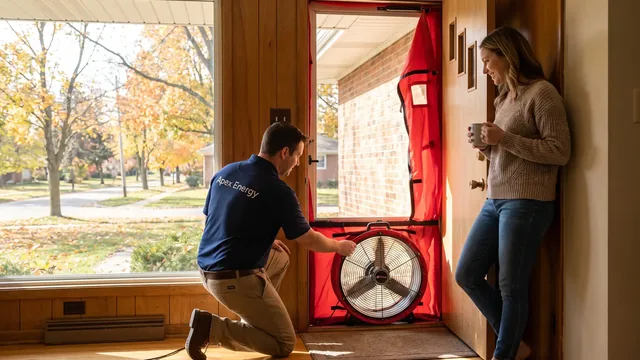
Learn what a home energy audit finds, how blower door and infrared testing works, and why the Department of Energy links audits to 5% to 30% energy savings.

12-minute read
Home renovation permits: What you need and what they cost
Find out which home renovation permits you need, how the application and inspection process works, and what happens when unpermitted work shows up at resale.

11-minute read
Home automation systems: How they work and where to start
Learn how home automation systems connect lights, locks and thermostats, what a starter setup costs, and which upgrades actually cut your energy bills.

12-minute read
How to evaluate home insurance options: Coverage, limits and quotes
Learn how to evaluate home insurance options by comparing dwelling limits, deductibles, exclusions and discounts so your coverage truly rebuilds your home.

12-minute read
Seasonal home maintenance checklist for every season
Find a seasonal home maintenance checklist covering exterior, interior, HVAC and plumbing tasks for all four seasons, keeping repairs small and planned.

11-minute read
Home maintenance for first-time homeowners: A full checklist
Learn what home maintenance for first-time homeowners involves, with monthly, seasonal, and annual tasks plus how much to budget each year for upkeep.

12-minute read
How to budget for home maintenance: The 1% rule and more
Learn how to budget for home maintenance using the 1% to 3% rule and the dollar-per-square-foot method, and how to size the fund for an older or larger home.

12-minute read
The impact of home improvements on property taxes
Learn how home improvements affect property taxes, which projects trigger reassessment, which ones don’t, and how Michigan’s Proposal A cap changes the math.

12-minute read
Condo vs. Co-op: Similarities and Differences Every Urban Buyer Should Know
Compare condo vs. co-op ownership, monthly fees and board approval rules so you can choose the urban home type that fits your budget and lifestyle.

14-minute read
Benefits of modular homes: Cost savings, faster builds and sustainability
Discover the benefits of modular homes, including 10%-20% cost savings, builds up to 60% faster than site-built homes and greener, efficient construction.

11-minute read
Guide to the Different Types of Houses by Structure and Style
Discover the different types of houses by structure and style, from ranch and colonial to craftsman and Victorian, and find which home type fits your life.

11-minute read
Craftsman Houses: History and Features That Still Win Buyers Over
Discover the history and signature features of Craftsman houses, from tapered porch columns to built-ins, and why buyers still love this style today.

12-minute read
Home warranty options for buyers: Coverage, costs and how to choose
Compare home warranty options for buyers, including what plans cover, typical service fees of $65 to $100, and how to pick coverage that fits your new home.

15-minute read
Manufactured Homes: Pros and Cons for Budget-Conscious Buyers
Compare the pros and cons of manufactured homes, from prices far below site-built houses to financing and resale trade-offs, and see if one fits your budget.

12-minute read
Buying a cul-de-sac house: The pros and cons to weigh before you offer
Learn the pros and cons of buying a cul-de-sac house, from lower traffic and safety to price premiums and parking limits, so you can decide with confidence.

12-minute read
Homeowner association fees: What they cover and how they affect you
Learn how homeowner association fees work, what they cover, and why the national average runs about $243 a month, so you can budget before buying in an HOA.

17-minute read
The 12 safest cities in the US for buying a home
See the 12 safest US cities for home buyers, ranked on violent and property crime, traffic safety, and livability, plus how each balances safety with cost.
3-minute read
The Ultimate Connoisseur’s Guide to Buying a Historic Home: Where Heritage Meets Modern Living
Learn how to buy a historic home, including mortgage options and preservation tips. Start your journey today!
3-minute read
The Hidden Costs of Luxury Living: A Savvy Homeowner’s Guide to HOA Fees in 2025
Picture this: You’ve just discovered your dream home in an exclusive community, complete with manicured landscapes, a resort-style pool, and
3-minute read
HOA Fees in 2025: What Homebuyers Must Know Before Buying
Understand homeowner association fees and their impact on your mortgage and home buying. Learn now!
4-minute read
Repair Escrow Guide: How Homebuyers Can Manage Repairs
Discover how to manage home repairs during escrow to protect your mortgage and purchase. Learn now!
4-minute read
The Ultimate Guide to House Types: A Sophisticated Explorer’s Manual to Residential Architecture
Discover different house types by structure and style and their mortgage implications. Learn more now!
1 of 4
