
Selling a home: The complete seller’s guide

This article is for informational purposes only and is not intended to provide legal, financial, or tax advice. Consult a qualified professional about your situation.
Selling a home usually takes 60 to 90 days from the day you decide to list to the day the proceeds hit your account, and it costs most sellers 6% to 10% of the sale price once commissions, title fees, transfer taxes, and buyer concessions are counted. On a $350,000 sale, that’s roughly $21,000 to $35,000 off the top before your mortgage payoff comes out.
The good news: almost every one of those numbers is negotiable, controllable, or both. Learn how the home selling process works step by step, what it actually costs, how to price and prepare your home, and how to line up the mortgage on your next house before this one closes.
Key takeaways:
- Typical timeline: Plan on 2 to 4 weeks to prepare and list, then 30 to 45 days under contract with a financed buyer about 60 to 90 days from decision to closing.
- Typical cost: Selling costs run 6% to 10% of the sale price, or roughly $21,000 to $35,000 on a $350,000 home, with agent commission the largest single line.
- Line up the next loan first: Get your next mortgage priced before you list. Align Lending is a broker, so we shop your purchase across multiple wholesale lenders while your current home is still on the market.
How does selling a home work?
Selling a home is a seven-step process that runs about 60 to 90 days: prepare and price, list and market, show and collect offers, accept an offer, clear inspection and appraisal, wait out the buyer’s loan approval, then close and get paid. Each step has a predictable duration, which means most “surprises” in a home sale are really just steps nobody warned you about.
- Prepare and price (2 to 4 weeks): Clean, declutter, handle obvious repairs, and set a list price off recent comparable sales rather than off what you owe.
- List and market (day 1): The listing goes live on the MLS and syndicates to the major portals. Photos and the first 72 hours of exposure do most of the work.
- Show and collect offers (1 to 6 weeks): Showings, open houses, and feedback. If you have no offers after 14 days and steady traffic, the price is usually the problem.
- Accept an offer and open escrow: The buyer deposits earnest money, typically 1% to 3% of the price, and the contract clock starts.
- Inspection and appraisal (1 to 3 weeks): The buyer inspects within a 7 to 10 day window, then their lender orders the appraisal.
- Buyer’s loan approval (30 to 45 days from contract): Underwriting, conditions, title work, and the final loan commitment.
- Close and get paid (1 to 2 business days after funding): You sign, the deed records, your mortgage is paid off, and the balance is wired to you.
If this is your first sale, the complete guide to selling your house walks the same seven steps in detail, and our tips for first-time home sellers cover the decisions that trip people up the first time around. Now that you know the shape of the process, here’s what it costs.
How much does it cost to sell a home?
Most sellers spend 6% to 10% of the sale price to sell, about $21,000 to $35,000 on a $350,000 home, and agent commission is the largest line by a wide margin. Everything below comes out of your proceeds at closing, so you rarely write a check; the money is netted out on the settlement statement.
| Seller cost | Typical range | On a $350,000 sale |
|---|---|---|
| Agent commissions (total, negotiable) | 4% to 6% | $14,000 to $21,000 |
| Title insurance and settlement fees | 0.5% to 1% | $1,750 to $3,500 |
| State and county transfer taxes | 0% to 1% | $0 to $3,500 (Michigan: $3,010) |
| Seller concessions toward buyer costs | 0% to 3% | $0 to $10,500 |
| Prep, repairs, and staging | 0.5% to 2% | $1,750 to $7,000 |
| Attorney, recording, and miscellaneous | 0.1% to 0.5% | $350 to $1,750 |
| Total selling costs | 6% to 10% | $21,000 to $35,000 |
Three of those lines deserve extra attention:
- Commission is negotiable, and the structure changed: Since the National Association of REALTORS® settlement rules took effect in August 2024, buyer-agent compensation is negotiated separately and is no longer advertised on the MLS. You decide whether to offer it, and how much. See how real estate agent commissions work before you sign a listing agreement.
- Concessions are a price cut in disguise: A buyer asking for 3% toward closing costs on a $350,000 home is asking for $10,500. Sometimes that’s a smarter trade than dropping the price, because it keeps your recorded sale price, and your neighbors’ comps, intact.
- Your payoff is not a selling cost: The mortgage balance is your money going back to the lender, not a fee. Keep the two separate when you’re estimating what you’ll walk away with.
The math for what you actually keep is simple: sale price minus mortgage payoff minus selling costs equals net proceeds. Say you sell a Waterford home for $350,000, owe $198,000, and spend $28,000 to sell, you net roughly $124,000. Your agent or title company can build that estimate before you list; a seller’s net sheet does exactly this, line by line. For the full fee-by-fee breakdown, read our guide to seller’s closing costs.
What happens after you accept an offer?
Once you accept an offer, expect 30 to 45 days to closing with a financed buyer and 7 to 14 days with a cash buyer. This stretch, the selling process after the handshake. Is where deals actually fall apart, and it runs on deadlines written into your purchase agreement.
- Earnest money and escrow (days 1 to 3): The buyer deposits 1% to 3% of the purchase price with the title company. It’s applied to their costs at closing, or forfeited if they walk without a contractual reason.
- Disclosures (days 1 to 5): You deliver your written property disclosures. Understating a known defect is the fastest route to a lawsuit after closing, here’s what a seller’s disclosure is and what it has to cover.
- Inspection and repair negotiation (days 5 to 15): Buyers usually get 7 to 10 days to inspect and respond. You can repair, credit, or decline, our guide to handling buyer repair requests covers when each answer makes sense.
- Appraisal (days 10 to 25): The buyer’s lender orders it, and the loan is sized off the lower of contract price or appraised value.
- Contingency removal (days 15 to 30): Financing, inspection, and sometimes the buyer’s own home sale. Home sale contingencies are the riskiest kind for a seller because your closing now depends on somebody else’s closing.
- Clear to close and final walkthrough (days 30 to 45): The buyer’s lender issues final approval; the buyer walks the home 24 to 48 hours before signing.
Deals do collapse. Financing falls through, an inspection scares a buyer, life happens. Knowing your options when a buyer backs out keeps a dead contract from becoming a dead sale. And once you sign, money movement has its own schedule: here’s when a seller actually gets paid after closing.
How should you price and prepare your home?
Price within about 3% to 5% of what comparable homes actually sold for in the last 90 days, and spend your prep budget on the first ten feet and the first ten photos. Overpricing is the most expensive mistake in the entire transaction: the listing burns its best two weeks of exposure, then sells later for less than it would have brought on day one.
Pricing: comps, not hopes
A comparative market analysis (CMA) looks at closed sales of similar homes, ideally within a half mile and the last six months, then adjusts for square footage, condition, and lot. Two habits matter most. First, price to how buyers search: a home listed at $305,000 misses every buyer whose filter stops at $300,000. Second, watch your own showing data, because 10 showings and no offers is market feedback, not bad luck. Start with pricing a home for sale, and if your timeline is tight, see how to price your home for a quick sale.
Preparing: high-return work only
- Clean, declutter, depersonalize: The cheapest work with the biggest effect on photos and showings. Empty counters and closets read as “more space” to buyers.
- Paint and light: Neutral paint and brighter bulbs cost a few hundred dollars and change how every photo looks.
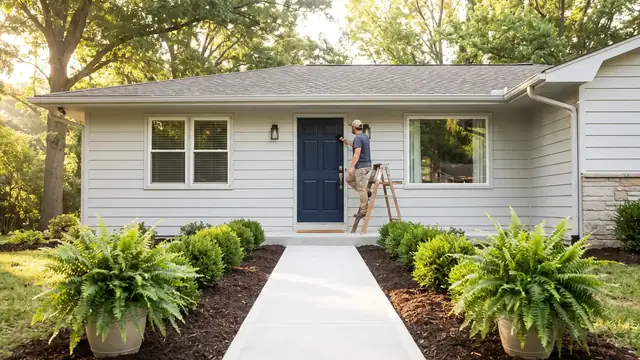
- Curb appeal: Mulch, trimmed shrubs, a clean walkway, and a fresh front door are what buyers see before they open your listing.
- Mechanical honesty: A failing roof, furnace, or water heater will surface at inspection. Fix it, credit it, or price it in, but don’t hide it.
A pre-listing inspection typically runs $300 to $500 and buys you the chance to fix problems on your own schedule instead of under a buyer’s deadline; the benefits of a pre-listing home inspection show up most on older homes. Staging is the other lever worth measuring, see what the impact of home staging on sale price looks like in practice, and work through preparing your home for sale for a room-by-room punch list. Our full pricing and preparing hub collects every valuation, repair, and staging guide in one place.
Should you sell with an agent, on your own, or to a cash buyer?
Most sellers net the most with a full-service listing agent, but the honest answer depends on three things: how fast you need to close, how much equity you have, and how much of the work you want to do yourself. Here’s how the four common paths compare.
| Approach | What it typically costs you | Typical time to close | Best for |
|---|---|---|---|
| Full-service listing agent | 2.5% to 3% listing side, plus any buyer-agent compensation you agree to | 60 to 90 days | Most sellers, especially first-timers |
| Discount or flat-fee brokerage | A reduced percentage or flat listing fee, with fewer services bundled in | 60 to 90 days | Sellers comfortable running showings and negotiation |
| For sale by owner (FSBO) | No listing commission; you may still offer buyer-agent compensation | Varies widely | Sellers with a ready buyer or deep local knowledge |
| Cash buyer or iBuyer | No commission, but offers generally come in below market value | 7 to 21 days | Speed and certainty, as-is or distressed homes |
The trade is always the same: convenience and certainty cost money, and saving money costs time and effort. FSBO sellers keep the listing-side commission but reach a smaller buyer pool and negotiate without a professional across the table, our guide to selling without a REALTOR® lays out exactly which tasks land back on you. If you’re going the traditional route, how to choose a real estate agent gives you the interview questions that actually predict performance. And if speed matters more than price, weigh the pros and cons of selling to a cash buyer honestly. The discount is real, and so is the certainty.
Marketing and offers
Roughly nine in ten buyers start their search online, so your listing photos are your open house. Professional photography, a floor plan, and a video or 3D walkthrough are table stakes on anything above the entry price band, see how to market your home online. When it works, you may get more than one offer at once, and price is only one of the variables: financing type, down payment, contingencies, closing date, and appraisal-gap language all change how likely an offer is to actually close. Our guide to handling multiple offers shows how to compare them side by side instead of just picking the biggest number. The full selling strategies hub covers agents, marketing, negotiation, and what to do when a listing stalls.
What if your sale isn’t a standard sale?
Complications rarely kill a sale, they usually add 1 to 4 weeks and a stack of paperwork. Roughly the same seven steps still apply; you’re just adding a party who has to sign off. These are the situations we see most often on the financing side of a transaction.
- Divorce: The decree or a court order usually dictates timing, listing price authority, and how proceeds are split. Both spouses on title normally must sign. Read selling a home during a divorce before you list.
- Probate and inherited homes: The personal representative needs authority from the court before conveying title, which can add weeks up front. Here’s how selling a home in probate works.
- Liens and judgments: Contractor liens, tax liens, and judgments must be paid or released at closing out of your proceeds. Title work surfaces them, so find them early, see selling a home with a lien.
- Reverse mortgages: The loan becomes due at sale, and the borrower or estate keeps whatever equity remains after payoff. Our guide to selling a home with a reverse mortgage covers the payoff mechanics and the non-recourse protection.
- Condos, HOAs, and co-ops: Association documents, current dues, and any special assessments have to be delivered to the buyer, and a distressed association budget can complicate the buyer’s financing.
Every one of these has a dedicated playbook in our selling situations hub, including relocation sales, forbearance, unpermitted work, and homes with condition issues.
What happens to your mortgage when you sell?
Your mortgage is paid off at closing out of the sale proceeds, no action required from you beyond authorizing it. Your servicer issues a payoff statement good for 10 to 30 days, the title company wires the exact amount including per-diem interest on the closing date, and the lien is released. Four details catch sellers off guard:
- Second liens count too: A HELOC or home equity loan is a separate lien with a separate payoff, and a HELOC has to be closed, not just zeroed out. Read selling a home with a home equity loan if you have one.
- Your escrow balance comes back: Whatever sits in your escrow account for taxes and insurance is refunded after payoff, generally within 20 business days, as a separate check from your proceeds.
- Some loans can transfer: Most conventional mortgages carry a due-on-sale clause, but FHA and VA loans are assumable with lender approval. If you hold a low-rate government loan, that’s a genuine marketing asset worth mentioning in the listing.
- The profit is usually tax-free: If you owned and lived in the home for at least two of the last five years, you can generally exclude up to $250,000 of gain if you file single and $500,000 if you’re married filing jointly, see IRS Publication 523. Talk with a tax professional about your specific situation; this isn’t tax advice.
Buying your next home while this one sells
You do not have to sell first to get preapproved. What changes is how a lender treats your departing residence: some count the full existing payment against your debt-to-income ratio until the sale closes, and others don’t once you’re under contract. That single guideline difference decides whether some sellers can buy at all, and it varies lender to lender, which is exactly where a broker earns their keep. Align Lending shops your scenario across multiple wholesale lenders and compares which ones treat your departing residence most favorably, at current market rates you can benchmark against the Freddie Mac Primary Mortgage Market Survey.
Two more tools are worth knowing. A sale contingency ties your purchase to your closing, which protects you but weakens your offer in a competitive market. A rent-back, where the buyer lets you stay in the home for a set period after closing, solves the moving-day gap without a second move, see negotiating a leaseback agreement. And if you assumed you needed 20% down on the next house, you don’t: conventional loans start at 3% down for qualified buyers, FHA at 3.5% with a 580 credit score, and most conventional programs set the floor around a 620 score.
What Michigan sellers should know
Michigan adds four wrinkles to a national home sale, and all four hit the seller’s side of the settlement statement.
- Transfer tax: Michigan charges $8.60 per $1,000 of sale price, $7.50 state plus $1.10 county, and by custom the seller pays it. On a $350,000 sale, that’s $3,010. A narrow state-level exemption exists for certain principal-residence sales that didn’t gain value; ask your title company whether yours qualifies.
- Seller’s disclosure is statutory: Michigan’s Seller Disclosure Act requires a written disclosure statement on most residential sales of one to four units, delivered before the purchase agreement becomes binding. Skipping it gives the buyer a termination right.
- Property taxes and your PRE: Michigan bills summer and winter taxes in advance, so closings prorate them according to local custom. Which differs by county and is negotiable in the contract. After the sale, file a Request to Rescind Principal Residence Exemption with your local assessor, generally within 90 days; the Michigan principal residence exemption page explains the rules.
- Winter selling is real here: November through February brings fewer buyers but also far fewer competing listings, and serious winter buyers are usually on a deadline. Frozen ground can delay septic, well, and grading inspections in rural counties.
FAQ: Selling a home
Here are answers to common questions about selling a home.
Should I sell my home before I buy my next one?
It depends on your equity and your cash cushion. Selling first gives you a known number and the strongest possible offer on the next house, but it can mean a temporary rental or a rent-back. Buying first is cleaner to live through and riskier financially, since you may carry two payments for a stretch. Run both scenarios against the actual dollars, our guide to the finances of selling lays out the math.
Do I have to make repairs before I list?
No. You can sell a home as-is, and plenty of buyers specifically shop for as-is properties. What changes is your buyer pool and your price: as-is homes attract more cash and investor offers and fewer financed buyers, since some loan programs require the home to meet minimum property standards. Compare the trade in selling a home as-is: pros and cons.
What happens if the appraisal comes in below the contract price?
The deal doesn’t die. It becomes a negotiation. The buyer’s lender will only lend against the lower appraised value, which leaves a gap somebody has to fill. Your four options are to lower the price, ask the buyer to bring the difference in cash, split it, or dispute the appraisal with new comparable sales. Most low appraisals end in a negotiated middle. Here’s how to work through selling a home with a low appraisal.
What’s the most common mistake that costs sellers money?
Overpricing, by a wide margin. A listing gets its best traffic in the first 7 to 14 days, and a price the market rejects burns that window. The home then sits, accumulates days on market, and typically sells for less than a correctly priced listing would have brought immediately. Our roundup of common seller mistakes to avoid covers the other expensive ones.
What should I do if my home doesn’t sell?
Diagnose before you discount. No showings is a price or exposure problem; showings without offers is usually a condition or photo problem; offers that die in escrow point to inspection or appraisal issues. Fix the specific signal, then relist or extend. Start with what to do if your home doesn’t sell.
How much does it cost to sell a house?
Plan on 6% to 10% of the sale price. Agent commission is the largest line, followed by title and closing fees, transfer tax, prorated property taxes, and any concessions you agree to during negotiation. Repairs and staging sit on top of that and vary widely by condition. Our line-by-line breakdown of seller’s closing costs shows what each fee runs.
When do I actually get my money after closing?
Usually the same day or the next business day. Once the deed records and the title company disburses, your proceeds go out by wire or check, wires typically land within hours, checks take longer to clear. Recording timing and your state’s practices set the pace. Our guide to when the seller gets money after closing covers what can delay it.
The bottom line on selling a home
Selling a home takes about 60 to 90 days from decision to closing and costs 6% to 10% of the sale price, roughly $21,000 to $35,000 on a $350,000 home, with agent commission as the biggest line. Price off recent comparable sales, spend your prep budget on cleaning, paint, and curb appeal, and know your mortgage payoff before you list so you can see your real net proceeds. Most of what goes wrong in a home sale is a step nobody explained, not a problem nobody could solve.
If you’re ready to sell one home and finance the next, talk to Align Lending. We’ll shop your scenario across our lender network and show you the numbers side by side. Call 248-506-5727 or start online.
This article is for informational purposes only and is not intended to provide legal, financial, or tax advice. Consult a qualified professional about your situation. Align Lending works with FHA- and VA-approved lenders and is not acting on behalf of, endorsed by, or sponsored by FHA, HUD, or the Department of Veterans Affairs.
More on Selling a home

Featured resources

20-minute read
Downsizing your home: tips for a smooth transition
Learn how to downsize your home without the chaos, with a decluttering timeline, a moving budget, tax rules on your gain and help with the emotional part.
18-minute read
How to improve your home’s curb appeal before you list
Discover how to improve your home’s curb appeal with paint, cleaning, landscaping and lighting upgrades that photograph well and bring buyers to the door.

19-minute read
How to negotiate seller concessions without giving away your profit
Learn how to negotiate seller concessions, what each loan type’s caps allow, and how to trade closing-cost help for price to protect net proceeds.

20-minute read
How to prepare for a home appraisal and support your price
See how to prepare for a home appraisal with a clean exterior, finished repairs and a documented upgrade list that helps the appraiser support your price.

20-minute read
Understanding home sale contingencies
Learn how home sale contingencies work, why buyers request them, and how sellers use deadlines, kick-out clauses, and earnest money to limit the risk.

20-minute read
Real estate agent commissions: How they work now
Learn how agent commissions work, who pays each side after the 2024 NAR settlement, how the split is calculated, and where sellers can negotiate.

20-minute read
Working with a real estate agent: What to expect at every step
Learn what working with a real estate agent involves for buyers and sellers, including agreements, timelines, communication and who pays the fees.

19-minute read
Pros and cons of seller financing for home sellers
Discover the pros and cons of seller financing, from interest income and a wider buyer pool to balloon payments, default risk, and installment-sale taxes.

20-minute read
Benefits of a pre-listing home inspection: what sellers gain
See how a pre-listing home inspection helps you price accurately, control repairs and avoid renegotiation, plus what it costs and when to order one.

20-minute read
How to sell a home with foundation issues without losing the deal
Learn how to sell a home with foundation issues, when repairing beats selling as-is, what an engineer’s report does, and which buyers can finance it.

20-minute read
How to sell a home with a low appraisal and keep the deal together
Learn how to sell a home with a low appraisal, from a reconsideration of value to splitting the gap with your buyer or restructuring the financing.

20-minute read
Understanding seller’s closing costs
See what seller’s closing costs include and why they typically run 6% to 10% of the sale price, from agent commissions and transfer taxes to title fees.

19-minute read
What is a seller’s disclosure?
Learn what a seller’s disclosure is, what defects you must report, when the form is delivered, and how honest disclosure protects you after the sale.

20-minute read
Decluttering your home before selling: where to start
Learn how decluttering before selling makes rooms read larger in photos and showings, with a room-by-room plan, a sorting method and a real timeline.

20-minute read
The finances of selling a home: what it costs and what you keep
See what selling a home really costs, from 3% to 6% commissions and closing fees to repairs and taxes, and how to calculate the net proceeds you keep.

20-minute read
How much an agent makes from a home sale: The real math
See how much an agent makes from a home sale, from the 5% to 6% total commission and the listing-buyer split to the brokerage cut of the take-home.

20-minute read
How to address buyer repair requests after the home inspection
Learn how to address buyer repair requests after an inspection, which items you must fix, and when a credit beats doing the work yourself before closing.

20-minute read
How to interview a real estate agent: The questions that matter
See how to interview a real estate agent, with the questions that reveal recent local sales, pricing logic, marketing plans, and communication standards.

18-minute read
How to market your home online so the right buyers actually see it
Learn how to market your home online with professional photos, video walkthroughs, MLS syndication and social posts that reach serious buyers.

20-minute read
How to sell a home with unpermitted work
Learn how to sell a home with unpermitted work: what to disclose, when retroactive permits are worth pulling, and how as-is pricing shapes offers.

20-minute read
How to maximize your home’s resale value
Learn how to maximize your home’s resale value with upgrades that actually return money: curb appeal, kitchens and baths, added space, and efficiency.

20-minute read
Pros and cons of selling to a cash buyer
Compare the pros and cons of selling to a cash buyer, including 7 to 14 day closings, as-is sales, and offers that often land well below market value.

20-minute read
Selling a home with a home equity loan or HELOC
See how selling a home with a home equity loan works, the order liens get paid at closing, prepayment and early-closure fees, and what you net afterward.

20-minute read
A guide to selling a home with a lien
Learn how to sell a home with a lien: how title searches surface liens, how to pay, negotiate or dispute them, and how to deliver clear title.

20-minute read
How to sell a home with a reverse mortgage
Learn how selling a home with a reverse mortgage works: the payoff steps, non-recourse protection and the timelines heirs get after a borrower dies.

20-minute read
Tips for first-time home sellers: What to do, in order
Learn the tips for first-time home sellers that matter most, from choosing an agent and pricing with comps to closing costs of 6% to 10% of the sale price.

20-minute read
What is a seller’s agent agreement? Listing terms, commission and types
Learn what a seller’s agent agreement covers (commission, term length, protection periods and the four listing types) before you sign with a brokerage.

20-minute read
What is a seller’s net sheet?
Learn what a seller’s net sheet is, which costs it subtracts from your sale price, and how to use it to compare offers and estimate your real proceeds.

20-minute read
Common seller mistakes to avoid (and what to do instead)
See the most common home seller mistakes, from overpricing to skipping repairs and emotional negotiating, and learn the fix for each before you list.

20-minute read
What to know about dual agency: How consent works and what you give up
Learn how dual agency works, where it is illegal, and why one agent representing both buyer and seller limits the advocacy you would otherwise receive.

20-minute read
Home staging on a budget: low-cost fixes that still move buyers
See how home staging on a budget works, from deep cleaning and decluttering to neutral paint and light, so your listing photographs well and sells faster.

20-minute read
How to Find a Real Estate Agent: Where to Look and What to Check
Find a real estate agent through referrals, portal profiles, open houses and license lookups, then narrow the list to two or three worth interviewing.

20-minute read
How to handle a buyer backing out of your home sale
Find out what to do when a buyer backs out of your home sale, who keeps the earnest money, when contingencies protect the buyer, and how to relist quickly.

20-minute read
How to handle multiple offers on your home without losing the best buyer
Learn how to handle multiple offers on your home, compare terms beyond price, use a highest-and-best deadline, and pick the offer most likely to close.

20-minute read
How to price your home for a quick sale without leaving money behind
Learn how to price your home for a quick sale using a comparative market analysis, smart list-price positioning and the search filters buyers actually use.

20-minute read
How to sell a home during renovations without giving up your equity
Learn how to sell a home during renovations, when finishing the work pays off, what an unfinished home costs you, and how to market to the right buyer.

20-minute read
How to sell a home with a pool and market it as an asset
Learn how to sell a home with a pool, from pristine maintenance and safety compliance to seasonal timing and pricing that reflects what buyers will pay.

20-minute read
The impact of home staging on sale price
See how home staging affects sale price: agents report offers 1% to 10% higher, staging costs 1% to 3% of asking price, and staged homes sell faster.

19-minute read
The impact of market timing on home sales
Learn how market timing affects your home sale: seasonal demand, buyer’s versus seller’s markets, and mortgage rates. Pick your listing window with data.

20-minute read
How to market a home with unique features
Discover how to market a home with unique features using storytelling, professional visuals, and 3D tours so the right buyer actually finds your listing.

20-minute read
Marketing your home with virtual tours
Learn how marketing your home with virtual tours works: 90% of buyers prefer listings with a tour, and homes with one can sell faster and for more money.

20-minute read
Preparing your home for sale, physically and emotionally
Learn how preparing your home for sale works on a real timeline: inspection at six months, repairs at three, deep clean at one, plus how to let go.

20-minute read
How to price a home for sale in today’s market
Learn how to price a home for sale using comps, days on market, and search-filter thresholds, and why the first two weeks decide your final sale price.

19-minute read
How to price your home in a competitive market
Compare three ways of pricing your home in a competitive market (at market, slightly below to draw multiple offers, or premium) and see when each one wins.

20-minute read
Discount real estate agents: The pros, cons and real savings
Compare the pros and cons of a discount real estate agent, including listing fees as low as 1%, a la carte charges and how sale price can erase savings.

20-minute read
Real estate agent contracts: The terms to know before you sign
Learn what real estate agent contracts contain, from exclusive right-to-sell listings to buyer agency agreements, and the fee and exit terms to check.

20-minute read
Understanding real estate agent fiduciary duties: What your agent legally owes you
Learn the 6 fiduciary duties a real estate agent owes you: loyalty, confidentiality, disclosure, obedience, accounting and reasonable care and diligence.

19-minute read
Seller concessions: What are they and how do they work?
Learn what seller concessions are, the loan-type limits that cap them at 3% to 9%, and how to negotiate them without giving away your bottom line.
20-minute read
Selling a home during a divorce: Your options and steps
Learn how to sell a home during a divorce, from consent and timing to splitting proceeds, buyout refinances, and the $250,000 capital gains exclusion.

20-minute read
A guide to selling a home in probate
Learn the probate home sale process for executors: court authority, appraisal, heir notice, listing and closing, and why it runs 6 to 9 months.

20-minute read
Selling a home with a mortgage in forbearance
Find out how selling a home with a mortgage in forbearance works, what the payoff must cover, how equity changes your options, and what it does to credit.

20-minute read
Selling without a REALTOR®: How FSBO works
Learn how selling without a REALTOR works, what flat-fee MLS listings cost, which paperwork Michigan requires, and how much commission you actually save.

20-minute read
A complete guide to selling your house
Learn how to sell your house step by step: pricing from comps, prepping and staging, marketing, evaluating offers, and getting to the closing table.

19-minute read
Tips for working with a luxury real estate agent: What to expect and demand
Learn how to work with a luxury real estate agent: vetting niche expertise, privacy protocols, off-market access and jumbo financing. Start here.
18-minute read
What to do if your home doesn’t sell
Find out what to do if your home doesn’t sell, from diagnosing price versus presentation problems to refreshing photos, changing agents, or renting it out.

20-minute read
When does a seller get money after closing?
Find out when a seller gets money after closing, typically within 1 to 3 business days, and what wire transfers, wet funding, and recording delays change.

20-minute read
Benefits of hiring a professional stager when you sell
See what a professional stager costs, how staging affects sale price and days on market, and when paying a stager beats staging it yourself.

20-minute read
Benefits of working with a seller’s agent: What you actually get
Discover the benefits of working with a seller’s agent, from CMA-based pricing and MLS exposure to negotiation and paperwork that protects your sale.

20-minute read
A guide to handling lowball offers
Learn how to evaluate a lowball offer on your home, when to counter versus decline, and the terms that can make a low price worth taking after all.

19-minute read
Handling negotiations: a home seller’s playbook for counteroffers, repairs and closing
Learn a repeatable approach to handling negotiations as a home seller, from countering lowball offers to trading low-cost concessions that close the deal.

20-minute read
How to sell a home in a competitive market and still get your price
Learn how to sell a home in a competitive market with strategic pricing, professional marketing and incentives that keep your listing ahead.

19-minute read
How to sell a home with low curb appeal
Learn how to sell a home with low curb appeal using cleanup, paint, and staging fixes most sellers finish for under $500. See what buyers notice first.

20-minute read
How to negotiate a leaseback agreement as a seller
Learn how to negotiate a leaseback agreement after selling: rent, move-out date, deposit, utilities, and insurance, plus the 60-day lender limit to watch.

20-minute read
How to evaluate and negotiate offers as a home seller
Learn how to negotiate offers as a seller by weighing all five parts of an offer: price, financing, contingencies, closing costs, and timing. Start here.

20-minute read
Open house tips for sellers
Learn open house tips for sellers that actually move buyers: what to clean, when to schedule, why you should leave, and how to turn feedback into offers.

20-minute read
Pros and cons of accepting a contingent offer
Learn the pros and cons of accepting a contingent offer, how each contingency changes your risk, and how tight deadlines protect your sale timeline.

19-minute read
Working with a new real estate agent: The pros and cons
Compare the pros and cons of working with a new real estate agent, from availability and effort to thin networks and gaps, plus how to vet them safely.

20-minute read
Understanding real estate agent liabilities: What agents get sued for and how clients are protected
Learn what real estate agents can be held liable for: nondisclosure, misrepresentation, negligence and legal advice they cannot give. Start here.

20-minute read
Real estate agent vs. broker: Licensing, duties and who does what
Compare a real estate agent vs. broker on licensing, supervision and responsibility so you know exactly who handles your transaction. Start here.

20-minute read
Real estate agents: What they do for buyers and sellers
Learn what real estate agents actually do (pricing, marketing, negotiation and closing coordination) and where their work saves you money and time.

19-minute read
Selling a home as-is: Pros and cons for sellers
See the pros and cons of selling a home as-is, why offers come in lower, which buyers still qualify, and what you must legally disclose either way.

20-minute read
Tips for negotiating with a real estate agent: Fee, term and marketing commitments
Learn how to negotiate with a real estate agent on commission, contract length and offer strategy so you keep leverage without losing good representation.

18-minute read
What is a listing agent? What they do for home sellers
Learn what a listing agent does (pricing, staging, marketing, screening buyers and negotiating offers) plus typical costs and how to choose the right one.
1 of 13
