
Dealing with multiple offers from tenants: How to choose fairly and document it
General information about fair housing and tenant screening law, not legal advice. These duties vary by state and municipality and change. Have a Michigan attorney review your criteria, application and lease first.
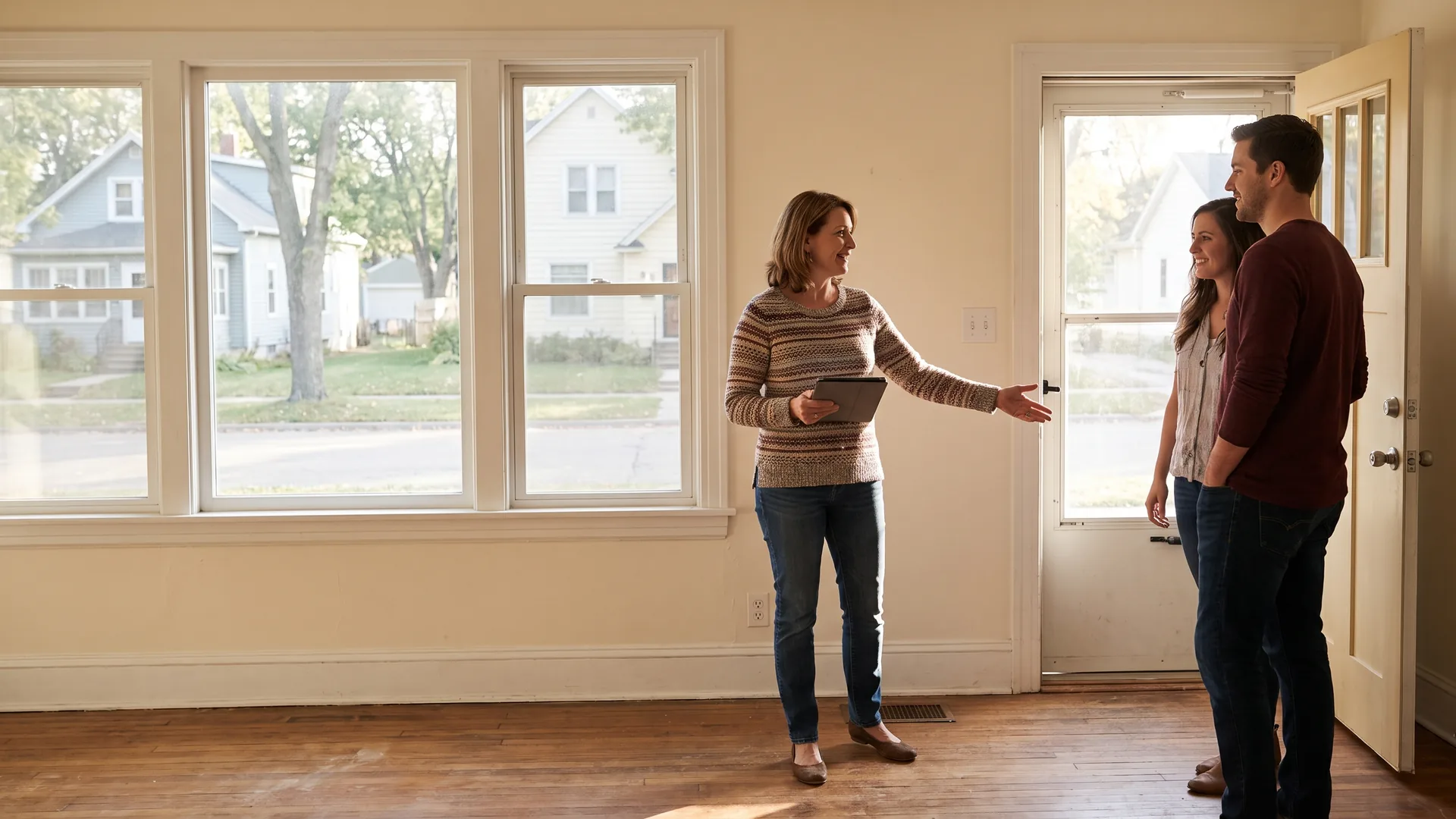
When several qualified applicants want the same rental, the decision has to be made by a rule you wrote before the applications arrived, not by a judgment you form after you meet people. The federal Fair Housing Act puts 7 characteristics off limits, race, color, religion, sex, national origin, familial status and handicap (disability), at 42 U.S.C. 3604, and Michigan’s Elliott-Larsen Civil Rights Act names 10 in real estate transactions, 4 of which the federal list does not carry: age, sexual orientation, gender identity or expression, and marital status.
This is a fair housing and consumer-reporting problem, not a negotiation. Learn how to handle multiple offers from tenants (written criteria, selection method, Fair Credit Reporting Act duties on a denial, and recordkeeping) or start with our Real Estate Investing guide.
Key takeaways:
- Write the criteria before you list: 7 characteristics are protected federally under 42 U.S.C. 3604 and 10 in Michigan’s Elliott-Larsen Civil Rights Act, so standards published in advance are what make a choice defensible.
- Count vouchers in your income test: since April 2, 2025, a Michigan landlord with 5 or more rental units may not exclude a rent voucher or subsidy when applying an income threshold.
- Keep the file longer than you think: a HUD complaint may be filed up to 1 year after the practice occurred or ended and a private federal suit up to 2 years, so your timestamps and reasons must survive that long.
What should your written rental criteria include?
Every item has to be objective and knowable from documents. If two people applying your criteria to one file would reach different answers, it is not tight enough. A workable set covers 5 categories.
- Income: a stated multiple of monthly rent, verified from pay stubs, benefit award letters or tax returns. Gross income of 2.5 to 3 times rent is a market convention, not a legal standard, pick your number and apply it to everyone.
- Credit: a minimum score or a defined list of disqualifying derogatory items, stated as a number rather than a general standard.
- Rental history: a stated number of years of verifiable tenancy and a defined lookback for judgments for possession, a period, not a vague “no evictions.”
- Occupancy: a per-unit limit tied to your local housing code, never to household composition. Familial status is protected federally and in Michigan, and a limit that works as a ceiling on children is how this goes wrong.
- Background screening: what you order, from whom, and which findings matter, individualized, not a blanket rule.
Then cut everything that cannot be measured. “Good fit,” “responsible” and “a feel for the person” are not criteria. They are where bias enters. Our guide to becoming a landlord covers the decisions underneath the sheet, and how to analyze a property’s rental potential covers setting the rent your income test runs against. Publish the criteria in the listing: applicants who cannot meet a stated threshold screen themselves out.
How competitive is the rental market, and how often does screening become a complaint?
Nationally, 7.3% of rental housing was vacant in the second quarter of 2026, according to the Census Bureau’s Housing Vacancy Survey release of July 28, 2026, which reported that rate as not statistically different from the 7.0% of a year earlier. The homeowner vacancy rate was 1.2%.
Michigan’s estimate is lower but less precise. The Census Bureau’s state table of rental vacancy rates puts Michigan at 6.0% for the second quarter of 2026, after 6.7% in the first quarter and 7.1% in the second quarter of 2025, with a margin of error of 2.1 percentage points on the latest figure. Read the direction as a hint, not a finding. Our guide to investor market analysis covers reading local rental data.
Complaints run at volume too. The National Fair Housing Alliance reported that 32,321 housing discrimination complaints were filed nationwide in 2024 and that community-based local fair housing agencies investigated nearly 75% of them, per its November 5, 2025 announcement.
The 2025 Fair Housing Trends Report itself says disability-related discrimination accounted for the largest share of complaints at 54.6%, and that complaints based on national origin rose 8.45% from the previous year. In Michigan, the Michigan Department of Civil Rights takes fair housing questions and complaints at 800-482-3604, and its list of protected bases includes source of income.
Which fair housing rules govern how you choose between applicants?
The Fair Housing Act, 42 U.S.C. 3604, makes it unlawful to refuse to rent, to refuse to negotiate, to discriminate in the terms of a rental, or to “otherwise make unavailable or deny” a dwelling because of a protected characteristic.1 See the Department of Justice overview of the Fair Housing Act and HUD’s fair housing rules for rental screening, which is also where complaints are filed.
Three practices create most of the exposure when applicants compete.
- Inconsistent criteria: waiving the income multiple for one applicant, running a credit check on some and not others, or accepting a co-signer from one household and not another. An unexplained deviation is the fact pattern a claim is built on.
- Steering: pointing an applicant toward a different unit, building or neighborhood than the one they asked about. Section 3604(a) reaches conduct that makes a dwelling unavailable, and Michigan’s statute separately prohibits knowingly failing to bring a listing to a person’s attention.
- Informal impressions: deciding on phone manner, an accent, a photograph, or who “seemed easiest.” None of it is written down or applies consistently, and all of it tracks characteristics you may not weigh.
Intent is not the only theory you can lose under. HUD’s discriminatory effects rule at 24 CFR 100.500, republished at 88 FR 19450 on March 31, 2023, allows liability from a practice’s discriminatory effect without discriminatory intent: under its three-step burden-shifting framework you must show the practice is necessary to a substantial, legitimate, nondiscriminatory interest no less discriminatory practice could serve. A neutral-sounding rule can fail that test. See new fair housing laws.
Is HUD changing the discriminatory effects rule in 2026?
HUD has proposed to, and had not finished as of this update. A proposed rule published January 14, 2026 at 91 FR 1475 would remove HUD’s discriminatory effects regulations at 24 CFR part 100 subpart G, which consists of section 100.500, “leaving to courts questions related to interpretations of disparate impact liability under the Fair Housing Act.” Comments were due February 13, 2026.
A supplemental proposal published August 10, 2026 at 91 FR 51416 reopened that comment period for topics related to the supplement, proposed removing disparate-impact provisions from HUD’s Title VI regulations, and set a comment deadline of October 9, 2026. Neither document is a final rule, and the eCFR still carried 24 CFR 100.500 when this guide was checked, up to date as of October 26, 2026. The current text has been in force since May 1, 2023, the effective date of HUD’s March 31, 2023 reinstatement.
Removing the regulation would not remove the theory. In Texas Department of Housing and Community Affairs v. Inclusive Communities Project, decided June 25, 2015 by a 5 to 4 vote, the Supreme Court held that disparate-impact claims are cognizable under the Fair Housing Act, and it described a robust causality requirement: a claim resting on a statistical disparity has to point to a policy that caused it. For a landlord choosing among applicants the work is the same under either framework: a written criterion, applied to every file, with a business reason you can state. See tips for new real estate investors.
Which selection method should you use when several applicants qualify?
Pick 1 of 3, name it in the listing before applications open, and do not switch mid-search. The difference is how much judgment each leaves you holding.
| Method | How it works | Legal exposure | Documentation burden |
|---|---|---|---|
| First-come, first-served | Processed in the order received; the first applicant meeting every criterion is approved. | Lowest. The tiebreaker is a timestamp. | Light: time received, result, decision. |
| Published application deadline | Accepted until a stated date, then reviewed together against the same criteria. | Moderate, ties still need a written rule. | Heavier: every file scored and tiebreaker recorded. |
| Best qualified | Applicants ranked on a written, weighted sheet built from the same criteria. | Highest. Ranking invites subjective weighting unless the sheet is fully specified. | Heaviest: the sheet, each score, and the ranking arithmetic. |
First-come, first-served is the most defensible because it removes the comparison: you test one file at a time against a fixed standard and stop at the first pass. Its cost is real. A stronger applicant may arrive on day three, after you have committed. A published deadline recovers that upside, but only if the tiebreaker is written down too. “Highest income ratio among qualified applicants” is a tiebreaker; “whoever we liked best” is not. Use the same method at every unit you own, see our tips for managing multiple rental properties.
How do you screen every applicant the same way?
Run the same steps, in the same order, on every completed application: verify identity, verify income against documents, order the consumer report you said you would order, verify rental history using one question list, and record the pass or fail against each criterion. Use one application form and one vendor for everyone, and decide in advance what an incomplete application means, hold or deny, because you cannot chase one applicant for missing pay stubs while denying another for the same gap.
The same discipline applies to automated tools. The Federal Trade Commission treats a risk score or rent-or-decline recommendation from a tenant screening company as a consumer report, so a vendor’s algorithm does not relieve you of Fair Credit Reporting Act duties, and fair housing law reaches its outcome the same way it reaches a manual one. If a tool produces recommendations you cannot explain against your written criteria, you hold the exposure. Setting the rent is separate, see analyzing rental market trends.
What does the FCRA require when you turn an applicant down?
An adverse action notice, every time a consumer report played any part in the decision. The Federal Trade Commission, which enforces the Fair Credit Reporting Act, is explicit that tenant background check reports are consumer reports and that the notice is required even when the report was not the primary reason. Adverse action is also broader than a denial: per the FTC’s landlord guidance it includes requiring a co-signer, requiring a larger deposit than you would require of another applicant, and charging higher rent, most of the ways landlords soften a rejection.
- What the notice must contain: the name, address and phone number of the consumer reporting agency that supplied the report; a statement that the agency did not make the decision and cannot give the reasons; and the applicant’s right to dispute the information and get a free copy within 60 days.
- If a credit score drove the decision: an additional written or electronic notice with the score, its source, the date created, the score range under that model, and the key factors that adversely affected it, in order of importance.
The FTC identifies written notice as best practice because it is your proof of compliance. Keep the message short and factual: the criterion they did not meet, plus the notice where one is owed. Do not compare them to the applicant you selected, and do not give a reason that is not on your criteria sheet.
How should you handle criminal-record screening?
Not as a blanket ban. The FTC’s guidance for landlords states that a blanket policy of refusing to rent to anyone with a criminal record may violate the Fair Housing Act, and the mechanism is the discriminatory effects standard above: a neutral rule that predictably produces a disparate impact must be justified as necessary to a substantial, legitimate, nondiscriminatory interest no less discriminatory practice could serve.2
What replaces it is an individualized assessment written into your criteria: which offenses relate to the safety of residents or the property, how far back you look, and what an applicant may submit about time elapsed, circumstances and rehabilitation. An arrest that never produced a conviction is not evidence the conduct occurred, and screening on arrest records alone is a known trap. Write the standard, publish it, apply it identically, and have a Michigan attorney review it first.
How should you destroy the screening reports you do not keep?
The FTC’s Disposal Rule, 16 CFR 682.3(a), requires anyone who possesses consumer information for a business purpose to dispose of it “by taking reasonable measures to protect against unauthorized access to or use of the information in connection with its disposal.” The rule’s own example of a reasonable measure for paper is burning, pulverizing or shredding it so the information cannot practicably be read or reconstructed.
Most reports you pull belong to applicants you did not choose. Record each pass or fail on your criteria sheet first, then shred the printed reports and delete downloaded copies from your email and laptop, so the decision file survives and the consumer reports do not. Applicants who later rent from you and want on-time payments to count toward their credit can read our guide to reporting rent for a credit boost.
What records should you keep, and for how long?
Keep the application file at least 2 years, longer where your attorney advises. The federal windows set the floor: a HUD complaint may be filed not later than 1 year after an alleged discriminatory housing practice occurred or terminated, 42 U.S.C. 3610(a)(1)(A)(i), and a civil action commenced not later than 2 years after, 42 U.S.C. 3613(a)(1)(A). A denial you cannot reconstruct is one you cannot defend.
- The criteria sheet, versioned and dated: you need to show which standard was in force when each application was decided.
- Date and time each application arrived: under first-come, first-served this is the decision; under a deadline it proves the deadline was honored.
- The result and the reason for each file: pass or fail against each criterion, the reason in the same words as the notice you sent, and a copy of each adverse action notice with its date.
Balance that against the FCRA’s disposal duty: what you retain is the decision file (criteria, timestamps, pass or fail, notices sent) not an archive of consumer reports. Our Rental Property Management hub covers the systems around it.
How do voucher payment standards compare with rents in Michigan metros?
Because a Michigan landlord with 5 or more units has to count a rent voucher in the income test, it helps to know what a voucher can cover. The Michigan State Housing Development Authority, which runs the Housing Choice Voucher program as a state program, is currently assisting over 29,000 families across all 83 counties in Michigan, according to MSHDA’s program overview.
HUD’s Fair Market Rents are 40th percentile rents and are used to determine payment standard amounts for the voucher program. Under 24 CFR 982.503(c), a basic range payment standard is any dollar amount from 90% up to 110% of the published Fair Market Rent for the unit size.
| HUD fair market rent area | 1 bedroom | 2 bedrooms | 3 bedrooms |
|---|---|---|---|
| Detroit-Warren-Livonia | $1,167 | $1,459 | $1,777 |
| Grand Rapids-Wyoming | $1,365 | $1,630 | $2,113 |
| Ann Arbor | $1,503 | $1,804 | $2,164 |
| Lansing-East Lansing | $1,054 | $1,323 | $1,685 |
| Kalamazoo-Portage | $1,013 | $1,158 | $1,545 |
| Flint | $939 | $1,133 | $1,391 |
Source: HUD Office of Policy Development and Research, fiscal year 2027 Fair Market Rents data file (FY27_FMRs.xlsx), opened October 28, 2026.
For example, at the Detroit-Warren-Livonia two-bedroom figure of $1,459, according to the same HUD file, the basic range runs from about $1,313 to about $1,605. The housing agency’s adopted payment standard, not the Fair Market Rent, sets the actual amount, so ask the agency which applies to your unit. Our guides to evaluating a real estate market for investment and investing in multi-family properties cover setting rent against figures like these.
How does the lease you sign affect financing your next rental?
The lease you sign with the applicant you choose can become loan paperwork later. Fannie Mae’s Selling Guide topic B3-3.8-01, dated September 2, 2026, says lenders may only use positive rental income for qualifying income if the borrower has at least 12 months of property management experience. For a newly executed lease, dated within two months of the loan application, on a property not reported on the borrower’s federal income tax return, the guide requires a minimum term of at least six months, and it says the agreement cannot be with an interested party or family member.
An arm’s-length tenant on a written lease, with rent deposits you can show from bank statements, is a file a lender can read; a newly signed lease with a relative would not meet that guide’s requirement. Our guides to financing investments, buying a multi-family home and credit and qualifying cover how rental income is counted, and the DSCR loans in Michigan page explains loans underwritten on the property’s rental cash flow.
What Michigan landlords should know
Michigan’s Elliott-Larsen Civil Rights Act, MCL 37.2502(1), prohibits discrimination in a real estate transaction on the basis of religion, race, color, national origin, age, sex, sexual orientation, gender identity or expression, familial status, or marital status, of the applicant or anyone residing with them. Disability sits in a separate statute, MCL 37.1502. Age and marital status catch landlords screening only against the federal list.3
- Source of income, effective April 2, 2025: under MCL 37.2502(3), added by 2024 PA 180, a landlord may not deny a tenancy or make distinctions in price, terms or fees based on source of income, and where a threshold income level is required, may not exclude a rent voucher or subsidy in calculating whether it is met. MCL 37.2502(4) exempts landlords of fewer than 5 Michigan rental units, counting related entities.
- Deposits and lease terms: Michigan caps a residential security deposit at 1.5 months’ rent under MCL 554.602 and requires an itemized list of claimed damages within 30 days after termination of occupancy under MCL 554.609, and charging one applicant a larger deposit is FCRA adverse action if a consumer report influenced it. The Truth in Renting Act, MCL 554.633(1)(c), bars any lease provision that discriminates in violation of either civil rights act.
- Rent control is preempted: MCL 123.411(2) bars a Michigan local government from enacting or enforcing an ordinance controlling the rent charged for private residential property. Rental registration, licensing and inspection ordinances are separate and common in cities including Detroit, Grand Rapids and Ann Arbor, verify yours.
Two more points. A landlord may not use self-help to remove a tenant: possession is recovered through summary proceedings under MCL 600.5714, and unlawful interference carries statutory damages under MCL 600.2918. And a lease survives a sale, the buyer takes subject to the existing tenancy, covered in how to sell a home with tenants.
What do Grand Rapids, Ann Arbor and Detroit add to the state rules?
Grand Rapids regulates the application stage itself whenever a fee is charged. Under the city’s Residential Rental Application Fees Ordinance, adopted July 10, 2018 (Chapter 174, Sections 9.925 through 9.928), and Administrative Policy 18-04 dated November 7, 2018, a landlord may take applications and fees only while a unit is “available and ready for occupancy,” meaning it has not been offered to or accepted by another applicant and no deposit has been accepted on another applicant’s behalf. The fee must be disclosed in advertising the owner controls, a fee may be held no more than 30 calendar days with a written receipt, an unscreened applicant’s fee comes back within 14 calendar days after the unit is no longer available, and applicants who are not offered the unit get written notice.
The city’s rental application fee complaint page adds that applicants are owed a written disclosure of the criteria used to judge applications, including the screening process and who screens, and a denial letter stating the reasons they did not get the unit.
Ann Arbor goes further on criminal history. Its Fair Chance Access to Housing ordinance, ORD-21-06, approved April 5, 2021 and effective April 18, 2021, says a housing provider shall not “inquire about an Applicant’s Criminal History,” with exceptions written into the ordinance and exclusions for some owner-occupied buildings. The city’s 2023 poster says housing providers may conduct criminal background checks only when required by federal or state law, and that the rule reaches landlords with one or more rental units in the city, so the individualized assessment described above gives way to the ordinance there.
Ann Arbor also says no unit may be leased or made available without a Certificate of Compliance in effect, and that advertising or listing a unit without one can bring enforcement, per its property registration and inspection page. In Detroit, the Buildings, Safety Engineering and Environmental Department cites the Michigan Housing Law, MCL 125.401 et seq., as the authority for requiring a Certificate of Compliance before a rental unit is occupied, and reports that City Council passed an overhaul of rental inspections in October 2024 that combines registration and the certificate into one application. Short-term rentals carry their own local rules, covered in navigating short-term rental regulations.
How Align helps you grow a portfolio
When a rental has built equity, a cash-out refinance or a DSCR loan may turn it into the down payment on the next one. Samantha compares those across multiple wholesale lenders.
She starts with the math that only works when nothing goes wrong, and makes sure yours still works when something does.
FAQ: Choosing among multiple rental applicants
Here are answers to common questions about choosing among multiple rental applicants.
Can I just pick the applicant who offers the most rent?
It depends on your published criteria. Considering a higher offer is not unlawful, but if your criteria are silent on competing offers and you deviate for one applicant, you have created the inconsistency a discrimination claim is built on. Define how offers are weighed before you list. See our Rental Property Management hub.
What should my written rental criteria include?
Income relative to rent, a minimum credit standard, verifiable rental history with a defined lookback, occupancy limits tied to your local code, and your background screening standard. Each stated as a number or a document you can check. Cut anything reading like “good fit.” See buying a home as an investment property.
Is first-come, first-served legal for rental applications?
Yes, and it is the most defensible common method because the tiebreaker is a timestamp rather than a judgment call. Process applications in the order received and approve the first applicant meeting every published criterion. The tradeoff is that it sometimes passes over a stronger later applicant. See our tips for managing multiple rental properties.
How do I tell rejected applicants without creating liability?
Cite the published criterion they did not meet, keep it brief and factual, and send it promptly. If a consumer report influenced the decision at all, the Fair Credit Reporting Act also requires an adverse action notice naming the reporting agency, stating it did not make the decision, and telling the applicant they may dispute the information and request a free copy within 60 days. See becoming a landlord.
How long does a tenant screening company have to investigate a dispute?
Generally 30 days. Under the Fair Credit Reporting Act, a consumer reporting agency must reinvestigate a disputed item within the 30-day period that begins when it receives the dispute, 15 U.S.C. 1681i(a)(1)(A). The same law generally bars reporting civil suits, civil judgments and arrest records older than seven years and bankruptcies older than 10 years, while records of convictions have no such limit, 15 U.S.C. 1681c(a).
How many people per bedroom can a landlord allow?
There is no single federal number. In its 1998 occupancy statement of policy, 63 FR 70256, HUD said an occupancy policy of two persons in a bedroom, as a general rule, is reasonable under the Fair Housing Act, then listed factors that change the answer: size of bedrooms and unit, age of children, configuration of the unit, other physical limitations, state and local law, and other relevant factors.
Can a Michigan landlord advertise no Section 8?
Not a landlord with 5 or more Michigan rental units. MCL 37.2502(3)(h) bars any advertisement or sign about a rental that indicates a preference, limitation or requirement based on source of income. Smaller landlords should check local law: the Fair Housing Center of Southeast & Mid Michigan says Lansing, East Lansing, Ann Arbor, Ypsilanti and Jackson include source of income in their anti-discrimination ordinances.
Does Michigan’s civil rights act apply when I rent out my own home for a year?
Its housing section may not. MCL 37.2503(1)(b) exempts from Elliott-Larsen’s housing rules renting your own home for not more than 12 months if you lived there at least 3 months immediately before and keep it as your legal residence. Michigan’s disability rules still apply: MCL 37.1503 has no such exemption, so MCL 37.1502 binds you. The Fair Housing Act’s advertising ban, 42 U.S.C. 3604(c), applies even when the Act’s single-family exemption, 42 U.S.C. 3603(b)(1), covers the rental.
How long must a landlord keep the lead paint disclosure?
Three years. For most pre-1978 private housing, the Lead-based Paint Disclosure Rule requires landlords to disclose known lead-based paint and hazards before a renter signs the lease, and to keep a signed copy of the disclosures for three years after the lease begins, according to EPA guidance last updated May 27, 2026. File it with the lease of the applicant you chose.
The bottom line on handling multiple tenant applications
Competing applications are a fair housing and consumer-reporting problem, not a negotiation. Write objective criteria before you list, publish them, name one selection method, apply the same steps in the same order to every file, and record the timestamp, the result and the reason behind each decision. The Fair Housing Act protects 7 characteristics at 42 U.S.C. 3604 and Michigan’s Elliott-Larsen Civil Rights Act names 10, with source-of-income protection added for landlords of 5 or more Michigan rental units effective April 2, 2025. Keep the file at least 2 years (HUD complaints run 1 year, private federal suits 2) and send an adverse action notice whenever a consumer report touched a denial.
If you’re ready to refinance a rental or finance the next one, talk to Align Lending. We’ll shop your scenario across our lender network and show you the numbers side by side, including how each lender treats rental income. Call 248-506-5727 or start online. Take screening criteria, lease drafting and tenancy disputes to a Michigan attorney, and see how to refinance an investment property.
Footnotes:
1. This article is general information, not legal advice, and Align Lending is a Michigan mortgage broker rather than a property manager, a law firm or a tenant screening company. Fair housing obligations come from federal, state and local law simultaneously; many municipalities protect characteristics that neither the Fair Housing Act nor Michigan’s Elliott-Larsen Civil Rights Act names, and statutory exemptions, including those at MCL 37.2503 for certain owner-occupied and short-term rentals, are narrow and fact-specific. Confirm current federal requirements with HUD and current Michigan requirements with the Michigan Department of Civil Rights, and have a Michigan attorney review your criteria, application and lease before you use them. Return to text.
2. Criminal-record screening is an area of active regulatory and litigation change, and this section describes the standard as of publication. The discriminatory effects framework described is the current text of 24 CFR 100.500, republished at 88 FR 19450 on March 31, 2023. HUD’s Office of General Counsel issued separate guidance in April 2016 on applying Fair Housing Act standards to the use of criminal records that is widely cited for the individualized-assessment approach; as of publication that document is no longer posted at its former hud.gov address, so confirm the current status of HUD guidance directly with HUD before relying on it. Nothing here is legal advice about any particular screening policy. Return to text.
3. Michigan statutory citations reflect the Michigan Compiled Laws as published by the Michigan Legislature and current through 2026 Public Act 91. Rental registration, licensing, inspection and certificate-of-compliance requirements are set by individual municipalities, change frequently, and are not described in detail here; the cities named are examples, not an exhaustive list, and requirements differ between them. Verify current obligations with the city, village or township where the property is located, and confirm any eviction, lease or tenancy question with a Michigan attorney. Return to text.
Sources: Prohibited practices in the sale or rental of a dwelling because of race, color, religion, sex, familial status, national origin and handicap, including refusal to rent, refusal to negotiate, discrimination in terms or conditions, and conduct that otherwise makes a dwelling unavailable or denies it, Fair Housing Act, 42 U.S.C. 3604(a) through (f). Complaint to the Secretary not later than one year after an alleged discriminatory housing practice occurred or terminated, 42 U.S.C. 3610(a)(1)(A)(i); civil action not later than 2 years after the occurrence or termination of an alleged discriminatory housing practice, 42 U.S.C. 3613(a)(1)(A). Discriminatory effect, legally sufficient justification and the three-step burden-shifting framework, 24 CFR 100.500, 88 FR 19450 (Mar. 31, 2023). Tenant background check reports as consumer reports; examples of adverse action including denial, requiring a co-signer, requiring a deposit or a larger deposit than for another applicant, and charging higher rent; permissible purpose and certification before obtaining a report; required contents of the adverse action notice including the consumer reporting agency’s name, address and telephone number, the statement that the agency did not make the decision, and the right to dispute and to a free report within 60 days; the additional credit-score notice; written notice as best practice; the statement that a blanket policy of refusing to rent to anyone with a criminal record may violate the Fair Housing Act; the treatment of a screening company’s risk score or recommendation as a consumer report; and the duty to dispose of consumer reports securely, Federal Trade Commission, “Using Consumer Reports: What Landlords Need to Know.” Investigative consumer report disclosures, 15 U.S.C. 1681d(a), (b). Michigan protected characteristics in real estate transactions, prohibited practices including knowingly failing to bring a property listing to a person’s attention, the source-of-income provisions and the requirement that a rent voucher or subsidy be included when applying an income threshold, and the exemption for a landlord of fewer than 5 rental units counting related entities, MCL 37.2502(1), (3) and (4), as amended by 2023 PA 6 (eff. Feb. 13, 2024) and 2024 PA 180 (eff. Apr. 2, 2025); definition of “source of income,” MCL 554.601(f); exemptions, MCL 37.2503(1). Disability in real estate transactions, Persons with Disabilities Civil Rights Act, MCL 37.1502(1). Security deposit not to exceed 1 1/2 months’ rent, MCL 554.602; itemized list of damages mailed within 30 days after termination of occupancy and the tenant’s 7-day response, MCL 554.609; landlord’s 14-day notice and the tenant’s 4-day forwarding address, MCL 554.603 and MCL 554.611. Prohibited rental agreement provisions, including any provision that excludes or discriminates in violation of the Elliott-Larsen Civil Rights Act or the Persons with Disabilities Civil Rights Act, Truth in Renting Act, MCL 554.633(1)(c). Local governmental unit prohibited from enacting, maintaining or enforcing an ordinance controlling the amount of rent charged for leasing private residential property, MCL 123.411(2). Summary proceedings to recover possession, MCL 600.5714; damages for unlawful interference with a possessory interest, MCL 600.2918. Further reading: the Department of Justice overview of the Fair Housing Act and HUD’s Office of Fair Housing and Equal Opportunity.
This article is for informational purposes only and is not intended to provide legal, financial, or tax advice. Fair housing law, tenant screening obligations, consumer reporting duties and local rental licensing requirements change and vary by jurisdiction; confirm current federal requirements with HUD and the Federal Trade Commission, confirm Michigan requirements and any tenancy dispute with a Michigan attorney, and confirm loan terms with your loan officer. Align Lending is an independent Michigan mortgage broker, NMLS #2041154, and is not a property manager, a tenant screening company, a law firm, or a registered investment adviser.
Sources
Every outside source this guide links to, in the order it appears. How we choose and check sources
- Census Bureau’s Housing Vacancy Survey release of July 28, 2026U.S. Census Bureau
- Census Bureau’s state table of rental vacancy ratesU.S. Census Bureau
- November 5, 2025 announcementnationalfairhousing.org
- 2025 Fair Housing Trends Reportnationalfairhousing.org
- Michigan Department of Civil RightsState of Michigan
- The Fair Housing Act, 42 U.S.C. 3604, makes it unlawfullaw.cornell.edu
- The Department of Justice overview of the Fair Housing ActU.S. Department of Justice
- HUD’s fair housing rules for rental screeningU.S. Department of Housing and Urban Development
- HUD’s discriminatory effects rule at 24 CFR 100.500Electronic Code of Federal Regulations
- Proposed rule published January 14, 2026 at 91 FR 1475govinfo.gov
- Supplemental proposal published August 10, 2026 at 91 FR 51416govinfo.gov
- HUD’s March 31, 2023 reinstatementfederalregister.gov
- Texas Department of Housing and Community Affairs v. Inclusive Communities Projectlaw.cornell.edu
- Every time a consumer report played any part in the decisionlaw.cornell.edu
- 16 CFR 682.3(a)Electronic Code of Federal Regulations
- Not later than 1 year after an alleged discriminatory housing practice occurred or terminatedlaw.cornell.edu
- A civil action commenced not later than 2 years afterlaw.cornell.edu
- MSHDA’s program overviewState of Michigan
- Fair Market RentsHUD Office of Policy Development and Research
- 24 CFR 982.503(c)law.cornell.edu
- Fiscal year 2027 Fair Market Rents data file (FY27_FMRs.xlsx)HUD Office of Policy Development and Research
- Selling Guide topic B3-3.8-01Fannie Mae Selling Guide
- Disability sits in a separate statute, MCL 37.1502Michigan Legislature
- Caps a residential security deposit at 1.5 months’ rent under MCL 554.602Michigan Legislature
- Itemized list of claimed damages within 30 days after termination of occupancy under MCL 554.609Michigan Legislature
- The Truth in Renting Act, MCL 554.633(1)(c)Michigan Legislature
- MCL 123.411(2) bars a Michigan local governmentMichigan Legislature
- Summary proceedings under MCL 600.5714Michigan Legislature
- Statutory damages under MCL 600.2918Michigan Legislature
- Administrative Policy 18-04grandrapidsmi.gov
- Rental application fee complaint pagegrandrapidsmi.gov
- ORD-21-06a2gov.org
- 2023 postera2gov.org
- Property registration and inspection pagea2gov.org
- Buildings, Safety Engineering and Environmental Departmentdetroitmi.gov
- 15 U.S.C. 1681i(a)(1)(A)law.cornell.edu
- 15 U.S.C. 1681c(a)law.cornell.edu
- Statement of policygovinfo.gov
- MCL 37.2502(3)(h)Michigan Legislature
- Fair Housing Center of Southeast & Mid Michiganfhcmichigan.org
- MCL 37.2503(1)(b)Michigan Legislature
- MCL 37.1503Michigan Legislature
- EPA guidanceU.S. Environmental Protection Agency
Related resources
20-minute read
A guide to becoming a landlord: Steps, laws and first-year costs
Learn how to become a landlord step by step, from screening tenants and writing a compliant lease to setting rent and buying landlord insurance.

20-minute read
Navigating short-term rental regulations: Zoning, licensing, insurance and lodging taxes
Learn how short-term rental regulations work, from licensing and lodging taxes to primary-residence rules and night caps, before you list your rental.

20-minute read
Tips for managing multiple rental properties: The systems that scale
Learn how to manage multiple rental properties with software, standardized leases, preventive maintenance and per-property books that protect your margins.
