
Benefits of investing in senior housing markets, from demographics to operating risk
This article is general information about a real estate sector and is not tax, legal or investment advice, and it is not an offer to sell or a solicitation of an offer to buy any security. Depreciation and entity questions belong with a qualified tax professional; fair housing and licensing questions belong with a Michigan attorney. Align Lending is an independent Michigan mortgage broker, not a broker-dealer, investment adviser, syndicator, operator or property manager.
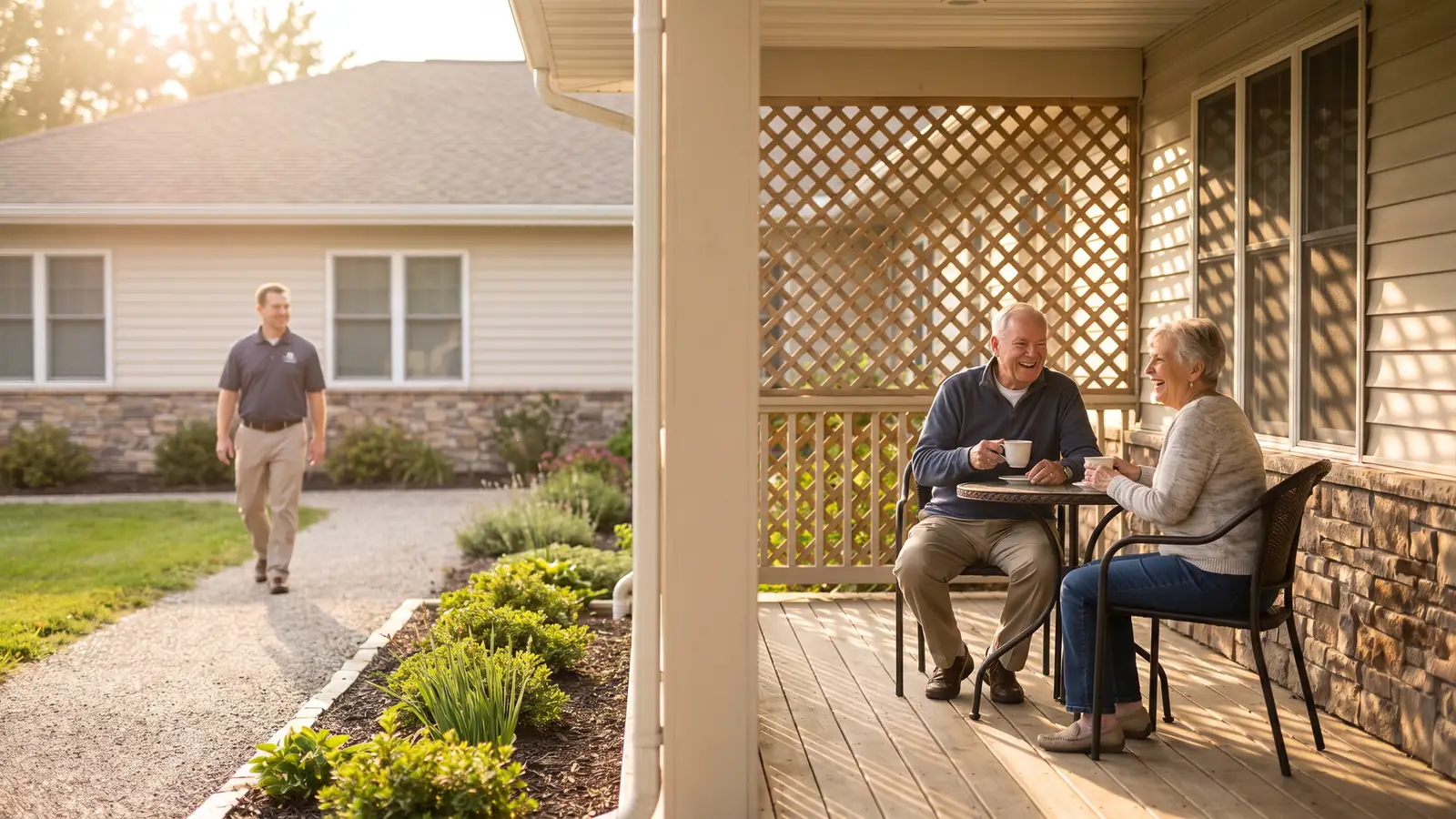
The number that drives senior housing demand is not 65. It is 85. The Administration for Community Living, reporting Census Bureau projections in its 2023 Profile of Older Americans, puts the population age 85 and older on track to more than double from 6.5 million in 2022 to 13.7 million in 2040, a 111% increase, and that is the cohort that actually fills assisted living and memory care.
The counterweight sits in the same dataset. In 2022, 1.3 million Americans 65 and older lived in nursing homes, roughly 2% of the 57.8 million in that age group. Demographics create a market. They do not create your occupancy or staff your building.
Learn how investing in senior housing markets works: the four segments, where real estate stops and a licensed healthcare business begins, the Housing for Older Persons Act conditions behind any age restriction, and how financing changes by segment. New to the asset class? Start with our Real Estate Investing guide or the Investment Property Types hub.
Key takeaways:
- The demand number that matters is 85-plus: That population is projected to grow from 6.5 million in 2022 to 13.7 million in 2040, while just 1.3 million of 57.8 million Americans 65 and older lived in nursing homes in 2022.
- Age restriction is a federal exemption with conditions: A 55-and-older community must keep 80% of occupied units housing one person 55 or older, publish policies showing that intent, and re-verify ages every two years.
- Two of the four segments are licensed businesses, not rentals: In Michigan, adult foster care licenses run from 3 residents to more than 20, and a home for the aged serves 21 or more residents age 55 or older.
What counts as senior housing, and where does real estate stop?
Senior housing spans four segments, and the line between real estate and healthcare falls between the second and the third. Active adult and independent living are housing you underwrite with rental math. Assisted living and memory care are operating companies that happen to own a building.
| Segment | Care provided | State licensure | What you are buying |
|---|---|---|---|
| Active adult | None, age-restricted housing with amenities | None for care; fair housing governs the age restriction | Real estate; underwrites like apartments or rentals. |
| Independent living | Meals, housekeeping, activities; no personal care | Varies by state and bundled services | Real estate plus a hospitality operation. |
| Assisted living | Help with daily activities, medication oversight, 24-hour staffing | Required, licensed as a residential care setting | A licensed operating business with real estate attached. |
| Memory care / skilled nursing | Dementia care or continuous nursing care | Required; heaviest survey and staffing standards | A healthcare business; real estate is the smaller half. |
That table is the argument of this article: the buyer of an age-restricted duplex and the buyer of a memory care community do not answer to the same regulator. Our investment property types overview sets these against other niches.
Why is an age-restricted community only lawful under the Housing for Older Persons Act?
Because familial status is a protected class, and “55 and older” is a narrow statutory exemption rather than a marketing choice. The Fair Housing Act says no provision regarding familial status applies to housing for older persons, but only housing meeting the statutory definition qualifies, and the owner carries the burden of proof.1
- The 62-and-older route: Housing “intended for, and solely occupied by, persons 62 years of age or older.” Solely means solely; a younger spouse breaks it.
- The 55-and-older route, with three conditions: At least 80% of occupied units must house at least one person 55 or older; the community must publish and adhere to policies demonstrating that intent; and it must comply with HUD’s verification rules, which call for reliable surveys and affidavits.
- The 80% test counts occupied units: A temporarily vacant unit counts if the primary occupant lived there in the past year and intends to return, and newly built housing first occupied after March 12, 1989 need not comply until 25% of units fill.
- Verification recurs: HUD requires the age survey to be updated at least once every two years. Documentation is not limited to official records: a driver’s license, birth certificate, passport, immigration card or military ID all count, and so does a certification in a lease, application or affidavit signed by any household member 18 or older stating that at least one person in the unit is 55 or older.
Two things follow that investors get wrong. The exemption reaches familial status only, race, color, religion, sex, national origin and disability protections apply in full. And the paperwork is part of the asset: a community that has drifted below 80% or has not surveyed in three years is an exposure you inherit at closing. Put the age survey and published policies on your diligence list, then run the market side through how to evaluate a real estate market for investment.
What did the Housing for Older Persons Act of 1995 change for 55-and-older communities?
It removed one test and added a defense. The Housing for Older Persons Act of 1995, Public Law 104-76, was approved December 28, 1995, and HUD’s implementing rule took effect May 3, 1999, according to the final rule published in the Federal Register. Before HOPA, a 55-and-older community also had to provide “significant facilities and services specifically designed to meet the physical or social needs of older persons.” HOPA eliminated that requirement and added the duty to follow HUD’s rules on verifying occupancy.
The second change matters when you buy. Under 42 U.S.C. 3607(b)(5), a person is not personally liable for monetary damages for relying, reasonably and in good faith, on the older-persons exemption, but only if that person has no actual knowledge that the community is not, or will not be, eligible, and the community “has stated formally, in writing” that it complies. Put the seller’s written statement of compliance in the diligence file beside the age surveys; it limits personal damages but does not make a community qualify. Our guide to new fair housing laws tracks later rule changes, and navigating HOA regulations covers association documents.
Why does the demographic case need a second number?
Because the headline is real and the conversion rate is not what most pitches imply. By 2030, all baby boomers will be older than 65, which the Census Bureau projects will put roughly one in five U.S. residents at retirement age. The Administration for Community Living counted 57.8 million Americans 65 and older in 2022, 17.3% of the population, and projects 78.3 million by 2040, or 22%.
Then the second number. Of those 57.8 million, 1.3 million lived in nursing homes in 2022: 1% of people 65 to 74, 3% of those 75 to 84, and 8% of those over 85. Most older Americans live in ordinary housing, and 28% of those in the community lived alone in 2023. Aging in place is the default, which is why the 85-plus cohort doubling by 2040 is the demand signal worth underwriting and the 65-plus total is not.2
Affordability is the third number and the one that caps rent growth. ACL put the 2022 median income of older Americans at $29,740 and the 2021 median household income of older renters at $20,000. Private-pay senior housing sells into a modest, largely fixed income distribution no matter how many people turn 85. And occupancy and return benchmarks here come from trade-group indexes rather than government statistics, so ask for the methodology before treating an outperformance figure as fact. Our piece on the impact of aging populations on housing markets works through the broader picture, and the Administration for Community Living data on the aging population is the source behind the figures above.
How is assisted living different from owning a rental?
It is a licensed operating business, and the difference shows up in who pays, who is liable and who can shut you down. A rental means collecting rent and maintaining a building. Assisted living means employing caregivers around the clock, documenting care plans, passing state surveys and carrying liability a landlord policy does not touch.
- Medicare does not pay for it: Medicare states plainly that it does not pay for long-term care, also called custodial care, help with bathing, dressing and other daily activities. Residents pay privately.
- Medicaid covers nursing facilities, not assisted living, by default: Nursing facility services for individuals 21 and older sit in the federal list of mandatory Medicaid services. Assisted living does not, and is covered, if at all, through optional state waivers that vary and can change.
- Federal mortgage insurance treats these as healthcare facilities: FHA’s Section 232 program insures mortgages for nursing homes, intermediate care facilities, board and care homes and assisted living facilities, defining each as licensed or regulated by the state. It does not reach age-restricted apartments.3
- The operator is the investment: Two identical buildings with different operators produce different results, because occupancy, care margins and survey history are operating outcomes.
If the yield in the higher-acuity segments appeals to you, you are buying healthcare operations with real estate underneath, closer to commercial real estate investing than to a rental portfolio.
How does financing change across senior housing segments?
The four-unit line governs everything. Fannie Mae purchases or securitizes first-lien mortgages secured by residential properties “when the dwelling consists of one to four units.” So a one- to four-unit age-restricted rental is a residential loan, a five-unit-and-up community is commercial multifamily, and a licensed care facility is healthcare lending, three different lenders.
- Age-restricted condos are generally eligible; continuing care communities are not: Fannie Mae makes any project owned or operated as a continuing care facility ineligible, describing communities that “typically require residents to enter into a lifetime contract with the facility to meet all future health, housing, or care needs.” It then draws the line: continuing care communities “are not the same as age-restricted projects,” and age-restricted projects with no lifetime healthcare contract remain eligible. Read the project documents before you write the offer.
- Commercial credit is not consumer credit: Past five units, the Loan Estimate, Closing Disclosure and the rest of the TILA and RESPA framework no longer apply, because the credit is business-purpose. Expect shorter terms, balloon maturities, DSCR underwriting and a negotiation over recourse.
- Depreciation follows what the building earns, not what it is called: Residential rental property is depreciated over 27.5 years, but the IRS defines it as property for which 80% or more of gross rental income comes from dwelling units. A building earning mostly care fees can land in the 39-year nonresidential class. Land is never depreciable either way, so every projection needs a defensible land-versus-improvement basis allocation behind it.4
Align Lending brokers 1 to 4 unit residential investment financing: an age-restricted rental, duplex or small condo. Not a 60-unit community or a licensed care home, and we would rather say so up front.
How much can the depreciation class change an investor’s numbers?
Enough to show up in every year of the hold. IRS Publication 946 (2025) lists a 27.5-year recovery period for residential rental property and 39 years for nonresidential real property under the general depreciation system, and IRS Publication 527 (2025) says a mid-month convention is used for both, so the year you place the building in service and the year you sell are partial years. Which class applies turns on the 80% dwelling-unit income test described above, so a revenue mix heavy in care fees is a tax question before it is a valuation question.
Hypothetical example, not an offer. Suppose an investor’s basis in a small senior rental is $600,000 and a defensible allocation puts $120,000 on land and $480,000 on the building. Land is not depreciable, so only the $480,000 is spread over the recovery period, using the periods in Publication 946:
| Class | Recovery period | Straight-line deduction in a full year |
|---|---|---|
| Residential rental property | 27.5 years | $17,455 |
| Nonresidential real property | 39 years | $12,308 |
| Difference | $5,147 a year |
Source: recovery periods and the mid-month convention from IRS Publication 946 (2025) and IRS Publication 527 (2025). The dollar amounts are hypothetical arithmetic ($480,000 divided by 27.5 and by 39, rounded to the dollar), not tax advice; partial first and last years will differ.
Ask a tax professional whether a later 1031 exchange fits the plan before you count on these deductions. Our guides to real estate depreciation and the tax benefits of real estate investing walk through the basics.
What does agency loan data show about assisted living versus independent living?
That the care side carries more of the trouble, even inside a program built for experienced owners. Freddie Mac Multifamily’s Seniors Housing investor presentation, with data as of June 30, 2026, reports that between 1998 and 2026 Freddie Mac purchased over $36 billion of loans supporting more than 2,070 seniors housing facilities. Since June 2009 Freddie Mac has placed seniors housing loans in K-Deal pools, with nearly $25 billion securitized; by June 30, 2026, $13.6 billion across 676 of those loans had paid off. It also states that “Experienced, successful Seniors Housing operators and owners are prerequisites” for those loans.
The presentation’s performance page breaks out the seniors housing loans in Freddie Mac’s K-Deal securitizations:
| Property type | Loans outstanding | Outstanding balance | Loans 60+ days delinquent | Delinquent balance | High Risk Watchlist |
|---|---|---|---|---|---|
| Assisted living | 252 | $5,113 million | 16 | $153 million | 40 loans, $509 million |
| Independent living | 152 | $5,233 million | 1 | $15 million | 6 loans, $74 million |
| Total | 404 | $10,346 million | 17 | $169 million | 46 loans, $583 million |
Source: Freddie Mac Multifamily, Seniors Housing Securitization Program Overview, Investor Presentation, K-Deal seniors housing performance data through June 30, 2026. The presentation says its High Risk Watchlist generally includes loans with occupancy at or below 75% and/or a debt service coverage ratio at or below 0.90x, and that watchlist data trails actual performance by 6 to 12 months; by outstanding balance, 5.6% of the seniors housing loans were on that watchlist.
The two outstanding balances are close in size, yet 16 of the 17 delinquent loans and 40 of the 46 High Risk Watchlist loans are assisted living. The same presentation notes that borrowers with a mix of unit types in licensed communities can generally shift up to 25% of units to a higher acuity level and up to 10% to a lower one without lender approval, and that skilled nursing is limited to 20% of net operating income. A small investor can borrow the agency lender’s discipline by pricing cap rates and cash flow on real vacancy; our real estate market risk guide covers the wider picture.
The federal insurance route works the same way. HUD’s Office of Residential Care Facilities administers Section 232, and its applications are assembled and underwritten by FHA-approved lenders before they reach HUD, which is why a care facility loan starts with a healthcare lender rather than a residential broker.
What are the honest risks in senior housing?
Four, and the first outranks the rest, because here the operating business rather than the market decides the outcome.
Why is staffing the dominant risk?
Because in the licensed segments staffing constrains revenue, not just expenses. Licensure sets minimum staffing requirements, so a community that cannot hire cannot admit residents, it caps its own census to stay compliant. Wage pressure hits from the other side, and because rates reset on a care-agreement cycle, cost and rate increases rarely arrive together. An empty wing in a licensed building is usually a hiring problem wearing a marketing costume.
- Regulatory and reimbursement change: Licensure standards and Medicaid waivers move on political timetables, and any property serving publicly funded residents inherits that risk.
- Liability of a different order: Resident care creates professional liability exposure no landlord policy contemplates, and insurance pricing reflects it.
- Illiquidity and a thin buyer pool: A buyer for a licensed facility must qualify to hold the license, a far smaller market than for an apartment building, which lengthens your exit.
- The rental backdrop still applies: Active adult and independent living compete with conventional rentals. The national rental vacancy rate was 7.3% in the second quarter of 2026 per the Census housing vacancy and homeownership data, so a pro forma assuming full occupancy describes a market that does not exist.
Rural markets deserve a warning: they often show the widest gap between senior population share and supply while having the thinnest healthcare labor pool to staff an answer.
How big is the care workforce a senior housing operator hires from?
Large, and spread across many employers. The Bureau of Labor Statistics Occupational Outlook Handbook profile of home health and personal care aides counts 4,677,100 jobs in 2025 and a median annual wage of $35,800 in May 2025, or $17.21 an hour. It projects employment to grow 18% from 2025 to 2035, with about 760,500 openings a year on average over the decade.
Senior communities employ a small slice of that workforce. Per the same BLS profile, 51% of these aides work in individual and family services and 23% in home healthcare services, against 6% in continuing care retirement communities and assisted living facilities for the elderly. An assisted living community recruits against home care agencies for the same people, so test a pro forma’s wage line against local pay, not last year’s budget. Rental management skills cover the landlord side; a licensed community needs an operator who already runs this hiring.
What Michigan investors should know
Michigan skews older than the country and licenses senior care under two statutes most out-of-state investors have never read. Census Bureau Vintage 2024 estimates put 19.6% of Michigan’s civilian population at 65 or older on July 1, 2024, against 18.0% nationally, roughly 1.99 million residents.
- Adult foster care licenses are sized by resident count: Under the Adult Foster Care Facility Licensing Act, a family home is a private residence approved for 3 to 6 adults whose licensee must live there; a small group home covers 3 to 12, a large group home 13 to 20, and a congregate facility more than 20. It serves adults needing supervision but not continuous nursing care.
- A home for the aged is a separate license at 21 or more residents: Michigan’s Public Health Code defines it as a supervised personal care facility at a single address providing room, board and personal care to 21 or more unrelated, nontransient individuals age 55 or older.
- You cannot use the name without the license, and there is a minimum admission age: Michigan law bars using “home for the aged” or a similar term for an unlicensed facility, and bars admitting anyone under 55 unless the department director grants a waiver on documented findings that the home can meet the individual’s needs under a plan of service and that the individual is compatible with the other residents.
- “Assisted living” is not a Michigan license category: A community marketed as assisted living is licensed as an adult foster care facility or a home for the aged. Confirm which one, and its license status, with the Department of Licensing and Regulatory Affairs before you underwrite.
Acquiring a licensed facility here is a regulatory project before a financing project, so route licensure and fair housing questions to a Michigan attorney. If your interest is the housing end, our guide to buying a home for aging in place covers what drives demand in age-restricted rentals.
How fast will Michigan’s oldest age groups grow?
Slowly at 65 and quickly at 85, and the timing is the useful part. The Michigan Center for Data and Analytics, the state’s demographic office, reported on March 2, 2026 that Michigan’s 65-plus population grew by about 64% between 2005 and 2025, adding around 800,000 people, and that growth will slow to around 17%, about 360,000 more people, from 2025 to 2050 (Baby Boomers and Michigan’s 65-plus population).
The same state analysis puts the turn later in the decade. Michigan’s population ages 65 to 74 is expected to peak around 2029 and then decline; the 75 to 84 group is projected to peak around 2039 with a potential increase of about 45%; baby boomers start joining the 85-plus group in 2031; and by 2050 the 85-plus group could grow by up to about 150%. On the state’s own projections, near-term growth sits in the younger, more independent ages, and the 85-plus wave that fills care settings builds after 2031.
For scale, USAFacts, using Census Bureau data, counts about 1.99 million Michigan residents 65 and older in 2024. Nationally, the Census Bureau’s Vintage 2024 release of June 26, 2025 found the 65-plus population rose 3.1% to 61.2 million from 2023 to 2024, and that its share of the population climbed from 12.4% in 2004 to 18.0% in 2024. See analyzing rental market trends for reading local rents.
How Align matches lenders to rentals
Lenders treat a duplex, a condo rental and a short-term rental very differently. Some count projected rent, some want a signed lease, and some will not finance the property at all.
Because Align is a broker, Samantha takes your file to the wholesale lender whose rules fit the property you actually want to buy. One application, multiple lenders.
FAQ: Senior housing investing
Here are answers to common questions about investing in senior housing markets.
What are the different types of senior housing?
There are four segments. Active adult communities are age-restricted homes with no care services, operating like conventional multifamily. Independent living adds meals and activities. Assisted living helps with daily activities and requires state licensing and 24-hour staffing. Memory care is the most staffing-intensive. Complexity and regulatory exposure rise down that list. Compare them in our investment property types overview.
Why is senior housing considered recession resilient?
Because the move into assisted living or memory care is driven by health needs, not the economy. A family does not delay memory care because rates rose. Active adult and independent living are discretionary and behave like conventional housing, which is why higher-acuity segments hold occupancy better through downturns. Resilient is not safe: staffing, licensure and liability risk do not fall in a recession.
What is the easiest way to start investing in senior housing?
Active adult is the common entry point, because cost per unit is lower and operations resemble multifamily rather than healthcare, so a rental investor transfers most of their skills. Healthcare REITs offer exposure with no operating role. For assisted living or memory care, an experienced operating partner is near-mandatory. Start with real estate investment strategies for beginners.
What are the biggest risks in senior housing investment?
Staffing is the largest ongoing risk, because labor shortages cap occupancy and inflate costs at once. Reimbursement changes affect any property serving publicly funded residents. Liability exposure is higher, and the resale pool is smaller because a buyer must qualify to hold the license. Compare against a straightforward rental in buying a home as an investment property.
Can a Michigan community restrict residents to age 50 and older?
Michigan law reaches further than federal law here. The Elliott-Larsen Civil Rights Act, MCL 37.2503, exempts housing “intended, advertised, designed or operated, bona fide” for persons 50 or older from its age and familial status provisions. The federal Fair Housing Act still applies, and its exemption starts at 55 or 62. Confirm any age floor with a Michigan attorney before you market it.
Does Freddie Mac finance senior housing communities?
Yes, through a separate seniors housing product. Chapter 21 of Freddie Mac’s Multifamily Seller/Servicer Guide covers independent living and assisted living, including an Alzheimer’s component, with limited skilled nursing considered case by case. Age-restricted seniors apartments are excluded from that product and handled under its standard multifamily programs. A property must have been occupied at least 12 months and show stabilized occupancy of at least 85% of units over the trailing three months.
Does Medicaid pay for assisted living in Michigan?
One route is a waiver rather than a standard benefit. Per the Michigan Department of Health and Human Services, the MI Choice Waiver Program began in 1992, reached every Michigan county on October 1, 1998, and lets eligible adults who meet income and asset criteria receive Medicaid-covered services like a nursing home’s while living at home or in another residential setting. Ask an operator how many residents use it.
Can a Michigan senior community turn away a renter who pays with a housing voucher?
Not if the landlord, counting related entities, has five or more rental units in Michigan, as the Michigan Judicial Institute landlord-tenant benchbook explains. Under MCL 37.2502, that landlord may not deny a tenancy based on an otherwise eligible tenant’s source of income, and any income threshold must leave out a rent voucher or subsidy. The senior housing exemption in MCL 37.2503(1)(c) applies to the age and familial status provisions only.
The bottom line on senior housing investing
Senior housing is four businesses wearing one label. The demographic case is genuine, the 85 and older population is projected to more than double from 6.5 million in 2022 to 13.7 million in 2040, but only 1.3 million of 57.8 million Americans 65 and older lived in nursing homes in 2022, so demand does not convert into occupancy on its own. Age-restricted housing is real estate, lawful only inside the Housing for Older Persons Act exemption with its 80% occupancy test, published policies and biennial age verification. Assisted living and skilled nursing are licensed operating businesses carrying staffing and liability risk no rental pro forma captures.
If you’re ready to finance a 1 to 4 unit age-restricted or senior-oriented rental, talk to Align Lending. We’ll shop your purchase or refinance across our lender network and show you the numbers side by side. Call 248-506-5727 or start online. Take depreciation questions to a qualified tax professional and licensure and fair housing questions to a Michigan attorney.
Footnotes:
1. This is general information, not legal advice. Fair housing compliance is fact-specific: whether a community qualifies for the housing-for-older-persons exemption depends on its actual occupancy, its published policies, its verification records and applicable state and local law, which may be more restrictive than federal law. Michigan’s Elliott-Larsen Civil Rights Act and local ordinances may impose additional requirements. Consult a Michigan attorney before adopting, marketing or relying on any age restriction. Align Lending is a mortgage broker and does not provide legal advice. Return to text.
2. Nothing in this article is investment advice, a recommendation to buy or sell any asset, or an offer to sell or a solicitation of an offer to buy any security. Population projections are estimates published by federal statistical agencies and are revised over time; they are not forecasts of occupancy, rent, cap rates or investment returns. Sector performance benchmarks referenced generally in this article are published by industry trade organizations rather than government agencies and are not independently verified here. Past performance does not predict future results, and no return is projected or guaranteed. Align Lending is not a broker-dealer, investment adviser, syndicator or issuer. Return to text.
3. Align Lending is not acting on behalf of or at the direction of FHA or HUD, and is not endorsed or sponsored by any government agency. FHA Section 232 mortgage insurance for residential care facilities is placed through HUD-approved lenders that specialize in healthcare facility finance; Align Lending brokers 1 to 4 unit residential mortgage financing and does not originate Section 232, commercial multifamily or healthcare facility loans. Program eligibility and requirements are set by HUD and change over time. Return to text.
4. This is general information, not tax advice. Depreciation recovery periods, the residential-versus-nonresidential classification of a given property, the allocation of basis between land and improvements, passive-activity loss rules, depreciation recapture on sale (which applies to depreciation allowed or allowable) and entity choice all depend on your individual circumstances and change over time. Consult a qualified tax professional about your situation before relying on any depreciation assumption. Align Lending does not provide tax advice. Return to text.
Sources: the 85 and older population projected to more than double from 6.5 million in 2022 to 13.7 million in 2040 (a 111% increase); 57.8 million Americans age 65 and older in 2022 representing 17.3% of the population; about 78.3 million people 65 or older projected by 2040, or 22%; all baby boomers older than 65 by 2030; 1.3 million people 65 and older living in nursing homes in 2022, at 1% of people 65 to 74, 3% of people 75 to 84 and 8% of people over 85; 28% of older adults living in the community living alone in 2023; 2022 median income of older people of $29,740; and 2021 median household income of $20,000 for older renters and $38,640 for homeowners 75 and older, Administration for Community Living / Administration on Aging, U.S. Department of Health and Human Services, 2023 Profile of Older Americans, publication date May 2024. All baby boomers older than age 65 by 2030 and roughly 1 in every 5 residents at retirement age, U.S. Census Bureau, “Older People Projected to Outnumber Children for First Time in U.S. History,” press release CB18-41. Michigan civilian population age 65 and older at 19.6% versus 18.0% nationally as of July 1, 2024, and approximately 1.99 million Michigan residents 65 and older, U.S. Census Bureau, Vintage 2024 State Characteristics Population Estimates (civilian population by age and sex), calculated from the published estimates. National rental vacancy rate of 7.3% in the second quarter of 2026, U.S. Census Bureau, Quarterly Residential Vacancies and Homeownership, Second Quarter 2026, release CB26-116, July 28, 2026. Familial status provisions not applying with respect to housing for older persons; housing intended for and solely occupied by persons 62 or older; and the 55-or-older conditions requiring at least 80 percent of occupied units to be occupied by at least one person 55 or older, published policies and procedures demonstrating the required intent, and compliance with HUD verification rules providing for verification by reliable surveys and affidavits, 42 U.S.C. 3607(b). The 80 percent occupied-unit test, the treatment of temporarily vacant units, and the rule that newly constructed housing for first occupancy after March 12, 1989 need not comply until at least 25 percent of units are occupied, 24 C.F.R. 100.305. Age verification updated at least once every two years and the list of acceptable age documentation, including a driver’s license, birth certificate, passport, immigration card, military identification, other official documents containing a birth date, and a certification in a lease, application, affidavit or other document signed by any member of the household age 18 or older asserting that at least one person in the unit is 55 years of age or older, 24 C.F.R. 100.307. Medicare not paying for long-term care, also called custodial care, and its description as help with activities of daily living, Medicare.gov, Long-term care coverage. Nursing facility services for individuals 21 years of age or older listed among mandatory medical assistance services, with no corresponding listing for assisted living or residential care, 42 U.S.C. 1396d(a)(4)(A). FHA Section 232 mortgage insurance covering nursing homes, intermediate care facilities, board and care homes and assisted living facilities, each defined as licensed or regulated by the State or political subdivision, National Housing Act Section 232, 12 U.S.C. 1715w. Fannie Mae purchasing or securitizing first-lien mortgages secured by residential properties when the dwelling consists of one to four units, Fannie Mae Selling Guide B2-3-01, General Property Eligibility. Projects owned or operated as a continuing care facility being ineligible, the description of lifetime contracts, and the statement that continuing care communities are not the same as age-restricted projects and that age-restricted projects not requiring a long-term or lifetime healthcare and housing contract are eligible, Fannie Mae Selling Guide B4-2.1-03, Ineligible Projects. Residential rental property defined as property for which 80% or more of gross rental income for the tax year is from dwelling units, the 27.5-year recovery period for residential rental property and 39-year period for nonresidential real property under the general depreciation system, and land not being depreciable, Internal Revenue Service Publication 527, Residential Rental Property. Adult foster care family home approved for 3 to 6 adults with the licensee required to be a member of the household and an occupant of the residence, small group home for 3 to 12 adults, large group home for 13 to 20 adults, congregate facility for more than 20 adults, and the scope of adult foster care for adults requiring ongoing supervision but not continuous nursing care, MCL 400.703, Adult Foster Care Facility Licensing Act, 1979 PA 218. Home for the aged defined as a supervised personal care facility at a single address providing room, board and supervised personal care to 21 or more unrelated, nontransient individuals 55 years of age or older, MCL 333.20106(3), Public Health Code, 1978 PA 368. Licensure requirement, the bar on using “home for the aged” or a similar term without a license, and the bar on admitting an individual under 55 years of age absent a waiver granted by the department director on documented findings that the home for the aged can meet the individual’s needs as determined in the plan of service and that the individual is compatible with the other residents, MCL 333.21311. Transfer of adult foster care licensing authority to the Department of Licensing and Regulatory Affairs, Executive Reorganization Order No. 2015-1, MCL 400.227.
This article is for informational purposes only and is not intended to provide legal, financial, tax or investment advice, and it is not an offer to sell or a solicitation of an offer to buy any security. Fair housing rules, state licensure requirements, Medicaid and Medicare policy, tax rules and loan program guidelines change and vary by property, program and locality; confirm current financing requirements with your loan officer, confirm tax treatment with a qualified tax professional, and confirm licensure, fair housing and entity questions with a Michigan attorney. Figures shown are drawn from the sources listed above, are not a rate quote or an offer of credit, and do not constitute an advertisement of credit terms or a projection of investment returns. Past performance does not predict future results. Align Lending is an independent Michigan mortgage broker, NMLS #2041154, and is not a broker-dealer, investment adviser, syndicator, operator or property manager.
Sources
Every outside source this guide links to, in the order it appears. How we choose and check sources
- Its 2023 Profile of Older AmericansAdministration for Community Living
- The Fair Housing Act says no provision regarding familial status applies to housing for older personslaw.cornell.edu
- HUD requires the age survey to be updated at least once every two yearsElectronic Code of Federal Regulations
- Final rule published in the Federal Registergovinfo.gov
- Which the Census Bureau projectsU.S. Census Bureau
- Administration for Community Living data on the aging populationAdministration for Community Living
- Medicare states plainlymedicare.gov
- FHA’s Section 232 programlaw.cornell.edu
- Fannie Mae purchases or securitizes first-lien mortgages secured by residential propertiesFannie Mae Selling Guide
- Fannie Mae makes any project owned or operated as a continuing care facility ineligibleFannie Mae Selling Guide
- The IRS defines it as propertyInternal Revenue Service
- IRS Publication 946 (2025)Internal Revenue Service
- Seniors Housing investor presentationFreddie Mac
- Office of Residential Care FacilitiesU.S. Department of Housing and Urban Development
- Census housing vacancy and homeownership dataU.S. Census Bureau
- Occupational Outlook Handbook profile of home health and personal care aidesbls.gov
- Under the Adult Foster Care Facility Licensing ActMichigan Legislature
- Michigan’s Public Health Code defines itMichigan Legislature
- Michigan law bars usingMichigan Legislature
- With the Department of Licensing and Regulatory Affairs before you underwriteState of Michigan
- Baby Boomers and Michigan’s 65-plus populationState of Michigan
- USAFactsusafacts.org
- Vintage 2024 releaseU.S. Census Bureau
- MCL 37.2503Michigan Legislature
- Multifamily Seller/Servicer GuideFreddie Mac
- Michigan Department of Health and Human ServicesState of Michigan
- Michigan Judicial Institute landlord-tenant benchbookState of Michigan
- MCL 37.2502Michigan Legislature
- 24 C.F.R. 100.305Electronic Code of Federal Regulations
- 42 U.S.C. 1396d(a)(4)(A)law.cornell.edu
- Executive Reorganization Order No. 2015-1, MCL 400.227Michigan Legislature
Related resources

20-minute read
A guide to investing in short-term rentals
How short-term rental investing works: picking a market and property, the 14-day and 7-day tax rules, and the local rules that can kill a deal.
20-minute read
A guide to investing in multi-family properties
Learn how multi-family investing works, why vacancy risk drops across units, how financing changes at five units, and what house hacking does.
18-minute read
Guide to buying a multi-family home: Financing a duplex, triplex or fourplex
Learn how to buy a multi-family home, from financing duplexes with 3.5% down FHA loans to analyzing cash flow, cap rates and property management costs.
3-minute read
The Foreclosure Process: What Home Buyers Should Know
Learn how the foreclosure process works, from payment default to REO, and what bargain hunters should check before buying a foreclosed home at a discount.