
Benefits of investing in student housing markets, and the operating tradeoffs
General information only, not tax, legal or investment advice, and not an offer to sell or a solicitation to buy any security. Take depreciation and entity questions to a qualified tax professional, and lease, guaranty, licensing and ordinance questions to a Michigan attorney. Align Lending is an independent mortgage broker, not a broker-dealer, investment adviser, syndicator or property manager.
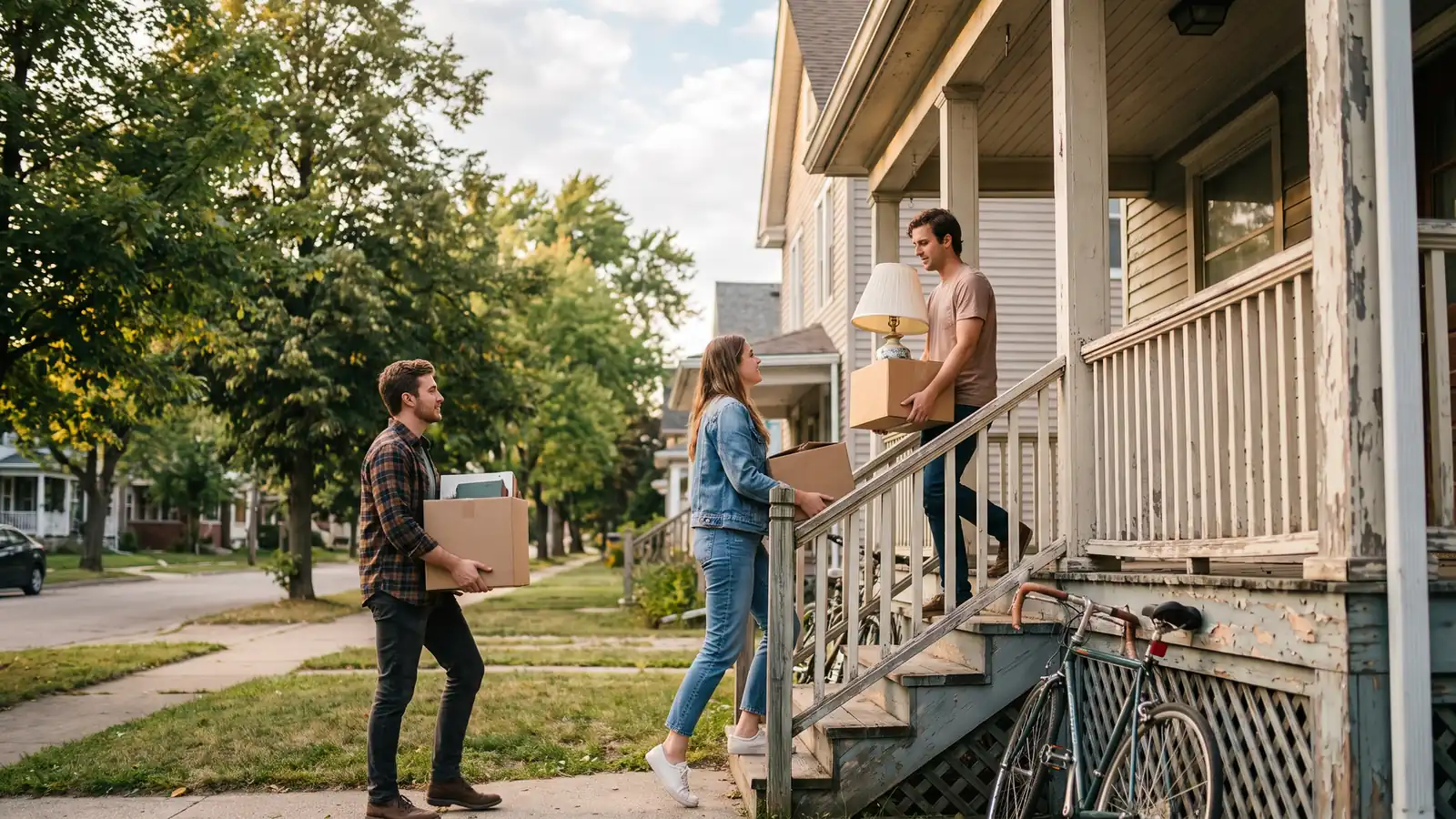
Student housing is residential rental property leased to college students, and its defining feature is that it is usually leased by the bed rather than by the unit, one structural choice that raises gross rent while multiplying the leases, guarantors, deposits and move-outs you manage. The number that should govern the decision is enrollment at the single campus you are betting on: national undergraduate enrollment fell 15% between fall 2010 and fall 2021, from 18.1 million students to 15.4 million, before the National Center for Education Statistics projected a 9% recovery to 16.8 million by fall 2031.
This is not a passive rental with a longer waiting list; it is a business with one customer and a turnover cycle that resets nearly every bed every year. Learn how the benefits of investing in student housing markets work, the per-bed rent math, campus proximity, the leasing calendar, and where enrollment, licensing and fair housing risk sit. New to rentals? Start with our Real Estate Investing guide or the Investment Property Types hub.
Key takeaways:
- Per-bed leasing is the income engine: A four-bedroom house at $600 per bed grosses $2,400 a month against $1,800 leased whole, roughly 33% more, before the furnishing, owner-paid utility and turnover costs it adds back.
- Your demand is one institution’s demand: National undergraduate enrollment fell 15% between fall 2010 and fall 2021, from 18.1 million to 15.4 million, per the National Center for Education Statistics, so your campus’s enrollment trend, not the national story, decides the deal.
- Michigan multiplies the paperwork by the bed: State law caps a security deposit at 1 1/2 months’ rent and requires an inventory checklist at the start and end of every occupancy, one set per bedroom, not one per house.
What is student housing, and how does per-bed leasing change the math?
Student housing is rental property whose tenants are enrolled students, and off campus it is most often leased one bedroom at a time under separate leases. Take a four-bedroom house near a Midwestern campus: leased whole at $1,800 a month it grosses $21,600 a year, and leased at $600 per bed it grosses $28,800, about 33% more.1 That is a gross-rent gap, and several line items move against you at once.
| Feature | Per-bed individual leases | Whole-unit lease to one household |
|---|---|---|
| Gross rent, 4-bedroom example | $2,400 per month ($600 × 4) | $1,800 per month |
| Leases to originate and renew | 4 per year | 1 per year |
| If one occupant leaves | One bed goes vacant; three leases stand | Under joint and several, the rest still owe full rent |
| Deposits and inventory checklists | One set per bedroom | One set per dwelling |
| Utilities and furnishings | Usually owner-paid, owner-furnished | Commonly tenant-paid, tenant-furnished |
| Common-area damage | Hard to assign to one lease | Assignable to the household |
Two lease structures sit behind that table.
- Joint and several: One lease, all four signing, each responsible for the entire rent. It protects your income when a roommate leaves, and it is what students and parents resist hardest.
- Individual per-bed leases: Each tenant owes only their own bedroom’s rent. Easier to sell, costlier to administer, and it moves roommate-departure risk back onto you.
- Parental guaranty: Most undergraduates have no income and thin credit, so leases here commonly require a guarantor. A guaranty is a separate contract, its scope is a legal question, and the requirement must be applied uniformly to every applicant.
This is not the arithmetic of a conventional rental. If what you want is a duplex or fourplex leased to households, our guide to investing in multi-family properties is the right start, and net operating income is where the per-bed premium survives or disappears.
Why is proximity to campus the whole value driver?
Because the tenant pool is defined by a walk. Students without cars filter listings by how long it takes to reach class, which usually means walking distance or a direct shuttle line, not a comparable house two miles out at a lower price. That is why a modest older house near campus out-rents a nicer property a mile away, and why the premium is fragile: a shuttle route change, a new residence hall or a program relocating across town can move a property outside that walk without anything about the building changing.
- Underwrite the walk, not the address: Map the pedestrian route to the buildings your tenants actually use, and check whether it survives a Michigan winter.
- Treat sector occupancy claims as marketing: Figures like “95%-plus occupancy” circulate widely in student housing promotion. They describe professionally managed purpose-built portfolios in strong markets, not your four-bedroom house, and they are not an underwriting assumption.
Build the rent roll from comparables inside that walk radius. Our guide to analyzing a property’s rental potential covers the method and evaluating a property’s cash flow potential covers what survives expenses. Published market-level rent indexes can sanity-check a submarket, though none of them price a per-bed rate.
What are the benefits of investing in student housing?
Three benefits are structural rather than promotional, and each carries a cost that belongs in the same sentence.
- Higher gross rent per square foot: Per-bed leasing turns one rent check into four, roughly 33% more gross rent in the example above, earned back in part through owner-paid utilities, furnished common areas and four times the administration.
- Demand refreshes annually, and rent resets with it: Every incoming class replaces the graduating one, so a well-located property re-leases from a new pool each year and re-prices to market every 12 months rather than sitting on a below-market rent. The same mechanism is why nearly every bed turns every year, and the reset cuts both directions in a softening market.
- A demand cycle uncorrelated with local employment: Enrollment responds to admissions and academic calendars, not to whether the county’s largest employer is hiring. Undergraduate enrollment peaked at 18.1 million in fall 2010, right after the 2007 to 2009 recession, the basis for the sector’s countercyclical reputation, then declined for the following decade, which is the part the marketing omits. Past performance does not predict future results.
Notice what is not on that list: passivity. Student housing is not a lower-effort rental, and any diversification it offers comes from a different operating model, not a safer one.
What does the student housing leasing calendar look like?
It is compressed, and missing it can cost a full academic year of income on a bed. Student housing runs on a fixed institutional calendar in which nearly all leasing decisions for next year are made months before it starts.
- Pre-leasing: Returning tenants and their roommate groups commit for next year while the current year is still in session. The groups that form early fill whole houses.
- Signing season: Most new leases are signed in one concentrated stretch. A property still unsigned once the pool has committed competes for a smaller remainder at a worse rent.
- The summer turn: Nearly every tenant moves out and in inside a narrow window, inspections, cleaning, paint, carpet and repairs, booked against every other landlord in town chasing the same trades.
- Make-ready budgeting: Because the turn is annual and near-total, treat make-ready as a recurring operating line, priced from local contractor quotes rather than a national rule of thumb.
Then there is the summer gap: a 12-month lease keeps rent flowing through months many tenants resist paying for, while a 9- or 10-month academic-year lease matches occupancy but funds an annual figure from fewer months of rent. Both are legitimate, just different pro formas. For other calendar-driven rentals, compare the demand pattern in investing in vacation rental markets and the regulatory exposure in our short-term rentals guide.
How do you read one campus’s enrollment trend before you buy?
Start with the university’s own fall census count, which its institutional research or budget office publishes, and read at least five years of it rather than one. Michigan State University and the University of Michigan both publish theirs, and their recent undergraduate lines do not move together.
| Fall term | Michigan State University undergraduates | University of Michigan, Ann Arbor undergraduates |
|---|---|---|
| Fall 2021 | 38,574 | 32,282 |
| Fall 2022 | 39,201 | 32,695 |
| Fall 2023 | 40,483 | 33,730 |
| Fall 2024 | 41,234 | 34,454 |
| Fall 2025 | 41,415 | 35,358 |
| Fall 2026 | 40,871 | Not in the report linked here |
Sources: Michigan State University Office of Institutional Research, Fall Semester 2026 Enrollment Report (September 25, 2026), undergraduate enrollment table; University of Michigan Office of Budget and Planning, Ann Arbor enrollment headcounts by academic level, fall 2021 through fall 2025 (dated September 17, 2025).
Read the direction and the inputs behind it. According to the MSU Fall Semester 2026 Enrollment Report, total undergraduate enrollment is 40,871, down from 41,415 last year, and the university received 62,539 applications for the entering class, lower than the prior year’s 64,492, while still enrolling 10,984 new undergraduates including transfers. In Ann Arbor, the University of Michigan headcount report shows first-year enrollment rising from 7,278 in fall 2024 to 8,178 in fall 2025. A headcount says how many students there are, not where they live, so read it beside the university’s own announcements about residence halls and housing requirements.
A national vacancy figure is a backdrop, not a rent-roll input. The Census Bureau’s Housing Vacancies and Homeownership release of July 28, 2026 reported national vacancy rates of 7.3% for rental housing and 1.2% for homeowner housing in the second quarter of 2026, with the homeownership rate at 65.0%. That rental rate covers every kind of rental nationwide; vacancy on beds near one campus comes from your own leasing records and the comparables inside the walk radius. Our guide to evaluating a real estate market for investment covers the other local checks.
What are the real risks in student housing?
Concentration is the largest, and it is not diversifiable at the property level: your entire tenant pool comes from one institution whose admissions decisions you cannot see.
- Enrollment risk is institution-specific: The national picture, a 15% undergraduate decline from 18.1 million in fall 2010 to 15.4 million in fall 2021, with a projected 9% recovery to 16.8 million by fall 2031, tells you nothing about your campus. Read that institution’s own enrollment history and housing plans, and remember a projection is not a guarantee. A university moving programs online or opening new dorms can cut off-campus demand fast, and none of it shows up in your comparable sales.
- Local licensing and occupancy ordinances: Many college towns license rentals, inspect on a cycle and cap how many unrelated occupants may share a dwelling. Such a cap can make a four-bed rent roll unlawful in a house that physically has four bedrooms, and it is set locally, not by the state, and not by your lender.
- Heavier wear: Higher occupant density, first-time renters and annual turnover produce more damage per year than a long-tenancy rental, a capital-expenditure assumption, not a maintenance one.
Verify the occupancy cap and licensing requirement in writing with the city before you write an offer. Analyzing rental market trends covers the demand side and real estate due diligence covers the sequence. To manage the turn yourself, IREM publishes property management standards and resources and the BiggerPockets investor discussions on rental strategy help with operating detail, neither substitutes for the ordinance.
How do fair housing rules apply to a student rental?
Familial status is a federally protected characteristic, so a blanket “students only” or “no children” policy carries real legal risk.2 Under 42 U.S.C. 3604 it is unlawful to refuse to rent, to discriminate in the terms of a rental, or to advertise any preference or limitation based on race, color, religion, sex, handicap, familial status or national origin, and 42 U.S.C. 3602(k) defines familial status to cover children under 18 living with a parent or guardian, pregnant persons, and persons obtaining custody.
- There is no student-housing exemption: Congress wrote an express exemption to the familial-status protection for qualifying housing for older persons at 42 U.S.C. 3607(b)(2). It wrote no equivalent for student housing, so a policy excluding families with children has no statutory safe harbor, however it is worded.
- Occupancy limits are a different question: 42 U.S.C. 3607(b)(1) provides that nothing in the Act limits reasonable local, state or federal restrictions on the maximum number of occupants permitted to occupy a dwelling. Complying with a lawful municipal cap is not the same as screening out a protected class, and the two get confused constantly.
- Michigan protects more than federal law does: MCL 37.2502 bars discrimination in a real estate transaction based on religion, race, color, national origin, age, sex, sexual orientation, gender identity or expression, familial status or marital status, of the individual or anyone residing with that individual. It separately bars denying or terminating a tenancy based on a tenant’s source of income, but that provision reaches only a landlord owning five or more rental units in Michigan, counting all related entities, a line a small owner crosses by buying a second house, not one drawn per property. Count your units, confirm with a Michigan attorney, and check the city, because several Michigan municipalities protect source of income by ordinance regardless of how many units you own.
So use objective criteria (income or guarantor thresholds, credit standards, occupancy limits drawn from the ordinance) applied identically to every applicant, rather than defining your tenant pool by who the tenant is. Our overview of fair housing law changes covers the wider framework; have a Michigan attorney review your criteria and lease first.
How is student housing financed and depreciated?
The four-unit line governs everything, and it counts dwellings, not tenants. Fannie Mae purchases or securitizes first-lien mortgages secured by residential properties when the dwelling consists of one to four units, so a house near campus is financed as residential real estate no matter how many students sleep in it.
- One to four units: Residential financing. Leasing by the bed does not convert the house into a five-unit property or into commercial credit.
- Five or more units: Commercial. Different underwriting, shorter terms, balloon maturities and debt-service-coverage tests, and the consumer-mortgage disclosures you may expect do not apply to business-purpose credit. See commercial real estate investing. Align Lending finances 1 to 4 unit residential investment property and is not a commercial lender.
- Owner-occupied 2 to 4 units: An owner-occupant may be able to use FHA or VA financing, which a pure investor cannot. FHA applies a self-sufficiency test to three- and four-unit properties that it does not apply to a one- or two-unit property: the property’s net self-sufficiency rental income, calculated from appraised fair market rents on every unit less the greater of the appraiser’s vacancy and maintenance estimate or 25%, must at least cover principal, interest, taxes and insurance. Confirm the current calculation and reserve requirement in HUD Handbook 4000.1.3
- Pure investment purchases: Expect higher down payment and reserve requirements and loan-level price adjustments. Confirm current limits in the Fannie Mae Eligibility Matrix, because they change.
On taxes, ordinary rental rules apply, and one point trips people up.4 Residential rental property is depreciated over 27.5 years under the IRS general depreciation system, and qualifies as residential rental when 80% or more of its gross rental income for the tax year comes from dwelling units. Land is never depreciable. The IRS states plainly that you can’t depreciate the cost of land because land generally doesn’t wear out, become obsolete, or get used up, so every depreciation figure needs a land-versus-improvement basis allocation behind it. See IRS Publication 527 and our explainer on real estate depreciation, then take the return to a CPA.
What Michigan investors should know
Michigan’s student housing demand concentrates in four towns (Ann Arbor, East Lansing, Kalamazoo and Mount Pleasant) and in each, state law adds requirements that per-bed leasing multiplies.5
- Renting rooms can make it a “rooming house”: The Housing Law of Michigan defines a rooming house as a dwelling in which rooms beyond those used by the immediate family are leased to outsiders without cooking accommodations for those roomers, and provides that in single and 2-family dwellings the bedrooms rented to roomers shall not exceed 3 unless the dwelling complies in all respects with the act’s multiple-dwelling provisions (MCL 125.402). Whether your per-bed structure lands there is a question for the city’s enforcing agency and a Michigan attorney.
- Certificate of compliance, issued within 15 days: Units in multiple dwellings or rooming houses may not be occupied unless the enforcing agency has issued a certificate of compliance after inspection, due within 15 days of written application (MCL 125.529). The act reaches every city, village and township of 10,000 or more, but not private and 2-family dwellings in a locality under 100,000 unless that locality adopted those provisions by resolution (MCL 125.401).
- Deposits capped at 1 1/2 months’ rent, per lease: A deposit may not exceed 1 1/2 months’ rent (MCL 554.602); the landlord supplies two blank commencement inventory checklists and the tenant returns one within 7 days (MCL 554.608); an itemized damages list must be mailed within 30 days after termination of occupancy (MCL 554.609). Four leases in one house means four deposits, eight checklists and four 30-day clocks.
- Your lease clauses are constrained: The Truth in Renting Act voids rent-acceleration clauses that omit the required statement about the landlord’s duty to minimize damages (MCL 554.633), which bears directly on joint-and-several and guaranty drafting.
Occupancy caps, licensing cycles and inspection fees are set by each city on top of this, so get the answer in writing. One financing note: calling an investment property your primary residence to get better loan terms is mortgage fraud, see buying a home as an investment property.
How do Michigan property taxes and city certificates change a student rental’s numbers?
A house you lease out is not your principal residence for Michigan property tax. MCL 211.7dd defines a principal residence as the one place where an owner has a true, fixed and permanent home, and counts only the portion of a dwelling that is owned and occupied by an owner. The exemption in MCL 211.7cc from the tax a local school district levies for school operating purposes belongs to a principal residence, so a house leased entirely to students does not carry it.
The purchase also resets the tax base. Per the Michigan Department of Treasury, a transfer of ownership causes taxable value to uncap in the calendar year following the year of the transfer. The year after a Michigan home sells, its taxable value resets to half of the assessor’s market value, so the seller’s tax bill is not your tax bill. Our Michigan property tax calculator looks up the published millage for an address and uses the district’s non-homestead rate when the home will not be your principal residence.
Then the city decides whether a bed may be leased at all. The City of Ann Arbor’s Rental Housing Services page quotes Ann Arbor Municipal Code 8:516(4): no person shall lease or make a dwelling or rooming unit available for occupancy if a Certificate of Compliance is not in effect for the unit, and the city inspects every rental unit every 30 months. The City of Kalamazoo states that all rental properties in the city must be registered and certified, and that owners who keep to its inspection schedule can earn certificates lasting as long as 52 months. Ask the city for a house’s certificate status before you write an offer; our guide to becoming a landlord sets out the rest of the setup.
What does Michigan’s deposit cap look like on a per-bed lease?
Hypothetical example, not an offer. Four students each lease one bedroom at $650 a month. Because MCL 554.602 caps a security deposit at 1 1/2 months’ rent, the most you may hold is $975 on each lease, or $3,900 across the house, held as four separate deposits.
How Align matches lenders to rentals
Lenders treat a duplex, a condo rental and a short-term rental very differently. Some count projected rent, some want a signed lease, and some will not finance the property at all.
Because Align is a broker, Samantha takes your file to the wholesale lender whose rules fit the property you actually want to buy. One application, multiple lenders.
FAQ: Investing in student housing markets
Here are answers to common questions about investing in student housing markets.
How does per-bed leasing work?
Each tenant signs an individual lease for one bedroom and shares the common areas, instead of one household signing for the whole property, and a parent often guarantees it. That raises total rent collected and keeps one departing roommate from voiding the whole lease, at the cost of several leases, deposits and checklists per dwelling, and usually owner-paid utilities. Test the result against cash flow in real estate.
Is student housing a good investment during a recession?
Historically the demand cycle has been countercyclical: undergraduate enrollment peaked at 18.1 million in fall 2010, right after the 2007 to 2009 recession. But enrollment then fell 15% over the following decade, so that is a tendency, not a rule, and past performance does not predict future results. The larger risk is institutional, a university cutting enrollment or building new dorms. Weigh it inside a broader plan, as in real estate investment strategies for beginners.
What are the biggest risks in student housing?
Concentration risk, because the asset depends on one institution’s health. Annual turnover means yearly make-ready costs and a leasing window that, if missed, can leave beds empty for a full academic year. Wear runs higher, and many college towns impose rental licensing, inspection cycles and caps on unrelated occupants. Confirm each before you commit, our tips for new real estate investors sequence the checks.
How close to campus does a student rental need to be?
Walking distance, generally under a mile, or on a direct campus shuttle or transit line. Proximity is the strongest predictor of occupancy and rent premium here, because students without cars will not consider properties outside that radius. Properties farther out compete on price and show longer lease-up times, which lands as a lower return on the cash you put in, see cash-on-cash return.
How many students can share one bedroom in a rental?
There is no single federal number. HUD’s 1998 occupancy standards statement (63 FR 70256) adopted the Keating memorandum, which says two persons in a bedroom, as a general rule, is reasonable under the Fair Housing Act. It calls that rebuttable and weighs bedroom size, unit configuration and limits such as septic capacity. Where a governmental occupancy requirement applies, HUD treats it as a special circumstance, so the city’s code usually sets the ceiling.
Can I depreciate the furniture in a furnished student rental?
Yes, on its own schedule. IRS Publication 527 places appliances, carpeting and furniture used in a residential rental real estate activity in the 5-year class under the general depreciation system, far shorter than the building’s schedule. A furnished per-bed house buys desks, beds and appliances for every bedroom, so keep dated receipts by room. Our guide to the tax benefits of real estate investing covers the rest; confirm your treatment with a tax professional.
Can I buy a house near campus with an FHA loan and rent rooms to students?
Only if the house is also your home. FHA’s Single Family Housing Policy Handbook 4000.1 requires at least one borrower to occupy the property within 60 days of signing the security instrument and to intend to continue occupancy for at least one year. Renting the other bedrooms while you live there is a question to settle with your loan officer and the city’s rental rules first. Our FHA loans guide covers the program.
Is college enrollment going up or down?
Nationally it rose in fall 2025. The National Student Clearinghouse Research Center reported total postsecondary enrollment up 1.0% over the prior fall, driven by undergraduate gains of 1.2%, in its Final Fall Enrollment Trends report published January 15, 2026. A national change that size is small next to the year-to-year swings at a single campus, so read your university’s own fall census count before you rely on it.
How long does a Michigan landlord have to return a security deposit?
Within 45 days after the occupancy ends, MCL 554.613 lets the landlord either start a court action for the damages claimed or return the deposit balance. A landlord may not keep any part for disputed damages without a money judgment unless an exception applies, such as no forwarding address, no response to the notice of damages, or a written agreement. Under MCL 554.609, the tenant has 7 days to respond by mail.
What must a Michigan rental inventory checklist include?
Every item in the unit the landlord owns. MCL 554.608 lists carpeting, draperies, appliances, windows, furniture, walls, closets, shelves, paint, doors, plumbing fixtures and electrical fixtures, and the commencement form must be identical to the termination form. A notice in 12-point boldface tells tenants they may request the last termination checklist showing what prior tenants were charged. Our rental management guide covers keeping those records.
The bottom line on student housing investing
Student housing is residential rental property leased by the bed, and that structure is the whole case: a four-bedroom house at $600 per bed grosses roughly 33% more than the same house leased whole at $1,800 a month, with campus proximity carrying nearly all of the premium. The costs are equally structural, four leases, deposits and checklists instead of one, a near-total annual turnover compressed into one summer, heavier wear, local licensing and occupancy caps, and a demand base generated by a single institution. National undergraduate enrollment fell 15% between fall 2010 and fall 2021, from 18.1 million to 15.4 million, which is the reminder that this demand is not automatic, and familial status is protected, with no student-housing exemption to fair housing law.
If you’re ready to price the financing on a 1 to 4 unit rental near a Michigan campus, talk to Align Lending. We’ll shop your purchase or refinance across our lender network and show you the numbers side by side. Call 248-506-5727 or start online. Take depreciation and entity questions to a qualified tax professional, and lease, guaranty, licensing and occupancy-ordinance questions to a Michigan attorney.
Footnotes:
1. Example figures are hypothetical and for educational purposes only; they do not constitute an advertisement of credit terms, a rate quote, an offer of credit, or a projection of investment returns under federal or state law. The $600 per-bed rent, the $1,800 whole-house rent, the $2,400 and $1,800 monthly totals, the $28,800 and $21,600 annual totals and the resulting 33% difference are Align Lending arithmetic shown to demonstrate how the per-bed structure changes gross rent. They are not observed market rents, do not reflect any specific property or campus, and exclude vacancy, owner-paid utilities, furnishing, make-ready, management, financing costs and taxes. Actual results depend on the property, the institution, the local ordinance and your own underwriting. Past performance does not predict future results. Return to text.
2. This is general information about fair housing law, not legal advice. Federal, state and local fair housing requirements, exemptions and enforcement standards vary by jurisdiction and change over time, and whether a given tenant-selection policy, advertisement or occupancy standard is lawful depends on facts this article cannot evaluate. Nothing here is a tenant-screening playbook. Have a Michigan attorney review your application criteria, advertising, lease and guaranty documents before you use them. Align Lending is a mortgage broker and does not provide legal advice. Return to text.
3. Align Lending works with FHA-approved and VA-approved wholesale lenders. It is not acting on behalf of or at the direction of FHA or HUD, and is not endorsed or sponsored by the Department of Veterans Affairs, HUD or any other government agency. FHA and VA financing requires the borrower to occupy the property as a principal residence and is not available for a pure investment purchase; program requirements, including the three- to four-unit self-sufficiency calculation and reserve requirements, are set by HUD and the VA, change over time, and individual lenders may add overlays. Confirm current requirements in HUD Handbook 4000.1 and with your loan officer before relying on them. Return to text.
4. This is general information, not tax advice. Depreciation recovery periods, the residential-versus-nonresidential classification, land and improvement basis allocation, depreciation recapture (which applies to depreciation allowed or allowable), passive-activity loss rules, deductible-versus-capitalized treatment of a given expense and entity choice all depend on your individual circumstances and change over time. Consult a qualified tax professional about your situation before relying on any figure in this article. Align Lending is a mortgage broker and does not provide tax, legal or investment advice. Return to text.
5. Michigan statutory provisions are summarized as of the date of this article and are general information, not legal advice. The Housing Law of Michigan applies differently depending on a locality’s population and on whether its legislative body has adopted specified provisions by resolution, and rental licensing, inspection cycles, fees and unrelated-occupancy caps are set by individual cities and change. Whether a particular per-bed leasing arrangement constitutes a rooming house, a multiple dwelling or a private dwelling under the act is a determination for the local enforcing agency. Confirm current requirements directly with the city and with a Michigan attorney before you rely on them. Return to text.
Sources: total undergraduate enrollment in degree-granting postsecondary institutions decreasing 15 percent from 18.1 million students in fall 2010 to 15.4 million in fall 2021, and the projected 9 percent increase to 16.8 million students by fall 2031, U.S. Department of Education, National Center for Education Statistics, Condition of Education, Undergraduate Enrollment. Prohibited practices in the sale or rental of a dwelling, and the prohibition on any notice, statement or advertisement indicating a preference, limitation or discrimination based on race, color, religion, sex, handicap, familial status or national origin, 42 U.S.C. 3604. Definition of familial status covering individuals under 18 residing with a parent or legal guardian or that person’s designee, pregnant persons and persons in the process of securing legal custody, 42 U.S.C. 3602(k). Preservation of reasonable local, state or federal restrictions regarding the maximum number of occupants permitted to occupy a dwelling, and the housing for older persons exemption and its conditions, 42 U.S.C. 3607(b)(1) and (b)(2). Protected characteristics in real estate transactions, including religion, race, color, national origin, age, sex, sexual orientation, gender identity or expression, familial status and marital status of an individual or anyone residing with that individual, and the prohibition, applying to a landlord that owns five or more rental units in this state including all related entities, on denying or terminating a tenancy based on the source of income of an otherwise eligible prospective or current tenant, MCL 37.2502(1) and (3) through (4), Elliott-Larsen Civil Rights Act. Eligibility of first-lien mortgages secured by residential properties when the dwelling consists of one to four units, Fannie Mae Selling Guide B2-3-01, General Property Eligibility; occupancy classifications for principal residence, second home and investment property and loan-level price adjustments on investment property, Fannie Mae Selling Guide B2-1.1-01, Occupancy Types; maximum LTV ratios varying by credit score, mortgage product, number of dwelling units and occupancy status, Fannie Mae Selling Guide B2-1.2-01 and the Fannie Mae Eligibility Matrix. FHA owner-occupancy and the standard that PITI divided by monthly Net Self-Sufficiency Rental Income may not exceed 100 percent for three- to four-unit properties, with Net Self-Sufficiency Rental Income calculated using the appraiser’s estimate of fair market rent from all units, including the unit the borrower occupies, less the greater of the appraiser’s estimate for vacancies and maintenance or 25 percent of fair market rent, U.S. Department of Housing and Urban Development, Single Family Housing Policy Handbook 4000.1, II.A.4; confirm current requirements before relying on them. The 27.5-year recovery period for residential rental property under the general depreciation system, the definition of residential rental property as property for which 80% or more of gross rental income for the tax year is from dwelling units, and the statement that you can’t depreciate the cost of land because land generally doesn’t wear out, become obsolete, or get used up, Internal Revenue Service Publication 527, Residential Rental Property. Classes of dwellings, the definition of a rooming house and the provision that in single and 2-family dwellings the number of bedrooms rented to roomers shall not exceed 3 unless the dwelling complies with the act’s multiple-dwelling provisions, MCL 125.402; the requirement of a certificate of compliance before occupancy of units in multiple dwellings or rooming houses and its issuance within 15 days of written application following inspection, MCL 125.529; application of the act to cities, villages and townships with a population of 10,000 or more and the limitation on its application to private dwellings and 2-family dwellings in localities under 100,000 absent adoption by resolution, MCL 125.401, Housing Law of Michigan. Security deposit not to exceed 1 1/2 months’ rent, MCL 554.602; commencement and termination inventory checklists, two blank copies and the tenant’s 7-day return, MCL 554.608; the itemized list of damages mailed within 30 days after termination of occupancy, MCL 554.609; and the tenant’s duty to provide a forwarding address within 4 days after termination of occupancy, MCL 554.611. Prohibited rental-agreement provisions, including acceleration clauses lacking the required minimize-damages and court-determination statement, and the voiding of provisions that violate the section, MCL 554.633; required rental-agreement statements and the 12-point notice, MCL 554.634, Truth in Renting Act. Occupancy rates commonly quoted for purpose-built student housing are drawn from commercial sector marketing and are presented in this article as promotional claims rather than verified statistics.
This article is for informational purposes only and is not intended to provide legal, financial, tax or investment advice, and it is not an offer to sell or a solicitation of an offer to buy any security. Enrollment data, market conditions, tax rules, fair housing requirements, local licensing and occupancy ordinances and loan program requirements change and vary by property, program and locality; confirm current figures with your loan officer, confirm tax treatment with a qualified tax professional, and confirm lease, guaranty, licensing, occupancy and fair housing questions with a Michigan attorney. Figures shown are illustrative, are not a rate quote or an offer of credit, and do not constitute an advertisement of credit terms or a projection of investment returns. Past performance does not predict future results. Align Lending is an independent Michigan mortgage broker, NMLS #2041154, and is not a broker-dealer, investment adviser, syndicator, property manager or commercial lender.
Sources
Every outside source this guide links to, in the order it appears. How we choose and check sources
- Per the National Center for Education Statisticsnces.ed.gov
- Michigan State University Office of Institutional Research, Fall Semester 2026 Enrollment Reportexplore.ir.msu.edu
- University of Michigan Office of Budget and Planning, Ann Arbor enrollment headcounts by academic levelobp.umich.edu
- Census Bureau’s Housing Vacancies and Homeownership releaseU.S. Census Bureau
- IREM publishes property management standards and resourcesInstitute of Real Estate Management
- Under 42 U.S.C. 3604law.cornell.edu
- 42 U.S.C. 3602(k) defines familial statuslaw.cornell.edu
- At 42 U.S.C. 3607(b)(2)law.cornell.edu
- MCL 37.2502 bars discriminationMichigan Legislature
- Fannie Mae purchases or securitizes first-lien mortgages secured by residential properties when the dwelling consists of one to four unitsFannie Mae Selling Guide
- Confirm the current calculation and reserve requirement in HUD Handbook 4000.1U.S. Department of Housing and Urban Development
- IRS Publication 527Internal Revenue Service
- The Housing Law of Michigan defines a rooming houseMichigan Legislature
- Due within 15 days of written applicationMichigan Legislature
- The act reaches every city, village and township of 10,000 or moreMichigan Legislature
- The tenant returns one within 7 daysMichigan Legislature
- The Truth in Renting Act voids rent-acceleration clausesMichigan Legislature
- MCL 211.7ddMichigan Legislature
- MCL 211.7ccMichigan Legislature
- Michigan Department of TreasuryState of Michigan
- City of Ann Arbor’s Rental Housing Services pagea2gov.org
- City of Kalamazookalamazoocity.org
- MCL 554.602Michigan Legislature
- 1998 occupancy standards statementgovinfo.gov
- Final Fall Enrollment Trends reportnscresearchcenter.org
- MCL 554.613Michigan Legislature
- MCL 554.609Michigan Legislature
Related resources

20-minute read
A guide to investing in short-term rentals
How short-term rental investing works: picking a market and property, the 14-day and 7-day tax rules, and the local rules that can kill a deal.
20-minute read
A guide to investing in multi-family properties
Learn how multi-family investing works, why vacancy risk drops across units, how financing changes at five units, and what house hacking does.
18-minute read
Guide to buying a multi-family home: Financing a duplex, triplex or fourplex
Learn how to buy a multi-family home, from financing duplexes with 3.5% down FHA loans to analyzing cash flow, cap rates and property management costs.
