
Drive-By Appraisal: What It Is and How It Works in the Home Buying Process
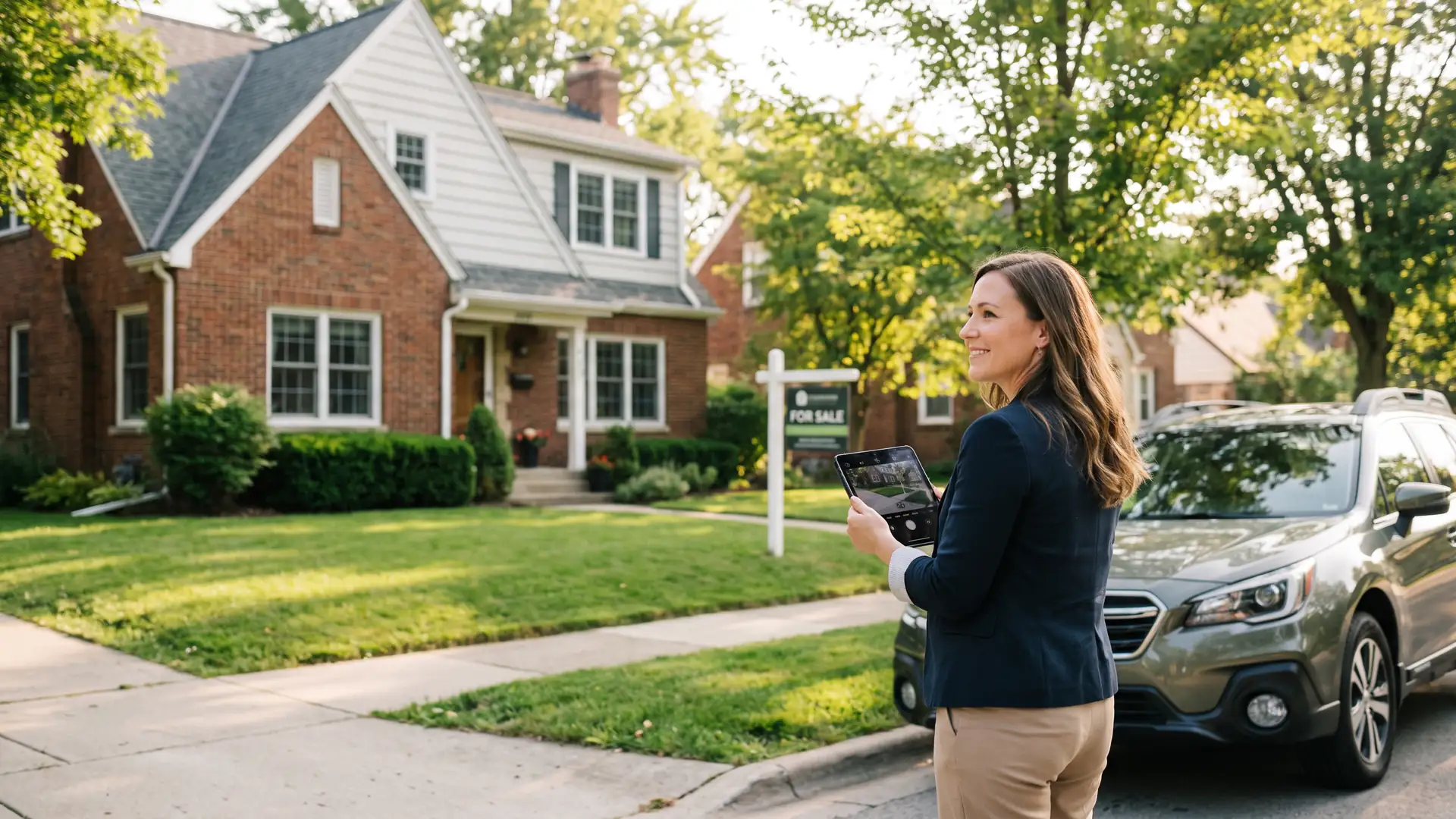
A drive-by appraisal is an exterior-only home valuation: a licensed appraiser inspects and photographs the property from the street, then estimates its value from comparable sales, MLS history, tax records and other public data instead of walking through the inside. It’s cheaper and faster than a full appraisal, the CFPB’s model Loan Estimate illustrates that full version at a $405 appraisal fee.
The catch is that you don’t pick it. Appraisal sits in Section B of your Loan Estimate, “Services You Cannot Shop For”. Your lender orders it, and loan program rules decide which report type your file is allowed.
Learn how a drive-by appraisal works, including what the appraiser evaluates, when lenders order one, and what to do when an exterior-only value comes in low. If you’re earlier in the process, start with our Home Buying guide.
Key takeaways:
- Exterior only, by design: A drive-by is the industry name for the Exterior-Only Inspection Residential Appraisal Report, legacy Form 2055, the appraiser values the home from the street and infers the interior from comps and public records.
- The savings come from the skipped walkthrough: Cutting the interior inspection is the entire cost and speed advantage; the CFPB’s model Loan Estimate prices a full appraisal at $405.
- Refinances get them, purchases usually don’t: Exterior-only reports show up on refinances with equity, home equity loans and portfolio reviews, while purchases almost always get the full Form 1004/Form 70 interior appraisal.
What is a drive-by appraisal?
A drive-by appraisal is a limited-scope appraisal in which a licensed or certified appraiser observes only the outside of a property, from the street, usually the sides and rear too, and develops an opinion of market value without entering the home. Its formal name is the Exterior-Only Inspection Residential Appraisal Report, Form 2055, a legacy Fannie Mae/Freddie Mac form that no longer appears in Fannie Mae’s current set of accepted appraisal report forms.
Everything the appraiser can’t see gets reconstructed from records: assessor data, MLS history, aerial imagery and third-party data feeds. So the report rests on an assumption, that the inside matches what the paperwork says. That assumption is the whole story of when a drive-by works and when it doesn’t. The Appraisal Institute’s professional resources and this industry explainer on drive-by appraisals cover the reporting distinctions.
Here’s how the two compare, and our guide to why home appraisals matter covers what the number does to your loan.
| Feature | Drive-by (exterior-only) | Full appraisal |
|---|---|---|
| Scope | Exterior only, from the street and around the property | Interior and exterior, walked and measured |
| Interior accuracy | Inferred from MLS history, tax records, prior photos | Observed firsthand, room by room |
| Report form | Legacy Form 2055, no exterior-only form in Fannie Mae’s current set | Fannie Mae Form 1004/Freddie Mac Form 70 (URAR) |
| Relative cost | Lower, smaller scope, no interior appointment | Higher, illustrated at $405 on the model Loan Estimate |
| Speed | Faster; nothing to schedule with the occupant | Slower; requires interior access |
| Typical use | Refinances with equity, home equity loans, portfolio reviews | Purchases, FHA loans, higher-priced mortgage loans |
Headed for the full version? Our walkthrough of the home appraisal process covers what happens inside.
How does a drive-by appraisal work, step by step?
A drive-by appraisal runs through five steps, and only one happens at the curb. The research on either side of that visit is where the value opinion gets built.
1. The lender orders the report and sets the scope
Your lender decides an exterior-only report is acceptable and orders it through an appraisal management company or approved appraiser panel. The order names the form and the intended use, which tells the appraiser they aren’t expected to get inside.
2. The appraiser pulls the property’s paper trail
Before the visit, the appraiser assembles the record: assessor and tax data, MLS history, prior listing photos, permits and aerial imagery. Technology has changed this step most, a drive-by leans on far richer digital records than a decade ago.
3. The appraiser inspects and photographs the exterior
The visit covers what’s visible: siding and trim, roof covering, windows, foundation and grading, driveway and garage, outbuildings and the lot itself. The appraiser photographs the front elevation and street scene, then flags anything contradicting the records, an addition missing from the tax card, undisclosed deferred maintenance.
4. The appraiser evaluates the neighborhood
Location does heavy lifting here. The appraiser assesses how well surrounding properties are maintained, the owner-occupied and rental mix, and external influences such as a commercial corridor, a busy road or a rail line.
5. The appraiser reconciles comparable sales into a value
The report closes the way a full appraisal does: recent closed sales of similar nearby homes, adjusted for size, age, condition and features, reconciled into one conclusion. The difference is that condition adjustments are inferred, not observed.
When do lenders order a drive-by appraisal instead of a full one?
Lenders order exterior-only reports on lower-risk files, where the interior has less bearing on the decision and the borrower already holds meaningful equity. Purchases are the opposite case.
- Refinances with substantial equity: A rate-and-term refinance at a conservative loan-to-value ratio is the classic candidate. Our guide to refinance appraisal requirements covers which valuation types each program accepts.
- Home equity loans and lines of credit: Second-lien products carry less exposure than a first mortgage, so many lenders accept a reduced-scope valuation.
- Modifications and portfolio reviews: A servicer restructuring a loan, or a lender revaluing collateral it already holds, needs a defensible number, not a full inspection.
Where an exterior-only report isn’t allowed
Two hard limits sit above lender preference. First, for a higher-priced mortgage loan, Regulation Z requires the creditor to “obtain a written appraisal performed by a certified or licensed appraiser who conducts a physical visit of the interior of the property.” That rule exempts qualified mortgages and loans at or below $34,200 in 2026, so it doesn’t reach every file, but where it applies, no exterior-only report satisfies it.
Second, program rules. FHA’s acceptable reporting form for a single-family home is the Form 1004/Form 70 URAR, and the FHA appraiser must observe attic interiors, operate the heating and electrical systems, flush the toilets and run a sample of faucets. None of that happens from the curb.1
The format also isn’t where the industry is heading. Fannie Mae’s current appraisal report forms include no exterior-only option at all. Today’s reduced-scope menu is the Form 1004 Desktop, the Form 1004 Hybrid, and value acceptance plus property data, where a trained and vetted collector walks the interior and exterior with a handheld app and no appraisal is required. A route that isn’t available once the purchase price or estimated value reaches $1,000,000. The trend is toward getting someone inside cheaply, not staying outside.
Pros and cons of a drive-by appraisal
The trade is simple: you give up interior accuracy to save money and time. Whether that’s a good trade depends on whether the inside of the home matches its records.
Pros
- Lower cost: Less scope means a smaller fee than the full-inspection version the model Loan Estimate illustrates at $405.
- Faster turnaround: No appointment to schedule with an occupant, which removes the most common source of appraisal delay.
- No access needed: It’s the practical answer for vacant properties, tenant-occupied rentals and owners who can’t take time off.
Cons
- Interior condition is an assumption: The appraiser infers condition from records that may be years out of date.
- Renovations get missed: Improvements that never generated a permit or listing photo are effectively invisible, which undervalues updated homes.
- Hidden problems get missed too: A failing furnace or water damage can leave the value overstated.
- Limited acceptance: Most purchase programs, FHA loans and higher-priced mortgage loans won’t take one.
The undervaluation risk is worth doing math on. Say you spent $40,000 on a kitchen and bath remodel that produced no permit record or listing photo. An exterior-only report could support $285,000 on a home a full appraisal would have valued at $300,000, a $15,000 gap that flows into your loan amount, your loan-to-value ratio and your mortgage insurance.2
If a value lands low, you have moves: our guides to appealing a low appraisal and refinancing with a low appraisal cover reconsideration of value and what to do when the number won’t move.
How to prepare for a drive-by appraisal
You get one real lever with an exterior-only report: documentation, delivered before the appraiser writes it.
- Send proof of interior work: Give your loan officer dated photos, invoices, permits and a list of improvements with costs and dates. It’s the only way a renovated interior gets counted.
- Clean up what’s visible: Mow, trim, clear the driveway and fix obvious exterior defects. The appraiser is grading curb appeal and photographing it.
- Offer your own comps: Recent nearby sales you think are the closest matches are fair to submit through your lender. The appraiser isn’t obligated to use them, but they get considered.
- Ask which report you’re getting: Exterior-only, desktop, hybrid or full, and whether a full appraisal is available if you’d rather pay for accuracy.
- Read the report when it arrives: On a first-lien loan secured by your home, Regulation B requires a free copy of each appraisal and written valuation “promptly upon completion, or three business days prior to consummation,” whichever is earlier.
The same logic applies whichever report you get, our guide to preparing for a home appraisal covers the interior side, and the home buying process guide shows where valuation falls.
How Align moves your purchase to the closing table
Over the last 12 months, Samantha's loans averaged under 14 days from application to clear to close, across more than 100 loans. Your closing date is set by your purchase agreement. Her job is to have your loan ready well before it.
She handles your file herself, with a processor supporting her behind the scenes. You always know who to call, and the person who answers knows your goals.
Build your homebuyer game plan
Sources: Align Lending loan records, 12 months to October 2026.
FAQ: Drive-by appraisals
Here are answers to common questions about drive-by appraisals.
What is the difference between a drive-by appraisal and a full appraisal?
A full appraisal includes an interior and exterior inspection, the appraiser walks every room, measures the home and notes condition and upgrades firsthand. A drive-by covers only the exterior; interior details come from MLS listings, tax records and prior photos. Full appraisals are more accurate and cost more, while drive-bys trade precision for speed, see our guide to the home appraisal process.
When would a lender use a drive-by appraisal?
Lenders typically order drive-by appraisals for lower-risk situations: refinances where the borrower has substantial equity, home equity loans and lines of credit, loan modifications, and portfolio reviews. Standard purchase mortgages usually require a full appraisal. The lender, not the borrower, decides which type is acceptable, based on loan program rules and risk; our guide to refinance appraisal requirements has the details.
Are drive-by appraisals accurate?
They’re reasonably reliable when public records are current and the home’s interior matches those records, but accuracy suffers when it doesn’t. A recently renovated kitchen the appraiser can’t see may be missed, undervaluing the home, while hidden interior damage can lead to overvaluation. If you’ve made significant improvements, send documentation and photos to your lender first, and know how to appeal a low appraisal.
Can I request a full appraisal instead of a drive-by?
You can ask, and it’s often smart if you’ve upgraded the interior since your home’s last sale. Tell your lender you believe an exterior-only report will miss value, and ask whether a full appraisal is available for your loan program. You’ll typically pay the higher fee, but a more accurate value can mean better terms or a bigger approved amount, start by preparing for a home appraisal.
The bottom line on drive-by appraisals
A drive-by appraisal is an exterior-only valuation, known in the industry by the legacy Form 2055: the appraiser inspects the home from the street and infers the interior from comparable sales, MLS history and public records. It’s cheaper and faster than the full interior appraisal the CFPB’s model Loan Estimate illustrates at $405, and that discount buys real accuracy risk. A renovated interior can go uncounted, a deteriorating one unnoticed. Your lender picks the report, and the rules are narrow: purchases, FHA loans and higher-priced mortgage loans all call for the full version.
If you’re ready to refinance or tap your equity and want to know which appraisal your loan will actually require, talk to Align Lending, we’ll shop your scenario across our lender network and show you the valuation requirements and the pricing side by side. Call 248-506-5727 or start online today.
Footnotes:
1. Align Lending is not acting on behalf of or at the direction of FHA or HUD. FHA appraisal reporting forms and appraiser observation requirements are set by HUD in Handbook 4000.1 and are subject to change. FHA permits an exterior-only report only in the narrow servicing and real-estate-owned situations the handbook identifies. Return to text.
2. Example figures are hypothetical and for educational purposes only; they do not constitute an advertisement of credit terms or a rate quote under federal or state lending laws. Your appraised value, loan amount, loan-to-value ratio, and mortgage insurance requirement depend on your application, the property, the completed appraisal, and market conditions. Return to text.
Sources: appraisal fee of $405 shown under Section B, “Services You Cannot Shop For,” on the Consumer Financial Protection Bureau’s model Loan Estimate, an illustrative model form, not a market average. Requirement that a creditor obtain a written appraisal performed by a certified or licensed appraiser who conducts a physical visit of the interior of the property for higher-priced mortgage loans, and the exemptions for qualified mortgages and for loans at or below $34,200 from January 1, 2026 through December 31, 2026, Regulation Z, 12 CFR § 1026.35(c). Requirement to provide a free copy of each appraisal or other written valuation promptly upon completion, or three business days prior to consummation, whichever is earlier, on applications for credit secured by a first lien on a dwelling, Regulation B, 12 CFR § 1002.14(a)(1). Name and form numbers of the Exterior-Only Inspection Residential Appraisal Report (Fannie Mae Form 2055/Freddie Mac Form 2055), FHA acceptable appraisal reporting forms, and FHA appraiser observation requirements, U.S. Department of Housing and Urban Development Handbook 4000.1. Current Fannie Mae appraisal report forms, including Form 1004 Desktop and Form 1004 Hybrid, Fannie Mae Selling Guide B4-1.2-01. Value acceptance plus property data requirements, including property data collection by a trained and vetted property data collector and ineligibility when the purchase price or estimated value is $1,000,000 or more, Fannie Mae Selling Guide B4-1.4-11. Absence of an exterior-only report form from Fannie Mae’s current appraisal report forms, Fannie Mae Selling Guide B4-1.2-01.
This article is for informational purposes only and is not intended to provide legal, financial, or tax advice. Appraisal type, valuation requirements, and program eligibility are determined by the lender and the loan program, and lenders in Align’s network may apply their own overlays. Consult a qualified professional about your situation. Figures shown are illustrative, are not a rate quote or an offer of credit, and are subject to change. Align Lending is an independent Michigan mortgage broker, NMLS #2041154.
Related resources
12-minute read
The Home Appraisal Process: What to Expect
Learn how the home appraisal process works, from the lender’s order to the final report, including typical costs of $300-$1,500 and what appraisers check.
12-minute read
Home inspection checklist for buyers: What to look for room by room
See the complete home inspection checklist for buyers, from foundation to attic, so you can spot costly problems before you close on your next home.

12-minute read
How to prepare for a home closing: your step-by-step checklist
Learn how to prepare for a home closing with a step-by-step timeline, documents to bring, and final walk-through tips for a smooth closing day.
