
The Foreclosure Process: What Home Buyers Should Know
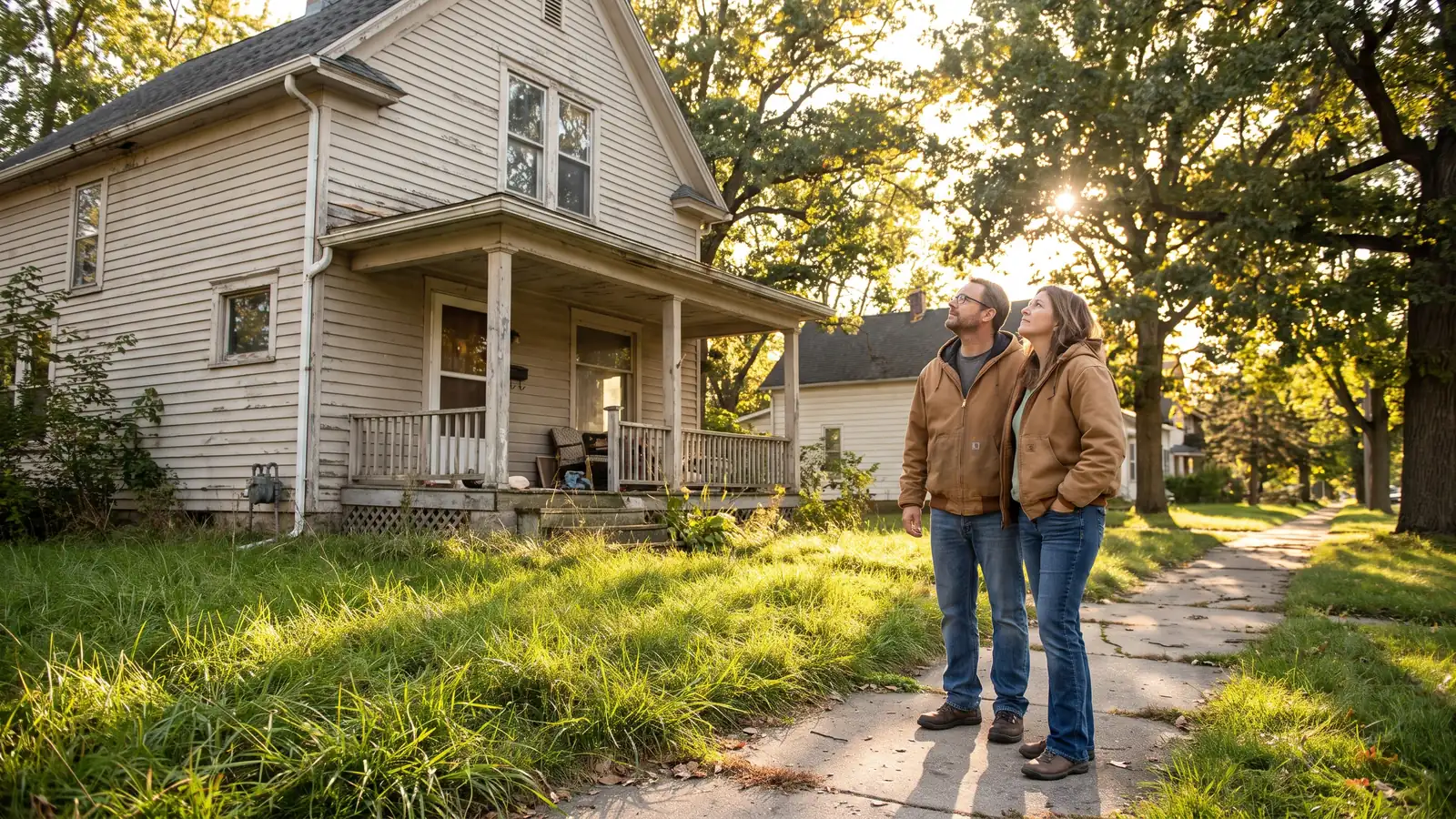
The foreclosure process typically moves through six phases, payment default, notice of default, notice of sale, the foreclosure sale, bank ownership (REO) and eviction, though the steps and their names vary by state. Under federal servicing rules a loan is delinquent the day a payment comes due and goes unpaid, but a servicer generally cannot make the first foreclosure notice or filing until the borrower is more than 120 days delinquent.
For a buyer, that timeline is a map of entry points: before the sale, at the auction, or after it as a bank-owned listing. Learn more about the foreclosure process, including the six stages in order, how the three buying routes compare, and the due diligence that keeps a hidden lien or an occupied house from becoming yours.
Key takeaways:
- Six phases, and the clock starts late: Foreclosure runs through payment default, notice of default, notice of sale, the sale, REO status and eviction, and federal rules generally keep a servicer from filing that first notice until a borrower is more than 120 days delinquent.
- Two practical ways in: Buyers can purchase foreclosures at auction or as bank-owned (REO) properties, and REO purchases usually allow inspections and ordinary mortgage financing while auctions often allow neither.
- Two protections do most of the work: A professional home inspection and a full title search matter most, because foreclosed homes frequently need significant repairs and may carry liens that survive the sale, and in Michigan a sheriff’s-sale buyer usually waits out a 6-month redemption period before taking possession.
What is foreclosure?
Foreclosure is the legal process a lender uses to take ownership of a home after the borrower stops paying the mortgage, so the property can be sold to recover what’s owed. The home is the collateral; foreclosure turns it back into cash.
Homes enter foreclosure for ordinary reasons: job loss, medical bills, divorce, a tax or insurance increase. That matters to a buyer, because deferred maintenance shows up long before it shows up in listing photos.
Two federal timing rules shape everything. A borrower is delinquent starting the day a payment covering principal, interest and escrow becomes due and unpaid. But a servicer generally may not make the first notice or filing required for a foreclosure until that borrower is more than 120 days delinquent.
Foreclosure is slow at the front and fast at the back. Fold that pacing into the wider home buying guide and your own home buying process timeline.
What are the six stages of foreclosure?
The six stages run from one missed payment to removal of the occupant, and a buyer can enter at stage 3, 4 or 5. Names differ by state, a “trustee’s sale” elsewhere is a “sheriff’s sale” in Michigan, but the sequence holds.
- Payment default: The borrower misses a payment and the loan is delinquent that day. A late fee follows the grace period, and the delinquency is reported at 30 days past due.
- Notice of default: After the loan passes 120 days delinquent, the servicer issues the first formal notice state law requires. The property starts appearing on pre-foreclosure lists.
- Notice of sale: The lender publishes and posts notice that the property will be sold, naming the date, the location and the amount claimed due.
- The foreclosure sale: The home sells at public auction to the highest bidder, usually for certified funds due the same day. If nobody outbids the lender’s credit bid, the lender takes it back.
- Real estate owned (REO): The lender owns the home and lists it as-is through an agent or asset manager. This is the stage most buyers can finance.
- Eviction: If former owners or tenants remain, the new owner must remove them through the courts. An occupied foreclosure is a legal project, not a fixer-upper.
How can you buy a foreclosed home?
There are three entry points, and they differ more on inspection rights and financing than on price. Pre-foreclosure is slowest and most negotiable, auctions are cheapest and riskiest, and bank-owned listings are the route most financed buyers use.
| Feature | Pre-foreclosure / short sale | Foreclosure auction | Bank-owned (REO) |
|---|---|---|---|
| Typical pricing | Near market, discounted for condition | Lowest, often set by the credit bid | Below comparable listings, as-is |
| Inspection rights | Full access, normal contingency | Usually none, exterior only | Usually allowed, for information |
| Financing | Conventional, FHA, VA, renovation | Cash or hard money, settled in days | Conventional, FHA, VA, renovation if condition allows |
| Typical timeline | 60 – 120 days for lender approval | Days, funds due at the sale | 30 – 60 days |
| Title and lien risk | Resolved before closing | Highest, surviving liens | Lowest, lender clears liens first |
Pre-foreclosure and short sales
A pre-foreclosure home is one where default has been noticed but the sale hasn’t happened, so the homeowner still owns it and can still sell. When the balance owed exceeds what the home will bring, it becomes a short sale and the lender’s loss-mitigation department must approve the price. Which is why short sales commonly run 60 – 120 days. Our guide to buying distressed properties covers how to find them, and short sales vs. foreclosures for buyers covers which fits a deadline.
The foreclosure auction
Auctions usually require certified funds the same day and give you no inspection, no appraisal contingency and no financing window. You’re buying a property you’ve seen only from the street, which is why auction buyers are typically investors who price repairs from the curb. Read how to purchase a home at auction first, and know what a genuine cash offer requires.
Bank-owned (REO) homes
An REO home is one the lender took back because nobody outbid it, and it’s the version most owner-occupants can use. The lender has usually cleared junior liens, secured the property and listed it with an agent, so you get a normal purchase agreement, a normal closing and, in most cases, the right to inspect. Expect an as-is sale and lender addenda that limit your remedies, our walkthrough of how to buy a foreclosed home covers the offer mechanics.
Government REO works differently. When an FHA-insured loan forecloses, the property can become a HUD Home, and HUD lists those to owner-occupants, governmental entities and HUD-approved nonprofits exclusively for the first 30 days before investors can bid. If you plan to live there, that window is a real edge. HUD’s guidance on buying a home explains how those listings work.
What due diligence do foreclosure buyers need?
Four checks do most of the work: title, liens, occupancy and condition. Run all four inside your inspection period, commonly 7 to 14 days in Michigan, because that’s the last stretch where walking away is free.
- Order a full title search: A foreclosure sale generally wipes out liens junior to the foreclosing mortgage, but property tax liens, municipal assessments, delinquent association dues and senior liens can survive it. Get written payoffs from the treasurer and the association, and remember that choosing your title company deserves more than five minutes here.
- Ask about federal tax liens: When a federal tax lien attaches to property sold at a non-judicial foreclosure, the government keeps a right to redeem for 120 days from the sale or the state redemption period, whichever is longer.
- Verify occupancy before you write: A foreclosure with someone still living in it is a legal proceeding you inherit, and evictions cost money and months. Confirm in writing who delivers the property vacant.
- Inspect even on an as-is sale: As-is means the seller won’t make repairs, not that you shouldn’t look. Work from a written home inspection checklist, then translate findings into dollars, reading a home inspection report separates cosmetic items from structural ones.
- Price what vacancy does: Burst pipes, mold from a dead sump pump, stripped copper and HVAC, and a roof that leaked all winter are the standard Michigan vacancy list. Ask whether utilities can be turned on for the inspection; if not, budget for the systems you couldn’t test.
The CFPB’s home-buying tools and resources cover the closing-document side, which matters more here because so much of the usual seller disclosure is missing.
How do you finance a foreclosure purchase?
Bank-owned homes can generally be financed with conventional, FHA, VA or renovation loans, and the deciding question is rarely your credit, it’s whether the property meets the program’s condition standards. Auctions are the exception: cash or hard money.
Standard loans on REO homes
A conventional loan on a habitable REO home works like any other purchase: the appraisal supports the value, the property is safe and sound, and you close in 30 to 45 days. Government programs add a condition screen. FHA appraisals apply minimum property requirements built around safety, security and soundness, so peeling lead-based paint on a pre-1978 home, a missing furnace or an unsafe panel can stop the loan until it’s corrected.1 VA loans work the same way through requirements the VA summarizes as safe, sound and sanitary.2
Renovation financing when the home won’t pass as-is
That condition screen is the most common reason a financed offer on a foreclosure falls apart. When the seller is a bank that won’t repair, the answer is a renovation loan: these roll the purchase price and repair budget into one mortgage, underwritten against the home’s as-completed value.
- FHA 203(k): Under FHA’s 2024 revisions the Limited 203(k) allows rehabilitation costs up to $75,000 and a nine-month rehab period, for non-structural work, kitchens, baths, roofs, mechanicals. The Standard 203(k) handles structural work with a consultant. The benefits of FHA 203(k) loans cover which version fits which house, and HUD’s FHA loan programs, including 203(k) renovation financing, set out the rules.
- Fannie Mae HomeStyle Renovation: The conventional alternative, with broader eligible improvements. On a purchase, renovation funds are capped at 75% of the lesser of purchase price plus renovation costs or the as-completed value. See what a HomeStyle renovation loan is for draw rules.
Here’s the math. Say a bank-owned ranch in Waterford lists at $180,000 and needs $45,000 of roof, furnace and kitchen work. A Limited 203(k) covers that outright, under the $75,000 ceiling. HomeStyle tests it differently: 75% of $225,000, price plus repairs, is $168,750, far above the repair budget, so the project clears.3 Our overview of financing home renovations covers what to do when neither fits.
Because Align is a broker, we can place a 203(k) or HomeStyle file with the lender whose renovation department actually wants it. Across Align Lending’s network of wholesale lenders, renovation appetite varies more than pricing.
What Michigan buyers should know
Michigan handles most foreclosures by advertisement, a non-judicial process, then adds a statutory redemption period that decides when you actually get the keys.
- Notice runs four weeks, then gets posted: The foreclosure notice must be published once a week for four successive weeks in a county newspaper, with a copy posted in a conspicuous place on the premises within 15 days after the first publication.
- The sale is a sheriff’s sale at the circuit court: Sales are held at the circuit court in the county where all or part of the property sits, between 9 a.m. and 4 p.m.
- Redemption is six months on most owner-occupied homes: On residential property of four units or fewer, redemption runs six months from the sale when more than two-thirds of the original debt was still owed at the notice of foreclosure. Where no shorter period applies, it runs a year. If the lender establishes abandonment under Michigan’s notice procedure, it can drop to 30 days.
- No possession on sale day: A sheriff’s-sale deed doesn’t become operative until redemption expires, and the former owner may stay in the home during that window. Buying at a Michigan sheriff’s sale means buying a six-month wait, which is why most owner-occupants wait for the REO listing. The broader set of buying strategies and situations covers how that timing changes an offer.
How Align fits your buying strategy
Local real estate agents bring Samantha in for a second opinion when their buyer arrives preapproved somewhere else. She regularly finds a lower rate or less cash to close, whichever helps the buyer more.
That comes from the broker model. One application goes to multiple wholesale lenders, so your offer is built on the loan that fits your situation, not the only one a single bank sells. A 2024 Polygon Research analysis of federal mortgage data found broker borrowers paid about $10,662 less over the life of a $400,000 loan than borrowers at nonbank retail lenders.
FAQ: Buying a home in foreclosure
Here are answers to common questions about the foreclosure process.
How long does the foreclosure process take?
It depends on the state and the type of foreclosure. Federal rules generally prevent servicers from starting foreclosure until a borrower is more than 120 days delinquent, and the process can take several more months. In Michigan, most foreclosures happen by advertisement rather than through the courts, followed by a redemption period, typically six months on owner-occupied homes, during which the former owner can reclaim the property. Check the state-specific home buying regulations where you shop.
Is buying a foreclosed home cheaper than a regular home?
Often, yes. Foreclosed homes are usually priced below comparable market listings because lenders want to sell quickly and the properties are sold as-is. However, repair costs can erase the discount entirely. Budget for an inspection when possible, estimated renovations and a contingency fund, then compare the all-in number against move-in-ready homes, the arithmetic behind the advantages of buying a fixer-upper.
Can you get a mortgage to buy a foreclosure?
Yes, in many cases. Bank-owned (REO) homes can typically be financed with conventional, FHA, VA or renovation loans if the property meets minimum condition standards. Auction purchases usually require cash or very fast private financing. If the home needs major repairs, a renovation mortgage rolls the purchase price and repair budget into one loan, start with what a renovation loan is.
What are the risks of buying a foreclosed home?
The biggest risks are unknown condition, hidden liens and occupied properties. Auction buyers often cannot inspect first, and foreclosures may sit vacant and deteriorate through a Michigan winter. Always run a title search, verify occupancy and budget for repairs. Buying REO is slower but gives you inspection rights and a clearer title, backed by a policy, which is exactly why title insurance is important here.
The bottom line on buying a foreclosure
The foreclosure process runs through six phases, payment default, notice of default, notice of sale, the sale, REO status and eviction, and federal servicing rules generally keep a servicer from filing that first notice until the borrower is more than 120 days delinquent. Buyers can enter before the sale, at the auction, or after it as an REO purchase, and only the last is realistic for most financed buyers. Auctions mean cash, no inspection, and in Michigan a six-month redemption wait. REO gives you an inspection, a title policy and access to FHA, VA, conventional and renovation financing.
Price the repairs before you price the discount. If you’re ready to buy a foreclosure without guessing at the financing, talk to Align Lending. We’ll shop your scenario across our lender network, including as-is and renovation programs, and show you the numbers side by side. Call 248-506-5727 or start online today.
Footnotes:
- Align Lending is not acting on behalf of or at the direction of FHA or HUD. Program requirements are set by FHA and subject to change. Return to text
- Align Lending works with VA-approved lenders and is not endorsed or sponsored by the Dept. of Veterans Affairs or any government agency. Return to text
- Example figures are hypothetical and for educational purposes only; they do not constitute an advertisement of credit terms or a rate quote under federal or state lending laws. Your eligibility and terms depend on your application, the property and market conditions. Return to text
This article is for informational purposes only and is not intended to provide legal, financial, or tax advice. Foreclosure law varies by state and changes over time; consult a qualified attorney about your situation. Figures shown are illustrative, are not a rate quote or an offer of credit, and are subject to change. Align Lending is an independent Michigan mortgage broker and is not endorsed or sponsored by FHA, HUD, the Department of Veterans Affairs, Fannie Mae, or any government agency.
Related resources

11-minute read
How to create a competitive offer on a house in a seller’s market
Learn how to create a competitive offer on a house, from preapproval and pricing to contingencies and appraisal gap coverage, and win in a hot market.

12-minute read
Advantages of buying a fixer-upper: 7 key benefits (and the tradeoffs)
Discover the advantages of buying a fixer-upper, from lower prices and less competition to renovation loans that roll repair costs into your mortgage.

12-minute read
Guide to Negotiating a Home Purchase
Learn proven strategies for negotiating a home purchase, from using inspection findings and seller concessions to crafting offers that win without overpaying.
