
Buying a home for aging in place: Features and planning that pay off
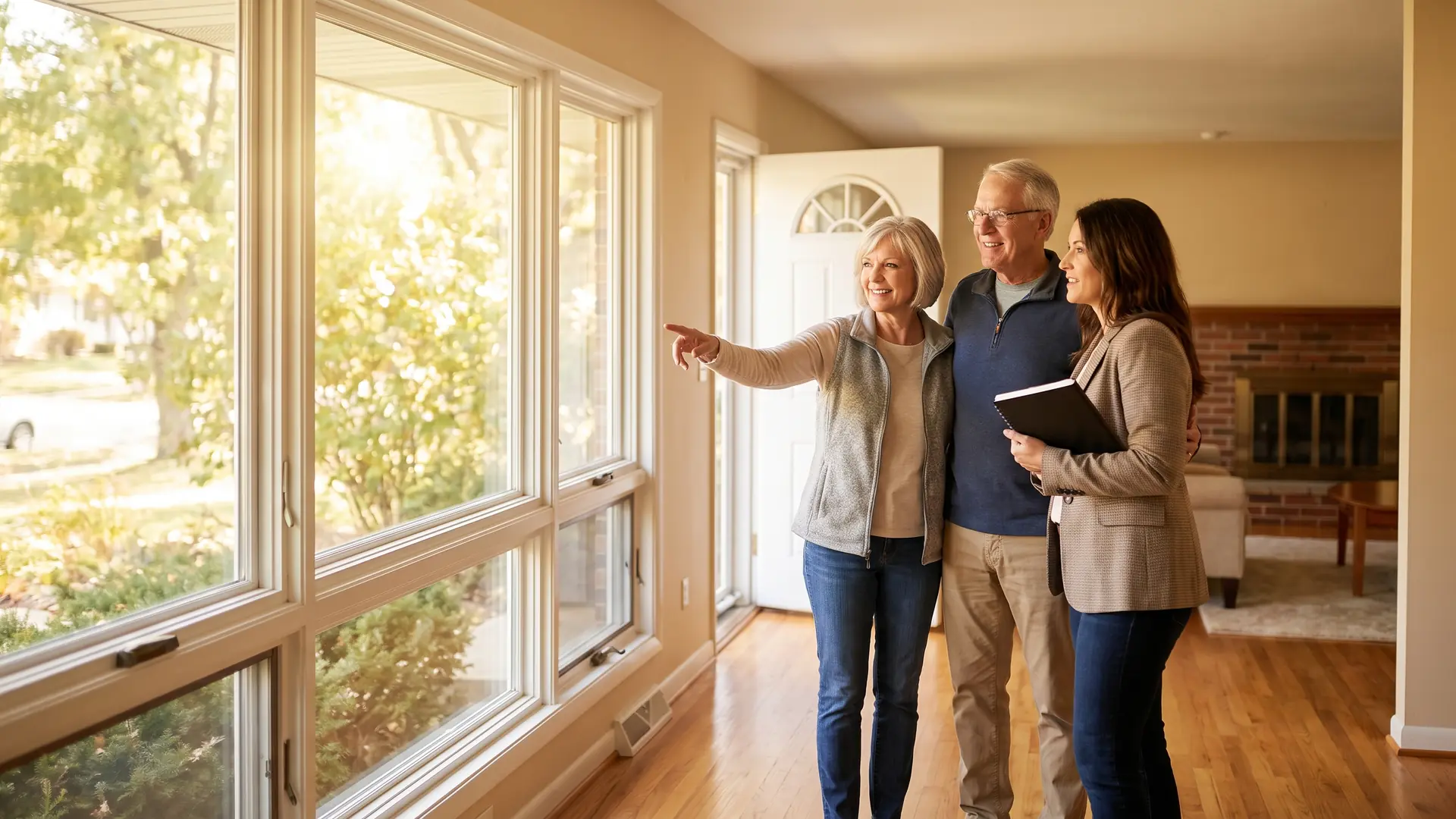
Buying a home for aging in place means choosing a house you can live in safely and independently as your mobility needs change, and the demand for those homes is enormous. The U.S. Census Bureau projects that by 2030, when the entire baby boom generation is past 65, 1 in every 5 U.S. residents will be retirement age. The features that matter most are single-level living with a main-floor bedroom and laundry, a zero-step entry, doorways wide enough for a walker or wheelchair, a walk-in shower, and lever-style hardware.
Buying age-ready now is almost always cheaper than retrofitting later, and it protects both your independence and your home’s future resale appeal. Learn more about buying a home for aging in place, including which features actually matter, what the retrofit alternative costs, and how to finance either the purchase or the modifications.
Key takeaways:
- Structure beats finishes: Aging in place starts with the bones of the house, single-level living, a zero-step entry, a main-floor bathroom, and circulation space wide enough to matter, meaning at least 32 inches of clear width at a door opening and 36 inches along a hallway.
- Buying age-ready usually costs less than retrofitting: Structural projects like widening doorways or adding a first-floor suite can run into tens of thousands of dollars, and a stair lift alone can reach $15,000 before installation.
- Location is a feature too: Weigh proximity to healthcare, transportation, and everyday services alongside the home itself, because a perfect floor plan 40 minutes from your cardiologist is not a plan for independence.
What does buying a home for aging in place mean?
Buying a home for aging in place means selecting a house whose structure will still work for you in 20 years. When reaching, climbing, and balancing are all harder than today. It’s a structural decision, not a decorating one. Countertops can be changed in a weekend; a staircase between you and your bedroom cannot.
The safety case is the strongest argument for buying age-ready. According to the Centers for Disease Control and Prevention, more than 14 million adults, about 1 in 4 people age 65 and older, report falling each year, driving roughly 3 million emergency department visits annually. Home hazards sit on the CDC’s list of modifiable risk factors, and modifications such as grab bars are among the interventions shown to reduce falls.
The purchase moment is the cheapest moment to solve this. You’re already paying closing costs, already moving, already comparing houses, so screening for a zero-step entry costs nothing but attention. The Home Buying guide walks the full sequence, and the market backdrop is covered in our look at the impact of aging populations on housing markets.
One honest caution: an age-ready home isn’t a medical plan. It’s the physical layer under one. Here’s what to look for.
What should you look for in an aging-in-place home?
Screen for five things, in this order: level access from the car to the door, everything you need on one floor, doorways and halls wide enough for a walker, a bathroom usable from a seated position, and hardware you can work with a closed fist. Everything else is preference.
Single-level living
A main-floor bedroom, full bathroom, kitchen, and laundry on the entry level is the single highest-value feature in the list. A true ranch delivers it automatically; a two-story with a first-floor primary suite delivers most of it. Check the laundry specifically. A basement laundry is a common reason an otherwise perfect house fails, and moving the hookups up means plumbing, venting, and electrical work.
Entries, doorways, and hallways
At least one zero-step entrance from a driveway, garage, or covered porch keeps the house usable on an icy February morning or after a knee replacement. The Americans with Disabilities Act doesn’t govern a private home, but its dimensions are the benchmark builders design to: door openings need 32 inches of clear width minimum, and an accessible walking route needs 36 inches. In practice, a 36-inch door slab is how you get 32 inches of clear opening, and 36-inch hallways are the floor, not the goal. Our guide to Accessibility Features in Modern Homes covers how newer construction handles this.
A bathroom that works seated
Look for a curbless or low-threshold walk-in shower with room for a bench, blocking in the walls for grab bars, a comfort-height toilet, and lighting bright enough to read a prescription label. The bathroom you can enter with a walker and use seated is the room that decides whether the house works long-term.
Kitchen and everyday reach
The kitchen test is simple: how much of what you use daily sits between knee and shoulder height? Pull-out shelves, drawer bases instead of deep lower cabinets, a wall oven, and a cooktop with front controls remove reaching over heat and bending into dark cabinets. Lever handles, rocker switches, and loop-style pulls cost little and work for hands that can’t grip.
The lot and the exterior
Low-maintenance siding, a roof and mechanicals with years left, a manageable yard, and a flat driveway answer the same question: how much of this property can you still maintain yourself? AARP’s aging-in-place tips make a useful second checklist to bring to a showing.
Buy age-ready vs. retrofit later: what each path really costs
The dividing line is structural versus cosmetic. Anything that only involves hardware or fixtures is cheap to add later and should never drive your buying decision. Anything that moves walls, plumbing stacks, or floor levels is expensive enough that you should buy it rather than build it.
| Feature | Why it matters | Adding it after you buy |
|---|---|---|
| Zero-step entry | The first and most frequent barrier; it fails in ice and snow before anywhere else. | Moderate. A ramp is the common fix, the National Council on Aging cites an average ramp installation cost of $1,110, but grading, landing space, and permits vary by lot. |
| Main-floor bedroom and full bath | Removes the staircase from your daily routine entirely. | High. A first-floor suite means framing, plumbing, and often a foundation change, the classic tens-of-thousands project. |
| Stair access on a two-story | The alternative when a main-floor suite isn’t possible. | High. The National Council on Aging notes stair lifts can cost as much as $15,000 before installation, which sometimes requires structural or electrical upgrades. |
| 32-inch clear doorways | Determines whether a walker or wheelchair can pass at all. | High per opening. Framing, drywall, trim, and flooring, and if the wall is load-bearing or carries plumbing, the cost climbs sharply. |
| Curbless walk-in shower | Removes the highest-risk step in the house. | Moderate to high. A tub-to-shower conversion is routine; a true curbless pan means altering the subfloor and drain. |
| Grab bars, lever handles, lighting | Meaningful fall-risk reduction for very little money. | Low. Afternoon projects. Never pass on a structurally right house because it lacks them. |
Read that table as a buying filter: two houses at the same price are not the same house if one already has the top four rows. If the retrofit math on your current home comes back ugly, moving is a legitimate answer, Downsizing Your Home: Tips for a Smooth Transition covers selling instead of remodeling. Either way, get a written contractor bid; it beats any national average.
Beyond the floor plan: technology, location, and competition
Once the structure passes, three softer factors decide how well the house actually serves you.
- Smart-home tools that reduce trips and risk: Voice-controlled lighting, a video doorbell, smart locks, a leak sensor, and a smart thermostat each remove a small daily hazard, getting up in the dark, answering the door, checking the basement. They’re cheap add-ons, not reasons to buy a house.
- Proximity to care and services: Map the drive to your doctor, the specialists you actually see, a pharmacy, and a grocery store. Then ask the harder question: does this location still work on a day you can’t drive? Transit and walkable services turn a good house into a durable plan, and some buyers solve proximity by buying with family outright.
- Community and support: The Administration for Community Living resources for older adults point to the network most buyers don’t know exists, Area Agencies on Aging, which coordinate meals, transportation, and in-home support county by county. The Eldercare Locator (1-800-677-1116) finds yours.
- A condo or association community: It moves snow and lawn care off your list, at the cost of a monthly fee and a project review your lender runs before approving the unit.
One market reality worth planning around: well-located single-story homes are the most competitive segment of this search, because downsizing buyers, first-time buyers, and investors chasing senior housing demand all want the same ranch. Our breakdown of Escalation Clauses: What They Are and How They Work explains one tool for that fight, and the broader Buying Strategies & Situations hub covers the rest. Set your ceiling before the bidding starts.
How to finance an age-ready home or the modifications it needs
You have four distinct paths, and the right one depends on whether you’re buying, renovating, or tapping equity you already have.
- A standard purchase mortgage: Buy the house that already has the features and skip the renovation. Age itself is not a qualifying factor, the Equal Credit Opportunity Act makes it illegal for a lender to deny you credit because of your age, and Social Security, pensions, and documented retirement-account drawdowns all count as qualifying income.
- A renovation loan that finances the work into the mortgage: FHA’s 203(k) Rehabilitation Mortgage Insurance Program finances a purchase and the renovation in a single loan, and HUD explicitly lists creating accessibility for persons with disabilities as an eligible improvement.1 Conventional renovation products through lenders in Align’s network do the same thing. Most buyers don’t know this option exists.
- Equity you already have: A cash-out refinance, home equity loan, or HELOC can fund modifications on a home you own. Fannie Mae’s guidelines require at least one borrower to have been on title six months before the new loan disburses, and any first mortgage being paid off must be at least 12 months old, so cash-out isn’t available right after closing.
- A HECM reverse mortgage: HUD’s Home Equity Conversion Mortgage is available to borrowers age 62 and older on a principal residence, requires counseling from a HUD-approved agency, and eliminates the monthly principal-and-interest payment.2 It isn’t free money: you still keep property taxes and homeowner’s insurance current, and failing to do so can put the loan in default. Read how reverse mortgages work and Foreclosure Process: What Home Buyers Should Know first, then what happens later when selling a home with a reverse mortgage.
Grant and assistance programs sit underneath all of that. USDA’s Section 504 Home Repair program makes lifetime grants of up to $10,000 to very-low-income homeowners age 62 and older in eligible rural areas, and can combine loans and grants up to $50,000. HUD’s Older Adults Home Modification Grant Program funds low-cost, high-impact modifications through state and local governments, nonprofits, and housing authorities. If you’re 60 or older, your Area Agency on Aging may have repair funds under Title III of the Older Americans Act, and Habitat for Humanity’s Aging in Place program does repairs in many communities. A free counselor through HUD’s housing counselor lookup can help you sort out which you qualify for.
Because Align is an independent broker rather than a direct lender, we can place a renovation loan that finances the accessibility work through partner lenders even though many retail banks don’t offer one, and price it against a straight purchase on the same file.
One more structure worth considering: buying with an adult child or sibling solves affordability and proximity at once, and creates real legal entanglement. Read Co-Buying a Home with Family or Friends before anyone signs, because every borrower on the note is fully liable for the whole payment.
How Align fits your buying strategy
Local real estate agents bring Samantha in for a second opinion when their buyer arrives preapproved somewhere else. She regularly finds a lower rate or less cash to close, whichever helps the buyer more.
That comes from the broker model. One application goes to multiple wholesale lenders, so your offer is built on the loan that fits your situation, not the only one a single bank sells. A 2024 Polygon Research analysis of federal mortgage data found broker borrowers paid about $10,662 less over the life of a $400,000 loan than borrowers at nonbank retail lenders.
FAQ: Buying a home for aging in place
Here are answers to common questions about buying a home for aging in place.
What features should I look for in a home for aging in place?
Prioritize single-level living or at least a main-floor bedroom, full bathroom, and laundry; a zero-step entrance; doorways with at least 32 inches of clear width, which usually means a 36-inch door; a walk-in shower with room for grab bars; lever door handles; good lighting; and low-maintenance exterior materials. A manageable lot, an open floor plan, and proximity to healthcare and services round out the list. Our guide to accessibility features in modern homes shows how newer builds handle each one.
Is it cheaper to buy an age-ready home or remodel my current one?
Buying age-ready is usually cheaper when your current home needs structural work. Adding a first-floor suite, installing a stair lift or elevator, or widening doorways can cost tens of thousands of dollars, while smaller updates like grab bars and lever handles are inexpensive. Compare a contractor’s retrofit estimate against the cost of moving before deciding, and if moving wins, downsizing your home covers how to make the transition smooth.
What is a Certified Aging-in-Place Specialist (CAPS)?
A CAPS is a professional, often a remodeler, builder, or designer, trained through the National Association of Home Builders to assess homes and recommend modifications that support safe, independent living. A CAPS consultation during your home search or inspection period can flag which candidate homes are easy to adapt and which would need costly structural changes. Build that consultation into the timeline laid out in the home buying guide.
Can I use home equity to fund aging-in-place modifications?
Yes. Common options include a cash-out refinance, home equity loan, or HELOC, and homeowners 62 and older may consider a HECM reverse mortgage that eliminates monthly principal-and-interest payments. Some states and nonprofits, including Habitat for Humanity’s Aging in Place program, also offer repair and modification assistance. Compare total costs across options before borrowing, starting with how reverse mortgages work.
The bottom line on buying a home for aging in place
Buying a home for aging in place means choosing a house you can live in safely and independently as your mobility needs change, and the demographics are not subtle: the Census Bureau projects 1 in every 5 U.S. residents will be retirement age by 2030. Screen for structure first. Single-level living with a main-floor bedroom, bath, and laundry, a zero-step entry, at least 32 inches of clear width at doorways, and a bathroom you can use seated. Hardware, lighting, and grab bars are cheap to add later; staircases, doorway widths, and floor levels are not. Buying those features is almost always cheaper than building them.
If you’re ready to buy the home you plan to stay in, talk to Align Lending, we’ll shop your scenario across our lender network, including renovation loans that finance the accessibility work, and show you the numbers side by side. Call 248-506-5727 or start online today.
Footnotes:
1. Align Lending is not acting on behalf of or at the direction of FHA or HUD. Return to text.
2. Align Lending is not acting on behalf of or at the direction of FHA or HUD. HECM is an FHA-insured product; program terms are set by HUD and are subject to change. Return to text.
This article is for informational purposes only and is not intended to provide legal, financial, or tax advice. Consult a qualified professional about your situation. Program terms and figures shown are illustrative, are not a rate quote or an offer of credit, and are subject to change. Align Lending works with FHA-approved lenders and is not acting on behalf of, endorsed by, or sponsored by FHA, HUD, USDA, or any other government agency.
Related resources

11-minute read
How to create a competitive offer on a house in a seller’s market
Learn how to create a competitive offer on a house, from preapproval and pricing to contingencies and appraisal gap coverage, and win in a hot market.

12-minute read
Advantages of buying a fixer-upper: 7 key benefits (and the tradeoffs)
Discover the advantages of buying a fixer-upper, from lower prices and less competition to renovation loans that roll repair costs into your mortgage.

12-minute read
Guide to Negotiating a Home Purchase
Learn proven strategies for negotiating a home purchase, from using inspection findings and seller concessions to crafting offers that win without overpaying.
