
Home Buyer’s Guide to Short Sales vs. Foreclosures
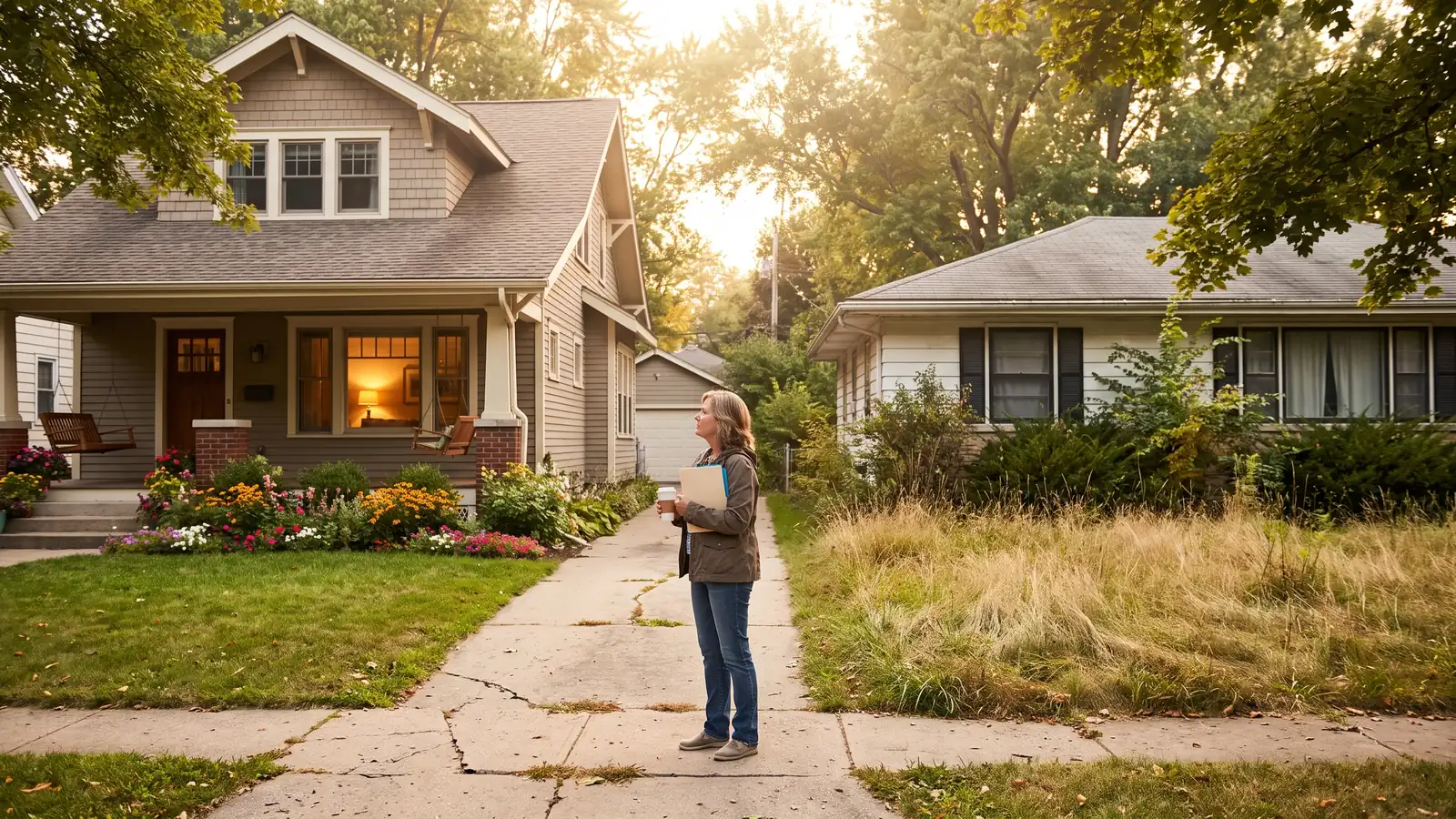
A short sale is a home sold for less than the owner’s mortgage balance with the lender agreeing to take the loss; a foreclosure is a home the lender has already repossessed after missed payments. For a buyer the difference is timing and condition: short-sale approvals commonly run 60 – 120 days because a loss-mitigation department has to sign off, while a bank-owned foreclosure closes on a normal 30 – 45 day timeline and is sold strictly as-is.
The right choice depends on your timeline, your renovation appetite and your risk tolerance. Learn more about short sales vs. foreclosures, including how each process works, how the two compare on condition, price and inspection rights, and how buyers finance either one.
Key takeaways:
- Lender approval is the bottleneck: A short sale requires the seller’s lender to approve accepting less than the mortgage balance, which is why approvals commonly take 60 – 120 days rather than days.
- Condition follows occupancy: Short-sale homes are typically in better condition because the owners still live in them, while foreclosures often sit vacant and deteriorate.
- Speed has a price: Foreclosure purchases usually move faster, a bank-owned closing runs a normal 30 – 45 days, and are discounted more deeply, but they come as-is, with more competition and fewer inspection opportunities.
What is a short sale?
A short sale is a sale in which the homeowner sells the property for less than the balance owed on the mortgage, and the lender agrees to release its lien and accept the shortfall. The owner still owns the home and still signs the deed. The lender is only approving the price.
That one fact explains everything a buyer experiences: you negotiate with a person, then wait on a department. Three parties have to line up.
- The homeowner: Accepts your offer and supplies the hardship documentation their servicer requires.
- The seller’s lender: Orders its own valuation and decides whether your price nets more than foreclosing would.
- Any junior lienholders: A second mortgage, a home equity line or unpaid association dues each need a payoff, and each holder can stall the file.
Federal servicing rules put a clock on part of this: when a servicer receives a complete loss-mitigation application more than 37 days before a foreclosure sale, it generally must evaluate the borrower for all available options, short sale included, within 30 days. The catch is the word “complete.” Assembling the package, ordering the valuation and negotiating the second lien are where the months go. Our guide to buying distressed properties covers finding these listings early, and the home buying guide puts the wait in context.
What is a foreclosure?
A foreclosure is the legal process a lender uses to take ownership of a home after the borrower stops paying, and a foreclosure purchase means buying that home either at the foreclosure sale or afterward from the lender that now owns it.
Under federal servicing rules, a servicer generally cannot make the first notice or filing required for foreclosure until the borrower is more than 120 days delinquent. By the time the property reaches you, it has usually been distressed for the better part of a year, and it shows. Buyers enter at one of two points.
- The foreclosure sale: A public auction, a sheriff’s sale in Michigan, where certified funds are typically due immediately and there is no inspection or financing contingency. Read how to purchase a home at auction first, and what a genuine cash offer requires.
- Bank-owned (REO): Nobody outbid the lender, so it took the home back, cleared junior liens and listed it with an agent. The version most financed buyers can use. Our walkthrough of how to buy a foreclosed home covers the offer mechanics.
Short sale vs. foreclosure: How the two purchases compare
Put foreclosure vs. short sale side by side and the trade is consistent: a short sale buys condition and information, a foreclosure buys speed and price.
| Feature | Short sale | Foreclosure |
|---|---|---|
| Who you negotiate with | The homeowner, subject to their lender and any junior lienholders | The bank’s asset manager on an REO, or nobody at auction |
| Typical condition | Occupied and maintained, utilities on, disclosures usually available | Often vacant, with deferred maintenance or stripped systems |
| Typical pricing | Near market, discounted for condition and the wait | Priced to move as an REO; auction bids can land well below market |
| Timeline to close | Commonly 60 – 120 days, most of it waiting on approval | 30 – 45 days on an REO; days at auction, funds due at the sale |
| Inspection rights | Normal inspection contingency, with the seller there to answer questions | Usually allowed on an REO for information; none at auction |
| Financing options | Conventional, FHA, VA or renovation loans | Same on an REO if condition allows; cash at auction |
Pros and cons of buying a short sale or a foreclosure
Neither is the bargain by default: a foreclosure’s discount pays for risk you accept, and a short sale’s premium pays for information you get.
Short sale pros and cons
- Pro, better condition: Someone has been running the furnace and mowing the lawn, so you’re less likely to inherit frozen pipes or mold.
- Pro, real information: You get a seller who knows when the roof was done, plus a normal inspection window with the utilities on.
- Pro, thinner field: Buyers on deadlines self-select out, so short sales often draw fewer competing offers.
- Con, the wait, and no guarantee: Approval commonly runs 60 – 120 days, the lender can still decline, and one junior lienholder refusing a payoff can sink the file.
Foreclosure pros and cons
- Pro, speed: An REO seller has no hardship package to assemble. Offers get answered in days and closings run a normal 30 – 45 days.
- Pro, deeper discounts: Lenders price REO homes to clear the books, and auction properties can sell for well under market value.
- Pro, cleaner title on REO: The lender typically clears junior liens and delivers marketable title.
- Con. As-is, with less information: No disclosures, no repairs, and a vacant Michigan winter produces a predictable list: burst pipes, dead sump pumps, missing copper and HVAC.
- Con, more competition: Auction buyers bid without an inspection, without a financing contingency, and without knowing who is living inside.
How to buy each type
Both paths start the same way: get fully preapproved. A distressed seller is choosing the buyer most likely to actually close.
How to buy a short sale
- Get a fully underwritten preapproval. The servicer weighs your ability to perform, so preparing to buy makes your file the one they approve.
- Ask what’s behind the mortgage before you offer. How many liens, which servicer, whether the hardship package is submitted. A file already in review is months ahead.
- Write with the wait built in. Set contingency dates that start at lender approval, not at acceptance.
- Inspect once approval lands. Work from a written home inspection checklist, then read the inspection report for items that change your number.
How to buy a foreclosure
- Decide auction or REO first. Auctions are a cash game with no inspection. REO is the financed buyer’s route, and almost every owner-occupant belongs there.
- Run title early. The sale wipes out most junior liens, but tax liens, assessments and senior liens can survive it, so choosing your title company deserves more than five minutes.
- Confirm occupancy in writing. A foreclosure with someone still living in it is a legal proceeding you inherit.
- Inspect anyway, then price the repairs. As-is means the seller won’t repair, not that you shouldn’t look. If the utilities can’t be turned on, budget for every system you couldn’t test.
How do you finance a short sale or foreclosure?
Both are financeable outside the auction house, and the deciding question is rarely your credit, it’s whether the property meets the program’s condition standards. Short sales usually clear it. Foreclosures are where financing breaks.
FHA appraisals apply the program’s minimum property requirements, and repairs the appraiser calls for generally have to be finished before the loan can close, so peeling paint on a pre-1978 home, a missing furnace or an unsafe electrical panel can stall a financed offer.1 VA loans run the same kind of screen against the VA’s own minimum property requirements.2 With a bank seller that won’t repair anything, that screen is the top reason financed foreclosure offers fall through.
Renovation financing is the answer. These loans roll the purchase price and the repair budget into one mortgage underwritten against the home’s as-completed value. Under HUD’s program revisions effective for FHA case numbers assigned on or after November 4, 2024, the Limited 203(k) covers minor remodeling and non-structural repairs with total rehabilitation costs that must not exceed $75,000, finished within nine months; the Standard 203(k) handles structural work with a consultant and allows up to 12 months. The benefits of FHA 203(k) loans cover which version fits which house, and financing home renovations covers conventional alternatives.
Run the all-in math before you fall for the discount. A bank-owned ranch listed at $185,000 that needs $40,000 of roof, furnace and kitchen work costs $225,000 all in, and that, not the list price, is the number to compare against the move-in-ready house down the street.3
Because Align is a broker, we can place a renovation file with the lender whose renovation department actually wants it. Across our network of wholesale lenders, appetite for as-is and rehab purchases varies more than pricing.
What Michigan buyers should know
Michigan handles most residential foreclosures by advertisement, publication and a sheriff’s sale rather than a lawsuit, then adds a redemption period that decides when anyone gets the keys.
- Notice runs four weeks, then gets posted: State law requires the notice to be published at least once a week for four successive weeks in a county newspaper, with a copy posted on the premises within 15 days after the first publication.
- Redemption is six months on most owner-occupied homes: For residential property of four units or fewer, redemption runs six months from the sale when more than 66 2/3% of the original debt was still owed at the date of the notice of foreclosure. Where no shorter period applies it runs a year, and a legally abandoned home drops to one month, or 30 days under a separate abandonment provision.
- No possession on sale day: The sheriff’s deed becomes operative only if the property isn’t redeemed in that window, so the former owner may stay the whole time. That wait is why most Michigan owner-occupants buy REO listings instead of bidding at the sale.
- Old liens don’t all disappear: Michigan’s statute protects any valid lien recorded before the foreclosed mortgage took effect, so a title search matters more here than on an ordinary resale. Rules differ by state, check the state-specific home buying regulations wherever you shop.
Which one is right for you?
Three questions decide it: when you must move, how much repair work you can fund, and how much uncertainty you can hold.
- A short sale fits if: Your move date is flexible and you’d rather take a smaller discount on a house that works than a bigger one on a house that doesn’t.
- A foreclosure fits if: You need a defined closing date, you have cash or a renovation loan for repairs, and you’re ready to compete with investors.
- Either way: Line up financing before you tour. The rest of the playbook lives in our buying strategies and situations hub, and how short sales and foreclosures compare for buyers pairs well with HUD’s home-buying guidance.
How Align fits your buying strategy
Local real estate agents bring Samantha in for a second opinion when their buyer arrives preapproved somewhere else. She regularly finds a lower rate or less cash to close, whichever helps the buyer more.
That comes from the broker model. One application goes to multiple wholesale lenders, so your offer is built on the loan that fits your situation, not the only one a single bank sells. A 2024 Polygon Research analysis of federal mortgage data found broker borrowers paid about $10,662 less over the life of a $400,000 loan than borrowers at nonbank retail lenders.
FAQ: Short sales vs. foreclosures
Here are answers to common questions about short sales vs. foreclosures.
What is the difference between a short sale and a foreclosure?
In a short sale, the homeowner still owns the property and sells it, with their lender’s permission, for less than the remaining mortgage balance. In a foreclosure, the lender has already taken the property back and sells it directly, at auction or as a bank-owned (REO) listing. The seller differs: a homeowner plus their lender, versus the bank alone. The foreclosure process for home buyers maps the stages in order.
Why do short sales take so long?
Because the seller’s lender, sometimes multiple lienholders, must approve taking a loss, and each runs its own review. After you and the homeowner agree on price, the file goes to the bank for valuation, hardship review and negotiation, which commonly takes weeks to several months with no guarantee of approval. Buyers on flexible timelines are best suited for short sales; see how the wait fits the home buying process.
Are foreclosures cheaper than short sales?
Often, yes. Lenders price foreclosures to move, and auction sales can go well below market value. But the discount reflects risk: foreclosures sell strictly as-is, frequently with deferred maintenance, vandalism or damage from vacancy, and auction buyers may not get inspections. Short sales price closer to market but deliver better-condition homes. Compare all-in cost, not list price, the arithmetic behind the advantages of buying a fixer-upper.
Can you get a mortgage for a short sale or foreclosure?
Yes, in most non-auction scenarios. Short sales and bank-owned foreclosures can be financed with conventional, FHA or VA loans if the property meets condition requirements, and renovation loans cover homes needing repairs. Auction foreclosures typically require cash. Preapproval matters even more here, because distressed sellers favor buyers who can demonstrably close. Start with what a renovation loan is, plus the CFPB’s home loan toolkit.
The bottom line on short sales vs. foreclosures
A short sale is a home sold for less than the mortgage balance with the lender’s approval; a foreclosure is one the lender already owns. Short sales commonly take 60 – 120 days for that approval but deliver a maintained house you can inspect with the utilities on. Foreclosures close in a normal 30 – 45 days as a bank-owned listing and discount more deeply, but hand you an as-is property with more competition and less information. Timeline decides this more often than price.
If you’re ready to buy a distressed property without guessing at the financing, talk to Align Lending. We’ll shop your scenario across our lender network, including as-is and renovation programs, and show you the numbers side by side. Call 248-506-5727 or start online today.
Footnotes:
- Align Lending is not acting on behalf of or at the direction of FHA or HUD. Program requirements are set by FHA and are subject to change. Return to text
- Align Lending works with VA-approved lenders and is not endorsed or sponsored by the Dept. of Veterans Affairs or any government agency. Return to text
- Example figures are hypothetical and for educational purposes only; they do not constitute an advertisement of credit terms or a rate quote under federal or state lending laws. Your eligibility and terms depend on your application, the property and market conditions. Return to text
This article is for informational purposes only and is not intended to provide legal, financial, or tax advice. Foreclosure and redemption law varies by state and changes over time; consult a qualified attorney about your situation. Figures shown are illustrative, are not a rate quote or an offer of credit, and are subject to change. Align Lending is an independent Michigan mortgage broker and is not endorsed or sponsored by FHA, HUD, the Department of Veterans Affairs, or any government agency.
Related resources

11-minute read
How to create a competitive offer on a house in a seller’s market
Learn how to create a competitive offer on a house, from preapproval and pricing to contingencies and appraisal gap coverage, and win in a hot market.

12-minute read
Advantages of buying a fixer-upper: 7 key benefits (and the tradeoffs)
Discover the advantages of buying a fixer-upper, from lower prices and less competition to renovation loans that roll repair costs into your mortgage.

12-minute read
Guide to Negotiating a Home Purchase
Learn proven strategies for negotiating a home purchase, from using inspection findings and seller concessions to crafting offers that win without overpaying.
