
How to sell a home with low curb appeal
This article is for informational purposes only and is not intended to provide legal, financial, or tax advice. Cost-basis rules, exclusion limits, and thresholds change, and how they apply depends on your situation. Consult a qualified tax professional about your situation.

When a home’s exterior is genuinely rough, the money says fix the cheap things and price for the rest. In the National Association of REALTORS® 2023 Remodeling Impact Report: Outdoor Features, agents estimated that a $415 standard lawn care service returns 217% of its cost at resale while a $90,000 in-ground pool returns 56%, and 74% of those agents recommend basic landscape maintenance before selling against 1% who recommend adding a pool.
That gap is the whole strategy. Cleanup and maintenance are cheap enough to be worth doing even when they return nothing, while capital projects on the outside of a house you’re about to leave rarely pay you back before closing. Everything the budget can’t reach gets handled with price, photo order and disclosure.
Learn how to sell a home with low curb appeal, including which exterior fixes agents actually recommend before listing, when peeling paint turns into a lender-required repair, and how to price and disclose an exterior you are not going to fix. If you’re earlier in the process, start with our Selling a Home guide.
Key takeaways:
- Maintenance outranks renovation before a sale: 74% of the REALTORS® NAR surveyed recommend landscape maintenance before selling, against 23% for a full landscape upgrade, 3% for a new patio and 1% for a pool.
- Peeling exterior paint can become a required repair: On an FHA-financed purchase the appraiser must require repair of defective paint that exposes the subsurface, and homes built before January 1, 1978 fall under HUD’s stricter lead-based paint appraisal rules, with the federal lead disclosure and lead-safe work rules reaching housing built before 1978.
- A closing credit is a price cut with paperwork: Seller money above the buyer’s actual closing costs is treated as a sales concession and deducted from the sales price, and FHA caps interested party contributions at 6% of the sales price.
Does low curb appeal actually change your sale price?
It changes what buyers will pay, but not evenly, and the pattern is the opposite of what most sellers assume. In NAR’s 2023 outdoor report, agents put estimated cost recovery on cheap maintenance far above recovery on visible capital projects: 217% on a $415 lawn care service against 59% on $6,800 of landscape lighting and 56% on a $90,000 in-ground pool addition.
Read those percentages for what they are. They’re agent estimates, not measured sale outcomes: NAR surveyed 42,164 members in February 2023 and received 1,891 responses, a 4.5% adjusted response rate, while the cost side came from a January 2023 contractor survey with 160 responses. Respondents were told to assume a 2,500-square-foot house on a 14,000-square-foot lot built after 1978 with no hidden issues, which is not the house this article is about. Treat the ranking as the finding and the percentages as rough. The underlying data sits in NAR’s research and statistics library.
What the evidence supports is narrower than “curb appeal adds value.” A tired exterior mainly costs you traffic: it thins the pool of buyers who click the listing and hands the ones who show up a reason to open below asking. That is a pricing and marketing problem, and it belongs in pricing and preparing your home rather than in a renovation budget.
Which exterior fixes are worth doing before you list?
The ones agents actually recommend before a sale are the cheap, repeatable ones. Landscape maintenance is recommended before selling by 74% of surveyed agents and a standard lawn care service by 53%, while only 3% recommend building a patio and 1% recommend a pool.
| Project | Contractor cost estimate | Agents’ estimated value recovered | Share of agents recommending it before selling |
|---|---|---|---|
| Standard lawn care service | $415 | 217% | 53% |
| Landscape maintenance | $4,800 | 104% | 74% |
| Tree care | $2,875 | 87% | 44% |
| Overall landscape upgrade | $9,000 | 100% | 23% |
| Landscape lighting | $6,800 | 59% | 11% |
| New patio | $10,500 | 95% | 3% |
| In-ground pool addition | $90,000 | 56% | 1% |
The two right-hand columns disagree on purpose, and the disagreement is the lesson. A new patio scores 95% on estimated recovery yet only 3% of agents recommend one before a sale, because recovering most of your money eventually is a homeowner’s math, not a seller’s. The order to work that list in (clean everything before buying anything, then cut and trim, then paint the door and trim rather than the house) is sequenced project by project in how to improve your home’s curb appeal, and overgrowth left in place reads as deferred exterior maintenance everywhere else in the house.
Check regional pricing before you commit, since cost aggregators such as Angi publish typical costs for exterior cleaning and landscaping projects that vary widely by market. None of it fixes a heaving driveway, a sagging porch or a roof that looks tired from the street.
Does interior staging make up for a weak exterior?
It helps the buyers who get through the door, but agents put curb appeal on the same short list. In a survey of REALTORS® that NAR released on May 6, 2025, the most common improvement recommendations agents gave sellers were decluttering the home (91%), cleaning the entire home (88%) and improving curb appeal (77%), according to NAR’s 2025 Profile of Home Staging release.
The same release reports which staged rooms matter most to buyers: the living room (37%), the primary bedroom (34%) and the kitchen (23%), with the guest bedroom last at 7%. Among sellers’ agents, 88% said photos in the listing were more or much more important to their clients, against 43% for traditional physical staging, per the NAR staging report. When the front elevation can’t carry the listing, the interior budget goes to the living room photo first and the primary bedroom second.
NAR drew these figures from a February 2025 survey that invited 49,806 REALTORS® and received 1,266 usable responses, so they describe what agents observe, not measured buyer behavior (NAR methodology note). For more on the interior side, see the impact of home staging on sale price and the benefits of hiring a professional stager.
When does a weak exterior become a financing problem?
The moment an appraiser writes it down. On an FHA-financed purchase of a home built in 1978 or later, HUD requires the appraiser to report all defective paint surfaces on the exterior and to require repair of any defective paint that exposes the subsurface to the elements.1 That turns peeling trim from a photography problem into a condition of the buyer’s loan.
Older housing gets a stricter version. On a home built before January 1, 1978, the appraiser must note the condition and location of all defective paint and require repair, observing stairs, decks, porches, railings, windows and doors plus fences, detached garages and sheds. Cracking, scaling, chipping, peeling or loose paint all count.
If you pay someone to scrape or paint, a federal rule applies. Under the EPA’s Renovation, Repair and Painting program, anyone paid to perform work that disturbs paint in housing built before 1978 must be certified in lead-safe work practices. Exterior jobs disturbing 20 square feet or less of painted surface can count as minor repair and maintenance, which the rule excludes, per the definitions in 40 CFR 745.83, and scraping a porch back to bare wood goes past that limit easily. If you do the work yourself in your own home, EPA says the rule generally does not apply, recommends hiring a lead-safe certified contractor, and points do-it-yourselfers to lead-safe work practices.
Two more things sellers get wrong. First, a low appraisal is a financing problem before it’s a pricing problem: on an FHA purchase the loan is sized on the Adjusted Value, the lesser of purchase price less inducements or appraised value, and conventional loan-to-value works the same way off the lower of sales price or appraised value. Second, you cannot contact the appraiser to argue the number up; your leverage is the comparable sales your agent supplies through proper channels, as our walkthrough of the home appraisal process explains.
How does a conventional appraiser grade a worn exterior?
With a condition rating from C1 to C6, and that rating decides whether the buyer’s loan can close on the house as it stands. Under Fannie Mae Selling Guide B4-1.3-06 (dated 06/04/2025), properties rated C1 through C5 are eligible “as is” provided existing conditions are minor and do not affect the safety, soundness or structural integrity of the property. When a deficiency does affect those, the property must be appraised “subject to” completion of the specific repairs.
C6 is the rating a neglected house risks. Fannie Mae’s property condition section defines it as improvements with “substantial damage or deferred maintenance with deficiencies or defects,” states that loans secured by C6 properties are not eligible for sale to Fannie Mae, and requires deficiencies affecting safety, soundness or structural integrity to be repaired to a minimum C5 first. If any portion of the dwelling is rated C6, the whole dwelling must be rated C6, so one badly deteriorated part is enough.
For a seller, that splits the exterior into two lists. Faded siding and an overgrown bed are handled with price. A defect the appraiser judges to affect safety or soundness can come back as a repair the buyer’s lender needs finished, and those get negotiated the way buyer repair requests usually are, with the timing issues covered in managing home repairs during escrow. If the value itself comes in short, selling a home with a low appraisal walks through the options.
What does the 2026 market mean for a listing that shows poorly?
Buyers have more listings to compare than they did a year ago. NAR reported on October 13, 2026 that total housing inventory reached 1.60 million units in September 2026, up 4.6% from September 2025, an unsold supply of 4.8 months against 4.5 months a year earlier, with a median time on market of 33 days, per its September 2026 existing-home sales report.
Prices are still rising in this part of the country. The same NAR report put the Midwest median existing-home price at $329,600 in September 2026, up 3.1% from a year earlier. The Federal Housing Finance Agency reported on August 25, 2026 that U.S. house prices rose 2.1% between the second quarter of 2025 and the second quarter of 2026, and that the East North Central division rose 4.5% over the same period (FHFA House Price Index release). That division is the Census Bureau grouping of Illinois, Indiana, Michigan, Ohio and Wisconsin, as the Census Bureau’s regions and divisions map shows.
Those two trends pull in different directions for a house that needs work: rising prices give the seller room, and more inventory gives the buyer alternatives. Neither figure is specific to homes in rough condition, so treat them as background, not a forecast for your street. If the listing stalls anyway, start with what to do if your home doesn’t sell, revisit pricing a home for sale, and check the list of common seller mistakes to avoid.
What to do when the exterior can’t be fixed before listing
Price it, order the photos to lead with strength, and let the discount do the work the landscaping would have done. On a hypothetical $300,000 Waterford listing, a 2% reduction is $6,000 off the asking price, which reaches every buyer scrolling the search results, while $6,000 of shrubs reaches only the ones who already clicked.2 If that discount is the difference between selling and stalling, and you need the equity to buy first, price it in alongside your bridge loan options rather than after the fact.
- Price to condition, not to the comps: Comparable sales describe houses that photographed well. Price against the closed sales that resemble yours in condition, then hold the number instead of chasing it down in $5,000 steps. Sequencing matters more than the size of the cut, which is covered in strategies for selling a home quickly.
- Reorder the photos, don’t hide the exterior: Lead with the strongest interior room but keep a clear, honest exterior shot in the set. Buyers who saw the front elevation online and came anyway are pre-qualified for the condition. Our guides to home staging on a budget cover the interior side.
- Clear the yard before the photographer arrives: Vehicles, hoses, bins, toys and stacked materials damage a listing photo more than dated siding does. Apply the same discipline you’d use decluttering your home before selling outdoors.
- Understand what a closing credit really does: Fannie Mae caps interested party contributions at 3% of value above 90% loan-to-value, 6% from 75.01% to 90%, 9% at 75% or less and 2% on investment property, and anything above the buyer’s actual closing costs becomes a sales concession deducted from the sales price. FHA caps them at 6% of the sales price, and contributions beyond real closing costs count as an inducement to purchase, lowering the Adjusted Value the loan is sized on. A “landscaping credit” the buyer pockets is a price cut that also shrinks the loan.
- Advertise concessions, not compensation: Since the NAR practice changes took effect on August 17, 2024, offers of buyer-broker compensation cannot be communicated through an MLS, though sellers may still advertise buyer concessions such as closing-cost help. Commissions are fully negotiable and not set by law.
One more surprise waits at tax time. The IRS treats repairs and maintenance that keep a home in good condition without adding value or prolonging its life as costs you cannot add to basis, naming painting, inside or out, filling holes or cracks, and replacing broken hardware as examples.3 Improvements can be added; a fresh coat on the front door generally cannot. If your gain is near the $250,000 single or $500,000 married-filing-jointly capital gains exclusion, which requires owning and living in the home at least 24 months of the previous five years, raise that distinction with a tax professional before you spend.
How does a seller credit show up on the buyer’s paperwork?
As a line on the buyer’s Closing Disclosure. The Consumer Financial Protection Bureau’s Closing Disclosure explainer describes the Seller Credit on page 3 as “the amount the seller has agreed to contribute to your closing costs,” notes that specific costs the seller agreed to pay may be listed instead as “Seller Paid” items on page 2, and says lenders are required to provide the Closing Disclosure three business days before the scheduled closing.
Hypothetical example, not an offer: a buyer contracts at $300,000 and asks for a $9,000 seller credit in place of exterior repairs, and the buyer’s actual closing costs come to $7,000. Applying the sales concession rule covered above from Fannie Mae Selling Guide B3-4.1-02 (dated 05/07/2025), the $2,000 excess comes off the price, and the lender uses the lower of $298,000 or the appraised value to calculate loan-to-value. The same section does not permit interested party contributions to be used for the borrower’s down payment, so the excess cannot be moved there instead.
To see what a credit does to your own proceeds, the seller net sheet calculator itemizes concessions alongside payoff, commission and Michigan transfer tax. Seller-paid closing costs and what a seller’s net sheet shows explain each line.
What you still have to disclose when you sell as-is
Selling “as is” changes what you agree to repair. It does not change what you have to tell the buyer. An as-is clause is a contract term; a disclosure duty is a statute.
- Known defects stay disclosable no matter how you price: Foundation movement, water intrusion, grading and drainage problems and environmental hazards are reportable when you know about them, and discounting does not substitute for saying so. Start with our guide to how to handle seller disclosures and this plain-English overview of what sellers must disclose about a home’s condition.
- Pre-1978 housing carries its own federal disclosure: Under the federal lead-based paint disclosure rule, a seller of target housing built before 1978 must disclose known lead-based paint and hazards, hand over available records and reports, provide the “Protect Your Family From Lead in Your Home” pamphlet, give the buyer a 10-day opportunity to conduct a risk assessment or inspection unless both parties agree otherwise, and attach the Lead Warning Statement to the contract.
- Deteriorating exterior paint is the condition that rule exists for: On a pre-1978 home, treat the lead disclosure and the lead-safe work requirements as part of the project cost.
What paperwork does an older exterior add to the sale?
A lead disclosure package on any home built before 1978, and a closer read of the flooding and water questions. The CDC states that homes built before 1978, when lead-based paints were banned, probably contain lead-based paint, and that when the paint peels and cracks it makes lead dust (CDC lead poisoning prevention page, dated June 12, 2024). The peeling trim an appraiser writes down and the lead disclosure you sign are about the same surfaces.
Buyers can also waive the lead inspection entirely. EPA’s real estate disclosure page states that homebuyers may waive this inspection opportunity, so expect some buyers of a rough house to waive it and others to use the whole inspection period described above.
Michigan’s form adds water questions an untended lot tends to raise. The statutory Seller’s Disclosure Statement in MCL 565.957 opens its list of conditions with the basement or crawl space, asking “Has there been evidence of water?” with a line to explain. Before you answer the flooding and drainage questions, look up the address on FEMA’s Flood Map Service Center, which FEMA calls the official public source for flood hazard information and which searches by address. Under MCL 565.955, a seller or agent is not liable for an error, inaccuracy or omission that was not within the seller’s personal knowledge, which is why the form asks what you know rather than what an inspector would find. Our guides to the seller’s disclosure, a pre-listing home inspection and selling a home as-is cover the choices around it.
What Michigan sellers should know
Michigan’s disclosure duty is statutory, and the form asks about the exterior by name.
- The act covers 1 to 4 residential dwelling units: Michigan’s Seller Disclosure Act applies to transfers of not less than 1 and not more than 4 residential dwelling units, and its exemptions are a closed list of nine categories: court-ordered transfers, foreclosure sales, nonoccupant fiduciary transfers, family transfers and government transfers among them. Selling “as is” is not on that list.
- Timing carries a penalty: The statement must be delivered before you execute a binding purchase agreement. Deliver it late and the buyer may terminate within 72 hours if it was handed over in person, or 120 hours by registered mail. Every disclosure must be made in good faith, which the act defines as honesty in fact.
- The form asks about the yard, not just the house: It asks whether you’re aware of “settling, flooding, drainage, structural, or grading problems,” about features shared with adjoining landowners such as walls, fences, roads and driveways, about roof leaks, underground storage tanks and environmental hazards including lead-based paint. Those are exactly the conditions a low-curb-appeal property tends to have.
- Winter is why Michigan driveways look the way they do: MDOT records put five-year average salt use on Michigan’s 30,000 lane-miles of trunkline roads at 474,000 tons as of fiscal year 2023. Freeze-thaw and tracked-in road salt chew up concrete, walkways and porch steps faster here than in milder states, so where your timeline allows, a spring listing date is worth more than most of the projects in the table above.
How Align helps before you list
If you are buying your next home too, talk to Samantha before you list. Knowing your buying power and your timeline first lets you price and prepare your home with a plan, not a guess.
Your closing date is set by your purchase agreement. Her job is to have your loan ready well before it.
FAQ: Selling a home with low curb appeal
Here are answers to common questions about selling a home with low curb appeal.
What is the cheapest way to improve curb appeal before selling?
Cleaning, because it costs labor rather than materials. Wash the siding, driveway, walkway and windows, haul off yard debris, then cut and edge what’s already growing. After that, repaint the front door, replace the house numbers and set two pots by the entry. Agents rank routine maintenance ahead of every capital project on the pre-sale list, and the full sequence is in how to improve your home’s curb appeal.
Does curb appeal really affect the sale price of a home?
Indirectly, through traffic. A weak exterior mostly reduces the number of buyers who click the listing and book a showing, and a thinner buyer pool produces weaker offers. Agents surveyed by NAR estimated far higher cost recovery on inexpensive maintenance than on visible capital projects, which suggests the effect runs through perceived upkeep rather than through the features themselves. Set the number with that in mind using pricing and preparing your home.
Can I sell a house without fixing the outside at all?
Yes. Disclose the known conditions, price to the condition, and market the interior honestly with professional photography. Expect a smaller buyer pool with more investor and cash interest, and expect any FHA or VA buyer’s appraiser to flag defective exterior paint as a repair item.
How much should I spend on curb appeal when selling?
Only as much as clears the neglect signal. Cleaning, cutting back overgrowth, tree care and a repainted door are the projects a majority of agents put ahead of listing; full landscape upgrades, patios, lighting systems and pools are not. If your budget is tight, spend it where it photographs and skip the rest, using the same triage logic as home staging on a budget.
What should a contract for exterior repairs include in Michigan?
Every promise, in writing, before work starts. Michigan’s Attorney General says a repair contract should list start and completion dates, a requirement that the builder obtain all required permits, a breakdown of costs, payment dates and the events that trigger each payment, and the contractor’s LARA license number, street address and phone number (AG building and remodeling alert). The same alert notes that a sale solicited at your home can carry a three-day right to cancel.
How many home buyers pay cash?
About a quarter. NAR reported that cash sales were 27% of existing-home transactions in September 2026, down from 30% a year earlier (NAR September 2026 report). A cash buyer has no lender appraisal, so the FHA and Fannie Mae repair conditions above don’t come from a loan, which makes cash offers worth weighing on a house you plan to sell as-is. See the pros and cons of selling to a cash buyer.
Can I deduct furniture I donate while clearing out the house?
Only if you itemize on Schedule A and the items are in good used condition or better, according to IRS Publication 526, which counts furniture, electronics, appliances and linens as household items. A noncash deduction over $500 also needs Form 8283. The non-itemizer deduction that begins with tax year 2026, up to $1,000 or $2,000 filing jointly, covers cash contributions only, per IRS Topic 506.
How long should a seller keep the lead paint disclosure?
Three years. EPA guidance says to keep a signed copy of the disclosures for three years after the sale is completed. That signed copy is your record that the pamphlet, the Lead Warning Statement and any reports were handed over, so file it with your closing papers rather than leaving it in the listing agent’s file.
The bottom line on selling a home with low curb appeal
You sell a home with low curb appeal by cleaning first, maintaining what’s already there, and pricing for whatever is left rather than renovating it. The agent data points one direction: 74% recommend landscape maintenance before a sale and 1% recommend adding a pool, and a $415 lawn care service carries a higher estimated recovery than a $90,000 pool. Keep the exterior honest in your photos and disclosures, know that defective paint can become a condition of your buyer’s loan, and treat any closing credit as the price cut it is.
If you’re ready to turn this sale into your next home, talk to Align Lending. We’ll shop your purchase or bridge scenario across our lender network and show you the numbers side by side. Call 248-506-5727 or start online.
Footnotes:
1. Align Lending is not acting on behalf of or at the direction of FHA or HUD. FHA appraisal and property requirements, including defective paint and lead-based paint provisions and the calculation of Adjusted Value, are set by HUD in Single Family Housing Policy Handbook 4000.1 and are subject to change. Return to text.
2. Example figures in this article are hypothetical and for educational purposes only; they do not constitute an advertisement of credit terms or a rate quote under federal or state lending laws. Your pricing, proceeds, and loan terms will depend on your property, your market, your application, and conditions at the time of sale. Return to text.
3. This is general information, not tax advice. Whether a cost is added to basis, whether you qualify for the exclusion of gain on the sale of a main home, and how selling expenses are treated depend on your individual circumstances. Consult a qualified tax professional about your situation. Return to text.
Sources: outdoor project cost estimates, agent-estimated value recovered, share of agents recommending each project before selling, and survey methodology (NALP contractor survey of January 2023, 160 responses; NAR member value survey of February 2023, 42,164 sampled and 1,891 responses, 4.5% adjusted response rate; scenario assumes a 2,500-square-foot house on a 14,000-square-foot lot built after 1978), National Association of REALTORS®, 2023 Remodeling Impact Report: Outdoor Features. Appraiser reporting and repair requirements for defective paint on homes built in 1978 or later and on homes built before January 1, 1978, exterior surfaces observed, and Adjusted Value as the lesser of purchase price less inducements or the Property Value, HUD Single Family Housing Policy Handbook 4000.1. FHA interested party contributions of up to 6% of the sales price and treatment of excess contributions as an inducement to purchase, HUD Handbook 4000.1. Conventional interested party contribution limits of 3%, 6%, 9% and 2%, treatment of amounts above the borrower’s closing costs as sales concessions, and calculation on the lower of sales price or appraised value, Fannie Mae Selling Guide B3-4.1-02. Certification requirement for anyone paid to disturb paint in pre-1978 housing, the rule’s general exclusion of homeowners working on their own homes, and EPA’s recommendations for homeowners, U.S. Environmental Protection Agency, Renovation, Repair and Painting Program; the 20 square foot exterior limit for minor repair and maintenance, 40 CFR 745.83. Seller disclosure of known lead-based paint and hazards, records and reports, the “Protect Your Family From Lead in Your Home” pamphlet, the 10-day inspection opportunity and the Lead Warning Statement for target housing built before 1978, 42 U.S.C. 4852d; 40 CFR part 745 subpart F; 24 CFR part 35 subpart A. Michigan Seller Disclosure Act applicability to 1 to 4 residential dwelling units, MCL 565.952; the nine categories of exempt transfers, MCL 565.953; delivery before execution of a binding purchase agreement and the 72-hour and 120-hour termination rights, MCL 565.954; good faith defined as honesty in fact, MCL 565.960; the statutory disclosure form’s questions on settling, flooding, drainage, structural or grading problems, shared walls, fences, roads and driveways, roof leaks, underground storage tanks and environmental hazards, MCL 565.957. Prohibition on communicating offers of compensation through an MLS effective August 17, 2024, the continued ability to advertise buyer concessions, and commissions being fully negotiable and not set by law, National Association of REALTORS®. Exclusion of up to $250,000 of gain, or $500,000 for a married couple filing jointly, the 24-month ownership and use tests within the previous five years, the treatment of selling expenses, and the exclusion of repairs and maintenance such as painting, filling holes or cracks and replacing broken hardware from cost basis, IRS Publication 523. Five-year average salt use of 474,000 tons on 30,000 lane-miles of trunkline roads as of fiscal year 2023, Michigan Department of Transportation report to the Legislature under MCL 247.661a, Section 11a.
This article is for informational purposes only and is not intended to provide legal, financial, or tax advice. Disclosure obligations, appraisal and repair requirements, contribution limits and tax rules change and vary by property, program and jurisdiction; confirm your obligations with a qualified attorney, tax professional and licensed real estate professional before you list. Figures shown are illustrative, are not a rate quote or an offer of credit, and are subject to change. Align Lending is an independent Michigan mortgage broker, NMLS #2041154, and is not a listing brokerage.
Sources
Every outside source this guide links to, in the order it appears. How we choose and check sources
- NAR’s research and statistics libraryNational Association of Realtors
- NAR’s 2025 Profile of Home Staging releaseNational Association of Realtors
- EPA’s Renovation, Repair and Painting programU.S. Environmental Protection Agency
- 40 CFR 745.83Electronic Code of Federal Regulations
- Fannie Mae Selling Guide B4-1.3-06Fannie Mae Selling Guide
- September 2026 existing-home sales reportNational Association of Realtors
- FHFA House Price Index releaseFederal Housing Finance Agency
- Census Bureau’s regions and divisions mapU.S. Census Bureau
- Fannie Mae caps interested party contributionsFannie Mae Selling Guide
- Consumer Financial Protection Bureau’s Closing Disclosure explainerConsumer Financial Protection Bureau
- What sellers must disclose about a home’s conditionNolo
- Federal lead-based paint disclosure ruleU.S. Environmental Protection Agency
- CDC lead poisoning prevention pagecdc.gov
- MCL 565.957Michigan Legislature
- FEMA’s Flood Map Service CenterFEMA Flood Map Service Center
- MCL 565.955Michigan Legislature
- MDOT recordsState of Michigan
- AG building and remodeling alertState of Michigan
- IRS Publication 526Internal Revenue Service
- Form 8283Internal Revenue Service
- IRS Topic 506Internal Revenue Service
- HUD Handbook 4000.1U.S. Department of Housing and Urban Development
- 42 U.S.C. 4852dlaw.cornell.edu
- 40 CFR part 745 subpart FElectronic Code of Federal Regulations
- MCL 565.952Michigan Legislature
- MCL 565.953Michigan Legislature
- MCL 565.954Michigan Legislature
- IRS Publication 523Internal Revenue Service
Related resources
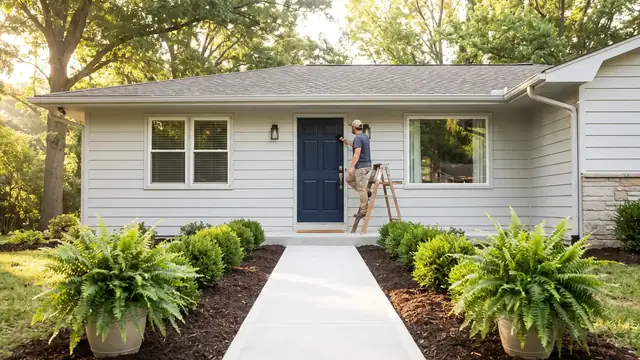
18-minute read
How to improve your home’s curb appeal before you list
Discover how to improve your home’s curb appeal with paint, cleaning, landscaping and lighting upgrades that photograph well and bring buyers to the door.

20-minute read
How to prepare for a home appraisal and support your price
See how to prepare for a home appraisal with a clean exterior, finished repairs and a documented upgrade list that helps the appraiser support your price.
20-minute read
Benefits of a pre-listing home inspection: what sellers gain
See how a pre-listing home inspection helps you price accurately, control repairs and avoid renegotiation, plus what it costs and when to order one.
