Pricing and preparing a home to sell: valuation, repairs, and staging
Every Pricing & Preparing guide in the Learn Center
The full pricing & preparing library, so you can go straight to the question you actually have.
- Benefits of hiring a professional stager when you sell
- How to sell a home with low curb appeal
- Staging your home for a quick sale: A room-by-room guide
- The strangest factors that affect home value
This article is for informational purposes only and is not intended to provide legal, financial, or tax advice. Consult a qualified professional about your situation.
Preparing a home to sell costs most sellers 1% – 3% of the expected sale price, roughly $3,500 – $10,500 on a $350,000 home, and takes 3 – 6 months to work through without paying contractor rush premiums. Pricing costs nothing and matters more: a listing draws its heaviest buyer traffic in the first 7 – 14 days, and a price the market rejects burns that window before anyone sees the paint job you just paid for.
Those two levers, the listing number and the condition behind it, are the only parts of a sale you fully control. Learn more about pricing and preparing a home for sale, including how to read comparable sales, which repairs pay for themselves, and where staging and curb appeal actually move the number.
Key takeaways:
- Budget 1% – 3% of the sale price: On a $350,000 home that’s $3,500 – $10,500 covering a pre-listing inspection, must-fix repairs, deep cleaning, paint, landscaping, and partial staging.
- Price within about 3% – 5% of recent closed comparables: Overpricing burns the listing’s best 7 – 14 days of exposure, and the home usually sells later for less than it would have brought on day one.
- Work the sequence, not the list: Inspection first, repairs second, cosmetics last, over 3 – 6 months. Staging a room you’re about to open up is money spent twice.
How do you price a home for sale?
Price within about 3% – 5% of what comparable homes actually closed for in the last 90 days. Not what similar homes are currently listed for, and not what you need to net. Active listings tell you what your competition hopes for. Closed sales tell you what buyers and appraisers agreed on, and only one of those two numbers gets a home financed.
A comparative market analysis (CMA) is the working tool: closed sales of similar homes, ideally within a half mile and the last six months, adjusted for square footage, condition, age, and lot. Three habits separate a price that works from one that sits:
- Price to how buyers search: Portal filters cluster on round numbers. A home listed at $305,000 is invisible to every buyer whose search stops at $300,000, and that band usually buys more traffic than the extra $5,000 buys in proceeds.
- Treat price per square foot as a sanity check, not a method: It ignores condition, layout, lot, and finish level. Two homes on one street can differ 20% per foot for reasons a spreadsheet can’t see.
- Read your showing data as feedback: No showings in the first 10 days is a price or exposure problem. Ten showings and no offers is usually condition, photos, or price, and sellers who improvise $5,000 cuts from there tend to chase the market down past where one decisive adjustment would have landed.
Strategy also depends on which way leverage runs. Pricing a home for sale covers the CMA mechanics, while seller’s market dynamics explains why the same home is priced differently when inventory is thin. Against several similar listings, pricing your home in a competitive market walks the banding math; when the timeline is the constraint, see how to price your home for a quick sale. Pricing sits inside the broader guide to selling a home and our selling strategies hub.
What actually determines your home’s value?
Three inputs set the value a buyer’s lender will finance: recent closed comparable sales, condition, and gross living area. Everything else, renovation receipts, your tax assessment, an online estimate, is context an appraiser may weigh but isn’t required to adopt. That gap is where seller frustration lives, so separate the three “values” attached to one house.
- List price: Your asking number, and a marketing decision you control.
- Contract price: What one buyer agreed to pay. Evidence of value, not proof of it.
- Appraised value: An independent opinion ordered by the buyer’s lender. The loan is sized off the lower of contract price or appraised value, which is why a high contract price doesn’t automatically close.
Improvements help unevenly. Kitchens, baths, roofs, and mechanical systems return the most because they remove a buyer objection; pools and highly personal finishes return the least. Our guide to maximizing your home’s resale value ranks the work by what it recovers, and the FHFA House Price Index tracks repeat-sale price changes by state and metro.
Prepare for the appraisal itself, too: leave a list of permitted improvements with dates and costs, make every room accessible, and confirm the tax record’s square footage is correct. A mismeasured record is a common, fixable source of a low number. Start with how to prepare for a home appraisal. If the number still comes in short, conventional borrowers have a formal appeal: Fannie Mae and Freddie Mac standardized a borrower-initiated reconsideration of value process lenders had to implement for applications dated on or after October 31, 2024. The post-offer timeline sits in our selling process guide.
Which repairs should you make before you list, and which should you skip?
Fix anything that reads as deferred maintenance or that an appraiser can flag, and skip cosmetic remodels you’d finish two weeks before handing over the keys. Buyers negotiate hard on visible systemic problems and largely forgive dated-but-functional finishes when the price reflects them.
Start with a pre-listing inspection, typically $300 – $500. It converts surprises into scheduled work: you fix on your calendar with your contractor, not under a buyer’s 7 – 10 day inspection deadline with their leverage. The benefits of a pre-listing home inspection show up most on homes over 25 years old; find a credentialed inspector through the American Society of Home Inspectors.
Condition matters more when your buyer is financed, because government programs carry property standards the appraiser applies on site. On an FHA appraisal, a home built before 1978 has every painted surface checked for chipping, peeling, or flaking paint, and defective surfaces must be treated before the loan closes. FHA guidance also expects a roof with at least two years of remaining physical life, and VA appraisals apply Minimum Property Requirements built on three words: safe, sound, and sanitary.1 None of that requires a remodel, but a failing roof, an active leak, exposed wiring, or peeling exterior paint can shrink your buyer pool to cash offers. Because Align is a broker, we can also tell your buyer which wholesale lenders in our network handle a condition-flagged file most flexibly.
Here’s what those line items run on the Michigan files we see, and what each one changes:
| Prep task | Typical cost | DIY or pro | What it changes |
|---|---|---|---|
| Pre-listing inspection | $300 – $500 | Pro | Finds what the buyer’s inspector will find, on your schedule |
| Deep clean and declutter | $200 – $600 | Either | How every listing photo reads, the cheapest work with the largest effect |
| Neutral paint, main living areas | $1,000 – $3,000 | Either | Removes the “dated” read from a whole floor |
| Landscaping and exterior cleanup | $300 – $1,500 | Either | The first photo and the first ten feet |
| Partial staging, key rooms | $500 – $2,500 | Pro | Scale and flow in the rooms that carry the listing |
| Must-fix repairs: roof, furnace, electrical, leaks | Varies widely | Pro | Whether a financed buyer’s appraiser flags the property |
Two categories need their own plan. Structural problems are priceable but not hideable, read selling a home with foundation issues before you take a bid. And renovation-for-resale is where sellers overspend most; renovating a home for resale separates projects that recover their cost from your taste, paid for in advance. Sales carrying a legal, title, or condition complication have playbooks in the selling situations hub.
Keep one tax distinction straight while you spend: improvements still part of the home at sale generally add to your cost basis, while ordinary repairs and maintenance generally don’t. Though repair work done as part of an extensive remodel can count. Save receipts, because basis is what shrinks a taxable gain.2
How much do staging and curb appeal actually move the number?
Be honest about this one: staging’s most reliable effect is on speed and on how a listing photographs, and the price-lift figures you’ll see quoted almost always come from agent surveys rather than controlled studies. That still matters, roughly nine in ten buyers start online, so your first ten photos are your open house, but it argues for spending $500 well instead of $5,000 broadly. The high-return work is mostly free:
- Declutter and depersonalize first: Empty counters, cleared closets, and packed-away family photos read as “more space” and let a buyer picture their own life there. Our walkthrough of decluttering your home before selling is the cheapest hour in the project.
- Clean past guest-ready: Windows, grout, baseboards, appliance interiors, and odors, especially pet and smoke odors, which buyers register in seconds.
- Fix the light: Higher-output bulbs at one color temperature, open blinds, and clean glass change every photo for under $100.
- Stage only the rooms that carry the listing: Kitchen, living room, primary bedroom, main bath. Secondary bedrooms and the basement get cleared, not furnished.
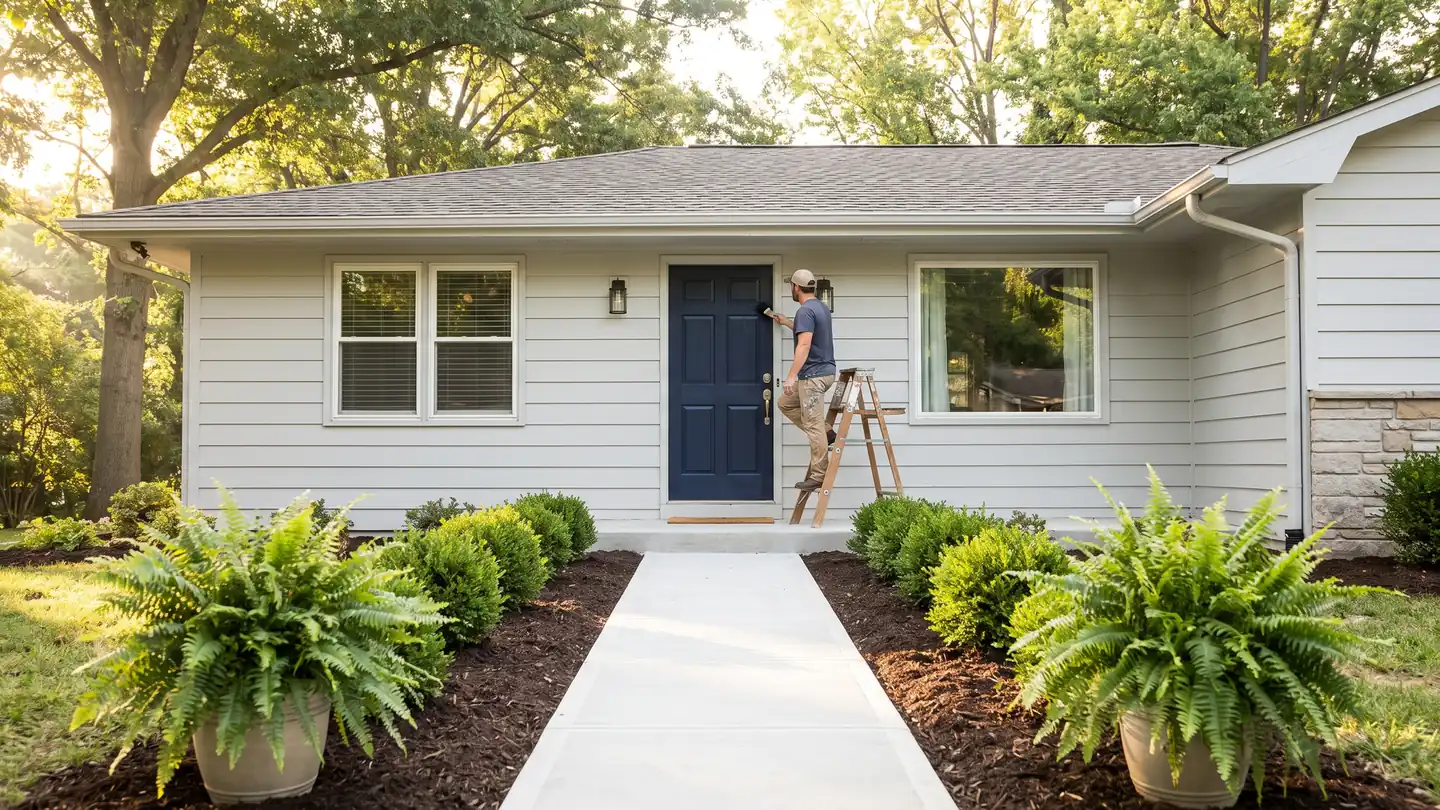
- Handle the first ten feet: Mulch, trimmed shrubs, a swept walkway, a repainted front door, and a working porch light land before anyone opens the door. Improving your home’s curb appeal puts the work in cost order.
Sequence protects the budget: inspection, repairs, paint, cleaning, then staging and photos. Run it backward and you’re cleaning a room a plumber is about to open. Our punch list for preparing your home also covers the emotional side, a real variable when you’ve lived somewhere a long time.
What Michigan sellers should know
Four Michigan specifics change how you prepare and how you defend your price.
- Disclosure is statutory, and early: Michigan’s Seller Disclosure Act covers transfers of 1 to 4 residential dwelling units, and the written statement must be delivered before you sign a binding purchase agreement, skipping it gives the buyer a termination right. Finish your inspection before you fill out the form so the answers are accurate rather than optimistic.
- The buyer’s tax bill won’t match yours: Under Proposal A, a transfer of ownership uncaps taxable value in the calendar year after the transfer, resetting it to the state equalized value. Have your agent quote the uncapped estimate up front rather than let it surface in inspection week.
- Basements, furnaces, and roofs get scrutinized here: Buyers look for basement moisture staining, a working sump pump with a backup, furnace age against a 15 – 20 year service life, and ice-dam damage. Fix the water intrusion and document mechanical ages, those items drive an outsized share of Michigan repair requests.
- Test before you list, not after: Much of Michigan sits in elevated radon potential zones, and the EPA recommends fixing a home at 4 pCi/L or higher. A short-term test is cheap; mitigation negotiated under a buyer’s deadline isn’t. In rural counties, pull well and septic records early, some county health departments run time-of-sale evaluations that become a contract deadline.
FAQ: Pricing and preparing your home for sale
Here are answers to common questions about pricing and preparing a home for sale.
How much does it cost to get a home ready to sell?
Most sellers spend 1% – 3% of the expected sale price, or roughly $3,500 – $10,500 on a $350,000 home, covering inspection, minor repairs, cleaning, paint, landscaping, and partial staging. Costs climb fast if the inspection surfaces roof, furnace, or foundation work. Which is why the inspection goes first. On a tight budget, home staging on a budget shows where the cheap wins are.
What should I fix before selling my house?
Fix what reads as deferred maintenance or triggers a lender repair condition: active leaks, roof damage, failing water heaters and furnaces, electrical hazards, broken windows, and peeling exterior paint. Skip cosmetic remodels. Radon, an underground fuel tank, or asbestos follow a different track, see selling a home with environmental issues.
Does staging actually raise my sale price?
Sometimes, and the more dependable benefit is speed. Staged homes photograph better and tend to spend less time on market, but published price-lift numbers generally come from agent surveys rather than controlled research. Stage the four rooms buyers judge hardest and skip the rest. Our review of the impact of home staging on sale price separates measurement from marketing.
What happens if the appraisal comes in below my contract price?
It becomes a negotiation, not a dead deal. The buyer’s lender lends only against the lower value, leaving a gap somebody covers. Your four options: reduce the price, ask the buyer to bring cash, split the difference, or support a reconsideration of value with additional closed comparables. Most land in a negotiated middle, work through selling a home with a low appraisal.
The bottom line on pricing and preparing your home
Preparing a home to sell costs most sellers 1% – 3% of the sale price, about $3,500 – $10,500 on a $350,000 home, and works best over 3 – 6 months in a fixed order: inspection, repairs, paint, cleaning, staging, photos. Price within roughly 3% – 5% of recent closed comparables, not active listings, because a listing gets its heaviest traffic in the first 7 – 14 days and never gets that window back. Spend on the problems a financed buyer’s appraiser can flag, spend lightly on the rooms that carry your photos, and price the rest.
If you’re ready to prepare one home and finance the next, talk to Align Lending, we’ll shop your scenario across our lender network and show you the numbers side by side. Call 248-506-5727 or start online today.
This article is for informational purposes only and is not intended to provide legal, financial, or tax advice. Consult a qualified professional about your situation. Cost ranges shown are illustrative, are not a rate quote or an offer of credit, and are subject to change.
Footnotes
1 Align Lending works with FHA- and VA-approved lenders and is not acting on behalf of, endorsed by, or sponsored by FHA, HUD, or the Department of Veterans Affairs. Program requirements are set by those agencies and are subject to change. Back to text
2 A general summary of federal rules, not tax advice. Basis, improvement treatment, and any gain exclusion depend on your ownership and use history, prior exclusions, and depreciation, consult a qualified tax professional. Back to text
More on Selling a home