
Using your home for extra income: 8 realistic ways to earn more
This article is for informational purposes only and is not intended to provide legal, financial, or tax advice. Consult a qualified tax professional about your situation.
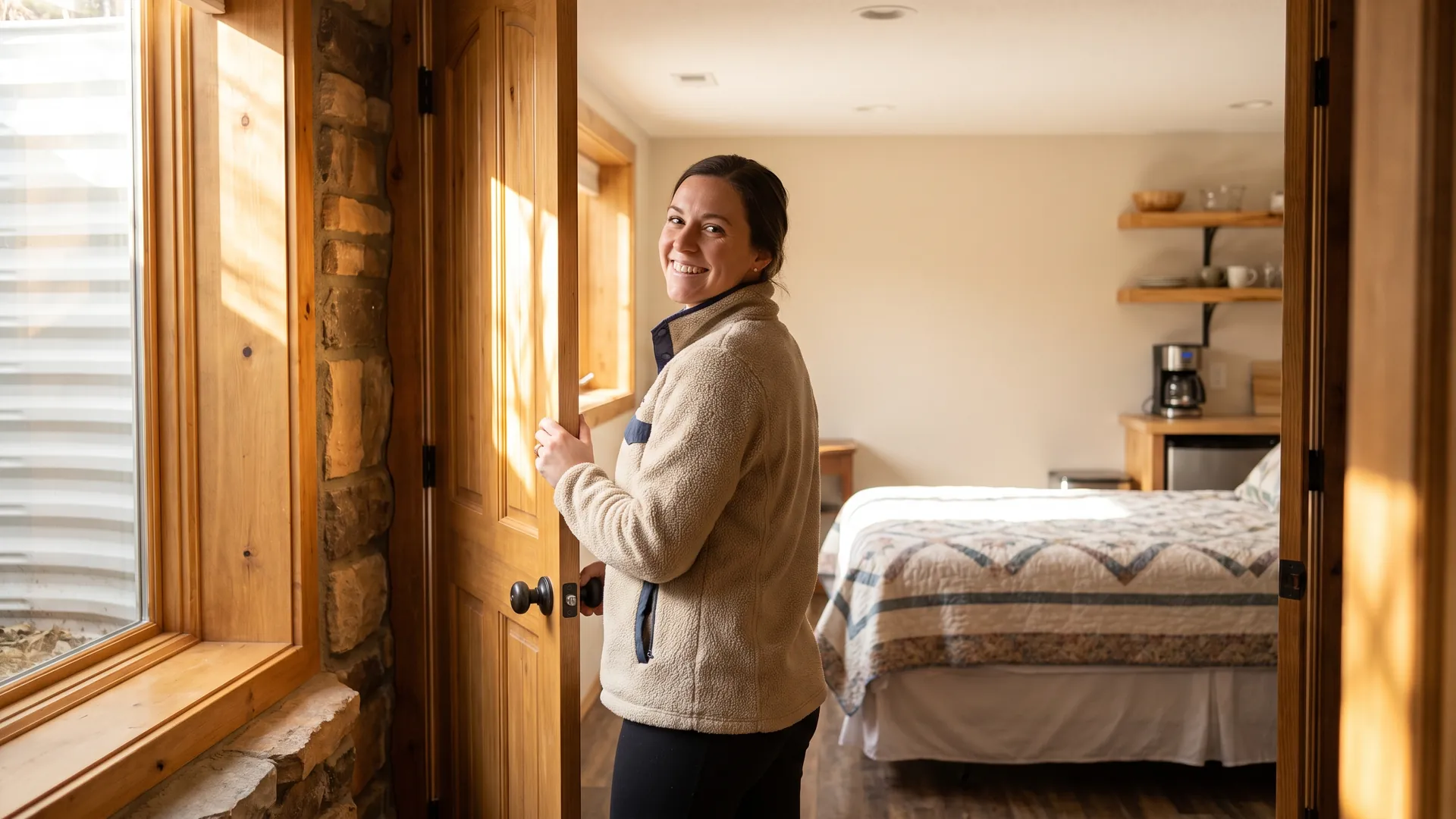
The most dependable ways to earn extra income from a home are renting living space, a spare bedroom, a finished basement, an accessory dwelling unit, or the whole house short term, followed by renting space you don’t live in, like a garage bay or a driveway. One line in the tax code separates them: rent your home for fewer than 15 days in the year and the IRS tells you not to report the income at all, and not to deduct rental expenses either. At 15 days or more, every dollar of rent is taxable and goes on Schedule E.
Renting living space almost always out-earns any other use of the same square footage, but carries the most rules. Learn the eight strategies, the five rules that can end a plan before it starts, how the money is taxed, and whether a lender will count it. Start with our Homeownership guide and our Taxes & Money hub.
Key takeaways:
- The 15-day line decides your tax treatment: Rent your home fewer than 15 days a year and the IRS says don’t report the income; at 15 days or more, all of it is taxable on Schedule E.
- Lenders cap the help at 30%: Fannie Mae, Freddie Mac, and FHA each limit boarder or accessory dwelling unit rental income to 30% of the income used to qualify you.
- Insurance is the cheapest gap to close: A typical homeowners policy carries only $2,500 of coverage for business equipment, and an endorsement doubling that to $5,000 can cost as little as $25.
What rules apply before you rent out part of your home?
Five rule sets decide whether a plan is legal, insured, and financeable. Clear all five before you spend a dollar on the space.
- Zoning and local ordinances: Michigan cities and townships regulate accessory dwelling units, short-term rentals, and home occupations through zoning ordinances adopted under the Michigan Zoning Enabling Act, Public Act 110 of 2006. Many require registration, a license, or an inspection.
- HOA and condo covenants: Associations frequently ban short-term rentals outright, set minimum lease terms, or cap how many units may be leased. Read the recorded declaration, not the website summary, our guide to homeowner association fees covers where those documents live.
- Homeowners insurance: A standard policy is written for a residence, not a business, and the business coverage inside it is thin, Insurance Information Institute guidance on insuring a business run from your home puts the typical homeowners limit for business equipment at $2,500, with an endorsement raising it to $5,000 available for as little as $25. Ask your carrier in writing whether renting is covered before the first tenant or booking; a landlord policy or a home-sharing endorsement may be required, and either can move your homeowners insurance deductibles.
- Mortgage occupancy terms: The Fannie Mae/Freddie Mac uniform security instrument on most conventional loans requires you to occupy the property as your principal residence within 60 days of signing and keep it that way for at least one year, unless the lender agrees in writing. Renting a room while you live there leaves that intact; moving out does not.
- Tax reporting: Rent is gross income. Advance rent counts in the year you receive it regardless of the period covered, and a security deposit you keep after a broken lease becomes income too.
8 ways to earn extra income from your home
These run from the most income per square foot to the most passive.
1. Rent a spare bedroom to a long-term roommate
A spare bedroom is the fastest income to switch on: no permit, no construction. Price it against local one-bedroom rents, since a private bathroom is the biggest lever on what it commands. Use a written lease. Once you accept rent, Michigan landlord-tenant law applies.
2. Finish a basement or in-law suite and rent it
A finished lower level with its own entrance rents far closer to a one-bedroom apartment than a shared bedroom does, which is why it out-earns option one on the same square footage. Budget the code items first: egress window, ceiling height, alarms, permitted rough-ins. Without a permit, an appraiser generally can’t count the space.
3. Add an accessory dwelling unit
An accessory dwelling unit, a garage conversion, above-garage apartment, or detached cottage, is the highest-cost, highest-payoff option, and the only one both Fannie Mae and Freddie Mac let you count rental income from on a one-unit primary residence. Freddie Mac allows one ADU on 1-, 2-, and 3-unit properties and requires legal, legal non-conforming, or unzoned status. See converting a garage into living space, the impact of home improvements on property taxes, and using home equity wisely or a home equity line of credit (HELOC).
4. Rent the whole home short term while you’re away
This is the one strategy with a built-in tax break: rent fewer than 15 days and you report nothing and deduct nothing. Past 14 days, income becomes reportable and expenses split by days, our guide to investing in short-term rentals covers operations.
5. Rent your garage or basement as storage
Storage is the closest thing here to passive income, because nobody lives in your space. Boxes, seasonal gear, a boat, or a car wintering indoors price against nearby self-storage rates. Ask your carrier whether someone else’s property is covered; most cover only yours.
6. Rent your driveway or parking pad
Parking produces the smallest figure of the eight and asks almost nothing once listed. It pencils out only near a stadium, hospital, campus, airport, or dense downtown. Check whether your municipality treats paid parking as commercial use.
7. Host events, photo shoots, and filming
Event and location hosting is episodic rather than monthly and can pay well for a distinctive house. It is also the riskiest of the eight on coverage, since a standard homeowners policy is not written for paying visitors.
8. House hack a 2- to 4-unit property
House hacking means buying a 2- to 4-unit building, living in one unit, and renting the others, the only item that changes what you buy. Because you occupy a unit, it is financed as a primary residence, not an investment property, which generally means better terms. House hacking strategies from investor forums are a reasonable start.
Which option earns the most for the effort?
Dollar amounts depend on local rents, so this table compares pricing, effort, and the first rule that can stop each.
| Strategy | How the income is priced | Effort | First rule to check |
|---|---|---|---|
| Spare bedroom | A share of local one-bedroom rent | Low after placement | Zoning occupancy limits |
| Basement or in-law suite | Close to a one-bedroom apartment | Moderate; construction first | Egress and permits |
| Accessory dwelling unit | A full one-bedroom rent, highest build cost | High up front, low after | Whether ADUs are permitted |
| Whole home, short term | Highest gross, lowest net after fees | High and continuous | Registration or licensing |
| Garage or basement storage | A fraction of self-storage pricing | Very low | Coverage for a customer’s property |
| Driveway or parking pad | Priced against nearby lots and meters | Lowest of the eight | Whether parking is commercial use |
| Events and photo shoots | Per booking, not per month | Moderate and irregular | Endorsement for paying visitors |
| House hack a 2- to 4-unit | Market rent on units you don’t occupy | Ongoing landlord duties | Occupancy terms |
What does a one-bedroom rent for in Michigan’s metro areas?
Several options above are priced against local one-bedroom rent, and HUD’s Fair Market Rent is a neutral public yardstick for it. HUD describes Fair Market Rents, as defined in 24 CFR 888.113, as estimates of 40th percentile gross rents for standard quality units within a metropolitan area or nonmetropolitan county.
| HUD Fair Market Rent area (counties) | Efficiency | One-bedroom | Two-bedroom |
|---|---|---|---|
| Ann Arbor (Washtenaw) | $1,458 | $1,503 | $1,804 |
| Detroit-Warren-Livonia (Lapeer, Macomb, Oakland, St. Clair, Wayne) | $1,047 | $1,167 | $1,459 |
| Livingston County | $1,168 | $1,291 | $1,477 |
| Grand Rapids-Wyoming (Kent) | $1,306 | $1,365 | $1,630 |
| Holland-Grand Haven (Ottawa) | $1,077 | $1,357 | $1,546 |
| Lansing-East Lansing (Clinton, Eaton, Ingham) | $1,036 | $1,054 | $1,323 |
| Grand Traverse County | $1,181 | $1,188 | $1,436 |
| Kalamazoo-Portage (Kalamazoo) | $885 | $1,013 | $1,158 |
| Monroe (Monroe) | $908 | $997 | $1,304 |
| Flint (Genesee) | $792 | $939 | $1,133 |
| Saginaw (Saginaw) | $795 | $893 | $1,141 |
Source: HUD Office of Policy Development and Research, FY 2027 Schedule of Metropolitan and Non-Metropolitan Fair Market Rents, monthly figures, counties as HUD lists them. Per HUD’s Federal Register notice of September 1, 2026, these figures took effect October 1, 2026.
HUD’s list of reevaluation requests names no Michigan area where older figures stay in effect; a Grand Rapids-Wyoming request lacked enough agency support, so the FY 2027 figures apply there too.
Our guides to analyzing rental market trends and analyzing a property’s rental potential show how to check rents closer to home.
How is income from your home taxed?
Rent becomes taxable the moment you cross 15 days of rental use in a year, and it goes on Schedule E, Part I of your Form 1040. Below that, the IRS is explicit the other way: rent a dwelling unit you also use as a home for fewer than 15 days and you report nothing and deduct nothing.
Once you’re reporting, you divide expenses between rental and personal use. Rent a 400-square-foot finished basement in a 2,000-square-foot house for $900 a month and that space is 20% of the living area, so roughly 20% of whole-house costs, mortgage interest, property tax, insurance, utilities, depreciation, is generally allocable to the rental, plus 100% of anything belonging only to that space.1 Where the split is driven by time instead, you divide by days used for each purpose.
Hypothetical example, not an offer. Actual rates, costs and payments vary.
- Depreciation runs 27.5 years: Residential rental property is depreciated over 27.5 years under the general depreciation system, straight line, mid-month convention. Land is never depreciated.
- Losses can be capped: Where you have personal use of a dwelling unit you also rent, including a residence in which you rent a room, your expenses and loss may be limited by the gross rental income limitation.
- Depreciation follows you to the sale: Section 121 excludes up to $250,000 of gain on a main home, or $500,000 filing jointly, if you owned and lived in it at least 24 months each within the 5 years ending on the sale date. But gain equal to depreciation adjustments allowed or allowable after May 6, 1997 can’t be excluded. It is recaptured under section 1250.
Good news for room renters: when the rented space sits inside your home rather than in a separate portion of the property, the IRS says you don’t need to allocate gain between the business part and the part used as a home. Recapture still applies. Read IRS Publication 527 on residential rental property before your first filing, and take the allocation question to a tax professional.2
Will a lender count the rental income when you apply?
Yes, up to 30%, all three major rulebooks land on the same cap, and each wants documentation built before you apply.
- FHA boarder income: Mortgagee Letter 2025-04, issued January 13, 2025 and required for case numbers assigned on or after March 14, 2025, lets lenders treat boarder rent as effective income when the occupying borrower has a 12-month history of receiving it and still receives it. You need 12 months of rental history, payments documented for at least nine of the most recent 12, proof the boarder’s address matches yours, and the executed written agreement. The amount used is the lesser of the 12-month average or current rent, capped at 30% of total monthly effective income, and an ADU renter is not a boarder.3
- HomeReady boarder income: Fannie Mae allows boarder income up to 30% of total gross qualifying income, with evidence the boarder lived with you the last 12 months and paid rent for those 12 months, or at least nine of the most recent 12 averaged over a year.
- Conventional ADU income: Fannie Mae caps qualifying ADU rental income at 30% of total qualifying income on a one-unit principal residence, allows only one ADU, restricts it to purchase and limited cash-out refinances, and requires a Single-Family Comparable Rent Schedule (Form 1007). Freddie Mac caps lease-documented ADU income at 75% of the lease amount, likewise limits qualifying rental income to 30%, and requires a full appraisal.
- FHA ADU income: Mortgagee Letter 2023-17, issued October 16, 2023, permits ADU income in effective income and requires the appraiser to include at least one comparable rental that is a single-family dwelling with a rented ADU.
Because Align is a broker, we can run one file against FHA, HomeReady, and Freddie Mac ADU rules through competing lenders and see which set treats your income best. A retail lender only knows its own program.
How much of the rent does a lender actually count?
The 30% caps above cover boarder and ADU rent. Other units of a 2- to 4-unit home you live in, and one-unit investment property, are figured differently: Fannie Mae’s Selling Guide topics B3-3.8-02 and B3-3.8-03 discount that rent by property type.
- 2- to 4-unit house hacks: Per Fannie Mae’s B3-3.8-02, Rental Income from the Subject Property (09/02/2026), a purchase starts from 75% of the monthly gross rent shown on Form 1007 or Form 1025, then subtracts the property’s full housing payment (PITIA). With 12 months or more of rental property management experience, a positive result can be used in full; with less, a positive result can only offset the property’s own PITIA.
- Short-term rentals: Fannie Mae’s B3-3.8-03, Rental Income from the Subject Property: Short-Term Rental (09/02/2026) defines a short-term rental as a furnished property rented for brief periods, typically less than 30 consecutive days, and accepts that income on one-unit investment properties only. The property must be legally permitted, including local registration, the income cannot come from an ADU, and a purchase counts 50% of market rent, the other 50% accounting for vacancy losses and maintenance expenses. Under those rules, renting your own home short term while you travel does not help you qualify. Local permits are covered in navigating short-term rental regulations.
- Boarders on a standard Fannie Mae loan: Outside HomeReady, B3-3.4-04, Boarder Income (03/04/2026) does not accept boarder rent as stable income, with one exception: rent that a borrower with disabilities receives from a live-in personal assistant, up to 30% of the total gross income used to qualify.
- HomeReady boarders: Per Fannie Mae’s HomeReady topic B5-6-02 (11/05/2025), the rule covers one-unit properties, the boarder cannot be obligated on the mortgage or hold an ownership interest, and rent the boarder pays directly to a third party is not acceptable.
- FHA accessory units: HUD’s Mortgagee Letter 2023-17 counts 75 percent of the lesser of the fair market rent reported by the appraiser or the rent in the lease when you have no rental history on the property since your last tax filing; with one, the lender averages your Schedule E income.
Hypothetical example, not an offer. Say the second unit of a duplex you will live in shows a market rent of $2,000 a month on the appraiser’s Form 1007. Fannie Mae’s 2- to 4-unit method in B3-3.8-02 starts from $1,500, which is 75%. If a one-unit investment property had the same $2,000 market rent as a short-term rental, the B3-3.8-03 purchase method would start from $1,000, which is 50%. Each figure is then reduced by that property’s housing payment before it touches your debt-to-income ratio.
Samantha Shelton, Align’s Broker Owner, on new investors’ rental math: “I don’t love a deal that only works when nothing goes wrong.” Our guides to buying a multi-family home, FHA loans and HomeReady mortgages cover the rest of each program.
What Michigan homeowners should know
Michigan adds two wrinkles most national articles miss: a property tax exemption that depends on how much of your home you rent, and a use tax that turns on how long guests stay.
- The principal residence exemption is worth up to 18 mills: Michigan’s PRE exempts an owner’s principal residence from the local school operating millage, up to 18 mills. File Form 2368 with your assessor by June 1 or November 1, our homestead exemption benefits and filing guide walks the form.
- Renting rooms usually doesn’t cost you the exemption: Michigan Treasury applies a 50% test. If less than 50% of the total square footage of living space is leased, the owner still qualifies for a full principal residence exemption; at 50% or more, only a partial exemption is allowed. A renter’s use of and access to common areas is not counted as leased square footage.
- Short stays can trigger the 6% use tax: Michigan’s 6% use tax (MCL 205.93) reaches rooms and lodging furnished by hotelkeepers, motel operators, and other persons furnishing accommodations to the public on a commercial basis under MCL 205.93a, which excludes rooms and lodging rented for a continuous period of more than one month. Ask Treasury where your arrangement falls.
- ADU and short-term rental rules are local: Michigan regulates both through municipal zoning ordinances under the Michigan Zoning Enabling Act. Statewide short-term rental bills have been introduced in recent sessions, but until one is enacted your local ordinance controls. A finished ADU is also new value on the roll, see how property tax assessments work.
What does Michigan landlord-tenant law require once you collect rent?
Michigan’s Landlord-Tenant Act defines a rental unit in MCL 554.601 as “a structure or part of a structure used as a home, residence, or sleeping unit by a single person or household unit,” including boarding houses and rooming houses. A rented bedroom, basement suite or ADU can fit that definition. Michigan Legal Help adds that paying utilities, buying groceries or providing a service in exchange for a room is like paying rent, so a judge could find a landlord-tenant relationship without cash rent. A security deposit brings these rules with it.
- Deposit cap: A security deposit cannot exceed 1 1/2 months’ rent under MCL 554.602.
- Written notice within 14 days: MCL 554.603 requires a written notice within 14 days after the tenant takes possession giving your name and address, the financial institution or surety holding the deposit, and the tenant’s duty to send a forwarding address within 4 days after moving out.
- Inventory checklists: Under MCL 554.608, you give the tenant 2 blank copies of a move-in checklist of items you own; the tenant returns one within 7 days, and at move-out you complete a matching checklist of claimed damages.
- Itemized damages within 30 days: MCL 554.609 requires a mailed notice of damages within 30 days after the occupancy ends, itemized with estimated repair costs, plus a check or money order for the balance, or an electronic transfer within 10 days after mailing the notice.
- The penalty for skipping steps: Within 45 days you either sue for the damages you claimed or return the balance, unless an exception in MCL 554.613 applies. Failing to comply fully waives all claimed damages and makes you liable for double the amount of the deposit retained.
What did Wilson v City of Grand Rapids decide about a roommate and the exemption?
The Michigan Court of Appeals took up that question in Wilson v City of Grand Rapids, published February 9, 2023. The Tax Tribunal had denied an owner the exemption for 2019 and 2020 because her roommate had access to common areas; the court reversed and ordered the exemption granted for both years. Michigan Treasury’s guidance on the partial principal residence exemption cites the case and lists factors for measuring leased square footage, including the owner-renter agreement, areas under the renter’s exclusive possession, and subleasing rights.
What safety and disclosure rules apply when you rent part of your home?
Escape openings for a basement bedroom
LARA’s Bureau of Construction Codes lists the 2015 Michigan Residential Code, effective February 8, 2016, as the current residential code. Its section R310 requires basements, habitable attics and every sleeping room to have at least one operable emergency escape and rescue opening, and a basement with sleeping rooms needs one in each of them. Whether the unit is allowed at all is a zoning question.
| R310 item | Requirement |
|---|---|
| Net clear opening | At least 5.7 square feet; 5 square feet for a grade-floor or below-grade opening |
| Opening height and width | At least 24 inches high and 20 inches wide |
| Window sill | No more than 44 inches above the floor |
| Window well | At least 9 square feet, with a projection and width of at least 36 inches |
| Ladder or steps | Permanently affixed when the well is deeper than 44 inches |
Source: Ypsilanti Township Building Department, Emergency Escape Windows handout (updated April 25, 2025), quoting section R310 of the 2015 code. See home insurance and renovations and FHA 203(k) loans for the build-out.
Lead paint disclosure in homes built before 1978
If your home was built before 1978, the EPA’s Lead-Based Paint Disclosure Rule reaches leases as well as sales. Before a renter signs, you give them EPA’s lead pamphlet, disclose known lead-based paint or hazards, share available reports, and include a Lead Warning Statement in the lease. The rule at 40 CFR 745.101 covers leases and subleases but exempts short-term leases of 100 days or less where no renewal or extension can occur, and EPA lists zero-bedroom units such as efficiencies and lofts as exempt unless a child under the age of six lives or is expected to live there.
How Align handles Michigan property taxes
The year after a Michigan home sells, its taxable value resets to half of the assessor's market value, so the seller's tax bill is not your tax bill. Samantha quotes the number you will pay, and she quotes it on the high side on purpose.
Veterans may owe far less. Michigan's Disabled Veterans Exemption removes property taxes on the home a qualifying disabled veteran lives in, and Samantha points eligible buyers to it.
See the Michigan uncapping study
Sources: Michigan Treasury, transfer of ownership and uncapping; Michigan Treasury, Disabled Veterans Exemption (MCL 211.7b).
FAQ: Using your home for extra income
Here are answers to common questions about using your home for extra income.
Do I need to tell my mortgage lender if I rent out part of my home?
Usually not for renting a room in a home you still occupy, since your occupancy is intact. Converting the whole home to a rental is different and can conflict with the occupancy clause in a primary-residence mortgage. Read your note, and if you plan to move out and rent the property, talk to your lender or broker first, our guide to becoming a landlord covers the rest.
Is rental income from my home taxable?
Yes. Rent you receive is taxable and belongs on your return, but you can deduct expenses tied to the rented portion, mortgage interest, property tax, insurance, utilities, repairs, and depreciation, usually allocated by square footage or days rented. Depreciation also shrinks what you can exclude at sale, as our explainer on capital gains tax exemptions covers in detail.
Will renting out a room affect my homeowners insurance?
It can. A standard homeowners policy may limit or exclude coverage for a paying tenant’s liability and belongings, and short-term rental activity is frequently excluded outright. Call your carrier before the first booking and ask about a home-sharing endorsement or a landlord policy; start by evaluating your home insurance options. Platform protection is a supplement, not a substitute.
What is the most passive way to earn income from my home?
Renting unused non-living space: a garage bay, a section of basement, a driveway, or a parking pad. No guests in your living area, minimal turnover, almost no cleaning. The income is modest next to a bedroom, but once listed with a written agreement the time cost is near zero, far less than managing a rental property.
Can I make a roommate leave without going to court in Michigan?
Not lawfully. A Michigan owner recovers possession through summary proceedings in district court under MCL 600.5714, after written notice: 7 days for unpaid rent, or one month, or one rental interval, to end a month-to-month tenancy under MCL 554.134. Changing locks, removing belongings or cutting heat or water can cost actual damages or $200, whichever is greater, for each occurrence under MCL 600.2918. The court’s form DC 100c is the standard notice to quit.
Will I get a 1099-K for short-term rental income?
Only above a threshold. According to the IRS page on Form 1099-K, last reviewed June 28, 2026, payment apps and online marketplaces must file the form when your payments through the platform exceed $20,000 in more than 200 transactions, and send you a copy by January 31, though they may send one for less. The IRS says to use the form with your other records to figure and report your taxable income.
How many days can I use my rental myself before the IRS treats it as my home?
Fourteen days, or 10% of the days it is rented at a fair rental, whichever is greater. Under 26 U.S.C. 280A(d), personal use beyond that makes the unit a residence for tax purposes, which brings in the expense limits described above. A day generally counts as personal if you, a co-owner or a family member uses the unit for any part of it. Our guide to real estate depreciation covers the next step.
What do I have to tell a rental applicant I turn down because of a screening report?
Federal law requires you to tell them a tenant screening or credit report was used to deny them housing, according to the Consumer Financial Protection Bureau. You give them the contact information for the company that made the report, their right to dispute what it says, and their right to a free copy if they ask within 60 days. These reports can include credit, eviction actions, employment verification and criminal history.
Do I pay Michigan income tax on rent from a room?
Yes, once the rent is taxable on your federal return. Under MCL 206.30, Michigan taxable income starts from federal adjusted gross income, so net rent from Schedule E carries into your Michigan return. Treasury’s notice of April 15, 2026 sets the 2026 individual rate at 4.25%. Treasury also lists 24 Michigan cities that levy taxes related to income, including Detroit, Grand Rapids and Lansing.
The bottom line on using your home for extra income
Renting living space earns the most; storage and parking earn the least while asking the least of you. The tax treatment turns on one threshold: fewer than 15 rental days a year and you report nothing, at 15 or more everything is taxable on Schedule E with expenses split between rental and personal use. If you want the income to help you borrow, Fannie Mae and FHA cap boarder income at 30% of qualifying income and want roughly a year of documented payments, and Fannie Mae and Freddie Mac cap ADU rental income at 30% too. Clear zoning, HOA, insurance, and occupancy first.
If you’re ready to finance an ADU, a basement conversion, or a 2- to 4-unit house hack, talk to Align Lending. We’ll shop your scenario across our lender network and show you which program counts your rental income and what it costs, side by side. Call 248-506-5727 or start online.
Footnotes:
1. Example figures in this article are hypothetical and for educational purposes only; they do not constitute an advertisement of credit terms, a rate quote, or tax advice under federal or state law. Your allocation, deductible expenses, and results depend on your own square footage, days of rental and personal use, expenses, and filing position. Return to text.
2. This is general information, not tax advice. Federal and state tax rules, dollar limits, and thresholds change and are subject to annual adjustment, and how they apply depends on your individual circumstances. Consult a qualified tax professional about your situation before you rent, deduct, or file. Return to text.
3. Align Lending is not acting on behalf of or at the direction of FHA or HUD. FHA policies for rental income from boarders and accessory dwelling units are set by HUD in Mortgagee Letters and the FHA Single Family Housing Policy Handbook 4000.1 and are subject to change. Return to text.
Sources: the rule that a dwelling unit rented fewer than 15 days is not reported and generates no deductible rental expenses; allocation of expenses between rental and personal use by days; the gross rental income limitation on rental expenses; and reporting on Schedule E (Form 1040), IRS Topic No. 415 and IRS Publication 527. Rent as gross income, advance rent included in the year received, retained security deposits as income, deductible expenses including mortgage interest, property tax, operating expenses, depreciation and repairs, reporting on Form 1040 Schedule E Part I, and the limitation on expenses and loss where there is personal use of a rented dwelling unit including a residence in which a room is rented, IRS, Tips on Rental Real Estate Income, Deductions and Recordkeeping. Residential rental property recovery period of 27.5 years under the general depreciation system, straight line method and mid-month convention, IRS Publication 527. Section 121 exclusion of up to $250,000, and up to $500,000 on a joint return, with 24-month ownership and 24-month use tests inside the 5 years ending on the sale date, IRS Topic No. 701. The rule that gain equal to section 1250(b)(3) depreciation adjustments allowed or allowable after May 6, 1997 cannot be excluded and must be recaptured, and the rule that no allocation of gain is required where the business or rental space is within the home, IRS Publication 523. FHA rental income from boarders: the 12-month history requirement; required documentation of 12 months of rental history, payments for at least nine of the most recent 12 months, matching-address evidence and an executed written agreement; calculation as the lesser of the 12-month average or current rent; the 30% of total monthly effective income cap; and the provision that a renter of an ADU is not a Boarder, FHA Mortgagee Letter 2025-04 (January 13, 2025; must be implemented for case numbers assigned on or after March 14, 2025). FHA treatment of accessory dwelling unit rental income and the comparable-rental appraisal protocol, FHA Mortgagee Letter 2023-17 (October 16, 2023). ADU rental income limited to 30% of total qualifying income on a one-unit principal residence, one ADU only, purchase or limited cash-out refinance, and the Form 1007 requirement, Fannie Mae Selling Guide B3-3.8-01, Rental Income (10/08/2025). Boarder income up to 30% of total gross qualifying income, with 12-month shared residency and payment documentation for 12 months or at least nine of the most recent 12 averaged over 12 months, Fannie Mae Selling Guide B5-6-02 (11/05/2025). One ADU allowed on 1-, 2- and 3-unit properties; zoning compliance as legal, legal non-conforming or no zoning; lease-documented ADU rental income capped at 75% of the lease amount; qualifying rental income capped at 30% of total qualifying income; purchase or no-cash-out refinance only; and appraisal required with no ACE waiver, Freddie Mac Single-Family Accessory Dwelling Units fact sheet (February 2026) and Seller/Servicer Guide Chapter 5306. Occupancy within 60 days of executing the security instrument and continued occupancy as a principal residence for at least one year, Fannie Mae/Freddie Mac Uniform Security Instrument; Freddie Mac Single-Family Seller/Servicer Guide Section 8405.1. Typical homeowners policy limit of $2,500 for business equipment and a homeowners policy endorsement raising that limit to $5,000 for as little as $25, Insurance Information Institute, “Insuring Your Home-based Business.” Principal residence exemption of up to 18 mills of local school operating tax and Form 2368 deadlines of June 1 and November 1, Michigan Department of Treasury. Full principal residence exemption where less than 50% of the total square footage of living space is leased, partial exemption where 50% or more is rented, and exclusion of a renter’s use of and access to common areas from leased square footage, MCL 211.7dd(c) and Michigan Department of Treasury, Principal Residence Exemption Guidelines, Partial Principal Residence Exemption. Michigan use tax rate of 6%, MCL 205.93(1); application of the use tax to rooms or lodging furnished by hotelkeepers, motel operators and other persons furnishing accommodations available to the public on a commercial basis, and the exclusion for rooms and lodging rented for a continuous period of more than one month, MCL 205.93a. Municipal authority to regulate land use through zoning ordinances, Michigan Zoning Enabling Act, Public Act 110 of 2006, MCL 125.3101 et seq.
This article is for informational purposes only and is not intended to provide legal, financial, or tax advice. Tax rules, dollar limits, insurance terms, loan program guidelines, and local ordinances change and depend on your individual circumstances; confirm your figures with your own documents and consult a qualified tax professional, your insurance carrier, and your municipality about your situation. Figures shown are illustrative, are not a rate quote or an offer of credit, and are subject to change. Align Lending is an independent Michigan mortgage broker, NMLS #2041154.
Sources
Every outside source this guide links to, in the order it appears. How we choose and check sources
- Insurance Information Institute guidance on insuring a business run from your homeInsurance Information Institute
- Estimates of 40th percentile gross rents for standard quality unitsHUD Office of Policy Development and Research
- FY 2027 Schedule of Metropolitan and Non-Metropolitan Fair Market RentsHUD Office of Policy Development and Research
- HUD’s Federal Register notice of September 1, 2026govinfo.gov
- List of reevaluation requestsHUD Office of Policy Development and Research
- IRS Publication 527 on residential rental propertyInternal Revenue Service
- Mortgagee Letter 2025-04, issued January 13, 2025U.S. Department of Housing and Urban Development
- Mortgagee Letter 2023-17, issued October 16, 2023U.S. Department of Housing and Urban Development
- B3-3.8-02, Rental Income from the Subject Property (09/02/2026)Fannie Mae Selling Guide
- B3-3.8-03, Rental Income from the Subject Property: Short-Term Rental (09/02/2026)Fannie Mae Selling Guide
- B3-3.4-04, Boarder Income (03/04/2026)Fannie Mae Selling Guide
- Fannie Mae’s HomeReady topic B5-6-02 (11/05/2025)Fannie Mae Selling Guide
- MCL 554.601Michigan Legislature
- Michigan Legal Helpmichiganlegalhelp.org
- MCL 554.602Michigan Legislature
- MCL 554.603Michigan Legislature
- MCL 554.608Michigan Legislature
- MCL 554.609Michigan Legislature
- MCL 554.613Michigan Legislature
- Wilson v City of Grand RapidsState of Michigan
- Guidance on the partial principal residence exemptionState of Michigan
- 2015 Michigan Residential Code, effective February 8, 2016State of Michigan
- Emergency Escape Windows handoutfiles.ypsitownship.org
- Lead-Based Paint Disclosure RuleU.S. Environmental Protection Agency
- 40 CFR 745.101Electronic Code of Federal Regulations
- MCL 600.5714Michigan Legislature
- MCL 554.134Michigan Legislature
- MCL 600.2918Michigan Legislature
- Form DC 100cState of Michigan
- IRS page on Form 1099-KInternal Revenue Service
- 26 U.S.C. 280A(d)law.cornell.edu
- Consumer Financial Protection Bureau
- MCL 206.30Michigan Legislature
- Notice of April 15, 2026State of Michigan
- Lists 24 Michigan citiesState of Michigan
- IRS Topic No. 415Internal Revenue Service
- IRS Topic No. 701Internal Revenue Service
- IRS Publication 523Internal Revenue Service
- MCL 211.7dd(c)Michigan Legislature
- MCL 205.93(1)Michigan Legislature
- MCL 125.3101 et seqMichigan Legislature
Related resources

12-minute read
How to budget for home maintenance: The 1% rule and more
Learn how to budget for home maintenance with the 1% to 3% rule and the dollar-per-square-foot method, and how to size the fund for an older home.

12-minute read
The impact of home improvements on property taxes
Learn how home improvements affect property taxes, which projects trigger reassessment, which don’t, and how Michigan’s Proposal A cap changes the math.

13-minute read
Property Tax Assessments: How They Work and How to Appeal Yours
Learn how property tax assessments work, why a higher assessed value may not raise your bill, and the step-by-step process for filing a winning appeal.
