
Homestead exemption: Benefits, eligibility, and how to file
This article is for informational purposes only and is not intended to provide legal, financial, or tax advice. Exemption amounts, eligibility rules, and filing deadlines are set state by state and change. Confirm your figures with your local assessor and consult a qualified tax professional.
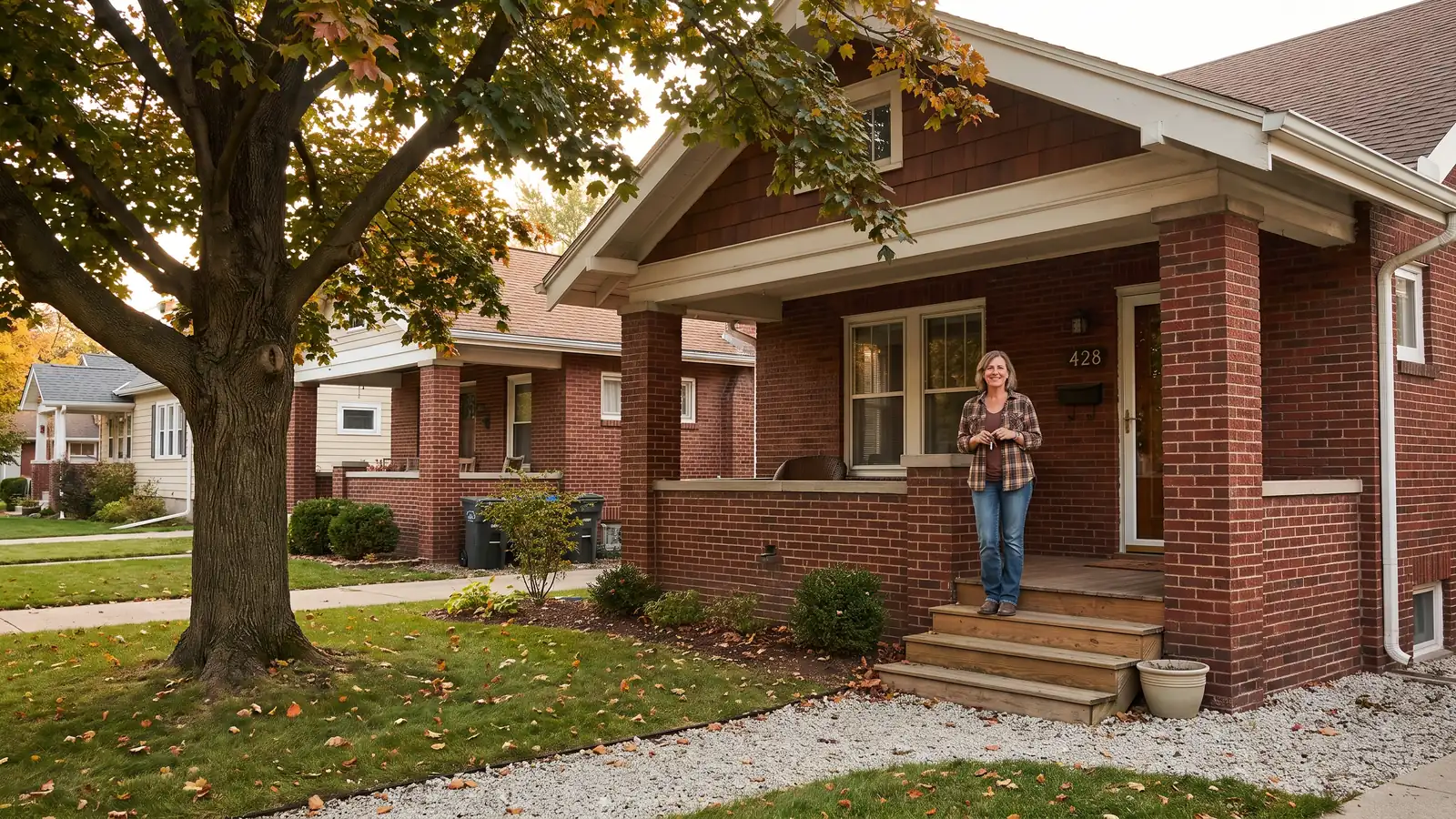
A homestead exemption removes part of your primary residence from the property tax base, which lowers your annual tax bill, and in most states it also shields a slice of your home equity from certain unsecured creditors. How large the break is depends on where the house sits: Michigan exempts a principal residence from up to 18 mills of local school operating tax, Texas exempts $140,000 of value from school district taxes, and Florida exempts up to $50,000 of assessed value. On a Michigan home carrying $100,000 of taxable value, lifting 18 mills is worth roughly $1,800 a year.1
Two conditions qualify you almost everywhere: you own the property, and you occupy it as your principal residence. Second homes and rentals are out. In most states the exemption is not switched on when your deed records, you file for it, and the deadline decides which tax year it starts.
Learn what a homestead exemption is, how it changes the math on your tax bill, who qualifies, how to file it, and what Michigan’s version does to your escrow payment. For the wider picture of what owning costs, start with our Homeownership guide and our Taxes and Money hub.
Key takeaways:
- It shrinks the taxed value, not the tax rate: Michigan lifts up to 18 mills of school operating tax off a principal residence, Texas exempts $140,000 of value from school taxes, Florida up to $50,000 of assessed value.
- Ownership plus occupancy is the whole test: You must own the home and live in it as your principal residence, and Michigan lets an owner claim exactly 1 exemption, rentals and second homes qualify nowhere.
- Deadlines decide the tax year: Michigan takes the affidavit through June 1 for the summer levy and November 1 for the winter levy, and once the home stops being your principal residence you have 90 days to rescind or face $5 a day, up to $200.
What is a homestead exemption?
A homestead exemption is a state-created benefit that removes part of the value of your primary residence from property taxation, and in most states also protects a portion of your home equity from certain creditors. It belongs to the property and your occupancy of it, not to you personally, so it does not travel to your next house on its own.
The name changes at the state line, Michigan’s is the Principal Residence Exemption, or PRE; Maryland’s is the Homestead Tax Credit, but the instinct is the same everywhere: tax the roof over someone’s head more gently than the rental duplex down the street.
Two things it is not. It is not a state income tax credit that happens to share the name; Michigan’s Department of Treasury says the PRE “is distinct from the Michigan Homestead Property Tax Credit, which applies to income tax returns.” And it is not a challenge to your assessment. If you think the value itself is wrong, that’s an appeal.
How does a homestead exemption lower your property tax bill?
It works on the value side of the equation, not the rate side. Your bill is roughly taxable value multiplied by the millage rate, and a mill is $1 of tax for every $1,000 of taxable value. An exemption subtracts either value before the multiplication or mills from the multiplier, the taxed number drops while the rate your local units voted stays put.
Michigan runs the second design. Property is assessed at 50% of its true cash value under state law, so a home worth $200,000 on the open market carries about $100,000 of taxable value. The PRE exempts that home from the local school operating levy, up to 18 mills. Eighteen mills against $100,000 is $1,800, money that never lands on the bill.2
Texas runs the first design. Under Texas Tax Code Section 11.13(b), school districts must exempt $140,000 of a residence homestead’s value. The Comptroller’s example is a $300,000 home taxed by the school district as if it were worth $160,000.
One caution before you count the savings: an exemption cuts the tax you owe, which also cuts the property tax you could deduct if you itemize. That deduction is capped anyway, the IRS limits the combined state and local tax deduction to $40,000, or $20,000 if married filing separately, phased down at higher incomes but never below $10,000.3 Our roundup of first-time home buyer tax credits covers the federal side.
Tax savings vs. creditor protection: what an exemption actually does
Two different benefits share one word. The property tax exemption is an annual discount from your local assessor. The homestead protection is a shield in a lawsuit or bankruptcy, set by state and federal law. Only one shows up on a tax bill.
| Feature | Property tax exemption | Creditor protection |
|---|---|---|
| What it reduces | The value or millage your home is taxed on | The equity a creditor can reach |
| Who grants it | Your city or township assessor | State exemption statutes and federal bankruptcy law |
| How you get it | File an affidavit or application by the deadline | Claimed in the proceeding; often automatic by residency |
| Typical reference figure | Up to 18 mills in Michigan; $140,000 in Texas | $31,575 under the federal bankruptcy exemption |
| What it does not do | Fix a valuation you think is too high | Stop mortgage foreclosure or a property tax lien |
That last row is the one people get wrong. The federal bankruptcy exemption for a residence rose to $31,575 effective April 1, 2025, and Michigan’s own starts at a statutory $30,000, or $45,000 if the filer or a dependent is 65 or older or disabled, adjusted for inflation by the state treasurer every three years. But federal law is explicit that exempt property stays liable for a debt secured by a lien that hasn’t been avoided, and for a properly filed tax lien. Translation: it does nothing against your mortgage lender or your county treasurer.4 For the legal mechanics, see this explainer on how homestead exemptions work legally.
Who qualifies for a homestead exemption?
You qualify if you hold an ownership interest in the property and occupy it as your principal residence. That pairing is the core test in every state that offers one. Everything else is a state-level wrinkle on top.
- An ownership interest: Your name has to be on the title, land contract, or equivalent interest. Michigan’s affidavit requires you to state you own and occupy the property on the date you sign it.
- Actual occupancy, not intent: Michigan defines a principal residence as the one place that is your true, fixed, and permanent home, and to which you intend to return whenever you’re away.
- One home, one exemption: Michigan law lets an owner claim exactly 1 exemption, and the affidavit makes you state you have not claimed a substantially similar exemption, deduction, or credit in another state.
- Extra exemptions for some owners: Many states stack additional relief for seniors, veterans, and disabled homeowners. Texas school districts must add a $60,000 exemption for owners 65 or older or disabled on top of the $140,000 general amount.
- What disqualifies you: Rentals, second homes, vacation properties, and anything held for business use.
How to file for a homestead exemption in 4 steps
Filing is a one-page form and a deadline, and the deadline is what costs people money.
1. Confirm your state’s rule and its deadline
Start with the assessor for the city, township, or county where the property sits, not the state. The deadline is what you’re after, because it decides which tax year your exemption starts. Michigan’s dates are June 1 and November 1; Texas sets a general filing deadline before May 1; Florida’s is March 1. Rules move, so check the current year, not what a neighbor remembers.
2. Gather proof of ownership and occupancy
Assessors want two things documented: that you own it and that you live in it. Have your recorded deed or closing package, a driver’s license showing the property address, and a utility bill in your name there. Seniors, veterans, and disabled applicants need separate documentation.
3. File with the assessor before the deadline
Submit the form to the local assessing office, in person, by mail, or online where that’s offered. In Michigan it’s Form 2368, filed with the local tax collecting unit where the property sits. Keep a date-stamped copy, a form filed a day late costs an entire levy.
4. Keep it, or rescind it when things change
Most exemptions are file-once. Michigan’s PRE stays in place until the property is transferred or stops being your principal residence, with no annual renewal. The obligation flips when you move: rescind the old one, file a new affidavit on the new home. Because additions change the taxable value the exemption applies against, read our guide to the impact of home improvements on property taxes first.
How homestead exemptions differ by state
Four states, four different mechanisms. Which is why a dollar figure you read about Texas tells you nothing about your Michigan bill. Property taxes are among the largest recurring costs of ownership, a burden tracked in NAR research on homeownership and property tax burdens.
| State | How the benefit works | Filing |
|---|---|---|
| Michigan | Exempts a principal residence from local school operating tax, up to 18 mills | Form 2368 with the local assessor by June 1 or November 1 |
| Texas | School districts exempt $140,000 of value; taxing units may add up to 20% locally | Application to the county appraisal district, generally before May 1 |
| Florida | Exempts up to $50,000 of assessed value and caps annual assessment growth at 3% or CPI, whichever is lower | Application to the county property appraiser by March 1 |
| Maryland | Credits any taxable assessment increase above 10% a year, or a lower local cap | One-time application with the state assessments department |
Notice the split: Michigan and Texas cut what gets taxed this year, while Florida and Maryland also cap how fast the taxed value can climb, worth more the longer you stay.
What Michigan homeowners should know
Michigan’s Principal Residence Exemption is worth up to 18 mills of local school operating tax. The largest line most Michigan homeowners can remove from a bill by filing a form. The rules sit at MCL 211.7cc and 211.7dd, and are published in Michigan’s Principal Residence Exemption rules.
- Two deadlines, two levies: File Form 2368 on or before June 1 and the exemption applies to the immediately following summer levy and every levy after it. File after June 1 but on or before November 1 and it starts with the winter levy instead. New buyers miss this constantly, ask at the closing table, not in April.
- Rescinding runs on a 90-day clock: Once the property is no longer your principal residence, you have not more than 90 days to file Form 2602, or face a penalty of $5 per day for each separate failure, capped at $200. If you’ve moved but the old house hasn’t sold, Form 4640 can instead hold the PRE for up to three consecutive years while the home stays unoccupied, for sale, unleased, and non-commercial.
- Wrongly claimed exemptions get audited backward: Treasury may review exemptions for the current calendar year and the 3 immediately preceding calendar years. A denial brings a corrected bill for the exempted millage plus interest at 1.25% per month and penalties, appealable to the Michigan Tax Tribunal’s residential and small claims division within 35 days.
- The PRE is not the Homestead Property Tax Credit: The credit is a separate income tax benefit on Form MI-1040CR for 2025, capped at $1,900, phasing out above $62,500 of total household resources, gone above $71,500, and closed to homes with taxable value over $165,400. You can qualify for both.
The PRE also lands in your monthly payment, not just your tax bill. Most Michigan borrowers escrow their taxes, and as the CFPB puts it, when property taxes change, your escrow payment and your total monthly payment change with them. Servicers send an annual escrow statement within 30 days of the end of each escrow computation year, so a PRE filed today usually reaches your payment at the next analysis, see how mortgage escrow accounts work and our Taxes and Money hub.
How Align handles Michigan property taxes
The year after a Michigan home sells, its taxable value resets to half of the assessor's market value, so the seller's tax bill is not your tax bill. Samantha quotes the number you will pay, and she quotes it on the high side on purpose.
Veterans may owe far less. Michigan's Disabled Veterans Exemption removes property taxes on the home a qualifying disabled veteran lives in, and Samantha points eligible buyers to it.
See the Michigan uncapping study
Sources: Michigan Treasury, transfer of ownership and uncapping; Michigan Treasury, Disabled Veterans Exemption (MCL 211.7b).
FAQ: Homestead exemption
Here are answers to common questions about homestead exemptions.
How much does a homestead exemption save?
It depends on your state’s formula and your local millage rate. Some states exempt a flat dollar amount of assessed value, others a percentage, others a block of mills. In Michigan, the Principal Residence Exemption removes up to 18 mills of local school operating tax, so on a home with $100,000 of taxable value the savings reach roughly $1,800 a year.
Does a homestead exemption apply to a rental or vacation home?
No. These exemptions apply only to the home you occupy as your primary residence. Second homes, vacation properties, and rentals are excluded, and claiming one anyway can trigger back taxes, interest, and penalties. Convert your home to a rental and you must notify the assessor and rescind.
What happens to my exemption when I sell my home?
It belongs to the property and your occupancy of it, so it does not travel with you. When you sell, file a rescission with the assessor, then file fresh on your next primary residence. Timing matters, because the deadline determines which tax year the new exemption first applies to. In Michigan a sale also resets the property’s taxable value, and so can renovations, see home improvements and property taxes.
Does a homestead exemption stop foreclosure?
No. Homestead protections can shield some home equity from certain unsecured creditors and in some bankruptcy situations, but they do not protect against foreclosure for unpaid mortgage payments or unpaid property taxes. Those debts are secured by the home itself, so the exemption is no defense against your lender or the taxing authority. If falling behind on taxes is the worry, escrowing your taxes with your mortgage is the better protection.
The bottom line on the homestead exemption
A homestead exemption removes part of your primary residence from the property tax base, and in most states also shields some home equity from certain unsecured creditors. Michigan’s version, the Principal Residence Exemption, lifts up to 18 mills of local school operating tax off a qualifying home, roughly $1,800 a year on $100,000 of taxable value, claimed on Form 2368 with your local assessor by June 1 for the summer levy or November 1 for the winter levy. Own it, live in it, file on time, rescind within 90 days.
If you’re ready to buy in Michigan and want to see what your payment really looks like with taxes and escrow built in, talk to Align Lending. We’ll shop your scenario across our lender network and put the numbers side by side. Call 248-506-5727 or start online.
Footnotes:
1. Example figures in this article are hypothetical and for educational purposes only; they do not constitute an advertisement of credit terms or a rate quote under federal or state lending laws. Actual savings depend on your property’s taxable value, your local millage rates, and your state’s exemption rules. Return to text.
2. The $200,000 home and $100,000 taxable value used here are illustrative round numbers, not an appraisal or an assessment. Michigan taxable value is capped separately from assessed value and is set by your assessor; confirm your figures on your assessment notice or with your local assessing office. Return to text.
3. This is general information, not tax advice. Whether property taxes benefit you at all depends on whether you itemize and on your individual circumstances, and the state and local tax deduction limit is subject to income-based phase-downs. Consult a qualified tax professional about your situation. Return to text.
4. This is general information, not legal advice. Bankruptcy and creditor exemption amounts depend on your state, your filing date, how long you have owned the property, and which set of exemptions applies to your case. Consult a licensed attorney about your situation. Return to text.
Sources: Principal Residence Exemption exempting an owner’s principal residence from the local school operating millage up to 18 mills, and the definition of principal residence, Michigan Department of Treasury and MCL 211.7dd(c). Filing an affidavit on or before June 1 for the immediately succeeding summer tax levy or on or before November 1 for the immediately succeeding winter tax levy, the limit of 1 exemption per owner, the requirement to rescind not more than 90 days after the property is no longer used as a principal residence, the penalty of $5.00 per day up to $200.00, Treasury review of exemptions for the current calendar year and the 3 immediately preceding calendar years, corrected tax bills with interest at 1.25% per month, and appeal to the residential and small claims division of the Michigan Tax Tribunal within 35 days, MCL 211.7cc. Form 2368, Principal Residence Exemption Affidavit, and Form 2602, Request to Rescind Principal Residence Exemption, Michigan Department of Treasury. Conditional rescission on Form 4640 for up to three consecutive years where the property is unoccupied, for sale, not leased and not used commercially, with annual refiling on or before December 31, Michigan Department of Treasury. Assessment at 50% of true cash value and the taxable value limitation of the lesser of 1.05 or the inflation rate, MCL 211.27a. A mill equal to $1 of tax for each $1,000 of taxable value, Michigan Legislature Taxpayer’s Guide. 2025 Michigan Homestead Property Tax Credit limits of $1,900, $62,500, $71,500 and $165,400, Michigan Department of Treasury. Michigan bankruptcy homestead exemption of $30,000.00, or $45,000.00 for a debtor or dependent who is 65 or older or disabled, and triennial adjustment by the state treasurer, MCL 600.5451. Federal bankruptcy residence exemption adjusted to $31,575 effective April 1, 2025, Judicial Conference of the United States, 90 Fed. Reg. 8941 (Feb. 4, 2025). Exempt property remaining liable for a debt secured by an unavoided lien and for a properly filed tax lien, 11 U.S.C. § 522(c)(2). School district residence homestead exemption of $140,000, local option exemptions up to 20%, the additional $60,000 exemption for owners 65 or older or disabled, and the general filing deadline before May 1, Texas Tax Code §§ 11.13(b), (c), (d) and (n) and the Texas Comptroller of Public Accounts. Florida homestead exemption of up to $50,000 in two $25,000 layers, the March 1 application deadline, and the Save Our Homes assessment limitation of 3 percent or the change in the Consumer Price Index, whichever is lower, Florida Department of Revenue. Maryland Homestead Tax Credit limiting taxable assessment increases to 10% or less each year and the one-time application requirement, Maryland Department of Assessments and Taxation. State and local tax deduction limit of $40,000 ($20,000 if married filing separately), subject to a modified adjusted gross income limitation but not reduced below $10,000, IRS Topic No. 503. Escrow payments and total monthly payments changing with property taxes, Consumer Financial Protection Bureau; annual escrow account statement within 30 calendar days of the end of the escrow account computation year, 12 CFR § 1024.17(i).
This article is for informational purposes only and is not intended to provide legal, financial, or tax advice. Homestead exemption amounts, eligibility rules, filing deadlines and creditor protections are set by state law, vary by jurisdiction, and change; confirm your figures with your local assessor and consult a qualified professional about your situation. Figures shown are illustrative, are not a rate quote or an offer of credit, and are subject to change. Align Lending is an independent Michigan mortgage broker, NMLS #2041154.
Related resources

12-minute read
How to budget for home maintenance: The 1% rule and more
Learn how to budget for home maintenance with the 1% to 3% rule and the dollar-per-square-foot method, and how to size the fund for an older home.

12-minute read
The impact of home improvements on property taxes
Learn how home improvements affect property taxes, which projects trigger reassessment, which don’t, and how Michigan’s Proposal A cap changes the math.

13-minute read
The cost of home repairs: Planning for the unexpected
Find out how much to budget for home repairs each year, which systems cost the most to replace, and how to build a repair fund before an emergency.
