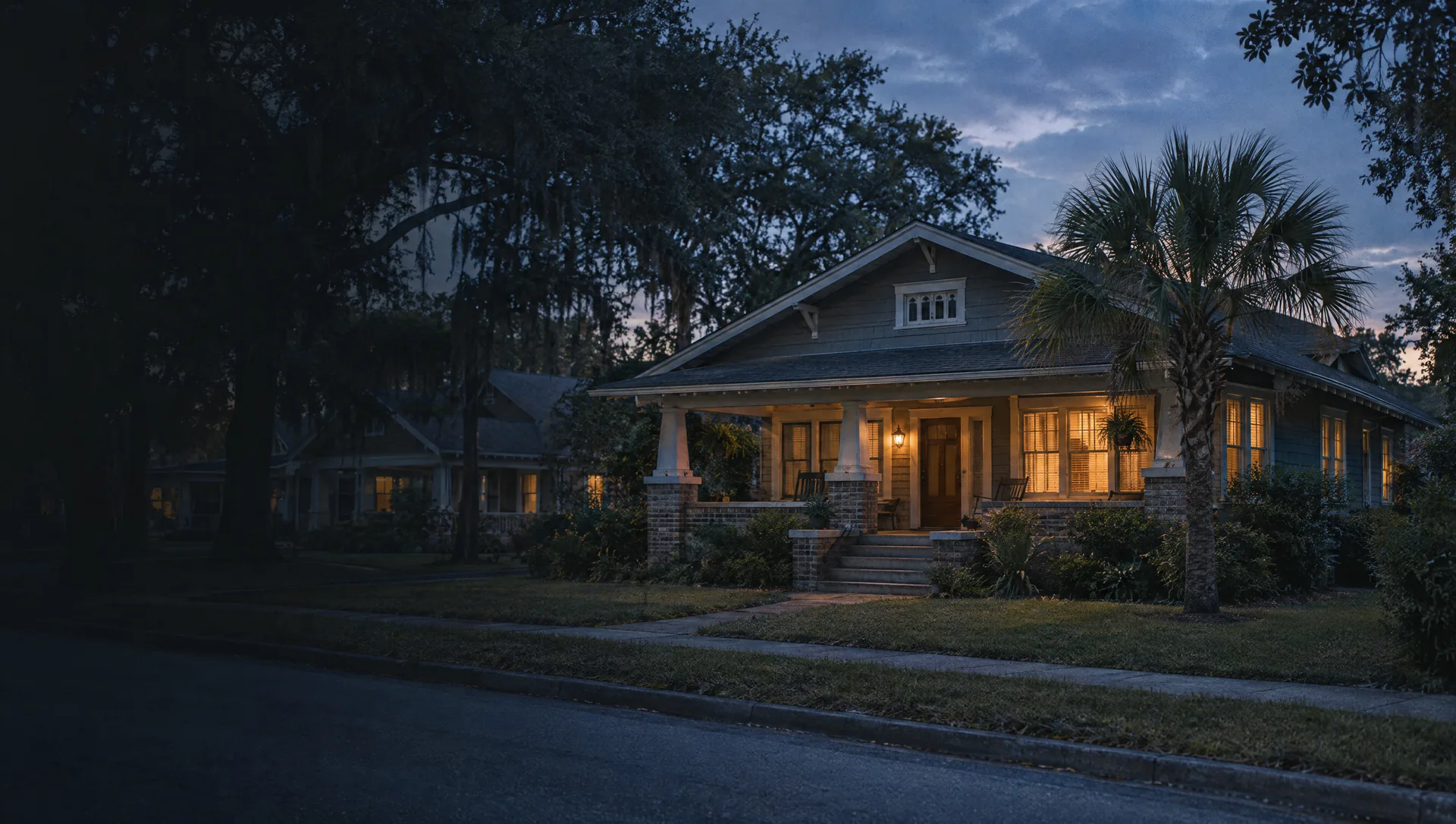
St. Petersburg, in Pinellas County, has a typical owner-occupied home value of $371,100 and a 2025 total millage of 19.9197 mills, per Census and county records.
What should you know before buying a home in St. Petersburg?
St. Petersburg is an incorporated city in Pinellas County with its own government, and the Census Bureau's 2020 to 2024 American Community Survey counts 74,915 owner-occupied homes here with a median value of $371,100. The Pinellas County Property Appraiser sets values and grants exemptions, the Pinellas County Tax Collector bills and collects, and the City of St. Petersburg handles permits, utilities and trash for homes inside the city limits. A mortgage broker helps you compare wholesale lenders for a purchase or refinance here, and starting with a short questionnaire shows which loan types to ask about first.
Values move a lot from one part of the city to another. In the ACS tract data, the median owner value runs from $230,200 in the Childs Park tract to $1,728,400 in the tract that holds Snell Isle, and that Snell Isle figure carries a wide margin of error of about $850,586. Read the neighborhood cards below as starting points and look up the actual parcel on the property appraiser's site before you build a budget around any figure. The calculators page and the loan limits tool help you test a price once you have one.
Two Florida habits are worth learning early. The tax bill is mailed on the last business day of October, according to the tax collector's FAQ, and the August TRIM notice is a preview, not a bill. And the Florida mortgage page explains how Align works across the state, with the St. Petersburg specifics on this page.
By the numbers
What do the numbers say about St. Petersburg housing?
Values move. Treat these as orientation and let us pull current figures for the address you are considering.
$371,100
Median owner-occupied home value in St. Petersburg, American Community Survey 2020 to 2024, Census Bureau.
19.9197 mills
2025 total millage for a St. Petersburg parcel, from the county tax roll recap and the Florida Department of Revenue.
74,915
Owner-occupied homes in St. Petersburg, American Community Survey 2020 to 2024.
6.4525 mills
The City of St. Petersburg's own rate, unchanged from last year, according to the city.
What does financing look like in St. Petersburg?
St. Petersburg sits well above the Florida entry price level in some neighborhoods and well below in others, so more than one loan type applies. Conventional loans fit many single-family homes and condos. FHA loans and VA loans are common choices when a buyer needs a smaller down payment or is a service member or veteran, and both have their own property standards that an appraiser checks. For 2026, the conforming limit for a one-unit home in Pinellas County is $832,750 and the FHA limit is $541,287. The Federal Housing Finance Agency has set the 2027 conforming limit at $855,400, effective January 1, 2027. Jumbo financing starts where the loan amount passes the conforming limit, which matters in parts of Old Northeast, Snell Isle and the downtown high-rises, where the Census tract medians are $1,053,200, $1,728,400 and $1,110,900. The loan limits tool shows the figures for any Pinellas County purchase, and this guide covers jumbo and non-QM loans.
Condos need their own review. In downtown tract 215.01, 1,418 of the 2,000 housing units sit in buildings of 50 or more units, according to the American Community Survey, so lenders will ask about the association's budget, reserves and any pending special assessments before they approve a unit. Buildings of three habitable stories or more also fall under Florida's milestone inspection and structural integrity reserve study rules, and you can ask the association for those documents. The condo financing guide lists what a lender reads. Insurance is part of the monthly cost in St. Petersburg: homeowners coverage with wind, flood coverage where a lender requires it, and any condo association master policy. Citizens Property Insurance requires flood coverage on most of its personal residential policies with wind coverage that take effect on or after January 1, 2027, per the Citizens flood page.
Compare offers on the same page: the Loan Estimate check reads two estimates side by side, and the rent vs. buy calculator tests how long you plan to stay. Florida Housing's first mortgage and down payment assistance programs, offered through participating lenders with county income and price limits, are listed on the Florida Housing homebuyer page, and the city homebuyer page lists what St. Petersburg offers inside its boundaries.
A St. Petersburg parcel's 2025 millage adds up to 19.9197 mills across ten levies, and the city's own share is 6.4525 mills, unchanged from last year, according to the city.
The market
What is the St. Petersburg housing market like?
St. Petersburg is a large city, and its housing market is several markets. St. Petersburg price and days-on-market figures change from month to month, so ask for the current month's closed sales rather than a number printed here. What the Census data shows is the mix: 78,301 of the city's 141,508 housing units are detached single-family homes, 16,674 are in buildings of 50 or more units, and 74,915 homes are owner occupied, according to the American Community Survey 2020 to 2024.
By tract, the median owner value ranges from $230,200 in Childs Park to $1,728,400 in the Snell Isle tract. The typical year built also spreads out: 1938 in the Old Northeast tract, 1949 in Historic Kenwood, and 1999 in the downtown tract that is mostly high-rise condominiums, while the city's overall median is 1969. A house built in the 1940s and a condo tower finished in the 1990s bring different questions to a loan: appraisal condition and insurance on one, association finances on the other.
Waterfront and canal homes are a housing type here, with docks, seawalls and wind and flood considerations of their own. The guides listed on this page cover waterfront and flood questions before you make an offer.
The association budget, reserve balance, pending special assessments, the master insurance policy, and the milestone inspection and structural integrity reserve study if the building is three habitable stories or more.
What does a single-family buyer ask for?
The roof age, a four-point inspection if the insurer wants one, the wind mitigation report, the permit history, the flood zone and the seller's flood disclosure.
Where to look
Which neighborhoods make up St. Petersburg?
Downtown St. Petersburg
Census tract 215.01 has a median owner value of $1,110,900 (margin about $192,626) and a typical year built of 1999. In the 2020 to 2024 American Community Survey, 1,418 of its 2,000 housing units are in buildings of 50 or more units, so the typical purchase here is a condominium. Association finances, the structural inspection documents and the building's flood zone are the main things to review before an offer.
Old Northeast
Census tract 237 has a median owner value of $1,053,200 (margin about $127,924) and a typical year built of 1938, the oldest in this list. The Census counts 936 detached single-family homes among 1,342 housing units. Older construction means insurers may ask about roof age, wiring and plumbing, and a loan amount above the conforming limit is a jumbo loan.
Snell Isle
Census tract 240.01 reports a median owner value of $1,728,400, but the margin is about $850,586, so treat the figure loosely. Typical year built is 1971, and 1,029 of 1,698 housing units are detached homes. Many properties sit on water, which makes seawall condition and the FEMA flood zone part of the purchase.
Historic Kenwood
Census tract 233 has a median owner value of $536,000 (margin about $80,266) and a typical year built of 1949. The homes are mostly older single-family houses, so the usual questions are roof age, a four-point inspection if the insurer asks, and whether any past renovation was permitted by the city.
Crescent Lake
This area falls in Census tract 235.02, which runs wider than the neighborhood: median owner value $596,200 with a margin of about $232,920, and a typical year built of 1949. Because the margin is wide, rely on recent comparable sales and the property appraiser's record for a specific address.
Shore Acres
Census tract 240.04 has a median owner value of $716,000 (margin about $111,575) and a typical year built of 1975. Waterfront and canal lots are part of the housing stock, so ask for the elevation certificate, check the FEMA map for the address and confirm what the city and county require for work near the water.
Northeast Park
Census tract 240.02 has a median owner value of $480,000 (margin about $102,801) and a typical year built of 1974. The city's park and recreation pages list its public facilities. Homes from this era often have original roofs replaced once, so roof age is a regular insurance question.
Riviera Bay
Census tract 244.11 has a median owner value of $536,900 (margin about $87,953) and a typical year built of 1975. It sits in the north end of the city along Tampa Bay, so confirm the flood zone and any wind mitigation features on the specific home.
Disston Heights
Census tract 228.01 has a median owner value of $264,400 (margin about $19,724) and a typical year built of 1968. The narrow margin means the figure is reliable for the tract, and it is among the lower values in the city, which can put a purchase within reach of FHA or conventional financing without a jumbo loan.
Jungle Prada
Census tract 225.03 has a median owner value of $383,300 (margin about $33,001), a typical year built of 1963, and sits close to the city's median of $371,100. A neighboring tract, 225.01 around Tyrone, reports $345,500.
Coquina Key
Census tract 203.02 has a median owner value of $368,700 (margin about $28,139) and a typical year built of 1974. The area is on the south side of the city near Tampa Bay, so flood zone and elevation work is a normal early step.
Lakewood Estates
Census tract 202.01 has a median owner value of $358,300 (margin about $27,843) and a typical year built of 1969. It is on the city's south side, and the neighboring tract 202.02 around Pinellas Point reports $378,900.
Schools and commute
Schools
Pinellas County Schools is the district for St. Petersburg, as it is for the rest of Pinellas County, and Florida runs one school district per county. The district's school zone locator takes a house number and street and returns the assigned school zone, and its directory of schools and bell times page list every campus. School zones can change, so confirm the zone for a specific address before you rely on it. St. Petersburg College and the St. Petersburg Library System are also part of the local education picture, with the library's locations and hours page listing branches that include Childs Park Community Library.
Commute
Driving times below are from downtown St. Petersburg by the OSRM routing service, with no traffic, so allow more at rush hour: Tampa International Airport is about 29 minutes and 20.5 miles away, downtown Tampa about 30 minutes and 23.0 miles, MacDill Air Force Base about 34 minutes and 19.9 miles, St. Pete-Clearwater International Airport about 19 minutes and 12.3 miles, St. Pete Beach about 18 minutes and 10.4 miles, and Fort De Soto Park about 29 minutes and 16.3 miles. Interstate 275 and the Gandy and Howard Frankland bridges connect to Tampa, and the Florida Department of Transportation posts current construction. Pinellas Suncoast Transit Authority buses serve the city, and the city CityTrails page describes bike lanes, routes and the bike map. Plan the commute from the exact address, then use the calculators to test the budget.
The city's parks and recreation page describes parks, playgrounds, preserves, three golf courses and CityTrails for cyclists and pedestrians, and the county parks page lists Fort De Soto Park, Weedon Island Preserve and the Pinellas Trail guide.
Where do people run errands?
The St. Petersburg Library System operates branches that include Childs Park Community Library, and the city runs water, trash and stormwater services for homes inside its limits. Pinellas Suncoast Transit Authority runs the local bus service.
What happens here through the year?
The city's parks and recreation program calendar lists classes and events, the library system posts a daily events list, and the county events calendar covers county programs. Check each calendar for 2026 dates before you plan around a specific event.
What does each season mean for a homeowner?
Hurricane season runs June 1 to November 30. The city offers up to 10 sandbags per household with proof of residence, year-round at 1744 9th Ave. N. on weekdays and the second Saturday of the month, and it operates five brush sites for yard waste. Bins go to the curb by 7 a.m. on collection day. The city's water restrictions page lists irrigation days by address. Tax bills are mailed on the last business day of October.
Which kind of home are you after?
Detached single-family homes number 78,301 of the city's 141,508 housing units, per the Census, and are the largest group, concentrated in tracts such as Old Northeast. High-rise condominiums cluster in the downtown tract, where 1,418 of 2,000 units are in buildings of 50 or more units. Condos add association documents to the loan file, and older houses add roof and wiring questions for insurers.
Florida property taxes
What will my property taxes be after I buy in St. Petersburg?
In Florida, Save Our Homes caps a homestead's assessed value while one owner holds it. On January 1 after the home sells, the assessment resets to just value, so the seller's tax bill is not your tax bill.
The Florida Department of Revenue's 2025 property tax tables list St. Petersburg's adopted city rate at 6.4525 mills. Add the county-wide levies of 11.9322 mills (the county, the school board and districts that cover all of Pinellas County) and a parcel inside the city starts from about 18.3847 mills, before any district or assessment that covers only part of the county.
The 2025 total millage for a St. Petersburg parcel is 19.9197 mills, according to the Florida Department of Revenue's chart and the Pinellas County 2025 tax roll recap. It is the sum of ten levies: the city at 6.4525 mills (unchanged from last year, per the city property tax page), the county general fund at 4.5423, the school board at 6.2930 in three parts (3.0450 required local effort, 2.5000 and 0.7480 local), the Juvenile Welfare Board at 0.8250, Pinellas Suncoast Transit Authority at 0.7300, emergency medical service at 0.8050, Southwest Florida Water Management District at 0.1831, the health department at 0.0713 and the Pinellas Planning Council at 0.0175. One mill works out to $100 a year for each $100,000 of taxable value, so 19.9197 mills works out to about $1,992 a year per $100,000 of taxable value, before exemptions and any non-ad valorem charges.
Non-ad valorem assessments are not part of that millage. They are flat charges for specific services, and a parcel's own bill from the Pinellas County Tax Collector lists any that apply, so ask the seller for the latest bill. A community development district, where one exists, charges its yearly assessment on the same bill. In August the property appraiser mails the TRIM notice, which lists each authority's proposed rate and hearing and is not a bill, and the bill follows at the end of October, with discounts for early payment in the months that follow. The property appraiser explains the notice, and the calculators help you turn the millage into a monthly figure.
Florida charges documentary stamp tax on the deed at $0.70 per $100 of the price, documentary stamp tax on a new mortgage at $0.35 per $100 of the loan, and a nonrecurring intangible tax of 2 mills on the loan. On a $371,100 home, near the typical St. Petersburg value, the deed stamps come to about $2,597.70.
Amendment 3, approved by Florida voters on November 3, 2026, changes the homestead exemption from the 2027 tax roll, and a buyer who was not a Florida resident on December 31, 2026 starts with a smaller exemption for the first years, so we plan your payment from the exemption you will actually have.
County alone does not tell you much. We would never say you are in a particular county so here are your taxes. It does not work like that. We need the actual property.
The City of St. Petersburg's rate is 6.4525 mills, unchanged from last year, according to the city.
What do the county and the school board levy?
The county general fund is 4.5423 mills. The school board's 6.2930 mills include 3.0450 required local effort, a 2.5000 local levy and a 0.7480 local levy.
Which smaller districts appear on the bill?
Juvenile Welfare Board 0.8250, Pinellas Suncoast Transit Authority 0.7300, emergency medical service 0.8050, Southwest Florida Water Management District 0.1831, health department 0.0713 and Pinellas Planning Council 0.0175 complete the 19.9197 mills.
Before you close
What should you check on insurance and inspections in St. Petersburg?
Look up the exact address on the FEMA Flood Map Service Center and on the city's Prepare, St. Pete map, which shows the city's stormwater floodplain, a 1% or greater yearly chance of rainfall flooding. If a lender requires flood insurance for a high-risk zone, get a quote before you commit. Since October 1, 2024, a seller gives the buyer a flood disclosure at or before signing the contract.
Ask about the roof, wind features and inspections
Insurers commonly ask for roof age and a four-point inspection of the roof, electrical, plumbing and HVAC. A wind mitigation inspection documents features that can earn insurance discounts or credits under Florida law, and My Safe Florida Home offers eligible homeowners inspections and grants, subject to funding.
Request condo and association documents
For a condo or co-op building of three habitable stories or more, ask the association for the milestone structural inspection report and the structural integrity reserve study, both required under Florida's 2025 law, along with the budget, reserve balance and any special assessments.
Confirm permits for a renovated home
Ask for the permit history of any addition, roof, window or electrical work from the city building department. The city notes a permit exemption form for single-family work totaling less than $7,500 that is not in a flood hazard area and not structural, effective July 1, 2026, so ask which route past work took.
Find the tax district and the real tax picture
Use the property appraiser's tax district lookup to confirm that the address is inside the city, then read the current bill for non-ad valorem charges. Plan around the post-sale reset on January 1, not the seller's bill.
Local resources
Check St. Petersburg records yourself
The official offices behind the tax, title and school details on this page.
Can’t say enough great things about Samantha and her team at Align Lending! Highly recommend
Justin BartonJune 2024
★★★★★
I got my first conventional loan through Samantha at aligned lending her expertise, customer service, and clear communication made everything super easy! I highly recommend Samantha for your mortgage needs!
Jimmy
★★★★★
Samantha was AMAZING to work with! She never left a question or call unanswered and made the home buying process so easy and fun. If I could give 10 stars I would!
Julia Zvonek
★★★★★
Samantha is so smart and helpful she answered all my questions and she followed up with me a week later to insure i had my questions answered again She is amazing
Jason Sych
★★★★★
Samantha and her team are amazing! They will help you through the entire process. They care about your loan experience from start to finish!
Lisa McDonough
★★★★★
Samantha at Align Lending made my home buying process super easy! As a first time homebuyer, she made the process simple and her communication was amazing. Thank you for helping me buy my dream home in clawson.
If yours is not here, ask it on the call. There are no dumb questions.
What is the 2025 millage rate in St. Petersburg?
The 2025 total for a St. Petersburg parcel is 19.9197 mills, per the Florida Department of Revenue and the county tax roll recap. The city’s own part is 6.4525 mills and the school board’s is 6.2930. The calculators turn a millage into a yearly figure.
When is the St. Petersburg property tax bill due?
Bills are mailed on the last business day of October and can be paid from November 1 through March 31, per the tax collector FAQ. Early payment discounts are 4% in November, 3% in December, 2% in January and 1% in February, and unpaid taxes are delinquent April 1 under section 197.162.
Which school zone is a St. Petersburg home in?
Use the district’s school zone locator with the house number and street. Zones can change, so confirm before you buy.
Buildings of three habitable stories or more need milestone structural inspections and structural integrity reserve studies under Florida’s 2025 law, summarized in HB 913. Ask the association for both, plus the budget and reserves. See the condo financing guide.
What loan limit applies in Pinellas County?
For 2026, the conforming limit for a one-unit home in Pinellas County is $832,750 and the FHA limit is $541,287. Jumbo financing starts where the loan amount passes the conforming limit. The loan limits tool shows each county.
Who issues building permits in St. Petersburg?
The city’s building department issues permits inside city limits, according to the permitting page. A permit exemption form for single-family work under $7,500 that is not structural and not in a flood hazard area took effect July 1, 2026. Outside the city, Pinellas County building services handle unincorporated areas.
Does a St. Petersburg mailing address mean the home is inside the city?
Not always. Pinellas County has 24 incorporated municipalities plus unincorporated areas, and some mailing addresses cross lines. The property appraiser’s tax district lookup confirms the city for a parcel, which sets who taxes it and who issues its permits.
What does the August TRIM notice tell a St. Petersburg buyer?
The TRIM notice, the Notice of Proposed Property Taxes, lists each taxing authority’s proposed rate and hearing, and it is not a bill, per the Florida Department of Revenue. After a sale, the reset on January 1 changes the assessed value, so the seller’s notice is a guide only.
Does St. Petersburg offer homebuyer help?
The city homebuyer page lists programs for buyers inside the city boundaries, and Florida Housing’s first mortgage and down payment assistance programs run through participating lenders with county income and price limits, as described on its homebuyer page. Start with the homebuyer game plan.
Tell Samantha what you are trying to do in St. Petersburg and she will tell you what actually matters for your situation, including whether the timing is right.
Align Lending LLC is licensed to make mortgage loans in Florida under NMLS #2041154, the same NMLS number that covers every state where Align is licensed: Michigan, Ohio, North Carolina, Florida, Louisiana and Texas. Samantha Shelton, NMLS 1647301. Equal Housing Opportunity. Figures on this page are market research for orientation, not a quote. This page is for educational purposes only. It is not a credit decision, a preapproval, a commitment to lend, or an offer of credit.
Scroll to Top
Old Northeast or Snell Isle? I'll show you where the jumbo line falls on your loan.