
The Impact of New Building Codes on Home Purchases
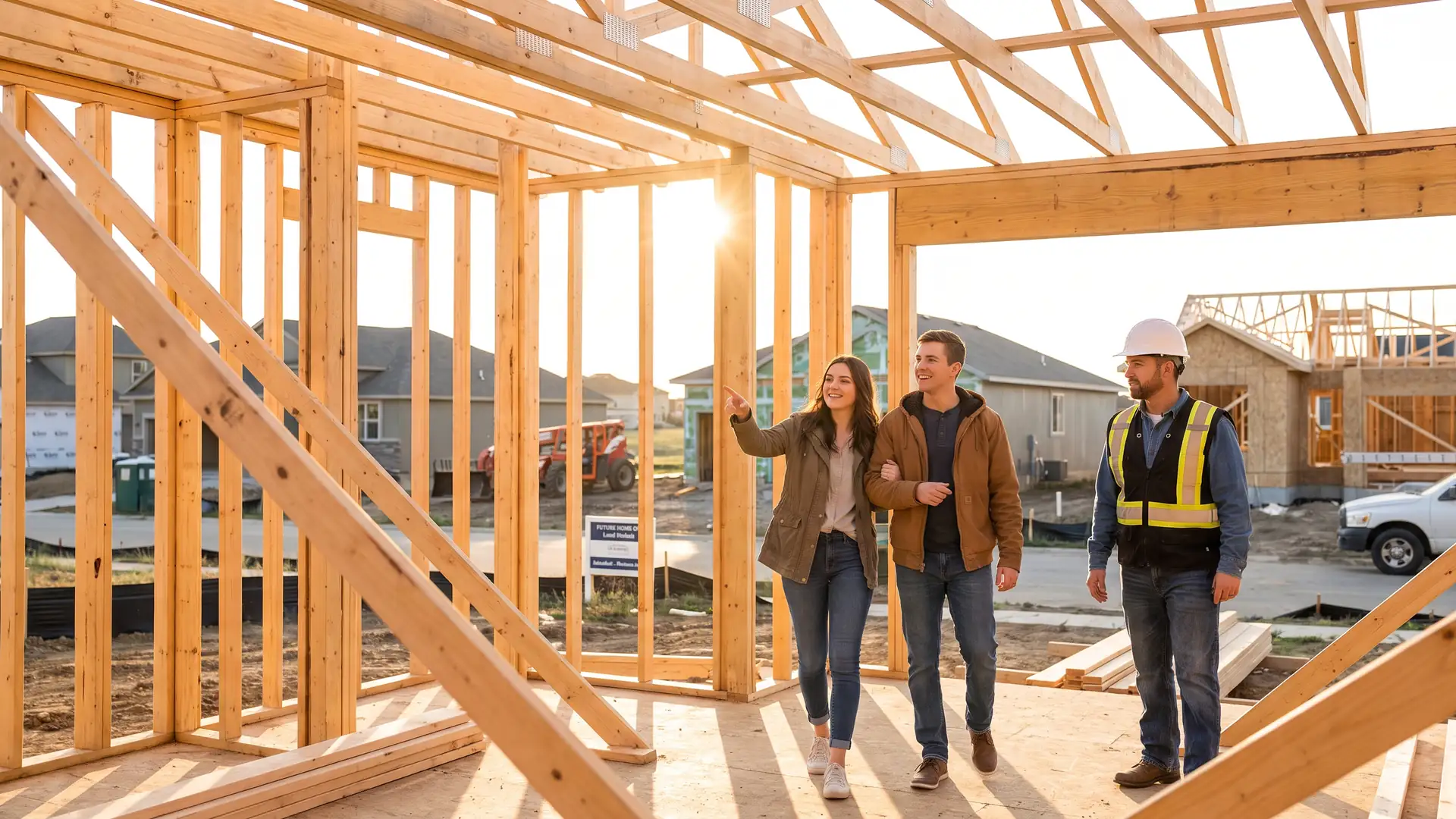
New building codes raise what a home costs to build and lower what it costs to run, but on May 1, 2026, the federal energy-code mandate behind most of the headlines was rescinded outright. HUD and USDA withdrew the April 2024 determination requiring new homes financed through FHA, USDA, and other federal programs to meet the 2021 International Energy Conservation Code (IECC), and the federal energy floor reverted to the 2009 IECC for single-family homes and ASHRAE 90.1-2007 for multifamily buildings.
So the code governing your new build is the one your state and local jurisdiction enforce. In Michigan, that’s a residential code written on the 2015 International Residential Code and the residential provisions of the 2015 IECC. Two IECC cycles behind what the federal rule would have imposed. For scale, Census Bureau data on new residential sales puts the median new home sold in June 2026 at $398,300.
Learn how the impact of new building codes on home purchases really works, including what changed in 2026, how code differences show up in your price and your utility bill, and what to ask a builder before you sign. If you’re earlier in the process, start with our Home Buying guide.
Key takeaways:
- The federal 2021 IECC mandate is gone: HUD and USDA rescinded it effective May 1, 2026, returning federally financed new construction to the 2009 IECC for single-family homes.
- Your state code binds your builder: Michigan adopts the 2015 International Residential Code and the residential provisions of the 2015 IECC, so a Michigan new build answers to a 2015-era energy standard, not a 2021 one.
- Compare total monthly cost, not sticker price: New construction carried a $398,300 median sale price in June 2026, and the honest comparison against an older home is payment plus utilities plus near-term repairs.
What are the new building codes, and who do they apply to?
The 2021 International Energy Conservation Code (IECC) is the model energy code that sets minimum insulation, air-sealing, window, duct, and lighting requirements for new buildings, and it’s a model, not a law, until a state or local government adopts it. That distinction is the whole story: a model code changes nothing about the house in your subdivision until your state writes it into its own rules.
Federal housing programs are the exception. Under Section 481 of the Energy Independence and Security Act of 2007, HUD and USDA may adopt revised editions of the IECC as a minimum standard for the housing they finance, but only after determining the newer code won’t hurt housing affordability or availability. That determination is the lever pulled in 2024 and released in 2026.
While in force, the standard reached new construction of public and assisted housing, homes carrying mortgages insured under the National Housing Act (that is, FHA-insured new construction), USDA Section 502 rural housing, HOME, and the Housing Trust Fund. It deliberately did not reach existing housing, manufactured housing, or rehabilitation. If you’re buying a resale home, no version of this rule ever applied to you.
One number puts the mandate in perspective: when HUD and USDA issued it, only five states, California, Washington, Connecticut, New Jersey, and Vermont, had already adopted a residential code meeting or exceeding the 2021 IECC. Everywhere else, Michigan included, the federal floor would have sat above the state’s own requirement. Our guide to new home construction and what to expect covers how a build gets permitted and inspected, and the benefits of buying a newly constructed home covers what current-code construction buys.
What changed in 2026, and what it means for your purchase
The 2021 IECC requirement for federally financed housing was extended four times before it was withdrawn. Here’s the sequence, because builders and agents still quote the 2024 version of it.
- April 26, 2024. The mandate is issued: HUD and USDA published a final determination adopting the 2021 IECC and ASHRAE 90.1-2019 for covered new construction, effective May 28, 2024.
- March 2025 through February 2026, compliance slips four times: HUD issued extensions in March 2025, November 2025, and February 2026, and USDA issued its own in April 2025.
- March 13, 2026, an executive order: Executive Order 14394, “Removing Regulatory Barriers to Affordable Home Construction,” signed March 13 and published in the Federal Register on March 18, directed the Secretaries of Housing and Urban Development, Agriculture, and Energy and the Director of FHFA to reform and, where appropriate, eliminate unduly burdensome or costly energy-efficiency requirements for housing.
- May 1, 2026, full rescission: HUD and USDA rescinded the 2024 determination and the related extension notices in their entirety, directing covered programs to “comply with the energy efficiency standards that were in effect immediately prior to the publication of the Final Determination.”
The agencies grounded the reversal in construction economics rather than in the merits of the code itself, citing a 43% increase in building material costs between January 2020 and November 2025 and a 42% increase in contractors’ bid amounts to build a home between 2019 and 2024. Builder trade groups had argued the same case from the start, and National Association of Home Builders research on construction costs was central to the industry’s opposition.
For a buyer, the translation is short: your loan program no longer sets the energy code on your house. Your state and local building department do. Ask which edition your jurisdiction enforces, and fold that answer into the home buying process the way you’d fold in taxes or insurance.
How building codes actually affect what you pay
Codes hit your wallet twice: once in the price the builder quotes, and every month afterward in the utility bill. Which code edition applies where you’re buying decides the size of both effects, and four separate layers can set that bar.
| Layer | What standard applies | Who it binds | What it means for your purchase |
|---|---|---|---|
| Federal financing floor | 2009 IECC (single-family) and ASHRAE 90.1-2007 (multifamily), restored May 1, 2026 | New construction financed through FHA, USDA Section 502, HOME, the Housing Trust Fund, and assisted housing | Rarely binding, since most state codes are newer than 2009 |
| State code | Michigan: 2015 International Residential Code plus the residential provisions of the 2015 IECC | Every new home built in the state, however it’s financed | The standard that actually shapes insulation, windows, and air sealing |
| Local enforcement | The state code, administered by the local building department | Your builder, through permits, inspections, and the certificate of occupancy | Sets how rigorously the code is verified on your lot |
| Voluntary above-code | Certification programs such as ENERGY STAR | Only builders who opt in | Costs more upfront and is the only layer you can negotiate |
Notice which row you have leverage over. You can’t negotiate the code, only whether the builder includes an above-code package, and ENERGY STAR guidance on energy-efficient homes is a fair yardstick for what that package should contain.
Be skeptical of any precise national figure for what a code adds to a home. Estimates range enormously, and most originate with organizations advocating a position rather than with a published government cost table. The documented cost pressure is the broader one the agencies cited, and it swamps the code question in most markets, our breakdown of what it costs to build a house shows where the dollars land.
The comparison that matters is one you can run yourself. Say a new build lists at the $398,300 national median and a comparable existing home nearby is $60,000 less, at $338,300. With 5% down, you’d bring $19,915 to the new home versus $16,915 to the resale, $3,000 more cash at closing, and finance $378,385 instead of $321,385.1 That monthly difference is fixed for the life of the loan, while the utility savings meant to offset it swing with weather and energy prices. Budget the cash side with our guide to closing costs.
One thing not to count on: the federal Energy Efficient Home Improvement Credit under Internal Revenue Code Section 25C applied only to qualifying property placed in service before December 31, 2025, so improvements installed in 2026 don’t qualify. Talk with a tax professional before assuming any credit exists.2
What this means for different buyers
The code question lands differently depending on what you’re buying, and for most buyers it matters less than the price of the lot.
- First-time buyers: You feel construction costs most, because purchasing your first house usually means shopping the entry-level tier, where a few thousand dollars decides affordability. Down payment assistance moves that number far more than any code edition, check first-time home buyer programs before ruling out new construction.
- Buyers weighing new against resale: A resale home is held to the code in force when it was built, which may be decades old. That’s information you want before you offer, so read our guide to handling seller disclosures and work the home inspection checklist for buyers.
- Investors and rental buyers: Operating cost is the whole game on a rental, so a tighter envelope matters more when you pay the utilities than when the tenant does. Model it as a line item, not a talking point.
- Buyers shopping across markets: Code editions vary by state, so one builder’s identical floor plan can be built to different requirements in two states. While finding a home, ask each builder which edition the local jurisdiction enforces.
How to verify a new home’s code compliance before you close
Every compliance claim a builder makes should be attached to a document, and there are five you can ask for by name in writing, during your inspection window, not at the closing table.
- Certificate of occupancy: The local building department’s sign-off that the home met code at final inspection. No certificate, no closing, and no amount of builder reassurance substitutes for it.
- Permit and inspection history: Ask for the permit record and the list of passed inspections. Gaps there are worth a question now, and avoiding common inspection pitfalls starts with reading the record.
- Energy code compliance documentation: Depending on the jurisdiction, this may be a compliance report, a duct-leakage test, or a blower-door test result. Ask which method the builder used, then request the paperwork.
- Builder warranty terms: Read what’s covered and for how long, and note who administers it, the builder or a third party.
- Your own independent inspection: A new home is still built by people on a deadline. Our guide to home inspections for new construction covers the pre-drywall and final walkthrough stages, and choosing a home inspector covers finding one who works new builds specifically.
Two financing notes. FHA-insured new construction was one of the categories the rescinded determination covered, so if a builder tells you an FHA loan forces a 2021 IECC build in 2026, that’s out of date.3 And your appraisal checks value, not code, the home appraisal process tells you what the home is worth, while the certificate of occupancy tells you it was built legally.
What Michigan buyers should know
Michigan runs a single statewide construction code, so the answer is the same in Waterford as in Marquette. The Michigan Residential Code adopts the 2015 International Residential Code by reference, and the Michigan Uniform Energy Code adopts the residential provisions of the 2015 IECC, both administered by the Bureau of Construction Codes at the Department of Licensing and Regulatory Affairs. Three consequences follow.
- The 2026 rescission changed nothing here: Michigan was never among the five states that had already adopted a code meeting or exceeding the 2021 IECC. Michigan new builds answered to the 2015 standard before the mandate and still do.
- Michigan spans three climate zones: Under the Department of Energy’s county climate-zone guide, Michigan counties fall into IECC zones 5A, 6A, and 7A. Oakland, Wayne, Washtenaw, and Kent sit in 5A; much of the northern Lower Peninsula is 6A; and Upper Peninsula counties such as Chippewa, Baraga, and Ontonagon are 7A. Insulation and air-sealing requirements tighten as that number rises, so an identical floor plan really is built differently in Sault Ste. Marie than in Waterford.
- Cold-climate math favors the envelope: Every Michigan county is classified “cold” or “very cold,” so most of a home’s energy spend is heating, not cooling. Insulation, air sealing, and window quality carry more weight here than in a mild climate. A fair argument for buying an above-code package voluntarily even though no code requires it.
If you’re pricing a Michigan build, our guide to building a home on a budget covers where to spend and where to hold the line.
How Align moves your purchase to the closing table
Over the last 12 months, Samantha's loans averaged under 14 days from application to clear to close, across more than 100 loans. Your closing date is set by your purchase agreement. Her job is to have your loan ready well before it.
She handles your file herself, with a processor supporting her behind the scenes. You always know who to call, and the person who answers knows your goals.
Build your homebuyer game plan
Sources: Align Lending loan records, 12 months to October 2026.
FAQ: New building codes and home purchases
Here are answers to common questions about new building codes and home purchases.
Do new building codes apply to existing homes?
Generally, no. Codes apply to new construction, additions, and major renovations that require a permit; an existing home only has to meet the code in force when it was built or last substantially renovated. The determination HUD and USDA rescinded in May 2026 specifically excluded existing housing, manufactured housing, and rehabilitation. Our guide to evaluating a home’s energy efficiency covers how to measure the difference before you offer.
How much do new energy codes add to the price of a new home?
There’s no single verified national figure, and most estimates in circulation come from organizations advocating a position rather than from a published government cost table. What is documented is the broader trend: HUD and USDA cited a 43% rise in building material costs between January 2020 and November 2025. Ask your builder to price the specific upgrades in writing, then use our guide to negotiating a home purchase to decide which are worth paying for.
Do energy-efficient building codes save buyers money in the long run?
They can, but the payback depends on your climate, your energy prices, and how long you stay. A tighter, better-insulated home costs less to heat and cool, and in Michigan’s cold and very cold climate zones most of that savings lands in the heating season. No one can promise a payback period for a specific house, so ask for the energy documentation instead of a brochure claim. Our guide to buying a home with solar panels covers valuing efficiency equipment already installed.
Should I buy a new home or an existing home because of the new codes?
It depends on how you weigh cash now against cost later. New construction is held to the current code and generally needs fewer near-term repairs; an older home usually costs less upfront and may need efficiency work you’ll pay for eventually. Compare total monthly cost, payment plus utilities plus expected maintenance, rather than sticker price. If the older home needs work, our guide to the advantages of buying a fixer-upper covers how to price it in.
The bottom line on new building codes
The impact of new building codes on home purchases is real, but smaller and more local than the headlines suggested. The federal 2021 IECC mandate for HUD- and USDA-financed new construction was rescinded effective May 1, 2026, and the federal floor reverted to the 2009 IECC for single-family homes and ASHRAE 90.1-2007 for multifamily. What binds your builder now is your state code in Michigan, the 2015 International Residential Code and the residential provisions of the 2015 IECC. Codes didn’t create the affordability problem either: materials rose 43% and contractor bids 42% over roughly five years, while the median new home sold for $398,300 in June 2026. Compare payment plus utilities plus maintenance, and ask for the compliance documents.
If you’re ready to price a new build or compare it against a resale, talk to Align Lending, we’ll shop your scenario across our lender network, including construction and renovation loan options, and show you the numbers side by side. Call 248-506-5727 or start online today.
Footnotes:
1. Example figures are hypothetical and for educational purposes only; they do not constitute an advertisement of credit terms or a rate quote under federal or state lending laws. Your purchase price, down payment, loan amount, and cash to close depend on your application, the property, the appraisal, and market conditions. Return to text.
2. This paragraph describes federal tax law in general terms and is not tax advice. Credit availability, eligibility, and expiration dates are set by Congress and administered by the IRS and are subject to change. Consult a qualified tax professional about your situation. Return to text.
3. Align Lending is not acting on behalf of or at the direction of FHA or HUD. Program requirements for FHA-insured new construction are set by HUD and are subject to change. Return to text.
Sources: rescission of the 2021 IECC and ASHRAE 90.1-2019 adoption, effective May 1, 2026, and the cited 43% building material cost increase (January 2020 – November 2025) and 42% increase in contractors’ bid amounts (2019 – 2024), HUD and USDA, “Rescission of Final Determination: Adoption of Energy Efficiency Standards for New Construction of HUD- and USDA Financed Housing,” 91 FR 23450. Original adoption, covered programs, exclusions, and the list of five states already meeting or exceeding the 2021 IECC, HUD and USDA, “Final Determination: Adoption of Energy Efficiency Standards for New Construction of HUD- and USDA-Financed Housing,” 89 FR 33112 (effective May 28, 2024). Prior standards of the 2009 IECC and ASHRAE 90.1-2007, HUD and USDA, “Final Affordability Determination, Energy Efficiency Standards,” 80 FR 25901. Statutory authority, Section 481 of the Energy Independence and Security Act of 2007. Executive Order 14394, “Removing Regulatory Barriers to Affordable Home Construction,” signed March 13, 2026, published at 91 FR 13207 (March 18, 2026). HUD compliance-date extensions at 90 FR 11622 (March 10, 2025), 90 FR 50750 (November 10, 2025), and 91 FR 4933 (February 3, 2026); USDA compliance-date extension at 90 FR 14775 (April 4, 2025). Michigan Residential Code adoption of the 2015 International Residential Code, Mich. Admin. Code R 408.30500 et seq.; Michigan Uniform Energy Code adoption of the residential provisions of the 2015 IECC, Mich. Admin. Code R 408.31001 et seq., Michigan Department of Licensing and Regulatory Affairs, Bureau of Construction Codes. Michigan county climate zone assignments (5A, 6A, 7A), U.S. Department of Energy Building America, “Guide to Determining Climate Regions by County,” PNNL-17211 Rev. 3. Median sales price of new houses sold of $398,300 in June 2026, U.S. Census Bureau and HUD, Monthly New Residential Sales, release CB26-121, July 24, 2026. Energy Efficient Home Improvement Credit placed-in-service window, Internal Revenue Service, Internal Revenue Code Section 25C.
This article is for informational purposes only and is not intended to provide legal, financial, or tax advice. Building code requirements, adoption cycles, and federal program standards change and vary by jurisdiction; confirm current requirements with your local building department and a licensed professional before relying on them. Consult a qualified professional about your situation. Program terms and figures shown are illustrative, are not a rate quote or an offer of credit, and are subject to change. Align Lending is an independent Michigan mortgage broker, NMLS #2041154.
Related resources
12-minute read
The Home Appraisal Process: What to Expect
Learn how the home appraisal process works, from the lender’s order to the final report, including typical costs of $300-$1,500 and what appraisers check.

12-minute read
Home inspection checklist for buyers: What to look for room by room
See the complete home inspection checklist for buyers, from foundation to attic, so you can spot costly problems before you close on your next home.

12-minute read
How to prepare for a home closing: your step-by-step checklist
Learn how to prepare for a home closing with a step-by-step timeline, documents to bring, and final walk-through tips for a smooth closing day.
