
Understanding the home closing process: a step-by-step timeline

The home closing process is everything that happens between an accepted offer and the moment the deed is recorded in your name, and it typically takes 30 – 60 days on a financed purchase versus roughly 4 – 10 days on an all-cash deal. In that window you complete inspections and the appraisal, the lender underwrites your file, the title company runs a title search, and you receive your Closing Disclosure at least three business days before signing, a deadline federal law sets, not your lender.
Closing day itself usually takes one to two hours. Almost everything that decides whether it happens on schedule was settled weeks earlier.
Learn how the home closing process works, what the three-day Closing Disclosure rule protects, and what most often pushes a closing date. If you’re earlier in the journey, start with our Home Buying guide.
Key takeaways:
- A financed closing typically runs 30 – 60 days: Cash purchases close in about 4 – 10 days, because underwriting and the appraisal drop out.
- Your Closing Disclosure must arrive at least 3 business days before signing: Regulation Z requires that window so you can check the final numbers against your Loan Estimate.
- Closing day itself is short, usually 1 – 2 hours: The real work happens earlier, in underwriting and title clearance.
How long does the home closing process take?
Across Align Lending’s broker network, financed purchases close 30 – 60 days after the offer is accepted, with 30 – 45 days the common target and cash purchases landing around 4 – 10 days. The spread comes from how many parties must finish in sequence: inspector, appraiser, underwriter, title examiner, settlement agent. Ranges below overlap.
| Day range | What happens | Who’s responsible | What you must do |
|---|---|---|---|
| Days 1 – 3 | Purchase agreement signed; earnest money deposited | Both agents, escrow or title company | Get the contract to your lender same day |
| Days 1 – 10 | Home inspection completed; repairs negotiated | You and your inspector | Put repair requests in writing before the contingency expires |
| Days 3 – 14 | Appraisal ordered; rate locked | Lender and appraiser | Return document requests same day |
| Days 7 – 30 | Underwriting reviews income, assets, credit, property | The underwriter | Clear conditions fast; open no new credit |
| Days 10 – 30 | Title search runs; payoffs ordered; commitment issued | The title company | Question every exception on the commitment |
| Days 25 – 45 | “Clear to close” issued; Closing Disclosure delivered | Your lender | Compare it to your latest Loan Estimate |
| Final 24 – 48 hours | Final walkthrough; cash to close sent | You and your agent | Confirm wire instructions by phone first |
| Closing day (1 – 2 hours) | Documents signed, loan funded, deed recorded, keys released | The settlement agent | Bring photo ID; sign only what you understand |
What happens right after your offer is accepted?
Within 72 hours you deposit earnest money, your purchase agreement reaches your lender, and the inspection clock starts. Our home buying process guide covers everything up to this point; from here, closing is a series of contract deadlines.
Deposit your earnest money
Earnest money is a good-faith deposit, and across Align Lending’s broker network it typically runs 1% – 3% of the purchase price. It isn’t an extra cost. The funds sit in escrow and are credited toward your down payment or closing costs at settlement. Our guide to the role of escrow in home buying explains when the money is at risk.
Know who does what
- Your loan officer or broker: Orders the appraisal, submits the file to underwriting, and issues the Loan Estimate and Closing Disclosure.
- The title or settlement company: Runs the title search, clears liens, and conducts the signing. See how to choose a title company. In Michigan, you may shop for one.
- Your real estate agent: Tracks contract deadlines and negotiates repairs.
- The underwriter: Makes the final credit decision. Every question reaches you as a “condition” through your loan officer.
What happens during inspections, the appraisal, and underwriting?
These three consume roughly 20 of your 30 – 45 days and run partly in parallel. They’re also where most closings slip.
The home inspection is yours, not the lender’s
No lender requires a home inspection, it protects you, and you pay for it. Schedule it in the first week, while you still have contingency time to negotiate. Work from a home inspection checklist for buyers, then read up on negotiating repairs after a home inspection, which covers when to ask for a credit instead.
The appraisal protects the lender’s collateral
An appraisal is an independent opinion of value, and it matters because on a purchase the loan-to-value ratio is calculated against the lower of the sales price or the appraised value, per Fannie Mae’s Selling Guide. Appraise short of your contract price and the gap becomes cash you bring, not loan you borrow.
Some conventional files receive value acceptance, Fannie Mae’s appraisal waiver, offered through automated underwriting, so no appraisal is required and you cut a week off the calendar. You’re also entitled to a copy of every appraisal and written valuation promptly upon completion, or at least three business days before closing, whichever comes first.1 Read the home appraisal process guide, and know how to appeal a low appraisal.
Underwriting ends with “clear to close”
Underwriting verifies everything you claimed: income, assets, credit, debts, and the property. Expect one or two rounds of conditions, and answer them the same day. Response speed is the biggest thing you control.
“Clear to close” means underwriting signed off. It does not mean you can go buy a refrigerator on credit; lenders re-verify employment and often re-pull credit shortly before funding.
What happens during the title search and Closing Disclosure review?
Two documents decide whether you sign: a clean title commitment, and a Closing Disclosure that federal law says must reach you at least three business days before closing.
What a title search finds
A title search examines the public record for anything that could challenge your ownership, unreleased mortgages, contractor’s liens, unpaid property taxes, easements, or an heir who never signed a deed. The company then issues a commitment listing what it will insure and what it won’t.
Your lender will require a lender’s title policy, and Fannie Mae requires that coverage at least equal the original principal loan amount and confirm the mortgage holds the required lien priority. That policy protects the lender, not you. An owner’s policy is the separate, usually one-time purchase that protects your equity. Our guide to why title insurance is important covers both.
Your Closing Disclosure arrives three business days before signing
Use the three days. Put the Closing Disclosure beside your most recent Loan Estimate and check the loan amount, rate, payment, and cash to close against each other. The CFPB’s Closing Disclosure explainer walks the form page by page, and comparing your Loan Estimate before you sign is why the earlier form exists.
| Feature | Loan Estimate | Closing Disclosure |
|---|---|---|
| When you get it | Within 3 business days of applying; by the 7th business day before closing | No later than 3 business days before closing |
| The numbers | Estimated terms and cash to close | Final terms and exact cash to close |
| What it’s for | Comparing competing lenders | Confirming nothing changed |
| If something changes | A changed circumstance supports a revised estimate | Three specific changes force a new 3-day wait |
Cash to close bundles your down payment, prepaid interest, the initial escrow deposit, and lender and title fees, minus earnest money and any seller credit. Across Align Lending’s broker network, buyer-paid closing costs on Michigan purchases commonly land between 2% and 5% of the purchase price, roughly $6,000 – $15,000 on a $300,000 home.2 Federal rules also let servicers collect an escrow cushion of up to one-sixth of estimated annual disbursements, about two months of taxes and insurance. See closing costs to expect as a buyer and how to budget for closing costs.
What happens on closing day?
Closing day takes 1 – 2 hours and has three parts: the walkthrough before it, the signing, and the funding and recording after. Prepare with our checklist for how to prepare for a home closing.
The final walkthrough, room by room
Schedule the walkthrough within 24 – 48 hours of signing. You’re confirming the home is in the agreed condition, agreed repairs were done, and the seller’s belongings are gone.
- Mechanicals: Run the furnace and the air conditioning several minutes each, regardless of season, and check the water heater for leaks.
- Plumbing: Open every faucet, flush every toilet, and look under each sink for fresh stains.
- Electrical: Test switches and outlets in each room, and confirm the garage door remotes are present.
- Appliances: Start everything that conveys, including the dishwasher and laundry equipment.
- Repairs: Bring the signed addendum and the seller’s receipts, then photograph anything that doesn’t match.
Problems found now are negotiable, a holdback, a credit, or a delayed closing. Problems found after you own the home are yours.
What you sign, what you bring, and when you get keys
You’ll sign the promissory note, the mortgage, the deed documents, and a stack of affidavits. Bring a government-issued photo ID, proof of homeowners insurance if the title company doesn’t have the binder, and your certified funds or wire confirmation. Everyone taking title generally signs.
The CFPB’s guidance on closing scams is blunt: never follow wiring instructions contained in an email, and verify the account name and number by phone using a number you already had. Wired funds are extremely difficult to recover.
After signing, the lender wires the loan proceeds, the settlement agent disburses payoffs, and the deed and mortgage are recorded with the county register of deeds. Keys usually change hands the same day. Keep the document package for tax time and any future title claim. Your first payment lands on the first of the second month after closing, since interest is paid in arrears.
One thing that is not part of a purchase closing: a three-day right to cancel. Federal rescission rights cover certain refinances, not the mortgage you use to buy the home.
Common closing delays and how to avoid them
Most delayed closings trace to one of five causes, and four are visible days before they become a problem.
| Cause | Warning sign | Prevention |
|---|---|---|
| Late underwriting conditions | Requests still arriving inside the last 10 days | Send the full document set up front; answer same day |
| Low appraisal | Comparable sales sit below your contract price | Keep an appraisal contingency; learn the appeal process early |
| Title defect | The commitment lists an unreleased lien or unsigned heir | Read the commitment the day it arrives |
| Credit or employment change | A new account, financed purchase, or job change | Change nothing between preapproval and funding |
| Cash to close arrives late | Funds still in a brokerage account 48 hours out | Move and season funds a week early |
Most Closing Disclosure revisions delay nothing, because only those three specific changes restart the clock. Your contingencies in home offers protect your earnest money if a delay turns into a dead deal.
What Michigan buyers should know
Three Michigan-specific items belong on your closing checklist, and Michigan closings are customarily run by a title or settlement company rather than an attorney, though you may hire one.3
- Transfer tax is the seller’s, by statute: Michigan levies $3.75 per $500 of value in state transfer tax (MCL 207.525) plus $0.55 per $500 in county tax in counties under 2 million residents (MCL 207.504), $8.60 per $1,000 combined, or $2,580 on a $300,000 sale, with the seller liable for the state portion (MCL 207.523).
- Your property taxes reset the year after you buy: Michigan caps annual growth in taxable value, but a transfer of ownership uncaps it to the state equalized value for the calendar year following the sale (MCL 211.27a). Budget from the uncapped figure, not the seller’s bill.
- Two forms carry hard deadlines: File the Property Transfer Affidavit with your assessor within 45 days of the transfer (MCL 211.27a), and the Principal Residence Exemption affidavit by June 1 for the summer levy or November 1 for the winter levy (MCL 211.7cc). That exemption removes up to 18 mills of school operating tax (MCL 380.1211).
Michigan also bills property taxes on separate summer and winter cycles, and proration at closing follows your purchase agreement and local custom rather than state law. Our overview of state-specific home buying regulations covers how these customs differ.
How Align moves your purchase to the closing table
Over the last 12 months, Samantha's loans averaged under 14 days from application to clear to close, across more than 100 loans. Your closing date is set by your purchase agreement. Her job is to have your loan ready well before it.
She handles your file herself, with a processor supporting her behind the scenes. You always know who to call, and the person who answers knows your goals.
Build your homebuyer game plan
Sources: Align Lending loan records, 12 months to October 2026.
FAQ: The home closing process
Here are answers to common questions about the home closing process.
How long does it take to close on a house?
Most financed purchases close in 30 to 60 days from accepted offer, with 30 to 45 days the common target, while cash purchases often close in about 4 to 10 days. Delays usually trace to appraisal scheduling, underwriting conditions, title problems, or late changes in credit or employment. Holding those deadlines together is largely a real estate agent’s role in closing.
What do I need to bring to closing?
Bring a government-issued photo ID, proof of homeowners insurance if the title company does not already have it, and your cashier’s check or wire confirmation for the cash to close. Bring your Closing Disclosure so you can compare figures line by line. If you are taking title with another person, everyone on title generally attends and signs. Whether you want your own attorney there is covered in the role of a closing attorney.
What happens during the final walkthrough?
The final walkthrough occurs within 24 to 48 hours of closing and confirms the home is in the agreed condition, agreed repairs were completed, the seller’s belongings are removed, and all systems still work. Run the furnace and air conditioning, test faucets and outlets, and open every appliance. Problems found now are far easier to resolve, see managing home repairs during escrow for how holdbacks work.
Can a closing be delayed at the last minute?
Yes. The most common causes are underwriting conditions that surface late, a low appraisal, an unresolved title issue such as an unreleased lien, a late wire, or a change in the buyer’s credit or employment. Avoid opening new accounts, financing furniture, or changing jobs between preapproval and closing. Reading how to read a home inspection report early keeps repair talks from eating your contingency window.
The bottom line on the home closing process
The home closing process runs from an accepted offer to a recorded deed, and it typically takes 30 – 60 days on a financed purchase versus about 4 – 10 days in cash. Inspections and the appraisal come first, underwriting and the title search run alongside them, and your Closing Disclosure must reach you at least three business days before you sign. Closing day itself is 1 – 2 hours. The date holds when documents go back the same day they’re requested and nothing about your credit changes.
If you’re ready to buy a home and want a closing date that holds, talk to Align Lending. We’ll shop your scenario across our lender network and keep underwriting moving so your file is clear to close on schedule. Call 248-506-5727 or get started online today.
Footnotes:
1. Appraisal and valuation copy timing is set by the ECOA Valuations Rule and is subject to change. Whether an appraisal is required at all, and whether value acceptance is offered, depends on the loan program, the automated underwriting result, and the individual lender’s requirements. Return to text.
2. Example figures are hypothetical and for educational purposes only; they do not constitute an advertisement of credit terms or a rate quote under federal or state lending laws. Your actual closing costs, escrow deposit, and cash to close depend on your application, the property, the lender, the title company, and market conditions. Return to text.
3. Michigan transfer tax rates, property tax uncapping, and exemption filing deadlines are set by Michigan statute and are subject to change; local assessing practices and proration customs vary by county and municipality. This is not tax advice, consult a qualified tax professional about your situation. Return to text.
Sources: Closing Disclosure receipt at least three business days before consummation, and the three changes requiring a corrected disclosure and a new three-business-day waiting period, 12 CFR § 1026.19(f)(1)(ii) and (f)(2)(ii). Annual percentage rate tolerance of 1/8 of 1 percentage point (regular transactions) and 1/4 of 1 percentage point (irregular transactions), 12 CFR § 1026.22(a)(2)–(3). Loan Estimate delivery within three business days of application and no later than the seventh business day before consummation, 12 CFR § 1026.19(e)(1)(iii). Precise “business day” definition, 12 CFR § 1026.2(a)(6). Copy of each appraisal and written valuation promptly upon completion or three business days before consummation, whichever is earlier, 12 CFR § 1002.14(a)(1). Escrow cushion limited to one-sixth of estimated total annual disbursements, 12 CFR § 1024.17(c)(1). Residential mortgage transactions exempt from the right of rescission, 12 CFR § 1026.23(a)(1) and (f)(1). Purchase loan-to-value based on the lower of sales price or appraised value, Fannie Mae Selling Guide B2-1.2-01. Title insurance coverage at least equal to the original principal amount of the loan and required lien priority, Fannie Mae Selling Guide B7-2-03. Value acceptance (appraisal waiver) offered through Desktop Underwriter, Fannie Mae Selling Guide B4-1.4-10. Wire instruction verification guidance, Consumer Financial Protection Bureau. Michigan state real estate transfer tax of $3.75 per $500, MCL 207.525; county real estate transfer tax of $0.55 per $500 in counties under 2,000,000 population, MCL 207.504; seller or grantor liable for the state transfer tax, MCL 207.523. Taxable value uncapping to state equalized value in the calendar year following a transfer of ownership, and the 45-day property transfer notification, MCL 211.27a. Principal Residence Exemption filing deadlines of June 1 and November 1, MCL 211.7cc; school operating levy of not more than 18 mills, MCL 380.1211. Closing timelines of 30 – 60 days financed and 4 – 10 days cash, earnest money of 1% – 3% of purchase price, and buyer-paid closing costs of 2% – 5% of purchase price, Align Lending broker network file observations.
This article is for informational purposes only and is not intended to provide legal, financial, or tax advice. Purchase agreements, title commitments, tax proration provisions, and closing documents should be reviewed by a licensed real estate professional or attorney in your state. Consult a qualified professional about your situation. Program terms and figures shown are illustrative, are not a rate quote or an offer of credit, and are subject to change. Align Lending is an independent Michigan mortgage broker, NMLS #2041154.
Related resources
12-minute read
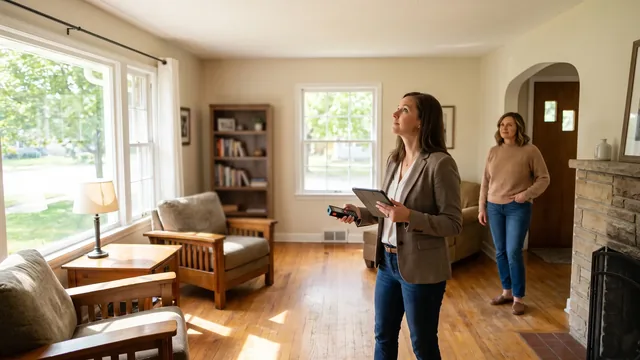
The Home Appraisal Process: What to Expect
Learn how the home appraisal process works, from the lender’s order to the final report, including typical costs of $300-$1,500 and what appraisers check.
12-minute read
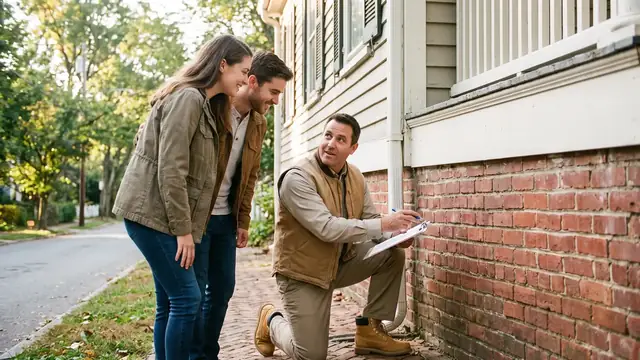
Home inspection checklist for buyers: What to look for room by room
See the complete home inspection checklist for buyers, from foundation to attic, so you can spot costly problems before you close on your next home.

12-minute read
How to prepare for a home closing: your step-by-step checklist
Learn how to prepare for a home closing with a step-by-step timeline, documents to bring, and final walk-through tips for a smooth closing day.
