
Pros and cons of investing in rural housing markets
General information only. Not tax, legal or investment advice, and not an offer to sell or a solicitation to buy any security. Take depreciation questions to a qualified tax professional, and well, septic, easement and title questions to a Michigan attorney. Align Lending is an independent Michigan mortgage broker financing one- to four-unit residential property, not a commercial lender, broker-dealer, investment adviser or property manager.
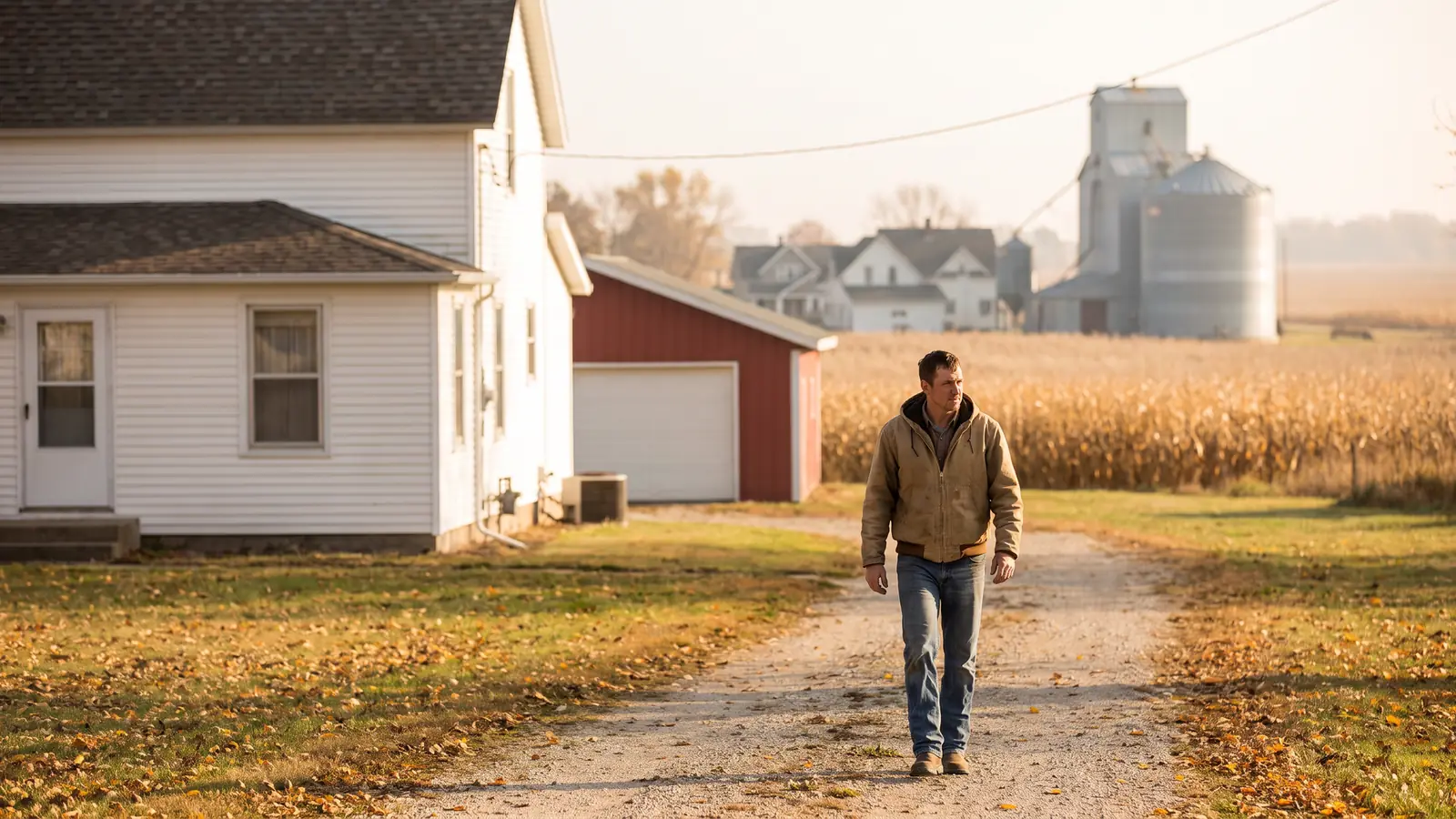
Rural housing buys you the cheapest door in residential real estate and the hardest one to price. Fannie Mae requires a minimum of three closed comparable sales, and its own Selling Guide concedes that on rural property there may be a shortage, or an absence, of recent truly comparable sales nearby. That sentence in an underwriting manual explains most of what goes wrong on a rural deal.
The stereotype gets the rest backward. The U.S. Census Bureau put the rental vacancy rate outside metropolitan statistical areas at 5.8% in the second quarter of 2026, below the 8.0% in principal cities. Rural rentals are not sitting empty. What thin markets cost you is optionality: few comps, few contractors, few buyers at exit.
One correction before you plan around it: a USDA Rural Development loan cannot finance a rental, because federal regulation requires the applicant to occupy the dwelling as a principal residence. Learn how the pros and cons of investing in rural housing markets trade off, from the appraisal to the financing to the septic tank. Start with our real estate investing guide or compare the field in investment property types.
Key takeaways:
- Vacancy is not the rural risk: The rental vacancy rate outside metropolitan statistical areas was 5.8% in the second quarter of 2026 against 8.0% in principal cities, per the Census Bureau. Depth is the risk: one tenant pool, one contractor bench, one buyer pool.
- USDA cannot finance a rental: Both single-family programs require the applicant to occupy the dwelling as a principal residence, under 7 CFR 3555.151 and 7 CFR 3550.53. A rural rental is a conventional investment loan instead, where Fannie Mae requires six months of reserves.
- The appraisal is the deal: Three closed comparable sales are the minimum, they should have closed within the last 12 months, and distant or older comps must be justified in writing. On acreage, expect a value opinion that may not credit everything you paid for.
What counts as a rural housing market, and why do two definitions matter?
Two official definitions are in play and they do not agree. The Census Bureau classified 20.0% of the U.S. population as rural in the 2020 Census, up from 19.3% in 2010, mostly because the urban threshold rose from 2,500 residents to 5,000, moving about 4.2 million people from urban to rural on paper.
USDA uses a statutory definition instead, from section 520 of the Housing Act of 1949: open country, or a place of no more than 2,500 residents; 2,500 to 10,000 if rural in character; or 10,000 to 20,000 if outside a metropolitan statistical area with a serious lack of mortgage credit. Places that lost the classification after 1990 stay eligible up to 35,000 through 2030. Neither tells you whether a town has renters, jobs or buyers. Underwrite the town, not the label.
| Factor | Rural housing market | Metro or suburban market |
|---|---|---|
| Rental vacancy rate, Q2 2026 | 5.8% outside MSAs | 6.9% suburbs, 8.0% principal cities |
| Appraisal support | Comps may be miles away or months old; three closed sales still the minimum | Recent comps usually in the same subdivision |
| USDA financing | Owner-occupants only, never a rental | Not available |
| Utilities | Often private well, onsite septic, private road, variable internet | Usually municipal water, sewer, public roads |
Why do investors buy rural rental property?
Because the capital required per rented door is the lowest in residential real estate, and the vacancy data does not punish them for it.
- More doors per dollar: Hypothetical example, not an offer. At 25% down, $75,000 of equity buys one $300,000 metro rental or three $100,000 rural rentals. Three leases fail one at a time; one fails all at once.1
- Stronger rent-to-price ratios: The national median asking rent for vacant for-rent units was $1,531 in the second quarter of 2026. Rural rents sit below that; rural prices sit further below it, and that gap is the ratio investors come for. The 1% rule quoted against it is a rule of thumb, not a standard.2
- Lower vacancy than the cities: Outside metropolitan statistical areas the Census Bureau measured a 5.8% rental vacancy rate and a 1.0% homeowner vacancy rate in the second quarter of 2026, against 8.0% and 1.5% in principal cities.
Two things follow. Institutional buyers need density and a shared management footprint, which does not work across forty miles of county road, so negotiating room survives here. And appreciation is missing on purpose: current income, not price growth, is the honest case for rural. Run the income with a property’s cash flow potential and cash-on-cash return; the closest comparison in the catalog is single-family rentals.
What makes a rural property hard to value and hard to sell?
The comparable sales, and everything downstream of them. Fannie Mae requires at least three closed comps and prefers sales closed within the last 12 months, then acknowledges that rural properties often have large lot sizes and undeveloped locations, so truly comparable recent sales nearby may be scarce or absent. Your appraisal gets built from sales the appraiser has to defend, distance stated in miles and a direction. Sometimes that holds. Sometimes value lands under contract and the deal reprices at week five.
- Acreage does not price linearly: Ten acres is not ten times one acre. Appraisers value the site at its highest and best use as improved, and land beyond what the market treats as typical contributes far less than the per-acre price you paid.
- Outbuildings carry less value than they cost: A pole barn or second garage can be useful and still add little to a value opinion, because the comp set has to show local buyers pay for one.
- Working land is a different asset: Agricultural properties such as farms and ranches are ineligible for Fannie Mae financing, and a house on tillable acreage can cross that line without the listing saying so. Bare ground is its own category, covered in the pros and cons of investing in raw land.
- More basis sits in land you cannot depreciate: The IRS is blunt. You can’t depreciate the cost of land, because land generally doesn’t wear out, become obsolete, or get used up. Improvements are recovered over 27.5 years; the acreage under them never is.3
Liquidity is the same problem in reverse: at sale, the thin comp set now complicates your buyer’s financing. Work the file with real estate due diligence and price the income with net operating income before leaning on a resale assumption.
How do you split land from building for depreciation on acreage?
IRS Publication 551, Basis of Assets (12/2025) says that when you buy buildings and the land on which they stand for a lump sum, you allocate the basis among the land and the buildings so you can figure the depreciation allowable on the buildings, and that if you are not certain of their fair market values you can allocate the basis based on their values for real estate tax purposes.
Hypothetical example, not an offer. For example, take a $200,000 rural rental where the local tax roll puts 40% of the value in the land. The depreciable building basis is $120,000, recovered over the 27.5 years that IRS Publication 527 sets for residential rental property, or about $4,364 a year. The same price on a small town lot with 15% in land leaves $170,000 of building basis, about $6,182 a year. The figures ignore the first-year mid-month convention and closing costs.
The difference is acreage you can never depreciate. Take the allocation to a tax professional, and see tax benefits of real estate investing for the wider picture.
How does financing a rural investment property actually work?
Not with a USDA loan, the most common misunderstanding in this category. The guaranteed program requires that applicants agree and have the ability to occupy the dwelling as their principal residence under 7 CFR 3555.151(c), and the Section 502 direct program carries the same requirement under 7 CFR 3550.53(c). There is no investor version of either.4
The rules close the door from the other side too. Under 7 CFR 3555.201 the site must not include income-producing land or buildings used principally for income-producing purposes, and property used primarily for agriculture, farming or commercial enterprise is ineligible. See USDA Rural Development’s single-family housing programs and our USDA loan basics explainer.
There is a legitimate owner-occupant path, worth naming precisely because it gets described sloppily. Buy an eligible home with a USDA loan, occupy it as a principal residence, and rent it later after genuinely moving. Signing an occupancy certification you never intend to honor is fraud, a federal crime, the line drawn in buying a home as an investment property. Buying one to live in? See tips for buying a home in a rural area.
So a rural rental is a conventional investment-property loan, and should be underwritten like one from day one.
- Six months of reserves, minimum: Fannie Mae requires six months’ reserves on an investment property transaction. A floor, not a target, when the tenant pool is a few hundred households.
- Every other financed property adds reserves: A borrower with one to four financed properties adds 2% of the aggregate unpaid principal balance of the others; five to six adds 4%, seven to ten adds 6%. Scaling is cheaper per door, not free.
- The property must be financeable, not just cheap: Properties not suitable for year-round occupancy are ineligible for Fannie Mae financing anywhere. A seasonal cottage without permanent heat is a cash purchase, not a mortgage. Order the appraisal early, because lender appetite for rural collateral genuinely differs.
How does a lender count the rent from a rural rental?
Under Fannie Mae’s Selling Guide B3-3.8-02, Rental Income from the Subject Property (topic dated 09/02/2026), on a purchase the lender multiplies monthly gross rent by 75% for the net rental income amount, then subtracts the subject property’s PITIA. The rent figure comes from a Single-Family Comparable Rent Schedule (Form 1007), or a Small Residential Income Property Appraisal Report (Form 1025) for two to four units, so a town with few comparable rentals makes the rent as hard to document as the value.
Hypothetical example, not an offer. For example, a rural rental with $1,200 of gross monthly rent shows $900 of net rental income after the 75% factor in B3-3.8-02, before the lender subtracts the property’s PITIA.
- Experience decides whether rent can help: Per Fannie Mae’s General Rental Income Information topic, B3-3.8-01 (09/02/2026), lenders may only use positive rental income for qualifying income if the borrower has at least 12 months of property management experience.
- The portfolio has a ceiling: B2-2-03, Multiple Financed Properties for the Same Borrower (11/05/2025) sets a maximum of 10 financed properties for a second home or investment property loan underwritten through Desktop Underwriter, with a multi-unit property such as a two-unit counting as one property.
- Consumer lending rules work differently: The CFPB’s official interpretation of 12 CFR 1026.3 says credit extended to acquire, improve or maintain rental property that is not owner-occupied, regardless of the number of housing units, is deemed to be for business purposes, one of Regulation Z’s exempt transactions.
Samantha Shelton, Align Lending’s broker owner, puts the underwriting lesson plainly: “I don’t love a deal that only works when nothing goes wrong.” On a rural rental that is usually a well pump, a drain field or a quiet stretch between tenants. Work the debt side with the debt-to-income ratio and the rent side with a property’s rental potential.
What do wells, septic systems and private roads add to your diligence?
A layer of inspection a metro investor has never had to buy, on infrastructure nobody regulates for you. The EPA reports that more than one in five U.S. households depend on individual septic or small community cluster systems, and that roughly 15% of the population, over 43 million people, rely on private wells whose water is not regulated by the federal government under the Safe Drinking Water Act, nor by most state governments. Owners are responsible for delivering safe drinking water. As a landlord that responsibility is yours, and your tenant drinks the result.
- Test the well for quality and quantity: Bacteria and nitrate are the standard screens; a flow test tells you whether the well supports a household in August. One that passes the lab test and produces three gallons a minute is still a problem.
- Inspect the septic, don’t just pump it: Get the permit, the as-built drawing and the drain-field location, then have the field evaluated. A clean tank does not mean a working system, and a failed field is a five-figure repair.
- Get the road in writing: On the conventional loan you will actually use, Fannie Mae treats a property that is not readily accessible by roads meeting local standards as ineligible; USDA’s own site standards, which apply only to an owner-occupant purchase, separately require hard-surfaced or all-weather-surfaced access. A shared drive with no recorded maintenance agreement is a financing problem and a winter one.
- Treat internet as a utility, not an amenity: Broadband changes address by address on rural roads, not county by county. For a remote-working tenant it sets the rent; for a listing, its absence shrinks your buyer pool. Verify service at the exact address.
What does a private well test usually turn up?
In a U.S. Geological Survey study of 2,100 domestic wells, about one in five held a contaminant above a human-health benchmark, most often metals, radionuclides or nitrate, and all but nitrate came primarily from natural sources, per the USGS domestic supply wells page. Ask the lab for a panel that covers the metals common in your area, not only bacteria.
How should you evaluate a rural market before you buy?
Start with the employment base, because in a small market one employer can outweigh everything else. Work these six checks in order and stop when one fails.
- Employer concentration: A town with a hospital, a school district and three manufacturers behaves nothing like one built around a single plant.
- Ten-year population trend: Pull the county’s change between the 2010 and 2020 censuses. Flat is fine; a decade of decline is a headwind rent cannot outrun.
- Median days on market: Your liquidity number. Get it from a local agent for your price band, not the county average.
- Broadband at the address: Confirm what is deliverable to the parcel and at what speed. It is the newest real value driver in rural housing, and the easiest to get wrong.
- Distance to the nearest metro: Commuting distance to an expanding fringe is the closest thing rural investing has to an appreciation story. Measure it in February drive time.
- Contractor and manager availability: Call three contractors and two property managers before you write the offer. If nobody will drive out for a turnover, you are the manager.
Seasonality is the seventh question, and where rural differs most from demand-anchored niches: in student housing markets an institution renews the tenant pool every August, while a tourism town prices housing off summer and pays you off winter. First purchase? Read real estate investment strategies for beginners and tips for new real estate investors.
What do the newest Census and USDA figures say about rural rental demand?
The Census Bureau’s Quarterly Residential Vacancies and Homeownership, Third Quarter 2026 (release CB26-161, October 28, 2026) moved the rural number up from the second-quarter figure quoted above. The rental vacancy rate outside metropolitan statistical areas was 6.4%, against 6.5% in suburbs and 8.8% in principal cities, and the Bureau reported that the suburban and outside-MSA rates were not statistically different from each other.
| Area | Rental vacancy rate, Q3 2026 | Homeowner vacancy rate, Q3 2026 |
|---|---|---|
| Outside metropolitan statistical areas | 6.4% | 1.2% |
| Suburbs | 6.5% | 1.1% |
| Principal cities | 8.8% | 1.4% |
| United States | 7.6% | 1.2% |
Source: U.S. Census Bureau, third quarter 2026 release CB26-161, October 28, 2026, Current Population Survey/Housing Vacancy Survey.
Regionally, the Census Bureau put the Midwest’s rental vacancy rate at 7.1% in the third quarter of 2026, against 9.2% in the South, and 2.3% of all housing units were vacant for seasonal use, per the same October 28, 2026 release.
According to USDA’s Economic Research Service, nonmetro counties held 46.2 million people in July 2024, 13.6% of the U.S. population, and grew 0.29% from July 2023 to June 2024, against 1.08% in urban areas (ERS chart published March 31, 2026). The same agency reported that 51% of nonmetro counties lost population between July 2020 and June 2024, with recent growth concentrated in counties adjacent to metro areas and counties with recreation economies (ERS population and migration page, updated February 13, 2026). That is why the ten-year county trend in the market screen above matters more than any rural average; see rental market trends and how to evaluate a real estate market for investment.
What Michigan investors should know
Most of Michigan’s land sits outside the Detroit, Grand Rapids, Lansing and Ann Arbor urbanized areas, so USDA-eligible geography is broad here, and irrelevant to a rental, because the occupancy rule applies here as everywhere.
- Check the address, then set USDA aside: Eligibility follows the statutory thresholds, 2,500 residents, 10,000 if rural in character, 20,000 outside an MSA lacking mortgage credit, and grandfathered places up to 35,000 through 2030. Confirm an address on USDA’s map, then plan the purchase as a conventional investment loan anyway.
- The Midwest is the tighter half of the national market: The Census Bureau reported a 6.9% rental vacancy rate in the Midwest in the second quarter of 2026, against 9.5% in the South and 7.3% nationally, regional rather than state-level, and still the closest published benchmark for a Michigan submarket.
- Underwrite Up North and Thumb markets on winter: Nationally, 2.3% of housing units were vacant for seasonal use in the second quarter of 2026, per the Census Bureau’s Housing Vacancy Survey. In Michigan’s tourism counties the share runs well above that, so housing is priced off summer demand while a year-round lease pays you off winter.
- Budget the non-homestead rate: Michigan’s principal residence exemption is reserved for property the owner occupies, so a rental does not qualify, confirm current millage with the local assessor. Well and septic permitting is local; ask the county health department for the records.
Which Michigan rules reach a rural rental beyond the tax bill?
- Septic rules are set county by county: Michigan is the only state without a statewide septic code, Michigan Public reported on January 30, 2026, and only 11 counties require septic inspections and repairs, most of them only when a home is sold. The same report says a bill from Sen. Sam Singh would require the Department of Environment, Great Lakes, and Energy to establish a septic system sanitary code within three years of the bill becoming law, enforced by local health departments. Today EGLE describes onsite wastewater management as a required service of local health departments under the Public Health Code, Act 368 of 1978.
- A farm next door is judged on farming practices: The Right to Farm program at the Michigan Department of Agriculture and Rural Development responds to nuisance complaints involving farms and assesses the farm operation for conformance with the Generally Accepted Agricultural and Management Practices (GAAMPs). Ask the township whether complaints have been filed against a neighboring farm.
- Wetlands and shoreline limit what acreage can hold: EGLE notes Michigan was the first state, and remains one of only two, authorized to administer the federal wetland program, so a wetland, lake or stream permit EGLE issues under state law also provides federal approval. On the Great Lakes, EGLE’s high-risk erosion areas are shorelines receding one foot or more per year for a minimum of 15 years, about 250 miles along Lakes Michigan, Superior and Huron, with building setbacks.
- The seller’s tax bill is not yours: In Michigan, a home’s taxable value is capped while one owner holds it. The year after it sells, that cap comes off and taxable value resets to the state equalized value, which is half of the assessor’s estimate of market value, not automatically half of what you paid. Which transfers uncap a property is set by section 211.27a of the General Property Tax Act, as Michigan Treasury’s Changes in Ownership and Uncapping of Property page explains; see how property tax assessments work.
How Align matches lenders to rentals
Lenders treat a duplex, a condo rental and a short-term rental very differently. Some count projected rent, some want a signed lease, and some will not finance the property at all.
Because Align is a broker, Samantha takes your file to the wholesale lender whose rules fit the property you actually want to buy. One application, multiple lenders.
FAQ: Investing in rural housing markets
Here are answers to common questions about investing in rural housing markets.
Are rural properties a good real estate investment?
They can be, for an investor who prioritizes current income over appreciation and has local knowledge. Lower prices produce stronger rent-to-price ratios, and the rental vacancy rate outside metropolitan statistical areas was 5.8% in the second quarter of 2026, below the 8.0% in principal cities. The catch is depth, not demand: one tenant pool, one contractor bench, one buyer pool at exit. Screen with cap rates in real estate.
Can I use a USDA loan to buy a rental property?
No. USDA’s guaranteed and direct loans both require the applicant to occupy the dwelling as a principal residence, and the site cannot include land or buildings used principally for income-producing purposes. Investors reach it only indirectly: buy an eligible home as a primary residence, live in it, and convert it after a genuine move. Never sign an occupancy certification you do not intend to honor. Updates are in recent changes to USDA loan programs.
Why do rural appraisals come in low so often?
Because the evidence is thinner. Fannie Mae requires at least three closed comparable sales that ideally closed within the last 12 months, and its guide acknowledges rural properties may have a shortage or absence of truly comparable recent sales nearby. Acreage beyond what is typical, and unsupported outbuildings, contribute less than they cost. Basis rules are in real estate depreciation.
What are the biggest risks of rural real estate investing?
Economic concentration, exit liquidity and infrastructure. One dominant employer can reset your tenant pool in a single announcement, resale takes longer because the buyer pool is small, and you own the well and septic outright. The EPA notes private wells are not federally regulated and the owner is responsible for safe water. Size reserves with a property’s cash flow potential.
Can I buy a vacation cabin with a USDA loan?
No. USDA’s guaranteed loan rule, 7 CFR 3555.151(c), states that Rural Development will not guarantee loans for investment properties, or temporary, short-term housing. 7 CFR 3555.10 defines a principal residence as the home domicile physically occupied by the owner for the major portion of the year and the address of record for federal income tax reporting and voter registration. A weekend cabin fails that test.
How often should a rental’s well water be tested?
At least once each year, according to the CDC guidelines for testing well water, for total coliform bacteria, nitrates, total dissolved solids and pH, using a state-certified laboratory. The CDC also advises checking the well every spring for mechanical problems. On a rental, a dated lab report each year gives you a record of the water you supplied. See how well water affects a home.
How often does a septic system need to be inspected?
The EPA says the average household septic system should be inspected at least every three years by a septic service professional, and household tanks are typically pumped every three to five years (EPA, updated August 17, 2026). In Michigan, EGLE reports the legislature appropriated 35 million dollars for a statewide, low interest loan program to replace failing and near failing septic systems. More in buying a home with a septic system.
How do I check whether a rural property is in a flood zone?
Before offering on rural acreage, find the parcel in FEMA’s Flood Map Service Center and check whether the house itself, not just the back of the lot, sits in a mapped flood zone. The appraisal looks too: Fannie Mae’s appraisal site rules in B4-1.3-04 cover Special Flood Hazard Areas alongside site utilities and privately maintained streets. Creek frontage that reads as an amenity can carry an insurance cost; see buying a home in a flood zone.
Where can I find the well record for a Michigan property?
Start with EGLE’s Water Well Viewer, an interactive mapping system that displays water wells, linked from EGLE’s water well construction page. Michigan wells fall under the Water Well Construction and Pump Installation Code, Part 127 of Act 368 of 1978. A well that does not appear in the viewer is a question for the seller and the county health department before closing, not after.
How much more tax does a Michigan rental pay without the homestead exemption?
Up to 18 mills of school operating tax. Michigan Treasury’s principal residence exemption page says the exemption covers the local school operating millage, up to 18 mills, so a rental pays it. Hypothetical example, not an offer: on $100,000 of taxable value, 18 mills is $1,800 a year. Treasury’s occupancy example reads summer-only utility use as a sign of a seasonal home. Try the Michigan property tax calculator.
The bottom line on rural housing investing
Rural housing offers the lowest capital per rented door in residential real estate, and the Census Bureau’s 5.8% rental vacancy rate outside metropolitan statistical areas in the second quarter of 2026 shows the demand stereotype is wrong. The real costs are valuation and liquidity: three closed comparables is the minimum, Fannie Mae’s own guide warns those comps may not exist nearby, and acreage and outbuildings frequently appraise below what you paid. Add the correction most investors need, USDA loans require owner occupancy and cannot finance a rental, and a rural purchase becomes a conventional investment loan carrying six months of reserves, plus a well, a septic system and a road on the diligence list.
If you’re ready to price a rural purchase with lenders genuinely comfortable with acreage, outbuildings and thin comp sets, talk to Align Lending. We’ll shop your scenario across our lender network and show you the numbers side by side. Call 248-506-5727 or start online. Take depreciation questions to a tax professional and title questions to a Michigan attorney.
Footnotes:
1. Hypothetical example, not an offer. The $75,000 of equity, the $300,000 and $100,000 purchase prices and the 25% down payment are illustration figures chosen only to compare capital per door. They are not observed market prices, do not describe any specific property and are not what any lender offers or requires. They leave out closing costs, repairs, reserves, financing costs and taxes. Return to text.
2. The 1% rule, screening for monthly rent equal to roughly 1% of purchase price, is a widely repeated practitioner rule of thumb, not a statutory, regulatory, index-published or underwriting standard, and it carries no predictive force. The same is true of the 2%, 50% and 70% rules. Rent-to-price ratios vary by market, property condition, expense structure and period, and a sound property can sit well outside any of these ranges. Nothing here is a projection or guarantee of any return, and past performance does not predict future results. Return to text.
3. This is general information, not tax advice. Land is never depreciable; only the improvement portion of your basis is recovered, which requires a defensible allocation between land and improvements that is fact-specific and matters more on acreage than on a small lot. Recovery periods, the deductible-versus-capitalized treatment of a given expense, passive-activity loss rules, depreciation recapture on deductions “allowed or allowable,” and entity choice all depend on your individual circumstances and change over time. Consult a qualified tax professional about your situation. Align Lending is a mortgage broker and does not provide tax, legal or investment advice. Return to text.
4. Align Lending works with wholesale lenders approved to originate USDA Rural Development guaranteed loans and is not endorsed or sponsored by the U.S. Department of Agriculture, USDA Rural Development, or any government agency, and is not acting on behalf of or at the direction of USDA. Program eligibility, income limits, area eligibility and fees are set by USDA, change over time, and are subject to annual appropriations; confirm current requirements with USDA Rural Development or your loan officer before relying on them. Return to text.
Sources: rental vacancy rate of 5.8% outside metropolitan statistical areas, 6.9% in suburbs, 8.0% in principal cities and 7.3% nationally; homeowner vacancy rates of 1.0% outside metropolitan statistical areas and 1.5% in principal cities; regional rental vacancy rates of 6.9% in the Midwest and 9.5% in the South; median asking rent of $1,531 for vacant for-rent units; and 2.3% of housing units vacant for seasonal use, all second quarter 2026, U.S. Census Bureau, Quarterly Residential Vacancies and Homeownership, Second Quarter 2026, release CB26-116, July 28, 2026, Current Population Survey/Housing Vacancy Survey; see Census housing vacancy and homeownership data. Rural population of 20.0% of the U.S. population in 2020 against 19.3% in 2010, the urban threshold increase from 2,500 to 5,000 residents or 2,000 housing units, and 1,140 areas containing approximately 4.2 million people reclassified from urban to rural, U.S. Census Bureau, “Nation’s Urban and Rural Populations Shift Following 2020 Census,” December 29, 2022. Statutory definition of rural area, including the 2,500, 10,000, 20,000 and 35,000 population thresholds and the grandfather provision extended through 2030, section 520 of the Housing Act of 1949, 42 U.S.C. 1490. Requirement that applicants agree and have the ability to occupy the dwelling as their principal residence, and the limit of no more than one retained single-family dwelling, 7 CFR 3555.151(c) and (e)(5). Occupancy requirement for the Section 502 direct program, 7 CFR 3550.53(c). Prohibition on sites including income-producing land or buildings to be used principally for income-producing purposes, ineligibility of vacant land without eligible residential improvements and of property used primarily for agriculture, farming or commercial enterprise, the requirement that site size be typical for the area, the requirement for direct access from a hard-surfaced or all-weather-surfaced street, road or driveway, and the requirement for adequate utilities and water and wastewater disposal systems, 7 CFR 3555.201. Program descriptions, USDA Rural Development, Single Family Housing Programs. Minimum of three closed comparable sales, the preference for comparable sales closed within the last 12 months, the requirement to state distance in miles with a directional indicator, and the statement that rural properties often have large lot sizes and relatively undeveloped locations so there may be a shortage or absence of recent truly comparable sales in the immediate vicinity, Fannie Mae Single Family Selling Guide B4-1.3-08, Comparable Sales. Ineligibility of agricultural properties such as farms or ranches, of properties not suitable for year-round occupancy, and of properties that are not readily accessible by roads that meet local standards, Fannie Mae Selling Guide B2-3-01, General Property Eligibility. Requirement that a loan represent the highest and best use of the site as improved, Fannie Mae Selling Guide B4-1.3-04, Site Section of the Appraisal Report. Six months’ reserves on an investment property transaction and additional reserves of 2% of the aggregate unpaid principal balance for one to four financed properties, 4% for five to six and 6% for seven to ten, Fannie Mae Selling Guide B3-4.1-01, Minimum Reserve Requirements. Statement that you can’t depreciate the cost of land because land generally doesn’t wear out, become obsolete, or get used up, and the 27.5-year recovery period for residential rental property under the general depreciation system, Internal Revenue Service Publication 527, Residential Rental Property. More than one in five U.S. households depending on individual septic or small community cluster systems, U.S. Environmental Protection Agency, Learn About Septic Systems. Approximately 15% of the U.S. population, over 43 million people in more than 23 million households, relying on private wells; the statement that the quality and safety of drinking water from private domestic wells are not regulated by the federal government under the Safe Drinking Water Act nor by most state governments; and the statement that private well owners are responsible for delivering safe drinking water to their households, U.S. Environmental Protection Agency, Private Drinking Water Wells. Michigan principal residence exemption eligibility, Michigan Department of Treasury, Principal Residence Exemption; confirm current millage rates with your local assessor.
This article is for informational purposes only and is not intended to provide legal, financial, tax or investment advice, and it is not an offer to sell or a solicitation of an offer to buy any security. Market conditions, vacancy rates, tax rules, millage rates, agency program requirements and loan program guidelines change and vary by property, program and locality; confirm current figures with your loan officer, confirm tax and depreciation treatment with a qualified tax professional, and confirm well, septic, easement, road-maintenance, zoning and title questions with a Michigan attorney. Figures shown are illustrative, are not a rate quote or an offer of credit, and do not constitute an advertisement of credit terms or a projection of investment returns. Past performance does not predict future results. Align Lending is an independent Michigan mortgage broker, NMLS #2041154, that finances one- to four-unit residential property, and is not a commercial lender, broker-dealer, investment adviser, syndicator or property manager.
Sources
Every outside source this guide links to, in the order it appears. How we choose and check sources
- IRS Publication 551, Basis of AssetsInternal Revenue Service
- IRS Publication 527Internal Revenue Service
- Same requirement under 7 CFR 3550.53(c)Electronic Code of Federal Regulations
- Under 7 CFR 3555.201Electronic Code of Federal Regulations
- USDA Rural Development’s single-family housing programsUSDA Rural Development
- Selling Guide B3-3.8-02, Rental Income from the Subject PropertyFannie Mae Selling Guide
- General Rental Income Information topic, B3-3.8-01Fannie Mae Selling Guide
- B2-2-03, Multiple Financed Properties for the Same BorrowerFannie Mae Selling Guide
- CFPB’s official interpretation of 12 CFR 1026.3Consumer Financial Protection Bureau
- USGS domestic supply wells pageusgs.gov
- Quarterly Residential Vacancies and Homeownership, Third Quarter 2026U.S. Census Bureau
- ERS chart published March 31, 2026ers.usda.gov
- ERS population and migration page, updated February 13, 2026ers.usda.gov
- USDA’s mapUSDA Rural Development
- Michigan Public reported on January 30, 2026michiganpublic.org
- EGLEState of Michigan
- Right to Farm programState of Michigan
- EGLEState of Michigan
- High-risk erosion areasState of Michigan
- Changes in Ownership and Uncapping of PropertyState of Michigan
- 7 CFR 3555.151(c)Electronic Code of Federal Regulations
- 7 CFR 3555.10Electronic Code of Federal Regulations
- CDC guidelines for testing well watercdc.gov
- EPA, updated August 17, 2026U.S. Environmental Protection Agency
- FEMA’s Flood Map Service CenterFEMA Flood Map Service Center
- B4-1.3-04Fannie Mae Selling Guide
- EGLE’s water well construction pageState of Michigan
- Principal residence exemption pageState of Michigan
- Occupancy exampleState of Michigan
- Census housing vacancy and homeownership dataU.S. Census Bureau
- Nation’s Urban and Rural Populations Shift Following 2020 CensusU.S. Census Bureau
- 42 U.S.C. 1490law.cornell.edu
- Fannie Mae Single Family Selling Guide B4-1.3-08, Comparable SalesFannie Mae Selling Guide
- Fannie Mae Selling Guide B2-3-01, General Property EligibilityFannie Mae Selling Guide
- Fannie Mae Selling Guide B3-4.1-01, Minimum Reserve RequirementsFannie Mae Selling Guide
- U.S. Environmental Protection Agency, Learn About Septic SystemsU.S. Environmental Protection Agency
- U.S. Environmental Protection Agency, Private Drinking Water WellsU.S. Environmental Protection Agency
Related resources
20-minute read
A guide to investing in short-term rentals
How short-term rental investing works: picking a market and property, the 14-day and 7-day tax rules, and the local rules that can kill a deal.

20-minute read
Pros and cons of investing in condominium markets
Compare the pros and cons of condo investing, from lower entry prices and less maintenance to HOA fees, rental caps and special assessments.
20-minute read
A guide to investing in multi-family properties
Learn how multi-family investing works, why vacancy risk drops across units, how financing changes at five units, and what house hacking does.
