
Rent control: How it affects rents, housing supply, and renters
Rent control is a local law that caps how much a landlord can raise the rent on covered units, usually to a fixed percentage or an inflation-linked figure each year. It reliably lowers the rent for tenants already living in a covered unit, but the most-cited quasi-experimental study of the question found a cost on the other side of the ledger: landlords covered by San Francisco’s 1994 rent-control expansion reduced their rental housing supply by 15%, according to research published in the American Economic Review in September 2019.
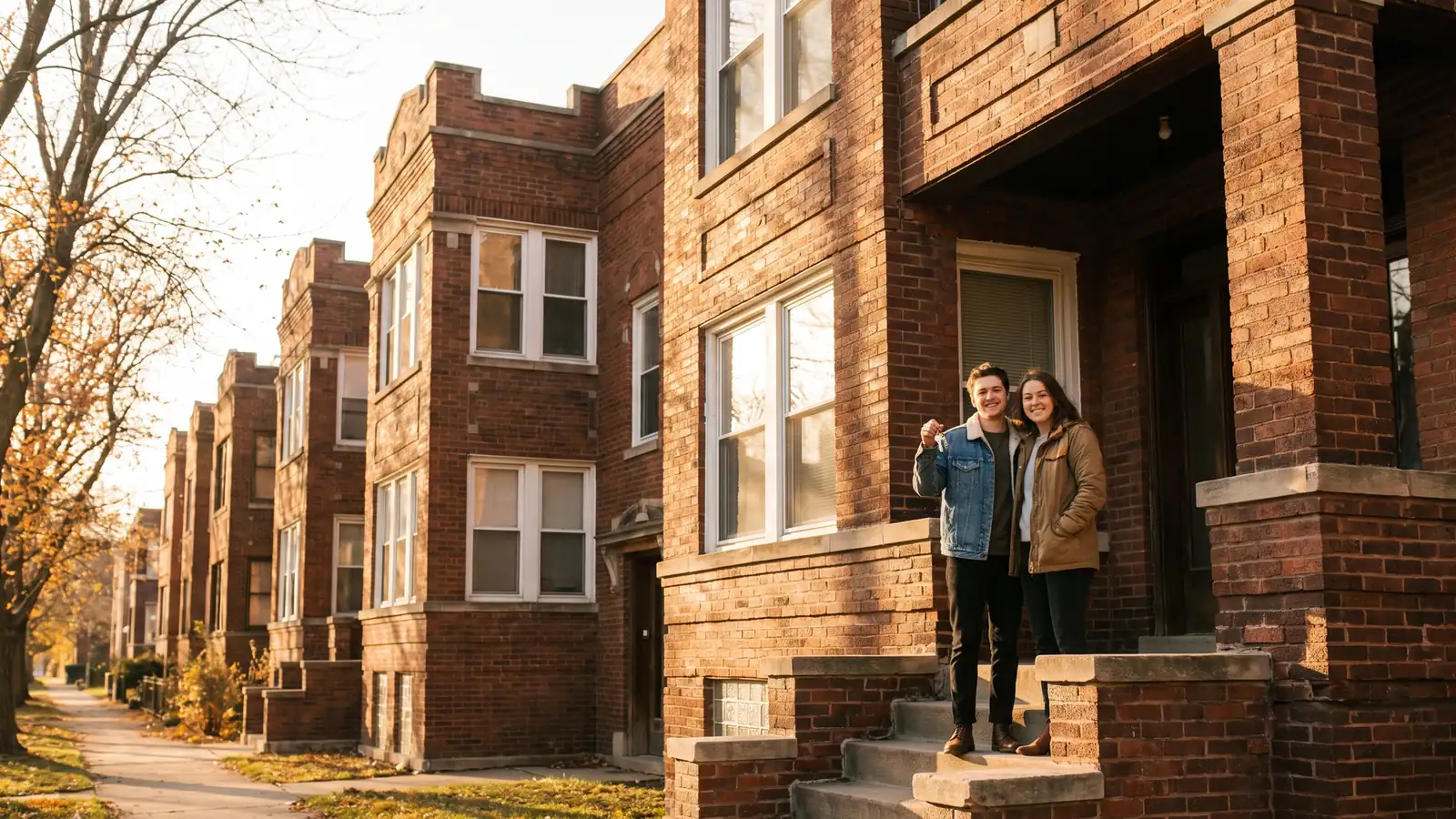
That is the whole debate in one sentence. Rent control is a price rule, not a supply rule. It changes what a landlord may charge without changing how many units exist. Sitting tenants gain. Renters searching for a unit in the same city, and taxpayers funding the alternatives, generally do not.
Here’s how rent control works, what it genuinely delivers for the tenants it covers, what it costs the wider rental market, what economists and housing agencies point to instead, and why no city in Michigan can enact it.
Key takeaways:
- What it is: Rent control is a local ordinance that limits annual rent increases on covered units. California’s statewide version caps increases at 5% plus the local change in the cost of living, or 10%, whichever is lower.
- The measured trade-off: Landlords covered by San Francisco’s rent-control expansion cut rental housing supply by 15% while covered tenants moved 20% less often, the two headline findings of the September 2019 American Economic Review study of that policy change.
- Where Michigan stands: Michigan bars every local government from enacting rent control under MCL 123.411, a 1988 statute last amended effective March 28, 2019, so rents on private residential property across all 83 counties are set by lease terms and market conditions rather than by local ordinance.
What is rent control?
Rent control is a law, enacted by a city or county, that limits the rent a landlord may charge on covered residential units, typically by capping the size of the annual increase rather than freezing the dollar amount. Coverage is never universal: ordinances almost always exempt newer construction, small owner-occupied buildings, and single-family rentals, so a large share of the rental stock in any rent-controlled city sits outside the rule.
Three design choices decide how much an ordinance actually bites: which buildings are covered, how the annual cap is calculated, and what happens when a tenant moves out. That last one matters most. Under vacancy decontrol, the rent resets to market when the unit turns over; without it, the gap between controlled and market rents compounds for decades. Nolo’s explainer on how rent control laws are written and enforced walks through the mechanics jurisdiction by jurisdiction.
Rent control is landlord-tenant law, set locally or by a state legislature. It has nothing to do with the federal rules that govern your mortgage, two separate bodies of law that renters and buyers often blur together. If you want the mortgage side, our Mortgage Regulation Updates hub tracks changes to lending rules, and Industry Updates & Rules covers the broader regulatory picture.1
Why rent control exists
Rent control shows up where rents rise faster than incomes and displacement becomes politically visible. The policy goal is stability: keep a long-term tenant from being priced out of a neighborhood by a single lease renewal. That goal is real, and the mechanism does achieve it for the households it covers.
The pressure behind it is measurable. The Bureau of Labor Statistics’ consumer price index for rent of primary residence rose about 2.9% in the year through July 2026 (series CUSR0000SEHA, released August 2026), and because rent is one of the largest line items in most household budgets, even modest annual increases compound quickly against flat wages. Our Housing Policy Changes hub tracks how legislatures respond.
What rent control does well
For a tenant inside a covered unit, rent control works exactly as advertised, and the San Francisco research quantified the benefit: covered renters were 20% less likely to move away, and the study found lower displacement from the city among the tenants the law reached.
- Payment predictability: A capped increase turns the scariest line in a lease renewal into a known number. A tenant can plan a year ahead instead of bracing for a market reset.
- Protection against displacement: The same 2019 study found rent control reduced the chance that covered tenants left San Francisco altogether. The clearest evidence that the policy does what its supporters intend for the people it covers.
- A targeted, immediate effect: Unlike zoning reform or new construction, a rent cap changes a household’s budget on the next renewal date, not in five to ten years.
None of that is in dispute. The disagreement is about what happens to everyone else in the same city.
What rent control costs the rental market
The central cost is supply. Landlords covered by San Francisco’s 1994 expansion cut their rental housing supply by 15%, and the authors identified exactly how they did it: selling units to owner-occupants and redeveloping buildings into forms the ordinance did not reach. The paper’s own conclusion is that the lost supply likely pushed market rents up citywide over the long run, undercutting the law’s purpose.
- Shrinking supply: A 15% reduction among covered landlords is not a rounding error. Every unit converted to a condo or sold to an owner-occupant leaves the rental pool permanently.
- Higher rents elsewhere: Demand does not disappear when supply does. Renters who cannot get into a covered unit compete for the uncontrolled stock, and prices there absorb the pressure.
- Deferred maintenance: Taxes, insurance, and repair costs rise on their own schedule. When the cap runs below cost growth, some owners cut the only variable they control, upkeep.
- Reduced mobility: The same 20% mobility reduction that protects a tenant also locks them in. A household that has outgrown a unit, or needs to move for a job, gives up a below-market rent to do it.
Landlord costs are not static, either. Financing costs move with the bond market, mortgage rates track the 10-year Treasury yield and mortgage-backed securities spreads, not the federal funds rate the Federal Reserve sets, and when borrowing gets more expensive, the economics of holding a capped-rent building get worse. Our guide to the impact of interest rate hikes on rental markets works through that chain, and the Mortgage Rates & Market guide explains what actually drives the rate side.
This is one of the rare questions where the economics profession is close to unanimous. In the Clark Center Forum’s US Economic Experts Panel survey on rent control, fielded February 7, 2012, 33 of the 37 panelists who voted agree, disagree or uncertain, about 90%, disagreed or strongly disagreed that local rent-increase limits had improved the amount and quality of broadly affordable rental housing over the prior three decades. Three were uncertain and one agreed; of the other four panelists listed, one had no opinion and three did not answer.
What else has research found about rent control?
San Francisco is not the only city economists have studied. In an October 18, 2018 summary for the Brookings Institution, Stanford economist Rebecca Diamond reviewed the wider literature and wrote that rent control appears to help current tenants in the short run but, over the long run, decreases affordability and creates negative spillovers on the surrounding neighborhood.
- Cambridge, Massachusetts: When rent control ended there in 1994, controlled units typically rented at 40-plus percent below nearby uncontrolled properties, according to the same Brookings review.
- Who paid, and who received: Citing Autor, Palmer and Pathak (2014), Diamond’s review reports that Cambridge’s rent control imposed $2.0 billion in costs on local property owners, while only $300 million of that cost was transferred to renters in rent-controlled apartments. The review concludes that more than half of the capitalized cost of rent control was borne by owners of never-controlled properties.
- Condo conversions: In the San Francisco data, rent-controlled buildings were 8 percentage points more likely to convert to a condo than comparable buildings outside the law, per Diamond’s summary. That is the building-level picture behind the 15% supply figure: converted units leave the rental pool as owner-occupied homes, the kind weighed in our guide to the pros and cons of buying a condo.
The same review suggests that if a city wants to insure renters against sharp increases, a government subsidy or tax credit may distort the market less than a mandate on landlords. For the supply side of the same debate, see our guides to the economic impacts of housing shortages, affordability challenges in today’s housing market and housing affordability indices.
Rent control vs. rent stabilization vs. rental assistance
These three tools get used interchangeably and are not the same policy. Rent control sets a ceiling, rent stabilization caps the increase, and rental assistance pays part of a market rent, and only the third leaves the landlord’s revenue intact.
| Feature | Rent control | Rent stabilization | Rental assistance |
|---|---|---|---|
| How the rent is set | A hard ceiling on the rent itself, usually on older units with long-tenured tenants | Market rent at move-in, with annual increases capped by a formula or a local board | Market rent, negotiated normally; a subsidy covers the gap between rent and what the household can pay |
| Who benefits | Sitting tenants in covered units only | Sitting and renewing tenants in covered buildings | Income-qualified households, in whatever building they rent |
| Effect on rental supply | Reduces it, 15% among covered landlords in the San Francisco study | Same direction, generally milder; formula caps let owners recover part of rising costs | Neutral to positive. Demand is subsidized without capping what the owner may charge |
| Who bears the cost | Property owners, through forgone rent | Property owners, through capped increases | Taxpayers, through appropriated federal and state funds |
| Where you see it | A handful of older municipal ordinances, concentrated in New York and California | Statewide formulas: California at 5% plus cost-of-living or 10%, whichever is lower; Oregon at 9.5% for calendar year 2026 | Nationwide, HUD’s Housing Choice Voucher program serves more than 2.3 million families, per HUD’s program description as of August 2026 |
Both statewide numbers need a date attached. Oregon’s Department of Administrative Services publishes a maximum allowable increase each September for the following calendar year under ORS 90.324, 10.0% for 2025 and 9.5% for 2026, the 2026 figure published in September 2025, with a separate 6% cap for 2026 on manufactured-dwelling and marina facilities of more than 30 spaces, and California’s cap floats with the local cost-of-living change under Civil Code section 1947.12. Check the state agency’s current-year figure rather than a number you read in an article.
How are statewide rent caps set each year?
Oregon writes its formula into statute. Under ORS 90.324, the yearly cap for most covered tenancies is the lesser of 10% or 7% plus CPI, and CPI means the September annual 12-month average change in the Consumer Price Index for All Urban Consumers, West Region. The Department of Administrative Services must calculate the next year’s figure no later than September 30. For 2027, the maximum allowable increase is 10%, the department reports, up from 9.5% for 2026.
Hypothetical example, not an offer. Here is how the most a landlord could add at renewal compares on the same $1,500 monthly rent, assuming a 3% local cost-of-living change for California.
| Rule | Cap that applies | Most added per month | Highest new rent |
|---|---|---|---|
| Oregon, calendar 2027 | 10% (the published figure) | $150 | $1,650 |
| California, 3% local cost-of-living change | 5% + 3% = 8%, lower than 10% | $120 | $1,620 |
| Michigan | No statutory cap (MCL 123.411) | Set by the lease and the market | Set by the lease and the market |
Sources: Oregon Department of Administrative Services, Rent Stabilization (2027 figure, published by September 30, 2026); California Attorney General, Landlord-Tenant Issues (Civil Code 1947.12 cap); Michigan Legislature, MCL 123.411. The dollar figures are illustrations, not quotes.
Caps limit the percentage, not the starting rent. Our guides to rental market trends and the impact of inflation on home prices cover what moves starting rents, and the rent vs. buy calculator tests your own increase against owning.
What works better than rent control?
The three alternatives that dominate the research literature all attack supply or income rather than price: build more units, subsidize the household directly, and remove the zoning rules blocking the first two. None delivers relief on the next renewal date the way a cap does, which is why rent control keeps getting proposed.
Adding housing supply
More units is the only fix that lowers rent without transferring the cost to a specific party. It is also the slowest. The national rental vacancy rate was 7.3% in the second quarter of 2026 and the median asking rent for vacant units was $1,531, per the Census Bureau’s Housing Vacancy Survey released July 28, 2026. A benchmark that updates quarterly, and one you can track through Census data on rental vacancy and homeownership rates.
Direct rental assistance
Vouchers subsidize the household instead of capping the landlord. Under the federal rule at 24 CFR 982.1, a Housing Choice Voucher family generally pays 30% of adjusted monthly income toward rent when the rent is less than the local payment standard; when the rent exceeds the payment standard, the family pays a larger share. Because the landlord still receives a market rent, the incentive to maintain and to keep the unit on the rental market survives. Renters should also know their HUD fair housing protections, which apply whether or not a jurisdiction regulates rent.2 For how federal housing programs change over time, see our Federal Housing Administration Updates hub.
Zoning reform
Zoning decides what can legally be built and at what density, which makes it the upstream constraint on every supply argument above. A jurisdiction that caps rents while prohibiting the construction that would relieve them is working against itself.
For a renter weighing the long game, there is a fourth option the policy debate tends to skip: buying. Ownership converts a rent that resets annually into a principal-and-interest payment that does not, the comparison our renting vs. buying financial comparison works through in detail.
How is a voucher family’s share of the rent calculated?
The federal formula looks at more than one income figure. Under 24 CFR 5.628, a family’s total tenant payment is the highest of 30 percent of monthly adjusted income, 10 percent of monthly income, a welfare rent where one applies, or the minimum rent. A housing agency may set that minimum rent at up to $50, and it must grant a hardship exemption to a family that cannot pay it. The statute behind the program, 42 U.S.C. 1437f, sets the assistance payment as the amount by which the rent, including tenant-paid utilities, exceeds the greatest of those amounts.
- The payment standard: Each agency picks a payment standard between 90% and 110% of the Fair Market Rent for the unit size without HUD approval, per 24 CFR 982.503.
- What a Fair Market Rent measures: HUD’s Fair Market Rents are estimates of 40th percentile gross rents for standard quality units in a metro area or nonmetro county, effective at the start of the federal fiscal year, generally October 1. HUD has posted its FY 2027 figures.
- What the owner receives: The agency must find the rent reasonable compared with similar unassisted units (24 CFR 982.507), and the tenant’s rent plus the agency’s payment may not exceed the rent to owner (24 CFR 982.451).
Hypothetical example, not an offer. A household with $2,400 of gross monthly income and $2,000 of adjusted monthly income has a 30% figure of $600 and a 10% figure of $240, so its total tenant payment is $600. If the unit rents for $1,200 with utilities included and the rent falls within the agency’s payment standard, the agency pays the owner about $600 and the family pays about $600.
Owners who accept vouchers still charge a market rent, with part of it paid by the agency. Our guides to becoming a landlord and rental management cover the owner’s side.
What Michigan renters should know
No Michigan city can enact rent control, and that is not a policy preference. It is state law. MCL 123.411, enacted as Act 226 of 1988 and last amended effective March 28, 2019, provides that a local governmental unit “shall not enact, maintain, or enforce an ordinance or resolution that would have the effect of controlling the amount of rent charged for leasing private residential property.” Counties, cities, villages, and townships are all covered.
- Two narrow carve-outs: Subsection (3) preserves a local unit’s right to manage residential property in which it holds a property interest, and subsection (4) allows ordinances that use voluntary incentives and agreements to increase the supply of moderate- or low-cost rental housing. Neither permits a cap on private rents.
- Assistance instead of caps: The Michigan State Housing Development Authority describes itself as the largest statewide public housing agency in the country, assisting more than 29,000 families across all 83 Michigan counties through the Housing Choice Voucher program as of August 2026.
- A state of owners: Michigan’s homeownership rate was 74.0% in 2025 against 65.2% nationally, per the Census Bureau’s annual Housing Vacancy Survey figures. Roughly a quarter of Michigan households rent, compared with about a third nationally, which is part of why rent regulation has never been a live issue here.
The practical consequence for a Waterford or Metro Detroit renter: your rent is governed by your lease and by local supply and demand, not by an ordinance, and the durable way out of annual rent resets is ownership. Because Align Lending is an independent Michigan broker, we compare that math across our lender network rather than pitching one bank’s product.
How is Michigan adding rental housing without rent control?
The rent gap, in numbers
The National Low Income Housing Coalition’s Out of Reach 2026 report for Michigan counts 1,092,179 renter households, 27% of all households. It puts the statewide Fair Market Rent at $1,070 a month for a one-bedroom and $1,327 for a two-bedroom, and reports that a worker needs $25.53 an hour to afford the two-bedroom. At the report’s $13.73 minimum wage, that is 74 hours of work a week.
The Statewide Housing Plan
Michigan released its first five-year Statewide Housing Plan in June 2022, with eight priorities and 37 goals. According to MSHDA’s 2026 Q2 progress report, which counts activity through October 2025, the plan had produced 83,777 new or rehabilitated housing units against a target raised to 115,000 (originally 75,000+), plus 18,118 homeownership opportunities for low- and moderate-income households against a 13,500 target (our guide to buying on a lower income covers the programs a household might use). The plan is organized around 15 Regional Housing Partnerships, and MSHDA is drafting a successor, SHP 2.0, with a final plan expected in spring to summer 2027.
Zoning bills in Lansing
House Bills 5581 to 5585 were introduced on February 24, 2026 and referred to the Committee on Government Operations; the House Fiscal Agency analyzed the package on May 13, 2026, and the bill history lists no committee vote or passage as of November 1, 2026. As Bridge Michigan reported on February 17, 2026, the House package as proposed would allow duplexes by right in single-family zones, cap parking requirements at one space per unit, cap minimum dwelling sizes at 500 square feet, bar minimum lot sizes above 2,500 square feet for single-family homes, and set a 60-day timeline for decisions. The Michigan Municipal League objected that nothing in the bills requires the savings to reach the buyer or renter. These are proposals, not law. Our guide to zoning regulations explains how local rules shape what gets built.
Can a housing voucher help a renter buy a home?
In some places, yes. Federal rules let a housing agency run a Section 8 homeownership option, under which voucher assistance goes toward homeownership costs instead of rent, and an agency must offer it when needed as a reasonable accommodation for a person with a disability.
- Michigan’s version: MSHDA’s Key to Own Homeownership Program is open only to holders of an active MSHDA Section 8 voucher. The program page lists earned income of at least $15,000 and at least 30 hours of work a week (with exceptions for elderly or disabled persons), and being a first-time homeowner or not having owned a home in the last 3 years. After the classes, participants who are debt-free, have credit scores over 640 and have kept $1,500 in the bank for 2 months get help finding a participating lender for a preapproval.
- How long assistance lasts: Under 24 CFR 982.634, homeownership assistance runs up to fifteen years if the first mortgage has a term of 20 years or longer, and ten years in other cases; the limit does not apply to elderly and disabled families.
- How lenders count it: Fannie Mae’s Selling Guide B3-3.4-14 (dated March 4, 2026) treats Housing Choice Voucher homeownership payments as acceptable qualifying income, nontaxable and eligible to be grossed up, with no minimum history required. Qualifying income is the bottom half of the debt-to-income ratio, so the payment counts toward it.
A HUD-approved housing counseling agency (HUD’s line is 800-569-4287) can help you prepare. Our guides to state assistance programs, credit scores and preapproval match the steps Key to Own asks for.
How Align keeps up with the rules
Program rules, loan limits and disclosure requirements change every year. Samantha tracks them so your file is built on the rules in force when you apply, not last year's.
One rule worth knowing: Align is paid by the lender, not by a fee you pay us, and federal rules bar a broker's pay from changing with your rate or fees. A broker earns the same on your loan whether your rate is higher or lower.
Sources: Regulation Z, 12 CFR 1026.36(d).
FAQ: Rent control
Here are answers to common questions about rent control.
Does rent control actually lower rent?
Yes, for tenants already living in a covered unit. That part is well established. The catch is that the savings concentrate among sitting tenants. Renters searching for a new place in the same city often pay more, because the uncontrolled portion of the market absorbs demand from everyone who cannot find a covered unit, and because the controlled stock shrinks over time. Landlord costs move too, which our guide to the impact of interest rate hikes on rental markets traces from financing costs through to asking rents.
Why do economists criticize rent control?
Because it treats price rather than supply. When a cap stops owners from recovering rising taxes, insurance, and repair costs, some defer maintenance, convert units to condominiums, or leave the rental business, the mechanisms the San Francisco study documented behind its 15% supply reduction. In the Clark Center Forum’s February 2012 expert panel, 33 of the 37 economists who voted, about 90%, disagreed or strongly disagreed that rent control had improved affordable rental housing. Our Housing Policy Changes hub follows how legislatures weigh that evidence.
Is there rent control in Michigan?
No. MCL 123.411 prohibits Michigan local governments from enacting, maintaining, or enforcing any ordinance that would control the rent charged on private residential property, so no Michigan city can cap rents the way New York or parts of California do. Michigan renters rely instead on lease terms, statutory notice requirements, and state and federal rental assistance. Our Industry Updates & Rules hub covers changes in this area as they happen.
What is the difference between rent control and rent stabilization?
Rent control is a hard ceiling on the rent itself, usually applied to older units with long-tenured tenants. Rent stabilization is the more common modern form: it permits an increase each year but caps it at a set percentage or an inflation-linked figure, and typically adds lease-renewal rights. California and Oregon both use the stabilization model statewide. Both restrict how fast rent can rise; stabilization is the looser of the two. If you are weighing a capped rent against a fixed mortgage payment, our renting vs. buying financial comparison lays out the trade.
Does rent control raise rents for everyone else?
The San Francisco researchers estimated that it did. In their January 2018 NBER working paper, Diamond, McQuade and Qian calculated that the supply lost under the 1994 expansion caused a 5.1% citywide rent increase. Diamond’s Brookings summary describes the result as a transfer from the city’s future renters to the tenants living there in 1994.
How much can a landlord raise rent in California?
Under the Tenant Protection Act, a landlord may raise rent by no more than 10% in total, or 5% plus the percentage change in the cost of living, whichever is lower, over any 12-month period, per the California Attorney General’s tenant guidance. Units issued a certificate of occupancy within the past 15 years are not covered, on a rolling timeline, so tenants gain protection once their building turns 15.
Can a landlord in Michigan refuse a Section 8 voucher?
Generally not, since April 2, 2025. MCL 554.601c bars a landlord from denying or ending a tenancy based on source of income, which includes housing choice vouchers, and requires a landlord with an income threshold to exclude a rent voucher or subsidy when checking it. Landlords with fewer than 5 rental units in Michigan are exempt. A tenant may sue for actual damages or up to 3 times the monthly rent, whichever is less, under MCL 554.601d.
How long do you have to use a Housing Choice Voucher?
The initial search term must be at least 60 calendar days under 24 CFR 982.303, and the agency must extend it when a person with a disability needs more time as a reasonable accommodation. A family that did not live in the issuing agency’s area when it applied may need to lease there for the first 12 months, per 24 CFR 982.353; after that, MSHDA notes a voucher can be used anywhere with a voucher program.
The bottom line on rent control
Rent control lowers the rent for tenants already inside a covered unit and reduces their odds of being displaced. Both effects are real and measured. It also shrinks the rental stock: landlords covered by San Francisco’s expansion cut rental housing supply by 15% while covered tenants moved 20% less often, and the researchers concluded the lost supply likely raised market rents citywide over time. That is why most economists and housing agencies point to added supply, direct rental assistance, and zoning reform instead. In Michigan the question is settled by statute: MCL 123.411 bars local rent control outright, so rents here move with supply and demand.
If you’re ready to find out whether a mortgage payment beats your next rent increase, talk to Align Lending. We’ll shop your scenario across our lender network and show you the numbers side by side. Call 248-506-5727 or start online.
Footnotes:
1. This article is for informational purposes only and is not intended to provide legal, financial, or tax advice. Rent regulation, landlord-tenant rules, and the tax treatment of rental property vary by state and locality and change over time; consult a qualified attorney or tax professional about your specific situation before acting on anything described here. Return to text.
2. Align Lending is not acting on behalf of or at the direction of FHA or HUD, and is not endorsed or sponsored by any government agency. References to HUD programs are provided for general information only. Return to text.
Sources: rental housing supply reduction of 15% and renter mobility reduction of 20% among landlords and tenants treated by San Francisco’s 1994 rent-control expansion, Rebecca Diamond, Tim McQuade and Franklin Qian, “The Effects of Rent Control Expansion on Tenants, Landlords, and Inequality: Evidence from San Francisco,” American Economic Review 109, no. 9 (September 2019): 3365 to 94. Prohibition on local rent control, and the exceptions in subsections (3) and (4), MCL 123.411 (Act 226 of 1988; amended by 2018 PA 585, effective March 28, 2019), Michigan Legislature. Rental vacancy rate of 7.3%, homeownership rate of 65.0%, and median asking rent of $1,531 for vacant for-rent units, U.S. Census Bureau, Quarterly Residential Vacancies and Homeownership, Second Quarter 2026 (release CB26-116, July 28, 2026); next release October 28, 2026. Michigan homeownership rate of 74.0% and U.S. rate of 65.2% for 2025, U.S. Census Bureau Housing Vacancy Survey annual state and national homeownership rates, retrieved from the Federal Reserve Bank of St. Louis (FRED series MIHOWN and USHOWN), August 2026. Consumer price index for rent of primary residence up approximately 2.9% year over year in July 2026, U.S. Bureau of Labor Statistics (series CUSR0000SEHA), retrieved from FRED, August 2026. Annual cap of 5% plus the percentage change in the cost of living, or 10%, whichever is lower, California Civil Code section 1947.12(a)(1). Maximum allowable annual rent increase for ORS 90.323 residential tenancies of 9.5% for 2026 (published September 2025) and 10.0% for 2025, and the separate 6% 2026 cap for manufactured-dwelling and marina facilities of more than 30 spaces, Oregon Department of Administrative Services, Office of Economic Analysis, published under ORS 90.324. Expert panel results, Clark Center Forum (formerly the IGM Forum) US Economic Experts Panel, “Rent Control,” February 7, 2012: of 41 panelists listed, 20 disagreed, 13 strongly disagreed, 3 were uncertain, 1 agreed, none strongly agreed, 1 had no opinion and 3 did not answer (participant list as shown on November 2, 2026). Housing Choice Voucher program serving more than 2.3 million families, and the 30%-of-adjusted-monthly-income tenant contribution at or below the payment standard, U.S. Department of Housing and Urban Development and 24 CFR 982.1(a)(3), retrieved August 2026. More than 29,000 families assisted across all 83 counties, Michigan State Housing Development Authority, Housing Choice Voucher Program, retrieved August 2026.
Statutory citations, program rules and market figures in this article reflect sources current as of August 2026 and are subject to change; verify the current text of any statute with the issuing state and the latest data with the publishing agency before relying on it. This article does not advocate for or against any housing policy. Align Lending is an independent Michigan mortgage broker, NMLS #2041154.
Sources
Every outside source this guide links to, in the order it appears. How we choose and check sources
- Research published in theaeaweb.org
- How rent control laws are written and enforcedNolo
- Clark Center Forum’s US Economic Experts Panel survey on rent controlkentclarkcenter.org
- Appears to help current tenants in the short runbrookings.edu
- HUD’s Housing Choice Voucher program serves more than 2.3 million familiesU.S. Department of Housing and Urban Development
- Oregon’s Department of Administrative Services publishes a maximum allowable increaseoregon.gov
- Calendar year under ORS 90.324oregonlegislature.gov
- Cost-of-living change under Civil Code section 1947.12oag.ca.gov
- MCL 123.411Michigan Legislature
- Census data on rental vacancy and homeownership ratesU.S. Census Bureau
- The federal rule at 24 CFR 982.1Electronic Code of Federal Regulations
- HUD fair housing protectionsU.S. Department of Housing and Urban Development
- 24 CFR 5.628Electronic Code of Federal Regulations
- Minimum rent at up to $50Electronic Code of Federal Regulations
- 42 U.S.C. 1437flaw.cornell.edu
- 24 CFR 982.503Electronic Code of Federal Regulations
- Fair Market RentsHUD Office of Policy Development and Research
- 24 CFR 982.507Electronic Code of Federal Regulations
- 24 CFR 982.451Electronic Code of Federal Regulations
- Michigan State Housing Development Authority describes itselfState of Michigan
- Out of Reach 2026 report for Michigannlihc.org
- Statewide Housing PlanState of Michigan
- Bill historyMichigan Legislature
- Reported on February 17, 2026bridgemi.com
- Section 8 homeownership optionElectronic Code of Federal Regulations
- Key to Own Homeownership ProgramState of Michigan
- 24 CFR 982.634Electronic Code of Federal Regulations
- Selling Guide B3-3.4-14Fannie Mae Selling Guide
- Housing counseling agencyU.S. Department of Housing and Urban Development
- NBER working papernber.org
- MCL 554.601cMichigan Legislature
- MCL 554.601dMichigan Legislature
- 24 CFR 982.303Electronic Code of Federal Regulations
- 24 CFR 982.353Electronic Code of Federal Regulations
- MSHDA notesState of Michigan
Related resources

20-minute read
Zoning regulations: How they limit what you can build, add or run at home
Learn how zoning regulations control property use, setbacks and additions, and how to check a home’s zoning classification before you buy or renovate.
20-minute read
Federal Housing Administration updates: How mortgagee letters change FHA rules
See the latest Federal Housing Administration updates (FHA loan limits, faster HUD home sales and new loss mitigation rules) and what they mean.

21-minute read
Mortgage regulation updates: what lenders need to know
Learn which mortgage regulation updates matter now, from CFPB servicing and originator rules to FHA, VA and state licensing, and how to stay current.
