
Renovating a historic home: The real challenges and how to handle them
Renovating a historic home means working inside three constraints most renovations never face: preservation review over anything visible from the street, period-appropriate materials that come from salvage or a custom shop rather than a shelf, and hidden conditions that only surface once you open a wall. Homes built before 1978 are the ones the U.S. Environmental Protection Agency’s Renovation, Repair and Painting rule was written for, and older housing stock often hides knob-and-tube wiring, failing plaster keys and asbestos alongside the lead paint.
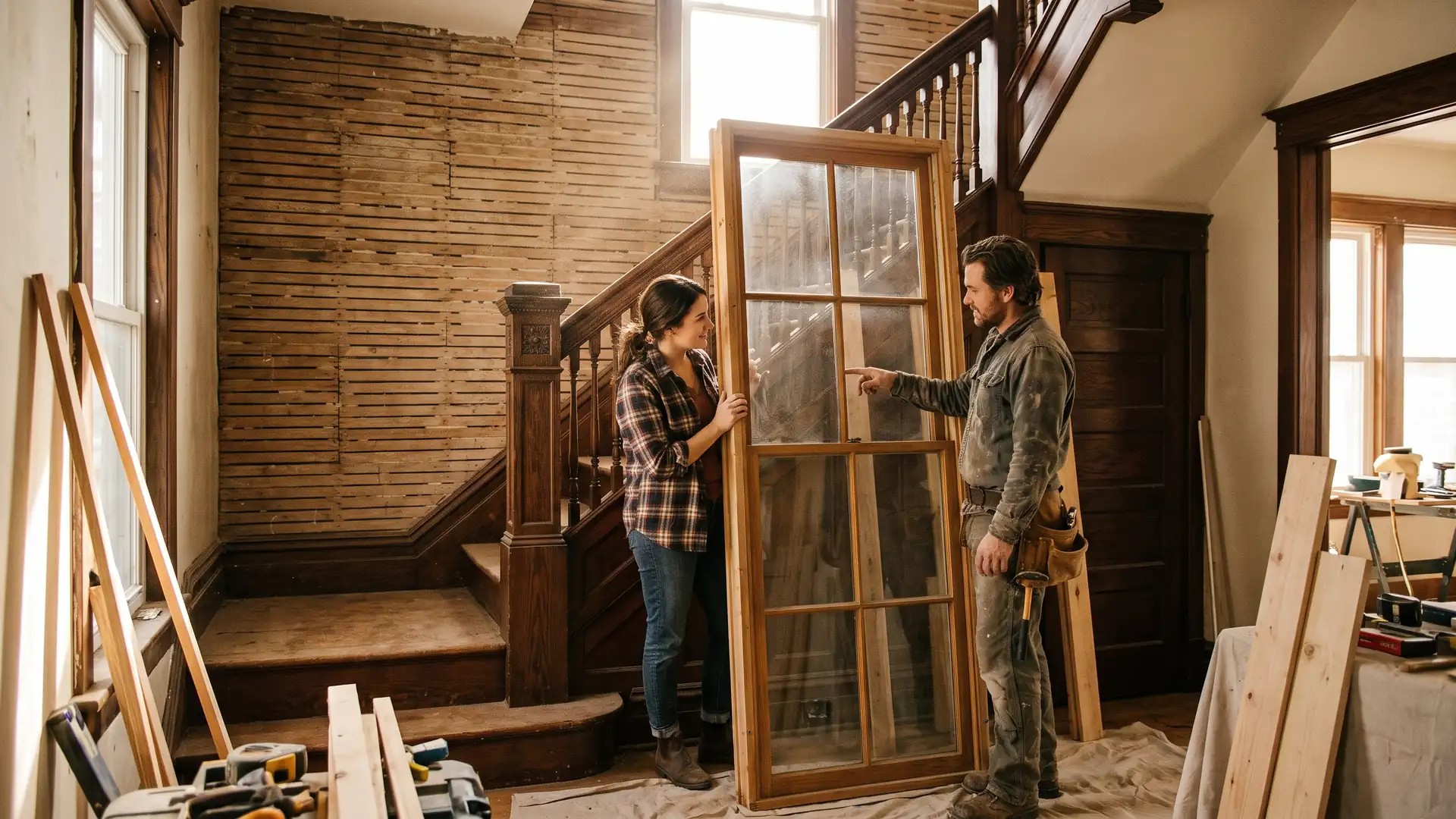
The sequence that works is the reverse of the one most homeowners want: investigative demolition first, structural and mechanical systems second, cosmetics last, and permits before any of it.
Learn how renovating a historic home works: which changes need approval, where period materials come from, what order the work runs in, and how to pay for it. For wider context, see our Homeownership guide and Home Improvement & Design hub.
Key takeaways:
- Preservation review governs the exterior: In a locally designated district, the 5 elements that draw the most scrutiny, windows, siding, roofing, porches and additions visible from the public way, typically need a certificate of appropriateness before a building permit will issue.
- Budget for discovery, not just design: Historic work commonly runs 15% to 30% above comparable work on a newer house, and investigative demolition before you finalize the scope is the best defense against that gap.
- Tax credits can change the math: The federal rehabilitation credit equals 20% of qualified rehabilitation expenses, but only on certified historic structures put to an income-producing use. Your own residence doesn’t qualify, though Michigan and other states run separate programs worth asking about.
What makes renovating a historic home different?
Mostly the review process, which turns on designation rather than age. “Historic” carries 3 different legal meanings, and the difference decides how much freedom you have.
- Old but undesignated: Age alone imposes nothing. A 1915 farmhouse outside any district answers to the same building code as a 2015 subdivision home, plus the pre-1978 hazard rules.
- Listed on the National Register of Historic Places: Largely honorific for a private owner. Listing generally doesn’t restrict what you do on your own house; it matters when federal funding or a tax credit is involved.
- Inside a locally designated historic district: The designation with teeth. A local ordinance creates a historic district commission, and that commission reviews proposed exterior changes before work starts.
Confirm which applies to your address first, owners routinely assume the wrong one. If you’re still shopping, our guide to buying a historic home covers checking designation and condition.
Do I need approval to change the exterior?
In a locally designated historic district, yes, and the approval comes before the building permit. The instrument is usually a certificate of appropriateness, and the commission judges whether a change is compatible with the district’s character.
- What review covers: Windows and doors, siding and masonry, roofing material and color, porches, additions and fences, anything visible from the public right-of-way. Replacement in a different material draws the most denials.
- What review usually doesn’t cover: Interiors. Kitchens, baths, wiring and insulation sit outside the commission’s reach unless you’re claiming a rehabilitation tax credit.
- Build the calendar around it: Many commissions meet monthly, so an incomplete application costs weeks. Bring photographs, cut sheets and a scaled drawing.
- Skipping it is expensive: Unapproved work can draw a stop-work order, fines or an order to restore what you removed, and it resurfaces at resale.
Ordinary permits still apply on top of design review, on a different clock. Our guide to home renovation permits maps that sequence, and the National Trust for Historic Preservation publishes preservation-minded renovation guidance mirroring what commissions look for.
Where do I find period-appropriate materials?
From 3 sources, in rising order of cost: the building itself, architectural salvage and custom fabrication. The cheapest material you’ll find is the one already nailed to your house.
- Harvest from the building: Trim from a closet, flooring from under a later addition, sash from a rear elevation nobody sees. Robbing a hidden room to finish a visible one is standard practice.
- Architectural salvage yards: Doors, hardware, mantels, radiators and flooring in dimensions mills stopped cutting decades ago. Inventory turns fast, so shop before demolition.
- Custom fabrication: A millwork shop can run a knife to match your existing profile. Expect a setup charge and weeks of lead time, so schedule it early.
- Repair before you replace: Epoxy consolidation on a rotted sill, dutchman patches in trim and re-keying plaster all cost less than replacement, and they keep the original material a commission wants to see.
Price specialty trades separately from the general contract. Slate roofing, repointing, plaster restoration and sash rebuilding are distinct crafts, and a contractor’s placeholder number for any of them is a guess until a specialist bids it. Angi publishes cost ranges for restoration trades and specialty work to check bids against, though only local quotes govern your project. Our roundup of DIY home renovation projects covers what to do yourself.
What do the federal rehabilitation standards ask of an old house?
Repair first, match what you must replace, and clean gently. Those are the core lines of the Secretary of the Interior’s Standards for Rehabilitation, which the National Park Service says are codified in 36 CFR Part 67 and commonly used by local historic district commissions (page last updated September 2, 2026).
- Match what you replace: Per the Standards, a feature too far gone to repair must match the old “in design, color, texture, and other visual qualities and, where possible, materials.”
- No sandblasting: Chemical or physical treatments that damage historic materials are barred, and cleaning uses the gentlest means possible.
- New work reads as new: An addition “shall be differentiated from the old” while staying compatible in massing, size and scale.
The Park Service’s briefs turn those rules into bid specifications. Preservation Brief 2 (October 1998) says new mortar must be softer and more vapor permeable than the masonry around it, and that a good repointing job should last at least 30 years, preferably 50 to 100. Preservation Brief 9 (1981) lists seven things to record for each window before deciding its fate, from paint and sill condition to glazing and hardware. Preservation Brief 4 (February 1978) says top quality slate with matching flashing lasts 40 to 60 years with minimal maintenance; see our guides to roof maintenance and Craftsman houses.
What hidden problems should I expect?
Plan on at least one condition no inspection could have seen, and hold money against it. Historic homes hide their problems inside assemblies you have to open to evaluate.
- Sills, joist ends and porches: Water follows the same paths for a century. Rot concentrates where framing meets masonry, under porch decks and beneath any window that leaked unnoticed.
- Foundations and chimneys: Stone and unreinforced brick move as mortar erodes, and repointing soft historic brick with hard modern cement traps moisture and spalls the face.
- Plaster keys: Lath-and-plaster walls hold because wet plaster squeezed through the lath and hardened into keys behind it. When those break the wall bulges. One ceiling is routine, the whole house is a budget event.
- Wiring and plumbing of unknown vintage: Cloth-insulated conductors, undersized services, galvanized supply lines and cast-iron drains all have finite lives, and partial upgrades splice several eras together.
Buy information before materials. A pre-renovation assessment by an inspector experienced with older construction converts unknowns into line items. InterNACHI maintains inspection resources for older housing stock, and our guide to avoiding common home inspection pitfalls covers what a general inspection misses.
What order should the work happen in?
Six phases, finishes last. Running out of order is the most expensive mistake in historic renovation. Refinished floors get destroyed by the plumber who should have come first.
| Phase | What happens | Why it comes first |
|---|---|---|
| 1. Investigative demolition | Open a wall cavity, ceiling bay and section of floor to see framing, wiring and moisture damage | Turns unknowns into a scope you can bid |
| 2. Hazard testing | Test for lead paint and asbestos, then abate or plan lead-safe work practices | Dictates how every later trade may work |
| 3. Structure and water | Foundation, framing repairs, roof and flashing, gutters and grading | Nothing downstream survives an active leak |
| 4. Mechanical, electrical, plumbing | Service and panel, rough wiring, supply and waste lines, heating and cooling | These trades cut into surfaces you’re about to close |
| 5. Envelope and exterior | Window restoration, repointing, siding repair, insulation and air sealing | Design review lives here, and approvals outlast the labor |
| 6. Finishes | Plaster, trim, paint, flooring, kitchens, baths and fixtures | Only safe once every other trade is done |
Hold your contingency against phases 1 through 3, not the whole project. A 15% to 20% contingency is a common planning figure here, and homeowners who fund it from the finish budget end up with a sound house and an unfinished kitchen.
What hazards and code issues come with a pre-1978 house?
Three recurring ones: lead paint, asbestos and legacy wiring. The first is federally regulated; the third is an insurance problem before it’s a code problem.
- Lead paint and the EPA RRP rule: The rule covers homes, child care facilities and kindergartens built before 1978, and any firm paid to disturb painted surfaces there must be EPA- or state-certified and use lead-safe work practices. Homeowners working in their own home are generally outside the rule. Which isn’t the same as being safe from the dust.
- Asbestos in unexpected places: Pipe and boiler insulation, floor tile and its mastic, textured ceilings, roofing and cement siding. Testing is cheap; disturbing it blind is not.
- Knob-and-tube and legacy wiring: Some carriers won’t write or renew a policy on a home with active knob-and-tube; others want an electrician’s letter or a replacement schedule.
- Code applies to what you touch: Existing conditions may remain, but the work you perform must meet current code. Which is how a kitchen remodel becomes a panel upgrade.
Bring your insurance agent in during planning. Coverage on older homes turns on wiring and plumbing vintage, roof age and whether ornate detail can be reproduced after a loss, see insuring a historic home for what carriers ask.
What does the federal lead rule require of the contractor you hire?
Paperwork first, limits on how paint comes off, and no exemption for window replacement. According to the EPA, about three-quarters of U.S. homes built before 1978 still contain some lead-based paint (RRP program page, last updated June 17, 2026), and the CDC states that “no safe blood lead level in children has been identified” (CDC lead prevention page, dated June 12, 2024).
- The pamphlet comes first: No more than 60 days before work begins, the firm must give the owner EPA’s Renovate Right pamphlet, per the EPA rule at 40 CFR 745.84.
- Small jobs have a ceiling: The minor repair exemption stops at 6 square feet of painted surface per room inside or 20 square feet outside, and never covers window replacement, per the definitions in 40 CFR 745.83.
- Restricted methods: Open-flame burning of paint is prohibited, power sanding and abrasive blasting need a shroud with a HEPA vacuum attachment, and heat guns must stay below 1,100 degrees Fahrenheit, per the work practice rules in 40 CFR 745.85.
Reglazing sash, stripping trim and prepping clapboards all disturb paint. Michigan’s lead program warns in its Is Your Child Safe From Lead Poisoning? quiz that recent or planned renovations can greatly increase lead exposure risk in homes built before 1978.
How do you add modern systems without wrecking the character?
By choosing equipment that needs the least building to install it, and keeping modern work visually distinguishable from original fabric rather than faking age.
- Heating and cooling: Ductless mini-splits, small-duct high-velocity systems and hydronic radiators condition space without the chases and dropped ceilings a conventional duct run demands.
- Windows: Restored sash with weatherstripping plus a storm window is the preservation standard, and commissions approve it when they won’t approve replacement. For units past saving, see choosing energy-efficient windows.
- Insulation and air sealing: Sealing the attic floor and rim joists delivers most of the comfort gain with the least risk; dense-packing old walls without a moisture strategy can trap water.
- Wiring and technology: Wireless sensors and battery-powered devices keep new technology from cutting chases through original plaster.
Which energy upgrades pay off on a historic house?
Air sealing and attic insulation first, window replacement last. Preservation Brief 3 (National Park Service, December 2011) calls reducing air leakage “the first priority of a preservation retrofit plan” and groups window replacement with measures that require more alteration.
| Measure | What the brief reports |
|---|---|
| Air leakage | 5% to 40% of space-conditioning costs |
| Windows | About 10% of total air loss in most buildings, per DOE data |
| Single-glazed storm window | Raises a single pane to about R2, twice the pane alone |
| Houses built before 1950 | About 30% to 40% less energy efficient than houses built after 2000, per EIA data |
Source: National Park Service, Preservation Brief 3: Improving Energy Efficiency in Historic Buildings, December 2011.
The same brief calls a 30% to 40% gain a realistic goal and warns that radiant barriers laid directly over attic insulation can trap moisture unless perforated. A home energy audit shows where your house leaks; energy-efficient home upgrades covers equipment.
What do owners of older homes actually spend?
More than owners of newer homes, and more of it on replacing worn parts. Harvard’s Joint Center for Housing Studies reported in Improving America’s Housing 2025: Key Facts that the U.S. housing stock is the oldest on record.
| Measure | Figure |
|---|---|
| Median age of owner-occupied homes, 2023 | 42 years (31 in 2003) |
| Average spending, owners of homes built before 1940, 2023 | $6,700, about 50% more than in homes built since 2010 |
| Replacements as a share of remodeling spending | About half before 1940; 9% for homes built in 2020 or later |
| Average improvement spending per owner, 2023 | $4,700; 29.7% of owners had a project |
| Yearly spending per owner, Detroit metro, 2015 to 2023 | Less than $4,000 |
| Improvements to owner-occupied homes, 2023 | $405 billion, up 54% from 2019 |
Source: Harvard Joint Center for Housing Studies, Improving America’s Housing 2025: Key Facts.
The same report found savings the most common funding source, with home equity covering 25% of spending on room additions and 15% on kitchen and bath remodels. See budgeting for home maintenance.
How do you pay for a historic renovation, and do tax credits help?
Through 1 of 4 routes: cash, a home equity loan or line of credit, a cash-out refinance, or a renovation mortgage underwritten against the home’s after-improved value. The last is the answer when a house needs more work than its current equity supports.
- Renovation mortgages: Fannie Mae HomeStyle Renovation and the FHA 203(k) program finance a purchase or refinance plus improvements in one loan, sized against the home’s completed value, with draws released as work is inspected.1 See what a HomeStyle renovation loan is.
- Home equity loan or HELOC: A fixed lump sum or revolving line secured by equity you already have, first mortgage untouched, well suited to phased historic work.
- Cash-out refinance: Replaces the mortgage with a larger one and returns the difference. Weakest when it re-prices a balance you’d rather leave alone.
An appraiser has to support that after-improved value, so plans and bids join the file, see the home appraisal process. Hypothetical example, not an offer: on a $75,000 scope added to a $180,000 balance, a renovation loan re-prices the full $255,000 while a home equity loan touches only the $75,000.2 Our guide to financing home renovations runs that comparison.
Be precise about who qualifies for credits. The federal historic rehabilitation credit equals 20% of qualified rehabilitation expenses, but only for buildings certified as historic structures by the National Park Service and used for a business or other income-producing purpose, with work meeting the Secretary of the Interior’s Standards for Rehabilitation. An owner-occupied residence doesn’t qualify. Several states, Michigan among them, run their own credits under separate rules, investigate those for a home you live in.3
Because Align Lending is a broker, we can quote all three against one another on a single scenario, and lenders differ widely on older properties.
What do the renovation loan programs require?
Each program publishes its own limits and deadlines, and they shape the scope of a historic project.
| Program | Published rule |
|---|---|
| FHA Limited 203(k) | Finance up to $75,000 into the mortgage for repairs and improvements |
| FHA Standard 203(k) | Rehabilitation of at least $5,000, total value within the area’s FHA limit; structural work allowed |
| Fannie Mae HomeStyle Renovation | No minimum and no restriction on renovation types; finished within 15 months of closing (dated 12/10/2025) |
| Fannie Mae HomeStyle Refresh | Up to 15% of the “as completed” appraised value; finished within 180 days of the note (dated 08/05/2026) |
Sources: HUD, 203(k) Rehabilitation Mortgage Insurance Program Types; Fannie Mae Selling Guide B5-3.2-01 and B5-3.3-01.
According to HUD, a 203(k) lender selects a HUD-approved consultant who prepares a work write-up and cost estimate (optional on the Limited 203(k)), and the contractor obtains permits before work starts. In a Michigan historic district no permit issues until the commission acts, so the certificate of appropriateness comes first. See benefits of FHA 203(k) loans, 203(k) pros and cons, FHA loan limits and renovation loans.
For phased work, the Consumer Financial Protection Bureau notes that a home equity loan pays out as a lump sum, usually with a fixed interest rate, and the lender could foreclose if you cannot repay. Compare home equity loans, HELOCs, cash-out refinances and insurance during a renovation.
Samantha Shelton, Align’s broker owner, puts it this way: “You’re not just financing the house. You’re financing the plan for the house.” Describing a renovation that got difficult, she named the pattern that breaks budgets: “‘Well, while we’re doing that, maybe we should also do this.'” On a historic house, each added exterior item can mean another trip to the commission.
What Michigan homeowners should know
Michigan gives you 2 layers and a short exterior season. The State Historic Preservation Office (SHPO) handles state and federal program review; designation and design review over your house happen locally.
- Your commission is local, not state: Michigan municipalities establish historic districts under state enabling law, and each district gets a commission reviewing exterior work. Detroit, Grand Rapids and Marshall are 3 well-known examples, and their standards differ.
- SHPO is the door to the credits: Federal credit applications route through the state office, and Michigan administers its own historic preservation tax credit. Terms change, so confirm requirements with SHPO and a tax professional.
- The exterior season runs roughly 7 months: Repointing, paint and roofing need temperatures above freezing, compressing exterior work here into roughly April through October. Book specialty trades in winter.
- Freeze-thaw is the local villain: Michigan’s freeze-thaw cycling destroys soft historic brick repointed with hard modern mortar. Grading, gutters and downspouts are the cheapest structural work you’ll do here.
If resale is in your thinking, plan with the eventual buyer in mind.
How does Michigan law govern work in a historic district?
Through the Local Historic Districts Act. MCL 399.205 sets the rules every Michigan commission works under:
- No permit until the commission acts: A permit “shall not be issued and proposed work shall not proceed” until the commission issues a certificate of appropriateness or a notice to proceed.
- A smoke alarm certification: No certificate issues unless you certify the house has, or will have by completion, a code-compliant fire alarm system or smoke alarm.
- Interiors only by exception: The commission reviews interior arrangements only if the local legislative body authorizes it or the work visibly changes the exterior.
- Staff can approve minor work when the commission delegates specified classes of it.
- Appeals: To the State Historic Preservation Review Board within 60 days, then circuit court, under MCL 399.205(2).
- Enforcement can reach the tax bill: If an owner does not correct unapproved work or demolition by neglect, a court-ordered repair can be charged as a special assessment against the property.
Practice varies by city. Ann Arbor’s application page lets staff approve listed minor work for a $35 fee; on its 2026 schedule, a major-work application due November 20, 2026 is heard December 10, 2026. Detroit’s Historic District Commission, seven residents appointed by the mayor, reviews permit applications for all exterior changes in a designated district. Then the building permit runs its own clock: under MCL 125.1511 the enforcing agency must act within 10 business days, or 15 for an unusually complicated structure.
Can a Michigan homeowner claim the state historic tax credit?
Yes, if the house qualifies and the work is approved. MCL 206.266a sets the credit at 25% of qualified expenditures for certificates issued after December 31, 2020 and before January 1, 2031, and covers owner-occupied dwellings. Michigan’s State Historic Preservation Office describes its state historic tax credit program as worth up to 25% of eligible rehabilitation expenses.
- Which houses qualify: Per the statute, one in a district designated by the National Register, the state register or a local historic district ordinance, or one individually listed.
- A statewide cap: Preapproved credits may not exceed $5,000,000 a year, with at least $1,000,000 for residential resources when residential applications exceed that, per MCL 206.266a(3).
- A low minimum: At least $1,000 of qualified expenditures, adjusted yearly by the Detroit Consumer Price Index under MCL 206.266a(16)(j).
- Apply before you build: Three sequential parts, first-come, first-served, and SHPO strongly recommends approval before work begins.
- The 2026 window: Owner-occupied applications opened January 2, 2026; per SHPO’s September 24, 2026 update, they must arrive by November 30, 2026, with proof of delivery.
Hypothetical example, not an offer. The 25% credit on an owner-occupied project, before any recapture:
| Qualified expenditures | Credit at 25% | Cost after the credit |
|---|---|---|
| $20,000 | $5,000 | $15,000 |
| $60,000 | $15,000 | $45,000 |
| $100,000 | $25,000 | $75,000 |
Source for the 25% credit: MCL 206.266a(2). SHPO’s review settles which costs count, so confirm with SHPO and a tax professional first.
How Align arranges renovation financing
You are not just financing the house. You are financing a plan for it. Align places HomeStyle and FHA 203(k) renovation loans, standalone HELOCs and home equity loans, so the project can be paid for the way that fits it, not the way one bank prefers.
Samantha starts with why: what the work is, what it should cost, and whether your equity or a renovation loan is the better tool. Then one application goes to multiple wholesale lenders.
FAQ: Renovating a historic home
Here are answers to common questions about renovating a historic home.
Do I need permission to renovate a historic home?
If your home is in a locally designated historic district, yes, exterior changes typically require a certificate of appropriateness from the historic district commission before permits issue. National Register listing alone imposes fewer restrictions on private owners unless federal funding or tax credits are involved. Interior work is usually unrestricted. Our guide to home renovation permits covers what applies on top of design review.
Is renovating a historic home more expensive?
Generally yes, commonly 15% to 30% above comparable work on a modern house. Cost drivers are custom millwork and window restoration instead of stock replacement, specialized trades such as plaster and slate roofing, hazard abatement for lead and asbestos, and design review itself. Hidden structural and mechanical surprises are the largest single variable. Our guide to buying a historic home covers building that premium into an offer.
Should I replace historic windows?
Usually restore rather than replace. Original wood sash with proper weatherstripping and a storm window can approach replacement-window performance while preserving the sightlines and material that give the home its character, and most historic district commissions won’t approve wholesale replacement anyway. Restoration also tends to outlast vinyl replacements by decades. For units past saving, see choosing energy-efficient windows.
How do I finance a historic home renovation?
Renovation mortgages such as Fannie Mae HomeStyle Renovation and the FHA 203(k) underwrite to the after-improved value, which works well when a historic home needs more work than its current equity supports. Home equity loans, HELOCs and cash-out refinances suit smaller phased projects. Start with how a HomeStyle renovation loan works.
Does the lead paint rule apply if I rent out part of my older home?
Yes, once you rent any of it. EPA’s RRP Rule leaves owners doing their own work on their own pre-1978 homes alone, but an upstairs flat, a carriage-house unit or a rented room brings paid paint-disturbing work under the rule, as does running a childcare center there or renovating it to sell. Sash reglazing, trim stripping and clapboard prep then need a certified firm using the work practices described above. Source: EPA RRP program, updated June 17, 2026.
What happens if I sell a house I claimed the Michigan historic credit on?
Part of the credit can come back as tax owed. Under MCL 206.266a, a sale or revocation less than 5 years after the certificate of completed rehabilitation adds back a share of the credit: 100% in the first year, then 80%, 60%, 40% and 20%, and none after 5 years. A written agreement with the state office can avoid recapture on a sale.
Do I need a licensed contractor for work on an older home in Michigan?
For most paid jobs, yes: Michigan requires a LARA license for residential work of $600 or more, and on a house in a local historic district, write the certificate of appropriateness into the contract as a condition before any work or permit. Our guide to home renovation permits covers licensing, permits and your right to cancel.
Is there a federal tax credit for storm windows or insulation in 2026?
Not for work installed in 2026. According to the IRS, the Energy Efficient Home Improvement Credit, 30% of qualified costs capped at $1,200 a year ($600 for windows and skylights, $250 per exterior door, $150 for an energy audit), covers improvements made through December 31, 2025. Source: IRS Energy Efficient Home Improvement Credit, reviewed April 28, 2026.
The bottom line on renovating a historic home
Renovating a historic home means managing three constraints at once: design review over anything visible from the street, materials that come from salvage or a custom shop, and hidden conditions you can only price after you open the building. Expect 15% to 30% above comparable work on a newer house, and protect that gap with investigative demolition and a real contingency. Run the phases in order, discovery, hazards, structure, systems, envelope, finishes. The federal 20% rehabilitation credit won’t help an owner-occupied house, but state programs may, and a renovation mortgage can fund work the current value doesn’t support.
If you’re ready to price a historic renovation, talk to Align Lending. We’ll shop renovation mortgages, cash-out refinances and home equity options across our lender network and show you the numbers side by side. Call 248-506-5727 or start online.
Footnotes:
1. Align Lending is not acting on behalf of or at the direction of FHA or HUD. FHA 203(k) program requirements are set by HUD, HomeStyle Renovation requirements are set by Fannie Mae, and both are subject to change. Return to text.
2. Example figures are hypothetical and for educational purposes only; they do not constitute an advertisement of credit terms or a rate quote under federal or state lending laws. Your loan amount, rate, payment, contingency needs and available equity depend on your application, the property, the scope of work, the appraisal and market conditions. Return to text.
3. This is a general description of historic rehabilitation tax credit programs and is not tax advice. Eligibility, certification, qualified expenses and program limits are determined by the National Park Service, the Internal Revenue Service and, for state programs, the Michigan State Historic Preservation Office, and they change over time. Consult a qualified tax professional and confirm current program terms before relying on any credit. Return to text.
Sources: applicability of the Renovation, Repair and Painting rule to homes, child care facilities and kindergartens built before 1978, the certification requirement for firms paid to disturb painted surfaces, and the general exemption for homeowners working in their own homes, U.S. Environmental Protection Agency, Lead Renovation, Repair and Painting Program. Federal historic rehabilitation tax credit equal to 20% of qualified rehabilitation expenses, limited to buildings certified as historic structures and used for a business or other income-producing purpose and rehabilitated in accordance with the Secretary of the Interior’s Standards for Rehabilitation, National Park Service Federal Historic Preservation Tax Incentives program. The 15% to 30% cost premium over comparable work on newer housing stock and the 15% to 20% contingency figure are general planning ranges, not quotes, confirm your own numbers with itemized bids from local specialty trades. Certificate of appropriateness requirements, review scope, meeting schedules and enforcement are set by the ordinance and historic district commission in your municipality; Michigan state and federal program review is administered by the Michigan State Historic Preservation Office. Verify all program terms directly with those offices before budgeting.
This article is for informational purposes only and is not intended to provide legal, financial, or tax advice. Historic designation, design review, building code, permitting, hazard abatement and tax credit requirements vary by jurisdiction and change over time; verify them with your local historic district commission, building department, the Michigan State Historic Preservation Office, and a qualified tax professional. Program terms and figures shown are illustrative, are not a rate quote or an offer of credit, and are subject to change. Align Lending is an independent Michigan mortgage broker, NMLS #2041154.
Sources
Every outside source this guide links to, in the order it appears. How we choose and check sources
- U.S. Environmental Protection Agency’s Renovation, Repair and Painting ruleU.S. Environmental Protection Agency
- Listed on the National Register of Historic Placesnps.gov
- Preservation-minded renovation guidanceNational Trust for Historic Preservation
- Secretary of the Interior’s Standards for Rehabilitationnps.gov
- Preservation Brief 2nps.gov
- Preservation Brief 9nps.gov
- Preservation Brief 4nps.gov
- Inspection resources for older housing stockInternational Association of Certified Home Inspectors
- CDC lead prevention pagecdc.gov
- 40 CFR 745.84Electronic Code of Federal Regulations
- 40 CFR 745.83Electronic Code of Federal Regulations
- 40 CFR 745.85Electronic Code of Federal Regulations
- Is Your Child Safe From Lead Poisoning?State of Michigan
- Preservation Brief 3nps.gov
- Improving America’s Housing 2025: Key Factsjchs.harvard.edu
- The FHA 203(k) programU.S. Department of Housing and Urban Development
- Certified as historic structures by the National Park Servicenps.gov
- B5-3.2-01Fannie Mae Selling Guide
- B5-3.3-01Fannie Mae Selling Guide
- Home equity loanConsumer Financial Protection Bureau
- The State Historic Preservation Office (SHPO)miplace.org
- Michigan administers its own historic preservation tax creditmiplace.org
- MCL 399.205Michigan Legislature
- Application pagea2gov.org
- Historic District Commissiondetroitmi.gov
- MCL 125.1511Michigan Legislature
- MCL 206.266aMichigan Legislature
- LARA licenseState of Michigan
- IRS Energy Efficient Home Improvement CreditInternal Revenue Service
Related resources
20-minute read
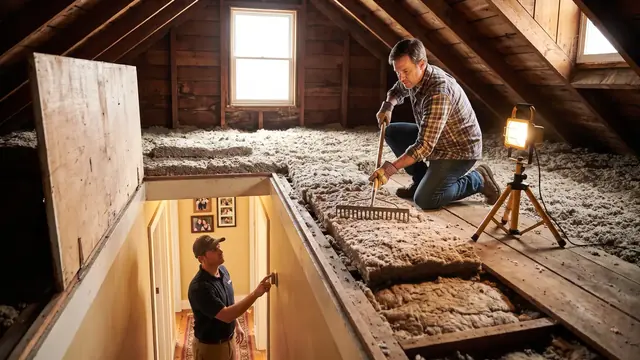
Energy-efficient home upgrades in Michigan: What to do first, and how to pay for it
See which energy-efficient upgrades pay off first in a Michigan home, what they cost, and how to pay for them in 2026 with rebates, loans and mortgages.

20-minute read
DIY home renovation projects: 12 upgrades you can actually finish
Discover DIY home renovation projects that upgrade your space on a budget, from peel-and-stick backsplashes to floating shelves and smart lighting.
20-minute read
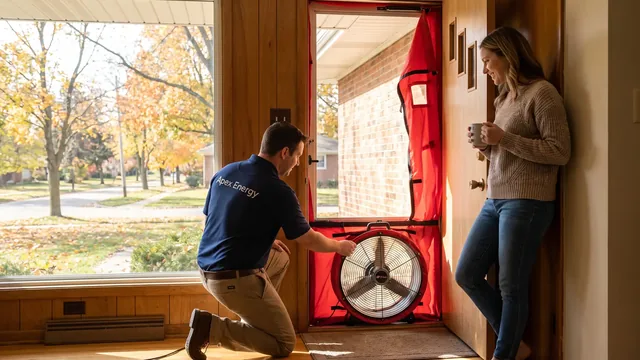
The benefits of a home energy audit and what it includes
Learn what a home energy audit finds, how blower door and infrared tests work, and why the Department of Energy ties audits to 5% to 30% savings.
