
Guide to the Different Types of Houses by Structure and Style
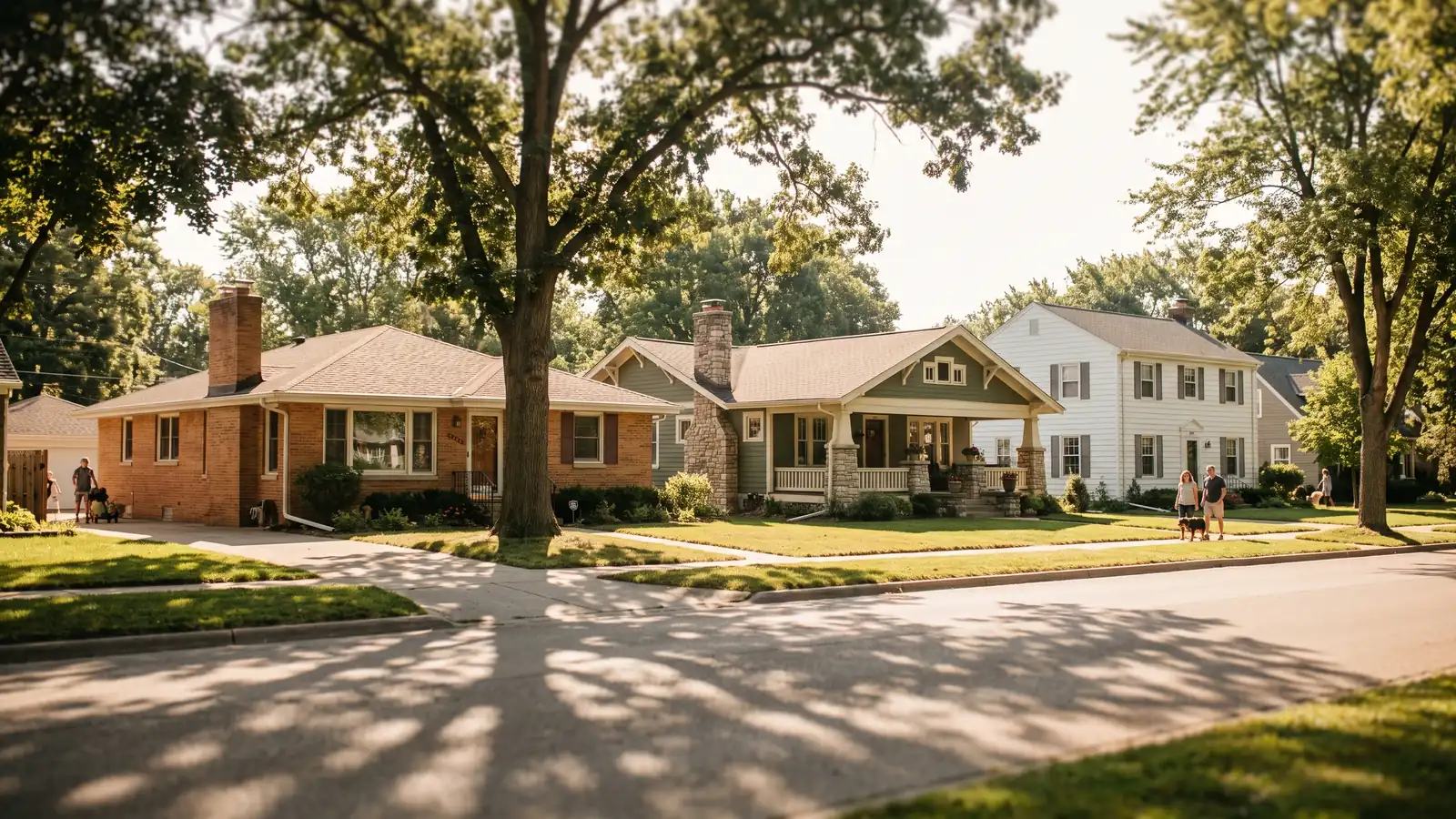
Houses get classified two different ways at once, and buyers mix them up constantly. Structure is the ownership-and-construction format, 5 common ones: single-family detached, townhouse, condominium, duplex or small multi-family, and factory-built. Style is the architecture layered on top, and this guide covers the 8 you’ll actually meet in listings: colonial, Victorian, Craftsman, Cape Cod, ranch, mid-century modern, Mediterranean, and contemporary.
Structure decides how you own and finance the home and what you pay each month beyond the mortgage; style decides layout, upkeep, and curb appeal. Style also tracks geography: one-story homes were 48.6% of new single-family starts nationally in 2025, but 55.7% in the East North Central division that includes Michigan.
Learn how houses are sorted by structure and style, including what each format costs to own, how to identify the major styles from the curb, and how to choose. Our Home Types & Living guide lines up every format side by side.
Key takeaways:
- Two classifications, one house: The 5 structural formats, detached, townhouse, condo, small multi-family, and factory-built, drive financing and monthly fees; the 8 major styles drive layout, maintenance, and resale appeal.
- Every classic style has a date range: Colonial Revival ran roughly 1880 to 1955, Victorian about 1830 to 1910, Craftsman about 1900 to 1930, and the ranch era roughly 1935 to 1975. Dating a house tells you which systems are likely original.
- Single-story is gaining, and the Midwest leads: One-story homes rose from 47.5% of new single-family starts in 2024 to 48.6% in 2025 nationally, and reached 55.7% in the East North Central division.
What are the main house structures?
There are 5 structural formats in almost any market, and the differences are legal and financial before they’re architectural. Two houses can look identical from the sidewalk and be completely different purchases.
- Single-family detached: One dwelling on its own lot, no shared walls and no shared ownership. You own the structure and the land and handle all the maintenance, with no association unless the subdivision created one.
- Townhouse or row house: A multi-story home sharing one or two side walls, usually on its own deeded lot. You typically own the interior, exterior, and small yard while an association maintains shared elements. Read the pros and cons of buying a townhouse before comparing one to a detached home on price.
- Condominium: You own your unit’s interior plus an undivided share of the common elements; the association owns everything else. Condos can be high-rise, garden-style, or even detached, the label describes ownership, not shape. Our guide to the pros and cons of buying a condo covers what dues buy.
- Duplex and small multi-family: Two to four units in one building. An owner-occupant can live in one and rent the others, what people call house hacking.
- Factory-built housing: Manufactured homes are built to a federal HUD code and shipped complete on a permanent chassis; modular homes are built in sections to the same local codes as site-built houses. The distinction changes which loans are available.
How structure changes the way you finance a house
Structure affects your loan long before style does, in three specific ways.
- Condos add a project review: Lenders underwrite the association as well as the borrower. Fannie Mae’s full project review requires that no more than 15% of a project’s units be 60 days or more past due on common-expense assessments, and that the budget fund replacement reserves at 10% or more, or pass a reserve study instead.1 A well-qualified buyer can still be turned down over the building’s finances.
- Association dues change your qualifying math: Monthly HOA or condo dues count in your debt-to-income ratio the way a car payment does. A $350 assessment shrinks how much house you qualify for even though it isn’t mortgage debt.
- Two- to four-unit buildings can still be primary-residence loans: FHA’s single-family programs generally cover dwellings with one to four units, and conventional programs treat owner-occupied 2 – 4 unit properties as primary residences, not investment property. Down payments and reserve requirements are set by the lender and program.
What are the most common house styles?
Eight styles account for most American housing stock, and each occupies a fairly narrow date range.2 The style tells you the decade the house was built, and the decade tells you what to have the inspector check.
House styles at a glance
| Style | Main era | Typical stories | Typical upkeep demand | Where they cluster |
|---|---|---|---|---|
| Colonial / Colonial Revival | 1880 – 1955 | 2 | Moderate | Northeast and Midwest, revivals nationwide |
| Victorian | 1830 – 1910 | 2 – 3 | High | Older city and streetcar neighborhoods |
| Craftsman bungalow | 1900 – 1930 | 1 – 1.5 | Moderate to high | Early-1900s suburbs nationwide |
| Cape Cod | 1930s – 1950s revival | 1 – 1.5 | Moderate | Northeast and postwar suburbs |
| Ranch | 1935 – 1975 | 1 | Low to moderate | Midwest, South, and West |
| Mid-century modern | 1945 – 1969 | 1 | Moderate to high | Postwar subdivisions, warm-climate metros |
| Mediterranean Revival | 1918 – 1940 | 1 – 2 | Moderate | Florida, California, the Southwest |
| Contemporary | 1970s – present | 1 – 2+ | Low when new | New construction everywhere |
Upkeep demand there is a tendency, not a measurement: a well-maintained Victorian beats a neglected ranch.
Colonial
Colonial Revival, the version most buyers actually encounter, ran from roughly 1880 to 1955 and is the most formally symmetrical style on this list.
- What to look for: A balanced facade, often five bays wide, with a centered door under a pediment, fanlight, or portico; multi-pane double-hung windows with shutters; a side-gabled or hipped roof.
- Living with one: Two full stories separate public and private space cleanly, but every bedroom is upstairs, and compartmentalized original plans often invite a wall-removal project.
- Where they cluster: Dense in the Northeast, common across the Midwest, built as a revival nationwide.
Victorian
Victorian is an umbrella, not a single style, covering houses built from roughly 1830 to 1910 across sub-styles including Gothic Revival, Italianate, Second Empire, and Queen Anne.
- What to look for: Steep, complex rooflines; asymmetrical massing with towers, turrets, or bays; wraparound porches; spindlework, brackets, and patterned wall surfaces.
- Living with one: Ceiling height and detail you can’t reproduce at today’s labor costs, paired with the highest maintenance burden here. Our guide to Victorian houses and their sub-styles shows which era you’re looking at.
- Where they cluster: Historic districts in cities that grew before 1910.
Craftsman
Craftsman houses were built mostly between about 1900 and 1930, as a reaction against Victorian ornament in favor of visible handwork and natural materials.
- What to look for: A low-pitched gable roof with wide eaves and exposed rafter tails, a deep front porch on thick tapered columns, and interior built-ins in natural wood.
- Living with one: Efficiently planned and small by modern standards, and now roughly a century old, so wiring, plumbing, and insulation deserve attention. See the full history and features of Craftsman houses.
- Where they cluster: Early-1900s streetcar suburbs in nearly every American city, thanks to pattern books and mail-order kit houses.
Cape Cod
The Cape Cod revival began in the late 1920s and became one of the most-built small-house forms of the 1930s and the immediate postwar years, before the ranch took over in the 1950s.
- What to look for: A simple rectangular footprint, one to one-and-a-half stories, a steep gabled roof, central chimney, dormers, and shuttered multi-pane windows.
- Living with one: Efficient and inexpensive to heat for its size; the upstairs half-story usually has sloped ceilings and limited headroom.
- Where they cluster: New England and the Northeast, plus postwar subdivisions across the Midwest.
Ranch
The ranch era ran from roughly 1935 to 1975, and the format never left. Single-story construction is gaining share again, according to home building trends from the National Association of Home Builders.
- What to look for: A long, low horizontal profile; a shallow-pitched roof with wide eaves; an attached garage; picture windows and sliding doors to a patio.
- Living with one: Everything on one floor, which is why ranches resell well to young families and downsizers alike. The tradeoff is a larger footprint on the lot.
- Where they cluster: Dominant across the Midwest and South. In Michigan, the brick ranch is the default suburban house of the 1950s and 1960s.
Mid-century modern
Mid-century modern is generally dated 1945 through 1969, and it’s the style most often confused with a plain ranch. The difference is intent and glass.
- What to look for: Flat or very low-slung rooflines, post-and-beam construction with exposed structure, walls of floor-to-ceiling glass, and materials left unadorned.
- Living with one: Indoor-outdoor flow that still feels current, offset by original single-pane glazing and flat roofs that are expensive to keep watertight.
- Where they cluster: Postwar architect-designed subdivisions, with known concentrations in Palm Springs, Los Angeles, and Chicago.
Mediterranean Revival
Mediterranean Revival peaked between about 1918 and 1940, borrowing from Spanish Colonial, Italian Renaissance, and Beaux-Arts sources.
- What to look for: Stucco walls, low-pitched red clay tile roofs, arched windows and doorways, wrought-iron balconies and window grilles.
- Living with one: Thick walls and tile roofs handle heat and sun well; in freeze-thaw climates the same details become a maintenance liability, which is why the style stayed regional.
- Where they cluster: Florida, California, and the Southwest, plus scattered revivals elsewhere.
Contemporary
Contemporary means whatever is being built now, which since the 1970s has trended toward open plans, large windows, mixed materials, and asymmetrical forms.
- What to look for: Clean lines without historical ornament, tall entries, oversized windows, and a mix of siding, stone, and metal on one facade.
- Living with one: Current insulation, wiring, and mechanicals mean the lowest near-term maintenance here. See our design ideas for a modern home.
- Where they cluster: New-construction subdivisions and infill lots everywhere.
How to choose the right house type for you
Work through 4 questions in this order. Structure first, style second, because structure is the one you can’t renovate your way out of.
- Lifestyle and stage: Do you want a yard and full control, or a lock-and-leave building? Detached homes maximize autonomy; condos and townhouses trade some of it for someone else handling the roof and the snow.
- Maintenance appetite, honestly assessed: A Victorian or a mid-century modern rewards owners who enjoy the work and punishes owners who don’t. Use a home inspection checklist to price the deferred maintenance first.
- Total monthly cost, not purchase price: Add mortgage, taxes, insurance, and any association dues together before comparing formats. Our guide on what to look for when buying a house covers the costs that don’t show up on the listing.
- Resale and fit with the neighborhood: A well-kept home in a style typical of its area generally resells most smoothly. On an older or protected property, read our guide to buying a historic home first, since district rules can limit what you may change, and see renovation ideas that boost home value.
Buyer preferences shift by generation and life stage, and NAR publishes data on what buyers look for in a home every year. Whatever you land on, start the financing conversation before the house hunt, our Homeownership guide covers what comes next.
How Align matches the loan to the property
Lenders do not treat every property the same. Condos, including non-warrantable ones, and homes with two to four units each come with rules that vary from one lender to the next.
Because Align is a broker, Samantha can take your file to the wholesale lender whose guidelines fit the property, instead of forcing it into one bank's box. One application, multiple lenders, and one person on your file from start to finish.
FAQ: House types by structure and style
Here are answers to common questions about the different types of houses by structure and style.
What is the difference between a house’s structure and its style?
Structure describes the building’s physical and ownership format, single-family detached, attached townhouse, condominium unit, duplex, or larger multi-family. Style describes the architectural design: colonial, Craftsman, ranch, Victorian, and so on. Structure drives how you finance the home and what fees you pay, while style drives layout, aesthetics, and maintenance demands. Any style can exist within several structures, which is why ownership format matters more than the photo, see how far that goes in our comparison of condos and co-ops.
What is the most popular house style in the Midwest?
Ranch homes are among the most common across the Midwest, prized for single-story accessibility, open floor plans, and straightforward maintenance. You’ll also find abundant colonials, Craftsman bungalows in early-1900s city neighborhoods, Cape Cods in postwar suburbs, and farmhouses in rural areas. In Michigan specifically, brick ranches and bungalows dominate many metro Detroit and Grand Rapids neighborhoods, and that single-floor layout is part of why they suit buying a home for aging in place.
Does a home’s architectural style affect its value?
Yes, though location and condition matter more. Styles in high local demand, Craftsman bungalows in walkable neighborhoods, updated mid-century moderns, can command premiums, while highly ornate styles like Victorian may cost more to maintain and insure, which some buyers price in. Our guide to insuring a historic home explains why older, detailed houses are underwritten differently. The safest lens is fit: a well-kept home in a style typical of its neighborhood usually resells most smoothly.
Is a townhouse or condo cheaper than a single-family house?
Usually the purchase price is lower for comparable square footage, which makes townhouses and condos popular entry points. But factor in monthly HOA or condo association fees, which cover shared maintenance and can run from modest to substantial, our guide to buying a home with an HOA covers what dues typically include. Condo financing also carries extra requirements, since lenders review the association’s finances. Compare total monthly cost, not just price.
The bottom line on house types and styles
Houses are classified two ways at once. Structure, detached, townhouse, condo, small multi-family, or factory-built, determines how you own and finance the home and what you pay in dues; style determines layout, upkeep, and curb appeal. The 8 major styles each sit in a date range, from Victorian’s roughly 1830 to 1910 window through the ranch era of about 1935 to 1975. The ranch is still gaining: one-story homes were 48.6% of new single-family starts nationally in 2025 and 55.7% in the East North Central division. Decide structure first, then style, then price the total monthly cost.
If you’re ready to shop for a home, condo, townhouse, duplex, or a detached house of any vintage, talk to Align Lending. We’ll match the financing to the property type and show you competing offers side by side. Call 248-506-5727 or start online today.
Footnotes:
1. The 15% delinquency limit and the 10% replacement-reserve requirement are Fannie Mae full-project-review standards for condominium projects; other agencies, investors, and portfolio lenders set their own project standards, and those standards change over time. Align Lending is an independent mortgage broker and does not set loan terms or project eligibility. The wholesale lenders in Align’s network do, subject to credit approval and property eligibility. Nothing here is an offer of credit. Return to text.
2. Style date ranges are approximate and overlap, because styles were adopted at different times in different regions and local builders kept building them long after the national peak. “Victorian” is an umbrella covering sub-styles with their own windows, Gothic Revival roughly 1830 to 1860, Italianate roughly 1840 to 1885, Queen Anne roughly 1880 to 1910. Treat the ranges as a dating aid, not a rule. Return to text.
Sources: one-story versus two-or-more-story shares of new single-family starts in 2024 and 2025, and the East North Central share, National Association of Home Builders analysis of U.S. Census Bureau Survey of Construction data (July 2026). Condominium project-review standards, Fannie Mae Selling Guide B4-2.2-02, “Full Review Process.” One- to four-unit coverage under FHA single-family programs, HUD Handbook 4000.1. Style date ranges, Pennsylvania Architectural Field Guide and the Washington State Department of Archaeology and Historic Preservation style guide.
This article is for informational purposes only and is not intended to provide legal, financial, tax, insurance, or architectural advice. Style periods, association rules, and loan program requirements vary by region and change over time, verify current details for any specific property before you write an offer. Align Lending is an independent Michigan mortgage broker, NMLS #2041154.
Related resources

12-minute read
Condo vs. Co-op: Similarities and Differences Every Urban Buyer Should Know
Compare condo vs. co-op ownership, monthly fees and board approval rules so you can choose the urban home type that fits your budget and lifestyle.

17-minute read
The 12 safest cities in the US for buying a home
See the 12 safest US cities for home buyers, ranked on violent and property crime, traffic safety, and livability, plus how each balances safety with cost.
