
How to choose a home inspector you can trust
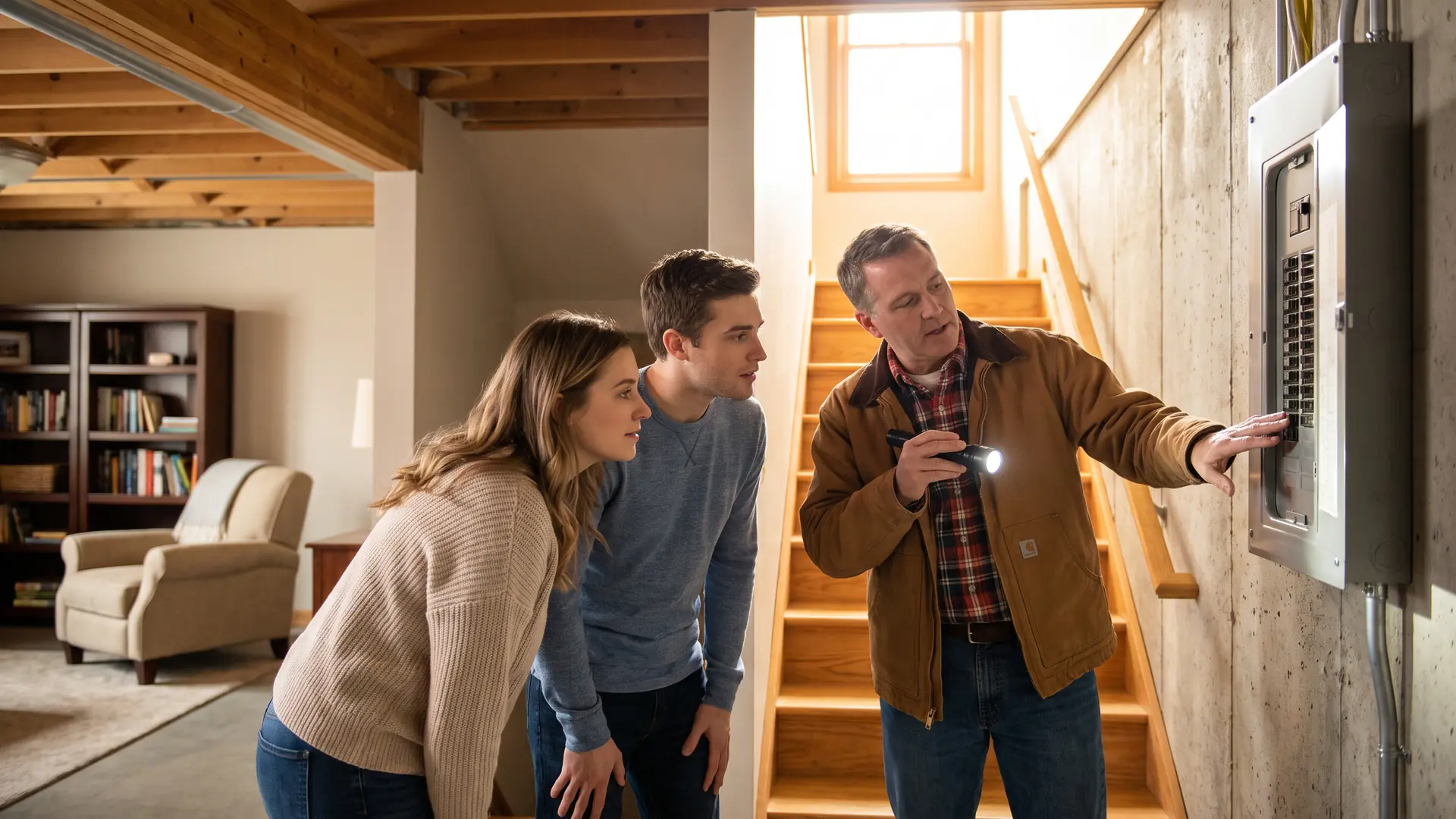
To choose a home inspector, check five things before you hire anyone: a state license where your state issues one, membership in a professional association like ASHI or InterNACHI, recent reviews from buyers in your area, proof of errors-and-omissions insurance, and a sample report you have actually read end to end. Because an inspection contingency window commonly runs just 7 – 10 days from an accepted offer, build that shortlist before your offer is accepted, not the morning after.
HUD puts the stakes plainly in its buyer notice For Your Protection: Get a Home Inspection: an inspection happens only if you arrange one, and its purpose is to inform and educate you about the property before you make a financial commitment. That notice also tells buyers to ask a prospective inspector for their Standards of Practice or a sample report, the most useful vetting step on the list, and the one almost nobody takes.
Learn how to choose a home inspector, including which credentials actually mean something, how to vet a shortlist in an afternoon, and the red flags that predict a shallow inspection. If you’re earlier in the process, start with our Home Buying guide.
Key takeaways:
- Association membership is the training floor: InterNACHI members must pass its inspector exam and re-take it every 3 years, complete its ethics and standards courses, and take 24 hours of accredited continuing education a year, a bar no state minimum guarantees by itself.
- A sample report is the best vetting tool you have: Ask for a complete report on a comparable home before you book, because it shows exactly what you’ll receive after the 2 – 4 hours an inspector spends in a typical single-family house.
- Michigan buyers carry the whole burden: Michigan’s Bureau of Professional Licensing regulates 14 occupational professions under the Michigan Occupational Code, and home inspector is not one of them, so vet 2 or 3 candidates yourself before you write an offer.
What qualifications should a home inspector have?
A qualified home inspector holds a state license where the state requires one, carries current ASHI or InterNACHI membership, and insures the work with an errors-and-omissions policy. Those three are the floor. Years in business, thermal cameras, and specialties are tiebreakers between candidates who clear it.
Licensing varies by state, and a license is only a floor
There is no federal home inspector license. Some states license or register inspectors and some don’t, so the first question isn’t “is this inspector licensed?” but “does my state issue a license at all?” HUD’s notice tells buyers to seek references from friends, real estate professionals, local licensing authorities, and organizations that qualify and test home inspectors. Four sources, because no single one is sufficient.
Even where a license exists, treat it as a starting line. InterNACHI states the case bluntly: “The licensing of home inspectors only sets a minimum standard.” A licensed inspector has cleared a baseline, not proven they’ll crawl the attic in August.
ASHI and InterNACHI membership
Association membership is the credential that travels across state lines, and it carries real requirements. Per InterNACHI’s guide to choosing a home inspector, members must pass its online inspector examination and re-take it every three years, complete its Code of Ethics and Standards of Practice courses, submit four mock reports to a report-review committee before their first paid inspection, and complete 24 hours of accredited continuing education annually.
The American Society of Home Inspectors runs a parallel system built on a published Standards of Practice and Code of Ethics, plus a searchable member directory. Look candidates up in the American Society of Home Inspectors directory and cross-check the names your agent gave you. Verify the membership number rather than trusting a logo on a website. Logos are free.
How to vet your shortlist: 5 things to check
Five checks, in this order, take an afternoon and eliminate most of the field. Start with three names, one from your agent, one from a neighbor who bought recently, and one from an association directory, so no single source controls the outcome.
1. Verify the license where your state issues one
Look the license up in the state’s own database, not on the inspector’s site, and confirm it’s active and free of discipline. Where no licensing regime exists, skip to check two and weight it more heavily. Either way, know which situation you’re in, it sets how much vetting falls to you.
2. Confirm current association membership
Search the inspector’s name in the ASHI or InterNACHI directory and confirm the membership is current, not lapsed. Levels differ, some are entry tiers, some require completed inspections and passed exams, so ask which they hold and what it required. A candidate who can explain their own credential in one sentence has thought about it.
3. Read the 5 most recent reviews for content, not stars
Star averages tell you almost nothing; the text tells you everything. Read the five most recent reviews for specifics: Did the inspector find something the buyer didn’t know about? Was the report delivered when promised? Reviews praising speed and low price without naming a single finding describe a fast inspection, not a good one.
4. Ask for proof of insurance
Errors-and-omissions (E&O) insurance covers the inspector’s professional judgment, the missed cracked heat exchanger, while general liability covers physical damage they cause in your home. Request a current certificate showing both, and read the inspection agreement’s liability limitation clause in advance, since many cap the inspector’s liability at the fee you paid.
5. Read a sample report before you book
This is the check that decides it. Ask each candidate for a full sample report on a comparable home, and for their Standards of Practice, exactly what HUD’s notice instructs buyers to request. A strong report shows a photograph of each defect, its location, a plain-English description, a severity rating, and a recommendation. A weak one is check boxes and “recommend further evaluation by a qualified contractor” over and over.
Our guide to reading a home inspection report covers how findings get categorized, and the home inspection checklist for buyers shows what a complete report covers. If the sample skips whole systems the checklist names, that’s your answer.
Cost, process and what to expect
Plan on 2 – 4 hours on site for a typical single-family home, a written report within a day or two, and a fee you pay out of pocket before closing. It’s one of the few costs you pay directly rather than financing, which is why buyers shop it on price.
What a home inspection costs
No state or federal agency sets home inspection fees. Inspectors price their own work, and quotes move with square footage, the home’s age, foundation type, and your local market. Get written quotes from two or three vetted candidates and confirm each covers the same scope, because add-ons, radon testing, sewer scopes, termite inspections, well water testing, and septic evaluations, are priced separately. On radon, the Environmental Protection Agency and the Surgeon General recommend that all houses be tested.
InterNACHI’s framing is the honest one: the cost of an inspection is very small relative to the value of the home being inspected. On a $300,000 Waterford purchase, one missed $9,000 sewer lateral or a $12,000 roof replacement costs more than every home inspection you will pay for in your life.1
Your lender’s appraisal is not a home inspection
HUD says it in capital letters on its buyer notice: appraisals are NOT home inspections. An appraisal is required to estimate the home’s value for your lender and does not replace a home inspection, and FHA does not guarantee the value or condition of your new home.2 If problems surface after closing, FHA cannot lend you money for repairs and cannot buy the home back from you.
Our guide to the home appraisal process covers what the appraiser evaluates and who receives the report. The short version: the appraiser works for the lender, and the inspector works for you.
How the inspection fits your contingency window
Timing is the constraint nobody plans for. An inspection contingency commonly gives you 7 – 10 days from acceptance to inspect, review the report, and deliver any repair request, and good inspectors book out further than that. HUD’s notice makes the sequencing point directly: request an inspection early and you may be able to make your purchase contract contingent on its results.
So vet during your home search, not after acceptance. See contingencies in home offers for what the clause protects, and where inspection sits in the broader home buying process. Where windows get shortened, our guide to a competitive offer covers tightening the timeline without waiving protection.
The house should steer your pick. Home inspections for new construction often happen in phases before drywall goes up, while a historic home or a fixer-upper argues for documented experience in that housing stock.
Red flags when choosing a home inspector
Five signals predict a shallow inspection more reliably than anything on a résumé. Any one is a reason to keep calling.
- A quote far below every other bid: A candidate who undercuts two comparable quotes by half is either doing less work or moving faster through the same house. Both cost you the same way.
- Same-day availability in a busy market: Good inspectors are booked days out in an active market. Instant availability during peak season is worth one polite question about why.
- Reluctance to let you attend: An inspector who discourages you from being there is protecting their pace, not your time.
- No sample report, or a thin one: “I’ll send it after” is a refusal. So is a sample with no photographs, severity ratings, or locations.
- Offering to do the repairs they find: An inspector who also sells repair work has a financial interest in what the report says. Most codes of ethics prohibit it for exactly that reason.
Pressure to decide on the spot belongs on the same list. Our guide to avoiding common home inspection pitfalls covers the mistakes that come after you’ve hired well, and avoiding buyer’s remorse usually traces back to something an inspection caught or didn’t.
What Michigan buyers should know
Michigan does not license home inspectors, which shifts the entire verification job onto you. Michigan’s Bureau of Professional Licensing regulates 14 occupational professions under the Michigan Occupational Code, among them architects, professional engineers, real estate appraisers, and real estate brokers, and home inspector appears nowhere on that list.
- Your appraiser is licensed; your inspector is not: Michigan licenses the appraiser who estimates the home’s value for your lender and the broker who writes your offer, but issues no credential to the person evaluating the roof, furnace, and foundation. Certification and insurance do the work a license does elsewhere.
- Winter inspections have blind spots: A December through March inspection often means a snow-covered roof, frozen ground over the septic field, and a central air conditioner the inspector won’t run. Most won’t operate one when outdoor temperatures have been below about 60 degrees, because it can damage the compressor. Ask in writing what got deferred.
- Basements are the main event: Michigan’s full-basement housing stock and freeze-thaw cycles make foundation cracks, drain tile, sump performance, and water staining the findings that matter most. An inspector who spends 10 minutes in the basement is not inspecting a Michigan house.
Selling instead? The benefits of a pre-listing home inspection are worth weighing before you list.
How Align moves your purchase to the closing table
Over the last 12 months, Samantha's loans averaged under 14 days from application to clear to close, across more than 100 loans. Your closing date is set by your purchase agreement. Her job is to have your loan ready well before it.
She handles your file herself, with a processor supporting her behind the scenes. You always know who to call, and the person who answers knows your goals.
Build your homebuyer game plan
Sources: Align Lending loan records, 12 months to October 2026.
FAQ: Choosing a home inspector
Here are answers to common questions about choosing a home inspector.
What should I look for when choosing a home inspector?
Check five things: a state license where required, ASHI or InterNACHI membership, strong recent reviews, errors-and-omissions insurance, and a sample report with detailed, photo-documented findings. Then confirm logistics. Time on site, whether you can attend, and how fast the report arrives. Do this while preparing to buy, not after an offer lands.
Should I use the home inspector my real estate agent recommends?
Often yes, but vet the referral yourself rather than accepting it automatically. Good agents want deals built on accurate information. Still, check credentials, reviews, and a sample report as you would for any candidate, and add one independent name for comparison. Our guide to choosing a real estate agent covers how referral networks work.
How much does a home inspection cost?
It depends on the home’s size, age, and your local market, because no state or federal agency sets inspection fees. Get written quotes from two or three vetted candidates and confirm each covers identical scope, since radon testing, sewer scopes, and well or septic evaluations are priced separately. Budget it as an out-of-pocket cost paid before closing, not part of your closing costs.
Should I attend my home inspection?
Yes, at least for the final walkthrough. Attending lets you see issues in context, ask questions in real time, and learn where the shutoffs are. Inspectors who discourage attendance are a red flag. Plan on two to four hours and let the inspector work while staying available for the summary, it makes negotiating repairs afterward far easier.
The bottom line on choosing a home inspector
Choosing a home inspector comes down to five checks you can finish in an afternoon: a state license where your state issues one, current ASHI or InterNACHI membership, the five most recent reviews read for content rather than stars, a certificate showing errors-and-omissions and general liability coverage, and a full sample report, the document HUD’s own buyer notice tells you to request. Do it during your home search, because a 7 – 10 day contingency window leaves no room to start over. In Michigan, where the state licenses your appraiser but not your inspector, those five checks are the only quality control in the transaction.
Your inspector’s job is to make sure the house deserves you. Ours is to make sure the loan does. If you’re ready to buy, talk to Align Lending, we’ll shop your scenario across our lender network and show you the numbers side by side. Call 248-506-5727 or start online today.
Footnotes:
1. Example figures are hypothetical and for educational purposes only; they do not constitute an advertisement of credit terms or a rate quote under federal or state lending laws. Inspection fees, repair costs, and property conditions vary by home, contractor, and market. Return to text.
2. Align Lending is not acting on behalf of or at the direction of FHA or HUD. Appraisal and inspection guidance referenced here is published by the U.S. Department of Housing and Urban Development and is subject to change. Return to text.
Sources: inspection purpose and arrangement, the Standards-of-Practice and sample-report instruction, the referral sources, early-inspection contingency guidance, “Appraisals are NOT Home Inspections,” and the EPA and Surgeon General radon recommendation, U.S. Department of Housing and Urban Development, form HUD-92564-CN, For Your Protection: Get a Home Inspection. The 14 occupational professions licensed under the Michigan Occupational Code, Michigan Department of Licensing and Regulatory Affairs, Bureau of Professional Licensing. Membership requirements and the minimum-standard quotation, InterNACHI. Standards of Practice, Code of Ethics, and member directory, American Society of Home Inspectors.
This article is for informational purposes only and is not intended to provide legal, financial, or tax advice. Inspection contingencies, inspection agreements, liability limitation clauses, and repair addenda should be reviewed by a licensed real estate professional or attorney in your state. Align Lending does not select, endorse, employ, or supervise home inspectors and does not warrant the condition of any property. Align Lending is an independent Michigan mortgage broker, NMLS #2041154.
Related resources
12-minute read
The Home Appraisal Process: What to Expect
Learn how the home appraisal process works, from the lender’s order to the final report, including typical costs of $300-$1,500 and what appraisers check.
12-minute read
Home inspection checklist for buyers: What to look for room by room
See the complete home inspection checklist for buyers, from foundation to attic, so you can spot costly problems before you close on your next home.

12-minute read
How to prepare for a home closing: your step-by-step checklist
Learn how to prepare for a home closing with a step-by-step timeline, documents to bring, and final walk-through tips for a smooth closing day.
