
Benefits of a pre-listing home inspection: what sellers gain
A pre-listing home inspection is an inspection you order and pay for before your home goes on the market, and it walks the same 10 systems the ASHI Standard of Practice builds every home inspection around: structural components, exterior, roofing, plumbing, electrical, heating, air conditioning, interiors, insulation and ventilation, and fireplaces and fuel-burning appliances. It hands you the same defect list the buyer’s inspector will produce, only weeks earlier, while you still control the timeline, the contractor and the budget.
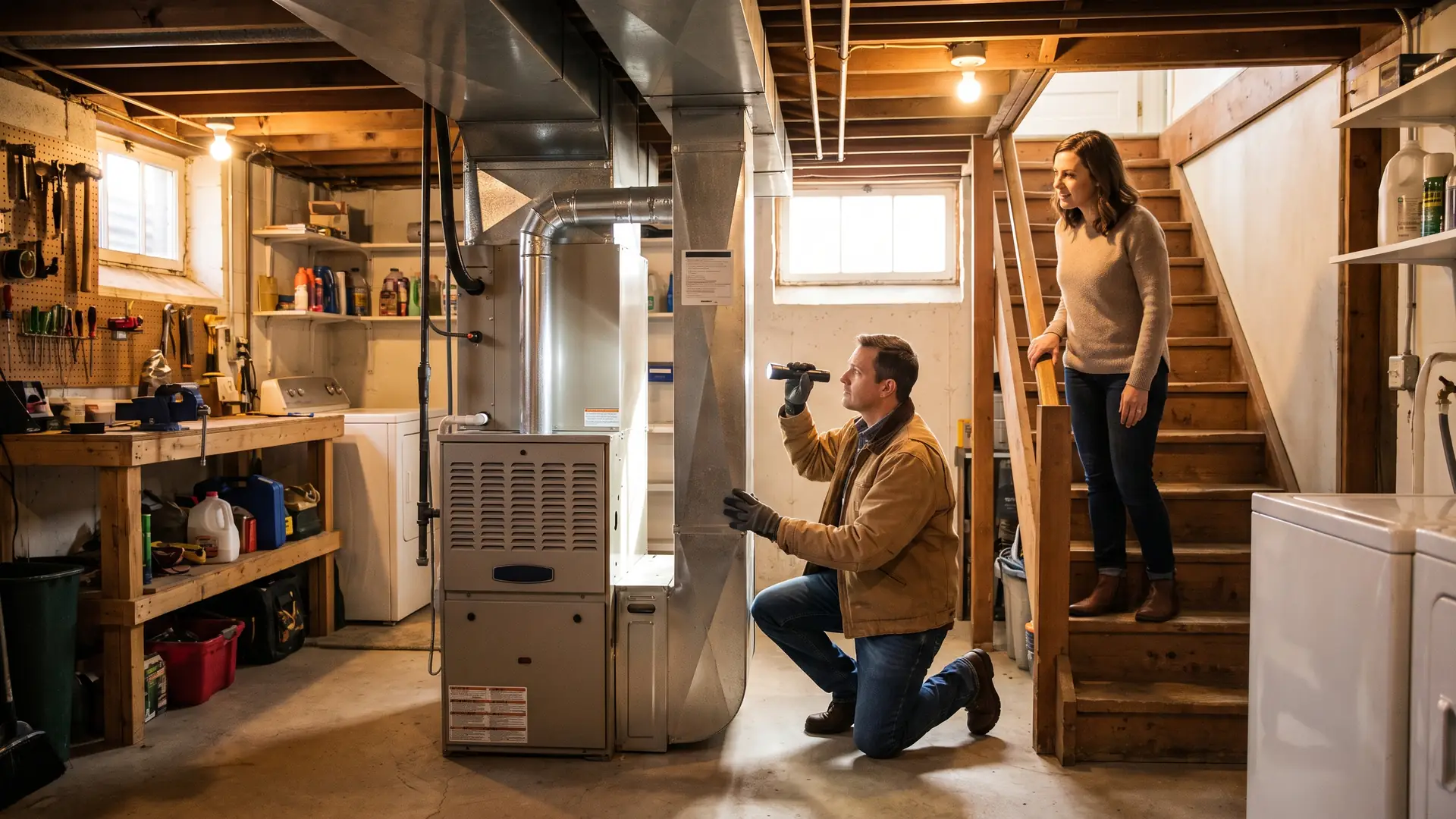
Sellers spend that head start pricing the home to its condition, fixing or disclosing problems on their own terms, and cutting the odds of a post-inspection renegotiation. In Michigan, what the report teaches you also flows onto the Seller’s Disclosure Statement required on transfers of 1 to 4 residential dwelling units.
Learn what a pre-listing inspection covers, the six benefits sellers get from one, how to sort findings into fix, disclose or credit, and how Michigan’s disclosure law treats what you learn. Earlier in the process? Start with our Selling A Home guide.
Key takeaways:
- Same scope, earlier timing: A pre-listing inspection covers the same 10 systems an ASHI-standard inspection covers, but the report lands before you set a price instead of after you’re under contract.
- What you learn, you disclose: Michigan’s Seller Disclosure Act applies to transfers of 1 to 4 residential dwelling units, and once a defect is within your personal knowledge it belongs on a statutory form that asks 12 numbered property-condition questions.
- Fix the deal-breakers, price the rest: Spend on safety, active leaks and anything that can stall the buyer’s appraisal, and if the home was built before 1978, leave room for the federal lead-paint rule’s 10-day buyer evaluation window.
What is a pre-listing home inspection?
A pre-listing home inspection is a standard inspection with the order of operations reversed: the seller hires the inspector before listing instead of the buyer hiring one after an offer is accepted. The scope is identical. HUD describes what a qualified inspector does for a fee as taking an unbiased look at the property to evaluate its physical condition, estimate the remaining useful life of major systems, equipment, structure and finishes, and identify items needing repair or replacement.
The limits are identical, and they matter when you read the report. The ASHI Standard of Practice covers systems and components that are readily accessible and visually observable, meaning available without moving personal property, dismantling anything or taking destructive measures. The inspection is explicitly not technically exhaustive, and inspectors need not report concealed conditions, latent defects or consequential damages. A clean report is a snapshot, not a warranty. Our home inspection checklist lays out that scope.
One thing a pre-listing inspection is not: an appraisal. HUD puts it in capital letters. Appraisals are NOT home inspections. An appraisal estimates value for the lender and does not replace an inspection, which is why a smooth home appraisal process tells you nothing about your furnace. For the pricing side, see our Pricing & Preparing hub.
What are the benefits of a pre-listing inspection?
Six benefits show up consistently, and most reduce to one mechanic: information you hold before you price is leverage; the same information after you’re under contract is a concession.
1. You see the house through a neutral third party’s eyes
You stop grading your own homework. After a decade in a house, the sticking basement door and the hairline foundation crack become background noise. InterNACHI’s case for the seller’s inspection leads with exactly this: it lets you see your home through the eyes of a critical and neutral third party. The inspector has no memory of the repair you made in 2019 and no reason to soften a finding. See InterNACHI on pre-listing inspection benefits for the full list.
2. You price the home to its actual condition
Condition is a number, not a feeling. A roof with five years left and a roof with twenty are different assets, and only one supports the top of your price band. Knowing which one you own before the listing photos go up lets you set a number you can defend when a buyer pushes, instead of one you walk back at day 10 of escrow. It also stops the opposite error: discounting for a problem that is only cosmetic.
3. You control which repairs happen, when, and at what price
Time is the entire savings. Repairs sourced on a six-week runway get competitively bid. Repairs sourced during a 10-day inspection contingency cost whatever the first available contractor charges, a point InterNACHI makes directly: an early inspection gives you time to secure reasonably priced contractors. You also choose the scope, because a buyer negotiating a credit prices the worst-case fix while you price the actual one. Our guide to managing home repairs during escrow shows that same work under deadline.
| Question | Pre-listing inspection | Buyer’s inspection |
|---|---|---|
| Who orders and pays | You, before the home is listed | The buyer, after the offer is accepted |
| Who controls the timing | You, around photos, showings and contractor availability | The contract clock; the contingency period sets the pace |
| Who chooses the contractor | You, with time to collect competing bids | You, under deadline, against the buyer’s preferred scope |
| Effect on your disclosure statement | Findings become your knowledge and go on the form before you sign it | Findings arrive after the statement is already signed |
| Effect on price | Condition is priced in once, at listing | Condition is priced out later, as a credit or a reduction |
4. You take away the buyer’s second run at the price
Renegotiation needs a surprise to work. The standard post-inspection ask, repair this or knock off that, depends on the buyer discovering something you didn’t tell them. Publish the report and repair receipts up front and the surprise is gone. Most buyers still order their own inspection, and they should, but the second report now confirms your story instead of resetting the negotiation. InterNACHI notes it may relieve prospects’ concerns and even encourage a buyer to waive the inspection contingency, a clause covered in contingencies in home offers.
5. You strengthen your seller’s disclosure statement
Documentation is protection. A disclosure form filled out from memory is a list of guesses. One backed by an inspection report and repair invoices rests on a professional’s written work, which InterNACHI describes as reducing your liability by adding professional supporting documentation to your disclosure statement.1 The trade is worth naming: once you know about a defect, you have to disclose it. Sellers read that as a reason not to look. It’s the opposite. A disclosed defect gets priced; an undisclosed one gets litigated.
6. You catch safety and access problems before the first showing
Strangers walk through your house for weeks. InterNACHI puts safety first for a reason: an inspection alerts you to immediate safety issues before agents and visitors tour the home, and flags items of immediate concern such as radon or active termite infestation. It’s also the moment to run health tests, since the EPA and the Surgeon General recommend that all houses be tested for radon, and problems like household mold take weeks to remediate properly.
Fix, disclose or credit: how to triage the report
Most pre-listing reports run dozens of findings, and fixing all of them is the wrong answer. Sort every item into one of three buckets before you spend a dollar.
- Fix: anything that threatens safety, soundness or structural integrity. This is a financing question, not just good practice. Fannie Mae rates property condition C1 through C6, and loans on C6 properties are not eligible for sale to Fannie Mae. Deficiencies affecting safety, soundness or structural integrity must be repaired to a minimum C5 rating before the loan is sold, with the property appraised “subject to” those repairs. A finding here doesn’t cost you a credit. It costs you the buyer’s loan.
- Fix: active water and anything that gets worse with time. A live roof leak, a failing sump pump or standing water in a crawl space compounds every week it sits, and shows up in photos, in smell and on the disclosure form.
- Disclose: age and wear you’re not replacing. A 19-year-old furnace and an original electrical panel are facts, not defects, and Michigan’s form asks for the approximate age of the roof and heating system directly. Answer honestly and price accordingly.
- Credit: cosmetic and low-stakes items. Cracked switch plates, a stuck window, a missing downspout extension. Bundling these into a modest credit is cheaper and faster than a scheduled contractor visit.
- Test, then decide: health and environmental items. Radon, mold, asbestos and lead paint need a specialist. Order these separately and early, because remediation takes weeks and a pre-1978 home carries a federal 10-day buyer evaluation window on lead-based paint.
Run the list past your listing agent, since the findings that move buyers vary by price band.
How do you order a pre-listing inspection?
Book it 6 to 8 weeks before your target list date, which leaves room to schedule contractors without paying rush pricing.
- 1. Clear access before the inspector arrives. An inspector only reports what’s readily accessible, so a blocked attic hatch or a furnace boxed in by shelving becomes a gap in your report. Doing your decluttering before selling first buys you a complete inspection instead of a partial one.
- 2. Vet the inspector, not just the price. HUD’s advice to buyers works for sellers too: ask a prospective inspector for their Standards of Practice or a sample report, and get referrals from real estate professionals and licensing organizations. You can also find an ASHI-certified home inspector through the association’s directory, and our guide to choosing a home inspector covers what to ask.
- 3. Walk the inspection with them. A report reads like a list of problems; a walkthrough tells you which three matter. Following the inspector also helps you avoid the misreads covered in avoiding common home inspection pitfalls.
- 4. Fix, then stage, then photograph. Do the repairs first so the photos capture the finished house. From there, staging on a budget handles most listings, and the case for hiring a professional stager strengthens the higher your price band goes.
Keep every invoice. Repair receipts turn “we fixed the roof” into a documented fact a buyer’s agent can hand their client.
What Michigan sellers should know
Michigan’s Seller Disclosure Act, 1993 PA 92, applies to any transfer of an interest in real estate of not less than 1 and not more than 4 residential dwelling units, covering nearly every house and duplex in the state.2 Here’s how a pre-listing inspection interacts with it.
- Deliver the statement before the purchase agreement is signed. If a disclosure or amendment lands after that, the buyer can terminate by written notice within 72 hours of delivery in person, or 120 hours by registered mail. Late disclosures hand the buyer an exit, which argues for having your report in hand before the listing goes live.
- The statutory form asks 12 property-condition questions and 11 more “Other Items” questions. The property-condition block covers basement or crawl space water, insulation, roof leaks and roof age, well, septic, heating type and age, plumbing type, electrical problems, infestation history, environmental hazards, flood insurance and mineral rights, plus a working-order checklist of 36 appliances and systems. An inspection report answers most of that list for you.
- Unpermitted work is its own line item. The form asks directly whether there have been structural modifications, alterations or repairs made without necessary permits or licensed contractors. Inspectors find this constantly in older Michigan housing stock, especially finished basements and DIY electrical. Our guide to home renovation permits explains what should have been pulled.
- The inspection changes what counts as “known.” Michigan law protects a seller who fails to disclose something findable only by inspecting inaccessible portions of the property, or only by someone with expertise beyond the seller’s. Order the inspection and that shield narrows, because the findings become your personal knowledge. It’s still the right trade: disclosures must be made in good faith, defined by the act as honesty in fact, and undisclosed defects surfacing after closing cost far more than disclosed ones you priced for.
- The form tells buyers to inspect anyway. The statutory language says the statement is not a warranty and is not a substitute for any inspections the buyer may wish to obtain, and notes that sellers generally have not inspected inaccessible areas such as the foundation or roof. A pre-listing report answers that invitation before it’s issued. Our walkthrough of handling seller disclosures goes line by line.
How Align helps before you list
If you are buying your next home too, talk to Samantha before you list. Knowing your buying power and your timeline first lets you price and prepare your home with a plan, not a guess.
Over the last 12 months, her loans averaged under 14 days from application to clear to close, across more than 100 loans. Your closing date is set by your purchase agreement. Her job is to have your loan ready well before it.
Sources: Align Lending loan records, 12 months to October 2026.
FAQ: pre-listing home inspections
Here are answers to common questions about pre-listing home inspections.
Is a pre-listing home inspection worth it?
For most sellers, yes. You pay out of pocket and get back control over repairs, defensible pricing and fewer renegotiations. It’s most valuable on homes older than 20 years, homes you’ve owned a long time and homes with deferred maintenance, and least valuable on new construction still under builder warranty. The value only shows up if you act on the findings, so start with how to read a home inspection report.
Do I have to disclose what a pre-listing inspection finds?
Yes, in most states, including Michigan. Once a material defect is within your personal knowledge, it belongs on your seller disclosure form whether or not you repair it. That’s not a reason to skip the inspection: undisclosed defects that surface after closing create far more expensive problems than disclosed ones you priced for. See how to handle seller disclosures, and what sellers are legally required to disclose for the wider legal picture.
Should I fix everything the pre-listing inspection finds?
No. Prioritize safety items, active leaks and anything that could block a buyer’s financing or appraisal, which generally means roof, electrical, heating and structural findings. Cosmetic and minor items are usually cheaper to disclose or credit than to repair. Ask your agent which findings actually move buyers in your price band before you spend.
Can a buyer still order their own inspection?
Yes, and most will. A pre-listing inspection doesn’t replace the buyer’s inspection or their contingency. The point is that the buyer’s inspector finds nothing you haven’t already disclosed and addressed, so the second report confirms your story instead of resetting the negotiation. Some buyers waive inspection entirely in competitive markets, a decision covered in home inspection waivers.
The bottom line on pre-listing home inspections
A pre-listing home inspection covers the same 10 systems the buyer’s inspector will cover, from structure and roof to plumbing, electrical, heating and air conditioning, and it delivers that list weeks before your listing goes live rather than days after you’re under contract. That timing is the whole benefit: you price the condition once instead of defending it twice, you bid repairs on a runway instead of a deadline, and you hand buyers a documented story instead of a surprise. In Michigan, what you learn goes on a Seller’s Disclosure Statement that must reach the buyer before the purchase agreement is signed.
If you’re selling one home and financing the next, talk to Align Lending. We’ll shop your scenario across our lender network and put competing offers in front of you side by side, so your preapproval is settled long before your sale closes. Call 248-506-5727 or start online.
Footnotes:
1. This article is general information about seller disclosure practices, not legal advice. Disclosure obligations, liability standards and remedies vary by state and by the facts of your transaction. Consult a licensed real estate attorney about your situation. Return to text.
2. Summaries of the Michigan Seller Disclosure Act are provided for general information only and are not legal advice. The act contains exemptions, and statutes and forms are amended from time to time; confirm current requirements with your listing agent or a Michigan real estate attorney before relying on them. Return to text.
Sources: the 10 system sections of a home inspection (structural components, exterior, roofing, plumbing, electrical, heating, air conditioning, interiors, insulation and ventilation, fireplaces and fuel-burning appliances), the readily accessible and visually observable scope, the “not technically exhaustive” limit, and the exclusion of concealed conditions, latent defects and consequential damages, American Society of Home Inspectors Standard of Practice. What a qualified inspector does for a fee, including estimating the remaining useful life of major systems, equipment, structure and finishes; the instruction to ask an inspector for their Standards of Practice or a sample report; referral sources; “Appraisals are NOT Home Inspections” and the statement that an appraisal estimates value for the lender and does not replace a home inspection; and the EPA and Surgeon General recommendation that all houses be tested for radon, U.S. Department of Housing and Urban Development, Federal Housing Administration form HUD-92564-CN, For Your Protection: Get a Home Inspection (OMB approval no. 2502-0538). Benefits of a seller’s inspection, including seeing the home through a critical and neutral third party’s eyes, alerting the seller to immediate safety issues before agents and visitors tour the home, items of immediate concern such as radon and active termite infestation, time to secure reasonably priced contractors, relieving prospects’ concerns and suspicions, encouraging waiver of the inspection contingency, and reducing liability by adding professional supporting documentation to the disclosure statement, InterNACHI. Condition ratings, ineligibility of C6 properties for sale to Fannie Mae, the minimum C5 rating for deficiencies affecting safety, soundness or structural integrity, and appraisal “subject to” completion of repairs, Fannie Mae Selling Guide B4-1.3-06. Michigan Seller Disclosure Act, 1993 PA 92: applicability to transfers of not less than 1 and not more than 4 residential dwelling units, MCL 565.952; delivery before execution of a binding purchase agreement and the 72-hour and 120-hour termination rights, MCL 565.954; limits on transferor liability for information outside personal knowledge or obtainable only by inspecting inaccessible portions of the property, MCL 565.955; the statutory disclosure form, its 36-item appliance and systems working-order checklist, its 12 numbered property-condition questions and 11 “Other Items” questions, the unpermitted-work question, and the statements that the form is not a warranty, is not a substitute for buyer inspections, and that the seller has generally not inspected inaccessible areas such as the foundation or roof, MCL 565.957; good faith defined as honesty in fact, MCL 565.960; permitted methods of delivery, MCL 565.963. Federal lead-based paint disclosure and the 10-day period for the purchaser to conduct a risk assessment or inspection in most pre-1978 target housing, U.S. Environmental Protection Agency.
This article is for informational purposes only and is not intended to provide legal, financial, or tax advice. Inspection scope, disclosure obligations, repair standards and program requirements change and vary by property, county, state and loan program; confirm the requirements that apply to your sale with your listing agent and a qualified professional. Align Lending is an independent Michigan mortgage broker, NMLS #2041154.
Related resources
12-minute read
How to improve your home’s curb appeal before you list
Discover how to improve your home’s curb appeal with paint, cleaning, landscaping and lighting upgrades that photograph well and bring buyers to the door.
