
Benefits of investing in green housing markets, from utility savings to financing and incentives
This article is general education about energy-efficient rental property, not investment, tax or legal advice. Align Lending is an independent Michigan mortgage broker, not a registered investment adviser, broker-dealer or financial planner. Talk to a licensed financial advisor about suitability, a CPA about tax treatment, and a Michigan real estate attorney about leases and contracts.
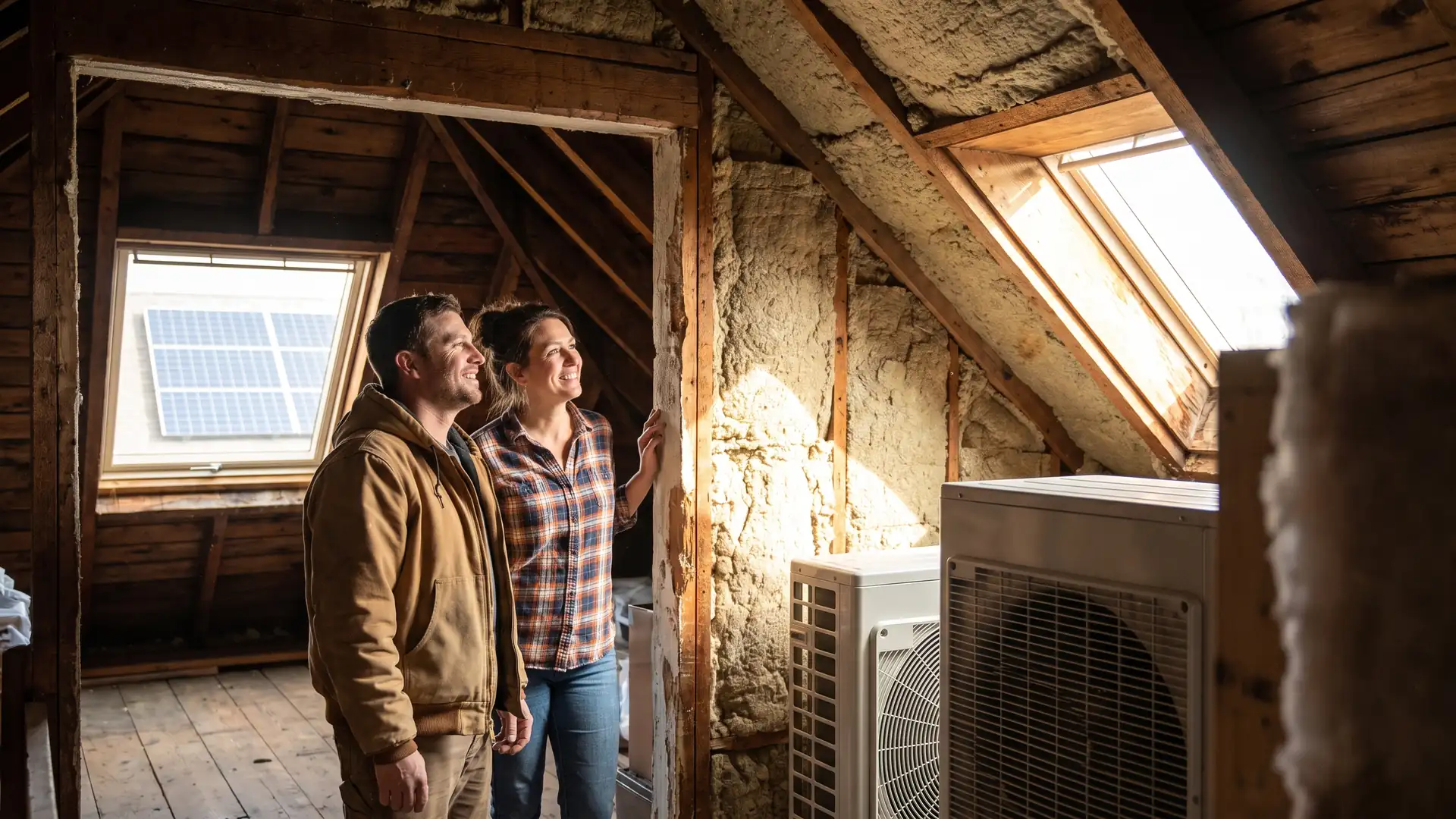
The reliable benefit of a green housing investment is the operating line, and it is measurable. EPA’s ENERGY STAR program estimates that air sealing a home and adding insulation in the attic, floors over crawlspaces and accessible basement rim joists saves an average of 15% on heating and cooling costs, roughly 11% of total energy costs, based on energy modeling of typical existing U.S. homes.1 ENERGY STAR also states that nearly half of the energy used in a home goes to heating and cooling, which is why envelope work sits above solar on most scopes.
Notice what that is not. It is not the 30% to 70% utility reduction that circulates through green-investing content with no issuing body and no study attached. An unattributed percentage is a defect.
Below: where the return comes from, who captures it, what can honestly be said about premiums, how the property gets financed, and which incentives survived the 2025 tax-credit changes. Start with our Real Estate Investing guide for the framework.
Key takeaways:
- Operating savings are the part you can underwrite: ENERGY STAR puts average savings from air sealing plus insulation at 15% of heating and cooling costs, or 11% of total energy cost.
- The lease decides who keeps the money: On a hypothetical $12,000 owner-paid annual utility line, an 11% cut is roughly $1,320 of added net operating income, under a tenant-paid lease the identical retrofit moves none of your NOI.
- The federal credits investors planned around have ended: Sections 25C and 25D are unavailable for property placed in service after December 31, 2025, leaving utility rebates, state programs and financing (such as GreenCHOICE Mortgages, capped at 15% of “as completed” value) as what remains.
What actually produces the return on a green housing investment?
Two channels, unequally trustworthy. Operating-cost reduction is arithmetic you can source. Revenue (higher rent, faster lease-up, stronger resale) is real but far harder to quantify. Underwrite the first; treat the second as upside.
The ENERGY STAR estimate carries a methodology as well as a percentage: 15% off heating and cooling costs, or 11% off total energy costs, from air sealing and added insulation in a typical existing U.S. home, modeled with Beacon Residential and corroborated by contractor field experience. That is a national average, not a promise about your building, a 1920s uninsulated duplex and a 2015 build land far apart around it.
On water, EPA’s WaterSense program publishes fixture-level figures: replacing old, inefficient toilets with labeled models saves the average family nearly 13,000 gallons and more than $170 a year in water costs, according to EPA’s residential toilets page (last updated May 29, 2026), and labeled showerheads save the average family 2,700 gallons a year. EPA also states WaterSense labeled homes use at least 30% less water than typical new construction. For a landlord on a master water meter, fixtures are the cheapest line on the scope, see energy-efficient home upgrades.
Here is how that converts, in a simple hypothetical.2 Take an owner-paid building with $12,000 a year of utilities and a scope landing at the ENERGY STAR average of 11%: about $1,320 of expense removed. Because it is expense, not revenue, it flows to net operating income dollar for dollar, and at a 7% capitalization rate $1,320 of recurring NOI capitalizes arithmetically to roughly $18,900 of value, a mechanical relationship, not a forecast. Swap 11% for an unsourced 50% and the model produces a number worth nothing.
Where does the energy in a home actually go?
Mostly into heating and cooling. EIA’s survey puts ENERGY STAR’s “nearly half” at 52%. According to the U.S. Energy Information Administration’s explainer on energy use in homes (last updated December 18, 2023, from its 2020 Residential Energy Consumption Survey), space heating and air conditioning took 52% of a household’s annual energy consumption in 2020. Water heating, lighting and refrigeration together took 25%, and the remaining 23% went to devices such as televisions.
ENERGY STAR’s Heating and Cooling page (undated, viewed October 2026) puts figures on the equipment side: sealing and insulating ducts can improve system efficiency by as much as 20 percent; replacing old equipment with ENERGY STAR certified units can cut an annual energy bill by nearly $140, depending on location; a certified smart thermostat can save about $100 a year in a home with high heating and cooling bills or one empty much of the day; and improper installation can reduce system efficiency by up to 30 percent, so judge a bid on how the system is sized and installed, not only on price.
Water fixtures save energy too. EPA’s WaterSense showerhead page (last updated March 3, 2026) says standard showerheads use 2.5 gallons per minute, labeled models must use no more than 2.0, and the average family could save more than 330 kilowatt hours of electricity a year through lower water-heater demand. Equipment ages are usually in the inspection; see how to read a home inspection report.
Who captures the utility savings, you or your tenant?
Whoever pays the bill. This one question decides whether a retrofit is an investment or a gift, and almost every article on the subject skips it.
- Owner-paid utilities: Every dollar of reduction lands in your NOI. This is where efficiency work underwrites cleanly, and it is common in older small multifamily with one boiler and one water meter.
- Tenant-paid utilities: The savings belong to the tenant. Your return has to come from rent, retention or lease-up speed, none as certain as an expense you removed.
- Submetering and ratio billing: Individual meters or a ratio utility billing system push consumption cost to the unit that creates it, but both are regulated by state and sometimes by municipality, a question for a Michigan real estate attorney first.
- Common-area systems: Hallway and exterior lighting, shared laundry and boiler plants stay on your bill under nearly any structure. The most reliably owner-captured measures you have.
Economists call this the split incentive: the party paying is not the party benefiting, so in a tenant-paid building an owner rationally underinvests in the envelope. Three responses: prioritize measures that stay on your bill; where you improve tenant-paid systems, check whether verified efficiency supports a higher asking rent that still lowers the tenant’s total housing cost; and change lease structure at turnover, not mid-term. Which is worth doing varies by market. What our Investor Market Analysis hub is built for.
What does a fixture swap look like on a small owner-paid rental?
Hypothetical example, not an offer. Take an owner-paid fourplex on one water meter, with the original toilets in all four units. EPA’s WaterSense residential toilets page (last updated May 29, 2026) says older toilets can use as much as 6 gallons per flush, labeled models use 1.28 gallons or less, and replacing old toilets saves the average family nearly 13,000 gallons and more than $170 a year in water costs, with $3,400 over the lifetime of the toilets. If each household matched EPA’s average family, four units would come to about 52,000 gallons and roughly $680 a year off the owner’s bill. At the same 7% capitalization rate used in the earlier illustration, $680 of recurring net operating income works out arithmetically to about $9,700 of value.
On a tenant-paid meter the same swap gives the owner nothing directly. Our guides on cap rates, cash flow in real estate and evaluating a property’s cash flow potential show how one expense line moves the model, and investing in multi-family properties covers master-metered buildings.
Do green homes really rent and sell for more?
Often, at the margin, and no one should quote you a single national percentage for it. Value-impact figures are the most fabricated numbers in real estate content: claims like “certification adds 9%” circulate across dozens of pages with no study, no year and no geography behind them. Absent a named study, treat the number as marketing.3 What holds up is mechanical, not statistical.
- Lower total occupancy cost is the selling point: Where utilities are tenant-paid, a renter compares rent plus utilities. A verified lower energy bill widens the rent you can ask while leaving the tenant no worse off. Arithmetic that works even when no premium study does.
- Verification makes efficiency visible: An unlabeled retrofit is invisible to a listing, an appraiser and a lender. A third-party label or energy rating turns it into a documented property characteristic the appraiser can actually credit.
- Certification is voluntary; codes are not: LEED, ENERGY STAR, the National Green Building Standard and HERS ratings are opt-in. Building energy codes are mandatory but adopted state by state and locally. There is no national residential energy code mandate.
- Documentation is the whole game: Invoices, ratings and certification paperwork have to reach the appraiser. Work you cannot document cannot be credited.
- Demand is concentrated, not general: It clusters in newer-construction submarkets and buildings marketed on total cost. Aggregate household and employment data will tell you whether it exists where you are buying.
How do LEED, NGBS, HERS and the Home Energy Score differ?
Two certify a whole building; two rate energy performance on a scale. Each row reflects what the program says about itself.
| Program | Who runs or verifies it | What it covers | How the result reads |
|---|---|---|---|
| LEED Residential | U.S. Green Building Council | Single family attached and detached homes, plus new construction and major renovation multifamily projects with any number of stories | Credits earn points; the total sets the certification level |
| National Green Building Standard (ICC 700) | Third-party NGBS Green Verifiers accredited by Home Innovation Research Labs | Homes and multifamily buildings; the first ANSI-approved green building rating system for them, per the program | Certification after third-party verification |
| HERS Index | RESNET, through certified HERS Raters | An energy rating of one home | A typical home built to 2006 standards scores 100; a score of 70 is 30% more efficient than a standard new home; lower is better |
| Home Energy Score | U.S. Department of Energy, through DOE-trained assessors | Energy use of an existing home | One to ten, where ten marks the highest efficiency |
Sources: U.S. Green Building Council, LEED Residential (viewed October 2026); Home Innovation Research Labs, ICC 700 National Green Building Standard (viewed October 2026); RESNET, What is the HERS Index (page dated 2021); U.S. Department of Energy, Home Energy Score (August 22, 2022).
According to the Department of Energy, its score is designed to share home energy information inside the real estate transaction through MLS listings, home appraisals and mortgage financing, and DOE-trained assessors can deliver it within an energy audit, a home inspection package or on its own. RESNET reports that over one million homes have been issued a HERS Index Score in the U.S. (viewed October 27, 2026). How an appraiser weighs that paperwork is covered in our guide to the home appraisal process.
Which green housing markets does this actually work in?
The ones where four things line up: a demanding climate, high utility rates, an active local incentive program, and older housing stock with room to improve. Since ENERGY STAR puts nearly half of the energy used in a home in heating and cooling, envelope payback scales with how many months the system runs, and a saved kilowatt-hour is worth more where power costs more. Miss all four and the retrofit is a cost center.
Choosing between markets rather than buildings? See trends in sustainable housing developments for where higher-performance supply is being built, and benefits of investing in emerging markets for entering an unfamiliar one. Evaluate on aggregate household formation, employment and income. Never on who lives in a neighborhood, which is bad analysis and, under the Fair Housing Act and Michigan’s Elliott-Larsen Civil Rights Act, a legal problem. Regulation is local too, and near-term cost pressure in climate-exposed markets often comes from insurance rather than any rule.
How do you finance energy-efficient investment property?
Two routes: a mortgage that folds improvement cost into the loan, or an investor loan plus separate improvement financing.4 Which is open to you turns on occupancy, because several energy products are written for owner-occupants.
- Freddie Mac GreenCHOICE Mortgages: Finances efficiency improvements (air sealing, insulation, high-efficiency HVAC, solar water heaters, low-flow fixtures, windows and doors) on 1- to 4-unit properties, terms up to 30 years. Energy financing is capped at 15% of the “as completed” value, and improvements over $6,500 in aggregate require a HERS report, a DOE Home Energy Score report or a comparable audit. Freddie Mac’s product page does not set occupancy on its own. Eligibility, including whether a non-owner-occupied property qualifies, is governed by the Freddie Mac Single-Family Seller/Servicer Guide, so confirm it before assuming a rental fits.
- Fannie Mae HomeStyle Energy, FHA EEM and 203(k): HomeStyle Energy finances energy and resiliency improvements inside a conventional loan; FHA allows a cost-effective energy package alongside an insured mortgage, and 203(k) handles broader rehab. Terms live in the Fannie Mae Selling Guide and HUD Handbook 4000.1 and change, and the FHA products carry owner-occupancy rules that exclude most investor purchases.
- Conventional investor and DSCR loans: For a rental you do not occupy, the workhorses are conventional investment-property financing and non-QM DSCR loans that qualify on the property’s cash flow rather than your income. Improvements get funded from reserves, a renovation product, or a later cash-out refinance once improved NOI is seasoned.
- Unsecured efficiency financing: Green banks and utility on-bill programs lend against the improvement itself, without disturbing existing financing.
Underwriting differs on a rental: down payment, reserves and pricing adjustments are tougher than for a primary residence and vary between wholesale lenders on the same file. We won’t quote a rate, look up the current Freddie Mac Primary Mortgage Market Survey for a weekly national reference point, and expect investment-property pricing above it.
Which incentives are still available after the 2025 tax-credit changes?
Fewer federal ones than most articles still claim.5 The IRS states the Section 25D Residential Clean Energy Credit (the 30% credit covering solar, wind, geothermal heat pumps and battery storage) is not available for property placed in service after December 31, 2025. Section 25C, worth 30% of qualified expenses up to $1,200 a year and $2,000 for heat pumps, is allowed by the IRS only for qualifying property placed in service on or after January 1, 2023 and before December 31, 2025, and EPA’s ENERGY STAR tax-credit page describes both as ending then.
That matters because much green-investing content still says “30% through 2032,” which is pre-2025 law. If a contractor quote prices a scope that way, it is stale. Both were homeowner credits keyed to a residence anyway, so neither was ever the main event for a rental portfolio; the business-side provisions, Sections 45L and 179D, carry separate rules and sunset dates a CPA should confirm. The IRS Section 45L page describes a credit of up to $5,000 per home, claimed by the eligible contractor who builds or substantially reconstructs the home, for homes acquired in 2023 through June 30, 2026, a window that has now closed, and the certification it requires is covered in the impact of green building standards on housing.
What remains is mostly non-federal, and it is where an investor’s time is better spent:
- Utility rebates: Regulated utilities run efficiency programs for insulation, air sealing, HVAC, water heating and lighting, often with multifamily tracks. Most require pre-approval before work begins. Applying after the invoice is the most common way investors lose a rebate.
- State, local and lender programs: Green banks and state energy offices run loan programs, some cities layer rebates onto certified projects, and the agency energy mortgages above are an incentive in their own right, moving improvement cost into long-term amortizing debt rather than cash.
What Michigan investors should know
Michigan’s long heating season is the structural advantage. Because ENERGY STAR attributes nearly half of the energy used in a home to heating and cooling, and Michigan runs a heating load most of the year, envelope measures accumulate savings over more months than in a mild climate.
- Michigan Saves is the state’s financing channel: A Lansing-based 501(c)(3) that describes itself as the nation’s first nonprofit green bank, financing home energy improvements plus commercial and bridge loans. Rates and amounts depend on the participating lender and your credit.
- Utility rebates are territory-specific: Michigan’s regulated utilities, DTE Energy and Consumers Energy among them, run their own efficiency programs on rules and funding cycles that change yearly. Get pre-approval from the utility serving the property before a contractor starts.
- Verify the adopted energy code. Do not assume it: Michigan’s construction codes, energy provisions included, are adopted through state rulemaking and administered by the Bureau of Construction Codes at LARA. Editions change on their own cycle, so confirm the current one before scoping new construction or a gut rehab.
- Water is a real line in older Michigan multifamily: Master-metered prewar buildings put the full water bill on the owner, making WaterSense labeled fixtures (the toilets EPA credits with nearly 13,000 gallons and more than $170 a year in water costs) unusually cost-effective per unit.
We place investment-property loans in Michigan every week. We are a mortgage broker: we shop your file. We do not select markets or advise on whether a deal is a good investment, those calls belong with a licensed financial advisor, a CPA and a Michigan real estate attorney.
What do Michigan electricity prices mean for an efficiency scope?
They raise the value of every kilowatt-hour an owner stops paying for. According to the U.S. Energy Information Administration’s Electric Power Monthly, Table 5.6.A (data for August 2026, released October 23, 2026), Michigan’s average residential electricity price was 22.99 cents per kilowatt-hour in August 2026, up from 20.73 cents in August 2025, against a U.S. average of 18.16 cents. EIA marks its 2026 values as preliminary.
| Area | Residential price, August 2026 (cents per kWh) | Residential price, August 2025 (cents per kWh) |
|---|---|---|
| Michigan | 22.99 | 20.73 |
| Ohio | 19.38 | 17.55 |
| Wisconsin | 19.41 | 18.44 |
| Illinois | 19.32 | 18.03 |
| Indiana | 17.02 | 16.21 |
| U.S. total | 18.16 | 17.57 |
Source: U.S. Energy Information Administration, Electric Power Monthly, Table 5.6.A, data for August 2026, released October 23, 2026 (2026 values preliminary).
The price applies to electric loads such as lighting, cooling, heat pumps and electric water heaters; a gas furnace or boiler is priced off the gas bill, so split a scope by fuel before you estimate it. For who pays which meter, see becoming a landlord.
Which energy code applies to a Michigan rehab or new build right now?
For homes, still the 2015 edition. The U.S. Department of Energy’s Michigan state profile (no page date, viewed October 2026) lists Michigan’s residential code as the 2015 IECC, effective February 8, 2016, and its commercial code as the 2021 IECC and ASHRAE 90.1-2019, effective April 22, 2025, both enforced statewide.
The reason is in LARA’s currently open rules page (viewed October 27, 2026): on July 7, 2025, the Michigan Court of Claims issued an order in Home Builders Assoc et al. v LARA et al. that temporarily prevents LARA from taking further steps to apply two rule sets that would update the Michigan Residential Code and its residential energy chapter. Both would have adopted, in part, the 2021 International Residential Code and 2021 IECC residential standards, effective August 29, 2025. While that stipulated order remains in place, LARA says, the 2015 versions remain valid and in effect.
Scope a gut rehab or new build to the edition in force on the permit date, and check again before the next project because the order is temporary. Permit steps are covered in home renovation permits, and how a larger project can change a tax bill is in the impact of home improvements on property taxes.
Which Michigan rebate programs can a rental owner use?
Two layers: utility programs required by state law, and federally funded state rebates. According to the Michigan Public Service Commission’s October 25, 2024 release on energy waste reduction, Michigan’s energy waste reduction standard, created in 2008 and amended by the Legislature in 2016 and 2023, requires all natural gas and electric utilities to run customer programs that lower energy use. The MPSC reported that utilities spent more than $551 million on those programs in 2023, spending expected to produce $1.4 billion of savings over the 12-year lifecycle of the measures, or $2.54 of benefits for every dollar spent.
The second layer is Michigan’s Home Energy Rebates program (MiHER), run by EGLE. EGLE’s MiHER page (viewed October 27, 2026) says Michigan received $105.7 million in federal funding for HOMES, whole-home rebates sized by modeled energy savings, and $105.3 million for HEAR, electrification and appliance rebates for households with incomes at or below 150% of area median income. Points that matter to an owner:
- Building types: generally open to Michigan homeowners, single-family and multifamily.
- Tenants: renters may qualify for certain rebates with landlord participation.
- Contractors: rebate work must be done by an approved MiHER Registered Contractor.
- Openings by district: EGLE lists new income-qualified applications for properties in its Detroit, Warren, Grand Rapids, Lansing and Kalamazoo districts as temporarily unavailable while it reviews applications and funding.
Coordinating contractors and tenant access across units is covered in rental management.
How Align supports your analysis
Your analysis tells you whether a property works. Samantha tells you what it will cost to finance, using real offers from multiple wholesale lenders rather than a rate you saw online.
She lives and works in Oakland County, so local questions, including what Michigan's tax uncapping does to a rental's tax bill after you buy, are part of the conversation.
FAQ: Green housing investment
Here are answers to common questions about green housing investment.
Do green homes actually rent or sell for more?
Often, but be skeptical of any single national percentage. The mechanism is clearer than the magnitude: a verified lower utility bill cuts a tenant’s total occupancy cost, supporting a higher asking rent, and a documented rating gives an appraiser something to credit.
Which green certifications matter most for a rental portfolio?
It depends on asset class and who verifies the work. LEED, ENERGY STAR, the National Green Building Standard and HERS ratings are voluntary programs with different scopes and costs, some certify a whole building, others rate energy performance on a scale. Match the label to what your appraiser and lender will recognize.
Are the federal energy tax credits still available in 2026?
No, not the two homeowner credits. The IRS states Section 25D is not available for property placed in service after December 31, 2025, and allows Section 25C only for qualifying property placed in service before December 31, 2025. Business-side provisions such as Section 45L follow separate rules and sunset dates, confirm current law with a CPA. See energy-efficient home upgrades.
How long does it take to recoup energy-efficient upgrades?
It depends on the measure, the fuel price and who pays the bill. Air sealing, LED lighting and WaterSense fixtures recover fastest because installed cost is small, EPA credits a labeled toilet swap with more than $170 a year in water costs for the average family. Equipment replacement and solar take far longer. Get a professional assessment before you scope, see the benefits of a home energy audit.
Do solar panels raise a home’s sale price?
A large federal lab study found average premiums on host-owned systems, but its sales date from 2002 to 2013, so it is no promise of resale value today. Selling Into the Sun, a January 2015 Lawrence Berkeley National Laboratory report, examined 22,822 sales, 3,951 with solar, in eight states: premiums averaged about $4 per watt, roughly $15,000 for a 3.6-kW system, and faded faster than panel efficiency. See buying a home with solar panels.
Do small rental buildings qualify for the Section 179D deduction?
Usually not. The Department of Energy’s 179D FAQ (viewed October 27, 2026) lists multifamily residential buildings of four or more stories as eligible, so a duplex or fourplex of one to three stories falls outside it. For buildings that do qualify, the IRS Section 179D page, updated October 27, 2026, says construction must begin on or before June 30, 2026. Confirm with a CPA; see tax benefits of real estate investing.
How much can an FHA energy efficient mortgage add to a loan?
The lesser of the assessed improvement cost or 5 percent of whichever is smaller: the adjusted value, 115 percent of the area median single-family price, or 150 percent of the national conforming limit, as ENERGY STAR summarizes the FHA program (undated, viewed October 2026). The financed amount can include materials, labor, inspections and the energy assessment, and the borrower qualifies on the base loan only. See FHA 203(k) loans.
What kind of house is ENERGY STAR’s 15% savings estimate based on?
A modeled home reflecting common construction from 1970 to 1989. ENERGY STAR’s methodology page (undated, viewed October 2026) assumes upgrades cut total air infiltration by 25% and bring insulation to 2012 IECC levels, and it says savings are higher in northern climates than in southern ones. Financing a scope wider than air sealing and insulation is covered in renovation loans.
The bottom line on green housing investment
The dependable benefit of green housing investment is the operating line, and it is a number you can source: ENERGY STAR puts average savings from air sealing plus insulation at 15% of heating and cooling costs, or 11% of total energy cost, and EPA states WaterSense labeled homes use at least 30% less water than typical new construction. Whether you capture it depends on your lease, owner-paid utilities send savings to NOI, tenant-paid leases send them to the tenant. Premiums are real but poorly measured, so treat them as upside. And 25C and 25D are gone after December 31, 2025, putting utility rebates, state programs like Michigan Saves and GreenCHOICE Mortgages, capped at 15% of as-completed value, at the center of the incentive picture.
If you’re ready to finance an energy-efficient rental or refinance one you’ve improved, talk to Align Lending. We’ll shop your scenario across our lender network and show you the numbers side by side. Call 248-506-5727 or start online. Take suitability questions to a licensed financial advisor, tax questions to a CPA, and lease questions to a Michigan real estate attorney.
Footnotes:
1. The ENERGY STAR savings estimate is a modeled national average, not a prediction for any specific property. EPA describes it as based on energy modeling of cost-effective improvements to “typical” existing U.S. homes using a weighted composite of characteristics, corroborated by contractor field experience; actual savings depend on the building’s existing condition, climate zone, fuel type, occupancy and local energy prices, and the estimate applies to a defined scope of air sealing plus insulation in the attic, floors over crawlspaces and accessible basement rim joists rather than to efficiency work generally. Verify the current estimate and methodology with ENERGY STAR before relying on it. Return to text.
2. The net operating income and capitalization illustration is a simplified hypothetical using round assumed figures, presented to show how the arithmetic works. It is not a projection, an estimate of returns, or a representation that any property will produce these results, and it omits real-world factors including vacancy, capital expenditure, financing cost, taxes, insurance, maintenance and the actual cost of the improvements. Align Lending is a mortgage broker, not a registered investment adviser or broker-dealer, and nothing here is investment advice or a recommendation to acquire any property. Consult a licensed financial advisor and a CPA before making an investment decision. Return to text.
3. Rent, occupancy and resale premiums attributed to green certification vary widely by study, market, asset class, certification program and time period, and many percentages circulating online cannot be traced to a named study. This article deliberately does not state a premium percentage. Property value is determined by a licensed appraiser using market-specific data; documentation of efficiency improvements and certifications should be provided to the appraiser, and no lender, broker or article can guarantee that efficiency work will be reflected in an appraised value. Return to text.
4. Loan program terms, caps, eligible improvements, occupancy requirements, loan-to-value limits and documentation thresholds are set by the agencies and investors that own the products and change without notice. The GreenCHOICE figures cited reflect Freddie Mac’s published product description as of publication; FHA and Fannie Mae program terms are governed by HUD Handbook 4000.1 and the Fannie Mae Selling Guide respectively. Nothing here is a loan commitment, a quote, an offer of credit, or a representation that any borrower or property will qualify. Loan approval is subject to underwriting, credit, income, asset, appraisal and property eligibility review. Align Lending is not acting on behalf of or at the direction of FHA, HUD, USDA or the VA, and is not affiliated with or endorsed by any government agency. Align Lending is an independent mortgage broker, NMLS #2041154, and does not lend directly. Equal Housing Opportunity. Return to text.
5. Tax law changes and this is not tax advice. The status of Sections 25C, 25D, 45L and 179D described here reflects Internal Revenue Service and ENERGY STAR guidance as of publication; eligibility, dollar caps, placed-in-service and acquisition dates, manufacturer identification requirements and sunset provisions differ by provision and by tax year, and state, local and utility program rules are separate from federal law and change frequently. Confirm current federal treatment with the IRS and a CPA, and confirm program eligibility, pre-approval requirements and funding availability directly with the utility or state program administrator before beginning work. Return to text.
Sources: Average savings of 15% on heating and cooling costs, or 11% on total energy costs, from air sealing and adding insulation in the attic, floors over crawlspaces and accessible basement rim joists, with methodology based on Beacon Residential energy modeling of “typical” existing U.S. homes, U.S. EPA, ENERGY STAR certification standards for homes, Seal and Insulate methodology page, accessed September 2026. Statement that “nearly half of the energy used in your home goes to heating and cooling”, U.S. EPA, ENERGY STAR Save at Home, Heat & Cool Efficiently, accessed September 2026. Statement that ENERGY STAR federal tax credits of up to $3,200 covering up to 30 percent of the cost, and the Residential Clean Energy credit of 30 percent for rooftop solar, wind, geothermal heat pumps and battery storage, run through December 31, 2025, U.S. EPA, ENERGY STAR federal tax credits page, accessed September 2026. Section 25D Residential Clean Energy Credit equal to 30% of qualified clean energy property installed from 2022 through December 31, 2025, and the statement that the credit is not available for any property placed in service after December 31, 2025, Internal Revenue Service, Residential Clean Energy Credit, accessed September 2026. Section 25C Energy Efficient Home Improvement Credit equal to 30% of certain qualified expenses beginning January 1, 2023, with a $1,200 annual maximum for most improvements and $2,000 for heat pumps, heat pump water heaters and biomass stoves and boilers, $250 per exterior door and $500 total, $600 for exterior windows and skylights, $150 for a home energy audit, the Qualified Manufacturer Identification Number requirement beginning in 2025, and availability through December 31, 2025, Internal Revenue Service, Energy Efficient Home Improvement Credit, accessed September 2026. Average family savings of nearly 13,000 gallons and more than $170 per year in water costs from replacing old inefficient toilets with WaterSense labeled models (EPA WaterSense, Residential Toilets, last updated May 29, 2026), and 2,700 gallons per year from WaterSense labeled showerheads (EPA WaterSense, Showerheads, last updated March 3, 2026), U.S. EPA, EPA WaterSense fixtures and water-efficiency savings, Statistics and Facts, accessed September 2026. Statement that WaterSense labeled homes use at least 30 percent less water than typical new construction, with a whole-house approach and third-party verification, U.S. EPA, WaterSense Labeled Homes, accessed September 2026. GreenCHOICE Mortgages eligible energy and water improvements, 1- to 4-unit property eligibility including condominiums and manufactured homes, terms up to 30 years, energy financing capped at 15% of the “as completed” value, and the requirement for a HERS report, DOE Home Energy Score report or comparable energy audit for improvements exceeding $6,500 in aggregate cost, Freddie Mac Single-Family, GreenCHOICE Mortgages product page, accessed September 2026; that page states no occupancy requirement of its own and refers to the Freddie Mac Single-Family Seller/Servicer Guide for full eligibility. Michigan Saves described as the nation’s first nonprofit green bank, a 501(c)(3) based in Lansing, Michigan, offering home energy improvement financing, commercial loans and bridge financing, with rates, terms and loan amounts varying by lender and creditworthiness, Michigan Saves, accessed September 2026. Michigan construction code administration by the Bureau of Construction Codes, Michigan Department of Licensing and Regulatory Affairs. Fair Housing Act, 42 U.S.C. 3604, and the Michigan Elliott-Larsen Civil Rights Act, 1976 PA 453. Weekly national average 30-year fixed mortgage rate reference, Freddie Mac Primary Mortgage Market Survey.
This article is for informational and educational purposes only and is not investment, tax, legal or financial advice, and is not a recommendation to buy, sell or hold any property or security. Align Lending is an independent Michigan mortgage broker, NMLS #2041154, not a registered investment adviser, broker-dealer, financial planner, real estate brokerage, tax preparer or law firm. Real estate investing involves risk, including the risk of loss; modeled savings and past performance do not predict future results. Energy efficiency savings, incentive programs, utility rebates, building codes and tax provisions change and vary by state, utility territory and municipality. Confirm tax treatment with a CPA, investment suitability with a licensed financial advisor, lease and contract questions with a Michigan real estate attorney, and loan terms with your loan officer. Equal Housing Opportunity.
Sources
Every outside source this guide links to, in the order it appears. How we choose and check sources
- EPA’s ENERGY STAR program estimatesENERGY STAR
- Nearly half of the energy used in a home goes to heating and coolingENERGY STAR
- Residential toilets pageU.S. Environmental Protection Agency
- EPA also states WaterSense labeled homesU.S. Environmental Protection Agency
- Explainer on energy use in homeseia.gov
- WaterSense showerhead pageU.S. Environmental Protection Agency
- U.S. Green Building Council, LEED Residentialusgbc.org
- Home Innovation Research Labs, ICC 700 National Green Building Standardngbs.com
- RESNET, What is the HERS Indexhersindex.com
- U.S. Department of Energy, Home Energy ScoreU.S. Department of Energy
- Over one million homesresnet.us
- Michigan’s Elliott-Larsen Civil Rights ActMichigan Legislature
- Freddie Mac’s product pageFreddie Mac
- FHA allows a cost-effective energy packageENERGY STAR
- Current Freddie Mac Primary Mortgage Market SurveyFreddie Mac
- Allowed by the IRS onlyInternal Revenue Service
- EPA’s ENERGY STAR tax-credit pageENERGY STAR
- Section 45L pageInternal Revenue Service
- Describes itself as the nation’s first nonprofit green bankmichigansaves.org
- Rates and amounts depend on the participating lendermichigansaves.org
- Run their own efficiency programsState of Michigan
- Administered by the Bureau of Construction Codes at LARAState of Michigan
- Electric Power Monthly, Table 5.6.Aeia.gov
- Michigan state profileenergycodes.gov
- MiHER pageState of Michigan
- Selling Into the Sunosti.gov
- 179D FAQU.S. Department of Energy
- Section 179D pageInternal Revenue Service
- ENERGY STAR certification standards for homesENERGY STAR
- Internal Revenue Service, Residential Clean Energy CreditInternal Revenue Service
- EPA WaterSense fixtures and water-efficiency savingsU.S. Environmental Protection Agency
- Fair Housing Act, 42 U.S.C. 3604U.S. Department of Justice
Related resources

20-minute read
How to evaluate a property’s location: A block-level checklist for investors
Discover how to evaluate a property’s location using job growth, school ratings, crime data, transit access, and zoning before you commit capital.
20-minute read
How to analyze rental market trends: A landlord’s step-by-step guide
Learn how to analyze rental market trends using vacancy rates, days on market and rent comps so you can price units competitively and cut costly vacancy.
20-minute read
Economic factors driving housing demand, and how investors should read them
Learn which economic factors drive housing demand, from 6% to 7% mortgage rates and labor market strength to migration and supply limits, so you can plan.
