
The benefits of a home energy audit and what it includes
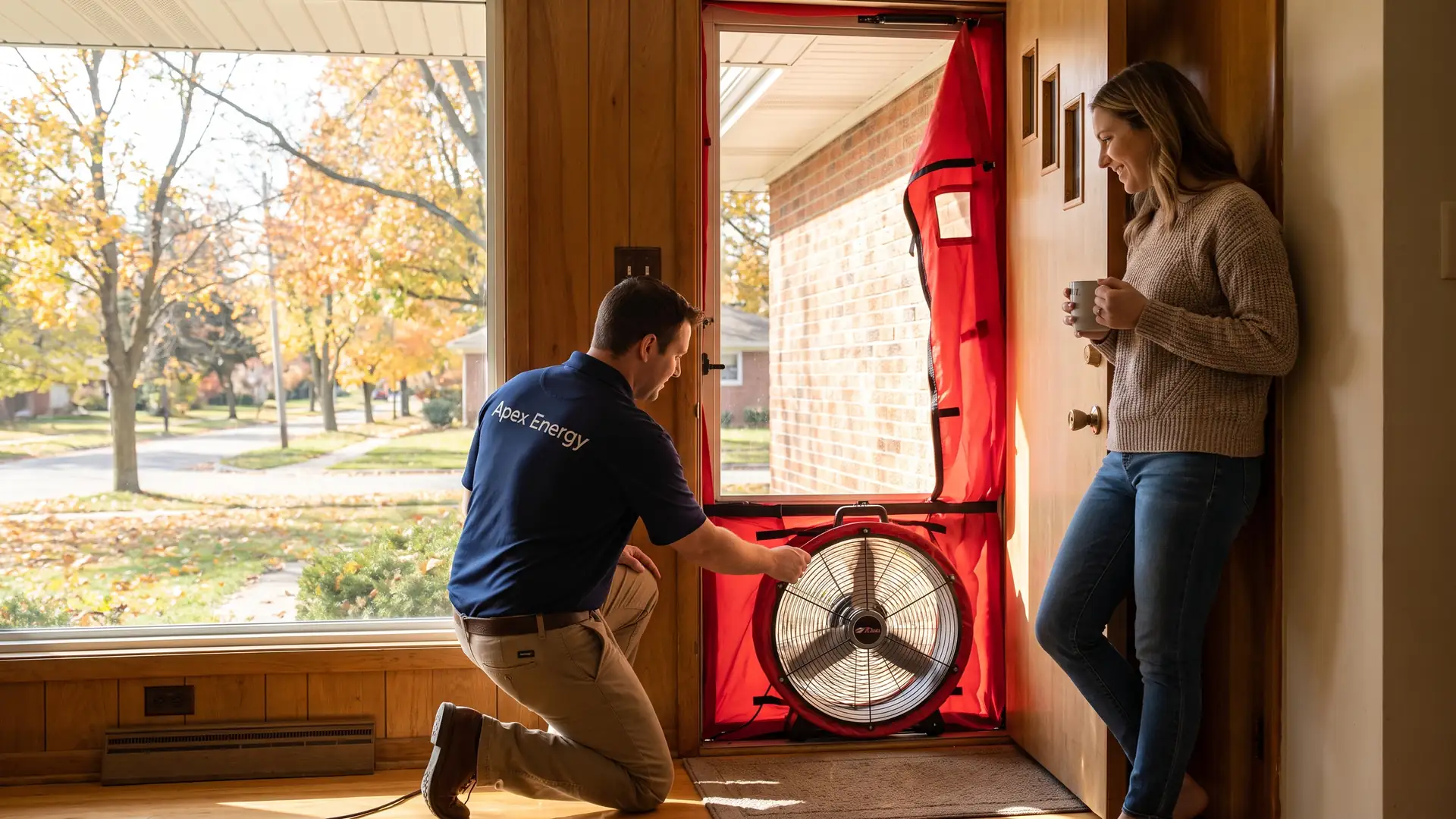
A home energy audit is a professional assessment that measures where your house leaks air and wastes energy, using a blower door test and an infrared camera instead of a walkthrough and a guess. The Department of Energy links the simple fixes an audit turns up to roughly 5% energy savings, rising toward 30% or more when a homeowner completes the full package of recommended improvements.
The report is what makes the visit worth booking: it ranks improvements by cost and expected savings, so you know whether attic air sealing, duct work, or a new furnace deserves your money first. Many utilities subsidize the audit or cover it outright for their own customers, which often makes the assessment the cheapest part of the project.
Learn what a home energy audit includes, what the testing actually finds, which recommendations pay off first, and how to finance the upgrades that follow. If you’re mapping out longer-term projects, start with our Homeownership guide.
Key takeaways:
- An audit measures instead of guessing: A blower door test and infrared imaging locate air leaks and insulation gaps room by room, which is why homes more than 20 years old usually get the most out of one.
- Savings scale with what you actually fix: The Department of Energy ties simple audit-driven fixes to roughly 5% energy savings, rising toward 30% or more once the full recommendation list is finished.
- The priority order is the real product: Air sealing plus added insulation saves an average of 15% on heating and cooling costs by ENERGY STAR’s estimate, and it almost always outranks the window replacement homeowners ask about first.
What is a home energy audit?
A home energy audit is a professional evaluation of how a house uses and loses energy, combining a review of 12 months of utility history with diagnostic testing of the building envelope and the mechanical systems. It ends in a written report that ranks recommended improvements by cost and expected savings.
Auditors are typically certified through the Building Performance Institute (BPI) or the Residential Energy Services Network (RESNET). Ask about the certification before you book. It’s what separates a diagnostic audit from a sales call, because a contractor who “audits” for free and then recommends only the product they install isn’t running the same exercise.
An energy audit is also not a home inspection. An inspection judges condition and safety for a transaction; an audit measures performance and hands you a spending plan. The two documents read differently, which is worth knowing if you’ve only ever seen a home inspection report. Our guide to choosing a home inspector covers that side, and how to evaluate a home’s energy efficiency covers the checks you can run yourself. The Department of Energy’s Home Energy Score shows how a professional assessment rates a home’s efficiency.
What does a home energy audit include?
A full diagnostic audit generally takes a few hours and moves through six stages, with the blower door test as its technical core. Each stage produces something specific.
- Utility bill review: The auditor reads 12 months of gas and electric history to set a baseline and spot the seasonal spikes that point at heating, cooling, or hot water rather than lighting.
- Room-by-room walkthrough: Insulation depth, windows and doors, penetrations at plumbing and wiring, ductwork, the furnace or boiler, the water heater, and major appliances all get inspected and photographed.
- Blower door test: A calibrated fan sealed into an exterior doorway depressurizes the house so the auditor can measure total air leakage as a number, then walk the rooms and find the individual leaks the pressure difference exaggerates.
- Infrared scan: A thermal camera reads surface temperatures across walls and ceilings, showing missing insulation, settled batts, and thermal bridging as cold or warm bands you could never see by eye.
- Combustion safety and ventilation checks: The auditor tests gas appliances for backdrafting and spillage, checks for gas leaks, and confirms the house still gets enough fresh air.
- The written report: Recommendations ranked by cost and expected savings, usually with photos, thermal images, and an estimated payback period on each line item.
Ask two questions before booking. Does the audit include blower door and infrared testing, or is it a visual walkthrough? And does the report come with prioritized recommendations, or just a summary? Those answers separate an audit you can act on from one you’ll file away.
What are the benefits of a home energy audit?
The headline benefit is a lower utility bill, roughly 5% from the easy fixes, 30% or more from the full list, but four other benefits are the reason homeowners say the visit paid for itself.
Lower bills you can trace to a specific fix
An audit converts a vague “our bills are high” into a list of measured problems. That traceability lets you verify results: seal the attic bypasses this fall, then compare next January’s therms against last January’s. How far you land inside the 5% – 30% range depends on the house, the climate, and how much of the list you finish.
A priority order for your renovation budget
The report tells you what to buy first, and that ordering is usually worth more than the audit fee. Homeowners routinely budget for windows when attic air sealing would return more comfort and savings for a fraction of the cost. Our guide to where to start renovating for energy efficiency walks the same sequence from the renovation side.
Comfort problems finally get an explanation
Cold floors over a crawl space, a bedroom above the garage that never warms up, a second story that runs hotter than the first, the blower door and infrared camera usually diagnose all three in one visit. The fix is often air sealing and insulation rather than a bigger furnace, and home automation systems can manage what’s left once the envelope is right.
Health and safety findings a standard inspection skips
Auditors routinely catch combustion appliances backdrafting exhaust into the living space, small gas leaks, and ventilation that stops keeping up once a house has been tightened. Moisture and mold conditions in attics and crawl spaces show up in the same pass, findings homeowners never think to look for, and the reason to test a house before you seal it up.
Efficiency features that hold up at resale
Documented upgrades, dated invoices, before-and-after utility history, the audit report itself, give a listing agent something to market and an appraiser something to reference. Energy features aren’t automatically worth a set dollar adjustment, so keep the paperwork and expect the credit to depend on local comparable sales. Our walkthrough of the home appraisal process explains how appraisers treat improvements like these.
Which audit recommendations pay off first?
In most homes older than 20 years, air sealing and attic insulation top the list and window replacement lands near the bottom. Newer houses built under stricter energy codes start tighter, our look at the impact of new building codes on home purchases explains why, but they leak at the same places. The table shows the priority order auditors work from, in cost tiers rather than fixed prices, because home size and local labor swing the numbers too widely to quote.
| Recommendation | Typical cost tier | Savings impact | Why it ranks there |
|---|---|---|---|
| Air sealing (attic bypasses, rim joists, penetrations) | Low | High | The cheapest savings in most older homes; ENERGY STAR pairs it with insulation for an average 15% cut in heating and cooling costs. |
| Attic insulation brought up to recommended R-value | Low to moderate | High | Heat leaves through the top of the house first. Works properly only after the air sealing is done. |
| Duct sealing and balancing | Low to moderate | Moderate to high | Ducts running through an attic or crawl space deliver air you already paid to heat into unconditioned space. |
| Smart or programmable thermostat and controls | Low | Moderate | Inexpensive to install, but the savings depend entirely on whether the schedule gets used. |
| Furnace, boiler, or water heater replacement | High | Moderate to high | Real savings when the existing unit is old and inefficient, but size the new one after the envelope work, not before. |
| Full window replacement | High | Low to moderate | The upgrade homeowners ask for first and auditors rank last. Weatherstripping, caulking, and storm windows capture much of the benefit for far less. |
Insulation is where most reports point, and our guide to upgrading your home’s insulation covers R-value targets by area and the sequencing that keeps you from insulating over a leak. Rooftop solar sits further down for the same reason: generating power is expensive until you’ve stopped wasting it, which is worth knowing before buying a home with solar panels already installed. For product-level guidance, ENERGY STAR home efficiency recommendations are the reference auditors work from.
On pricing, get quotes rather than estimates. Marketplaces publish typical energy audit and insulation project costs by region, but the only number that matters is what two or three local contractors put in writing for your house.
How do you pay for the upgrades an audit recommends?
Work the funding sources in order, cheapest money first: utility rebates, then any surviving tax incentive, then financing. Once rebates are applied, most homeowners can cover the first tier of recommendations, air sealing, insulation, duct work, without borrowing at all.
- Utility rebates and program incentives: Start here, before you sign a contract. Many utilities discount or fully cover the audit and rebate part of the insulation, air sealing, and HVAC work that follows, and some require preapproval or an authorized contractor, so the order of operations matters.
- Federal tax credits: The federal Energy Efficient Home Improvement Credit covered qualifying improvements, including up to $150 for a qualifying home energy audit, placed in service before December 31, 2025, and does not apply to property placed in service after that date.1 Ask a tax professional what’s actually available for the year you do the work before you budget around a credit.
- Renovation and energy-efficient mortgage options: Some loan programs let qualifying improvements be financed into a purchase or refinance, and a few count projected energy savings when evaluating what you can afford. FHA2 and VA3 both maintain energy-efficient mortgage features, though not every lender offers them.
- Home equity and cash-out refinancing: With enough equity, a cash-out refinance, home equity loan, or line of credit can fund a larger package at mortgage-adjacent rates instead of contractor financing or a credit card.
Which route is cheapest depends on your rate, your equity, and how much of the list you tackle at once, so compare total cost rather than monthly payment. Our overview of energy-efficient home upgrades covers what typically qualifies. Because Align is a broker, we compare renovation and cash-out programs across multiple wholesale lenders instead of pitching one bank’s version.
What Michigan homeowners should know
Michigan’s heating season is long enough that attic air sealing and insulation outrank almost every other recommendation an auditor makes here, and long enough that subsidized assessments are easy to find in this state.
- Your utility probably runs the audit: DTE Energy offers a Home Energy Assessment and Consumers Energy offers a free Home Energy Analysis to residential customers, both paired with rebates for insulation, windows, and heating and cooling equipment. Check your utility’s current program before paying a private auditor full price.
- Those programs exist because state law requires them: Under Michigan’s 2016 energy laws, electric providers must achieve annual energy savings equal to 1% of prior-year retail sales and natural gas providers 0.75%. That mandate funds the free assessments and rebates Michigan utilities advertise.
- Michigan Saves can finance what rebates don’t cover: Michigan Saves is a Lansing-based nonprofit green bank, the first in the country, that arranges financing for home energy improvements through authorized contractors. Rates, terms, and loan amounts vary by lender and creditworthiness, so compare its quote against a home equity option rather than assuming either wins.
Sequence matters more in a cold climate: seal and insulate before you size new heating equipment, or you’ll buy a furnace bigger than the house needs. The rest of the project list lives in our Home Improvement & Design hub.
How Align finances a renovation
You are not just financing the house. You are financing a plan for it. Align places HomeStyle and FHA 203(k) renovation loans, standalone HELOCs and home equity loans, so the project can be paid for the way that fits it, not the way one bank prefers.
Samantha starts with why: what the work is, what it should cost, and whether your equity or a renovation loan is the better tool. Then one application goes to multiple wholesale lenders.
FAQ: Home energy audits
Here are answers to common questions about home energy audits.
What happens during a home energy audit?
An auditor walks the home, reviews a year of utility bills, and inspects insulation, windows, doors, ductwork, and mechanical systems. The technical core is a blower door test, which depressurizes the house to measure air leakage, often paired with an infrared camera that reveals missing insulation and thermal bridges. You receive a written report ranking recommended improvements by cost and expected savings. Appliances get looked at too, and our guide to energy-saving appliances for homeowners covers which replacements are worth doing on their own schedule.
How much does a home energy audit cost?
Prices vary by home size and audit depth, and many utilities offer a subsidized or free version to residential customers. A basic walkthrough assessment is inexpensive; a full diagnostic audit with blower door and infrared testing costs more but produces far more actionable data. Before paying full price, check your utility’s efficiency program, since rebates frequently cover most or all of the fee, and run the free checks in our guide to evaluating a home’s energy efficiency first.
Is a home energy audit worth it?
It’s worth it when you’re about to spend money on efficiency, because it tells you which upgrade to buy first. Homeowners often assume windows are the problem when attic air sealing would deliver more savings for a fraction of the cost. Audits are especially valuable in homes over 20 years old, homes with uneven room temperatures, and homes with unexplained utility bill spikes, and smart home devices for energy savings make it easier to confirm the fixes worked.
Can energy-efficient improvements be financed into a mortgage?
Yes. Energy-efficient mortgage options and renovation loan programs allow qualifying improvements to be financed into a purchase or refinance loan, and some programs count projected utility savings when evaluating what you can afford. Home equity loans and lines of credit are another route for homeowners with equity. It’s the same financing toolkit buyers use on a fixer-upper, which our guide to the advantages of buying a fixer-upper covers in detail. Compare rates and total cost across options before committing to any one path.
The bottom line on home energy audits
A home energy audit measures where your house leaks air and wastes energy using a blower door test and an infrared camera, then hands you a report ranking the fixes by cost and expected savings. The Department of Energy links the simple fixes to roughly 5% energy savings, rising toward 30% or more once the full recommendation list is done. The priority order is what you’re paying for: air sealing and attic insulation almost always beat window replacement, and ENERGY STAR estimates the pair saves an average of 15% on heating and cooling costs. In Michigan, check DTE or Consumers Energy first. The assessment may cost you nothing.
If you’re ready to finance the upgrades your audit recommends, talk to Align Lending, we’ll shop renovation, cash-out, and home equity options across our lender network and show you the total cost of each side by side. Call 248-506-5727 or start online today.
Footnotes:
1. The Energy Efficient Home Improvement Credit under Internal Revenue Code Section 25C applied to qualifying property placed in service on or after January 1, 2023 and before December 31, 2025, with a maximum of $150 per year for a qualifying home energy audit. Tax law and eligibility rules change; this is not tax advice, and you should consult a qualified tax professional about your situation. Return to text.
2. Align Lending is not acting on behalf of or at the direction of FHA or HUD. FHA Energy Efficient Mortgage requirements and limits are set by HUD and are subject to change; not all lenders in Align’s network offer the program. Return to text.
3. Align Lending works with VA-approved lenders and is not endorsed or sponsored by the Dept. of Veterans Affairs or any government agency. VA Energy Efficient Mortgage limits and conditions are set by the Department of Veterans Affairs and are subject to change. Return to text.
Sources: audit-driven savings of roughly 5% for simple fixes rising toward 30% with full implementation, U.S. Department of Energy, Energy Saver: Home Energy Audits. Air sealing and insulation savings estimate (an average of 15% on heating and cooling costs), U.S. Environmental Protection Agency / ENERGY STAR. Energy Efficient Home Improvement Credit dates and the $150 home energy audit maximum, Internal Revenue Service. Auditor certifications, Building Performance Institute and Residential Energy Services Network. Michigan energy waste reduction targets of 1% (electric) and 0.75% (natural gas) under 2016 PA 342, Michigan Public Service Commission. Home Energy Assessment and Home Energy Analysis program descriptions, DTE Energy and Consumers Energy. Nonprofit green bank status and authorized-contractor financing model, Michigan Saves.
This article is for informational purposes only and is not intended to provide legal, financial, or tax advice. Rebate availability, utility program terms, and tax incentives change; confirm current terms with the administering agency, your utility, or a qualified tax professional. Cost tiers and savings ranges shown are illustrative, are not a rate quote or an offer of credit, and are subject to change. Align Lending is an independent Michigan mortgage broker, NMLS #2041154.
Related resources

12-minute read
Energy-efficient home upgrades: What to do first, and what it saves
See which energy-efficient home upgrades pay off first, from air sealing and insulation to heat pumps and solar, with real costs and yearly savings.

12-minute read
DIY home renovation projects: 12 upgrades you can actually finish
Discover DIY home renovation projects that upgrade your space on a budget, from peel-and-stick backsplashes to floating shelves and smart lighting.

12-minute read
Home renovation permits: What you need and what they cost
Find out which home renovation permits you need, how the application and inspection process works, and what happens when unpermitted work shows up at resale.
3-minute read
The Ultimate Connoisseur’s Guide to Buying a Historic Home: Where Heritage Meets Modern Living
Learn how to buy a historic home, including mortgage options and preservation tips. Start your journey today!
