
Energy-efficient home upgrades in Michigan: What to do first, and how to pay for it
The most cost-effective order for energy-efficient home upgrades is envelope first, equipment second, generation third: seal air leaks and insulate the attic, then replace heating, cooling and water heating, then look at solar. ENERGY STAR estimates that sealing air leaks and adding attic insulation saves up to 10% on annual energy bills, and the sequence matters, because a tighter house needs smaller, cheaper equipment than a leaky one.
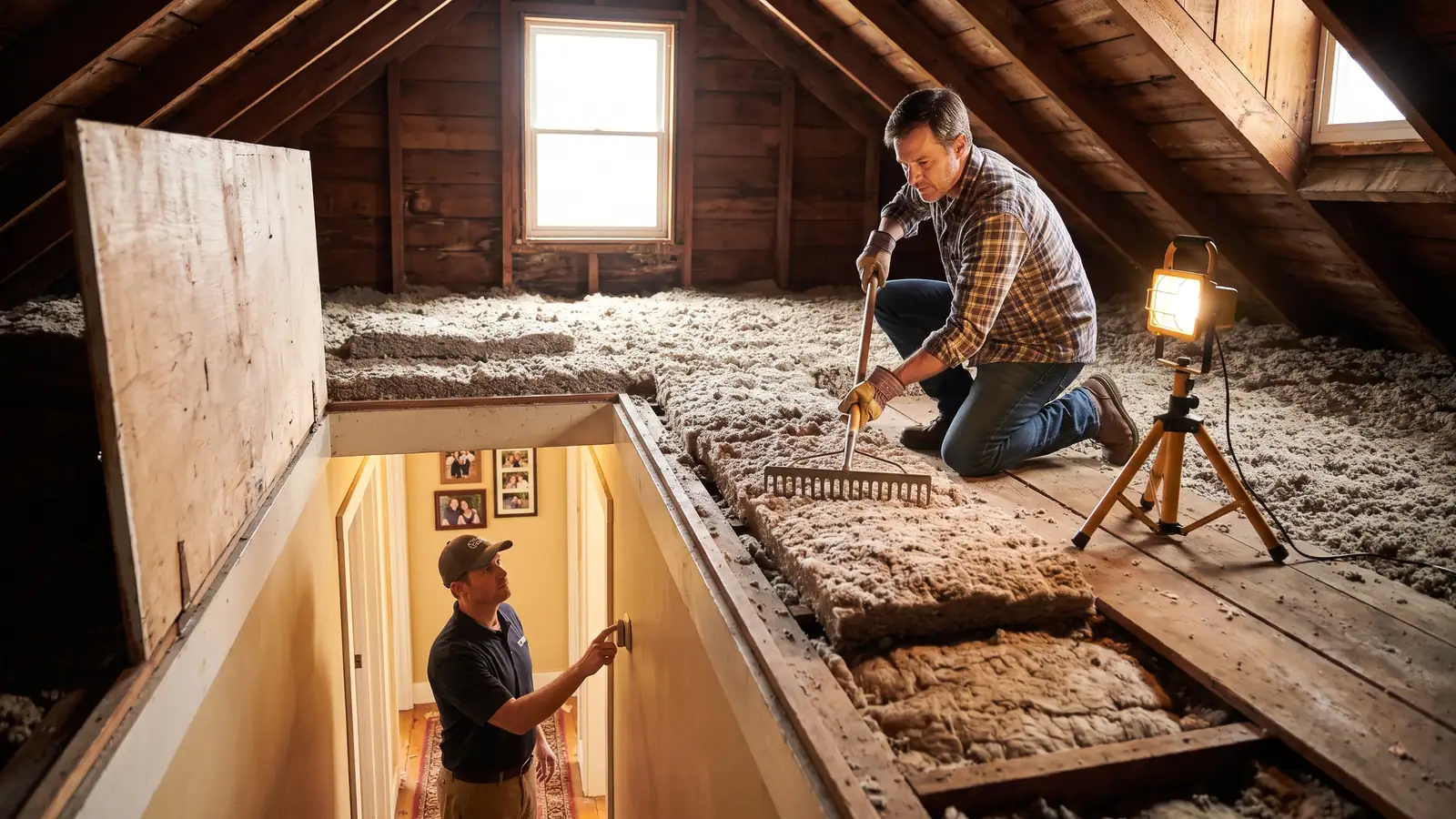
Skipping to the expensive end is the common mistake. Fannie Mae estimates households waste $200 to $400 a year on drafts and outdated systems alone, money a weekend of caulk starts recovering immediately.
Learn how to prioritize energy-efficient upgrades in a Michigan home, what each project costs and saves, and how to pay for the big ones now that the federal tax credits have ended. Our Homeownership guide covers the wider picture.
Key takeaways:
- Sequence beats spend: Air sealing and attic insulation are the cheapest measures available, cut annual energy bills by up to 10%, and shrink the heating and cooling system you buy next.
- Equipment is where the dollars live: Heating and cooling take almost half of the average household’s annual energy bill, more than $900, and a heat pump water heater alone saves a household of four about $550 a year.
- Glass and solar come last: Replacement windows commonly run $300 to $1,000 or more per opening against an average 12% bill reduction, so weigh windows and solar only after the envelope is tight.
Step 1: Where is your home losing energy?
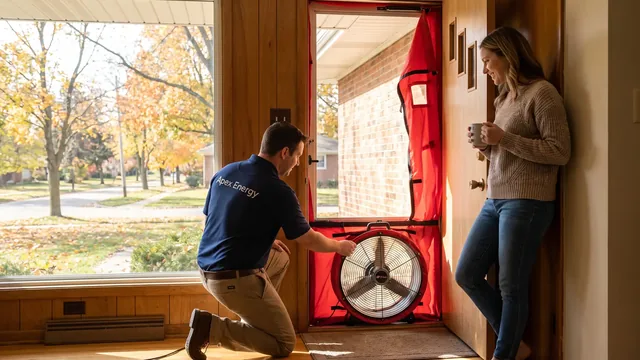
You can’t sequence upgrades you haven’t measured. A professional energy assessment with a blower door test, a fan mounted in an exterior door that depressurizes the house and measures how leaky it is, turns guesswork into a ranked punch list in about two hours. Auditors pair it with an infrared camera that shows cold air tracking through wall cavities, recessed lights and plumbing chases. Those hidden bypasses matter more than the drafty window you can feel, because they leak around the clock.
Three findings drive most upgrade plans:
- Attic bypasses and insulation depth: Where warm air escapes into the attic, and how much insulation sits above the ceiling. Almost always the first fix.
- Duct leakage: Ducts running through unconditioned attics, crawl spaces or garages deliver conditioned air to places nobody lives.
- Equipment age: The age and rated efficiency of the furnace, air conditioner and water heater, which tells you what’s near end of life.
Read our guide to the benefits of a home energy audit first. Some utilities subsidize assessments, so ask yours before paying retail.
Step 2: How much do air sealing and insulation actually save?
Up to 10% of your annual energy bill, according to ENERGY STAR’s Seal and Insulate guidance, which call sealing and insulating the most cost-effective way to improve efficiency and comfort. The second benefit is harder to see on a bill: a tight house has a smaller load, so the equipment you buy in Step 3 can be smaller and cheaper.
Air sealing comes first, insulation second. Insulation slows heat transfer but does almost nothing to stop moving air, so blowing cellulose over unsealed bypasses insulates around the problem instead of fixing it. Where the work happens, in priority order:
- Attic plane: Seal every ceiling penetration, wire and pipe chases, bath fans, chimney chases, recessed lights, then add insulation depth.
- Rim joists: The wood band atop the foundation wall is a classic leak path and takes rigid or spray foam well.
- Ductwork: Mastic and foil tape on accessible joints, especially where ducts leave conditioned space.
- Doors and windows: Weatherstripping and door sweeps are the cheapest items in the project and the easiest to DIY.
Envelope work never shows up in listing photos, which is why homeowners underspend on it.
Does a tighter house need a ventilation check?
Yes, and the U.S. Department of Energy treats the two as one job. Its Consumer Guide to Air Sealing the Home (2021) says air sealing and ventilation “go hand in hand”: the first step is working out how much fresh air the house needs for healthy indoor air and to vent combustion appliances such as stoves, ovens, fuel-burning furnaces and fireplaces. Starved of oxygen, the guide warns, those appliances may release carbon monoxide into the home, one reason it recommends a professional home energy auditor or certified HVAC contractor.
The same DOE guide maps at least 19 key areas where air sealing improves efficiency, comfort and building durability. DOE’s Energy Saver Guide (2022 edition) reports that sealing uncontrolled air leaks can save 10% to 20% on heating and cooling bills. That measures heating and cooling bills only, a narrower base than ENERGY STAR’s whole annual energy bill in Step 2.
Moisture is the other check. The EPA’s Care for Your Air guide (last updated August 17, 2026) recommends keeping indoor humidity between 30 and 50 percent and names improperly vented fuel-burning appliances, such as water heaters, dryers and fireplaces, as the major source of combustion pollutants in homes. Our guide to winterizing your home covers the cold-weather checks that go with a sealing project.
Step 3: Which heating, cooling and water heating upgrades pay off?
Heat pumps, for space and water heating, are the two highest-impact equipment upgrades in most homes, heating and cooling already take almost half of the average household’s annual energy bill, more than $900 a year by ENERGY STAR’s estimate. Equipment is also the most expensive place to guess wrong, which is why it belongs after the envelope.
Heat pumps for heating and cooling
A heat pump moves heat rather than generating it, so it can deliver more heat energy than the electricity it consumes. One machine does both jobs, replacing the furnace and air conditioner in one purchase. Much of the value when both are near end of life.
Whether it saves money depends mostly on the ratio between your electricity and natural gas prices. Ask for a load calculation performed after your sealing and insulation work; an oversized system costs more and dehumidifies poorly in summer.
Heat pump water heaters
This is the clearest arithmetic on the list. ENERGY STAR estimates a certified heat pump water heater saves about $550 a year for a household of four versus a conventional electric unit; home-performance analyses cite figures closer to $350 for smaller households. One constraint: it cools the room it sits in, a summer bonus, a winter tradeoff.
Controls and distribution
A smart thermostat is the cheapest equipment-side upgrade, but the savings come from the setbacks, not the hardware, one left at a single temperature saves nothing. Pair it with duct sealing, which is priced per system and pays back fast on leaky runs. Our guides to home automation systems cover what’s worth wiring in and what’s a gadget.
How do heat pumps and heat pump water heaters perform in a Michigan winter?
ENERGY STAR’s air source heat pump page says cold-climate certification requires third-party verified performance at low temperatures, with units tested down to 5°F. A cold-climate unit keeps working below 5°F, but ENERGY STAR advises pairing it with a back-up energy source for even colder stretches. In a heating-dominated state, that is the practical case for keeping a furnace in the plan.
ENERGY STAR’s heat pump water heater page notes they generally run less efficiently in colder spaces, and that in colder environments with colder incoming water a unit may switch temporarily to a back-up standard electric mode in the colder months, which raises energy use for those months. DOE’s Energy Saver Guide (2022 edition), citing energystar.gov, reports that a certified heat pump water heater uses 70% less electricity than a standard electric model to make the same hot water.
The case for doing the envelope first shows up in DOE’s own numbers. According to the Energy Saver Guide, new efficient heating or cooling equipment alone can reduce energy use by 20% or more, while combining a new system with recommended insulation, air sealing and thermostat settings can cut heating and cooling bills by about 30%. Our seasonal home maintenance checklist keeps the equipment checkups on a calendar.
Step 4: Are new windows and doors worth the cost?
For energy savings alone, usually not. ENERGY STAR estimates that replacing old, drafty windows with certified windows lowers household energy bills by an average of 12%, but whole-house replacement commonly runs $300 to $1,000 or more per opening, which can stretch simple payback past 20 years.
That doesn’t make windows a bad project. It makes them a replacement project rather than an efficiency project. Windows earn their cost when the existing units are single-pane, rotting, fogged or painted shut. At which point you’re buying comfort and curb appeal, and the energy savings are a bonus. Cheaper options capture part of the benefit:
- Storm windows and interior inserts: Add a second glazing layer at a fraction of replacement cost, and they’re removable.
- Weatherstripping and sash locks: A locked, weatherstripped double-hung seals far better than an unlocked one, and the lock is free.
- Cellular shades and exterior shading: Cut winter heat loss and summer solar gain on the worst-oriented glass.
When replacement is right, our guide to choosing energy-efficient windows covers U-factor, solar heat gain coefficient and frame materials. If you’re adding glass rather than replacing it, weigh the pros and cons of installing a skylight first. A skylight is a hole in the best-insulated surface in the house.
Step 5: When does solar make sense?
Solar makes sense last, after the envelope is tight, because every kilowatt-hour you stop wasting is a kilowatt-hour of panels you don’t have to buy. Residential systems commonly run $15,000 to $30,000 installed before incentives. Large enough that sizing should be done on a reduced load. Four conditions drive whether it pencils out:
- Roof age: If the roof needs replacement within about a decade, do the roof first. Removing and reinstalling an array later is an avoidable cost.
- Shading and usable area: Trees and dormers take a real bite out of production, so a quote should include a shading analysis, not a rule of thumb.
- How your utility credits exported power: What you’re paid for electricity sent back to the grid drives the whole payback calculation, and those tariffs change.
- How long you plan to stay: If a move is likely inside a few years, the payback belongs to the next owner.
Check the incentive picture before you model any savings. The IRS states the residential clean energy credit, the 30% federal credit widely cited for solar, is not available for property placed in service after December 31, 2025, and the separate energy efficient home improvement credit applied to property placed in service before that same date. Don’t build a federal credit into your math; confirm current rules with a tax professional. Our guides to buying a home with solar panels cover ownership versus leasing, which matters enormously at resale.
Energy-efficient upgrades at a glance: cost, savings and payback
Simple payback is one division problem: installed cost divided by annual savings. Run it on every quote, the ranking below shifts with your utility rates and your home’s condition.
| Upgrade | Typical cost range | Estimated annual savings | Payback profile |
|---|---|---|---|
| Air sealing | Cheap for DIY; pro jobs priced per house | Counted with attic insulation | Fastest on the list |
| Attic insulation | $1,500 to $3,000 | Up to 10% of the annual bill, with air sealing | Fast to moderate |
| Smart thermostat | $150 to $300 plus install | Largest when the house sits empty on weekdays | Short, if you use setbacks |
| Heat pump (space) | $4,000 to $8,000; more for cold-climate units | Tracks your electricity-to-gas price ratio | Moderate; better when it replaces furnace and AC |
| Heat pump water heater | Priced per install | About $550 for a household of four | Short to moderate |
| ENERGY STAR windows | $300 to $1,000+ per opening | About 12% average bill reduction | Long, often past 20 years |
| Solar | $15,000 to $30,000 before incentives | Site-specific: roof, shading, usage, utility credits | Long; depends on how long you stay |
These are contractor ranges, not quotes, typical insulation and HVAC project costs vary by home size and region. Get three local bids first.
Here’s the math. Say your energy bills total $2,400 a year and an attic sealing-and-insulation package quotes at $2,200. At ENERGY STAR’s up-to-10% result, that’s $240 a year, roughly a nine-year simple payback on energy alone.1 Two things make the real return better: the comfort arrives the first winter, and Consumer Reports has reported that envelope work can cut a later heat pump project’s cost by about $3,700 by allowing a smaller system. The cheap job pays for part of the expensive one.
What do electricity and natural gas cost in Michigan?
Michigan households pay more than average for electricity and less for natural gas, the ratio Step 3 says drives heat pump savings. According to the U.S. Energy Information Administration’s Electric Power Monthly, Table 5.6.A (released October 23, 2026), the average residential electricity price in Michigan was 22.99 cents per kilowatthour in August 2026, against a U.S. average of 18.16 cents. EIA’s annual natural gas price table (released September 30, 2026) puts Michigan’s average residential natural gas price at $10.92 per thousand cubic feet in 2025, against $15.34 for the United States.
| Residential price | Michigan | United States | Period |
|---|---|---|---|
| Electricity, cents per kWh | 22.99 | 18.16 | August 2026 (preliminary) |
| Electricity, cents per kWh | 20.73 | 17.57 | August 2025 |
| Natural gas, $ per thousand cubic feet | $10.92 | $15.34 | 2025 |
| Natural gas, $ per thousand cubic feet | $10.76 | $14.50 | 2024 |
Sources: U.S. Energy Information Administration, Electric Power Monthly Table 5.6.A (released October 23, 2026; 2026 values preliminary) and Average Price of Natural Gas Delivered to Residential Consumers, annual (released September 30, 2026).
Pricier electricity and cheaper gas than the national average make the operating-cost comparison between a heat pump and a gas furnace tighter in Michigan, so ask an installer to model your own bills at your utility’s current rates rather than national averages.
How do you pay for a big efficiency project?
Small envelope work usually comes out of cash or a contractor payment plan. Once a project passes the cost of a new HVAC system, four options open up.
- Cash-out refinance: Replaces your mortgage with a larger one and returns the difference in cash. Best when the new loan’s terms genuinely work for you, since you’re re-pricing the whole mortgage.
- Home equity loan or line of credit: Borrows against equity separately and leaves your first mortgage alone. Often better when your current mortgage has terms worth keeping.
- Renovation financing: Some programs finance a purchase or refinance based on the home’s value after improvements.
- Utility rebates and Michigan Saves: Get the rebate in writing before the equipment is ordered. Michigan Saves arranges home energy loans through Michigan credit unions; the payment counts in your debt-to-income ratio when you later apply for a mortgage.
Because Align Lending is a broker rather than a direct lender, we can place cash-out, home equity and renovation scenarios across a network of wholesale lenders and show you what each prices out at, the terms belong to the lender, not to us.2 If you’re weighing a house that needs the work, our guide to the advantages of buying a fixer-upper covers underwriting the project alongside the purchase. This work typically requires permits, and the impact of new building codes on home purchases explains why documented work matters later. More guidance lives in our Home Improvement & Design hub.
Which loan programs can include energy improvements?
Several mortgage programs build energy work into the loan itself, each with rules set by the agency behind it. Align Lending is not affiliated with HUD, FHA, Fannie Mae or Freddie Mac.
- Fannie Mae HomeStyle Renovation: Fannie Mae’s Selling Guide section B5-3.2-01 (dated December 10, 2025) lets a borrower buy or refinance and include funds in the loan amount for “repairs, remodeling, renovations, or energy improvements,” and requires the work to be completed no later than 15 months from the date the loan closes.
- Freddie Mac GreenCHOICE: Freddie Mac’s GreenCHOICE Mortgages page caps energy financing at 15% of the property’s “as completed” value. Its list of basic improvements includes programmable thermostats, caulking or weather stripping, ceiling, wall or floor insulation, air sealing, heating or air conditioning replacement to high efficiency, efficient water heaters, and replacement windows and doors.
- FHA 203(k): HUD’s 203(k) program types page says the Limited 203(k) lets buyers and owners finance up to $75,000 into the mortgage to repair, improve or upgrade the home, while the Standard 203(k) requires rehabilitation costs of at least $5,000 and supports major renovations.
- Home equity line of credit: The CFPB’s HELOC explainer (last reviewed August 28, 2026) notes that HELOCs usually have adjustable interest rates and a payment that varies with the outstanding balance.
Hypothetical example, not an offer. Suppose an assessment recommends attic air sealing, added ceiling insulation and a high-efficiency furnace replacement, quoted at $6,200 together. Each item is on Freddie Mac’s basic list and the total is at or under $6,500, so under the rules on Freddie Mac’s GreenCHOICE page the loan would not need a separate energy report. Add a $3,000 window package and the $9,200 project would need one: a Home Energy Rating System (HERS) report, a Department of Energy Home Energy Score report, or a comparable rating report or audit.
Our guides to renovation loans, FHA 203(k) loans, home equity lines of credit and loans and cash-out refinancing cover how each one works; financing home renovations covers smaller jobs.
What Michigan homeowners should know
Michigan is a heating-dominated climate, which shifts the ranking above in one way: the attic is worth even more here than national averages suggest, and cooling upgrades matter less than they would in the South. Warm air rises, and in a cold-winter state it spends six months trying to leave through your ceiling.
- Insulate to the cold-climate target: ENERGY STAR’s guidance for the northern zones that include Michigan is R-60 in an uninsulated attic, and adding roughly R-49 where only 3 to 4 inches of old insulation remains. Measure your depth with a ruler first.
- Ice dams are an insulation problem, not a gutter problem: Heat escaping into the attic melts snow on the roof deck, the meltwater refreezes at the cold eave, and the dam pushes water under the shingles. Sealing and insulation fix the cause; heat cables manage the symptom.
- Size cold-climate heat pumps on the improved load: Ask for rated heating capacity at your local design temperature, not just at 47 degrees, and run the load calculation after the envelope work. That $3,700 Consumer Reports saving only exists if you sequence correctly.
Check your utility’s current rebate list before signing a contract. DTE Energy and Consumers Energy both pay rebates on insulation, heating and cooling equipment and water heaters through participating contractors, and both run programs for income-qualified households (DTE’s Energy Efficiency Assistance, Consumers Energy’s Helping Neighbors). Amounts reset periodically, Consumers Energy’s rebates are first come, first served, and rebates are claimed around installation, not at tax time.
Which Michigan MiHER rebate pathway fits each upgrade?
MiHER, the Michigan Home Energy Rebates program run by the Michigan Department of Environment, Great Lakes, and Energy (EGLE), splits the upgrades on this page into two pathways, per EGLE’s August 20, 2026 program update. Insulation, air sealing and a new furnace, air conditioner or heat pump can fall under the whole-home pathway (HOMES), where the rebate follows the project’s modeled energy savings rather than a fixed amount per item. A heat pump water heater, an electric stove or an electrical wiring upgrade belongs to the electrification pathway (HEAR), which EGLE limits to households at or below 150% of Area Median Income.
The process starts with a contractor’s home assessment; our guide to the benefits of a home energy audit walks through how MiHER’s assessment and contractor steps work. One caution dated to that August 20, 2026 update: EGLE reported a temporary pause on new single-family approvals in the Detroit district as it neared its funding cap.
The federal ceilings behind the program are on the U.S. Department of Energy’s Home Energy Rebates Programs page: HOMES rebates of up to $8,000 for projects with modeled savings of at least 20%, and up to $14,000 under the electrification and appliance program, which DOE’s page calls HEEHR. Utility programs sit alongside the state one; Consumers Energy’s rebates page, for example, lists heating and cooling, insulation and windows, and water heating rebates plus a free home energy analysis, and DTE Energy runs an appliance recycling program for old refrigerators and freezers.
What should Michigan homeowners check before hiring an energy contractor?
- A state license for the trade: LARA’s Helpful Information for Homeowners page says contractors offering work that totals $600 or more in labor and materials must be licensed by the Department of Licensing and Regulatory Affairs. Under MCL 339.2404, a residential maintenance and alteration contractor’s license covers listed crafts and trades, including insulation work, roofing, siding and gutters, and screen or storm sash installation, and the license specifies the trade the holder is qualified for.
- Permits named in the contract: The same LARA homeowner page recommends a contract statement that all required building permits and variances will be obtained by the contractor before work begins.
- Lead-safe work in older homes: For work on a home built before 1978, the EPA’s Renovation, Repair and Painting program page (last updated June 17, 2026) requires anyone paid to disturb painted surfaces to be certified and their employees trained in lead-safe work practices.
- Time to cancel a door-to-door deal: LARA’s homeowner guidance says that if you were solicited and signed the contract in your home, you have three days to cancel and must send the contractor a registered letter. Federally, the FTC’s Cooling-Off Rule, 16 CFR Part 429 gives buyers until midnight of the third business day to cancel most door-to-door sales of $25 or more.
How Align finances a renovation
You are not just financing the house. You are financing a plan for it. Align places HomeStyle and FHA 203(k) renovation loans, standalone HELOCs and home equity loans, so the project can be paid for the way that fits it, not the way one bank prefers.
Samantha starts with why: what the work is, what it should cost, and whether your equity or a renovation loan is the better tool. Then one application goes to multiple wholesale lenders.
FAQ: Energy-efficient home upgrades
Here are answers to common questions about energy-efficient home upgrades.
Which energy-efficient upgrade should I do first?
Air sealing and attic insulation. They’re the lowest-cost measures available, the comfort improvement shows up in the first cold week, and they shrink the load so later equipment can be smaller. A blower door test shows exactly where the house leaks, which keeps you from insulating around a problem instead of fixing it. Our guide to evaluating a home’s energy efficiency covers what to check yourself.
Is a heat pump worth it in a cold climate?
Often, yes. Modern cold-climate heat pumps hold useful efficiency well below freezing, and many homes pair one with a backup furnace for the coldest stretches. The economics turn on your electricity-to-gas price ratio and on whether you also gain air conditioning you didn’t have. Tighten the envelope first so the installer sizes to the improved load, see how to upgrade your home’s HVAC system.
Are new windows worth the cost for energy savings?
On energy savings alone, rarely. ENERGY STAR certified windows cut household bills by an average of 12%, but replacement often runs $300 to $1,000 or more per opening, so payback can stretch past 20 years. Windows make more sense when the existing units are failing, rotting or single-pane. If the goal is purely energy, sealing and insulation return far more per dollar, several appear on our list of DIY home renovation projects.
Do energy-efficient upgrades increase home value?
Documented, permanent upgrades, insulation, high-efficiency HVAC, owned solar, new windows, support appraised value and can shorten time on market, especially with utility bill history to show. Leased solar is different and can complicate a sale or refinance, because the lease has to be assumed or bought out. Keep invoices and permits for the appraiser; the home appraisal process explains what documentation gets credited.
Do I need a permit to install a heat pump or new furnace in Michigan?
Usually, yes. LARA’s mechanical permit page says that, except for replacing minor parts, mechanical work may not start until the enforcing agency issues a permit. Mechanical contractors pull permits for work they do for an owner. An owner who occupies a single-family home may do the work without a license but must still secure the permit. Portable heating and cooling units and small window air conditioners are exempt.
Do energy upgrades raise my property taxes in Michigan?
Many routine ones do not until the home sells. Under MCL 211.27(2), an assessor may not count value added by normal repairs, replacement and maintenance on residential property until a sale. The list includes insulating or weatherstripping, replacing storm windows or doors, replacing a furnace with a new furnace of the same type, replacing an automatic water heater, and certain alternative energy systems up to 150 kilowatts. Our guide to home improvements and property taxes covers the rest.
How much can turning down the thermostat save?
DOE’s Energy Saver Guide (2022 edition) says turning the thermostat down 7 to 10 degrees Fahrenheit for 8 hours a day in fall and winter can save as much as 10% a year on heating and cooling. Its heating and cooling guide (2021) puts it at about 1% of the heating bill for each degree set back over an eight-hour period. With a heat pump, DOE advises using a smart or programmable thermostat designed for heat pumps.
Should a professional seal my ductwork?
For anything beyond taping accessible joints, the U.S. Department of Energy says yes. Its Energy Saver Guide (2022 edition) advises hiring a qualified professional to perform changes and repairs to a duct system, and says all duct sealing should be tested by a qualified professional to ensure combustion safety and proper air flow. Ducts that run outside conditioned space should also be insulated, according to the same guide.
The bottom line on energy-efficient home upgrades
Energy-efficient home upgrades pay off in a specific order: envelope first, equipment second, generation third. Seal air leaks and insulate the attic, ENERGY STAR puts that at up to 10% off your annual energy bills, and it shrinks the system you buy next. Then address heating, cooling and water heating, where almost half of the average household’s energy bill already goes. Windows and solar come last, judged against how long you’ll stay. Run simple payback on every quote and confirm rebates in writing first.
If you’re ready to finance a larger efficiency project, talk to Align Lending. We’ll shop your scenario across our lender network, compare cash-out, home equity and renovation options, and show you the numbers side by side. Call 248-506-5727 or start online.
Footnotes:
1. Example figures are hypothetical and for educational purposes only; they do not constitute an advertisement of credit terms or a rate quote under federal or state lending laws. Actual project costs, energy savings, and payback periods depend on your home, your utility rates, your contractor’s pricing, and how the work is performed. Return to text.
2. Loan program terms, eligibility, and pricing are set by the individual wholesale lenders in Align Lending’s network, not by Align Lending, and are subject to change. Availability of cash-out, home equity, and renovation financing depends on your application, your equity, the property, and lender guidelines. Return to text.
Sources: attic air sealing and insulation savings of up to 10% on annual energy bills, ENERGY STAR Home Upgrade. Certified windows lowering household energy bills by an average of 12% when replacing old, drafty windows, ENERGY STAR. Heat pump water heater savings of about $550 per year for a household of four versus a conventional electric water heater, ENERGY STAR. Heating and cooling accounting for almost half of the average American household’s annual energy bill, more than $900 per year, ENERGY STAR. Recommended attic insulation of R-60 for uninsulated attics and roughly R-49 added over 3 to 4 inches of existing insulation in the northern climate zones, ENERGY STAR insulation R-value guidance. Estimated $200 to $400 wasted annually on drafts and outdated systems, Fannie Mae. Envelope improvements reducing a heat pump project’s cost by about $3,700, Consumer Reports. Heat pump water heater savings of up to $350 per year for smaller households, Sealed home performance analysis. Residential clean energy credit unavailable for property placed in service after December 31, 2025, and energy efficient home improvement credit applying to property placed in service before December 31, 2025, Internal Revenue Service. Project cost ranges are typical contractor ranges compiled from home-improvement cost sources and are not quotes.
An EV charger is an electrical-capacity project as much as an efficiency one, and the panel assessment usually decides the cost.
This article is for informational purposes only and is not intended to provide legal, financial, or tax advice. Tax credit and rebate rules change and are administered by federal, state, and utility programs, consult a qualified tax professional about your situation before relying on any incentive. Energy savings estimates are averages and are not a prediction of your results. Program terms and figures shown are illustrative, are not a rate quote or an offer of credit, and are subject to change. Align Lending is an independent Michigan mortgage broker, NMLS #2041154.
Sources
Every outside source this guide links to, in the order it appears. How we choose and check sources
- ENERGY STAR estimates that sealing air leaks and adding attic insulation saves up to 10% on annual energy billsENERGY STAR
- Consumer Guide to Air Sealing the HomeU.S. Department of Energy
- Energy Saver GuideU.S. Department of Energy
- Care for Your Air guideU.S. Environmental Protection Agency
- ENERGY STAR’s estimateENERGY STAR
- Heat pump water heater pageENERGY STAR
- The IRS states the residential clean energy creditInternal Revenue Service
- Energy efficient home improvement credit applied to property placed in service before that same dateInternal Revenue Service
- Electric Power Monthly, Table 5.6.Aeia.gov
- Annual natural gas price tableeia.gov
- Selling Guide section B5-3.2-01Fannie Mae Selling Guide
- GreenCHOICE Mortgages pageFreddie Mac
- 203(k) program types pageU.S. Department of Housing and Urban Development
- HELOC explainerConsumer Financial Protection Bureau
- DTE Energydteenergy.com
- Consumers Energyconsumersenergy.com
- August 20, 2026 program updateState of Michigan
- Home Energy Rebates Programs pageU.S. Department of Energy
- Consumers Energy’s rebates pageconsumersenergy.com
- Appliance recycling programdteenergy.com
- Helpful Information for HomeownersState of Michigan
- MCL 339.2404Michigan Legislature
- Renovation, Repair and Painting program pageU.S. Environmental Protection Agency
- Cooling-Off Rule, 16 CFR Part 429Electronic Code of Federal Regulations
- Mechanical permit pageState of Michigan
- MCL 211.27(2)Michigan Legislature
- Heating and cooling guideU.S. Department of Energy
Related resources

20-minute read
DIY home renovation projects: 12 upgrades you can actually finish
Discover DIY home renovation projects that upgrade your space on a budget, from peel-and-stick backsplashes to floating shelves and smart lighting.
20-minute read
The benefits of a home energy audit and what it includes
Learn what a home energy audit finds, how blower door and infrared tests work, and why the Department of Energy ties audits to 5% to 30% savings.

20-minute read
Home renovation permits: What you need and what they cost
Find out which renovation permits you need, how the application and inspection process works, and what happens when unpermitted work shows up at resale.
4-minute read
Managing home repairs during escrow: A buyer’s guide
Learn how to manage home repairs during escrow, from repair negotiations to 150% escrow holdbacks, so your closing stays on track and your funds protected.
Also worth reading
- How to install a home EV charger: Costs, permits and stepsSee what home EV charger installation involves, from Level 2 wiring and panel capacity to permits and typical costs, so you can plug in safely at home.
