
How to buy a foreclosed home: A step-by-step guide
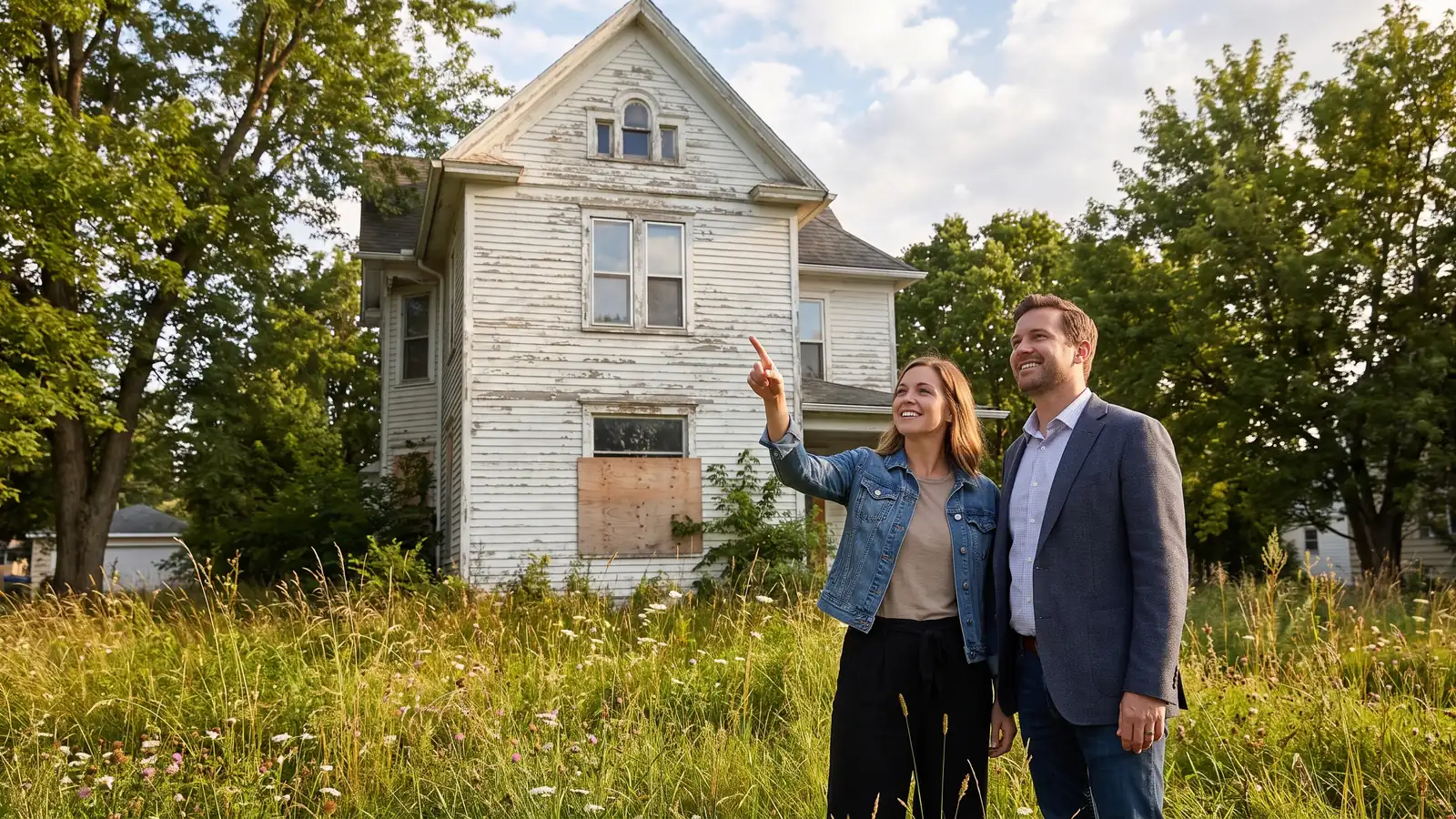
To buy a foreclosed home, get preapproved for financing, hire an agent experienced with distressed properties, and choose your purchase route: a pre-foreclosure sale, a public auction (which usually requires cash), or a bank-owned (REO) listing that works much like a traditional purchase. Expect to submit an earnest money deposit of 1% – 3% with your offer and to buy the property as-is, so budget for repairs, back taxes and possible title issues.
REO and HUD homes are the most beginner-friendly paths because they allow inspections and mortgage financing. Learn more about how to buy a foreclosed home, including which of the four purchase routes matches your financing, what to verify before you write an offer, and how Michigan’s redemption period changes your timeline.
Key takeaways:
- 4 purchase routes: Foreclosed homes are sold through pre-foreclosure, auction, bank-owned (REO) and HUD listings, and auctions typically demand cash with no inspection opportunity.
- As-is is the real risk: Budget for repairs, unpaid liens and back taxes on top of the discounted price, plus a reserve of at least 10% of your repair estimate.
- Plan on 1% – 3% up front: An earnest money deposit of that size accompanies your offer and applies toward your down payment and closing costs if the deal completes.
What is a foreclosed home?
A foreclosed home is a property the lender has taken back after the borrower stopped making mortgage payments, sold to recover what the lender is owed rather than to capture top dollar. That one fact explains the rest: the seller is a department, not a family, and the price reflects condition and speed.
The discount is real, but it’s compensation, not a gift. These homes sell as-is after months of vacancy, and utilities may be shut off, so an inspector can’t test the furnace or run water through the plumbing. Understanding the foreclosure process from a home buyer’s perspective tells you where a property sits, and that stage decides whether you can inspect it, finance it, or even get inside.
Two questions separate a bargain from a trap: what will it cost to make the home livable, and can you see it first? The broader home buying guide covers the parts that work like any other purchase.
The four ways to buy a foreclosed home
Your purchase route determines your financing more than your credit score does. Auctions generally require cash or certified funds within days, while bank-owned and HUD listings accept conventional, FHA and VA mortgages. Pick the route first, then build the offer around it.
| Purchase route | Mortgage financing | Inspection allowed | Typical discount | Risk level |
|---|---|---|---|---|
| Pre-foreclosure / short sale | Yes, conventional, FHA, VA | Yes, normal contingency | Small to moderate | Moderate, lender approval sets the timeline |
| Sheriff’s sale / public auction | Rarely, cash or certified funds | No interior access | Largest, least certain | Highest, liens, occupants, unknown condition |
| Bank-owned (REO) | Yes, conventional, FHA, VA | Yes, informational only | Modest | Lower. As-is, clear title, standard contract |
| HUD home (FHA-foreclosed) | Yes, including FHA | Yes, buyer-paid | Varies; programs discount more | Lower to moderate, as-is, broker-submitted bid |
- Pre-foreclosure: The owner still holds title and is trying to sell before the sale date. If they owe more than the home is worth, it becomes a short sale requiring the lender’s sign-off, which is why these take months. Our comparison of short sales vs. foreclosures for buyers covers which fits a buyer on a lease deadline.
- Auction: You bid at the sheriff’s sale or online, usually sight-unseen, and settle within days in certified funds. You inherit whatever the title carries.
- Bank-owned (REO): Nobody bid enough at auction, so the lender took it back and listed it with an agent, the best starting point for a first foreclosure.
- HUD homes: When an FHA-insured loan forecloses, the property can end up owned by HUD and listed on the HUD Home Store, where bids must be submitted through a HUD-registered real estate broker. HUD also runs Good Neighbor Next Door, which offers a 50% discount off the list price of eligible homes to law enforcement officers, firefighters, emergency medical technicians and teachers who live in the home three years.1
How to get your financing and your team ready
Get preapproved before you tour a distressed property. REO sellers commonly require a preapproval letter or proof of funds with the offer, and preapproval fixes the number that governs here: your ceiling on purchase price plus repairs.
Which loan fits depends on the home’s condition, not just your qualifications.
- Conventional financing: Works on an REO that is habitable and appraises cleanly. Expect the appraiser to flag safety issues that must be cured before closing.
- FHA financing: Available on HUD homes and most REO listings when the property meets FHA’s condition standards at appraisal. A vacant home with no working utilities can stall here, so ask whether the seller will turn services on.
- VA financing: Eligible veterans can buy an REO with no down payment as long as the sales price isn’t higher than the appraised value, and VA-backed loans require no private mortgage insurance. VA financing also covers buying a home and improving it.2
- Renovation financing: The FHA 203(k) rehabilitation mortgage insures a loan used to purchase a home that also includes funds to repair it, one loan, one closing, one payment. The Limited 203(k) covers minor, nonstructural work with total rehabilitation costs capped at $75,000; the Standard 203(k) handles larger jobs, requires a HUD-approved 203(k) Consultant, and allows up to 12 months to finish.
Because Align is a broker, we can place a renovation loan through a partner lender that specializes in them. Even when the bank down the street won’t touch a home with a missing furnace.
Your team matters as much as your loan: an agent who has closed distressed deals, a title company willing to run a full search early, an inspector who works around shut-off utilities, and a contractor who prices the work before you write the offer. HUD’s home buying resources cover the counseling side of that.
Your pre-offer due diligence checklist
Run all five before you write an offer, not after. On an auction property, everything you skip becomes a cost you absorb.
- Title search: Order one early and read it. A foreclosure wipes out junior liens only when the foreclosing mortgage was senior and the process was done correctly; tax liens, some municipal assessments and certain federal liens can survive the sale.
- Lien and back-tax check: Pull the county treasurer’s record for delinquent property taxes and the municipality’s record for unpaid water, sewer and code-enforcement bills. These often attach to the property, not the former owner.3
- Inspection wherever permitted: On REO and HUD homes you can and should inspect, even though the seller won’t repair anything. You’re buying information, not leverage.
- Written repair estimate: Get a contractor’s number in writing, then add a contingency for what’s behind the walls. Roof, furnace, electrical panel, plumbing and water damage break the most budgets.
- Comparable sales analysis: Run comps on the after-repair value, subtract your realistic renovation cost, and only then decide whether the asking price is a bargain. The CFPB’s guide to the buying process covers how the rest fits around that number.
Worked example: a Waterford REO lists at $185,000, and comps support $255,000 after repairs. Your contractor prices the roof, furnace and kitchen at $52,000, the title search turns up $6,400 in delinquent taxes, and you reserve $10,000 for surprises. Your all-in basis is about $253,400, so the list price only looks like a discount until you do the arithmetic.
How to buy a foreclosed home, step by step
The sequence applies to every route. The fork comes at step four, where auction buyers deliver certified funds and REO buyers open a normal financed escrow.
1. Set your all-in budget
Add purchase price, repairs, carrying costs and a reserve of at least 10% of your repair estimate. Foreclosure budgets fail because buyers price the house and forget everything around it.
2. Get preapproved and gather proof of funds
REO sellers want the letter attached to the offer, and auction registration usually requires a certified-funds deposit before you bid.
3. Find and evaluate properties
Bank REO pages, the HUD Home Store, your agent’s MLS access and the county’s published sheriff’s sale list are the four sources worth checking weekly. General guidance on buying a foreclosed home orients you, but local sale lists are where the inventory lives.
4. Make your offer or place your bid
On an REO or HUD home you submit a written offer with an earnest money deposit of roughly 1% – 3% of the purchase price, which applies toward your down payment and closing costs. At a sheriff’s sale there is no offer. You bid, and the winning bid is generally due immediately in certified funds.
5. Complete inspections and title work
Financed purchases keep a normal inspection and appraisal window. Use it to confirm your repair estimate and check the title commitment against your search.
6. Close and take possession
Bank sellers move on their own schedule and rarely negotiate contract language, so expect a rigid close. Change the locks, transfer utilities and bind insurance the day you get keys.
What Michigan buyers should know
Michigan’s redemption period surprises out-of-state investors: winning the bid at a sheriff’s sale does not give you the house. The former owner can reclaim the property by paying the redemption amount before the clock runs out, and until it does, your deed can be voided.
- Six months is the common residential period: On residential property of four units or fewer, redemption runs six months from the sale date when more than two-thirds of the original debt was still owed at the notice of foreclosure (MCL 600.3240(8)).
- One year is the fallback: When those conditions don’t apply, and on property used for agricultural purposes, redemption runs a full year from the sale (MCL 600.3240(11) and (12)).
- Abandonment shortens it sharply: Residential property of four units or fewer that is legally determined abandoned carries a one-month redemption period, and a separate provision sets 30 days or expiration of a required notice, whichever is later (MCL 600.3240(9) and (10)).
- Redemption has a price tag: The former owner pays the amount bid at the sale, plus interest at the mortgage’s rate and the sheriff’s fee plus $5 for care and custody of the money if it’s paid to the register of deeds. In counties of 750,000 to 1,500,000 people, Oakland and Macomb among them, the register of deeds must compute that amount on request, and may charge no more than $50 for doing it (MCL 600.3240(2), (14) and (15)).
The practical takeaway: a sheriff’s sale purchase ties up your cash for months before you can safely renovate or occupy. Bank-owned listings clear that hurdle, because redemption has already expired by the time the property reaches the market.
Common pitfalls to avoid
Most foreclosure losses trace back to five avoidable mistakes, and four happen before closing.
- Buying sight unseen: Auction bidders regularly discover gutted plumbing, fire damage or a still-occupied home after the gavel falls. If you can’t get inside, bid as though the worst reasonable case is true.
- Skipping title insurance: An owner’s policy is the cheapest protection against a lien that survived the foreclosure. Declining it to save a few hundred dollars is the worst trade in the deal.
- Underestimating repairs: Cosmetic damage is visible and cheap; the expensive problems are mechanical, structural and hidden. Price the systems, not the paint.
- Ignoring association dues: Foreclosures inside condo, HOA and gated community developments often carry unpaid assessments, and the association may collect part of that balance from the new owner. Get a written statement from the management company first.
- Assuming speed: A bank-owned closing is not faster than a traditional one. Corporate sellers add approval layers, so don’t schedule a lease expiration around one.
Foreclosures reward preparation. If the numbers only work when nothing goes wrong, it isn’t a deal, and walking away is always an option.
How Align fits your buying strategy
Local real estate agents bring Samantha in for a second opinion when their buyer arrives preapproved somewhere else. She regularly finds a lower rate or less cash to close, whichever helps the buyer more.
That comes from the broker model. One application goes to multiple wholesale lenders, so your offer is built on the loan that fits your situation, not the only one a single bank sells. A 2024 Polygon Research analysis of federal mortgage data found broker borrowers paid about $10,662 less over the life of a $400,000 loan than borrowers at nonbank retail lenders.
FAQ: Buying a foreclosed home
Here are answers to common questions about buying a foreclosed home.
Is buying a foreclosed home a good idea?
It can be, if you go in with realistic expectations. Foreclosures often sell below market value, but the discount compensates you for real risks: as-is condition, deferred maintenance, possible liens, and sometimes occupants still in the home. Buyers with repair budgets and patience for slow bank timelines do well. Buyers expecting a move-in-ready bargain don’t, which is why our guide to investing in fixer-uppers is worth reading first.
Can you buy a foreclosed home with a mortgage?
Yes, for bank-owned (REO) and HUD homes, those sales work much like traditional purchases and accept conventional, FHA and VA financing, provided the property meets the program’s condition standards. Courthouse auctions generally require cash or certified funds on the spot. If the home needs significant work, the benefits of FHA 203(k) loans include financing purchase and repairs in one mortgage.
What are the risks of buying a foreclosed home?
The big four are condition, title, cost and timeline. Foreclosures sell as-is, often after months of vacancy. Unpaid liens or back taxes can attach to the property if the title work is sloppy, repair costs regularly exceed estimates, and bank sellers move slowly. A full title search, an owner’s policy of title insurance, a professional inspection where allowed, and a healthy repair reserve mitigate most of these.
How much less do foreclosed homes sell for?
Discounts vary widely with condition, location and competition from a few percent for a clean REO in a hot market to substantially more for properties needing major work. The discount is compensation for risk and repairs, not free money. Run comps on the after-repair value, subtract realistic renovation costs, and only then judge whether the price is a bargain. Our guide to buying strategies and situations covers the other distressed and off-market routes.
The bottom line on buying a foreclosed home
Buying a foreclosed home comes down to picking the right route and pricing the risk honestly. Pre-foreclosure, auction, bank-owned (REO) and HUD listings are the four routes, and auctions typically demand cash with no inspection. REO and HUD homes are the beginner-friendly paths because they allow inspections and mortgage financing, including FHA 203(k) renovation loans covering purchase and repairs together. Plan on an earnest money deposit of 1% – 3%, buy as-is, and budget for repairs, back taxes and title surprises. In Michigan, add the redemption period to your timeline.
If you’re ready to buy a foreclosed home, talk to Align Lending, we’ll shop your scenario across our lender network, including renovation loan options matched to the property’s condition, and show you the numbers side by side. Call 248-506-5727 or start online today.
Footnotes:
1. Align Lending is not acting on behalf of or at the direction of FHA or HUD. FHA and HUD program requirements are set by HUD and subject to change. Return to text.
2. Align Lending works with VA-approved lenders and is not endorsed or sponsored by the Dept. of Veterans Affairs or any government agency. Return to text.
3. This article is for informational purposes only and is not intended to provide legal, financial, or tax advice. Property tax and lien consequences vary by county and situation, consult a qualified tax professional or attorney. Return to text.
Program terms and figures shown are illustrative, are not a rate quote or an offer of credit, and are subject to change. Align Lending is an independent Michigan mortgage broker, NMLS #2041154.
Related resources

11-minute read
How to create a competitive offer on a house in a seller’s market
Learn how to create a competitive offer on a house, from preapproval and pricing to contingencies and appraisal gap coverage, and win in a hot market.

12-minute read
Advantages of buying a fixer-upper: 7 key benefits (and the tradeoffs)
Discover the advantages of buying a fixer-upper, from lower prices and less competition to renovation loans that roll repair costs into your mortgage.

12-minute read
Guide to Negotiating a Home Purchase
Learn proven strategies for negotiating a home purchase, from using inspection findings and seller concessions to crafting offers that win without overpaying.
