
Energy-efficient home upgrades: What to do first, and what it saves
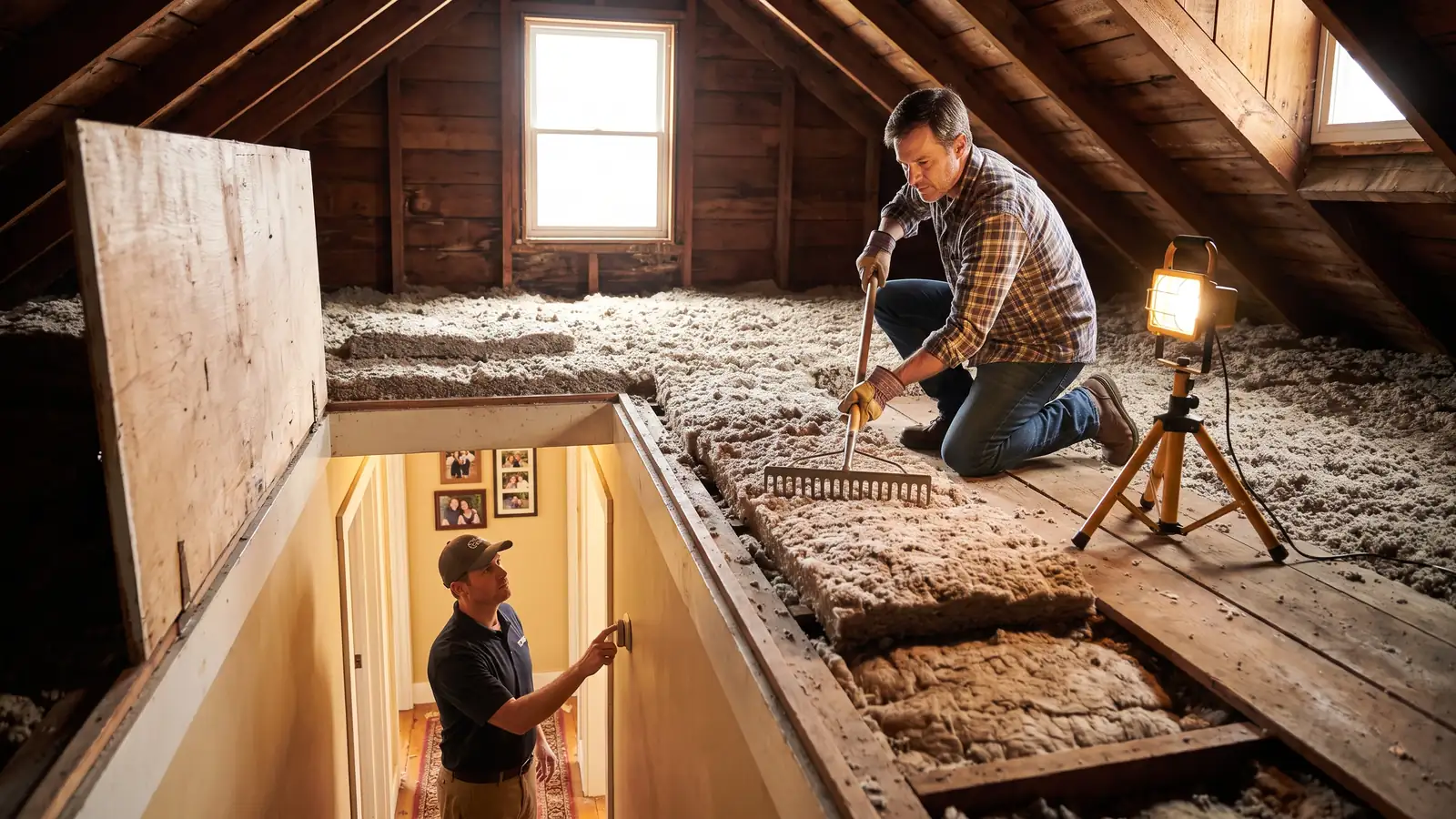
The most cost-effective order for energy-efficient home upgrades is envelope first, equipment second, generation third: seal air leaks and insulate the attic, then replace heating, cooling and water heating, then look at solar. ENERGY STAR estimates that sealing air leaks and adding attic insulation saves up to 10% on annual energy bills, and the sequence matters, because a tighter house needs smaller, cheaper equipment than a leaky one.
Skipping to the expensive end is the common mistake. Fannie Mae estimates households waste $200 – $400 a year on drafts and outdated systems alone, money a weekend of caulk starts recovering immediately.
Learn how to prioritize energy-efficient home upgrades, including what each project costs, what it saves, and how to pay for the big ones. Our Homeownership guide covers the wider picture.
Key takeaways:
- Sequence beats spend: Air sealing and attic insulation are the cheapest measures available, cut annual energy bills by up to 10%, and shrink the heating and cooling system you buy next.
- Equipment is where the dollars live: Heating and cooling take almost half of the average household’s annual energy bill, more than $900, and a heat pump water heater alone saves a household of four about $550 a year.
- Glass and solar come last: Replacement windows commonly run $300 – $1,000 or more per opening against an average 12% bill reduction, so weigh windows and solar only after the envelope is tight.
Step 1: Where is your home losing energy?
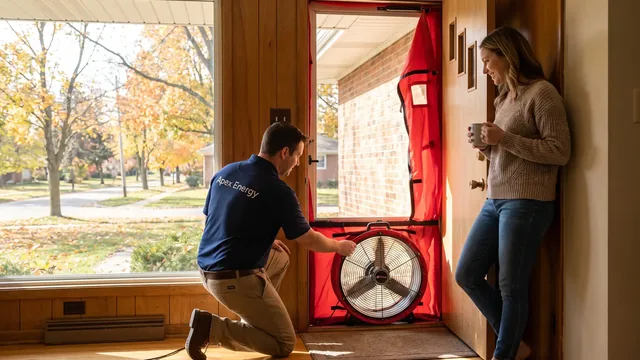
You can’t sequence upgrades you haven’t measured. A professional energy assessment with a blower door test, a fan mounted in an exterior door that depressurizes the house and measures how leaky it is, turns guesswork into a ranked punch list in about two hours. Auditors pair it with an infrared camera that shows cold air tracking through wall cavities, recessed lights and plumbing chases. Those hidden bypasses matter more than the drafty window you can feel, because they leak around the clock.
Three findings drive most upgrade plans:
- Attic bypasses and insulation depth: Where warm air escapes into the attic, and how much insulation sits above the ceiling. Almost always the first fix.
- Duct leakage: Ducts running through unconditioned attics, crawl spaces or garages deliver conditioned air to places nobody lives.
- Equipment age: The age and rated efficiency of the furnace, air conditioner and water heater, which tells you what’s near end of life.
Read our guide to the benefits of a home energy audit first. Some utilities subsidize assessments, so ask yours before paying retail.
Step 2: How much do air sealing and insulation actually save?
Up to 10% of your annual energy bill, according to ENERGY STAR’s product and savings estimates, which call sealing and insulating the most cost-effective way to improve efficiency and comfort. The second benefit is harder to see on a bill: a tight house has a smaller load, so the equipment you buy in Step 3 can be smaller and cheaper.
Air sealing comes first, insulation second. Insulation slows heat transfer but does almost nothing to stop moving air, so blowing cellulose over unsealed bypasses insulates around the problem instead of fixing it. Where the work happens, in priority order:
- Attic plane: Seal every ceiling penetration, wire and pipe chases, bath fans, chimney chases, recessed lights, then add insulation depth.
- Rim joists: The wood band atop the foundation wall is a classic leak path and takes rigid or spray foam well.
- Ductwork: Mastic and foil tape on accessible joints, especially where ducts leave conditioned space.
- Doors and windows: Weatherstripping and door sweeps are the cheapest items in the project and the easiest to DIY.
Envelope work never shows up in listing photos, which is why homeowners underspend on it. If a remodel is coming, our guide to renovating for energy efficiency covers how to stage it alongside the rest.
Step 3: Which heating, cooling and water heating upgrades pay off?
Heat pumps, for space and water heating, are the two highest-impact equipment upgrades in most homes, heating and cooling already take almost half of the average household’s annual energy bill, more than $900 a year by ENERGY STAR’s estimate. Equipment is also the most expensive place to guess wrong, which is why it belongs after the envelope.
Heat pumps for heating and cooling
A heat pump moves heat rather than generating it, so it can deliver more heat energy than the electricity it consumes. One machine does both jobs, replacing the furnace and air conditioner in one purchase. Much of the value when both are near end of life.
Whether it saves money depends mostly on the ratio between your electricity and natural gas prices. Ask for a load calculation performed after your sealing and insulation work; an oversized system costs more and dehumidifies poorly in summer.
Heat pump water heaters
This is the clearest arithmetic on the list. ENERGY STAR estimates a certified heat pump water heater saves about $550 a year for a household of four versus a conventional electric unit; home-performance analyses cite figures closer to $350 for smaller households. One constraint: it cools the room it sits in, a summer bonus, a winter tradeoff.
Controls and distribution
A smart thermostat is the cheapest equipment-side upgrade, but the savings come from the setbacks, not the hardware, one left at a single temperature saves nothing. Pair it with duct sealing, which is priced per system and pays back fast on leaky runs. Our guides to smart home devices for energy savings and home automation systems cover what’s worth wiring in and what’s a gadget.
Step 4: Are new windows and doors worth the cost?
For energy savings alone, usually not. ENERGY STAR estimates that replacing old, drafty windows with certified windows lowers household energy bills by an average of 12%, but whole-house replacement commonly runs $300 – $1,000 or more per opening, which can stretch simple payback past 20 years.
That doesn’t make windows a bad project. It makes them a replacement project rather than an efficiency project. Windows earn their cost when the existing units are single-pane, rotting, fogged or painted shut. At which point you’re buying comfort and curb appeal, and the energy savings are a bonus. Cheaper options capture part of the benefit:
- Storm windows and interior inserts: Add a second glazing layer at a fraction of replacement cost, and they’re removable.
- Weatherstripping and sash locks: A locked, weatherstripped double-hung seals far better than an unlocked one, and the lock is free.
- Cellular shades and exterior shading: Cut winter heat loss and summer solar gain on the worst-oriented glass.
When replacement is right, our guide to choosing energy-efficient windows covers U-factor, solar heat gain coefficient and frame materials. If you’re adding glass rather than replacing it, weigh the pros and cons of installing a skylight first. A skylight is a hole in the best-insulated surface in the house.
Step 5: When does solar make sense?
Solar makes sense last, after the envelope is tight, because every kilowatt-hour you stop wasting is a kilowatt-hour of panels you don’t have to buy. Residential systems commonly run $15,000 – $30,000 installed before incentives. Large enough that sizing should be done on a reduced load. Four conditions drive whether it pencils out:
- Roof age: If the roof needs replacement within about a decade, do the roof first. Removing and reinstalling an array later is an avoidable cost.
- Shading and usable area: Trees and dormers take a real bite out of production, so a quote should include a shading analysis, not a rule of thumb.
- How your utility credits exported power: What you’re paid for electricity sent back to the grid drives the whole payback calculation, and those tariffs change.
- How long you plan to stay: If a move is likely inside a few years, the payback belongs to the next owner.
Check the incentive picture before you model any savings. The IRS states the residential clean energy credit, the 30% federal credit widely cited for solar, is not available for property placed in service after December 31, 2025, and the separate energy efficient home improvement credit applied to property placed in service before that same date. Don’t build a federal credit into your math; confirm current rules with a tax professional. Our guides to solar panel costs and benefits and buying a home with solar panels cover ownership versus leasing, which matters enormously at resale.
Energy-efficient upgrades at a glance: cost, savings and payback
Simple payback is one division problem: installed cost divided by annual savings. Run it on every quote, the ranking below shifts with your utility rates and your home’s condition.
| Upgrade | Typical cost range | Estimated annual savings | Payback profile |
|---|---|---|---|
| Air sealing | Cheap for DIY; pro jobs priced per house | Counted with attic insulation | Fastest on the list |
| Attic insulation | $1,500 – $3,000 | Up to 10% of the annual bill, with air sealing | Fast to moderate |
| Smart thermostat | $150 – $300 plus install | Largest when the house sits empty on weekdays | Short, if you use setbacks |
| Heat pump (space) | $4,000 – $8,000; more for cold-climate units | Tracks your electricity-to-gas price ratio | Moderate; better when it replaces furnace and AC |
| Heat pump water heater | Priced per install | About $550 for a household of four | Short to moderate |
| ENERGY STAR windows | $300 – $1,000+ per opening | About 12% average bill reduction | Long, often past 20 years |
| Solar | $15,000 – $30,000 before incentives | Site-specific: roof, shading, usage, utility credits | Long; depends on how long you stay |
These are contractor ranges, not quotes, typical insulation and HVAC project costs vary by home size and region. Get three local bids first.
Here’s the math. Say your energy bills total $2,400 a year and an attic sealing-and-insulation package quotes at $2,200. At ENERGY STAR’s up-to-10% result, that’s $240 a year, roughly a nine-year simple payback on energy alone.1 Two things make the real return better: the comfort arrives the first winter, and Consumer Reports has reported that envelope work can cut a later heat pump project’s cost by about $3,700 by allowing a smaller system. The cheap job pays for part of the expensive one.
How do you pay for a big efficiency project?
Small envelope work usually comes out of cash or a contractor payment plan. Once a project passes the cost of a new HVAC system, four options open up.
- Cash-out refinance: Replaces your mortgage with a larger one and returns the difference in cash. Best when the new loan’s terms genuinely work for you, since you’re re-pricing the whole mortgage.
- Home equity loan or line of credit: Borrows against equity separately and leaves your first mortgage alone. Often better when your current mortgage has terms worth keeping.
- Renovation financing: Some programs finance a purchase or refinance based on the home’s value after improvements.
- Utility rebates and promotions: The incentives most homeowners can still count on. Get yours in writing before the equipment is ordered.
Because Align Lending is a broker rather than a direct lender, we can place cash-out, home equity and renovation scenarios across a network of wholesale lenders and show you what each prices out at, the terms belong to the lender, not to us.2 If you’re weighing a house that needs the work, our guide to the advantages of buying a fixer-upper covers underwriting the project alongside the purchase. This work typically requires permits, and the impact of new building codes on home purchases explains why documented work matters later. More guidance lives in our Home Improvement & Design hub.
What Michigan homeowners should know
Michigan is a heating-dominated climate, which shifts the ranking above in one way: the attic is worth even more here than national averages suggest, and cooling upgrades matter less than they would in the South. Warm air rises, and in a cold-winter state it spends six months trying to leave through your ceiling.
- Insulate to the cold-climate target: ENERGY STAR’s guidance for the northern zones that include Michigan is R-60 in an uninsulated attic, and adding roughly R-49 where only 3 to 4 inches of old insulation remains. Measure your depth with a ruler first.
- Ice dams are an insulation problem, not a gutter problem: Heat escaping into the attic melts snow on the roof deck, the meltwater refreezes at the cold eave, and the dam pushes water under the shingles. Sealing and insulation fix the cause; heat cables manage the symptom.
- Size cold-climate heat pumps on the improved load: Ask for rated heating capacity at your local design temperature, not just at 47 degrees, and run the load calculation after the envelope work. That $3,700 Consumer Reports saving only exists if you sequence correctly.
Check your utility’s current rebate list and any state-administered efficiency program before signing a contract. Michigan utilities have historically offered rebates on insulation, air sealing and high-efficiency equipment, but qualifying models and amounts reset periodically, and rebates generally must be claimed around installation rather than at tax time.
FAQ: Energy-efficient home upgrades
Here are answers to common questions about energy-efficient home upgrades.
Which energy-efficient upgrade should I do first?
Air sealing and attic insulation. They’re the lowest-cost measures available, the comfort improvement shows up in the first cold week, and they shrink the load so later equipment can be smaller. A blower door test shows exactly where the house leaks, which keeps you from insulating around a problem instead of fixing it. Our guide to evaluating a home’s energy efficiency covers what to check yourself.
Is a heat pump worth it in a cold climate?
Often, yes. Modern cold-climate heat pumps hold useful efficiency well below freezing, and many homes pair one with a backup furnace for the coldest stretches. The economics turn on your electricity-to-gas price ratio and on whether you also gain air conditioning you didn’t have. Tighten the envelope first so the installer sizes to the improved load, see how to upgrade your home’s HVAC system.
Are new windows worth the cost for energy savings?
On energy savings alone, rarely. ENERGY STAR certified windows cut household bills by an average of 12%, but replacement often runs $300 to $1,000 or more per opening, so payback can stretch past 20 years. Windows make more sense when the existing units are failing, rotting or single-pane. If the goal is purely energy, sealing and insulation return far more per dollar, several appear on our list of DIY home renovation projects.
Do energy-efficient upgrades increase home value?
Documented, permanent upgrades, insulation, high-efficiency HVAC, owned solar, new windows, support appraised value and can shorten time on market, especially with utility bill history to show. Leased solar is different and can complicate a sale or refinance, because the lease has to be assumed or bought out. Keep invoices and permits for the appraiser; the home appraisal process explains what documentation gets credited.
The bottom line on energy-efficient home upgrades
Energy-efficient home upgrades pay off in a specific order: envelope first, equipment second, generation third. Seal air leaks and insulate the attic, ENERGY STAR puts that at up to 10% off your annual energy bills, and it shrinks the system you buy next. Then address heating, cooling and water heating, where almost half of the average household’s energy bill already goes. Windows and solar come last, judged against how long you’ll stay. Run simple payback on every quote and confirm rebates in writing first.
If you’re ready to finance a larger efficiency project, talk to Align Lending, we’ll shop your scenario across our lender network, compare cash-out, home equity and renovation options, and show you the numbers side by side. Call 248-506-5727 or start online today.
Footnotes:
1. Example figures are hypothetical and for educational purposes only; they do not constitute an advertisement of credit terms or a rate quote under federal or state lending laws. Actual project costs, energy savings, and payback periods depend on your home, your utility rates, your contractor’s pricing, and how the work is performed. Return to text.
2. Loan program terms, eligibility, and pricing are set by the individual wholesale lenders in Align Lending’s network, not by Align Lending, and are subject to change. Availability of cash-out, home equity, and renovation financing depends on your application, your equity, the property, and lender guidelines. Return to text.
Sources: attic air sealing and insulation savings of up to 10% on annual energy bills, ENERGY STAR Home Upgrade. Certified windows lowering household energy bills by an average of 12% when replacing old, drafty windows, ENERGY STAR. Heat pump water heater savings of about $550 per year for a household of four versus a conventional electric water heater, ENERGY STAR. Heating and cooling accounting for almost half of the average American household’s annual energy bill, more than $900 per year, ENERGY STAR. Recommended attic insulation of R-60 for uninsulated attics and roughly R-49 added over 3 to 4 inches of existing insulation in the northern climate zones, ENERGY STAR insulation R-value guidance. Estimated $200 – $400 wasted annually on drafts and outdated systems, Fannie Mae. Envelope improvements reducing a heat pump project’s cost by about $3,700, Consumer Reports. Heat pump water heater savings of up to $350 per year for smaller households, Sealed home performance analysis. Residential clean energy credit unavailable for property placed in service after December 31, 2025, and energy efficient home improvement credit applying to property placed in service before December 31, 2025, Internal Revenue Service. Project cost ranges are typical contractor ranges compiled from home-improvement cost sources and are not quotes.
An EV charger is an electrical-capacity project as much as an efficiency one, and the panel assessment usually decides the cost. Read more on installing a home EV charger.
This article is for informational purposes only and is not intended to provide legal, financial, or tax advice. Tax credit and rebate rules change and are administered by federal, state, and utility programs, consult a qualified tax professional about your situation before relying on any incentive. Energy savings estimates are averages and are not a prediction of your results. Program terms and figures shown are illustrative, are not a rate quote or an offer of credit, and are subject to change. Align Lending is an independent Michigan mortgage broker, NMLS #2041154.
Related resources

12-minute read
DIY home renovation projects: 12 upgrades you can actually finish
Discover DIY home renovation projects that upgrade your space on a budget, from peel-and-stick backsplashes to floating shelves and smart lighting.
12-minute read
The benefits of a home energy audit and what it includes
Learn what a home energy audit finds, how blower door and infrared testing works, and why the Department of Energy links audits to 5% to 30% energy savings.
12-minute read
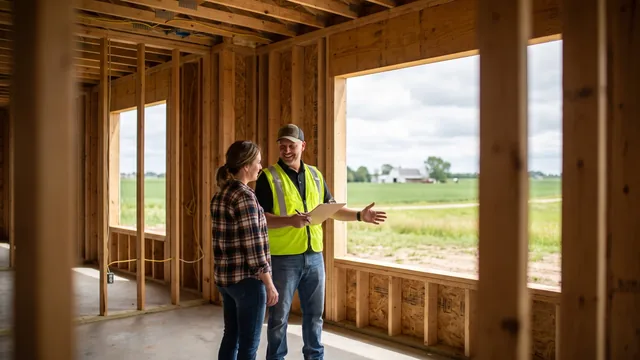
Home renovation permits: What you need and what they cost
Find out which home renovation permits you need, how the application and inspection process works, and what happens when unpermitted work shows up at resale.
4-minute read
Repair Escrow Guide: How Homebuyers Can Manage Repairs
Discover how to manage home repairs during escrow to protect your mortgage and purchase. Learn now!
