
Maintaining a home’s roof: Tips and tricks
Roof maintenance is mostly two habits done on schedule: inspect the roof twice a year plus after every major storm, and clean the gutters at least twice a year. Those two habits protect a covering that should last 20 to 30 years on asphalt shingles and considerably longer on metal, tile, or slate.
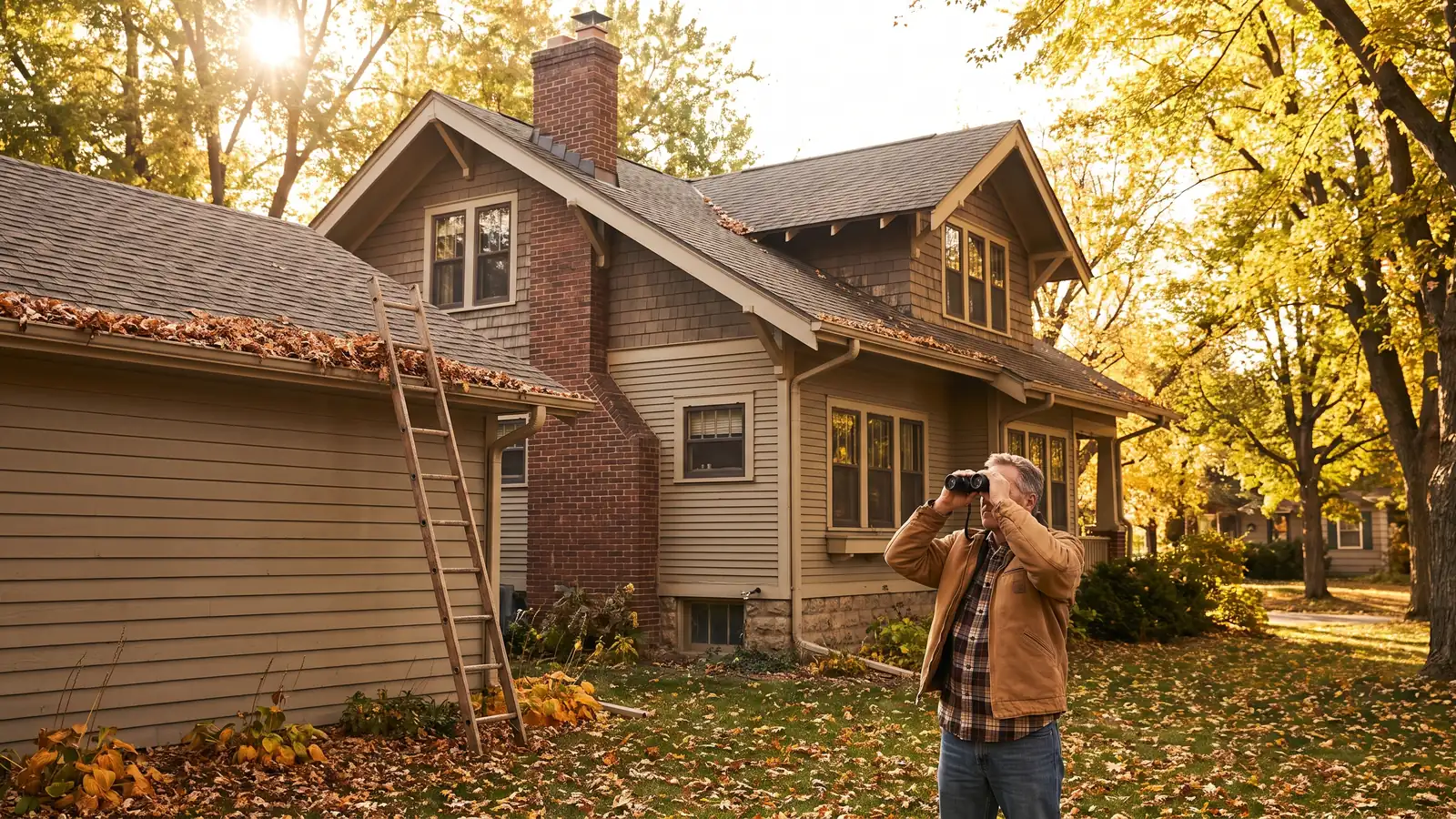
From the ground, look for missing, curled, or cracked shingles, damaged flashing at chimneys and vents, and granules collecting in the gutters. From inside, check the attic for daylight, moisture stains, and musty odors, ventilation problems damage a roof from underneath, where nobody looks.
Learn how to maintain a home’s roof, including how to inspect it without climbing on it, what each season requires, and which jobs belong to a roofer, one piece of the larger rhythm of home maintenance.
Key takeaways:
- Inspection schedule: Check the roof 2 times a year plus after any hail, high-wind, or heavy-snow event, working from the ground with binoculars and from the attic with a flashlight.
- Expected service life: Asphalt shingle roofs typically last 20 to 30 years, and granules piling up in the gutters are the clearest early sign the surface is wearing out.
- Ventilation protects the roof from below: Trapped heat and moisture shorten shingle life and drive ice dams, and attic vent area is generally sized at 1 square foot of net free area per 150 square feet of attic floor, or 1 per 300 when intake and exhaust are balanced.
Why does roof maintenance matter?
Because maintenance decides whether an asphalt roof reaches its 20-to-30-year service life or fails a decade early. Nothing wears out all at once. Sealant cracks, a flashing joint opens, and water works into the deck for two winters before a stain shows up on a ceiling. By then the repair isn’t a shingle, it’s sheathing, insulation, and drywall.
- Leaks and rot: Water entering at failed flashing soaks the deck, and wet sheathing loses strength and holds mold.
- Shortened roof life: Heat and moisture trapped under the deck cook shingles from the inside, the most overlooked cause of premature failure.
- Insurance friction: Carriers separate sudden storm damage from long-term deterioration, and deterioration is the homeowner’s problem.
How long should a roof last?
Twenty years is the floor for the most common covering in America; a century-plus is the ceiling for the rarest. The table uses estimated service lives from InterNACHI’s Standard Estimated Life Expectancy Chart for Homes.
| Material | Typical service life | Relative cost | Best fit |
|---|---|---|---|
| 3-tab asphalt shingle | About 20 years | Lowest | Tight budgets, short ownership horizons |
| Architectural asphalt shingle | About 30 years | Low to moderate | The default on most houses |
| Metal (standing seam or panel) | 40 to 80 years | High | Snow shedding, long holds |
| Clay or concrete tile | 100+ years | High | Homes framed for the weight |
| Slate | 60 to 150 years | Highest | Historic and multi-generational homes |
Estimates differ between sources, NAHB guidance on building material service life is another reference point, but the ranking never changes.
How do you inspect a roof without climbing on it?
Almost everything worth finding is visible from the lawn with binoculars and from the attic with a flashlight. Walking on shingles damages them, asphalt is brittle when cold and soft when hot, and falls are the most serious hazard in home maintenance. Hire someone the moment you need to be on the roof.
What to look for from the ground
Walk the perimeter, then look again from across the street.
- Shingles: Missing, cracked, curled, cupped, or lifted shingles, and bald patches where the granule layer has worn through.
- Flashing: Metal at chimneys, skylights, valleys, and vent stacks, lifted edges, rust, gaps, failed sealant. Flashing joints leak far more often than the field of shingles.
- Rooflines: Sagging ridgelines or any wavy plane, which points to decking or framing rather than a surface issue.
- Gutters: Granules in the trough or at the downspout outlet. A handful after a new roof is normal; steady accumulation on an older roof means the surface is eroding.
- Growth and penetrations: Moss and algae streaking on shaded slopes, plus cracked rubber boots at plumbing vents, a very common leak source.
What to look for in the attic
- Daylight: Any pinpoint of light through the roof deck is a hole. Mark it and get it looked at.
- Stains and streaks: Dark trails on the sheathing or rafters trace water back to its entry point, usually uphill from the stain.
- Frost or condensation: Moisture on nail points in cold weather is a ventilation problem, not a leak.
- Odor and blocked insulation: A musty smell means sustained dampness, and insulation stuffed into the eaves blocks the soffit vents.
Warning signs you shouldn’t ignore
Five findings move a roof from “watch it” to “call someone this month”: water stains on ceilings or walls, granules accumulating in the gutters, a visible sag in the roofline, repeat leaks in different spots, and daylight through the deck. Past 20 years, any one of these usually points toward replacement rather than another patch.
How do you clean a roof without damaging it?
Gently, and never with a pressure washer. High-pressure water strips the protective granules off asphalt shingles and can force water up under them, a cleaning that takes years off the roof. The goal is removing what holds moisture against the surface.
Removing debris and organic growth
- Loose debris: Leaves and pine needles in valleys act like a sponge. Clear them with a blower or soft-bristle broom, working downslope so you don’t lift shingle edges.
- Moss and algae: Apply a cleaning solution made for roofs with a low-pressure sprayer, let it dwell per the label, then rinse with a hose. Never scrape moss off dry, it takes granules with it.
- Regrowth prevention: Thinning the canopy above lets the roof dry faster, which slows regrowth. Zinc or copper strips near the ridge are an option when the roof is replaced; added to an existing roof, they need exposed nails or broken shingle seals, which can lead to leaks or wind damage.
For the cleaning mix, how long to let it sit and how to rinse, the Asphalt Roofing Manufacturers Association’s algae and moss guide is a solid reference.
Gutters are roof maintenance
Clean gutters at least twice a year, because a clogged gutter is a roof problem before it’s a foundation problem. When the trough packs with debris, water backs up under the shingle edge, soaks the fascia and first course of decking, and in winter gives ice a place to build, damage that shows up first in the home’s exterior trim and siding. Flush the downspouts instead of only scooping the top.
What roof maintenance does each season need?
Two inspections a year carry most of the load; each season adds a task or two. Times are rough planning estimates for an average single-family home.
| Season | Tasks | Typical time | DIY or pro |
|---|---|---|---|
| Spring | Full ground and attic inspection; clear winter debris; check flashing and sealants for freeze-thaw damage | 1 to 2 hours | DIY inspection; pro for repairs |
| Summer | Check for heat cracking and warping; confirm ventilation is moving air and soffits are clear; trim branches back | 1 to 2 hours | DIY; pro for tree work |
| Fall | Second full inspection; clean gutters after full leaf drop; verify bath and dryer vents exhaust outdoors | 2 to 4 hours | DIY on 1-story; pro on 2-story or steep |
| Winter | Rake heavy snow off the lower roof from the ground; watch for ice dams; check the attic for frost | 30 to 60 min per storm | DIY from the ground only; pro for ice |
Fold these into the rest of the calendar, our seasonal home maintenance checklist sequences roof work alongside HVAC and plumbing.
What prevents roof damage before it starts?
Three things do more than any repair: correct attic ventilation, trees kept off the roof, and honest expectations about coatings.
Why attic ventilation matters more than anything else on this list
Attic ventilation is generally sized at 1 square foot of net free vent area per 150 square feet of attic floor, or 1 per 300 when intake and exhaust are balanced, roughly half the vent area low at the soffits, half high near the ridge.1 That balance is what people get wrong. Ridge vents over blocked soffits don’t ventilate; they depressurize the attic and pull conditioned air out of the house. Done right, ventilation keeps the deck near outdoor temperature, so shingles don’t bake from below and snow doesn’t refreeze at the eave.
- Intake at the soffits: Vents should be open, not painted shut, with baffles inside holding a clear channel so insulation can’t block them.
- Exhaust high on the roof: Ridge, box, or gable vents near the peak. Mixing ridge and gable vents can short-circuit the airflow.
- Vents that exhaust outdoors: Bathroom fans and the dryer must terminate outside. One bath fan dumping into an attic can soak sheathing through a winter.
- Air sealing first: Sealing can lights, plumbing stacks, the hatch, and top plates keeps house moisture out to begin with. Ventilation can’t outrun an unsealed ceiling.
Tree trimming and landscaping
Keep branches back roughly 10 feet from the roof where the tree allows it. Overhanging limbs abrade shingles in wind, drop the debris that clogs gutters, shade slopes into moss, and give squirrels a bridge to the fascia. Hire an arborist for anything over the house.
What roof coatings and sealants can and can’t do
Sealants are a targeted repair, not a roof treatment. Fresh sealant at flashing joints, vent boots, and chimney counterflashing is genuine maintenance and belongs on the spring list. Elastomeric coatings are made for low-slope, flat, and metal roofs. Not a way to extend a worn asphalt roof, and applying one can void the warranty. Be skeptical of any “rejuvenation” spray sold for shingles already shedding granules.
What roof work should you leave to a pro?
The line is simple: if the job requires you to be on the roof, it’s a professional job.
Tasks most homeowners can handle
- The twice-yearly inspection: Binoculars from the lawn plus a flashlight in the attic, 2 times a year and after storms.
- Gutter cleaning: Reasonable on a 1-story home with level ground and a stable ladder.
- Debris and spot moss treatment: A telescoping brush or roof-safe cleaner used from a ladder on the lower slopes.
- Snow raking: A roof rake worked from the ground, never from a ladder.
When to call a roofer
Call a licensed, insured contractor for shingle and flashing replacement, any repair on a 2-story or steep-pitch roof, chimney and skylight work, structural sagging, active leaks, and full replacement. Get at least 3 written quotes with the scope spelled out, tear-off versus overlay, decking allowance, ice-and-water shield, ventilation work included. Published roof repair and replacement cost ranges help you orient, but pricing swings hard with pitch, material, and access, so treat national figures as a sanity check, not a budget.
A full replacement often runs larger than a credit card or emergency fund comfortably covers. Where that’s the case, lenders in Align’s network offer renovation and cash-out refinance options that fold the cost into the mortgage instead, one of the paths in our homeownership guide.2
What Michigan homeowners should know
In Michigan the spring inspection is the one you can’t skip. A Michigan winter runs snow load, lake-effect accumulation, and repeated freeze-thaw cycling across the same roof, and freeze-thaw is uniquely destructive: water works into a sealant crack, freezes, expands, and widens the opening with every cycle. Damage that starts in January often doesn’t show until an April rain.
- Ice dams are an attic problem, not a roof problem: Warm air escaping into the attic melts snow on the upper roof, and the meltwater refreezes at the cold eave into a dam that backs water under the shingles. The fix is air sealing, insulation, and clear soffit intake.
- Rake the first 3 to 4 feet after heavy snow: Clearing the lower roof from the ground removes the snow that feeds a dam. Never climb onto a snow-covered roof, and never chip at ice with anything metal.
- Check flashing and sealants every spring: Freeze-thaw attacks joints first. Chimney counterflashing, vent boots, and valley metal are where Michigan roofs leak, and 2 inspections a year catches them early.
- Finish fall work before the first hard freeze: Michigan’s window between full leaf drop and freeze-up is short, so book contractors early.
One local note: design snow loads are set by the code your county enforces, so if a roofline has ever worried you after a storm, ask a structural engineer.
How Align helps when a repair is bigger than your savings
Most repairs belong in a savings account, not a loan. When one does not, like a roof or a furnace, Samantha looks at whether a home equity line, a home equity loan or waiting makes more sense for you.
Align places standalone HELOCs and home equity loans, so you can keep your first mortgage and its rate in place. She explains the payment and the risk before you borrow against your home.
FAQ: Roof maintenance
Here are answers to common questions about roof maintenance.
How often should a roof be inspected?
Twice a year, ideally spring and fall, plus after any hail, high-wind, or heavy-snow event. Spring inspections catch winter damage from ice and freeze-thaw cycles; fall inspections prepare the roof for snow load and confirm gutters are clear. Most of this can be done from the ground with binoculars and from inside the attic with a flashlight. Put both dates on your seasonal home maintenance checklist so they don’t slide.
What are the signs a roof needs replacing?
Widespread curling or cupped shingles, bald patches where granules have worn off, granules piling in gutters, sagging rooflines, repeated leaks in different locations, and daylight visible through the roof deck in the attic. Age matters too: an asphalt roof past 20 years with any of these signs is usually a replacement candidate rather than a repair candidate. If you’re at that point, compare roofing materials and their pros and cons before you sign with the first contractor.
Can I pressure wash my roof?
No. High-pressure washing strips the protective granules off asphalt shingles and can force water under them, which shortens the roof’s life significantly. Remove moss and algae with a gentle cleaning solution applied with a low-pressure sprayer or soft brush, then rinse with a garden hose. Zinc or copper strips near the ridge can help prevent regrowth once the roof is replaced. The same soft-wash rule applies to the rest of the shell.
How do I prevent ice dams?
Ice dams form when attic heat melts snow that refreezes at the cold eave, so the fix is insulation and ventilation, not roof heating cable. Air-seal attic penetrations, bring insulation to full depth, keep soffit vents clear of insulation, and confirm bathroom and dryer vents exhaust outdoors rather than into the attic. A roof rake clears snow after storms.
The bottom line on roof maintenance
Roof maintenance comes down to two habits: inspect twice a year plus after every major storm, and clean the gutters at least twice a year. Do those and an asphalt roof should reach its expected 20 to 30 years, with metal, tile, and slate lasting far longer. Work from the ground with binoculars and from the attic with a flashlight, never pressure wash, keep attic vent area balanced between soffit intake and ridge exhaust, and hand off anything that requires standing on the roof. In Michigan, treat ice dams as an attic problem.
If you’re ready to take on a roof replacement or the deferred work behind it, talk to Align Lending. We’ll shop your scenario across our lender network and show you the options side by side. Call 248-506-5727 or start online.
Footnotes:
1. The 1:150 and 1:300 ratios are model-code figures for minimum net free ventilating area in the International Residential Code, and the 1:300 allowance is conditional. It generally requires that vent area be split between low intake and high exhaust, or that a vapor retarder be present in colder climate zones. Adopted code edition and local amendments vary by jurisdiction, and Michigan enforces its own residential code. Net free area is also not the same as the physical opening size, since screens and louvers reduce it. Confirm current requirements with your local building department or a licensed contractor before sizing or changing vents. Return to text.
2. Align Lending is an independent mortgage broker and does not set loan terms. Renovation and cash-out refinance program terms, eligibility, and available loan amounts are set by the individual wholesale lenders in Align’s network and are subject to change, credit approval, property eligibility, and equity requirements. Nothing here is an offer of credit or a commitment to lend. Return to text.
Sources: estimated service life by roof covering, 3-tab asphalt shingles 20 years, architectural asphalt 30, metal 40 to 80, slate 60 to 150, clay and concrete tile 100 or more, InterNACHI’s Standard Estimated Life Expectancy Chart for Homes, International Association of Certified Home Inspectors; additional building material service life guidance, National Association of Home Builders. Minimum attic net free ventilating area ratios of 1:150 and 1:300, International Residential Code. Homeowner roof maintenance procedures, Family Handyman. Repair and replacement cost ranges referenced for orientation only, Angi. Time estimates in the seasonal table are planning approximations, not measured figures, and no dollar amounts are quoted in this article.
This article is for informational purposes only and is not intended to provide legal, financial, tax, engineering, or construction advice. Working at height carries a risk of serious injury; inspect from the ground and from inside the attic wherever possible, and hire a licensed, insured contractor for work on the roof itself. Building code requirements, product performance, warranty terms, contractor pricing, and insurance treatment of roof damage vary by jurisdiction and carrier and change frequently, verify current details locally before you buy or hire. Align Lending is an independent Michigan mortgage broker, NMLS #2041154.
Related resources

12-minute read
Seasonal home maintenance checklist for every season
Find a seasonal home maintenance checklist covering exterior, interior, HVAC and plumbing tasks for all four seasons, keeping repairs small and planned.

12-minute read
Home maintenance for first-time homeowners: A full checklist
Learn what home maintenance for first-time homeowners involves, with monthly, seasonal, and annual tasks plus how much to budget each year for upkeep.
11-minute read
How to address water damage in your home: A step-by-step plan
Learn how to address water damage in your home fast, from shutting off water and power to drying materials before mold starts growing in 24 to 48 hours.
