
Home maintenance for first-time homeowners: A full checklist
Home maintenance for first-time homeowners runs on three rhythms: monthly, seasonal, and annual. Budget 1% to 3% of your home’s value every year to pay for it. On a $300,000 house that is roughly $3,000 to $9,000 a year, set aside before anything breaks.

Monthly means changing the HVAC filter, testing smoke and carbon monoxide alarms, checking under sinks for leaks, and clearing slow drains. Seasonal means servicing the furnace and air conditioner before each heating and cooling season, cleaning gutters, and winterizing outdoor faucets. Annual means a roof inspection, a chimney check, and trimming vegetation back from the siding.
Learn how home maintenance for first-time homeowners works: first-week tasks, the monthly and seasonal lists, and how to budget for upkeep. For what a home costs after closing, see our Homeownership guide.
Key takeaways:
- Three rhythms: Monthly filter and alarm checks, seasonal HVAC and gutter work, and one annual roof and chimney inspection cover the vast majority of home upkeep, and ENERGY STAR’s guidance is to check your HVAC filter every month and change it at minimum every 3 months.
- Budget the money now: About $250 to $750 a month on a $300,000 home, moved into its own account, turns emergency repairs into planned expenses.
- Walk the house: One slow walkaround a month catches leaks, cracks, and pest entry while they’re still cheap, and it’s when you test every smoke alarm, which the U.S. Fire Administration says to do monthly and to replace entirely every 10 years.
What should you do in your first week?
Four things, in this order, before you finish unpacking: find and label the shutoffs, test every alarm, change the HVAC filter, and walk the exterior. That’s an afternoon, and it catches most of what a new owner can’t see.
- Main water shutoff: Find it, turn it to confirm it moves, and tag it. A burst supply line is the fastest way to do five figures of damage.
- Electrical panel: Have someone flip breakers while you note what dies, then write the results on the panel door. Sellers rarely label accurately.
- Gas shutoff: Locate the meter valve outside plus the shutoffs behind the furnace, water heater, range, and dryer, and keep a wrench at the meter.
- Smoke and carbon monoxide alarms: The U.S. Fire Administration home fire prevention checklist calls for alarms inside and outside each sleeping area and on every level, tested monthly, with the entire alarm replaced every 10 years. Read the manufacture date on the back of each one and replace anything a decade old.
- Exterior walk: Look up at the roofline for lifted shingles, at the gutters for sag and overflow stains, and down at the grade to confirm soil slopes away from the foundation.
Write it all down. The maintenance log described below is the place for it.
Why does home maintenance matter so much for new owners?
Because deferred maintenance is the most expensive kind, and the numbers behind that aren’t abstract. In 2021, the U.S. Fire Administration counted an estimated 32,200 home heating fires that caused 190 deaths, 625 injuries, and $442 million in property loss, and its standing prevention advice comes down to one annual task: have heating equipment and chimneys cleaned and inspected each year by a professional.
- Systems last longer: A yearly tune-up and a clean filter are the cheapest things you can do for the most expensive equipment you own, because furnaces, air conditioners, and water heaters fail early when they run dirty.
- Small problems stay small: A loose flashing is a repair; the same flashing ignored for three winters is a roof deck, insulation, and drywall job. Our guide to the cost of home repairs and planning for the unexpected covers which failures escalate fastest.
- Insurance keeps working: Policies generally cover sudden, accidental damage, not deterioration, so read your policy’s wear-and-tear language before you need it.
Consistency beats completeness. Done reliably, the routine below outperforms an ambitious spring blitz followed by nothing.
What tools does a first-time homeowner actually need?
About 9 items cover nearly everything on the monthly and seasonal lists: a multi-bit screwdriver, an adjustable wrench with slip-joint and needle-nose pliers, a flange plunger and small hand auger, a headlamp, a step ladder, a caulk gun with exterior-grade and silicone caulk, silicone lubricant and penetrating oil, a utility knife with tape measure and level, and safety gear. Buy them before you need them, or every one of these purchases happens at 9 p.m. during an emergency. Our seasonal home maintenance checklist puts the same work on a calendar.
What should you check every month?
Five checks, and the two that matter most both carry a hard number: check your HVAC filter every month, and test every smoke alarm every month. Nearly half of the energy used in a home goes to heating and cooling, which is why the filter earns a recurring calendar slot.
- HVAC filter: ENERGY STAR heating and cooling maintenance guidance is to check the filter every month, especially in heavy-use winter and summer months, change it if it looks dirty after a month, and change it at minimum every 3 months.
- Smoke and carbon monoxide alarms: Hold the test button on every unit until it sounds, and replace 9-volt batteries, including the backups in hardwired alarms, at least once a year.
- Under-sink plumbing: Run your hand along the supply lines, trap, and cabinet floor in every vanity. You’re feeling for damp, not looking for a puddle.
- Slow drains: Any drain that has started to hesitate gets handled this month, because a hand auger now beats a main-line call later.
- The walkaround: One slow lap inside and one outside, looking for new cracks, ceiling stains, and gaps where pests get in.
Put all five on a repeating calendar reminder, and check the fire extinguisher gauge while you’re at it. Our home maintenance hub collects the deeper guides for each system.
What does a seasonal maintenance schedule look like?
Two professional appointments and roughly a dozen tasks a year, organized by one rule: service equipment before the season that stresses it. A furnace tune-up in September is routine; the same call in January is an emergency rate.
| Season | Tasks | DIY or pro |
|---|---|---|
| Spring | Air conditioner tune-up; clean gutters; inspect roof and flashing from the ground; recaulk windows and doors; check grading after thaw | Pro for the tune-up; DIY for gutters, caulk, and grading |
| Summer | Test irrigation and spigots; trim vegetation back from siding and roofline; check for wasp nests and pest entry; clean refrigerator coils | DIY; pro for limbs over the roof or near power lines |
| Fall | Furnace tune-up; chimney and flue cleaning and inspection; clean gutters after leaf drop; shut off exterior faucets; replace alarm batteries | Pro for furnace and chimney; DIY for the rest |
| Winter | Check attic insulation; watch the eaves for ice dams; test the sump pump; lubricate exterior locks and garage door tracks; seal drafts | DIY; pro for insulation and any winter roof access |
| Once a year | Professional roof inspection; clean the dryer vent duct end to end; test GFCI outlets; exercise every shutoff valve; drain water heater sediment | Pro for the roof; DIY for the rest |
Fall is the season first-time owners underestimate: expensive appointments plus the tasks that prevent freeze damage. Our seasonal home maintenance checklist turns each row into a printable list.
What should a first-time owner check before the first heating season?
The history of equipment you did not install. Ask the seller, or check the inspection report, for the furnace’s age, its last service date and when the chimney or flue was last swept. If nobody knows, book both before the first cold month. The U.S. Fire Administration’s Topical Fire Report on heating fires in residential buildings, covering 2017 to 2019, found 77% of residential building heating fires were confined to chimneys, flues or fuel burners, the equipment a yearly service covers.
The ENERGY STAR maintenance checklist says airflow problems can reduce a system’s efficiency by up to 15%, so ask that first technician to check airflow and note the filter size for your log.
Then count the carbon monoxide alarms. The CDC wants a battery-powered or battery back-up CO detector close to each place people sleep, and the Consumer Product Safety Commission wants a CO alarm on each floor as well.
Ready.gov (updated February 26, 2026) says a fire can become life-threatening in just two minutes. See our fire safety tips, and the seasonal home maintenance checklist for the national heating fire and carbon monoxide figures.
How do you spot problems before they cost you?
Almost every expensive repair started as a cheap one nobody wrote down. The monthly walkaround catches the change; the log keeps you from forgetting it. Four things deserve your eye.
- Water where it shouldn’t be: Ceiling and wall stains, white mineral deposits on basement block, damp joists, and soil washed away from the foundation. Water leaves a trail before it leaves a bill.
- Things that changed: A door that started sticking, a floor with a new bounce, a crack longer than last month. Change matters more than condition; plenty of houses keep the same hairline crack for decades.
- Grading and seals: Ground should slope away from the foundation and downspouts should discharge well clear of it. Failed caulk at tubs and windows is an afternoon’s work.
- Anything that repeats: A drain that clogs twice, a breaker that trips again, a stain that returns after paint. Recurrence means the cause is upstream of what you see.
What to put in a maintenance log
Keep it simple enough that you’ll actually use it; a spreadsheet or a notes app is fine. Record five things: the date, what you did, the model and serial numbers of every major system, the sizes of consumables like furnace filters, and the contractors you’d call again. The payoff shows up when a warranty or insurance claim needs proof of service, and again at resale.
How can you tell if your house has a hidden water leak?
Read the water meter twice. According to EPA WaterSense’s Fix a Leak Week guidance, you check the meter before and after a two-hour period when no water is being used, and if the reading changes at all, you probably have a leak.
WaterSense, on a page last updated in March 2026, reports that fixing easily corrected household leaks can save homeowners about 10 percent on their water bills, and names worn toilet flappers, dripping faucets and other leaking valves as the common sources.
| Leak | What WaterSense reports |
|---|---|
| Faucet dripping once per second | More than 3,000 gallons a year |
| Old or worn toilet flapper | Can flush on its own or silently leak thousands of gallons a year |
| All leaks in an average household | More than 9,300 gallons a year |
| Homes with the largest leaks | 9% waste 50 gallons or more per day |
| Household leaks nationwide | Nearly 1 trillion gallons a year |
Source: U.S. EPA WaterSense, Fix a Leak Week, page last updated March 13, 2026.
When a leak does get loose, the window is short. According to the EPA’s brief guide to mold, moisture and your home, updated February 18, 2026, wet or damp materials dried within 24 to 48 hours after a leak or spill will, in most cases, not grow mold. Our guide to addressing mold issues in your home picks up from there.
What should you learn about your water in the first month?
Where it comes from, how old the water heater is and how hard the water is. Read the label on the tank for its manufacture date and log it beside the furnace’s. Hardness matters because, according to the U.S. Geological Survey’s Water Science School, heating hard water leaves calcium carbonate scale that can reduce the life of equipment.
On a public supply, look for a hardness figure in your utility’s Consumer Confidence Report, the annual drinking water quality report that, per the EPA, community water systems must send customers each year by July 1. On a private well, a lab test gives the number; our guide to well water and home value covers that side of ownership.
How much should you budget for home maintenance?
Set aside 1% to 3% of your home’s value every year. On a $300,000 home in Waterford, that’s $3,000 to $9,000 annually, or about $250 to $750 a month moved into a separate account before you ever see it.1 An alternate rule of thumb is roughly $1 per square foot per year, which lands in a similar place on a typical home.
Neither figure is a prediction. They’re planning targets, and where you land depends on the house.
- Age of the home: A house built in the last decade sits near the 1% end; one from the 1950s with original systems sits near 3%.
- Age of the big four: Write down the install year of the roof, furnace, air conditioner, and water heater. When two are near end of life, budget at the top of the range.
- Climate and lot: Freeze-thaw cycles, heavy tree cover, and poor drainage all push the number up.
- What you handle yourself: Labor is the majority of most repair invoices, so an owner who caulks, clears gutters, and changes filters shifts real money out of the number.
Automate the transfer, treat it like the mortgage payment rather than the leftovers, and don’t raid it for improvements. A kitchen island is not maintenance. Skip the national average cost tables, too: rates vary enormously by market and year, so price any specific job with written quotes from local contractors. Our guide to how to budget for home maintenance covers sizing the account.
Which maintenance jobs should you hire out?
Five categories, every time: gas appliance repair, electrical panel work, roof repair beyond a look from the ground, chimney relining, and anything requiring extended ladder work above one story. The savings are small and the downside is catastrophic.
What’s genuinely yours is the recurring list: filters, alarms, caulking, drains, safe-height gutters, weatherstripping, and the monthly walkaround. That work prevents problems; the pro work fixes them. Get license and insurance details in writing before work starts.
Two lines are worth knowing exactly. Swapping an outlet or a light fixture is reasonable; anything at the panel, any aluminum wiring, and any circuit that trips repeatedly goes to an electrician. A supply line under a sink is a homeowner repair; a leak inside a wall or under a slab is a plumber’s. And call a pro the moment a small problem repeats after you’ve fixed it.
When a maintenance item crosses into a five-figure project, the question changes from who to call to how to pay for it. A new owner may not have enough equity to borrow against yet, so savings come first. Once there is equity, Align places standalone HELOCs and home equity loans, which leave your first mortgage and its rate in place, and as a broker we compare those programs across multiple wholesale lenders rather than selling one.2 Align Lending doesn’t sell home services and has no stake in which contractor you hire.
How do you avoid a fall during gutter and roof checks?
In a November 4, 2019 release, the American Academy of Orthopaedic Surgeons reported more than 493,500 ladder-related injuries treated in 2018, according to the Consumer Product Safety Commission.
- Height on the ladder: AAOS says not to stand higher than two steps down from the top, and on an extension ladder not above the third rung.
- Reach: Your belly button should not go beyond the sides of the ladder.
A job that breaks those rules goes on the hire-out list; see our roof maintenance guide.
Will insurance or taxes cover a worn-out system?
Usually not for the worn-out part itself, and the tax code draws the same line. IRS Publication 547, Casualties, Disasters, and Thefts (2025 edition) says a loss of property due to progressive deterioration isn’t deductible as a casualty loss. Its own example: the deterioration and damage to a water heater that bursts does not qualify, but the rust and water damage to rugs and drapes caused by the burst does.
Hypothetical example, not an offer. An aging water heater bursts. The $1,600 replacement is the wear item and comes out of the maintenance account. The water ruins $5,000 of flooring, the sudden part; if the policy covers that discharge with a $1,000 deductible, the claim pays $4,000. Your policy’s wording decides it.
Our guides to evaluating home insurance options, deductibles and home warranties explain how to read those limits.
What does deferred maintenance do to a future appraisal?
It shows up in the condition rating, which matters the first time you refinance or borrow against the house. The Fannie Mae Selling Guide, section B4-1.3-06 (dated June 4, 2025) describes a C5 home as one whose improvements feature obvious deferred maintenance and need some significant repairs. A C6 home has substantial damage or deferred maintenance severe enough to affect safety, soundness or structural integrity, and loans secured by C6 properties are not eligible for sale to Fannie Mae.
The same section says that if the appraisal shows evidence of infestation, such as wood-boring insects, dampness or abnormal settlement, the appraiser must comment on the effect on the property’s value and marketability. The monthly walkaround is built to catch those early. See our guides to the appraisal process, refinance appraisals, foundation issues and HELOCs.
What Michigan homeowners should know
Michigan’s maintenance calendar is front-loaded into fall, because the state’s winters do the damage the rest of the year’s tasks prevent. Five items first-time owners here miss.
- Test the sump pump twice a year: Once in fall and again before the spring thaw. Pour a few gallons into the pit, confirm the float rises and the pump pushes water away from the foundation, and check that the discharge line isn’t frozen shut. Battery backup earns its cost, because the storms that overwhelm a pump also cut power.
- Book furnace service before November: Schedule in September or October, while HVAC companies still have routine slots. The U.S. Fire Administration calls for an annual professional cleaning and inspection of heating equipment and chimneys, and in Michigan that has to land before the heating season.
- Prevent frozen pipes before the first hard freeze: Disconnect and drain garden hoses, shut and drain exterior faucets, insulate supply lines running through unheated crawlspaces or exterior walls, and keep the heat on when you travel in winter. Our guide to winterizing your home covers the full sequence.
- Watch the eaves for ice dams: Long icicle lines and thick ice ridges at the gutter edge mean heat is escaping into the attic, and the fix is insulation and air sealing, not chipping ice from a ladder. With space heaters running all winter, also keep anything that can burn at least 3 feet from every heat source.
- Call 811 before you dig: Michigan law requires buried utility lines to be flagged before any excavation project, even a fence post or a garden bed. MISS DIG 811 does it for free: call 811 or place the request online.
Which Michigan rules and records matter for upkeep?
- Your seller disclosure is your baseline: The form in Michigan’s Seller Disclosure Act, MCL 565.957 asks whether there has been evidence of water in the basement or crawl space, whether the roof leaks and its approximate age, and about settling, flooding, drainage, structural or grading problems. File your copy with the maintenance log; it is often the only record of the roof’s age. See our guides to the seller’s disclosure and inspection reports.
- Watch for a service line notice: According to EGLE’s service line replacement page, water supplies must annually notify homes served by lead, galvanized previously connected to lead, or lead-status unknown service lines. A University of Michigan Graham Sustainability Institute brochure on Michigan’s revised Lead and Copper Rule (April 2019) says water supplies must replace all lead service lines by January 1, 2041, including portions on both public and private property, and that the lead action level dropped from 15 ppb to 12 ppb on January 1, 2025.
- Check the contractor’s license: In a May 9, 2019 release, LARA told homeowners to look up a contractor’s license, get a detailed written contract with a payment schedule, never sign one with blank spaces, and get a signed waiver of lien from the contractor, subcontractors and suppliers.
- Frost comes at different times across the state: Michigan State University’s geography department notes that the growing season is longest near the lakes, mainly because the lakes delay the first fall frost, and that the north-central Lower Peninsula near Gaylord has the shortest season. Owners inland or up north should shut off outdoor faucets earlier.
One MISS DIG rule new owners miss: according to MISS DIG 811, which contacts more than 1,700 members to locate public lines, you cannot dig before the start time on your request, even if every utility is marked.
What does an inch of water in the house cost, by Michigan’s estimate?
More than a year of the hypothetical budget above. The Michigan Department of Insurance and Financial Services flood page says one inch of water could cost a homeowner $10,000 or more to repair, and its table totals $10,600 for 1 inch of water, $20,150 for 6 inches and $27,150 for 1 foot. DIFS bases them on an average 1,000 square foot U.S. home on a slab and calls them illustrations, not an estimate of any actual loss.
| Item in the DIFS table | 1 inch of water | 6 inches | 1 foot |
|---|---|---|---|
| Finished floor (wood, carpet) | $7,900 | $7,900 | $7,900 |
| Cleaning | $850 | $1,000 | $1,300 |
| Doors, base trim and windows | $450 | $1,100 | $1,100 |
| Wall insulation, drywall or paneling | None listed | $1,500 | $1,500 |
| Kitchen and bath cabinets | $50 | $2,400 | $2,400 |
| Electrical and plumbing | $150 | $150 | $900 |
| Repairs to furnace or AC | $150 | $250 | $450 |
| Appliances | $70 | $90 | $2,200 |
| Washer and dryer | $70 | $80 | $500 |
| Total for all 18 items DIFS lists | $10,600 | $20,150 | $27,150 |
Source: Michigan Department of Insurance and Financial Services, Flood, “How Much Could a Flood Cost You”, selected rows plus the total for all 18 items, viewed October 27, 2026.
If water does get in, DIFS advises reporting it to the insurer as water damage, not simply as a flood, because a sewer backup or a failing sump pump may be covered under the policy. Our guide to addressing water damage in your home walks through the claim.
How Align helps when a repair is bigger than your savings
Most repairs belong in a savings account, not a loan. When one does not, like a roof or a furnace, Samantha looks at whether a home equity line, a home equity loan or waiting makes more sense for you.
Align places standalone HELOCs and home equity loans, so you can keep your first mortgage and its rate in place. She explains the payment and the risk before you borrow against your home.
FAQ: Home maintenance for first-time homeowners
Here are answers to common questions about home maintenance for first-time homeowners.
What home maintenance should a first-time homeowner do first?
Locate and label the main water shutoff, the electrical panel breakers, and the gas shutoff before anything else, because knowing where they are is what keeps a leak from becoming a disaster. Then test every alarm, change the HVAC filter, and walk the exterior looking at the roof, gutters, and grading.
How much should I budget for home maintenance each year?
Plan on 1% to 3% of your home’s value annually, or roughly $1 per square foot as an alternate rule of thumb. On a $300,000 home, that’s $3,000 to $9,000 a year, and older homes with aging roofs or furnaces belong at the higher end. Our guide to how to budget for home maintenance shows how to size the monthly transfer.
How often should I change my furnace filter?
Check it every month and change it at minimum every 3 months, which is ENERGY STAR’s guidance; if it looks dirty after a month, change it then. Thin fiberglass filters need replacing most often, while thicker pleated media filters often stretch to a full quarter. Our seasonal home maintenance checklist puts filter changes on the same calendar as the rest of the recurring tasks.
What maintenance tasks should I never do myself?
Leave gas appliance repairs, electrical panel work, roof repairs beyond a visual check, chimney relining, and any extended ladder work above one story to licensed professionals. The savings are small and the risk is real. See the cost of home repairs and planning for the unexpected for how to prepare for the jobs you hire out.
How often should you test a Michigan home for radon?
Every two years, according to a January 13, 2026 EGLE release, even when a mitigation system is installed. EGLE estimates 25% of Michigan homes have elevated radon, against about 7% nationally, with elevated levels found in all 83 counties; the action level is 4 pCi/L. Many local health departments offer test kits, and the EPA calls radon the second leading cause of lung cancer.
What water damage does a first homeowners policy leave out in Michigan?
Usually more than new owners expect. The Michigan Department of Insurance and Financial Services homeowners guide says to read the policy for water damage exclusions, that water backup and sump pump overflow may need added coverage, and that a regular homeowners policy does not cover flood. When you bind the policy before closing, ask the agent to put the backup endorsement’s limit in writing.
What humidity level should you keep in your house?
Below 60% relative humidity, and ideally between 30% and 50%, according to the EPA mold guide. The CDC is stricter: keep humidity as low as you can, no higher than 50%, all day long. A basic hygrometer, sold at most hardware stores, shows the number, so you can see whether a basement needs a dehumidifier.
How long does it take for flood insurance to start?
Typically up to 30 days, according to Ready.gov, so the time to buy is well before a storm. FloodSmart, FEMA’s National Flood Insurance Program site, notes that most homeowners insurance does not cover flood damage and lists agents who sell flood policies. Our guide to buying a home in a flood zone covers what changes when a home sits in a mapped flood zone.
The bottom line on home maintenance for first-time homeowners
Home maintenance for first-time homeowners breaks into three rhythms. Monthly: change the HVAC filter, test the alarms, check under sinks, clear slow drains, and walk the house. Seasonal: service the air conditioner in spring and the furnace before November, clean gutters twice, and winterize outdoor faucets. Annual: a roof inspection plus a professional chimney and heating equipment inspection. Budget for it from the first month, roughly $3,000 to $9,000 a year on a $300,000 home.
If you’re facing a project bigger than a maintenance budget covers (a roof, an HVAC system, or a full renovation), talk to Align Lending. We’ll shop your scenario across our lender network and show you the options side by side. Call 248-506-5727 or start online.
Footnotes:
1. The 1% to 3% and $1-per-square-foot figures are widely used budgeting rules of thumb, not measured averages, and no agency publishes them as an official standard. The $300,000 example and the figures derived from it are hypothetical illustrations for educational purposes only; they are not an estimate of your costs, an advertisement of credit terms, or a rate quote under federal or state lending laws. Actual costs depend on your home’s age and condition and on local labor rates. Return to text.
2. Align Lending is an independent mortgage broker and does not set loan terms. HELOC and home equity loan terms, eligibility, loan amounts, and equity requirements are set by the individual wholesale lenders in Align’s network and are subject to change, credit approval, and property eligibility. Nothing here is an offer of credit or a commitment to lend. Return to text.
Sources: U.S. Fire Administration, smoke alarm placement, monthly testing, annual battery replacement, 10-year replacement, annual professional cleaning and inspection of heating equipment and chimneys, the 3-foot clearance from heat sources, and the 2021 figures of 32,200 home heating fires, 190 deaths, 625 injuries, and $442 million in property loss. ENERGY STAR, filter and tune-up intervals and the heating-and-cooling share of home energy.
This article is for informational purposes only and is not intended to provide legal, financial, tax, insurance, or engineering advice. Maintenance intervals, contractor pricing, and coverage terms vary by home, market, and carrier. Gas, electrical, roofing, and chimney work should be performed by a licensed contractor under local code and permitting rules. Align Lending is an independent Michigan mortgage broker, NMLS #2041154.
Sources
Every outside source this guide links to, in the order it appears. How we choose and check sources
- U.S. Fire Administration home fire prevention checklistU.S. Fire Administration
- The U.S. Fire Administration countedU.S. Fire Administration
- ENERGY STAR heating and cooling maintenance guidanceENERGY STAR
- Topical Fire Report on heating fires in residential buildingsU.S. Fire Administration
- ENERGY STAR maintenance checklistENERGY STAR
- CDCcdc.gov
- Consumer Product Safety Commissioncpsc.gov
- Ready.gov
- EPA WaterSense’s Fix a Leak Week guidanceU.S. Environmental Protection Agency
- EPA’s brief guide to mold, moisture and your homeU.S. Environmental Protection Agency
- U.S. Geological Survey’s Water Science Schoolusgs.gov
- EPAU.S. Environmental Protection Agency
- American Academy of Orthopaedic Surgeonsaaos.org
- Publication 547, Casualties, Disasters, and TheftsInternal Revenue Service
- Fannie Mae Selling Guide, section B4-1.3-06Fannie Mae Selling Guide
- MISS DIG 811
- Michigan’s Seller Disclosure Act, MCL 565.957Michigan Legislature
- EGLE’s service line replacement pageState of Michigan
- University of Michigan Graham Sustainability Institute brochuregraham.umich.edu
- LARAState of Michigan
- Michigan State University’s geography departmentproject.geo.msu.edu
- Michigan Department of Insurance and Financial Services flood pageState of Michigan
- EGLE releaseState of Michigan
- EPAU.S. Environmental Protection Agency
- Michigan Department of Insurance and Financial Services homeowners guideState of Michigan
- CDCcdc.gov
- Ready.gov
- FloodSmartFEMA, National Flood Insurance Program
Related resources

20-minute read
Seasonal home maintenance checklist for every season
Find a seasonal home maintenance checklist covering exterior, interior, HVAC and plumbing tasks for all four seasons, keeping repairs small and planned.

20-minute read
Winterizing your home: how to seal, insulate and protect before the first freeze
Learn how to winterize your home step by step, from sealing drafts to insulating pipes and prepping the furnace, so you avoid frozen pipes this winter.
21-minute read
How to address water damage in your home: A step-by-step plan
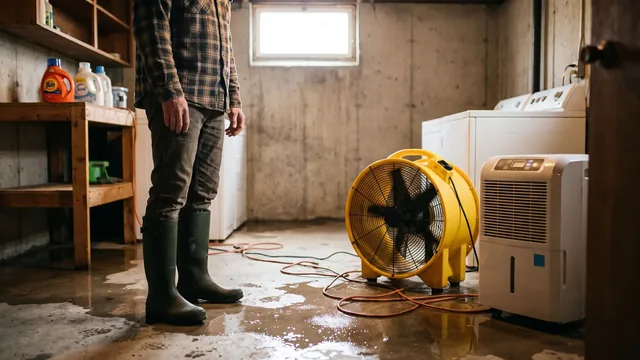
Learn how to address water damage in your home fast, from shutting off water and power to drying materials before mold starts growing in 24 to 48 hours.
