
A guide to selling a historic home
This article is for informational purposes only and is not legal or tax advice. Designation rules, disclosure duties and tax credit terms vary by property and change over time. Consult a Michigan real estate attorney and a tax professional about your situation.
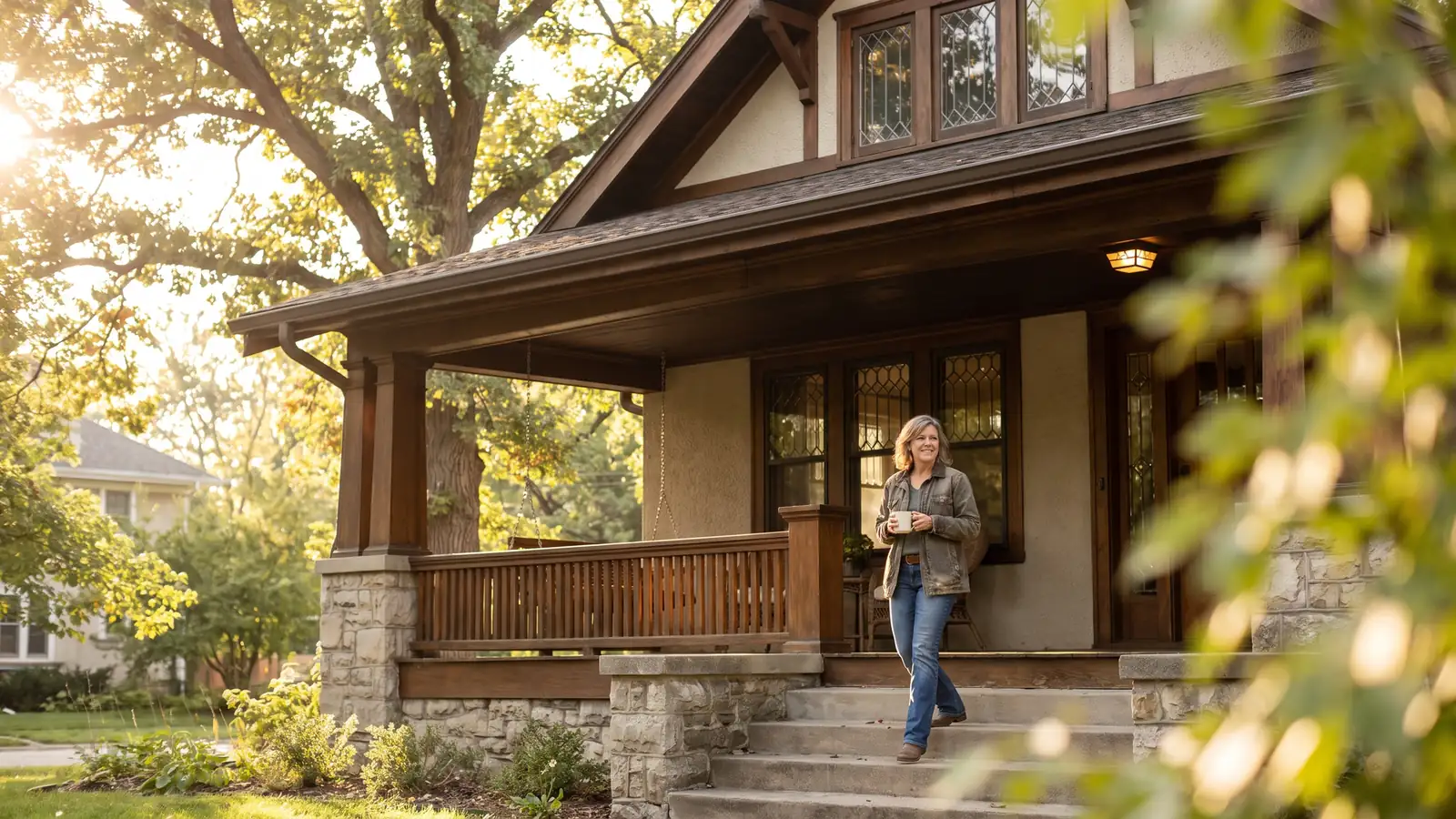
Selling a historic home is a disclosure and pricing problem before it is a repair problem. Any home built before 1978 triggers the federal lead-based paint disclosure: the lead hazard pamphlet, written disclosure of known lead-based paint and hazards, and a 10-day opportunity for the buyer to inspect. And in a locally designated Michigan historic district, a permit is required before any work affecting the exterior appearance, issued only after the historic district commission grants a certificate of appropriateness or a notice to proceed.
Pricing is the second problem. Comparable sales are thin, so appraisers value original millwork, leaded glass and craftsmanship inconsistently, and the four designations buyers ask about restrict a property very differently. National Register listing alone places no federal restriction on a private owner using private money. Local designation and a recorded preservation easement do.
Learn which designation you hold, what has to go in writing, whether to preserve or modernize, how to price original features, and what Michigan commissions allow. Start with our Selling a Home guide and Selling Situations hub.
Key takeaways:
- Four designations, and only 2 restrict you: National Register listing places no federal restriction on a private owner using private funds, while a local historic district requires a permit before any exterior work and a recorded preservation easement binds every future owner in perpetuity.
- Repair rather than replace: Michigan commissions review plans against the Secretary of the Interior’s 10 Standards for Rehabilitation, which require deteriorated historic features to be repaired rather than replaced. That is also what your buyer pool is paying for.
- Run the tax math before you list: Michigan’s state historic tax credit equals 25% of qualified expenses, but selling within 5 years of your certificate of completed rehabilitation adds back 100% to 20% of what you claimed.
What makes selling a historic home different?
Three things, and none is the age of the roof. A historic sale differs because a public body may control your exterior, because a smaller and better-informed buyer pool sets your price, and because the appraisal has fewer comparables.
- Somebody else may own your exterior decisions: In a locally designated district, replacing windows, changing siding, altering a porch or removing a chimney is regulated work, and that constraint transfers to your buyer.
- The buyer pool is narrower: Preservation buyers arrive knowing what a repointed foundation and an original sash cost. They pay for authenticity and discount damage to it.
- The comparables are thin: A 1908 four-square with original leaded glass rarely has three recent, nearby, similar sales. Value opinions widen, and a wide appraisal is a financing risk, as the home appraisal process explains.
Age alone is not designation. A property normally must be at least 50 years old to be considered for the National Register, and one that achieved significance more recently qualifies only if it is of exceptional importance or contributes to an eligible district. A 1930s bungalow nobody nominated is an old house, not a designated one.
Which historic designation do you actually have?
Confirm it in writing before you list, because the four designations carry different restrictions. National Register listing is an honor with tax consequences, local designation is a land-use control, and a preservation easement is a recorded interest that outlives you.
| Designation type | Who grants it | Restricts exterior changes? | Must you disclose it? |
|---|---|---|---|
| Individual National Register listing | National Park Service, nominated through the state historic preservation office | No. Federal review attaches only when federal funding, licensing or permitting is involved | Yes, and provide the nomination file |
| Contributing property in a National Register district | National Park Service, through the state historic preservation office | No, on the same terms as individual listing | Yes, and name the district |
| Local historic district | A county, city, village or township by ordinance under Michigan’s Local Historic Districts Act | Yes. A permit is required before any work affecting exterior appearance | Yes, with the design guidelines and commission contact |
| Preservation easement | A recorded deed of easement to a qualified organization | Yes, in perpetuity, and it binds every future owner | Yes. The statutory disclosure form asks about easements |
A property can carry more than one at once, including an easement a prior owner donated for a charitable deduction. Ask your title company for the recorded documents and your clerk for district boundaries. A recorded easement is an encumbrance the buyer’s lender will see, like other recorded property liens.
Should you preserve original features or modernize them?
Repair, do not replace. In a designated district that is not a matter of taste: Michigan commissions review plans against the Secretary of the Interior’s Standards for Rehabilitation, and Standard 6 states that deteriorated historic features “shall be repaired rather than replaced,” with any replacement matching the old in design, color, texture and materials.
- Windows are the classic mistake: Original sashes are usually repairable through reglazing, weatherstripping and a storm window, and vinyl replacements may be denied outright. Repair also preserves what the buyer is shopping for.
- Spend discretionary money where buyers cannot see it: Knob-and-tube wiring, a 60-amp panel, galvanized supply lines and a failing roof kill deals and appraisals, and none of it goes before the commission.
- Do not open the floor plan: Removing millwork, plaster, pocket doors and staircases destroys the premium your buyer pool exists to pay.
- Use contractors who work in historic materials: Lime mortar on soft brick, matching trim profiles and correct sash repair take specific skills, and the wrong repair can fail design review after you paid for it.
Where a house needs more than repair, give it a documented scope: renovating a historic home covers sequencing, home renovation permits covers paperwork, and maximizing your home’s resale value plus preparing your home rank what is worth funding.
What do you have to disclose when you sell a historic home?
The restrictions, not just the defects, and in writing. Michigan’s Seller Disclosure Act applies to transfers of not less than 1 and not more than 4 residential dwelling units, and the statutory form asks about the items a historic home most often carries.
- Easements and nonconforming uses: The form asks whether you are aware of “any encroachments, easements, zoning violations, or nonconforming uses.” A recorded preservation easement belongs there, with the deed.
- Work done without permits: The form asks about “structural modifications, alterations, or repairs made without necessary permits or licensed contractors,” and separately about “any outstanding municipal assessments or fees.” Exterior work done without a certificate of appropriateness triggers both, and selling a home with unpermitted work covers how to unwind it.
- Environmental hazards, including lead: The form lists lead-based paint by name, and the federal rule applies independently to any home built before 1978. Older homes also hide moisture behind plaster and in stone basements.
Two things “as-is” does not do: it does not waive your duty to disclose defects you know about, and it does not remove a district ordinance from the property. The statutory exemptions are narrow, such as court-ordered transfers and transfers by a nonoccupant fiduciary, and an as-is listing is not among them. Start with what a seller’s disclosure is and how to handle seller disclosures, then have a Michigan real estate attorney review anything unusual on your title. That is a legal question, not a lending one.
What lead paperwork should you keep after the sale?
A signed copy of the federal disclosure, kept for at least 3 years. Under 40 CFR 745.113, sellers and their agents must each keep a copy of the completed attachment for “no less than 3 years” from the completion date of the sale. Put it with the closing file, not in the listing folder that gets thrown out.
The attachment has more parts than many sellers expect. Per the regulation, it carries:
- The Lead Warning Statement, which opens with “Every purchaser of any interest in residential real property on which a residential dwelling was built prior to 1978”.
- Your own statement disclosing known lead-based paint or hazards, or saying you know of none.
- A list of the lead records or reports you handed over, or a statement that none are available. On a restored house, for example, a window restorer’s paint test or an old risk assessment belongs on that list.
- The buyer’s acknowledgment of the information and the federal pamphlet, and the buyer’s statement about the inspection opportunity.
- Statements from any agents that they told you your obligations, plus dated signatures from sellers, agents and buyers.
The EPA’s real estate lead disclosure page (last updated May 27, 2026) says lead-based paint for use in homes was banned in 1978 but “is still present in millions of homes,” and that sellers who do not provide the required information “may be subject to penalties.” A pre-listing home inspection can tell you what you are about to disclose before a buyer’s inspector does.
How do you price a historic home?
With an appraiser and an agent who have documented historic experience, because the usual comparable-sales shortcut breaks down. Historic homes sometimes command a premium in districts with strong demand and sometimes give it back through maintenance, design review limits and a smaller buyer pool. Character is what you are selling; condition is what you are discounted for. Sellers who assume the premium is automatic list high and sit.
- Build the comparable set deliberately: Ask for sales inside the district and sales of comparable styles, not the three closest addresses. A brick Tudor four blocks away can beat the ranch next door.
- Document provenance in the file: Original plans, the National Register nomination, restoration invoices, permits, certificates of appropriateness and photographs belong in the listing packet and in the appraiser’s hands. Undocumented restoration is invisible to an appraisal.
- Watch the financing risk: A wide value opinion is a loan problem before it is a price problem, and pricing a home for sale covers setting a number that survives underwriting.
Then run your own arithmetic. Sale price, minus payoff, minus selling costs, minus any repair credit, is the cash that becomes your next down payment. Federal law lets many sellers exclude up to $250,000 of gain, or $500,000 filing jointly, if they owned and used the home as a main residence for at least 24 months out of the 5 years before the sale, with limits in IRS Publication 523 on gain from selling your home. On a long-held home, basis matters, so bring the restoration invoices to your tax professional and read capital gains tax exemptions.
How will the buyer’s appraiser handle so few comparable sales?
By widening the search and explaining the choice in writing, if the loan follows Fannie Mae’s rules. Fannie Mae’s Selling Guide topic on comparable sales (dated June 4, 2025) says “A minimum of three closed comparables must be reported in the sales comparison approach,” and that sales closed within the last 12 months should be used. The same topic allows older sales when market conditions have limited recent ones, provided the appraiser explains that change in the report.
The guide also accepts that a one-of-a-kind house may have no true match. According to the Selling Guide, when truly comparable sales are scarce, the appraiser may rely on properties that are not truly comparable, as long as the appraiser documents the analysis and explains why those sales were used. That written reasoning is where a historic premium holds or slips, so give the buyer’s agent your list of in-district sales and your restoration invoices to pass along for the appraiser.
Your buyer will see the number. According to the CFPB, a borrower has the right to a free copy of the appraisal for a first-lien mortgage, sent as soon as it is finished and no later than three days before the loan closes (CFPB, page last reviewed September 9, 2020). If the value comes in short, selling a home with a low appraisal lays out your options and appealing a low appraisal explains how the buyer’s side can ask for a second look.
Who buys historic homes, and how do you reach them?
A narrower and more motivated audience than the general pool, which is why marketing does more work here than staging. Preservation buyers self-select on style, district and story, so the listing must carry all three.
- Lead with the architecture and the documentation: Name the style, the build year, the architect if known, and the district. Photograph the newel post, the tile, the leaded glass and the original hardware, not just wide-angle rooms.
- Sell the incentives your buyer can actually use: Eligibility depends on designation type, so state the designation and let the buyer verify. The federal 20% rehabilitation credit is limited to income-producing property and is not available for an owner-occupied residence; Michigan’s state credit does reach owner-occupied dwellings.
- Be honest about design review: Buyers who learn about it after closing complain. Buyers who learn about it in the listing are the ones who wanted it.
The same playbook works on any home whose value sits in features rather than square footage, so read marketing a home with unique features and selling a luxury home alongside this one. If your buyer will finance repairs, selling a fixer-upper covers how renovation-loan buyers underwrite, and buying a historic home is the page to hand them. Review insuring a historic home too, since a quote can stall a contract, and selling a condo will feel familiar, because there an association governs the exterior instead of a commission. On buyer preferences, NAR’s research on buyer preferences and home sales beats any single agent’s impression.
What does a buyer who plans to renovate need from you?
A scope of work they can finance and a commission can approve. Many buyers of older homes fold repairs into the purchase loan. HUD’s 203(k) program page says the Limited 203(k) “Permits homebuyers and homeowners to finance up to $75,000 into their mortgage to repair, improve, or upgrade their home,” and that on the Standard 203(k) “The cost of the rehabilitation must be at least $5,000,” with the property’s total value still inside the mortgage limit for the area (both figures as HUD’s page showed them in November 2026). What a renovation loan is and financing home renovations explain the other routes a buyer may use.
In a local district, that scope also has to clear design review. Grand Rapids tells owners that additions, alterations, improvements and repairs in a historic district “will either need to be approved by city staff or the Historic Preservation Commission,” that a commission application must be filed before the filing date of the chosen meeting, and that each application carries a non-refundable fee (City of Grand Rapids, certificate of appropriateness application). One statewide rule surprises buyers: under MCL 399.205, a commission may not issue a certificate of appropriateness unless the applicant certifies that the property has or will have a fire alarm system or a smoke alarm complying with the Stille-DeRossett-Hale single state construction code act.
Paint is the third piece. The EPA’s Renovation, Repair and Painting Program page (last updated June 17, 2026) reports that approximately three-quarters of U.S. homes built before 1978 still contain some lead-based paint, and that “anyone paid to perform work that disturbs paint” in pre-1978 housing must be certified in lead-safe work practices. That covers the scraping and repainting you pay for before listing as well as the buyer’s later plans, so ask any painter or window restorer for the firm’s certification.
What Michigan sellers should know
Michigan puts the restriction at the local level and the penalty on the property. National Park Service designation does not control your exterior. A local ordinance does.
- A permit comes before any exterior work: Under the Local Historic Districts Act, 1970 PA 169, a permit is required before work affecting the exterior appearance of a resource, and none issues until the commission grants a certificate of appropriateness or a notice to proceed. “Ordinary maintenance” is expressly not work under the act. A repair that changes the external appearance is.
- Commissions apply federal standards, and denials are appealable in 60 days: The act requires commissions to follow the Secretary of the Interior’s Standards for Rehabilitation at 36 CFR part 67 and to review exterior features only, unless the local legislative body authorized more. An applicant may appeal to the State Historic Preservation Review Board within 60 days, then to circuit court.
- Unpermitted work can become a special assessment: Where work was done without a permit and does not qualify for a certificate of appropriateness, the commission may require the owner to restore or modify it; if the owner does not comply, the commission may seek a circuit court order, do the work itself, and have the local unit levy the cost against the property as a special assessment.
- The state historic tax credit has a 5-year clawback: Michigan’s credit equals 25% of qualified expenses, capped statewide at $5,000,000 a year with at least $1,000,000 reserved for residential historic resources and a $1,000 inflation-adjusted minimum spend for an owner-occupied dwelling. Sell less than 5 years after your certificate of completed rehabilitation and the add-back runs 100% in year one, then 80%, 60%, 40% and 20%, unless you sign a written agreement with the State Historic Preservation Office.1
Verify designation before you market it. The State Historic Preservation Office administers the National Register in Michigan and the state register of historic sites; your clerk confirms whether an ordinance-created district covers your address.
Can your buyer still use Michigan’s historic tax credit?
Only if their own project fits the statute’s calendar and the program still has room. Under MCL 206.266a, the state credit created by Public Act 343 of 2020, a certificate of completed rehabilitation must be issued before January 1, 2031, and the credit must first be claimed within 5 years after that certificate is issued. A buyer who receives a preapproval letter must also begin the work within 1 year after it, if work has not already begun. A buyer planning a long, phased restoration should map those dates before counting on the credit.
Capacity is the practical limit. The State Historic Preservation Office reported that owner-occupied residential applicants could apply for the 2026 credit beginning January 2, 2026, with reservations awarded on a first-come, first-served basis (Michigan SHPO, Historic Preservation Tax Credits). Its program FAQ (May 25, 2022) asks “Is every project guaranteed a full 25% credit?” and answers “No,” adding that a project may receive a preapproval letter for less than a full credit (State Historic Tax Credit Program FAQ). In a listing, say the house is eligible to apply, never that a buyer will receive the credit.
The cap may change. House Bill 4503, introduced May 20, 2025, would modify the program (Michigan Legislature, HB 4503), and the Michigan Historic Preservation Network reports that the bill package would “raise the current $5M annual credit cap to $100M” (Michigan Historic Preservation Network). Until a bill is enacted, the statewide cap in the statute is the law, so describe the credit to buyers from the statute, not the proposal.
How do Michigan county records show a local historic district?
Through the ordinance the local unit files with the county register of deeds. Under MCL 399.203, a local unit “may, by ordinance, establish 1 or more historic districts,” and once it does, it must file a copy of the ordinance, including a legal description of the property in the district, with the register of deeds. A title search can therefore surface the district, which is one more reason to order title work early; choosing a title company and why title insurance matters cover that step.
Local districts are common in Michigan but far from universal. According to the State Historic Preservation Office, 82 Michigan communities have historic district ordinances that let them appoint a commission with design review authority (Michigan SHPO, Local Historic Districts, as the page read in November 2026). Detroit’s Historic District Commission was formed by Ordinance 161-H in 1976 and administers permit review “for all exterior changes to a building or site in a designated district,” per the City of Detroit.
Your buyer will also ask about property taxes, and the answer is not your bill. Michigan Treasury explains that a change of ownership may affect property taxes (Michigan Treasury, Changes of Ownership). In Michigan, a home’s taxable value is capped while one owner holds it. The year after it sells, that cap comes off and taxable value resets to the state equalized value, which is half of the assessor’s estimate of market value, not automatically half of what you paid. Point buyers to how property tax assessments work and the Michigan property tax calculator, and run your own side with the finances of selling.
How Align helps when the move is hard
Divorce, a job transfer, an inherited home or a growing family rarely arrive on a convenient schedule. Samantha lives and works in Oakland County and meets people across a desk, not through a call center.
She handles your next loan from the first conversation to the closing table, including refinancing to remove a co-borrower when a home stays with one person.
FAQ: Selling a historic home
Here are answers to common questions about selling a historic home.
What legally counts as a historic home?
It depends on the designation. A home may be listed individually on the National Register, contribute to a National Register district, sit inside a locally designated district, or carry a preservation easement, and generally only the local designation and the easement restrict what you can change. National Register listing alone imposes no restriction on a private owner using private funds. Confirm the status in writing, and hand a serious buyer our guide to buying a historic home.
Do I have to disclose that my home is in a historic district?
Yes. District status and any recorded preservation easement affect what a buyer can do with the property, and Michigan’s statutory form asks directly about easements, unpermitted alterations and outstanding municipal assessments. Provide the designation documents, the design guidelines and the commission’s contact, and see what a seller’s disclosure is.
Should I renovate a historic home before selling it?
Repair, do not replace. Restoring original windows, refinishing floors and repointing masonry preserves the value your buyer pool is paying for, while ripping out millwork for an open floor plan destroys it. Put discretionary money into electrical, plumbing, roof and HVAC, and use contractors experienced with historic materials so the work passes design review, as renovating a historic home explains.
Do historic homes sell for more than comparable houses?
Sometimes, and less predictably than sellers expect. Craftsmanship can command a premium in districts with strong demand, while maintenance costs, design review restrictions and a smaller buyer pool offset it elsewhere, and thin comparables make appraisals volatile. Hire an appraiser and agent with historic-property experience, and use the method in pricing a home for sale.
What is demolition by neglect in a Michigan historic district?
It is a commission finding that a resource in a historic district is threatened through lack of repair. Under MCL 399.205(11), the commission may then require the owner to repair all conditions contributing to it. If repairs are not made within a reasonable time, the commission may obtain a circuit court order, enter the property and make them, and the cost is charged to the owner and may be levied as a special assessment against the property.
Does a plaque mean a house is on the National Register?
Not by itself. The National Park Service says “the National Register of Historic Places does not issue plaques as a result of listing” (National Register FAQ, last updated February 17, 2026), so a plaque on the porch proves nothing either way. Ask the Michigan State Historic Preservation Office for the listing record, and check separately whether a local ordinance district covers the address.
Can the Michigan historic tax credit be transferred to someone else?
Only by the certificate holder, and only in the year the certificate is issued. Under MCL 206.266a(7), the holder “may assign all or any portion of the credit,” but an assignment “is irrevocable and shall be made in the tax year in which a certificate of completed rehabilitation is issued.” A seller whose certificate came years earlier cannot assign the credit to a buyer at closing. Ask your tax professional how a sale affects credit you already claimed.
Can you tear down a building in a Michigan historic district?
Only with the commission’s approval: a certificate of appropriateness or a notice to proceed, and a notice to proceed requires one of these findings. Under MCL 399.205, the resource is a hazard to safety, is a deterrent to a major improvement program of substantial benefit to the community, causes undue financial hardship from events beyond the owner’s control, or keeping it is not in the interest of the majority of the community.
The bottom line on selling a historic home
Selling a historic home comes down to naming the designation, disclosing the restriction, and preserving the character that creates your buyer pool. National Register listing alone places no federal restriction on a private owner using private funds; a local historic district requires a permit before any work affecting the exterior appearance; and a recorded preservation easement binds every owner who follows you. Repair rather than replace. And check the tax calendar, since Michigan’s 25% state credit can claw back as much as 100% of what you claimed if you sell within 5 years of your certificate of completed rehabilitation.2 Easement, ordinance and title questions belong with a Michigan real estate attorney.
If you’re ready to find out what your sale proceeds will actually buy next, talk to Align Lending. We’ll run your payoff and net proceeds, plan the financing if you need to buy before you sell, and shop your next loan across our lender network so you see the numbers side by side. Call 248-506-5727 or start online, and see the benefits of working with a mortgage broker.
Footnotes:
1. This article is for informational purposes only and is not intended to provide legal or tax advice. Historic tax credit eligibility, recapture and application procedures are set by statute and administered by the Michigan State Historic Preservation Office, and they change. Consult a qualified tax professional and a Michigan real estate attorney about your specific situation. Return to text.
2. Figures in this article are educational and are not a rate quote, an offer of credit, or an advertisement of credit terms under federal or state lending laws. Sale prices, appraised values, credit amounts and net proceeds depend on your property, its designation status, your market and the professionals you engage. Return to text.
Sources: no federal restriction on a private owner’s use of a National Register-listed property absent federal funding, licensing or permitting, National Park Service, National Register of Historic Places frequently asked questions. General 50-year age threshold and the exceptional-importance requirement for properties that achieved significance within the past 50 years, National Register Criteria Consideration G and National Register Bulletin 15, National Park Service. Ten Standards for Rehabilitation and Standard 6’s requirement that deteriorated historic features “shall be repaired rather than replaced,” with replacement matching the old in design, color, texture and, where possible, materials, National Park Service, Secretary of the Interior’s Standards for Rehabilitation, 36 CFR part 67. Federal 20% rehabilitation credit limited to income-producing properties and unavailable for owner-occupied residences, and claimed ratably over 5 years, National Park Service Historic Preservation Tax Incentives and IRS Rehabilitation Credit guidance. Perpetuity and binding-on-future-owners requirements for a qualified conservation or facade easement, IRS conservation easement guidance under IRC section 170(h) and National Park Service, Easements to Protect Historic Properties. Lead-based paint disclosure for target housing built before 1978, including the lead hazard pamphlet, disclosure of known lead-based paint and hazards, and the 10-day opportunity to conduct a risk assessment or inspection, 42 U.S.C. 4852d as implemented at 40 CFR part 745 subpart F and 24 CFR part 35 subpart A. Section 121 exclusion of up to $250,000 of gain, or $500,000 for married filing jointly, with ownership and use for at least 24 months of the 5 years before the sale, IRS Publication 523. Permit required before work affecting the exterior appearance of a resource in a historic district, and issuance only after a certificate of appropriateness or notice to proceed; commission review against the Secretary of the Interior’s Standards at 36 CFR part 67; review limited to exterior features unless otherwise authorized; 60-day appeal to the State Historic Preservation Review Board and subsequent appeal to circuit court; and restoration or modification of work done without a permit with costs levied as a special assessment against the property, MCL 399.205. Definitions of certificate of appropriateness, notice to proceed, ordinary maintenance, repair and work, MCL 399.201a; Local Historic Districts Act, 1970 PA 169, MCL 399.201 to 399.215. Applicability of seller disclosure requirements to transfers of not less than 1 and not more than 4 residential dwelling units, MCL 565.952; exemptions including court-ordered transfers and transfers by a nonoccupant fiduciary, MCL 565.953; statutory Seller’s Disclosure Statement questions on environmental hazards including lead-based paint, encroachments and easements, structural modifications made without necessary permits, and outstanding municipal assessments or fees, MCL 565.957. Michigan state historic preservation tax credit equal to 25% of qualified expenditures, $5,000,000 annual statewide cap with not less than $1,000,000 reserved for residential historic resources, $1,000 minimum qualified expenditures for a residential historic resource adjusted annually for inflation using the Detroit Consumer Price Index, eligibility for resources individually listed on or contributing to the National Register or state register or located in a local historic district, and the sliding 100%, 80%, 60%, 40% and 20% add-back on sale or disposition less than 5 years after the certificate of completed rehabilitation together with the written-agreement alternative, MCL 206.266a. Transfer of the State Historic Preservation Office to the Michigan Strategic Fund, Executive Reorganization Order No. 2019-3, MCL 125.1998.
This article is for informational purposes only and is not intended to provide legal, financial, or tax advice. Historic designation, disclosure duties, design review outcomes, tax credit terms and loan program requirements change and vary by property, municipality and program; confirm your designation with your local unit and the Michigan State Historic Preservation Office, and consult a Michigan real estate attorney and a qualified tax professional about your situation. Figures shown are illustrative, are not a rate quote or an offer of credit, and are subject to change. Align Lending is an independent Michigan mortgage broker, NMLS #2041154. Align Lending is a mortgage broker and does not list or sell real estate, and does not provide legal advice.
Sources
Every outside source this guide links to, in the order it appears. How we choose and check sources
- 40 CFR 745.113law.cornell.edu
- Real estate lead disclosure pageU.S. Environmental Protection Agency
- IRS Publication 523 on gain from selling your homeInternal Revenue Service
- Comparable salesFannie Mae Selling Guide
- CFPB, page last reviewed September 9, 2020Consumer Financial Protection Bureau
- NAR’s research on buyer preferences and home salesNational Association of Realtors
- 203(k) program pageU.S. Department of Housing and Urban Development
- City of Grand Rapids, certificate of appropriateness applicationgrandrapidsmi.gov
- MCL 399.205Michigan Legislature
- Renovation, Repair and Painting Program pageU.S. Environmental Protection Agency
- MCL 206.266aMichigan Legislature
- Michigan SHPO, Historic Preservation Tax Creditsmiplace.org
- State Historic Tax Credit Program FAQmiplace.org
- Michigan Legislature, HB 4503Michigan Legislature
- Michigan Historic Preservation Networkmhpn.org
- MCL 399.203Michigan Legislature
- Michigan SHPO, Local Historic Districtsmiplace.org
- City of Detroitdetroitmi.gov
- Michigan Treasury, Changes of OwnershipState of Michigan
- National Register FAQ, last updated February 17, 2026nps.gov
- National Park Service, Secretary of the Interior’s Standards for Rehabilitation, 36 CFR part 67nps.gov
- 42 U.S.C. 4852dlaw.cornell.edu
- 24 CFR part 35 subpart AElectronic Code of Federal Regulations
- MCL 565.952Michigan Legislature
- MCL 565.953Michigan Legislature
- MCL 565.957Michigan Legislature
Related resources

20-minute read
Downsizing your home: tips for a smooth transition
Learn how to downsize your home without the chaos, with a decluttering timeline, a moving budget, tax rules on your gain and help with the emotional part.

20-minute read
How to sell a home with unpermitted work
Learn how to sell a home with unpermitted work: what to disclose, when retroactive permits are worth pulling, and how as-is pricing shapes offers.

20-minute read
Selling a home with a home equity loan or HELOC
See how selling a home with a home equity loan works, the order liens get paid at closing, prepayment and early-closure fees, and what you net afterward.
