Align Lending

Ottawa County, Michigan

Mortgage Broker in Holland, MI

Buying in the City of Holland, from the historic blocks near Hope College to the Allegan County side south of 32nd Street? Samantha prices your loan with multiple wholesale lenders and checks the county, school district and tax rate on the parcel before you make an offer.

  • No credit pull to talk
  • Licensed loan originator, NMLS 1647301
  • 5.0 on Google, 128 reviews

Buying a home in Holland

Holland is a city on the Ottawa and Allegan county line near Lake Michigan, home to about 35,000 residents in the Census Bureau's 2024 estimate and known for the Tulip Time Festival. Holland is home to Hope College and Western Theological Seminary, and companies including Herman Miller, Haworth and Adient. The median household income in Holland is near $75,900.

By the numbers

Holland housing and mortgage snapshot

Values move. Treat these as orientation and let us pull current figures for the address you are considering.

$252,000

Typical home value, from the market research on this page

+64%

Typical rise in taxable value the year after a home sells, 2026 Uncapping Study

1.24%

Property tax current owners pay, as a share of value. A buyer's bill can reset higher the year after a sale

2

Residential ZIP codes: 49423, 49424

What financing looks like in Holland

In the Census Bureau's survey, owners put the middle half of City of Holland homes between about $200,000 and $333,000 (2020 to 2024). Sales since then run higher. Redfin's median for Holland was about $345,000 for July through September 2026, close to flat from a year earlier, with the typical listing going under contract in about 12 days, and Zillow puts the city's typical value near $371,000. At those prices a purchase sits well inside the 2026 conforming limit of $832,750 and the 2026 FHA limit of $541,287, so conventional, FHA and VA loans all work. MSHDA's MI Home Loan is another route for buyers within its income limits and credit requirements, with a $566,355 price limit and $10,000 in down payment assistance.

The age of the house shapes a Holland loan more than its price. About one home in four in the city went up before 1940, closer to three in ten on the Ottawa County side, so the inspection and the appraisal carry real weight. A renovation loan can roll needed repairs into the mortgage, and inside the four local historic districts, new windows, siding or a porch rebuild in a different material needs the city's approval first, so get the cost of that work before you set your offer.

Condos are the other common case. About 27% of the city's homes share a building with at least one other unit, most of them downtown, around Hope College and east of US-31. A lender looks at the condominium association's budget, insurance and owner mix along with your own file, and an FHA loan needs the project on FHA's approved list or a single-unit approval, so ask for the association documents as soon as an offer is accepted.

On a City of Holland home, the county line at 32nd Street and the historic district map shape the budget more often than the loan amount does.

The market

The Holland housing market

The typical home value in Holland is near $252,200, the median for owner-occupied homes in the Census Bureau's American Community Survey, which counts about 8,800 owner-occupied homes here. The median year built is 1966, so Holland has many established homes in its historic district and older neighborhoods, with newer construction at the edges. Homeowners pay a median of about $3,130 a year in property taxes, an effective property tax rate of about 1.24% of the median value.

Two counties, one city

Holland on each side of 32nd Street

The city is split almost evenly by land between Ottawa and Allegan counties, but not by homes. Figures are Census estimates for each county's part of the city (2020 to 2024), the 2020 Census count of homes and our 2026 Uncapping Study.

Ottawa County side: about three quarters of the homes

Downtown, Hope College, the historic districts, Washington Square, Holland Heights and the Westside. Typical home from 1957, about three in ten built before 1940, owners in about 64% of occupied homes and an owner median near $255,000. In the Study, the post-sale jump in taxable value here runs about 64%.

Allegan County side: about half the land

Maplewood, the newer blocks west of Washington Avenue, the airport and the industrial south side. Typical home from 1985, owners in about 78% of occupied homes, an owner median near $244,000, and all of the city's manufactured homes. The reset after a sale runs about 57%, adding roughly $1,890 to the first full year of tax on a $250,000 home.

ZIP 49423 is bigger than the city

Nearly all of the city uses 49423, but about four fifths of that ZIP's land lies in townships, mostly Fillmore, Laketown and Overisel. 49424, the ZIP north of the river, touches only a sliver of the city's northeast corner, where the 2020 Census counted no homes. Redfin's 49423 median sale was about $355,000 for the three months ending September 2026.

Where to look

Holland neighborhoods

Downtown and Eighth Street

The shopping blocks of Eighth Street, listed on the National Register as the Holland Downtown Historic District in 1990, and the riverfront north to Windmill Island Gardens. Nearly every home in this Census block group is in a building of two or more units and most are rented. Owned condos and lofts carry a Census median near $337,000, with a wide margin. Many downtown streets and sidewalks run on the city's snowmelt system, and low ground by the Black River is in FEMA's high-risk flood zone.

Hope College blocks

The streets around Hope College's 120-acre campus, shared with Western Theological Seminary since 1884, next to downtown. The typical home here dates from 1938 by Census median, a mix of single-family and two-family houses with apartments, and renters outnumber owners. Owner values run near $233,000 to $239,000 by block group.

The Holland Historic District

Along 11th through 15th streets between Washington Boulevard and College Avenue, with the blocks west of River Avenue running toward Kollen Park on Lake Macatawa. The city's first local historic district, formed in 1986 with about 186 properties, sits here, and the Washington Boulevard district takes in houses on 9th Street. West of River Avenue, about three in four homes are detached, the typical one from 1938, with an owner median near $242,000 and a wide margin.

Washington Square and Rosa Parks Green

From 16th Street to 24th Street: the Washington Square shops at 18th and 19th streets, whose single block of Washington Avenue joined the National Register in 2026, and Rosa Parks Green to the east, near Baker Lofts in a former furniture factory on 24th Street. Typical home from 1938, about 86% detached, owners in about four of five occupied homes, Census tract median near $222,000.

24th to 32nd Street

The band that holds Holland Hospital on Michigan Avenue, Holland High School on Van Raalte Avenue and the Holland Aquatic Center. Its central blocks were built up mostly in the late 1940s and 1950s, the western blocks around 1961, and the east end toward US-31 adds townhomes and condos, typically from the 1980s. Census tract owner median near $243,000, typical home from 1959.

Westside by Graafschap Road

The city's west edge, home to the 18-acre DeGraaf Nature Center on Graafschap Road. Almost every home is a detached house, typically from about 1961, and owners hold close to nine in ten. Owner estimates in the Census survey place the middle half of homes between about $262,000 and $518,000, with the tract median near $349,000.

Holland Heights

East of US-31, where the city's neighborhood guide describes homes built from 1950 to 1990 and Van Raalte Farm Park spreads over 160 acres off 16th Street. About half of the tract's homes are in apartment or condo buildings, mostly toward its southeast edge, and renters slightly outnumber owners. Owner median near $278,000, typical home from 1985. Paw Paw Preserve on the Black River marks the flood-prone north edge.

Maplewood

The Allegan County side between Washington and Lincoln avenues, from 32nd Street south toward 40th, around Matt Urban Park. Its northern blocks are mostly detached homes from the mid-1950s, nearly all owner-occupied, with a block-group median near $239,000. Farther south and east, condos and attached homes from the late 1980s make up about half of the homes. Holland Public Schools.

West of Washington Avenue, south of 32nd

The newest part of the Allegan County side, with homes typically from the 1990s. Townhomes and condos make up a large share, and south of 40th Street most homes are in multi-unit buildings and renters outnumber owners. Block-group owner medians run from about $284,000 to $362,000. Mostly Holland Public Schools, with a southern strip in Hamilton Community Schools.

The south side job center and airport

The far south and southeast of the city, around West Michigan Regional Airport on Geurink Boulevard and out to I-196 and M-40, which the city's Holland Heights guide calls the Southside job center. Most of this land is in Hamilton Community Schools. About 620 homes stood here in the 2020 Census, including nearly all of the city's roughly 290 manufactured homes, and about nine in ten of those 620 are in Holland Public Schools.

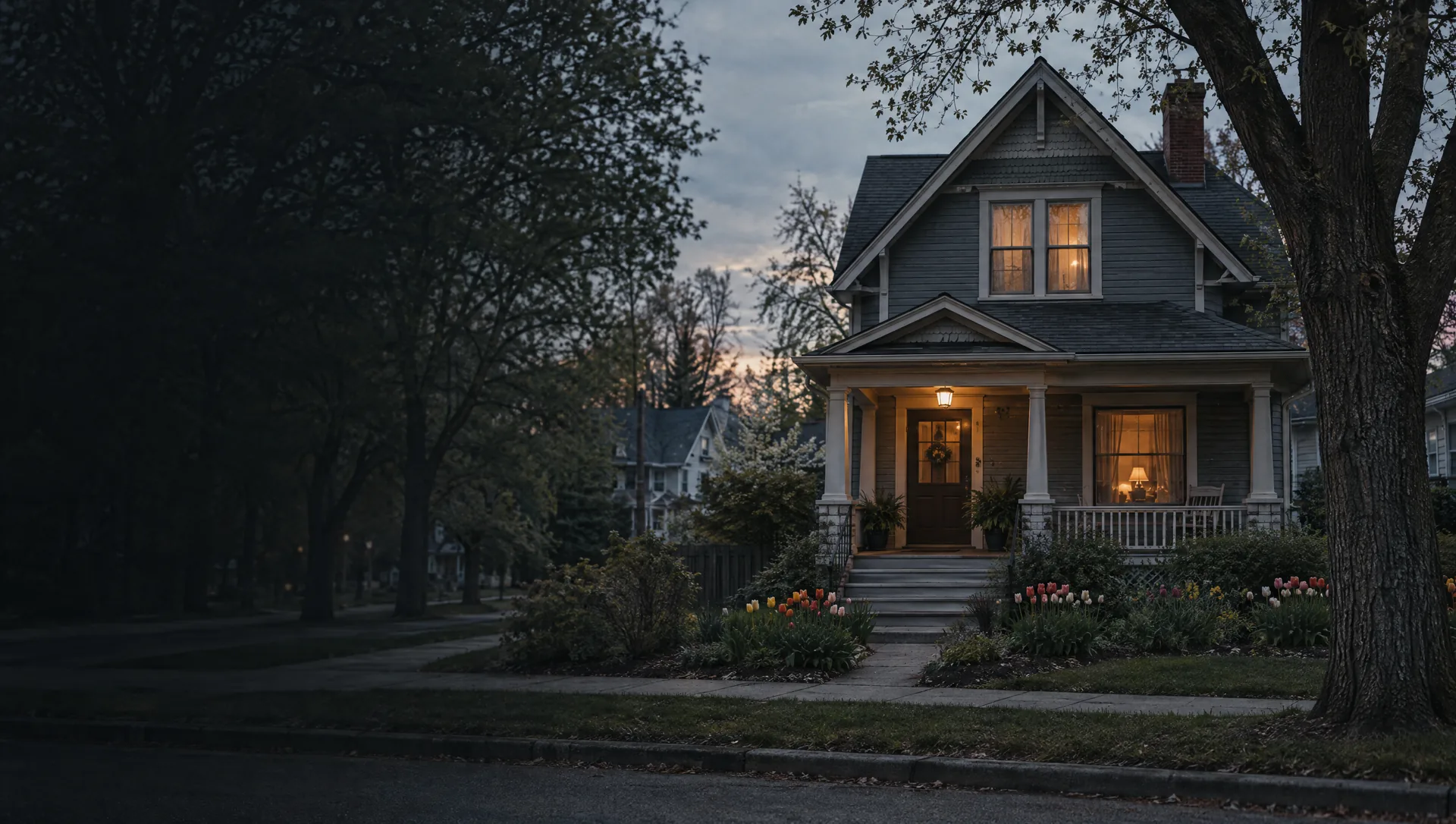
City rules

Five things to settle on a City of Holland house

Each of these comes from a city or utility office, and every one is simpler to settle while the inspection period is still open.

  • Historic district review. The city has four local districts, created in 1986, 1994, 2001 and 2010, plus the Van Raalte Farm home lot added in 2006. Its historic preservation page lists them, and the February 2026 review guide sorts each kind of exterior work into no review, staff review or Commission review. Michigan's state historic tax credit takes applications from owner-occupied homes that contribute to a listed or local district, first come, first served.
  • Rental and short-term rental certificates. The city's rental licensing guide sets out which certificate a monthly lease, a room for a boarder or a short stay needs, and the investor short-term rental slots in residential zones are full.
  • The water service line. The Holland BPW keeps records of service line material and will check an address on request, though some lines are still listed as unknown. Galvanized lines once tied to lead goosenecks are on its replacement list.
  • Downtown snowmelt. The city's snowmelt system, running since 1988 on waste heat from power generation, clears about 690,000 square feet of streets and sidewalks, and another 190,000 square feet of private walks and drives draw from its mains. For a downtown condo with heated walks, ask the association what that costs its budget.
  • Help after you move in. The city's Home Repair Program offers income-eligible owners of single-family homes in the city up to $10,000 toward needed repairs, or $5,000 when the work disturbs lead-based paint.

The neighborhood figures above come from Census survey data for 2020 through 2024 at the tract or block-group level, and the margins at that scale run wide, so recent sales are what we lean on for the house you choose.

Schools and commute

Schools

Holland Public Schools serves nearly all of the city, all but about 1 in 50 of its homes in the 2020 Census, on both sides of the county line. Hamilton Community Schools covers close to three tenths of the city's land, mostly the airport and industrial south side in Allegan County, yet only about 200 of its homes. Michigan Treasury's 2025 millage table also lists a Zeeland Public Schools rate for a sliver of the Ottawa side where the 2020 Census counted no homes, and it lists no West Ottawa rate for the city at all. Together, the district and the county set the homestead rate: 41.94 mills for Holland Public Schools on the Ottawa side, 43.54 for the same district in Allegan County and 40.21 in Hamilton.

Commute

US-31 cuts diagonally across the city's east side, I-196 crosses its southern tip in Allegan County, and M-40 heads southeast toward Hamilton. From City Hall on River Avenue, downtown Zeeland is about 5 miles, roughly 11 minutes by car, downtown Grand Rapids about 28 miles (38 minutes without traffic) and Holland State Park on Lake Michigan about 7 miles (15 minutes). Amtrak's Pere Marquette to Chicago stops at the Padnos Transportation Center downtown, which is also the transfer point for MAX buses. About half of working residents get to work in under 15 minutes, with an average near 17 minutes by Census count. The city's 2025 financial report lists Haworth (about 1,840 jobs), LG Chem Michigan (1,780), Holland Community Hospital (1,400), Challenge Manufacturing, Hope College and Tiara Yachts among its ten principal employers, which together account for about half of the jobs in the city.

Michigan property taxes

Holland property taxes after you buy

The year after a Michigan home sells, its taxable value resets to half of the assessor's market value, so the seller's tax bill is not your tax bill.

In the City of Holland, our 2026 Uncapping Study found taxable value typically rises about 64% the year after a sale. On a $250,000 home, near the typical Holland value, that is roughly $2,070 more in first-year tax at the local median homestead millage. We build your payment on that post-sale number.

Looking at a Holland address? Our Michigan property tax calculator finds that property's published 2025 millage and works out the tax to plan for after you buy.

In Samantha's words

County alone does not tell you much. We would never say you are in a particular county so here are your taxes. It does not work like that. We need the actual property.

2025 homestead millage

Holland's tax rate by county and school district

The 2025 homestead totals Michigan Treasury publishes for the county and school district pairs inside the city. Each example uses a $250,000 home the assessor values at its price, so its taxable value lands near $125,000 once the sale resets it. The city adds a 1% administration fee to each bill.

Ottawa side, Holland Public Schools: 41.94 mills

Most of the city's homes. About $5,240 for a full year of tax on the example home.

Allegan side, Holland Public Schools: 43.54 mills

Maplewood and most homes south of 32nd Street. About $5,440 a year on the same home. The county line accounts for the gap with the Ottawa side.

Allegan side, Hamilton Community Schools: 40.21 mills

The airport area and a strip of the southwest. About $5,030 a year on the example.

Second home or rental: about 18 mills more

Without the principal residence exemption, the Ottawa side's Holland Public Schools total is 59.94 mills, about $7,490 a year on the example. Downtown parcels in the Downtown Development Authority district also carry a small added levy.

Local resources

Check Holland records yourself

The official offices behind the tax and school details on this page.

What our clients say

5.0 on Google across 128 reviews

★★★★★
Can’t say enough great things about Samantha and her team at Align Lending! Highly recommend
Justin BartonJune 2024

Individual experiences. Results vary.

Holland mortgage questions

If yours is not here, ask it on the call. There are no dumb questions.

Is my Holland address inside the City of Holland?

Not always. The 49423 ZIP code covers almost all of the city, but the city holds only about a fifth of that ZIP’s land and roughly seven in ten of its homes. The rest belongs to Laketown, Fillmore and Overisel townships in Allegan County and to slices of Holland, Park and Zeeland townships. A city parcel pays the city’s levy and gets city police and fire service, so check the taxing unit on the parcel record before you budget.

32nd Street is the line: north of it is Ottawa County, south of it is Allegan County. About half of the city’s land but only about a quarter of its homes sit on the Allegan side. The county changes the tax rate and the office that records your deed. In our 2026 Uncapping Study, the post-sale rise in taxable value runs lower in the Allegan part, about 57% compared with about 64% in the Ottawa part.

Inside the city’s four local historic districts, work that changes the outside of a building goes through the city first. Under the Historic District Commission’s February 2026 guide, repairs in the same material, design and size need no Certificate of Appropriateness, matching replacement windows go to staff review, and a change of material goes to the Commission, which charges $25. Starting work before approval adds a $50 late fee, so ask the seller whether past exterior work was approved.

Maybe, depending on the zone. The city treats a stay of under 30 days as a short-term rental, which needs its own certificate. Renting a room in your primary home, or the whole house while you are away, is allowed in any zone. An investor-owned short-term rental is allowed in the mixed-use, industrial, planned unit and similar districts that permit housing, but the residential zones cap them at 25 with 500 feet between them, and the city’s guide says none are open now. Renting for 10 days or fewer during Tulip Time needs no certificate.

Yes. Every rental unit in the City of Holland has to be registered with Community and Neighborhood Services and hold a certificate of compliance, with an inspection every three or six years. The registration fee is billed each year and due by December 10, and a missed registration costs $200. If rent will help you qualify, talk with us before you choose a loan, because lenders count rental income under their own rules.

Only on a small part of the city. About 4% of its land falls inside FEMA’s high-risk flood zone, and roughly nine tenths of that follows the Black River on the north edge, from Windmill Island east past Paw Paw Preserve. A house inside that zone needs a flood policy before a federally backed loan can close, so check that address against FEMA’s flood map before you sign a purchase agreement.

The summer bill is dated July 1 and due August 15, and the winter bill is dated December 1 and due February 14, each moving to the next business day when the date falls on a weekend or holiday. The city adds a 1% administration fee to both bills. Own and occupy the home and file the principal residence exemption by June 1 to get it for that year, or by November 1 to get it starting with the winter bill.

Yes. The Holland Board of Public Works found no service lines made entirely of lead, but about 4,000 short lead connectors called goosenecks were once installed, and galvanized lines tied to them now count as lead service lines. The utility has removed more than 2,000 of those goosenecks, and state rules require it to replace every lead service line at its own cost within 20 years of 2021, including the stretch on the owner’s side of the shutoff. Ask the BPW for its record on the address while you are under contract.

Talk with a local mortgage expert

Tell Samantha what you are trying to do in Holland and she will tell you what actually matters for your situation, including whether the timing is right.

  1. 1

    Tell us what you are trying to do

    Not what product you want. What you are actually trying to accomplish.

  2. 2

    Samantha looks at your situation

    She works out what matters most for you specifically.

  3. 3

    You leave with a plan

    Your options, the tradeoffs, and your next step. No obligation to go further.

Align Lending LLC, NMLS #2041154. Samantha Shelton, NMLS 1647301. Equal Housing Opportunity. Licensed in Michigan, Ohio, North Carolina, Florida, Louisiana and Texas. Figures on this page are market research for orientation, not a quote. This page is for educational purposes only. It is not a credit decision, a preapproval, a commitment to lend, or an offer of credit.

Scroll to Top
Align Lending logo