
Renovating for Energy Efficiency: Where to Start for Maximum Impact
Start with an assessment, not a purchase. A professional energy audit or Home Energy Score shows where your specific house is losing energy, and that matters because the Building Performance Institute attributes up to 40% of a home’s energy loss to air leaks, not to the windows most homeowners replace first.
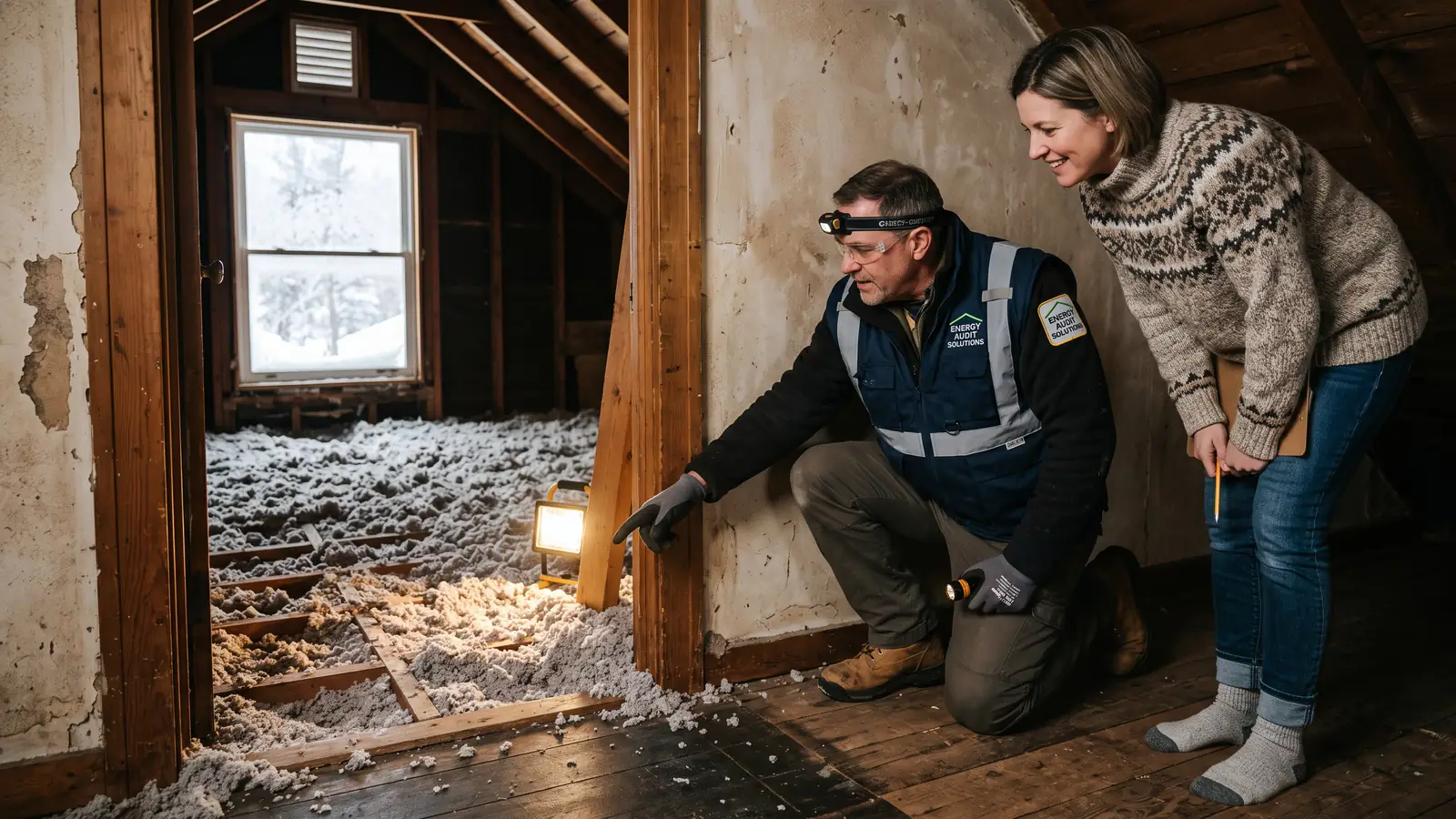
From there, the order that returns the most per dollar is consistent: air sealing and insulation first, high-efficiency HVAC and water heating second, windows and doors third, solar and other renewables last. ENERGY STAR estimates that air sealing a home and adding insulation in attics, floors over crawl spaces, and accessible basement rim joists saves an average of 15% on heating and cooling costs.
Learn where to start when renovating for energy efficiency. How the priority ladder works, which upgrades you can do this weekend, how Michigan’s climate changes the specification, and how to pay for the work now that the federal energy tax credits have expired. Our Home Improvement & Design hub and Homeownership guide cover the rest.
Key takeaways:
- Audit before you buy anything: A blower-door test and thermal scan show which walls, ducts, and penetrations actually leak, which matters because the Building Performance Institute attributes up to 40% of a home’s energy loss to air leaks.
- The envelope beats the equipment: ENERGY STAR estimates air sealing plus added insulation saves an average of 15% on heating and cooling costs, and a tighter house lets you buy a smaller, cheaper HVAC system afterward.
- Renewables go last, and 2026 changed that math: The 30% federal Residential Clean Energy Credit no longer applies to property placed in service after December 31, 2025, so solar on a leaky house means paying full price to generate energy you lose through the attic.
Why does the order of energy upgrades matter?
Order matters because each step changes the size, and the price, of the step after it. Seal and insulate first and you may need a smaller furnace and fewer solar panels than the same house needed six months earlier. Do it backwards and you pay for capacity to overcome a problem you could have fixed for a fraction of the cost.
| Step | Upgrade | Typical cost tier | Expected savings | Why it comes at this point |
|---|---|---|---|---|
| 1. Assess | Professional energy audit or Home Energy Score | $ | None directly, it redirects everything after it | Tells you which steps below your house actually needs |
| 2. Seal | Caulk, weatherstripping, rim joists, attic penetrations, duct joints | $ | Highest return per dollar spent | The cheapest available fix for the largest single loss category |
| 3. Insulate | Attic first, then floors over crawl spaces and basement rim joists | $$ | With sealing, an average of 15% of heating and cooling costs | Insulation doesn’t stop moving air, so leaks get sealed first |
| 4. Mechanicals | High-efficiency HVAC or heat pump, water heater, duct sealing | $$$ | Varies with the age of what you replace | A tighter house needs a smaller system, so sizing follows steps 2 and 3 |
| 5. Windows and doors | Replacement glazing, insulated doors, storm windows | $$$ | Modest relative to the spend, unless units are failing | Expensive per unit of energy saved, a comfort project as much as an energy one |
| 6. Generate | Solar photovoltaic, solar water heating, geothermal | $$$$ | Offsets whatever demand is left | You size generation to an efficient house, so you buy less of it |
Cost tiers are relative, not quotes. What each step costs depends on your home’s age, size, and access, so get written bids. For a closer look at each rung, see our guide to energy-efficient home upgrades.
What is a home energy audit?
A home energy audit is a professional diagnostic that measures where your house loses air and heat instead of estimating it from the age of your furnace. An auditor typically runs three tests: a blower-door test that depressurizes the house to quantify air leakage, a thermal imaging scan that shows missing or compressed insulation, and combustion safety checks on gas appliances.
What you get back is a prioritized list, and that’s the entire value. Without it, most homeowners start with what’s most visible, usually windows, which the ladder puts fifth.
Two practical notes. Many utilities subsidize residential audits or provide a basic version free, so check before paying retail. And ask whether the auditor sells the improvements they recommend, because an auditor with no stake in the work gives you a cleaner list. Our guide to the benefits of a home energy audit covers how to read the report, and the Department of Energy’s efficient home design guidance explains the whole-house approach.
Where does the energy in a typical home go?
Mostly to the two jobs the envelope steps shrink. According to the U.S. Energy Information Administration, 52% of a household’s annual energy consumption in 2020 went to space heating and air conditioning, and natural gas, used in 58% of homes, accounted for about 43% of residential end-use energy.
| Where the energy goes | Share | Measured as |
|---|---|---|
| Space heating and air conditioning | 52% | Household energy consumption, 2020 (EIA) |
| Water heating | About 18% | Household energy use (DOE, 2022) |
| Lighting | About 15% | Household electricity use (DOE, 2021) |
Sources: EIA, Energy use in homes (updated December 18, 2023, 2020 survey data); DOE Energy Saver Guide (2022); DOE Consumer Guide to Energy-Efficient Lighting (August 2021). The rows use different bases, so they do not add to 100%.
In dollars, per the ENERGY STAR smart thermostat page, almost half of the average household’s annual energy bill goes to heating and cooling, more than $900 a year. The 2022 Energy Saver Guide adds that new heating or cooling equipment alone can reduce energy use by 20% or more, while pairing it with insulation, air sealing and thermostat settings can cut heating and cooling bills by about 30%.
What are the cheapest high-impact upgrades?
Air sealing is the cheapest meaningful upgrade you can make, and it targets the loss category the Building Performance Institute sizes at up to 40% of a home’s energy use. Materials cost little; the work is mostly patience and access.
- Seal the attic plane first: The attic hatch, recessed light housings, chimney chases, and top plates leak more than any window in the house, because warm air rises and exits there.
- Caulk and weatherstrip the obvious gaps: Window and door frames, baseboards, and openings around plumbing and wiring. The leaks you can feel, and the ones a DIY afternoon closes.
- Seal duct joints: Ducts running through attics, crawl spaces, and garages deliver conditioned air where you don’t live. Mastic or foil tape keeps it in the rooms you heat.
- Insulate the rim joist: The band where the floor meets the foundation is among the leakiest spots in a basement, and one of the easiest to reach.
- Handle the free wins: LED bulbs, a smart thermostat, and a lower water heater setpoint cost little or nothing and start saving immediately.
One caution: a significantly tightened house needs deliberate ventilation, and any home with combustion appliances needs a safety check afterward. The main reason the audit belongs first.
You can also cut hot-water demand without touching the heater. EPA’s WaterSense program labels showerheads and faucets that use less water while still performing, and less hot water used is less water your heater has to heat, see EPA WaterSense guidance on water-heating efficiency for labeled fixtures.
How much do thermostat settings and lighting change the bill?
According to the DOE Consumer Guide to Home Heating and Cooling (2021), you can save 1% on heating bills for each 1°F of setback over an eight-hour period, and regular maintenance can reduce heating and cooling costs by 10% or more. The catch is that most thermostats are never programmed: the EIA reported in July 2017 that only 12% of the nation’s 118 million households had central air controlled by a programmed thermostat.
- Lighting: LEDs use up to 90% less energy and last up to 25 times longer than incandescent bulbs, per the DOE lighting guide, and the Energy Saver Guide says swapping a home’s five most-used fixtures or bulbs for ENERGY STAR products can save $75 a year, and one LED about $55 over its life.
- Exhaust fans: ENERGY STAR certified ventilation fans use about 48% less energy than standard models, per the ENERGY STAR fan page, so the ventilation a tighter house needs costs little to run.
Our guide to winterizing your home has the seasonal checklist that pairs with a setback schedule.
How do I improve the building envelope?
Improve the envelope in one order: seal, then insulate, then address windows and doors. Insulation slows heat transfer but does almost nothing to stop air moving through a gap, so blowing insulation over an unsealed attic plane buries the leak instead of fixing it.
Attics come first because heat leaves through the top of the house, and once the plane is sealed, adding depth there is usually the best-value insulation dollar in the building. Floors over crawl spaces and rim joists come next. Wall insulation in a finished house requires drilling and dense-packing, so it belongs in the conversation only after the attic.
Moisture management is the part homeowners skip. Sealing and insulating change how a house dries, so exhaust fans need to vent outside rather than into the attic, and roof or plumbing leaks get fixed before insulation covers them. Wet insulation loses most of its R-value and creates a mold problem.
Windows sit fifth for a reason: replacement is expensive per unit of energy saved and typically recovers only part of its cost at resale. That changes when units are genuinely failing, rotted frames, fogged glass, or single-pane windows with no storms. If you replace, match the glazing to the climate; in cold regions a low U-factor matters more than a low solar heat gain coefficient. ENERGY STAR product and sealing recommendations list certified specifications by climate zone.
When should you upgrade HVAC and water heating?
Upgrade mechanicals after the envelope, unless the existing equipment is failing. In which case the decision is being made for you. A sealed, well-insulated house has a smaller heating and cooling load, which means a smaller and less expensive system.
Ask any contractor bidding the job to run a load calculation on the house as it will exist after your envelope work, not as it exists today. Contractors who size from square footage alone routinely oversize, and an oversized system short-cycles and wears faster.
- Heating and cooling: Heat pumps handle both, and cold-climate rated models hold usable capacity at low outdoor temperatures. Ask for rated capacity at your local design temperature, not at 47 degrees.
- Water heating: Heat pump water heaters are substantially more efficient than electric resistance tanks, but they need air volume and produce cool exhaust, a consideration in a small closet.
- Ductwork and ventilation: Duct sealing belongs with the envelope budget, since delivery losses undercut the efficiency you just bought, and a tightened house may need mechanical ventilation.
What efficiency ratings should a new furnace or heat pump carry?
For a gas furnace, the number is AFUE, the share of fuel that becomes heat in the house. Federal guidance sets these tiers for the Northern region, which includes Michigan:
| Northern region furnace tier | AFUE |
|---|---|
| Less efficient model | 80% |
| ENERGY STAR | 95% |
| High end of the models FEMP lists | 99% |
Source: U.S. Department of Energy, Purchasing Energy-Efficient Residential Furnaces (FEMP acquisition guidance, December 2024).
FEMP assumes a 21-year furnace life and reports that a Northern ENERGY STAR furnace pays off over that life if it costs no more than $1,345 above the less efficient model (2023 dollars). The ENERGY STAR furnace page puts certified northern gas furnaces at up to 18% more efficient than baseline, about $160 a year.
Heat pumps change the math when the fuel being replaced is expensive. The DOE reported on February 14, 2024 that the right heat pump would lower bills for over 90% of households assessed, and that in Michigan, homes heating with propane or electricity could save $1,500 annually on average with a cold-climate model, against around $300 in the more common case. An ENERGY STAR heat pump water heater uses 70% less electricity than a standard electric model, per the Energy Saver Guide, and needs a space that stays between 40°F and 90°F with 1,000 cubic feet of air around it, per ENERGY STAR.
Keep the combustion safety check whatever you install. The U.S. Fire Administration reported an estimated 32,200 home heating fires in 2021, causing 190 deaths and $442 million in property loss; portable heaters were 3% of heating fires but 41% of fatal ones in 2017 to 2019.
When do solar panels and other renewables make sense?
Renewables make sense after the efficiency work, because you size a generation system to the demand that’s left. Every kilowatt-hour you stop wasting is panel capacity you don’t have to buy, and panels cost far more per unit of energy than caulk does. The financial case also shifted this year, which the financing section below covers.
Geothermal and solar water heating follow the same logic: sizing depends on the load of the house, so both belong at the end of the sequence.
How do you pay for energy-efficiency renovations?
Most homeowners pay for efficiency work one of four ways: cash for the small stuff, a home equity line of credit or home equity loan for phased work, a cash-out refinance for a larger project, or a renovation mortgage.
The incentive picture changed at the start of this year, and it’s the most important thing to understand before you budget. Two federal credits that offset this work for several years have expired. The Energy Efficient Home Improvement Credit, which covered insulation, air sealing, windows, doors, heat pumps, and audits, applied to property placed in service before December 31, 2025, and the Residential Clean Energy Credit is not available for property placed in service after that date.1 Utility rebates and state programs now do that work. Talk with a tax professional about how this applies to your return.
- HELOC or home equity loan: Suited to phased work, because you draw as each rung of the ladder gets done rather than borrowing everything up front. The house needs equity to draw against.
- Cash-out refinance: Replaces your mortgage with a larger one and returns the difference in cash. Best when the project justifies redoing the whole loan.
- Renovation and energy mortgages: Products such as Fannie Mae’s HomeStyle Refresh bundle qualifying improvements into the mortgage, which helps when you’re buying a house that needs the work. Eligibility rules and limits are set by the investor and change over time.2
- Contractor or program financing: Often fastest for a single measure like insulation or a furnace. Compare total cost against a home equity option first.
One note on sequencing the whole list. If you’re weighing efficiency work against a cosmetic project, a kitchen refresh, or an outdoor kitchen. Efficiency is the one that lowers a recurring bill, and the envelope steps rarely need to displace anything.
Because Align is a broker rather than a direct lender, we can place renovation and energy-related mortgage products through partner lenders even when a given bank doesn’t offer them. Where a program isn’t the right fit, we’ll say so and point you toward a utility program instead.
What do renovation loan programs allow for energy work?
Each agency sets its own limits. These are the program rules as each agency’s page states them; a lender can add its own requirements.
| Program | Energy work covered | Program limit | Completion rule |
|---|---|---|---|
| Fannie Mae HomeStyle Refresh | Energy- or water-efficiency improvements, among other work | Up to 15% of the “as completed” appraised value on purchases or limited cash-out refinances | Within 180 days of the note |
| Fannie Mae HomeStyle Renovation | Repairs, renovations or energy improvements, no minimum amount | Per the guide’s loan limits | Within 15 months of closing |
| Freddie Mac GreenCHOICE | Energy and water efficiency improvements | Up to 15% of the “as completed” value; basic work of $6,500 or less needs no energy report | Per the guide |
| FHA Limited 203(k) | Repairs, improvements or upgrades | Up to $75,000 | Per HUD |
| FHA Standard 203(k) | Major renovations and structural additions | At least $5,000, total value within the FHA limit | Per HUD |
Sources: Fannie Mae Selling Guide B5-3.3-01 (dated August 5, 2026); Fannie Mae Selling Guide B5-3.2-01 (dated December 10, 2025); Freddie Mac GreenCHOICE Mortgages; HUD 203(k) program types.
Per the CFPB, a HELOC usually carries an adjustable rate and a payment that varies with the balance, while a home equity loan pays a lump sum, usually at a fixed rate (CFPB).
Our guides go deeper: renovation loans, refinancing for home improvements, how a HELOC works, home equity loan pros and cons, cash-out refinancing, using home equity wisely and financing home renovations. Samantha can tell you which of these her lenders will consider on your file, and the HELOC page explains how Align handles equity lines.
Can you still claim the federal energy credits on a tax return?
Only for work placed in service in 2025 or earlier. The IRS page (last reviewed April 28, 2026) says the credit covers improvements made through December 31, 2025: 30% of qualified expenses, up to $1,200 a year for most improvements and $2,000 a year for qualified heat pumps and water heaters, including up to $150 for an audit, $600 for windows and skylights and $250 per exterior door. Some pages lag: ENERGY STAR’s heat pump page still mentions a credit up to $2,000, so for 2026 work rely on the IRS and a tax professional. See also the impact of new tax laws on homeownership.
What Michigan homeowners should know
Michigan sits entirely in the cold climate zones, which raises the payoff on envelope work and changes the specification you should be buying.
- Attic depth is the Michigan number: ENERGY STAR recommends R-60 in the attic for climate zones 5 through 7, which cover the entire state, and adding roughly R-49 where only 3 to 4 inches remain. Many older Michigan attics fall well short, which is why attic work tops most Michigan audit reports.
- Buy heat pumps on cold-weather ratings: A cold-climate rated heat pump holds capacity at low outdoor temperatures, but capacity still falls as it gets colder. Ask for rated output at your county’s design temperature, and discuss keeping the existing furnace as backup.
- Utility rebates now carry more of the load: Michigan’s regulated utilities, including DTE Energy and Consumers Energy, run residential efficiency programs, and Michigan Saves is a state-affiliated green bank that finances the work through approved contractors. Amounts and eligibility change year to year, so confirm terms before signing a contract.
- Winter is the diagnostic season: Blower-door and thermal imaging read most clearly when indoor and outdoor temperatures differ sharply. A January audit finds leaks a mild-day audit misses.
Which Michigan programs and rules apply to energy upgrades?
What is MiHER and who can apply?
MiHER is Michigan’s Home Energy Rebates program, run by EGLE. According to EGLE’s August 20, 2026 update, its two pathways each received just over $105 million in federal funding ($105.7 million for HOMES, per the MiHER program page): HOMES for whole-home work such as insulation and air sealing, priced on modeled savings, and HEAR for electric equipment such as heat pumps, for incomes at or below 150% of Area Median Income. The goal is about 15,000 homes; the Marquette district alone had distributed more than $595,000, while the Detroit district paused new single-family approvals near its funding cap. The EGLE FAQ caps HEAR at $14,000 and HOMES at $20,000 per household, with larger rebates intended under 80% of AMI.
Why do Michigan utilities offer efficiency rebates?
State law requires them to cut waste. Per the Michigan Public Service Commission, Public Act 229 of 2023 requires electric utilities to save 1.5% of the prior year’s retail sales each year and gas utilities 0.875%; customers save around $4 for every program dollar, and since 2009 utilities have helped customers save almost $6 billion in electric and close to $2 billion in gas costs. Consumers Energy lists appliance and home improvement rebates plus a free home energy analysis, and DTE Energy offers $50 on a qualified wi-fi thermostat, applications due by December 31, 2026. For the last rung, the MPSC reported 23,910 distributed generation customers with 24,150 installations in 2024; see buying a home with solar panels.
Do you need a licensed contractor and a permit?
Usually. According to LARA, contractors offering work totaling $600 or more in labor and materials must be licensed, and if you were solicited and signed in your home, you have three days to cancel. LARA’s mechanical permit page says mechanical work, for example a furnace or heat pump installation, may not start until a permit is issued, except for minor parts. A LARA notice explains that a July 7, 2025 court order keeps the 2015 residential and energy code provisions in effect. More in our guide to renovation permits.
Will weatherizing raise your property tax assessment?
Not before a sale, for most of the ladder. The State Tax Commission’s Bulletin 7 of 2020 (Michigan Treasury, May 11, 2020) quotes MCL 211.27(2): the assessor shall not consider value added by normal repairs, replacement and maintenance until the property is sold. The list includes insulating or weather stripping, replacing storm windows or doors, a same-type furnace, a water heater and an alternative energy system of not more than 150 kilowatts. It applies to residential property only and ends the year after that owner sells. See the impact of home improvements on property taxes and how assessments work.
How Align arranges renovation financing
You are not just financing the house. You are financing a plan for it. Align places HomeStyle and FHA 203(k) renovation loans, standalone HELOCs and home equity loans, so the project can be paid for the way that fits it, not the way one bank prefers.
Samantha starts with why: what the work is, what it should cost, and whether your equity or a renovation loan is the better tool. Then one application goes to multiple wholesale lenders.
FAQ: Renovating for energy efficiency
Here are answers to common questions about renovating for energy efficiency.
What is a home energy audit and is it worth it?
A home energy audit is a professional diagnostic that uses a blower-door test, thermal imaging, and combustion safety checks to measure where your home leaks air and heat. Many utilities subsidize it or offer a basic version free. It’s worth it because it converts a guessing game into a prioritized list, and it usually pays for itself on the first upgrade it redirects, our guide to the benefits of a home energy audit covers how to read the report.
What is the cheapest way to make a home more energy efficient?
Air sealing. Caulk and weatherstripping around windows, doors, rim joists, and plumbing and wiring penetrations, plus sealing duct joints, costs very little in materials and targets the leaks the Building Performance Institute sizes at up to 40% of a home’s energy loss. Pair it with LED lighting, a lower water heater setpoint, and smart home devices for energy savings for the fastest measurable results.
Should I replace windows to save energy?
Rarely first. Window replacement is expensive per unit of energy saved and typically recovers only part of its cost, so it belongs after air sealing, insulation, and HVAC. Unless the existing windows are failing, rotted, or single-pane with no storms. If you do replace them, match the glazing to your climate rather than buying the top of the catalog; our guide to choosing energy-efficient windows explains U-factor in plain terms.
How do I pay for energy efficiency renovations?
It depends on the size of the project. Small envelope work is usually cash, phased work suits a HELOC or home equity loan, a large project may justify a cash-out refinance, and renovation products such as Fannie Mae’s HomeStyle Refresh can bundle improvements into the mortgage. The federal energy tax credits no longer apply to property placed in service after December 31, 2025, so utility rebates carry more weight now. Which matters most on big-ticket items like solar panel costs and benefits.
Does a heat pump work in a Michigan winter?
Yes, if it is a cold-climate model sized for the house. ENERGY STAR tests cold-climate air source heat pumps at 5°F, and the units keep working below that, though ENERGY STAR says pairing one with a backup heat source is the efficient choice in deeper cold (ENERGY STAR). In a 2017 DOE field test, a standard cold-climate system in an Ohio home showed 40% energy savings (DOE).
Are storm windows worth it instead of replacement windows?
Often, on older houses. The National Park Service’s Preservation Brief 3 (December 2011) notes DOE found windows account for only about 10% of total air loss in most buildings, and that a single-glazed storm window raises a single-pane window to about R2, twice the window alone. It lists storm windows among upgrades needing minimal alteration (NPS Preservation Brief 3). If you do replace, a lower U-factor on the NFRC label keeps more heat in.
What indoor humidity should a basement keep after sealing?
Generally 30% to 50% relative humidity. ENERGY STAR calls that range optimum and says anything above it may promote mold growth. Certified dehumidifiers are 20% more efficient than non-certified models, and because frost can form on the coils below 65 degrees, a cool Michigan basement calls for a unit rated for lower temperatures (ENERGY STAR). If mold is already there, see our guide to addressing mold.
How do I handle a door-to-door energy upgrade pitch?
Slow it down and ask for everything in writing. Michigan’s Attorney General warned in July 2023 about people posing as home security sales representatives, and reminds residents they have no obligation to buy something right now without being fully informed. Complaints go to the AG’s Consumer Protection Team at 877-765-8388 (Michigan Attorney General).
The bottom line on renovating for energy efficiency
Renovating for energy efficiency works when you follow the order rather than the catalog. Start with an energy audit or Home Energy Score, since the Building Performance Institute attributes up to 40% of a home’s energy loss to air leaks rather than to the windows most homeowners replace first. Then work down the ladder: air sealing and insulation, where ENERGY STAR estimates an average of 15% savings on heating and cooling costs, then HVAC and water heating, then windows and doors, and finally renewables. Each step shrinks the one after it, which is why sequence saves more than any single product choice.
If you’re ready to fund an efficiency project without guessing at the financing, talk to Align Lending. We’ll shop renovation, home equity, and cash-out options across our lender network and show you the numbers side by side. Call 248-506-5727 or start online.
Footnotes:
1. This article is for informational purposes only and is not intended to provide tax advice. Federal tax credit availability, expiration dates, and eligibility rules are set by Congress and administered by the IRS, and are subject to change. Consult a qualified tax professional about how any credit applies to your situation. Return to text.
2. Renovation and energy mortgage program terms are set by the investor and by the lenders in Align’s network, not by Align Lending, and are subject to change. Lenders in Align’s network typically require the improvements, contractor documentation, and appraisal to meet applicable program guidelines. Eligibility depends on your application, the property, and current program rules. Return to text.
Sources: air sealing and insulation savings of an average of 15% on heating and cooling costs, or an average of 11% on total energy costs, ENERGY STAR methodology for estimated energy savings from cost-effective air sealing and insulating. Recommended attic insulation of R-60 for climate zones 5 through 7, and adding R-49 where 3 to 4 inches of existing insulation remain, ENERGY STAR recommended home insulation R-values. Air leaks accounting for up to 40% of a home’s energy loss, and insulation and air sealing savings of up to 20% on heating and cooling costs, Building Performance Institute. Energy Efficient Home Improvement Credit allowed for qualifying property placed in service before December 31, 2025, and Residential Clean Energy Credit not available for property placed in service after December 31, 2025, Internal Revenue Service.
This article is for informational purposes only and is not intended to provide legal, financial, or tax advice. Cost tiers, savings estimates, and program descriptions are illustrative, are not a quote or an offer of credit, and are subject to change. Contractor selection, permitting, building code compliance, and ventilation requirements should be reviewed by a licensed professional in your jurisdiction. Consult a qualified professional about your situation. Align Lending is an independent Michigan mortgage broker, NMLS #2041154.
Sources
Every outside source this guide links to, in the order it appears. How we choose and check sources
- The Department of Energy’s efficient home design guidanceU.S. Department of Energy
- U.S. Energy Information Administrationeia.gov
- DOE Energy Saver GuideU.S. Department of Energy
- DOE Consumer Guide to Energy-Efficient LightingU.S. Department of Energy
- ENERGY STAR smart thermostat pageENERGY STAR
- EPA WaterSense guidance on water-heating efficiencyU.S. Environmental Protection Agency
- DOE Consumer Guide to Home Heating and CoolingU.S. Department of Energy
- Reportedeia.gov
- ENERGY STAR fan pageENERGY STAR
- ENERGY STAR product and sealing recommendationsENERGY STAR
- Cold-climate rated models hold usable capacity at low outdoor temperaturesENERGY STAR
- U.S. Department of Energy, Purchasing Energy-Efficient Residential FurnacesU.S. Department of Energy
- ENERGY STAR furnace pageENERGY STAR
- ReportedU.S. Department of Energy
- ENERGY STAR
- U.S. Fire Administration
- The Energy Efficient Home Improvement Credit, which covered insulation, air sealing, windows, doors, heat pumps, and auditsInternal Revenue Service
- The Residential Clean Energy Credit is not available for property placed in service after that dateInternal Revenue Service
- Fannie Mae Selling Guide B5-3.3-01Fannie Mae Selling Guide
- Fannie Mae Selling Guide B5-3.2-01Fannie Mae Selling Guide
- Freddie Mac GreenCHOICE MortgagesFreddie Mac
- HUD 203(k) program typesU.S. Department of Housing and Urban Development
- CFPBConsumer Financial Protection Bureau
- CFPBConsumer Financial Protection Bureau
- ENERGY STAR recommends R-60 in the attic for climate zones 5 through 7ENERGY STAR
- Michigan’s regulated utilities, including DTE Energy and Consumers Energy, run residential efficiency programsState of Michigan
- EGLE’s August 20, 2026 updateState of Michigan
- MiHER program pageState of Michigan
- EGLE FAQState of Michigan
- Consumers Energyconsumersenergy.com
- DTE Energydteenergy.com
- ReportedState of Michigan
- LARAState of Michigan
- Mechanical permit pageState of Michigan
- LARA noticeState of Michigan
- Bulletin 7 of 2020State of Michigan
- DOEU.S. Department of Energy
- NPS Preservation Brief 3nps.gov
- NFRC labelnfrc.org
- ENERGY STAR
- Michigan Attorney GeneralState of Michigan
Related resources
20-minute read
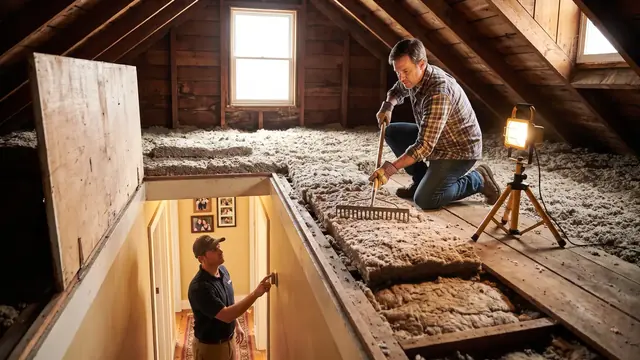
Energy-efficient home upgrades in Michigan: What to do first, and how to pay for it
See which energy-efficient upgrades pay off first in a Michigan home, what they cost, and how to pay for them in 2026 with rebates, loans and mortgages.

20-minute read
DIY home renovation projects: 12 upgrades you can actually finish
Discover DIY home renovation projects that upgrade your space on a budget, from peel-and-stick backsplashes to floating shelves and smart lighting.
20-minute read
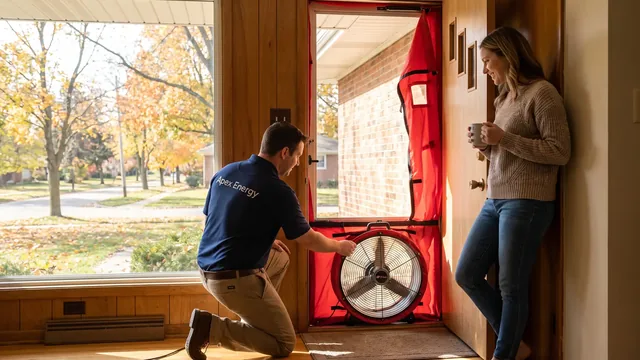
The benefits of a home energy audit and what it includes
Learn what a home energy audit finds, how blower door and infrared tests work, and why the Department of Energy ties audits to 5% to 30% savings.
