
How to choose energy-efficient windows for your climate
Choosing energy-efficient windows comes down to two numbers on the NFRC label: U-factor, which measures how fast heat escapes, and solar heat gain coefficient (SHGC), which measures how much solar heat comes through the glass. In ENERGY STAR’s Northern zone, which covers every ZIP code in Michigan, the Version 7.0 prescriptive requirement is a U-factor of 0.22 or lower with an SHGC of 0.17 or higher.
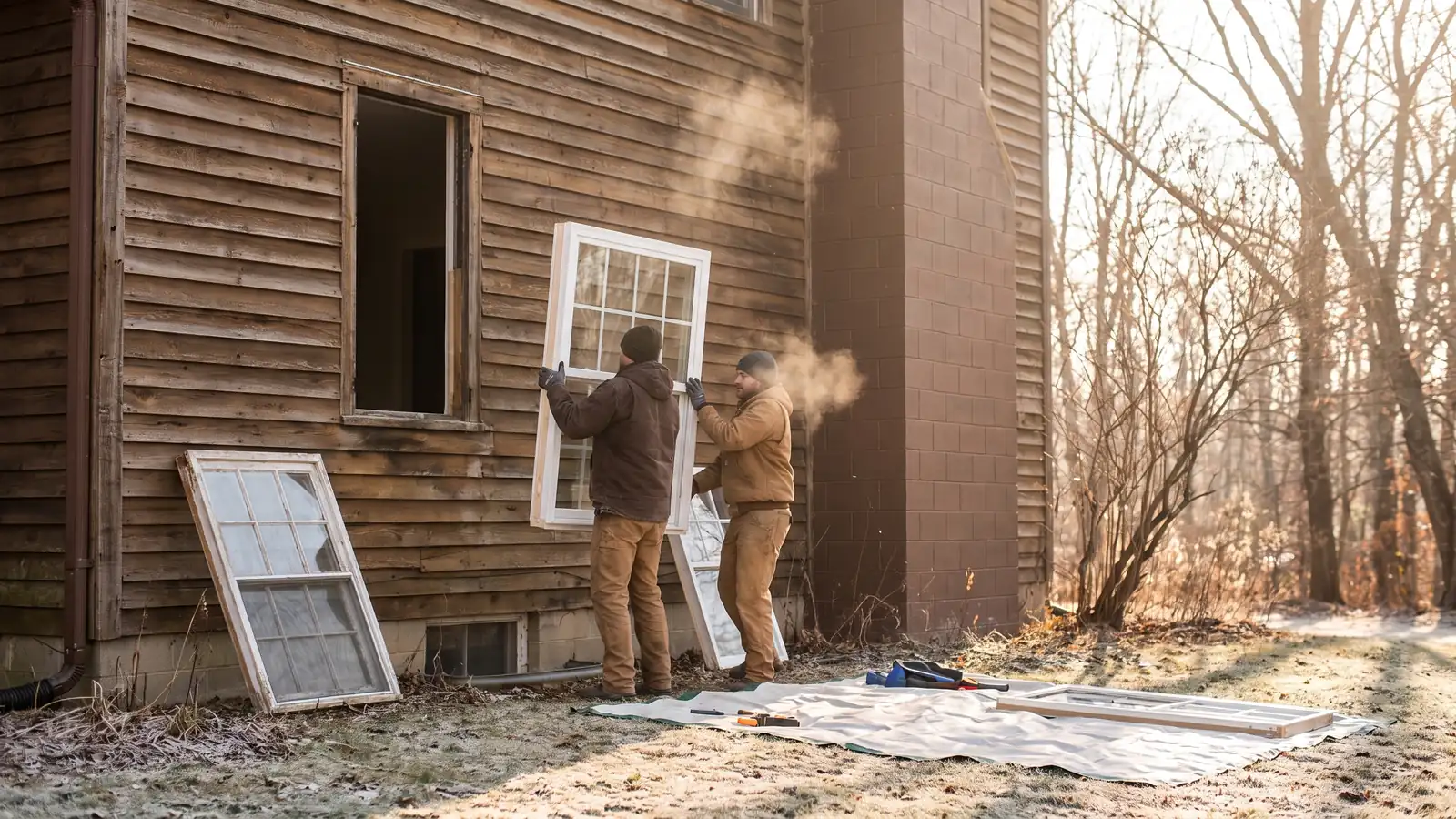
Those targets flip in warmer zones: the Southern zone allows a U-factor as high as 0.32 but caps SHGC at 0.23. ENERGY STAR, the federal efficiency certification program, estimates that replacing single-pane windows with certified units lowers household energy bills by an average of up to 13% nationwide.
Learn how to choose energy-efficient windows, including how to read an NFRC label, which U-factor and SHGC targets fit your climate zone, and what to ask a contractor. Planning a bigger project? Start with our Home Improvement & Design guide.
Key takeaways:
- Two numbers decide it: U-factor measures heat loss, SHGC measures solar heat gain, and ENERGY STAR sets a different target in each of its 4 zones, 0.22 or lower in the Northern, 0.32 or lower in the Southern.
- Climate zone changes the answer: Northern is the only zone with a minimum SHGC (0.17 or higher) instead of a maximum, so a window that certifies in the South can fail in Michigan.
- Installation can erase the rating: ENERGY STAR requires certified windows to ship with instructions covering flashing, shimming, and sealing at the product-wall interface, 3 details that decide whether a 0.22 window performs like one.
How do you read an NFRC window label?
An NFRC label reports whole-unit performance for the entire window, glass, frame, sash, and spacer, across four metrics. Compare whole-unit numbers, because center-of-glass figures ignore the frame, often the assembly’s weakest part.
U-factor: how fast heat escapes
U-factor measures heat transfer per hour, per square foot, per degree of temperature difference, and lower is always better. ENERGY STAR’s Version 7.0 criteria, in effect since October 23, 2023, run from 0.22 or lower in the Northern zone to 0.32 in the Southern. U-factor is certified under NFRC 100 and recertified every 5 years.
Solar heat gain coefficient: how much sun gets through
SHGC is the fraction of the sun’s heat that reaches the room, on a 0-to-1 scale, and whether you want it high or low depends on your climate. ENERGY STAR caps SHGC in three of its four zones. 0.40 or lower in North-Central, 0.23 or lower in South-Central and Southern, and sets a floor of 0.17 or higher in the Northern zone, where winter sun is a heating asset.
Visible transmittance and air leakage
Visible transmittance (VT) is the share of daylight the window admits, and it moves independently of SHGC. Air leakage is the one metric with a single national threshold: 0.3 cfm/ft² or lower for windows, sliding doors, and skylights. If drafts are the complaint, read air leakage first, our guide to winterizing your home covers cheaper fixes worth trying first.
What ranges do the label numbers usually fall in?
A label number means more once you know the span it sits in. According to the U.S. Department of Energy’s Federal Energy Management Program buying guidance (updated December 2021), U-factors are reported in Btu per hour, per square foot, per degree Fahrenheit and typically range between 0.2 and 1.2. It puts the SHGC of real windows between 0.20 and 0.80 and visible transmittance, which includes the frame and sash, between 0.10 and 0.80.
For a heating climate, the guidance is specific: buy a low U-factor to keep heat loss down, and prefer a high SHGC to use the sun’s free heat. It also says to specify windows with high condensation resistance ratings in extremely cold regions. The National Fenestration Rating Council, the nonprofit that certifies the label, describes condensation resistance as a rating where a higher number means the product resists condensation better, so it is worth asking for when a manufacturer reports it.
Per ENERGY STAR’s windows page, the ENERGY STAR label names each climate zone a window qualifies in, so a Michigan buyer looks for Northern on it, and buyers should save the ENERGY STAR and NFRC labels as documentation. ENERGY STAR also runs a climate zone search for your location.
What U-factor and SHGC should you target in your climate zone?
Find your ENERGY STAR zone first, then shop to its two numbers. ENERGY STAR publishes a ZIP-code-level zone list, so you never have to guess.
| ENERGY STAR climate zone | U-factor | SHGC | Typical glazing package |
|---|---|---|---|
| Northern (all of Michigan) | 0.22 or lower | 0.17 or higher | Double glazing, low-e, argon, warm-edge spacer, or triple glazing |
| North-Central | 0.25 or lower | 0.40 or lower | Double glazing, low-e, argon |
| South-Central | 0.28 or lower | 0.23 or lower | Double glazing, solar-control low-e |
| Southern | 0.32 or lower | 0.23 or lower | Double glazing, spectrally selective low-e |
A second route in the Northern zone trips people up at the showroom. ENERGY STAR’s equivalent-energy-performance path certifies a higher U-factor when the window delivers more solar gain in exchange: 0.23 or 0.24 qualifies at an SHGC of 0.35 or higher, 0.25 or 0.26 at 0.40 or higher. That path applies only in the Northern zone and only to windows, so a 0.26 U-factor sold as “ENERGY STAR certified” may be accurate, but only if the SHGC comes with it.
Windows are one piece of an envelope. Our guide to energy-efficient home upgrades covers how replacement ranks against other projects competing for the same budget.
What does ENERGY STAR Most Efficient mean for a window?
Most Efficient is a tier above standard certification. According to EPA’s Most Efficient 2025 criteria for residential windows and sliding glass doors, released September 2024, a product must already be ENERGY STAR certified and then meet tighter numbers in each zone:
| Climate zone | Most Efficient 2025 U-factor | Most Efficient 2025 SHGC | Standard Version 7.0 U-factor |
|---|---|---|---|
| Northern (all of Michigan) | 0.20 or lower | 0.20 or higher | 0.22 or lower |
| North-Central | 0.20 or lower | 0.40 or lower | 0.25 or lower |
| South-Central | 0.20 or lower | 0.23 or lower | 0.28 or lower |
| Southern | 0.21 or lower | 0.23 or lower | 0.32 or lower |
Source: ENERGY STAR Most Efficient 2025 Recognition Criteria, Residential Windows and SGD (EPA, released September 2024) and the ENERGY STAR Version 7.0 specification (effective October 23, 2023). The Southern zone also accepts a U-factor of exactly 0.22 with an SHGC of 0.21 or lower.
The criteria list models recognized from January 1 through December 31, 2025, and say the designation may stay in use for as long as the model remains on the market.
The tier also set the federal tax rule. According to the IRS page on the Energy Efficient Home Improvement Credit, last updated April 28, 2026, the credit equaled 30% of certain qualified expenses beginning January 1, 2023, windows and skylights had to meet ENERGY STAR Most Efficient certification requirements, and the overall yearly limit for this group of improvements was $1,200. A standard Northern-zone window at 0.22 did not meet that bar on its own. The IRS page says improvements could be claimed only through December 31, 2025, so a window installed in 2026 is outside it.
How much does frame material affect performance?
Enough to change the whole-unit rating: vinyl, fiberglass, and composite frames generally insulate better than aluminum, which conducts heat readily unless it has a thermal break. Material also drives maintenance and dimensional stability, which matter in a freeze-thaw climate.
| Frame material | Insulating performance | Maintenance | Relative cost |
|---|---|---|---|
| Vinyl | Good, comparable to wood; chambers can be subdivided or foam-filled | Minimal, no painting | Lowest |
| Fiberglass | Very good; expands and contracts at close to the rate of glass | Low; finish may need refreshing | Higher than vinyl |
| Wood | Good, frame-only U-factors generally run 0.30 to 0.50 | Highest: paint or stain, plus rot inspection | High |
| Clad wood | Same as wood, with a weather-resistant exterior skin | Low outside, wood care inside | High |
| Aluminum | Weakest, conducts heat unless thermally broken | Very low | Low to moderate |
Wood-polymer composites sit between the two: they take stain like wood but resist moisture better. Whatever you pick, buy on the whole-unit U-factor, not the material’s reputation.
What glass package actually does the work?
Most of a window’s U-factor comes from the glass package, coating, gas fill, spacer, and pane count, which is why two windows in identical frames post very different ratings.
Low-e coatings
A low-emissivity coating is a microscopically thin metallic layer that reflects long-wave heat while letting visible light through. Coatings are tuned by climate: a high-solar-gain low-e keeps radiant heat inside while admitting winter sun, which is what the Northern zone’s 0.17 SHGC floor rewards. A solar-control low-e does the opposite. According to the Department of Energy’s building science page on high-performance glass, low-e coatings also protect curtains, furniture and hardwood floors from fading over time.
Argon and krypton gas fills
Filling the sealed space between panes with argon or krypton slows heat transfer, since both conduct heat more slowly than air. Argon is the standard, cheaper choice. Krypton performs better in narrow cavities, which makes it the usual fill in triple-pane units where 3 panes share one frame.
Double-pane vs. triple-pane
Double glazing with a low-e coating and argon fill clears the 0.22 Northern-zone threshold in plenty of product lines, so triple glazing is an upgrade decision rather than a requirement. It lowers U-factor further, reduces condensation risk, and cuts noise, but adds cost and weight. Price both on the same opening, and don’t overlook smart window treatments for energy efficiency on windows you’re keeping.
Does a house built before 1978 change who replaces the windows?
Yes, when you pay someone to do it. Old windows are where lead paint gets disturbed most: taking out a sash, its stops and the surrounding trim breaks painted wood that has been rubbing open and shut for decades. Under EPA’s RRP Rule, a company paid to do that work on a pre-1978 house must be lead-safe certified, and its crew must be trained.
- Ask for the firm’s certification before you sign: EPA’s rule covers the paid contractor, so a quote from an uncertified crew on an older house is a quote you cannot use.
- Doing it yourself is different: per EPA, the RRP Rule generally does not apply to homeowners working on their own pre-1978 homes, but EPA still recommends hiring a lead-safe certified contractor.
- Plan for the inspection report: if you are buying an older house that needs windows, our home inspection checklist and guide to buying a historic home cover what to ask before closing.
Why installation quality decides what you actually get
A poorly installed high-performance window will underperform a well-installed average one, because air moving around the frame never appears on the NFRC label. The label rates the unit in a lab; your wall rates the install.
ENERGY STAR treats this as a certification requirement. Under Version 7.0, manufacturers must publish installation instructions covering flashing, shimming the unit flush, level, and plumb, sealing at the product-wall interface, safe removal with lead-paint guidance, and variations for pocket versus rough-opening installs.
- Pocket install or full-frame? A pocket install leaves the existing frame and costs less; a full-frame install reaches the rough opening and is the only way to find rot, missing insulation, or bad flashing.
- How will you flash the opening? Ask for the sequence, sill pan, jamb, head, and confirm it matches the manufacturer’s instructions, since deviating can void the warranty.
- What goes in the shim gap? Low-expansion foam or backer rod and sealant, not batt insulation. This gap is where the air leakage you paid to avoid shows up.
- Who warranties what? Get the product warranty and the labor warranty in writing as 2 separate terms, with the labor period stated in years.
Air sealing and insulation belong in the same conversation, because a tight window in a leaky wall solves half the problem.
What does window replacement cost, and how do you pay for it?
There’s no honest national price, because the number swings with opening size, frame material, glass package, install type, and local labor, so get 3 itemized quotes on the same specification. References like Angi, a home project cost reference, set expectations, but your written quotes are the only figures that count, and all 3 should price the same U-factor and SHGC.
A whole-house project is usually large enough to finance, and the route changes total cost more than the payment suggests. Hypothetical example, not an offer: say your quotes come back at $18,000 for 14 windows on a Waterford colonial.1 Each option below carries a different total interest cost.
- Home equity loan or HELOC: The common route with existing equity. A fixed home equity loan gives you a set payment; a HELOC gives you a draw period and a variable rate.
- Cash-out refinance: Replaces your mortgage with a larger one and pays out the difference. Worth comparing when the rest of your terms would improve too.
- Renovation loan: FHA’s 203(k) mortgage and conventional renovation products base the loan on the home’s after-improved value, which helps a buyer purchasing a house that needs windows.2 See HUD’s overview of FHA loan programs.
- Contractor or program financing: Convenient, sometimes competitive. Compare the total finance charge against a lender quote, not the monthly payments.
One note on taxes: the federal Energy Efficient Home Improvement Credit (Section 25C) covered qualifying exterior windows and skylights with a $600 annual limit, and the IRS describes it as applying to improvements placed in service before December 31, 2025.3 Confirm current-year eligibility with a tax professional before budgeting around one.
Before committing, confirm windows are the right first dollar. A home energy audit tells you whether the losses are at the windows or in the attic, and our guide to renovating for energy efficiency covers sequencing within the broader Homeownership budget.
Which mortgage programs can include windows in the loan?
Beyond a home equity loan or a cash-out refinance, several agency programs name energy work, windows included, as eligible.
| Program | What it says about energy work | Limit or timing |
|---|---|---|
| Fannie Mae HomeStyle Renovation | Funds repairs, remodeling, renovations or energy improvements; no required improvements and no minimum dollar amount | Work completed within 15 months of closing |
| Fannie Mae HomeStyle Refresh | Lists energy or water efficiency improvements as eligible | Up to 15% of the “as completed” appraised value; finished within 180 days of the note |
| Freddie Mac GreenCHOICE | Names replacement of windows and doors among eligible improvements | Capped at 15% of the “as completed” value; no energy report for basic improvements of $6,500 or less |
| FHA Limited 203(k) | Smaller repairs and improvements that are not structural | Maximum $75,000, no minimum |
| FHA Standard 203(k) | Major and structural work | Minimum $5,000, no maximum |
Sources: Fannie Mae Selling Guide B5-3.2-01, HomeStyle Renovation Mortgages (dated December 10, 2025) and B5-3.3-01, HomeStyle Refresh (dated August 5, 2026); Freddie Mac GreenCHOICE Mortgages (page copyright 2026); HUD’s renovation program comparison fact sheet (revised November 4, 2024).
A window-only job fits the smaller programs, and a buyer whose purchase needs windows plus other work can compare them in our guides to renovation loans and FHA 203(k) loans. Owners with equity can weigh a HELOC, a cash-out refinance or refinancing for improvements, and our overview of financing home renovations lines up the trade-offs.
Samantha’s view of renovation money is about the plan before the loan: “The biggest thing is preparation. You’re not just financing the house. You’re financing the plan for the house.” On equity, her line is just as direct: “Your house isn’t an ATM. Equity is valuable. So there should be a reason behind using it.”
What Michigan homeowners should know
Michigan is a single-zone state for window shopping, so one pair of targets applies statewide, from Monroe to Marquette.
- Every Michigan ZIP code is Northern zone: All 1,170 Michigan ZIP codes in ENERGY STAR’s Version 7.0 climate-zone list are classified Northern, so your target is 0.22 or lower on U-factor with 0.17 or higher on SHGC, or one of the 4 equivalent-performance pairings.
- Solar gain is an asset here, not a liability: Northern is the only one of the 4 zones with an SHGC floor instead of a ceiling. Chasing the lowest SHGC on the shelf, the right instinct in Phoenix, works against you in a Michigan January.
- Skylights carry a looser target: A certified skylight in the Northern zone needs a U-factor of 0.45 or lower and no SHGC rating at all, a different standard than the window below it.
Two local practicalities. Condensation on the inside glass of new windows in January usually signals indoor humidity, not a defect, tighter windows trap moisture that used to escape through the leaks you just sealed, and exhaust fans plus an outdoor-vented dryer typically fix it. And efficiency programs change year to year: DTE Energy, Consumers Energy, and Michigan Saves all run or finance residential energy work, so confirm what’s open in your territory before signing. Pair new windows with our guide to winterizing your home.
What should a Michigan window contract say before you sign?
Michigan regulates who can sell you the job. According to LARA’s Bureau of Construction Codes page of helpful information for homeowners, all contractors offering work that totals $600 or more in labor and materials must be licensed by the Department of Licensing and Regulatory Affairs. Check the license number on any quote at that size against LARA’s records before a deposit changes hands.
- Window details in writing: the contract should name the exact units by maker and series, list the NFRC-rated U-factor and solar heat gain coefficient for each, and say they carry the ENERGY STAR Northern zone mark, so what gets installed is what was quoted. Ask the contractor to confirm in the contract that they will pull any permit your city requires before work starts, and keep the NFRC labels and the final invoice with that permit for an appraiser or a future buyer. Our guide to renovation permits explains why an unpermitted job can surface at sale.
Which building code applies to window work in Michigan right now?
The 2015 residential code, for now. According to LARA’s currently open rules page, the state’s rule sets that would adopt, in part, the 2021 International Residential Code and 2021 International Energy Conservation Code were set to take effect on August 29, 2025, but a July 7, 2025 order in two Michigan Court of Claims cases paused them. While that order stands, LARA says the 2015 versions of the IRC and the residential IECC provisions remain valid and in effect.
Bedroom windows carry a safety rule that a new style of window can break. The Charter Township of Ypsilanti’s handout on Section R310 emergency escape openings (updated April 25, 2025) states the 2015 Michigan code text: every sleeping room needs at least one operable escape opening with a net clear opening of at least 5.7 square feet (5 square feet at grade floor or below), a clear height of at least 24 inches, a clear width of at least 20 inches, and a sill no more than 44 inches above the floor. The handout says those dimensions are measured by normal operation from inside, so swapping a casement for a slider or double-hung of the same rough size can shrink the opening. Confirm the net clear opening with the building department before you order.
Do new windows raise your Michigan property tax assessment?
Michigan’s property tax law treats some window work as maintenance. According to MCL 211.27 (Michigan Legislature, rendered October 22, 2026), the assessor shall not consider the increase in true cash value from expenditures for normal repairs, replacement and maintenance until the property is sold. The statute’s list of normal maintenance includes “(f) Replacing storm windows or doors” and “(g) Insulating or weatherstripping,” and the subsection applies only to residential property.
The list names storm windows, not prime replacement windows, and it excludes work that is part of a structural addition or completion. Ask your local assessor how they treat a full replacement before you assume the bill stays flat. Our guides to how improvements affect property taxes and property tax assessments explain the rest of the calculation.
What state and utility programs cover efficiency work in Michigan?
Michigan law makes the utilities run efficiency programs. According to the Michigan Public Service Commission’s energy optimization page, 2023 PA 229 requires electric utilities to achieve annual energy savings of 1.5% of the prior year’s retail sales and natural gas utilities 0.875%, with new customer energy optimization plans beginning January 1, 2025. The same page links each participating utility’s program and a statewide financing option.
The state’s federally funded rebates are a separate track. In its MiHER update of August 20, 2026, Michigan’s Department of Environment, Great Lakes, and Energy reported two rebate pathways that each received just over $105 million in federal funding, with a goal of upgrades for approximately 15,000 homes:
- Home Efficiency Rebates (HOMES): whole-home upgrades such as insulation, air sealing and heating and cooling, with rebate amounts based on the modeled energy savings of the project. Windows are not named; the modeled savings decide.
- HEAR rebates: per EGLE, for households with incomes at or below 150% of Area Median Income.
- Detroit district: EGLE reported that single-family participation there was nearing the funding cap, with a temporary pause in approvals.
Because HOMES pays on modeled savings, a home energy audit that compares windows against attic insulation and air sealing shows where modeled savings would come from. Nationally, the U.S. Energy Information Administration’s Use of energy explained reports that 52% of a household’s annual energy use in 2020 went to space heating and air conditioning, which is the share window, wall and attic work competes for.
How Align finances a renovation
You are not just financing the house. You are financing a plan for it. Align places HomeStyle and FHA 203(k) renovation loans, standalone HELOCs and home equity loans, so the project can be paid for the way that fits it, not the way one bank prefers.
Samantha starts with why: what the work is, what it should cost, and whether your equity or a renovation loan is the better tool. Then one application goes to multiple wholesale lenders.
FAQ: Choosing energy-efficient windows
Here are answers to common questions about choosing energy-efficient windows.
What is a good U-factor for windows in a cold climate?
Lower is better, and in ENERGY STAR’s Northern zone the Version 7.0 prescriptive baseline is a U-factor of 0.22 or lower paired with an SHGC of 0.17 or higher. A higher U-factor qualifies only on the equivalent-energy-performance path, which requires more solar gain in return. That level usually means double glazing with a low-e coating and argon fill, or triple glazing. Compare whole-unit NFRC numbers, not center-of-glass figures, and if you’re unsure where your losses are, a home energy audit will find them.
Are triple-pane windows worth the extra cost?
In cold climates they can be, particularly for rooms that feel drafty or sit on the windward side of the house. Triple glazing lowers U-factor, cuts condensation risk, and reduces noise, but it costs more and adds weight. The economics depend on your heating costs and how long you plan to stay, so price double-pane low-e argon units alongside triple-pane before deciding.
Which window frame material is most energy efficient?
Vinyl, fiberglass, and composite frames generally outperform aluminum, which conducts heat readily unless it has a thermal break. Wood insulates well but needs maintenance unless it’s clad in vinyl or aluminum on the exterior. Fiberglass tends to be the most dimensionally stable across freeze-thaw cycles, which matters in climates with wide seasonal temperature swings. Frame choice is a design decision too, and our Home Improvement & Design hub covers keeping efficiency and curb appeal aligned.
Can you finance window replacement?
Yes, through several routes. Homeowners with equity often use a home equity loan or line of credit, while buyers purchasing a home that needs windows can use a renovation loan that finances improvements based on the after-improved value. Compare total borrowing cost, not just the monthly payment, and confirm any tax credit with a tax professional first. Our guide to energy-efficient home upgrades covers which projects compete for the same dollars.
How do most Michigan homes heat, and why does it matter for new windows?
Mostly with natural gas. The Michigan Public Service Commission’s winter energy appraisal of December 9, 2025 says natural gas heats about 77% of Michigan homes and about 8% of households use propane. It projected a residential gas commodity price of $3.53 per Mcf for the 2025 to 2026 season, 12% more than the prior year’s $3.15, so your fuel and its price set how fast a lower U-factor pays back.
Can I cancel a window contract I signed at my kitchen table?
Often, yes. Under the FTC’s Cooling-Off Rule, 16 CFR part 429, a sale of $25 or more made at your home, or $130 or more at places such as fairgrounds or hotel rooms, can be canceled before midnight of the third business day. The seller must give you a cancellation notice in duplicate and refund payments within 10 business days of a valid cancellation. LARA notes a similar three-day right for solicited contracts signed in your home.
Is a home equity loan or HELOC for windows a second mortgage?
Yes, if you already have a mortgage. The CFPB says both are considered second mortgages you pay in addition to your first (last reviewed August 28, 2026), and its home equity loan page warns that the lender could foreclose if you cannot repay. Because the debt is secured by the house, size it to the quote rather than the credit limit. Our guide to home equity loan pros and cons weighs both.
Do energy-efficient windows show up in a home appraisal?
They are supposed to be noted. Fannie Mae’s Selling Guide section B4-1.3-05 (dated June 4, 2025) says special energy-saving items must be recognized in the appraisal process and noted on the appraisal report form. Whether they move the value depends on what nearby sales show, so keep the NFRC labels, invoices and permit for the appraiser. Our guide to the home appraisal process explains how comparable sales drive the number.
The bottom line on choosing energy-efficient windows
Choosing energy-efficient windows starts with two numbers on the NFRC label and your ENERGY STAR climate zone. In the Northern zone, which covers all of Michigan, the Version 7.0 prescriptive target is a U-factor of 0.22 or lower with an SHGC of 0.17 or higher, and higher U-factors certify only when paired with more solar gain. Warmer zones invert that logic, allowing U-factors up to 0.32 while capping SHGC at 0.23. Pick the package that hits your zone’s numbers, then focus on flashing, shimming, and sealing.
If you’re ready to finance a window project or buy a home that needs one, talk to Align Lending. We’ll shop your scenario across our lender network and show you home equity, cash-out, and renovation loan options side by side. Call 248-506-5727 or start online.
Footnotes:
1. Example figures are hypothetical and for educational purposes only; they do not constitute an advertisement of credit terms or a rate quote under federal or state lending laws. Actual project costs depend on your contractor’s quote, and your loan amount, rate, and terms depend on your application and market conditions. Return to text.
2. Align Lending is not acting on behalf of or at the direction of FHA or HUD. FHA program requirements are set by HUD in the Single Family Housing Policy Handbook 4000.1 and in mortgagee letters, and are subject to change. Return to text.
3. This is a general summary, not tax advice. Federal tax credit rules, limits, and expiration dates are set by Congress, administered by the IRS, and subject to change. Confirm current-year eligibility with a qualified tax professional. Return to text.
Sources: zone criteria, equivalent-energy-performance pairings, air leakage thresholds, NFRC 100 and NFRC 200 test methods, recertification intervals, and installation-instruction requirements, ENERGY STAR Program Requirements for Residential Windows, Doors, and Skylights, Eligibility Criteria Version 7.0, effective October 23, 2023 (U.S. EPA). Michigan ZIP code classification, ENERGY STAR Version 7.0 climate zones by ZIP code (U.S. EPA). Up to 13% bill reduction, ENERGY STAR. Wood frame-only U-factor range, Efficient Windows Collaborative. Section 25C limit and placed-in-service date, Internal Revenue Service.
This article is for informational purposes only and is not intended to provide legal, financial, or tax advice. Window ratings, building codes, permit rules, and utility program terms vary by jurisdiction and change over time; verify current requirements with your building department, your utility, and a licensed contractor. Figures shown are illustrative and are not a rate quote or an offer of credit. Align Lending is an independent Michigan mortgage broker, NMLS #2041154.
Sources
Every outside source this guide links to, in the order it appears. How we choose and check sources
- ENERGY STAR, the federal efficiency certification programENERGY STAR
- Federal Energy Management Program buying guidanceU.S. Department of Energy
- National Fenestration Rating Councilnfrc.org
- ENERGY STAR’s windows pageENERGY STAR
- Climate zone searchENERGY STAR
- Most Efficient 2025 criteria for residential windows and sliding glass doorsENERGY STAR
- ENERGY STAR Version 7.0 specificationENERGY STAR
- IRS page on the Energy Efficient Home Improvement CreditInternal Revenue Service
- Building science page on high-performance glassU.S. Department of Energy
- EPA’s RRP RuleU.S. Environmental Protection Agency
- HUD’s overview of FHA loan programsU.S. Department of Housing and Urban Development
- B5-3.2-01, HomeStyle Renovation MortgagesFannie Mae Selling Guide
- B5-3.3-01, HomeStyle RefreshFannie Mae Selling Guide
- Freddie Mac GreenCHOICE MortgagesFreddie Mac
- Renovation program comparison fact sheetU.S. Department of Housing and Urban Development
- Helpful information for homeownersState of Michigan
- Currently open rules pageState of Michigan
- Handout on Section R310 emergency escape openingsfiles.ypsitownship.org
- MCL 211.27Michigan Legislature
- Energy optimization pageState of Michigan
- MiHER updateState of Michigan
- Use of energy explainedeia.gov
- Winter energy appraisalState of Michigan
- 16 CFR part 429Electronic Code of Federal Regulations
- CFPBConsumer Financial Protection Bureau
- Home equity loan pageConsumer Financial Protection Bureau
- B4-1.3-05Fannie Mae Selling Guide
Related resources
20-minute read
Energy-efficient home upgrades: What to do first, and what it saves
See which energy-efficient home upgrades pay off first, from air sealing and insulation to heat pumps and solar, with real costs and yearly savings.

20-minute read
DIY home renovation projects: 12 upgrades you can actually finish
Discover DIY home renovation projects that upgrade your space on a budget, from peel-and-stick backsplashes to floating shelves and smart lighting.
20-minute read
The benefits of a home energy audit and what it includes
Learn what a home energy audit finds, how blower door and infrared tests work, and why the Department of Energy ties audits to 5% to 30% savings.
3-minute read
Homeowner association fees: What they cover and how they affect you
Learn how HOA fees work, what they cover, and why the national average runs about $243 a month, so you can budget before buying in an association.
