
Home buying strategies for every market and situation
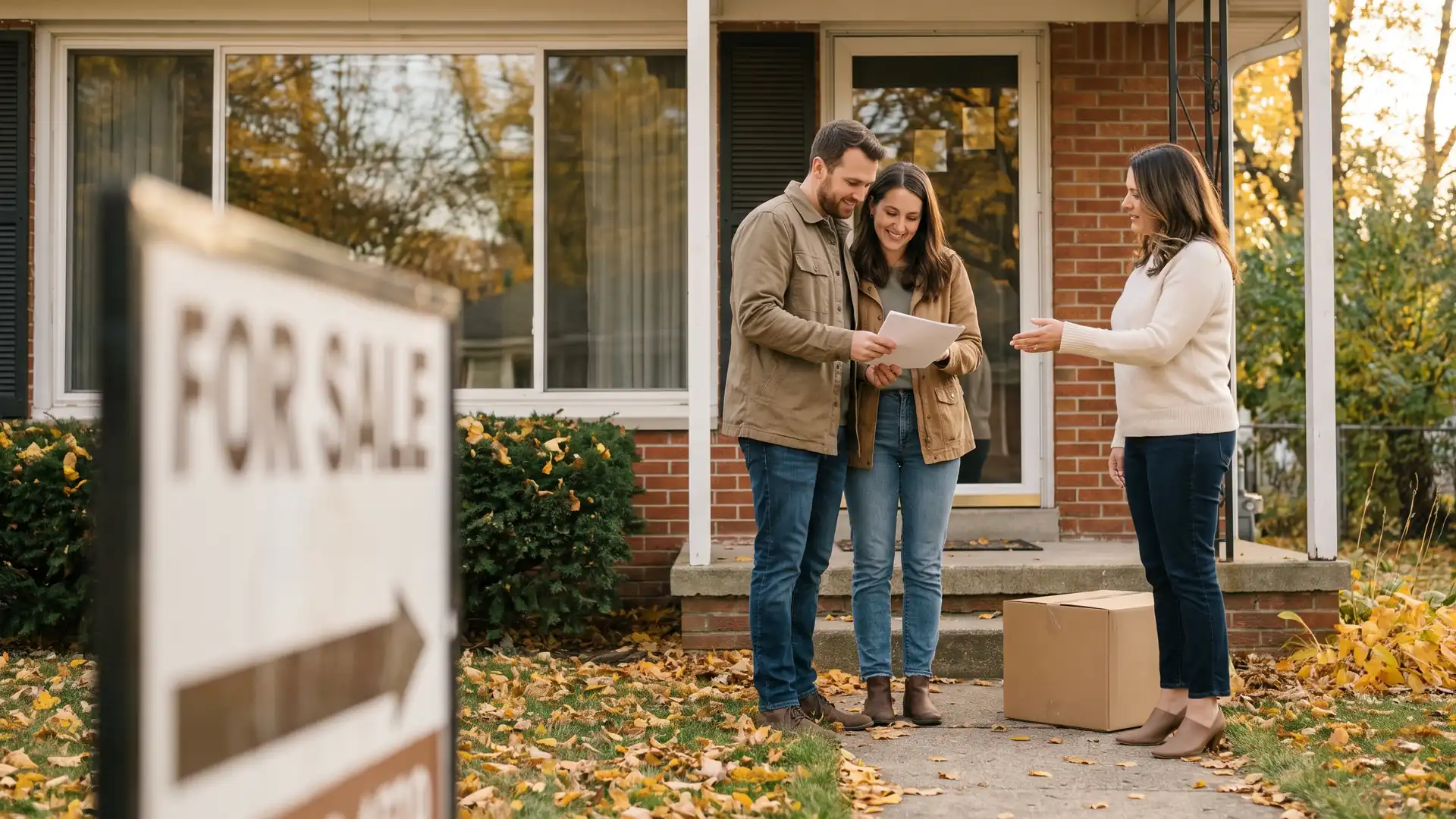
There is no single right way to buy a home. The strategy that wins depends on your market, the property, and who is on the loan with you. In a seller’s market, winning offers typically land 2% – 6% above list with shortened contingencies. When the market cools, the same buyer can often negotiate 3% – 6% in seller concessions plus a full inspection window.
We’ll group every strategy by the one thing that changes it: the market, the property, the people on the loan, or the seller’s situation. Learn more about home buying strategies, including how to build a competitive offer, which unique property types change the deal, and how distressed and off-market purchases work.
Key takeaways:
- Market sets the playbook: In a seller’s market, winning offers typically run 2% – 6% over list with shortened contingencies; in a buyer’s market the same buyer can usually negotiate 3% – 6% in seller concessions instead.
- Situation sets the loan: Fixer-uppers, septic and well properties, flood-zone parcels, and condos each change which loan programs will approve the file, and a broker can move the file to a lender whose guidelines fit.
- Where to start: Settle your financing before you write the offer. Across Align Lending’s network of wholesale lenders, a fully underwritten preapproval is the cheapest way to strengthen an offer without raising your price.
How market conditions change your buying strategy
Two numbers decide your posture before you write a single offer: median days on market and the neighborhood’s sale-to-list ratio. Under about 20 days with homes closing above list, you compete on speed and terms. Past 60 days with price cuts showing, you can start asking for things. Take that read alongside the broader home buying guide before you tour.
- Seller’s market: Inventory is short and sellers hold the leverage. Understanding what a seller’s market means for buyers keeps you from writing three losing offers before you adjust.
- Competitive market: Even a balanced market has hot pockets by price band and school district. The strategies for buying in a competitive market are about removing friction for the seller, not raising your number.
- Buyer’s and cooling markets: When listings sit, concessions come back. Rate buydowns, closing cost credits, and repair escrows turn negotiable again, and the inspection stops being something you feel pressured to waive.
- Your own readiness: Leverage you can’t document is leverage you don’t have. Preparing to buy, credit, documented assets, a real payment budget, is what turns a strategy into an accepted offer.
The market tells you how hard to push. The offer itself is where you actually push.
How to write an offer that actually wins
An offer has four levers and price is only one: price, contingencies, timeline, and earnest money. Earnest money commonly runs 1% – 3% of the purchase price in Michigan, and a larger deposit signals commitment at no real cost if you close. The other three cost you risk rather than dollars, which is why sellers weigh them heavily.
What goes into a competitive offer
The strongest offers are the ones a listing agent believes will close on time: a verified preapproval, a closing date matching the seller’s move, an earnest deposit at the top of the local range, and contingency windows measured in days, not weeks. Working through how to create a competitive offer is an exercise in removing the seller’s reasons to worry. The CFPB’s home buying tools cover the disclosure side of the same sequence.
How escalation clauses work
An escalation clause automatically raises your offer in set increments above any competing offer, up to a ceiling you name. It only helps in a genuine multiple-offer situation, and it reveals your maximum up front. Read how escalation clauses work before you use one, because plenty of listing agents refuse them outright.
Do you have to beat a cash offer?
Not always. Sellers accept cash because it removes appraisal and financing risk. A financed offer with a fully underwritten approval and a 21-day close often beats cash at 60 days with a home-sale contingency attached. Understanding what a cash offer really means tells you which parts of it you can match, and what follows an accepted offer is mapped out in the home buying process guide.
One caution on escalating: the appraisal still has to support the price you land on. Offer $330,000 on a home listed at $315,000, and if the appraisal comes back at $318,000 your lender lends against that value, leaving a $12,000 gap you cover in cash or renegotiate.1 Decide your ceiling before the bidding starts.
Buying situations that change your loan
Who is on the loan changes the qualifying math more than most buyers expect, and it does so before you ever look at a house. Income type, occupancy, and the number of borrowers each move the guidelines an underwriter applies.
- Buying solo after a divorce: Alimony and child support can count as qualifying income, but conventional guidelines require documented receipt for the most recent six months and evidence the payments continue at least three years from the note date. Gather the decree and deposit history early.
- Buying with a partner you’re not married to: Title and the mortgage are separate documents. Decide how you’ll hold title and put exit terms in writing before you make an offer.
- Co-buying with family or friends: Every borrower on the note is fully liable for the whole payment, and the debt lands on every co-borrower’s credit report, which cuts both ways in a future purchase.
- Buying on a lower income: Income caps are a qualifier, not a disqualifier, several assistance programs only open up below a limit. The options for buying a home with low income pair a low-down-payment loan with grant or second-lien help, and first-time buyers should also work the first-time home buyers hub for stackable assistance.
- Buying a second home: Occupancy drives the down payment. Conventional financing on a one-unit second home generally tops out at 90% loan-to-value, at least 10% down, while a primary residence can reach 97% LTV with 3% down on qualifying programs. Our guide to buying a second home covers the reserve and rental-use rules.
Because Align is a broker, we can move a co-borrower or self-employed scenario to the wholesale lender whose guidelines fit it, instead of forcing it into one bank’s box.
Property types that change the deal
The property kills roughly as many deals as the borrower does, at two gates: the appraisal and the insurance binder. Both land after your offer is accepted, which is why an unusual property needs a strategy up front.
Fixer-uppers and new construction
Cosmetic problems scare off competition, which is the whole argument for a fixer-upper: less bidding, a lower entry price, and renovation loans that finance repairs into the mortgage. The advantages of buying a fixer-upper shrink fast when the issues are structural, mechanical, or health-and-safety related, because those can stall the appraisal. New construction flips the risk profile: fewer surprises, longer timelines, builder-friendly contracts.
Systems the appraiser will flag
Well and septic properties, aging electrical, roofs near end of life, and leased solar all draw appraisal attention. Leased panels are a common closing delay: they’re treated as personal property, excluded from the appraised value, and the leasing company’s UCC filing has to cover only the equipment, not the home or the land under it. Ask for the lease and UCC paperwork the week you go under contract, and read up on buying a home with a septic system if it isn’t on city sewer.
Water, risk, and association-governed homes
If the home sits in a FEMA Special Flood Hazard Area and you’re using a federally backed mortgage, flood insurance is mandatory for the life of the loan. Check the parcel through the National Flood Insurance Program and read buying a home in a flood zone before shortening an inspection window. Condo, co-op, and HOA properties add a second layer: the project itself has to clear a review before many programs will lend on a unit inside it.
Distressed, off-market, and alternative purchases
Timeline is the dividing line. Short sales commonly take 60 – 120 days because a lender’s loss-mitigation department has to approve the price, while a sheriff’s sale closes in days and usually requires cash. Bank-owned listings sit in between.
- Bank-owned and pre-foreclosure listings: Financeable in most cases, as long as the home is habitable and appraises. Expect an as-is sale and a seller that’s a department, not a person.
- Short sales: The seller owes more than the sale price and needs lender approval to close. The comparison of short sales vs. foreclosures for buyers covers which fits a buyer with a lease expiring.
- Auctions: Courthouse and online auction purchases usually can’t be financed conventionally, no inspection, no appraisal window, settlement within days. Plan on cash or a private lender.
- Seller financing: Useful when a property or borrower falls outside conventional guidelines, but the terms, balloon date, and recording deserve an attorney’s review.
- Crypto-funded purchases: Digital assets must be converted to U.S. dollars and held in a U.S. or state-regulated financial institution, with the balance verified in dollars before closing. Conventional guidelines also bar virtual currency from the earnest money deposit, so liquidate early.
What Michigan buyers should know
Michigan’s housing stock and statutes create four strategy questions that rarely come up elsewhere.
- Redemption periods: Michigan foreclosures carry a statutory redemption period after the sheriff’s sale. Under state law it runs six months on residential property of four units or fewer when more than two-thirds of the original debt was still owed at the notice of foreclosure, and a year in most other cases. Possession isn’t immediate, and that timing belongs in your strategy.
- Wells and septic: A large share of homes in Oakland, Livingston, and Lapeer counties run on well and septic, and some local health departments operate time-of-sale evaluation programs. Confirm with the county early, because an evaluation is a contract deadline, not an inspection nicety.
- Waterfront and inland lakes: Michigan’s lake frontage brings thin, seasonal appraisal comps and flood-zone questions. Verify the FEMA zone and the insurance quote before you shorten your inspection window on waterfront property.
- Winter timing: Michigan listing inventory typically thins from December through February. Fewer choices, but fewer competing buyers, and January sellers usually need to move. Pair that with MSHDA’s homeownership programs if you’re using down payment assistance.
FAQ: Home buying strategies
Here are answers to common questions about home buying strategies.
How much over asking price should I offer in a bidding war?
It depends on your local sale-to-list ratio, not on a rule of thumb. If recent comparable sales in the neighborhood closed at 102% of list, offering 3% – 4% over asking is realistic; offering 10% over usually just creates an appraisal gap you have to cover in cash. Ask your agent for the last 90 days of sale-to-list data before you name a number, and read how to handle a bidding war before you escalate.
Can I use a mortgage to buy a foreclosed or auction home?
Sometimes, but not at a courthouse auction. Bank-owned listings and short sales can usually be financed with conventional or renovation loans as long as the property is habitable and appraises. Sheriff’s-sale and auction purchases generally require cash or hard money because there’s no inspection, no appraisal window, and a same-week settlement. See how to buy a foreclosed home for the financeable paths.
Is co-buying a home with a friend or family member risky?
It depends entirely on what you put in writing. Both borrowers are fully liable for the whole mortgage payment, and both credit reports carry the debt, so one person’s missed payment damages the other. A co-ownership agreement covering exit terms, buyout pricing, and who pays what should be signed before you make an offer. Read the pros and cons of co-buying with friends first.
Do home buyer rebates actually lower my closing costs?
Sometimes. A buyer rebate returns part of the agent’s commission to you, but many lenders require it to be applied as a credit on the closing disclosure rather than paid to you in cash, and some loan programs cap total credits. Confirm the treatment with your loan officer before you count on it. Our guide to home buyer rebates covers how they’re documented.
The bottom line on home buying strategies
The winning strategy is the one that matches your conditions. In a seller’s market, accepted offers typically run 2% – 6% over list with shortened contingencies; when the market cools, the same buyer can usually negotiate 3% – 6% in seller concessions and keep a full inspection window. The property and the people on the loan decide which programs will approve the file: a second home needs at least 10% down where a primary residence can go to 3%, and septic, solar, flood-zone, and association-governed homes each add a gate. Settle the financing first.
If you’re ready to write an offer you can actually close on, talk to Align Lending, we’ll shop your scenario across our lender network and show you the numbers side by side. Call 248-506-5727 or start online today.
1. Example figures are hypothetical and for educational purposes only; they do not constitute an advertisement of credit terms or a rate quote under federal or state lending laws. Your rate and terms will depend on your application and market conditions. Return to text.
Every Buying Strategies & Situations guide in the Learn Center
The full buying strategies & situations library, so you can go straight to the question you actually have.
- Benefits of buying a newly constructed home: 7 advantages over resale
- Building a home on a budget: 10 tips and tricks that actually save money
- Guide to Buying Distressed Properties
- Guide to Buying a Historic Home: What to Know First
- Buying a home as a single parent: Loan programs, assistance and tips
- Buying a home for aging in place: Features and planning that pay off
- What to know about buying a home in a gated community
- Buying a home with an HOA: The pros, cons and costs to weigh
- Buying a home with a partner: Legal considerations for unmarried co-buyers
- What to know about buying a home with a pool
- Guide to buying a home with solar panels
- Buying a pocket listing: The pros, cons and risks of off-market deals
- Guide to Buying a Vacation Home
- Co-buying a home with family or friends: How it works and how to protect everyone
- The cost of building a house: Is it worth it?
- The Foreclosure Process: What Home Buyers Should Know
- How to avoid buyer's remorse when buying a home
- How to buy a home with cryptocurrency: Three ways it actually works
- How to evaluate a home's energy efficiency before you buy
- How to navigate a cooling housing market as a buyer
- How to navigate a hot housing market without overpaying
- How to negotiate house prices: proven tactics for buyers
- How to purchase a home at auction: process, payment rules, and risks
- How to win a house in a seller's market
- How well water impacts a home's value
- Navigating a Buyer's Market as a Home Buyer
- Navigating co-op board approvals: What buyers should know
- Navigating Multiple-Offer Situations as a Home Buyer
- Navigating a Seller's Market as a Buyer
- Guide to Negotiating a Home Purchase
- Negotiating a Home Purchase With Seller Financing
- New home construction: What to expect from contract to move-in
- Off-market listings: How to find hidden homes for sale
- Tips for buying a home in a rural area: financing, wells, septic and access
- Virtual home tours: how they work and how buyers should use them
This article is for informational purposes only and is not intended to provide legal, financial, or tax advice. Consult a qualified professional about your situation. Program terms and figures shown are illustrative, are not a rate quote or an offer of credit, and are subject to change. Align Lending works with FHA- and VA-approved lenders and is not acting on behalf of, endorsed by, or sponsored by FHA, HUD, the Department of Veterans Affairs, or USDA.
More on Home buying

Featured resources

12-minute read
Advantages of buying a fixer-upper: 7 key benefits (and the tradeoffs)
Discover the advantages of buying a fixer-upper, from lower prices and less competition to renovation loans that roll repair costs into your mortgage.

12-minute read
Guide to Negotiating a Home Purchase
Learn proven strategies for negotiating a home purchase, from using inspection findings and seller concessions to crafting offers that win without overpaying.
12-minute read
How to negotiate house prices: proven tactics for buyers
Learn how to negotiate house prices with proven tactics, from inspection leverage to seller concessions, and save thousands on your next home.

12-minute read
How to handle a bidding war when buying a house
Learn proven ways to handle a bidding war on a house, from escalation clauses to appraisal gap coverage, so you can compete without overpaying.

12-minute read
Buying a home with an HOA: The pros, cons and costs to weigh
Learn the pros and cons of buying a home with an HOA, from amenities and property-value protection to monthly dues, special assessments and foreclosure risk.

12-minute read
Guide to Buying a Home With a Septic System
Learn what to inspect before buying a home with a septic system, from tank condition and drain field to maintenance records, and avoid costly surprises.

12-minute read
Guide to Buying a Historic Home: What to Know First
Learn what buying a historic home involves, from preservation rules and specialized inspections to FHA 203(k) financing, and own history with confidence.

12-minute read
Buying a home in a flood zone: What to know about risk, insurance and cost
Learn what buying a home in a flood zone really involves, from FEMA zone maps and insurance rules to a 26% 30-year flood risk, before you commit to the house.
11-minute read
Escalation clauses: What they are and how they work in a bidding war
See how escalation clauses work in real estate offers, what to include and when to use one to win a bidding war without blowing your home budget.

11-minute read
How to avoid buyer’s remorse when buying a home
Learn how to avoid buyer’s remorse on a home purchase with preapproval, realistic budgeting, thorough inspections and a clear needs list before you commit.
12-minute read
How to win a house in a seller’s market
Learn how to win a house in a seller’s market with tactics like strong preapproval, fast closings, and smart contingencies that make offers stand out.
12-minute read
Buying a home for aging in place: Features and planning that pay off
Learn how to buy a home for aging in place, from single-level layouts and zero-step entries to smart-home tools and financing, so your next move is your last.
12-minute read
Guide to buying a home with solar panels
Learn what to check before buying a home with solar panels, including who owns the system, lease transfers, warranties and how solar affects your mortgage.

13-minute read
Buying a second home: Requirements, costs and steps
Learn what buying a second home takes, from 10%+ down payments and stricter credit rules to location, taxes and rental rules, before committing.

12-minute read
Guide to Buying a Waterfront Property
Learn what to check before buying waterfront property, from flood insurance and erosion risk to riparian rights, dock permits and shoreline condition.
12-minute read
Building a home on a budget: 10 tips and tricks that actually save money
See practical tips for building a home on a budget, from simple floor plans to modular construction that can cut building costs 10%-20% versus stick-built.

11-minute read
Guide to Buying Distressed Properties
Learn how to find and buy distressed properties, from foreclosures and short sales to auctions, with budgeting, inspection and financing strategies that work.

11-minute read
The Foreclosure Process: What Home Buyers Should Know
Learn how the foreclosure process works, from payment default to REO, and what bargain hunters should check before buying a foreclosed home at a discount.

11-minute read
How to buy a foreclosed home: A step-by-step guide
Learn how to buy a foreclosed home at auction or from a lender, the risks of as-is sales, and the financing steps that protect bargain hunters from surprises.

13-minute read
What to know about buying a home with a pool
See what a pool really costs after closing – routine service, equipment, resurfacing and insurance – plus the separate pool inspection buyers need.
11-minute read
Home Buyer’s Guide to Short Sales vs. Foreclosures
Compare short sales vs. foreclosures for home buyers, from property condition and pricing to timelines, and find out which distressed purchase fits you best.

12-minute read
Buying a home with low income: Assistance programs and tips that work
Learn how buying a home with low income is possible through FHA, USDA and down payment assistance programs, plus budgeting tips that get you to closing day.

11-minute read
Buying a home with a partner: Legal considerations for unmarried co-buyers
Learn the legal considerations of buying a home with a partner, from joint tenancy vs. tenancy in common to cohabitation agreements that protect both of you.

12-minute read
Buying a pocket listing: The pros, cons and risks of off-market deals
Learn how buying a pocket listing works, the pros of less competition and early access, and the risks including sales that close about 17% below MLS prices.

11-minute read
Home buyer rebates: How they work and how to get one
Learn how home buyer rebates return part of your agent’s commission at closing, how much you can save and how to negotiate one before signing with an agent.

12-minute read
How to purchase a home at auction: process, payment rules, and risks
Learn how to purchase a home at auction, from registration and financing to bidding and redemption periods, plus the risks every buyer should know.
13-minute read
New home construction: What to expect from contract to move-in
Learn what to expect with new home construction, from choosing a builder and signing the contract to design selections, inspections and closing day.

12-minute read
Co-buying a home with family or friends: How it works and how to protect everyone
Learn how co-buying a home with family or friends works, from joint tenancy vs. tenancy in common to the co-ownership agreements that protect everyone.

12-minute read
Buying a home as a single parent: Loan programs, assistance and tips
Learn how to buy a home as a single parent, from 3% down loan programs and down payment assistance to budgeting on one income and finding the right home.

12-minute read
How to buy a home with cryptocurrency: Three ways it actually works
Learn how to buy a home with cryptocurrency by converting to cash, borrowing against your holdings or paying a seller directly, plus the tax rules to know.

13-minute read
Builder’s preferred lender vs. an outside mortgage broker: how to weigh the incentive
A builder’s lender incentive is real money, but what is it worth? Price credits and buydowns, see what RESPA says, and get an outside Loan Estimate first.
1 of 6
