
How to upgrade your home’s HVAC system
The highest-return HVAC upgrade in most homes isn’t a new furnace, it’s sealing the ducts. About 20% to 30% of the air moving through a typical house’s duct system is lost to leaks, holes, and poorly connected ducts, and ENERGY STAR estimates that sealing and insulating those ducts can improve your heating and cooling system’s efficiency by as much as 20%.

That matters because heating and cooling already accounts for almost half of the average household’s annual energy bill, more than $900 a year. Next fastest is a smart thermostat, which ENERGY STAR estimates saves about $100 a year in homes with high bills or that sit empty much of the day. Full replacement earns its place once equipment passes 10 to 15 years or repair bills start stacking up.
Learn how to upgrade your home’s HVAC system, including which upgrades pay back fastest, when replacement beats another repair, and how to pay for the work. For the wider set of projects, start with our Home Improvement & Design guide.
Key takeaways:
- Ducts come before equipment: A typical duct system loses 20% to 30% of the air moving through it, and sealing it can improve heating and cooling efficiency by as much as 20% for a fraction of what new equipment costs.
- A smart thermostat pays back fastest: It installs in under an hour and saves roughly $100 a year in homes with high heating and cooling bills or that sit empty during the workday.
- Replace at 10 to 15 years, not before: Furnaces typically run 15 to 20 years and central air conditioners 12 to 15; once a repair quote passes half the cost of new equipment, replacing is usually the better buy.
Which HVAC upgrades save the most money?
Ranked by cost per dollar saved, duct sealing wins, the thermostat is second, and replacement is last, the reverse of the order most homeowners consider them. A new furnace can only be as efficient as the ductwork delivering its air, so fixing delivery first makes every later dollar work harder.
Seal and insulate the ductwork first
Start here. About 20% to 30% of conditioned air in a typical house never reaches a room. It escapes through leaks, holes, and poor joints, often into an attic, crawlspace, or basement you aren’t trying to heat. Sealing and insulating that system can improve heating and cooling efficiency by as much as 20%, according to ENERGY STAR duct sealing and equipment efficiency guidance.
The fix is mastic sealant or foil-backed tape at the seams, plus insulation on any run through unconditioned space. Ordinary cloth duct tape is the wrong material despite the name, it dries out and lets go within a few years. Exposed basement runs are within reach of a determined homeowner; duct buried in finished walls is a professional job, and that difference drives most of the cost.
Add a smart thermostat
A smart thermostat costs a few hundred dollars, installs in under an hour, and saves about $100 a year in the homes it helps most, those with high heating and cooling bills or that stand empty during the workday. If your house is occupied around the clock and you already set back the temperature by hand, expect less.
Consider zoning if some rooms never get comfortable
Zoning uses motorized dampers to control areas separately, so you stop overheating a basement to keep a bonus room livable. It suits a persistent hot-or-cold room, a large addition, or a second floor running several degrees off the first. It isn’t cheap and won’t fix leaking duct, seal first. Broader smart home devices for energy savings solve some of the same complaints for less.
Upgrade the air handler and filtration when you replace
A variable-speed air handler runs longer at lower speeds instead of cycling hard on and off, using less fan energy and pulling more humidity out in summer. It rarely justifies a standalone project but is worth specifying during a replacement. On filtration, check the blower’s pressure rating before adding a dense filter, restricting airflow costs more than the filter gains you.
HVAC upgrades compared
Costs swing widely by market and house, so read the cost column as a ranking, not a quote, HVAC replacement and duct sealing cost ranges give a sense of local pricing, and three written bids give the real number.
| Upgrade | Relative cost | What the research suggests | Typical payback | DIY or pro |
|---|---|---|---|---|
| Seal and insulate ducts | Low to moderate, driven by access | Up to 20% better efficiency (ENERGY STAR) | Short | DIY on exposed runs; pro for buried duct |
| Smart thermostat | A few hundred dollars | About $100/yr in high-bill or empty-daytime homes (ENERGY STAR) | Shortest here | DIY on most systems |
| Air sealing and attic insulation | Moderate | Varies with how much insulation you already have | Medium | DIY air sealing; pro for blown-in |
| Variable-speed air handler | High, usually bundled into a replacement | Lower fan energy, steadier temps, better humidity control | Long on its own | Pro |
| Full system replacement | Highest | Nearly $140/yr swapping old equipment for ENERGY STAR certified models | Longest; driven by avoided repairs as much as energy | Pro |
How efficient should replacement equipment be in a northern state?
For a gas furnace, compare AFUE. According to the U.S. Department of Energy’s Federal Energy Management Program furnace guidance (updated December 2024), a Northern Region furnace needs 95% AFUE to meet ENERGY STAR, the most efficient listed model reached 99%, and the least efficient model in ENERGY STAR’s market data sat at 80%. The program reports that the ENERGY STAR model saves money if it is priced no more than $1,345 (in 2023 dollars) above that 80% model.
| Northern Region gas furnace (70,000 Btu/h) | Most efficient listed | ENERGY STAR | Least efficient listed |
|---|---|---|---|
| AFUE | 99% | 95% | 80% |
| Annual energy cost | $482 | $503 | $597 |
| Lifetime energy cost savings vs. least efficient | $1,635 | $1,345 | Baseline |
Source: U.S. Department of Energy, Purchasing Energy-Efficient Residential Furnaces, Table 1, updated December 2024; costs assume natural gas at $0.961 per therm, the July 2024 average at federal facilities.
Heat pumps are compared on SEER2 and HSPF2. Per the Department of Energy’s air-source heat pump purchasing guidance (updated December 2024), an ENERGY STAR heat pump in the northern states rates 15.2 SEER2 and 7.8 HSPF2, and a 36,000 Btu/h unit at that level costs about $61 a year less to run than the least efficient listed model.
| Northern states air-source heat pump (36,000 Btu/h) | Most efficient listed | ENERGY STAR | Least efficient listed |
|---|---|---|---|
| SEER2 / HSPF2 | 24 / 11 | 15.2 / 7.8 | 14.3 / 7.5 |
| Annual electricity, heating and cooling | 7,394 kWh | 10,990 kWh | 11,551 kWh |
| Annual energy cost, heating and cooling | $814 | $1,210 | $1,271 |
| Lifetime energy cost savings vs. least efficient | $5,243 | $707 | Baseline |
Source: U.S. Department of Energy, Purchasing Energy-Efficient Residential Air-Source Heat Pumps, Table 3, updated December 2024; costs assume electricity at 11 cents per kWh, the July 2024 average at federal facilities.
Both tables price energy at federal facility rates, not a Michigan household’s bill, so rerun the gap on your own rates. For furnaces, ENERGY STAR’s furnace page says certified gas furnaces in the northern half of the U.S. are up to 18 percent more efficient than baseline models and can save $160 a year in energy costs.
When should you replace your HVAC system?
Replace when the equipment passes 10 to 15 years old and a repair quote crosses roughly half the cost of new equipment. Before that, repair is usually cheaper. Age alone isn’t a verdict, and a well-maintained 14-year-old furnace that has never failed owes you nothing yet.
Four signals, in the order they usually appear:
- Age: Furnaces typically last 15 to 20 years, central air conditioners 12 to 15, and heat pumps around 12 to 15 since they run in both seasons. Past that window, start budgeting even if nothing has broken.
- Repair frequency: Two service calls in one season is the practical tipping point. Ask what failed and what else is near end of life, a compressor or heat exchanger failure changes the math immediately.
- Rising bills with no change in habits: Flat usage with costs climbing yearly means the system is losing efficiency, the ducts are leaking, or both.
- Uneven temperatures: Rooms that never match the thermostat point to duct problems, thin insulation, or equipment sized wrong from the start. Swapping the box without diagnosing the cause just reproduces it.
One honest caveat: replacement isn’t automatically right. If the equipment is 12 years old, running fine, and the ducts have never been sealed, spend this year’s money on the ducts and plan replacement for when the system asks for it.
What do federal energy surveys show about heating in Midwest homes?
According to the U.S. Energy Information Administration’s Energy use in homes explainer, space heating and air conditioning made up 52% of household energy consumption in 2020, a share of energy used rather than of the bill. EIA’s analysis of that survey (August 7, 2023) reported that Midwest homes consumed 34% more natural gas than the national average, and that household gas use for space heating in the region ranged from 72.7 million Btu in Michigan, the top of the range, to 50.9 million Btu in Kansas.
House age is part of the reason. The same EIA analysis found that 27% of Midwest homes built before 1970 reported poor or no insulation, compared with 11% of those built since. In an older Michigan house, that argues for testing the envelope first and keeping winterizing on the fall list.
What should you fix before you touch the equipment?
Fix the envelope first, because it determines what size equipment you need. Every air leak you seal and every inch of attic insulation you add lowers the home’s load, and a lower load means a smaller, cheaper system does the same job. Insulate after replacing and you can end up with equipment that’s now oversized.
- Air sealing: Caulk and foam around rim joists, attic penetrations, recessed lights, plumbing chases, and window and door frames. Cheapest efficiency work in the house, largely DIY.
- Attic insulation: The highest-leverage insulation in most older homes, since heat rises and attics are usually the envelope’s weakest point.
- Ceiling fans: Fans let you hold the thermostat a few degrees higher in summer. Turn them off in empty rooms, fans cool people, not spaces.
- Filter discipline: Check filters monthly and change them on schedule. A clogged filter restricts airflow, raising energy use and shortening equipment life.
Several overlap with basic comfort work. NAHB research on home energy systems tracks how builders sequence the same decisions, and the order matches: envelope, then distribution, then equipment.
How much can maintenance and thermostat settings save before any upgrade?
The Department of Energy’s Consumer Guide to Home Heating and Cooling (2021) reports that regular maintenance can reduce heating and cooling costs by 10% or more, and that you save 1% on heating bills for each degree you set the thermostat back over eight hours.
Its Energy Saver Guide (2022 edition) puts a 7 to 10 degree setback for 8 hours a day in fall and winter at as much as 10% a year on heating and cooling, with one caution: do not set back a heat pump without a smart or programmable thermostat designed for heat pumps. The same guide reports that sealing uncontrolled air leaks can save 10% to 20% on heating and cooling bills, and that new equipment alone can cut energy use by 20% or more, while pairing it with insulation, air sealing and thermostat settings can cut heating and cooling bills by about 30%.
Most households do not use the controls they own. The 2020 Residential Energy Consumption Survey counted smart thermostats in 12.78 million of 123.53 million U.S. homes, according to EIA table HC6.1, and the survey’s release webinar reported that only about one-third of households with programmable or smart thermostats use them to control temperature.
On filters, the EPA’s guide to MERV ratings (last updated January 14, 2026) suggests at least MERV 13, or as high a rating as your system fan and filter slot can accommodate. A seasonal maintenance checklist keeps the service visit on the calendar, and budgeting for home maintenance sets money aside for it.
How do you choose the right upgrade for your home?
Choose from a measured diagnosis, not a catalog. Two houses of identical square footage can need opposite things, one duct work, the other insulation, and testing is the only way to know which is yours. An energy audit with a blower-door and duct-leakage test turns guesswork into a ranked list.
Then ask every bidding contractor the same four questions:
- Did you run a Manual J load calculation? It sizes equipment from your actual square footage, insulation, window area, and orientation. A contractor sizing from the old unit’s nameplate is copying whatever mistake was made last time.
- What did the duct test show? A bid that never mentions the duct system is a bid for a box, not a working system.
- What’s the payback on each option? Ask for it in years, calculated on your utility rates rather than a national average.
- What does the warranty cover, and what voids it? Most require registration within a set window and documented annual maintenance.
Get three written bids. The spread on identical scope is routinely wide enough to fund a separate upgrade.
Which safety checks belong in an HVAC project?
Heating equipment is behind more U.S. house fires than anything except cooking: the U.S. Fire Administration’s heating fire safety page counts an estimated 32,200 of them in 2021, with 190 deaths, 625 injuries and $442 million in property loss, which is why a furnace or boiler swap is a good time to close out the safety items too. According to the CDC’s carbon monoxide page (updated October 26, 2026), each year more than 400 Americans die from unintentional CO poisoning not linked to fires and more than 100,000 visit an emergency department.
The CDC recommends having your heating system, water heater and other fuel-burning appliances serviced by a qualified technician every year, and installing battery-operated or battery back-up CO detectors near every sleeping area. Add the detectors while the work is underway, and check home insurance and renovations for when to tell your insurer about the project.
What does an HVAC upgrade cost, and how do you pay for it?
There’s no honest national price for this work, equipment tier, home size, duct condition, and local labor rates dominate the number, so the useful figure comes from three local bids. The savings side you can estimate now.
Hypothetical example, not an offer. Say your household spends about $900 a year on heating and cooling, in line with the national average. If your ducts sit at the leaky end of the range and sealing them delivers ENERGY STAR’s 20% improvement, that’s roughly $180 a year back. It won’t pay for a system replacement, but against a duct-sealing job it can return itself several times over, and it permanently lowers the load any future equipment must meet.1
Four ways homeowners pay for the work:
- Federal tax credits, verified against current law: The Energy Efficient Home Improvement Credit (Section 25C) offered up to $2,000 for qualifying heat pumps and up to $600 for qualifying furnaces or central air conditioners, but it applied to property placed in service before December 31, 2025, and is not available for equipment placed in service in 2026. If a contractor’s payback math still counts that $2,000 credit, ask to see the authority for it.2
- Utility rebates: Many utilities rebate qualifying equipment, thermostats, and insulation. Amounts change yearly and some programs require pre-approval, so confirm the current offer first.
- Contractor and manufacturer financing: Fast and sometimes genuinely promotional. Read deferred-interest terms closely. They can charge back the full accrued interest if the balance isn’t cleared in time.
- Home equity: For a full replacement, a cash-out refinance or home equity loan often prices well below unsecured contractor financing, because the loan is secured by the home.
That last option is where a broker earns a phone call. Because Align Lending is an independent broker rather than a single lender, we compare cash-out refinance and home equity pricing across a network of wholesale lenders and show you which costs less over the term, and we’ll say plainly when the contractor’s promotional offer beats all of them. Our Homeownership guide covers weighing a project like this against your housing costs.
How do home equity loans, HELOCs and contractor promotions compare for HVAC work?
According to the Consumer Financial Protection Bureau’s page What is a home equity loan?, a home equity loan arrives as a lump sum, usually has a fixed interest rate, may carry upfront fees, and if you cannot repay it the lender could foreclose. The CFPB’s HELOC explainer (last reviewed August 28, 2026) describes a HELOC as a line of credit, like a credit card, borrowed against your equity, usually with an adjustable rate and a payment that varies with the balance.
A lump sum fits one quoted replacement; a line fits staged work, such as ducts this year and equipment when it fails. Compare the home equity line of credit, home equity loans, cash-out refinancing and its trade-offs, all limited by your loan-to-value ratio. When the HVAC job is part of a larger project, financing home renovations and refinancing for home improvements cover the wider choices.
The CFPB’s guidance on store credit offers explains that a deferred-interest deal is usually advertised as no interest if paid in full in a set period, and if you do not pay the full balance by the end of the promotion, interest going back to the date of the purchase is added to your remaining balance.
Hypothetical example, not an offer. A homeowner puts a $12,000 replacement on a 12-month deferred-interest promotion and still owes $500 when the 12 months end. Under the structure the CFPB describes, the charge is not one month of interest on $500; it is interest dating back to the day the system was bought.
What Michigan homeowners should know
Michigan is a heating-dominated climate with a season running roughly October through April, so the sizing decision that matters most here is the heating one, and it’s the one most often gotten wrong.
- Dual fuel is the common Michigan heat pump answer: Pairing a heat pump with a gas furnace lets the heat pump carry the long shoulder season while the furnace takes the coldest stretches. Contractors often set the switchover point in the 25°F, 35°F range, but the right number depends on your own electric and gas rates, ask to see that calculation rather than accepting a default.
- Size for the design temperature, not the average: A Manual J calculation here runs against local winter design conditions, which is why one done properly often returns a smaller number than homeowners expect.
- Check your utility’s program before you buy: Michigan’s major providers, including DTE Energy and Consumers Energy, run residential efficiency rebates covering qualifying equipment and thermostats. Terms change and some require enrollment before installation, so confirm the current offer with your utility.
- Schedule around the season: Emergency replacement during a January cold snap is the most expensive way to buy a furnace. Contractors have more availability, and more room on price, in spring and early fall.
Which Michigan programs and prices change the HVAC math?
Michigan runs the federal home energy rebates as MiHER. According to the MiHER update from the Department of Environment, Great Lakes, and Energy (EGLE) (August 20, 2026), its two rebate pathways each received just over $105 million in federal funding, aiming at approximately 15,000 Michigan homes. HOMES rebates support whole-home work including heating and cooling systems, sized by modeled energy savings; HEAR rebates go to households at or below 150% of Area Median Income. The update also reported a temporary pause in single-family approvals in the Detroit district, which neared its funding cap.
EGLE’s Home Energy Rebates FAQ caps HEAR at $14,000 and HOMES at $20,000 per household, with larger rebates intended for incomes under 80% of AMI and amounts set by a home assessment. Confirm the program’s status before a contractor builds a rebate into the price.
Electricity prices weigh on the heat pump decision here. EIA’s Electric Power Monthly Table 5.6.A (released October 23, 2026) reported Michigan’s residential price at 22.99 cents per kWh in August 2026, up from 20.73 cents a year earlier, against a U.S. average of 18.16 cents, about 27% higher. In its heat pump analysis (February 14, 2024), the Department of Energy reported that Michigan homes heating with propane or electricity could save $1,500 annually on average with a cold-climate heat pump. Consumers Energy also lists a free home energy analysis, a measured starting point before you take bids.
How Align finances a renovation
You are not just financing the house. You are financing a plan for it. Align places HomeStyle and FHA 203(k) renovation loans, standalone HELOCs and home equity loans, so the project can be paid for the way that fits it, not the way one bank prefers.
Samantha starts with why: what the work is, what it should cost, and whether your equity or a renovation loan is the better tool. Then one application goes to multiple wholesale lenders.
FAQ: Upgrading your HVAC system
Here are answers to common questions about upgrading your HVAC system.
How long does an HVAC system last?
Furnaces typically last 15 to 20 years, central air conditioners 12 to 15, and heat pumps around 12 to 15 since they run year-round. Once equipment passes the 10-to-15-year mark, compare the repair quote against replacement. A rule many contractors use is that a repair costing more than half the price of new equipment favors replacing it instead.
Is a heat pump a good choice in a cold climate?
Often, yes. Modern cold-climate heat pumps hold useful heating capacity below freezing, a real change from older models. Many homeowners in northern states install a dual-fuel setup, where the heat pump handles most of the season and a gas furnace takes over in extreme cold. Run the payback on your own electric and gas rates, and confirm any credit or rebate is currently available before counting it. See our roundup of energy-efficient home upgrades for how a heat pump compares.
How much does it cost to seal ductwork?
It depends on access. Ducts running through an open basement or attic are far cheaper to seal than ducts buried in finished walls, so quotes vary widely, get local pricing rather than a national figure. Duct sealing generally costs a small fraction of a replacement while returning up to 20% in efficiency. Ask for a duct-leakage or blower-door test before and after so the improvement is measured, not assumed; the benefits of a home energy audit include exactly that documentation.
Do I need a bigger HVAC system than I have?
Usually not. Oversizing is a more common problem than undersizing. Oversized equipment short-cycles, which wastes energy, wears out parts faster, and leaves humidity in the air. Ask any contractor for a Manual J load calculation based on your home’s actual square footage, insulation, windows, and orientation rather than sizing from the old unit’s nameplate. If you’ve added insulation since the last system went in, your load may be smaller than it used to be.
Do I need a permit to replace a furnace in Michigan?
Usually, yes. Michigan LARA’s mechanical permit page says that, except for replacement of minor parts, mechanical work shall not start until a permit is issued, and that homeowners pull permits for their own work while contractors pull them for work done for an owner. See our guide to renovation permits for how long a Michigan permit takes.
Does replacing a furnace raise my property taxes in Michigan?
A like-for-like swap counts as normal maintenance. MCL 211.27 lists replacing a furnace with a new furnace of the same type, or replacing an oil or gas burner, as normal maintenance the assessor shall not consider until the property is sold. It applies only to residential property, and a different type of system is not on the list. See improvements and property taxes.
Is a space heater a reasonable stopgap while I wait on a new furnace?
Only with care. U.S. Fire Administration heating fire data shows portable heater fires were just 3% of home heating fires in 2017 to 2019 but 41% of fatal ones. USFA advises keeping anything that can burn at least 3 feet from heat sources, space heaters included. Our guide to planning for unexpected repairs helps budget for a faster fix.
What do AFUE, SEER2 and HSPF2 mean on an HVAC quote?
They are efficiency ratings. The Department of Energy’s heating and cooling guide defines AFUE as the heat actually delivered to your house compared with the fuel supplied to the furnace, so higher wastes less. SEER2 rates cooling and HSPF2 heating; the department’s heat pump guidance calls them new rating values and nomenclature, replacing SEER and HSPF. Compare quotes on the same version.
Can an HVAC replacement be financed inside a mortgage?
Some programs allow it. Freddie Mac’s GreenCHOICE Mortgages list heating and air conditioning replacement to high efficiency as an eligible improvement, cap energy financing at 15% of the as-completed value, and skip the energy report for basic improvements of $6,500 or less. HUD’s Limited 203(k) lets buyers and owners finance up to $75,000 into their mortgage for repairs and upgrades. See renovation loans and 203(k) loans.
The bottom line on upgrading your HVAC system
Upgrading your home’s HVAC system pays best when you work from the outside in. Seal the ducts first, since a typical system loses 20% to 30% of its air on the way to the rooms and sealing it can improve efficiency by as much as 20%. Add a smart thermostat, which installs in under an hour and saves about $100 a year in homes with high bills or empty daytimes. Tighten the envelope next, since it sets the size of the equipment you’ll buy. Then replace the system when it passes 10 to 15 years or a repair quote crosses half the price of new equipment, sized by a Manual J calculation and priced from three written bids.
If you’re ready to fund an HVAC replacement with your home’s equity, talk to Align Lending. We’ll shop your scenario across our lender network and show you cash-out refinance and home equity numbers side by side. Call 248-506-5727 or start online.
Footnotes:
1. Example figures are hypothetical and for educational purposes only; they do not constitute an advertisement of credit terms or a rate quote under federal or state lending laws. Actual energy savings depend on your home, your equipment, your utility rates, and the condition of your duct system, and the efficiency improvement from duct sealing varies by house. Return to text.
2. Tax information is provided for general educational purposes only and is not tax advice. Federal energy tax credit rules change, and eligibility depends on the equipment, the installation date, and your individual tax situation. Confirm the current rules with the IRS and a qualified tax professional before relying on any credit. Return to text.
Sources: share of air lost to duct leaks, holes, and poorly connected ducts (about 20 to 30 percent) and the efficiency improvement from sealing and insulating ducts (as much as 20 percent), ENERGY STAR. Heating and cooling as almost half of the average household’s annual energy bill, more than $900 a year, ENERGY STAR. Smart thermostat savings of approximately $100 a year for homes with high heating and cooling bills or that are unoccupied much of the day, ENERGY STAR. Annual energy cost reduction of nearly $140 from replacing old heating and cooling equipment with ENERGY STAR certified models, ENERGY STAR. Energy Efficient Home Improvement Credit (Internal Revenue Code Section 25C) annual limits of up to $2,000 for qualifying heat pumps and up to $600 for qualifying central air conditioners and furnaces, and the credit’s application to qualifying property placed in service before December 31, 2025, Internal Revenue Service.
This article is for informational purposes only and is not intended to provide legal, financial, or tax advice. Equipment sizing, installation, permitting, and code compliance should be handled by a licensed HVAC contractor in your state, and tax credit eligibility should be confirmed with a qualified tax professional. Consult a qualified professional about your situation. Program terms and figures shown are illustrative, are not a rate quote or an offer of credit, and are subject to change. Align Lending is an independent Michigan mortgage broker, NMLS #2041154.
Sources
Every outside source this guide links to, in the order it appears. How we choose and check sources
- ENERGY STAR duct sealing and equipment efficiency guidanceENERGY STAR
- Federal Energy Management Program furnace guidanceU.S. Department of Energy
- Air-source heat pump purchasing guidanceU.S. Department of Energy
- Furnace pageENERGY STAR
- Energy use in homeseia.gov
- Analysis of that surveyeia.gov
- NAHB research on home energy systemsNational Association of Home Builders
- Consumer Guide to Home Heating and CoolingU.S. Department of Energy
- Energy Saver GuideU.S. Department of Energy
- EIA table HC6.1eia.gov
- Release webinareia.gov
- Guide to MERV ratingsU.S. Environmental Protection Agency
- Heating fire safety pageU.S. Fire Administration
- Carbon monoxide pagecdc.gov
- Energy Efficient Home Improvement Credit (Section 25C)Internal Revenue Service
- What is a home equity loan?Consumer Financial Protection Bureau
- HELOC explainerConsumer Financial Protection Bureau
- Guidance on store credit offersConsumer Financial Protection Bureau
- DTE Energydteenergy.com
- Consumers Energyconsumersenergy.com
- MiHER updateState of Michigan
- Home Energy Rebates FAQState of Michigan
- Electric Power Monthly Table 5.6.Aeia.gov
- Heat pump analysisU.S. Department of Energy
- Mechanical permit pageState of Michigan
- MCL 211.27Michigan Legislature
- GreenCHOICE MortgagesFreddie Mac
- Limited 203(k)U.S. Department of Housing and Urban Development
- Heating and cooling as almost half of the average household’s annual energy bill, more than $900 a year, ENERGY STARENERGY STAR
Related resources
20-minute read
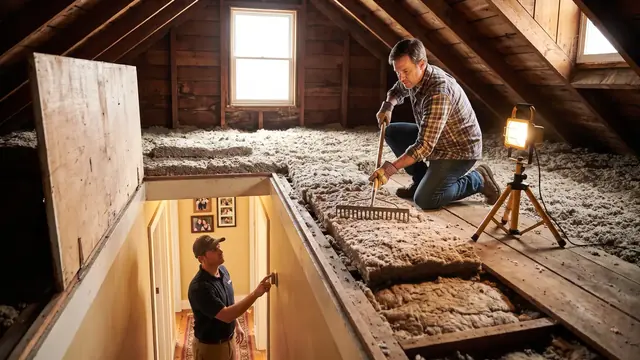
Energy-efficient home upgrades: What to do first, and what it saves
See which energy-efficient home upgrades pay off first, from air sealing and insulation to heat pumps and solar, with real costs and yearly savings.

20-minute read
DIY home renovation projects: 12 upgrades you can actually finish
Discover DIY home renovation projects that upgrade your space on a budget, from peel-and-stick backsplashes to floating shelves and smart lighting.
20-minute read
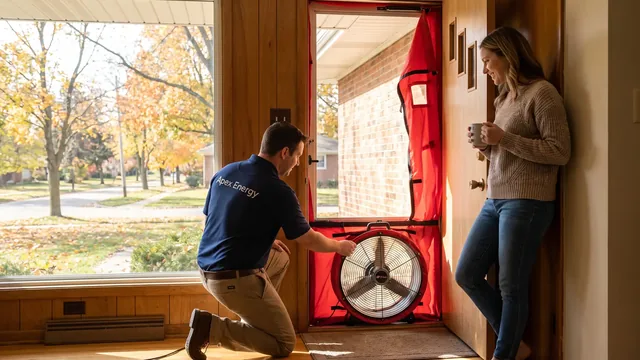
The benefits of a home energy audit and what it includes
Learn what a home energy audit finds, how blower door and infrared tests work, and why the Department of Energy ties audits to 5% to 30% savings.
Also worth reading
- How to install a home EV charger: Costs, permits and stepsSee what home EV charger installation involves, from Level 2 wiring and panel capacity to permits and typical costs, so you can plug in safely at home.
