
Home renovation trends: 8 upgrades worth your budget now
Today’s home renovation trends cluster around eight themes: energy efficiency, spa-style bathrooms, integrated smart home technology, a shift from open concept back to defined and multifunctional rooms, bold color and personalized design, artisan and handcrafted materials, aging-in-place features such as curbless showers, and flooring, which returns more of its cost at resale than anything else on the list. Energy efficiency leads the group because it’s the only theme that pays you back every month: space heating and air conditioning together account for 52% of the energy a typical U.S. household uses in a year.1

The practical read: efficiency work and flooring carry both lifestyle and resale value, while bold color and highly personal finishes are cheaper expressions best applied where they’re easy to change later. A trend list is a starting point, not a shopping list.
Learn which home renovation trends deserve your budget, including how the eight compare on cost and resale impact, which projects hold their value when you sell, and which ones are safest to personalize. For the wider set of projects, start with our Home Improvement & Design guide.
Key takeaways:
- The dominant theme: Energy efficiency leads renovation activity, and because space heating and cooling consume 52% of a typical home’s annual energy, insulation, windows, and HVAC belong at the front of the list.
- The highest-return project: Flooring is the value leader. Refinishing hardwood is one of the few remodeling projects REALTORS® regularly estimate recovers more than 100% of its cost at resale.
- The design shift: 4 of the 8 trends are about how rooms feel and function rather than what they save you, defined multifunctional rooms replacing open concept, bolder color, artisan materials, and aging-in-place features like curbless showers.
The 8 renovation trends at a glance
Two of the eight, efficiency work and flooring, earn their place on financial grounds alone. The other six are lifestyle decisions ranging from cheap and reversible to expensive and permanent. The cost bands below are relative to one another, not price quotes.2 Real numbers come from written bids on your house and your local labor market.
| Trend | Typical cost band | Resale impact | Best for |
|---|---|---|---|
| Energy efficiency (insulation, windows, HVAC) | Moderate to high | Strong, plus lower monthly operating cost | Owners staying put |
| Flooring (refinish or install hardwood) | Low to moderate | Highest on this list | Almost any house; strongest pre-sale project |
| Spa-style bathroom | High | Good, if the finishes stay broadly appealing | Dated full baths and primary suites |
| Integrated smart home systems | Low to moderate | Modest, hardware dates quickly | Owners who want control and security now |
| Defined, multifunctional rooms | Moderate | Good when it adds a genuinely usable room | Remote workers and multigenerational households |
| Bold color and dramatic wallpaper | Low | Neutral, or negative if it’s taste-specific | Rooms you can repaint in a weekend |
| Artisan and handcrafted materials | Moderate to high | Mixed. Character sells, oddity doesn’t | Focal points, not entire houses |
| Aging-in-place features | Moderate | Growing, because it widens your buyer pool | Anyone planning to stay long term |
If value matters more than lifestyle, work top-down from that resale column, our guide to renovation ideas that boost home value ranks projects by what they return, not by what’s trending.
1. Energy efficiency is the dominant renovation priority
Efficiency work is the trend with the clearest financial case, because space heating and air conditioning consume 52% of a typical household’s annual energy use, more than lighting, appliances, water heating, and electronics combined.
The order of operations matters more than the product you pick: sealing and insulating first is what makes better equipment perform as rated. A high-efficiency furnace in a leaky house delivers a fraction of what you paid for.
- Air sealing and insulation: The least glamorous work here and usually the cheapest per unit of comfort gained. Attics and rim joists come first in cold climates.
- Windows and exterior doors: A large expense with a long payback. Replace them when they’re failing or when comfort near the glass is the real complaint, not as a pure energy play.
- Heating and cooling equipment: Right-sizing matters as much as efficiency rating. Ask any bidder to show you a load calculation, not a square-footage rule of thumb.
- Appliances and water heating: Certified equipment is the low-friction version of this trend, replaceable one unit at a time.
Certification programs simplify comparison shopping, ENERGY STAR from the EPA publishes product criteria you can check before you buy. Federal, state, and utility incentives change from year to year, so confirm what’s available locally before building a rebate into your budget. Our guide to energy-efficient home upgrades covers which projects to sequence first.
2. Flooring returns more of its cost than any other project on this list
Flooring is the highest-return renovation of the eight, and refinishing existing hardwood is its best expression, one of the few remodeling projects REALTORS® regularly estimate recovers more than 100% of its cost at resale.3 New wood flooring ranks close behind. These estimates are directional, not guaranteed; your result depends on local demand and what’s under the carpet.
The reason is boring and durable: it’s the one surface every buyer walks across in every room, it photographs well, and it reads as maintenance rather than taste. A refinish is also the least disruptive major project in a house, days rather than weeks, with no walls opened.
- Refinishing beats replacing: If there’s sound hardwood under the carpet, refinishing costs a fraction of new installation and delivers most of the result.
- Consistency beats variety: Running one floor material through the main living areas makes a house feel larger; changing material at every doorway does the opposite.
- Stain color is the reversible part: Species and plank width you live with; color changes the next time the floor is sanded.
Flooring is also the project most worth doing before you list. Our guide to renovating a home for resale covers what to fix before photos and what to leave for the buyer, and NAR research and statistics tracks cost recovery and buyer preferences by project.
3. Bathrooms are being rebuilt as spa retreats, not just updated
Bathrooms are the highest-cost trend here and the one homeowners most often over-scope, because a spa bathroom is a full rebuild, not a finish swap. Wellness-driven design pushed the standard past a new vanity and tile floor.
- Heated floors and towel warmers: The feature people mention first in cold climates, and far cheaper to add while the floor is already open.
- Freestanding tubs and rainfall showers: Visually dominant, and both change your plumbing and framing, not surface-level decisions.
- Compact saunas and steam: The most personal item here, with the narrowest resale appeal. Buy it for yourself, not the next owner.
- Natural stone and calm palettes: The safest way to get the spa feeling without the mechanical cost, and the easiest part to keep broadly appealing.
Bathrooms carry the highest risk of hidden conditions behind walls, old plumbing, past leaks, undersized framing, so contingency money belongs in the budget from day one. In a smaller footprint.
4. Smart home technology is shifting from gadgets to whole-home systems
The change in smart home technology isn’t the devices, it’s the integration. Homeowners are moving from a shelf of unrelated apps to one system handling lighting, temperature, security, and access, which turns the category from novelty into infrastructure.
- Lighting: Automated scenes and schedules, increasingly wired into the switch rather than the bulb so the system outlives the bulbs.
- Temperature: Smart thermostats are the crossover product with the efficiency trend, and often the cheapest entry point to both.
- Security and access: Cameras, sensors, and keyless locks. The features most likely to be mentioned in a listing.
- Voice and app control: Useful, but the layer most likely to be obsolete first. Don’t let it drive wiring decisions.
Budget knowing hardware dates faster than anything else on the list: prewiring and neutral wiring at switch boxes hold their value, a specific brand’s hub may not.
5. Open concept is giving way to defined, multifunctional rooms
Open concept is softening rather than disappearing, and the replacement is partial separation, not a return to closed floor plans. Remote work and shared households exposed the two things a fully open layout can’t provide: acoustic privacy and a door you can close.
Most homeowners aren’t rebuilding walls. They’re adding one partial wall, pocket or glass doors, a built-in, or a half-height divider that defines a zone without darkening the room.
- Flexible zones over dedicated rooms: A space that works as office, guest room, and playroom outperforms one that only does the first.
- Doors are the whole point: Pocket and glass doors buy sound control while keeping sightlines and daylight.
- Layered lighting does structural work: Separate task, ambient, and accent circuits let one room change character without moving a wall.
Any change that moves walls, adds circuits, or relocates plumbing puts you into permit territory, and requirements are set locally. Confirm what your municipality requires before demolition. The National Association of Home Builders tracks where these layout preferences are heading.
6. Bold color and personal taste are replacing all-white interiors
Color is the cheapest trend on the list and the fastest to reverse, which is why personalization shows up here first. The move is away from all-white and greige toward saturated, moody palettes: deep greens, navy, terracotta, warm golds.
- Paint is the low-risk version: A dramatic wall costs a weekend and undoes in another weekend. Spend your boldness here.
- Wallpaper is the medium-risk version: Higher impact, higher removal cost. Powder rooms and single accent walls limit the downside.
- Tile and cabinetry are the high-risk version: A strongly colored permanent surface is a taste bet you can’t easily unwind.
- Keep the envelope calm: Floors, counters, and cabinet boxes are the expensive layer. Keep those broadly appealing and be bold everywhere else.
The resale caution is real but narrow: personalized finishes return the least of any renovation category, because the next buyer rarely shares your taste. Keep color in the reversible layer rather than painting everything white. Our guide to renovation ideas that boost home value covers where personality helps a listing and where it costs you.
7. Artisan and handcrafted materials are beating mass-produced finishes
The artisan trend is a quality argument more than a style one: fewer, better materials instead of more surfaces covered cheaply. Handmade tile, carved cabinetry, reclaimed wood, and local stone read as permanence in a market full of identical builder-grade finishes.
- Handmade tile: Irregular glaze and edges are the point. Budget for longer lead times and a more skilled installer.
- Custom millwork and cabinetry: The most expensive expression, and the one that most changes how a room feels.
- Locally sourced materials: Easier to match and repair later than an import that gets discontinued.
- One focal point per room: Craftsmanship reads as luxury when it’s concentrated and as clutter when it’s everywhere.
Handcrafted work carries schedule risk mass-produced material doesn’t. Confirm lead times in writing before you set a completion date.
8. Aging-in-place features are becoming standard design, not medical retrofits
Aging-in-place features moved into mainstream remodels because the demographics are unambiguous: adults 65 and older are roughly 1 in 6 Americans, and that group grew 38.6% in a decade, its fastest ten-year growth since the late 1800s.4 Designers responded by making accessibility invisible rather than institutional.
- Curbless showers: The signature feature of this trend, and one that now reads as high-end rather than clinical. Cheapest to do while the bathroom floor is already open.
- Reinforced walls for future grab bars: Blocking behind the tile costs almost nothing during a remodel and turns a later addition into a one-hour job.
- Wider doorways and hallways: Easier to build into a layout change you’re already making than to retrofit as a standalone project.
- Lever handles, non-slip flooring, and better lighting: Low-cost specification choices that help everyone in the house, not just its oldest resident.
This trend widens your buyer pool rather than narrowing it, which separates it from other personalization. Planning to stay long term? Our Homeownership guide covers improvement planning across the years you’ll own the house.
Whichever trends make your list, decide how you’re paying before you sign a contract. Cash, a cash-out refinance, a home equity product, and renovation financing each carry different costs and timelines, our guide to financing home renovations compares them side by side.
What did the 2025 Remodeling Impact Report find about cost recovery?
The National Association of REALTORS® and the National Association of the Remodeling Industry (NARI) published the 2025 Remodeling Impact Report in April 2025. The cost side came from 177 NARI member firms surveyed in summer 2024, each pricing projects on a 2,300 square foot, post-1978 house with no hidden problems. The value side came from 4,005 REALTORS® estimating what each project adds at resale.
According to NAR’s April 9, 2025 announcement, the projects with the largest estimated cost recovery in this edition were a new steel front door (100%), a closet renovation (83%) and a new fiberglass front door (80%). NAR said this edition is structured differently from prior ones, and refinishing hardwood does not appear among the twelve projects in the 2025 cost recovery chart, so read the flooring estimate in section 2 as directional, as its footnote says.
| Project | 2025 report finding |
|---|---|
| New steel front door | 100% estimated cost recovery |
| Closet renovation | 83% estimated cost recovery |
| New fiberglass front door | 80% estimated cost recovery |
| Kitchen upgrade | Joy Score 10; 48% of REALTORS® saw more demand for it in the last two years |
| New roofing | Joy Score 10; 43% saw more demand; 37% recommend it before selling |
| Bathroom renovation | 35% of REALTORS® saw more demand |
| Painting the entire home | Recommended before selling by 50% of REALTORS® |
| Painting one interior room | Recommended before selling by 41% of REALTORS® |
Source: NAR and NARI, 2025 Remodeling Impact Report announcement, April 9, 2025. Cost recovery figures are estimates, not guaranteed returns.
Joy and resale point in different directions: the three projects with a perfect Joy Score of 10 (an added primary bedroom suite, a kitchen upgrade and new roofing) are not the three with the largest cost recovery, and the report found 43% of owners happy and 38% satisfied with the finished project, a typical Joy Score of 8.2. Our guide to assessing a home’s resale potential shows what buyers weigh; see also renovating a kitchen on a budget and maintaining a roof
Why are homeowners remodeling, and how are they paying for it?
The same report includes a HouseLogic survey of 806 consumers taken in winter 2024. The leading reasons were upgrading worn-out surfaces, finishes and materials (27%), improving energy efficiency (19%), time for a change (18%) and selling within the next two years (18%). 89% said affordability was not a factor in the decision, while 9% said rising home prices or mortgage rates pushed them to remodel because they did not or could not move.
On payment, 54% of consumers reported using a home equity loan or line of credit, 29% used savings and 10% used credit cards. On labor, 29% hired a professional for the whole job, 24% hired the labor but bought the materials, and 24% did everything themselves. Schedules split three ways: 37% said the project took about as long as planned, 31% more time and 31% less. Our guide to DIY home renovation projects covers which jobs suit a homeowner.
The two equity products in that survey work differently. The CFPB explains that a home equity loan pays out as a lump sum and usually carries a fixed rate, and that the lender could foreclose if the loan is not repaid. A home equity line of credit, per the CFPB, works like a credit card borrowed against your equity, and its rate is usually adjustable. Our guides to the home equity line of credit, home equity loans, equity loan pros and cons and a cash-out refinance compare the options.
Samantha Shelton, Align’s loan originator, starts every equity conversation with the purpose: “Your house isn’t an ATM. Equity is valuable. So there should be a reason behind using it.” On renovation files she adds, “You’re not just financing the house. You’re financing the plan for the house.” More in our guide to using home equity wisely.
What are architects and buyer surveys showing for 2026?
In the American Institute of Architects’ third quarter 2026 Home Design Trends Survey, released September 21, 2026, AIA reported that demand for outdoor living spaces jumped by 10% from 2025, and that accommodation for multiple generations, first-floor primary suites and wider doorways led the special features homeowners asked for.
| Design trend (net share of architects reporting it increasing) | Q1 2026 | Q1 2025 |
|---|---|---|
| Overall design for aging in place | 65% | 49% |
| Easier accessibility within the home | 60% | 31% |
| Outdoor living space, covered outdoor rooms | 51% | 55% |
| Blended indoor and outdoor space | 43% | 40% |
Source: AIA Home Design Trends Survey, 2026 Q2 report (Q1 2026 data). The net share is the percentage of architects reporting a trend increasing minus the percentage reporting it decreasing.
Homes themselves are not getting larger. The same AIA report shows a net 9% of architects reporting overall home square footage decreasing in Q1 2026, and the Census Bureau reports that the median single-family home completed in 2025 was 2,142 square feet, across 1,005,000 completions. Our guide to creating home office space covers flexible layouts.
In the AARP 2024 Home and Community Preferences Survey, 75% of adults age 50 and older said they would like to stay in their current home as long as possible; among those planning modifications, 72% are looking at bathroom upgrades such as grab bars and no-slip tile, and 44% want to add smart home security features. Our guide to buying a home for aging in place covers the features to look for. The National Association of Home Builders’ 2024 What Home Buyers Really Want survey of more than 3,000 buyers found 78% rated a programmable thermostat essential or desirable, followed by security cameras (76%) and a video doorbell (74%), and 81% wanted hardwood on the main level, while a laundry room and a patio were each wanted by 86%.
How do federal home energy rebates reward efficiency work?
The U.S. Department of Energy says the Home Efficiency Rebates (HOMES) can cover up to $8,000 of upgrades based on modeled energy savings, with a minimum savings of 20%, and the Home Electrification and Appliance Rebates (HEAR) can cover up to $14,000 of efficient upgrades. DOE also stresses insulating and sealing a home before upgrading heating and cooling to get the most from the rebate. States run the programs.
The envelope work that comes first has its own payoff. ENERGY STAR says sealing air leaks and adding insulation can save up to 10% on annual energy bills. Fuel matters too: according to the EIA, natural gas was used in 58% of homes in 2020 and accounted for about 43% of residential end-use energy that year. A home energy audit shows which of these steps your house needs.
What health and safety rules apply when you renovate an older home?
In a house built before 1978, paint is the first thing to ask about: the EPA puts the share of those homes with some lead-based paint at roughly three in four, so its Renovation, Repair and Painting Rule says a contractor paid to sand, cut or scrape painted surfaces in them must be a certified firm whose workers are trained in lead-safe practices. The rule generally does not apply to owners working on their own homes, but EPA recommends hiring a lead-safe certified contractor, who must hand you the Renovate Right pamphlet before work begins.
The EPA notes that paints, varnishes and wax all contain organic solvents, and that concentrations of many volatile organic compounds run up to ten times higher indoors than outdoors. Its indoor air guide advises plenty of fresh air and fans when painting or remodeling, and keeping indoor humidity between 30% and 50%. Our guides to addressing mold and home insurance and renovations cover moisture and coverage questions.
What should Michigan homeowners know before a renovation?
Michigan licenses the people who do the work. The Department of Licensing and Regulatory Affairs (LARA) says any contractor offering work that totals $600 or more in labor and materials must be licensed, that your contract should state that all required permits will be obtained before work begins, and that if you were solicited and signed the contract in your home, you have three days to cancel. A maintenance and alteration license covers specific trades only, under MCL 339.2404, for example insulation, roofing, siding and gutters, or tile and marble work, so check the trade named on the license.
On May 18, 2026, LARA released a 13-page consumer guide on choosing qualified contractors, understanding contracts, spotting fraud and working through permits. Our guide to home renovation permits covers the permit steps in more detail.
Michigan’s efficiency rebates run through MiHER, administered by the Department of Environment, Great Lakes, and Energy (EGLE). EGLE reported on August 20, 2026 that each of its two rebate pathways received just over $105 million in federal funding, that the program aims to fund upgrades for about 15,000 Michigan homes, and that HEAR rebates go to households at or below 150% of area median income. The same update said approvals for single-family projects in the Detroit district were temporarily paused because participation was nearing the funding cap.
Michigan electricity also costs more than the national average. The EIA reported an average Michigan residential price of 22.99 cents per kilowatthour in August 2026, up from 20.73 cents in August 2025, against a U.S. residential average of 18.16 cents in August 2026. Our guide to the impact of home improvements on property taxes covers the tax side.
How Align finances a renovation
You are not just financing the house. You are financing a plan for it. Align places HomeStyle and FHA 203(k) renovation loans, standalone HELOCs and home equity loans, so the project can be paid for the way that fits it, not the way one bank prefers.
Samantha starts with why: what the work is, what it should cost, and whether your equity or a renovation loan is the better tool. Then one application goes to multiple wholesale lenders.
FAQ: Home renovation trends
Here are answers to common questions about home renovation trends.
What renovation trends are biggest right now?
Energy efficiency leads, followed by spa-style bathrooms, integrated smart home systems, a move from open concept to defined multifunctional rooms, bolder color and personalized design, artisan materials, aging-in-place features, and flooring upgrades. The common thread is homeowners investing in comfort and long-term usability rather than purely visual updates. Our Home Improvement & Design guide covers each of these in more depth.
Which renovations give the best return on investment?
Flooring, especially refinishing or installing hardwood, consistently ranks near the top. Energy efficiency work such as insulation, efficient windows, and HVAC upgrades also returns well because it lowers operating costs and appeals to buyers. Highly personalized finishes and elaborate custom features return the least, since the next buyer rarely shares the same taste. See our guide to energy-efficient home upgrades for how to sequence the efficiency side.
Is open concept design going away?
It’s softening rather than disappearing. The current shift favors defined rooms and flexible zones that can serve as an office, a guest space, or a playroom, because full open layouts proved hard to use for remote work and noise control. Many homeowners are adding partial walls, pocket doors, and glass partitions instead of full teardowns.
How much should I budget for a renovation?
It depends entirely on scope, but build any budget from three written bids on an identical scope plus a 10% to 20% contingency. Efficiency work tends to be the most predictable to price; bathrooms and kitchens carry the highest risk of hidden conditions behind walls. Decide before you start which line items you’ll cut if costs run over, and read our guide to financing home renovations before you commit to a payment method.
Do I need a permit to remodel my house in Michigan?
Usually, for anything beyond ordinary repairs. MCL 125.1511 says the alteration of a building cannot start until a permit is issued, and the enforcing agency must decide within 10 business days, or 15 for an unusually complicated project. LARA exempts ordinary repairs, but not cutting away a wall, removing a structural beam, or changing a means of egress.
Is the federal energy efficient home improvement tax credit still available?
Not for new work. The IRS says the credit covers qualifying improvements made through December 31, 2025. From 2023 through 2025 it equaled 30% of certain qualified expenses, generally capped at $1,200 a year, with exterior windows and skylights limited to $600. Projects finished in 2026 depend on state and utility programs, such as the MiHER rebates described above, so confirm current terms before you count on any incentive.
Does remodeling raise property taxes in Michigan?
It depends on the work. Under MCL 211.27, the assessor may not count added value from normal repairs, replacement and maintenance on residential property until it sells, and the listed repairs include insulating, weatherstripping and replacing storm windows or doors. New construction is treated differently: MCL 211.34d values it at its true cash value multiplied by 0.50. Our guide to property tax assessments explains more.
Can renovation costs be rolled into a mortgage?
Yes, through renovation programs. Fannie Mae’s HomeStyle Renovation lets the loan amount include repair, remodeling or energy improvement costs, sets no minimum renovation amount, and requires the work to be finished within 15 months of closing. HUD says the Limited 203(k) finances up to $75,000 of repairs, while the Standard 203(k) needs at least $5,000 of work. Our guide to renovation loans compares them.
The bottom line on home renovation trends
Eight themes define home renovation right now, and two carry the money: energy efficiency and flooring. Efficiency work leads because space heating and cooling account for 52% of a typical home’s annual energy use, so insulation, windows, and HVAC pay you back every month. Flooring leads on resale. Refinishing hardwood is one of the few projects REALTORS® regularly estimate recovers more than 100% of its cost. The other six, spa bathrooms, smart home systems, defined multifunctional rooms, bold color, artisan materials, and aging-in-place features, are lifestyle decisions, and the low-cost ones are simple to undo. Get three written bids on identical scope before committing.
If you’re ready to renovate, talk to Align Lending. We’ll shop your scenario across our lender network and show you cash-out refinance and renovation financing options side by side. Call 248-506-5727 or start online.
Footnotes:
1. Space heating and air conditioning accounted for 52% of annual household energy consumption in 2020, per the U.S. Energy Information Administration’s Residential Energy Consumption Survey. Your home’s share depends on climate, age, envelope condition, and equipment. Return to text.
2. Cost bands in the table are relative comparisons between the eight trends, not price estimates, quotes, or bids. Actual project costs vary widely by scope, materials, home condition, and local labor market. Get written bids from licensed contractors for your specific project. Return to text.
3. Cost recovery figures for remodeling projects are estimates reported by REALTORS® and remodeling professionals in industry research, not guaranteed returns. Actual resale value depends on your local market, the condition of the work, and buyer demand at the time you sell. Return to text.
4. The U.S. population age 65 and older was 55.8 million as of the 2020 Census about 1 in 6 people, or 16.8% of the population after growing 38.6% between 2010 and 2020. Return to text.
Sources: household energy end-use shares, U.S. Energy Information Administration, Residential Energy Consumption Survey (2020 data), via EIA Energy Explained: Use of energy in homes. Product efficiency criteria and home-efficiency guidance, ENERGY STAR, U.S. Environmental Protection Agency. Remodeling cost recovery estimates and buyer preference data, National Association of REALTORS® research and statistics, including the NAR/NARI Remodeling Impact Report. Housing design and construction research, National Association of Home Builders. Population age 65 and older, U.S. Census Bureau, 2020 Census. Permit requirements referenced generally; requirements are set by your local building authority.
This article is for informational purposes only and is not intended to provide legal, financial, or tax advice. Renovation costs, contractor bids, permit requirements, and the resale impact of any project vary by property and market. Availability and terms of federal, state, and utility efficiency incentives change over time, confirm current program rules and consult a qualified tax professional before relying on any incentive. Consult a licensed contractor and your local building department about your specific project. Align Lending is an independent Michigan mortgage broker, NMLS #2041154.
Sources
Every outside source this guide links to, in the order it appears. How we choose and check sources
- ENERGY STAR from the EPAENERGY STAR
- Federal, state, and utility incentives change from year to yearInternal Revenue Service
- NAR research and statisticsNational Association of Realtors
- Confirm what your municipality requires before demolitionState of Michigan
- The National Association of Home BuildersNational Association of Home Builders
- 2025 Remodeling Impact ReportNational Association of Realtors
- NAR’s April 9, 2025 announcementNational Association of Realtors
- CFPBConsumer Financial Protection Bureau
- Per the CFPBConsumer Financial Protection Bureau
- Third quarter 2026 Home Design Trends Surveyaia.org
- AIA Home Design Trends Survey, 2026 Q2 report (Q1 2026 data)hdts.aia.org
- Census BureauU.S. Census Bureau
- AARP 2024 Home and Community Preferences SurveyAARP
- 78% rated a programmable thermostat essential or desirableeyeonhousing.org
- 81% wanted hardwood on the main leveleyeonhousing.org
- U.S. Department of Energy
- ENERGY STAR
- According to the EIAeia.gov
- EPAU.S. Environmental Protection Agency
- Renovate Right pamphletU.S. Environmental Protection Agency
- Paints, varnishes and wax all contain organic solventsU.S. Environmental Protection Agency
- Indoor air guideU.S. Environmental Protection Agency
- Department of Licensing and Regulatory Affairs (LARA)State of Michigan
- Under MCL 339.2404Michigan Legislature
- Released a 13-page consumer guideState of Michigan
- EGLE reported on August 20, 2026State of Michigan
- EIA reportedeia.gov
- MCL 125.1511Michigan Legislature
- MCL 211.27Michigan Legislature
- MCL 211.34dMichigan Legislature
- Fannie Mae’s HomeStyle RenovationFannie Mae Selling Guide
- HUDU.S. Department of Housing and Urban Development
- 55.8 million as of the 2020 CensusU.S. Census Bureau
Related resources
20-minute read
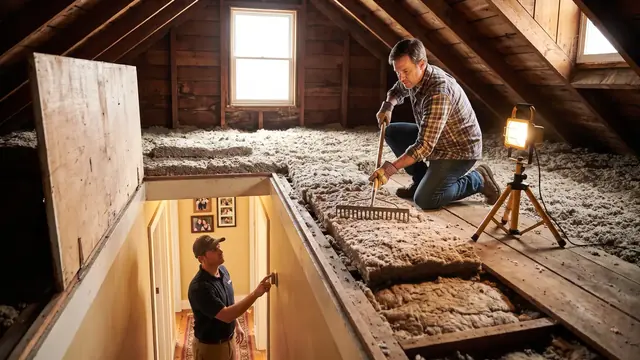
Energy-efficient home upgrades: What to do first, and what it saves
See which energy-efficient home upgrades pay off first, from air sealing and insulation to heat pumps and solar, with real costs and yearly savings.

20-minute read
DIY home renovation projects: 12 upgrades you can actually finish
Discover DIY home renovation projects that upgrade your space on a budget, from peel-and-stick backsplashes to floating shelves and smart lighting.
20-minute read
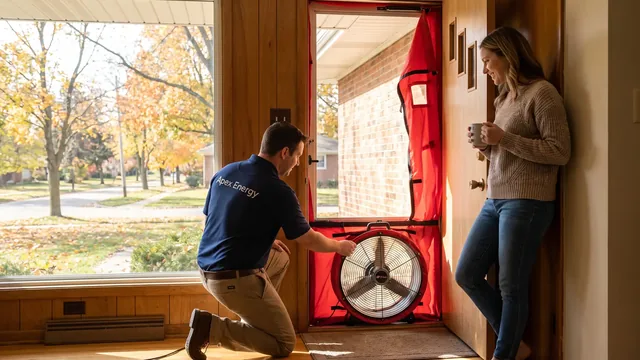
The benefits of a home energy audit and what it includes
Learn what a home energy audit finds, how blower door and infrared tests work, and why the Department of Energy ties audits to 5% to 30% savings.
