
How to prevent home burglaries
Most home burglaries are crimes of opportunity rather than break-ins. In 40% of unlawful entries into unoccupied homes, the offender got in through a door or window that simply wasn’t locked, according to the Bureau of Justice Statistics’ National Crime Victimization Survey.
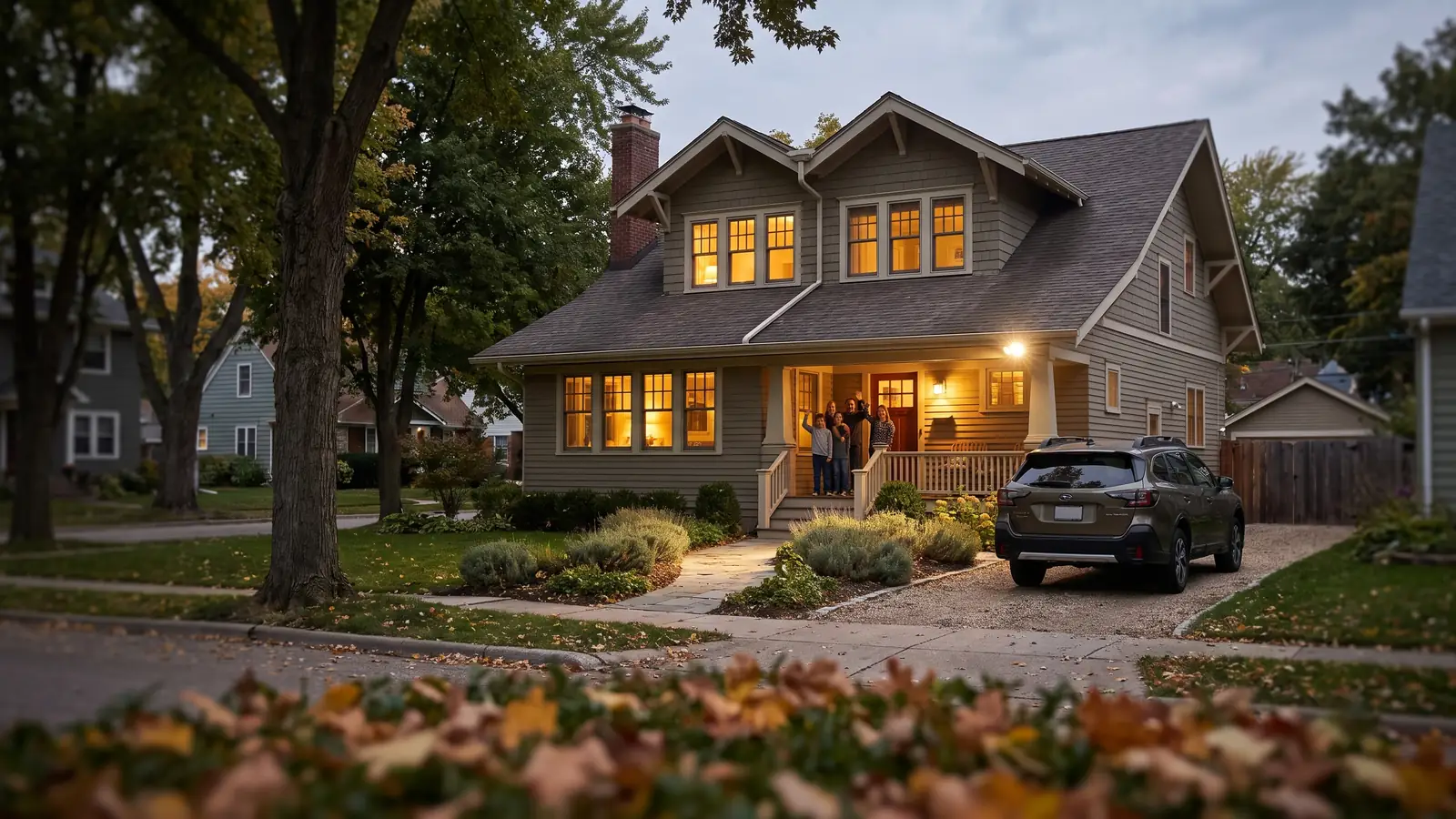
That makes the highest-return prevention work unglamorous. Lock every exterior door and window every time, put a deadbolt on each exterior door, replace the short strike-plate screws with 3-inch screws that reach the framing behind the jamb, and add motion-activated lighting at every entry point. Then trim the shrubs below window height so there’s nowhere to work unseen.
Learn how to prevent home burglaries, including how burglars choose and enter a house, which deterrents push them to a different target, and how to make an empty house look lived-in. If security is one line on a longer project list, our Homeownership guide covers the rest.
Key takeaways:
- Unlocked entries are the main failure: In 40% of unlawful entries into unoccupied homes, the burglar used a door or window that wasn’t locked, so locks, deadbolts, and 3-inch strike-plate screws outrank any gadget you can buy.
- Alarms move burglars to another house: In a survey of 422 incarcerated burglars, 83% said they try to determine whether an alarm is present before attempting a burglary, and 60% said they’d look for a different target if they found one.
- The empty-house hours are the risk window: Burglaries with no one home were far likelier between 6 a.m. and 6 p.m. (43%) than between 6 p.m. and 6 a.m. (26%), so light timers, held mail, and a car in the driveway matter as much as hardware.
How do burglars actually get in?
Through doors and windows, and most often through ones left open or unlocked. The Bureau of Justice Statistics found that in 40% of unlawful entries into unoccupied residences, the offender gained access through an unlocked door or window, no tools, no damage, no noise. Those figures come from the National Crime Victimization Survey, covering an estimated 3.7 million household burglaries a year on average from 2003 through 2007.
Sophisticated entry is rare. In a University of North Carolina at Charlotte study of 422 incarcerated burglars, most reported entering through open windows and doors or forcing them open. Only about one in eight said they picked a lock or used a key they had previously acquired.
Know the stakes. FBI Uniform Crime Reporting data for 2019 put the average loss at $2,661 per burglary offense, with 62.8% of burglaries at residences and only 14.1% of offenses cleared by arrest or exceptional means. Most cases are never solved, the real argument for prevention over reaction.
How many homes are burglarized each year, and how many get reported?
The Bureau of Justice Statistics’ Criminal Victimization, 2024 (NCJ 310547, published September 2025) counted 1,103,790 household burglaries in 2024, a rate of 8.2 per 1,000 households, down from 1,210,640, or 9.5 per 1,000, in 2020. Counted by household, 943,900 households, about 0.71% of all U.S. households, had at least one burglary in 2024.
Many never reach a police file. The same BJS report found that 40.7% of burglaries were reported to police in 2024, compared with 42.2% in 2023. Police counts, like the FBI and Michigan State Police figures here, include only that share.
An older BJS special report, Victimization During Household Burglary, breaks entries down by method. In 2003 to 2007, entries made without force were the largest group, and a household member was present in a third of them.
| Type of household burglary | Average per year, 2003 to 2007 | Share with a household member present |
|---|---|---|
| Unlawful entry (no force) | 1,949,520 | 33.3% |
| Forcible entry | 1,134,230 | 15.5% |
| Attempted forcible entry | 629,250 | 32.0% |
| All household burglaries | 3,713,000 | 27.6% |
Source: Bureau of Justice Statistics, Victimization During Household Burglary (NCJ 227379, September 2010), table 1.
How do you harden doors, windows, and sliding doors?
Start with the door frame, because that’s what fails first. A deadbolt is only as strong as the wood it lands in, and most strike plates ship with 3/4-inch screws that grab nothing but thin jamb trim. Swapping them for 3-inch screws that pass through the jamb into the wall stud is a ten-minute job that changes what a kick has to move.
- Deadbolts on every exterior door: Include the garage-to-house door, the one people skip most. If you’re buying new hardware, look for ANSI/BHMA A156.40 certification: residential locks are graded A, B, or C, Best, Better, Good, separately in three categories, durability, strength and security, and finish. Read the security grade, not just the package. The Grade 1, 2, and 3 system quoted all over the internet belongs to the commercial standards, not residential deadbolts.
- Solid-core or metal exterior doors: A hollow-core door defeats any lock you put in it. Knock on yours, a hollow door sounds like a drum.
- Reinforced strike plates and hinges: A box strike spreads force across more framing. Use 3-inch screws on hinges too, since outswing doors fail at the hinge side.
- Window locks that actually engage: Test every sash lock. Ground-floor and basement windows matter most, plus any window a porch roof or fence makes reachable.
- Sliding doors: Drop a dowel or security bar into the track and add an anti-lift device, since most sliders can be lifted out even when latched.
- Glass-break sensors: These trigger on the frequency of breaking glass even when the frame is never opened, which is what a contact sensor alone misses.
Almost all of this is weekend work with a screwdriver and a drill. Our list of DIY home security upgrades sorts the true do-it-yourself projects from the ones needing a locksmith or electrician.
Does exterior lighting deter burglars?
It helps, and the reason is cover rather than brightness. In the UNC Charlotte offender survey, the factors burglars weighed when choosing a target included the close proximity of other people and visible signs of security, alarm signs, alarms, dogs inside, outdoor cameras. Lighting works the same way: it removes the ability to work at a door or window unseen.
Motion-activated fixtures are the practical choice at entry points, because a light that snaps on is a change someone notices, while a light that burns all night becomes scenery. The Department of Energy’s Energy Saver guidance points to LED floodlights combining a photosensor with a motion sensor, so the fixture stays off in daylight and only draws power when triggered. Look for automatic daylight shut-off and motion sensing on the fixture itself: ENERGY STAR says the EPA has ended its program for the most common light fixtures.
Landscaping does the same job for free. Keep shrubs below window height and limb up nearby trees so there’s a clear sightline from the sidewalk to every ground-floor opening. Tall privacy hedges across a front yard protect the burglar, not you.
Do neighborhood watch groups and better street lighting reduce burglary?
The National Institute of Justice’s CrimeSolutions profile of neighborhood watch programs (posted September 9, 2013) summarizes a 2008 meta-analysis by Bennett and colleagues: across 15 samples from 10 studies that used police data, crime decreased by 16% in watch areas compared with control areas. The 3 samples from 2 studies built on residents’ own victimization surveys showed no significant effect, so CrimeSolutions rates the practice Promising for reducing crime and Ineffective for victimization.
The profile lists the three most common watch components: watching for and reporting suspicious activity, property marking, and a home security survey. Permanently marking items to show ownership, the profile notes, makes stolen goods harder to offload.
The National Crime Prevention Council notes that the modern Neighborhood Watch launched in 1972, at the request of sheriffs and police chiefs facing an increasing number of burglaries. Ask your police department whether a group covers your street.
For lighting, the CrimeSolutions profile of improved street lighting (posted March 9, 2015) reports Welsh and Farrington’s 2008 finding that crime decreased by 21% in treatment areas compared with comparison areas across 13 studies, with a small, significant effect on property offenses and no significant effect on violent crime. That finding covers street lighting, not porch fixtures.
Which home security deterrents actually work?
Ranked by what offenders say they respond to, a monitored alarm and a lived-in look beat everything else, but the free habits at the top of this table outperform any purchase. Costs vary by brand, installer, and monitoring plan, so price the exact products before you buy.
| Deterrent | Typical cost | Effort | Deterrent strength |
|---|---|---|---|
| Locking every door and window, every time | Free | Daily habit | Highest, closes the 40% opportunity gap |
| Deadbolt on every exterior door | Low, hardware-store | DIY in an hour, or a locksmith | High |
| Reinforced strike plate with 3-inch screws | Very low | DIY, one screwdriver | High relative to cost |
| Trimmed landscaping below window height | Free to low | Seasonal yard work | Moderate, removes working cover |
| Motion-activated exterior lighting | Low to moderate | DIY for solar or plug-in; electrician for hardwired | Moderate to high |
| Visible cameras and a doorbell camera | Moderate, plus storage subscription | DIY on most models | Moderate to high, a named target-selection factor |
| Monitored alarm system | Moderate, plus monthly monitoring | DIY or professional install | Highest purchased option. 60% would pick another target |
The alarm numbers deserve the detail. In that survey of 422 incarcerated burglars, 83% said they would try to determine whether an alarm was present before attempting a burglary, and 60% said they would seek an alternative target if there was one on site. Among those who found an alarm partway through, about half said they would discontinue, another 31% would sometimes retreat, and only 13% would always continue. The study was funded by the Alarm Industry Research and Educational Foundation, worth knowing, though the finding matches the plainer point that burglars pick easy houses.
Two notes. A camera records the crime while an alarm interrupts it, so they aren’t substitutes. And self-monitoring saves the monthly fee but puts the response on you and your phone. Our guide to how to choose a home security system compares monitoring tiers and contracts.
How do you make an empty house look occupied?
Attack the daytime window first, because that’s when houses sit empty. Burglaries with no one home were far more likely between 6 a.m. and 6 p.m. (43%) than between 6 p.m. and 6 a.m. (26%), per the National Crime Victimization Survey. The 2 a.m. masked figure is mostly a movie; the risk is a weekday while you’re at work.
- Vary your timers: Put interior lamps, a radio, or a TV on schedules that change, not one lamp clicking on at 7:00 every night. Randomized and sunset-linked schedules are standard on connected plugs and switches.
- Kill the pile-up signals: Hold mail and packages or have a neighbor collect them daily. Accumulating mail, newspapers, and boxes announce that nobody has been home in days.
- Keep the yard on schedule: Arrange lawn care or snow removal in advance rather than on request, so the property keeps its normal rhythm.
- Park a car in the driveway: One of the cheapest occupancy signals there is, and a neighbor can supply it.
- Stay quiet online until you’re home: Post the vacation photos after you’re back, and give your dates to one trusted neighbor, not a public feed.
- Skip the outdoor spare key: Under the mat, in a flowerpot, above the door frame, and inside a fake rock all get checked in seconds. Leave a spare with someone you trust or use a smart lock with a code you can revoke.
What should you set up before a long trip?
The U.S. Postal Service’s Hold Mail service holds mail for a minimum of 3 days and a maximum of 30 days, and you can request it up to 30 days in advance.
A Michigan winter trip adds frozen pipes to the list. In its January 22, 2026 winter storm release, the Michigan Department of Insurance and Financial Services (DIFS) lists frozen pipes, roof collapses and ice dams among the most common winter insurance claims and advises keeping the heat set above 55°F. Our seasonal home maintenance checklist covers the rest of the winter list.
The same DIFS release warns that heavy snow and ice can knock out power for hours or even days. Ready.gov’s power outage guidance advises listing the items you rely on that need electricity and finding out how long battery backup will last; ask that of an alarm panel, a Wi-Fi camera and a smart lock before you leave. An alarm that also reports smoke protects against fire too, covered in our fire safety tips for homeowners.
How should you protect valuables and prepare for a claim?
Assume some attempts succeed, and make that outcome smaller. A bolted-down safe for jewelry, cash, spare keys, firearms, and documents converts a grab-and-go into a job most burglars won’t take, since the typical burglary is fast and opportunistic rather than planned.
Then check what your policy actually pays. Standard homeowners policies carry special limits on theft of certain categories, and the Insurance Information Institute’s guidance on covering valuables notes that many cap theft of jewelry, furs, and precious stones somewhere in the $1,000 to $2,000 range in total, not per item. If your rings, watches, or collections exceed that, the two fixes are raising the special limit or scheduling individual items on a floater, which covers a broader set of losses and often carries no deductible. Our guide to evaluating home insurance options walks through how those endorsements are priced.
Build the inventory before you need it. The Institute recommends a photo record of individual items and whole rooms, closets, and drawers, labeled with what’s pictured, where you bought it, the make and model, and what you paid, plus serial numbers on appliances and electronics. An inventory speeds a claim, substantiates the loss, and shows whether you carry enough personal property coverage. Store a copy off-site. An inventory stolen with the house isn’t an inventory.
Worth saying plainly: Align Lending doesn’t sell alarms, locks, or insurance, and has no stake in which system you choose. Where this meets our work is financing. When hardening the house is part of a bigger renovation, lenders in Align’s network offer renovation and cash-out refinance options that fold the cost into the mortgage.1 Our Insurance & Protection guide covers the coverage side.
How often do homeowners file theft claims, and what do they pay?
Theft is a small share of homeowners claims, but not a small check. According to the Insurance Information Institute’s homeowners and renters insurance statistics, built on ISO data, theft claims averaged $5,524 each over 2019 to 2023, at a frequency of 0.12 claims per 100 insured homes per year. By the Institute’s calculation from 2018 to 2020 data, about one in 700 insured homes has a theft claim each year, and theft made up 0.6% of homeowners losses by cause in 2023.
The Institute’s guide to understanding insurance deductibles notes that a homeowners deductible applies each time you file a claim. Hypothetical example, not an offer: on a theft loss equal to the Institute’s $5,524 average, a $1,000 deductible would leave a claim payment of $4,524, before any special limits on jewelry or other categories. Our guide to homeowners insurance deductibles covers choosing one.
The same Institute page cites a 2023 Triple-I/Munich Re consumer survey in which 47% of homeowners said they had prepared an inventory of their possessions. Michigan DIFS’s homeowners insurance guide widens the record: photograph the exterior from different viewpoints, and include the garage, the attic and separate buildings. If an upgrade raises your rebuild cost, see our guide to home insurance and renovations.
What should you do after a break-in?
- Notify the police: Michigan DIFS’s homeowners claims guide lists notifying the police in the event of a theft among a policyholder’s duties after a loss, along with reasonable steps such as boarding up damaged property or replacing a broken lock.
- Make temporary repairs only: DIFS’s homeowners insurance guide says to save receipts for temporary repairs and not make permanent repairs until your insurance company has inspected the damaged property.
Then fix the weakness quickly. The ASU Center for Problem-Oriented Policing’s guide Burglary of Single-Family Houses (Guide No. 18, 2002) reports that previously burglarized houses are up to four times more likely to be burglarized than houses never targeted, and that a repeat is most likely within six weeks of the first. Houses next door also face increased risk, and burglars may return months later for property replaced with insurance proceeds, so tell your neighbors the same day.
The same POP Center guide reports that burglars are less likely to gain entry when a house has two or more security devices, such as window locks, dead bolts, security lights and alarms. For a rotted frame or a weak door, our guides to home maintenance for first-time homeowners and DIY home renovation projects sort the repairs you can handle from the ones for a contractor, and wiring work can need a renovation permit.
What Michigan homeowners should know
Michigan’s version of this problem is seasonal, and the insurance side is where the hardware pays you back.
- Protective-device discounts start around 5%: The Insurance Information Institute reports that homeowners can usually get a discount of at least 5% for a smoke detector, burglar alarm, or deadbolt locks, and that some companies cut premiums by as much as 15% or 20% for a sophisticated sprinkler system paired with a fire and burglar alarm that rings at a police station, fire department, or monitoring station. On a hypothetical $2,000 annual premium, a 5% discount is about $100 a year.2
- Discounts are not uniform across state lines: The Institute is explicit that companies don’t all offer the same discount, or the same amount, in every state. Ask your Michigan carrier which devices qualify and how large the credit is before you buy equipment expecting it to pay for itself.
- Snow is an occupancy billboard: An unshoveled drive and unbroken snow across the front walk announce an empty house as loudly as piled-up mail. If you’re a snowbird or traveling in winter, put snow removal on a standing schedule rather than calling for it.
- Lock the detached buildings: Detached garages and sheds are common on Michigan lots, and they hold the ladders and power tools that make entering the house easier. Secure them to the same deadbolt-and-long-screws standard, and don’t leave an opener in a car parked outside.
Hypothetical example, not an offer. Actual rates, costs and payments vary.
For local numbers, the Michigan State Police publish county- and agency-level offense counts through the Michigan Incident Crime Reporting program, a better basis for a decision than any “safest cities” listicle.
How do Michigan crime data and Michigan law apply to a break-in?
The Michigan State Police’s 2022 Crime in Michigan Annual Report counted 21,866 burglaries statewide in 2022, a 3.1% increase from 2021 but 32.6% fewer than the 32,466 counted in 2018. Of the 2022 total, 14,659, or 67.0%, occurred at a residence or home, and 17,997 were forced entries. July had more burglaries than any other month, and Monday more than any other day.
| Year | Burglaries reported in Michigan | Rate per 100,000 persons |
|---|---|---|
| 2018 | 32,466 | 326.0 |
| 2019 | 28,878 | 289.2 |
| 2020 | 24,478 | 242.9 |
| 2021 | 21,206 | 211.3 |
| 2022 | 21,866 | 217.9 |
Source: Michigan State Police, Michigan Incident Crime Reporting, 2022 Crime in Michigan Annual Report, burglary section.
The same MSP report shows a 13.9% clearance rate for 2022: 2,786 of 20,036 burglary incidents were cleared by arrest or exceptional clearance. Starting with 2023 data, MSP publishes its annual figures in the Crime in Michigan dashboard instead of a PDF, according to its MICR annual reports page.
Under MCL 750.110a, breaking into a dwelling to commit a felony, larceny or assault is home invasion. It is first degree when the person is armed with a dangerous weapon or another person is lawfully present, a felony punishable by up to 20 years in prison or a $5,000 fine, or both; second degree carries up to 15 years or $3,000, and third degree up to 5 years or $2,000.
Michigan also sets the clock on a theft claim. DIFS’s claims guide, FIS-PUB 0216, explains that your insurer must tell you within 30 days of filing what information it needs (the proof of loss) and must pay within 60 days after receiving proof of loss, or owe 12% simple interest on the overdue amount. The rule is MCL 500.2006, and DIFS takes complaints at 877-999-6442.
Can you finance security upgrades with a mortgage or home equity?
A deadbolt belongs in the household budget (see budgeting for home maintenance); financing matters when security is part of larger work, such as doors, windows or a remodel.
Under FHA’s own rules, HUD’s 203(k) program page describes the Limited 203(k), which lets buyers and owners finance up to $75,000 into the mortgage to repair, improve or upgrade a home, and the Standard 203(k) for major rehabilitation costing at least $5,000. Align Lending is not affiliated with or endorsed by HUD or FHA. Our guide to renovation loans explains how these loans work.
Owners with equity can use a cash-out refinance (weigh the pros and cons and see refinancing for home improvements) or a home equity line of credit. The Consumer Financial Protection Bureau’s explanation of home equity loans notes the money arrives as a lump sum and that the lender could foreclose if you cannot pay it back. Our guides to home equity loan pros and cons and financing home renovations lay out the trade-offs.
Still shopping? Add exterior doors, frames and window locks to your walk-through; our home inspection checklist for buyers covers what an inspection looks at. After closing, our guide to moving and settling in plans your first weeks at home.
How Align handles insurance and taxes in your payment
Insurance is part of your monthly cost whether it is escrowed or not, so Samantha prices the full payment before you commit, not just principal and interest.
She also builds in Michigan's tax uncapping. The year after a Michigan home sells, its taxable value resets to half of the assessor's market value, so the seller's tax bill is not your tax bill. She quotes your number, not theirs.
Get a homebuying budget review
Sources: Michigan Treasury, transfer of ownership and uncapping.
FAQ: Preventing home burglaries
Here are answers to common questions about preventing home burglaries.
What is the number one deterrent to burglars?
Evidence that someone is home or watching. Visible cameras, monitored alarm signage, motion-activated lighting, and a lived-in look, cars in the driveway, lights on varied timers, no piled-up mail, all push a burglar toward an easier target. A house that looks occupied and observed often never gets tested at all.
Do security cameras actually prevent break-ins?
They help. Outdoor cameras were among the signs of security that offenders in the UNC Charlotte survey weighed when choosing a target, and cameras produce evidence that supports a police report and an insurance claim. They work best paired with a monitored alarm, since a camera records the crime while an alarm interrupts it. Our guide to choosing a home security system compares camera storage, monitoring, and contract terms.
Should I hide a spare key outside?
No. Burglars check the obvious spots, under the mat, in a flowerpot, above the door frame, inside a fake rock, within seconds. Leave a spare with a trusted neighbor instead, or install a smart lock with a temporary code you can issue and revoke. Also change every lock when you move into a new home, since you can’t know how many old keys exist. Our list of DIY home security upgrades covers smart locks and rekeying.
How do I keep my home safe while on vacation?
Make the house look occupied and stay quiet about your absence. Put interior lights, a radio, or a TV on varied timers; hold mail and packages or have a neighbor collect them; arrange lawn care or snow removal on a schedule; park a car in the driveway; and wait until you’re home to post travel photos. Tell one trusted neighbor your dates.
Do dogs deter burglars?
Usually, yes. The ASU Center for Problem-Oriented Policing’s burglary guide calls a dog’s presence a close substitute for someone being home and reports that most burglars avoid houses with dogs: small dogs may bark and attract attention, and large dogs may pose a physical threat. On average, burglarized houses are less likely to have dogs than houses that were not burglarized.
Does homeowners insurance cover things stolen from my car?
Usually, up to a limit. Michigan DIFS’s homeowners insurance guide explains that a homeowners policy also protects personal property while it is away from the premises, such as property left in a car or a hotel room, and that this off-premises coverage is usually limited to 10% of the total contents coverage amount. Check your own policy’s limit before leaving tools or a laptop in a vehicle.
What time of day do most burglaries happen?
Weekday mornings and early afternoons. The ASU Center for Problem-Oriented Policing’s 2002 guide, Burglary of Single-Family Houses, cites research finding that burglars most often strike on weekdays from 10 a.m. to 11 a.m. and from 1 p.m. to 3 p.m., when houses are unoccupied. The same 2002 guide reports that about 60% of reported U.S. residential burglaries then occurred in the daytime, up from about 16% in 1961.
Can I cancel a home security system contract in Michigan?
Often, if a salesperson signed you up at your home. Michigan’s Home Solicitation Sales Act (MCL 445.112) gives a short written-notice window after a sale made at home, and the FTC’s Cooling-Off Rule adds a federal one. If you are adding an alarm after a break-in nearby, take a day to read the contract and compare systems before you sign. Check what the contract says about cancelling after that window, too.
The bottom line on preventing home burglaries
Preventing home burglaries comes down to closing the opportunity gap, not outspending it. In 40% of unlawful entries into unoccupied homes, the offender used a door or window that wasn’t locked, so locking up, putting a deadbolt on every exterior door, and replacing strike-plate screws with 3-inch screws that reach the stud do more than any gadget you can buy. Add motion-activated lighting, trim shrubs below window height, and make the house look occupied during the 6 a.m. to 6 p.m. window when 43% of no-one-home burglaries happen. If you want the strongest purchased deterrent, it’s a monitored alarm: 60% of surveyed burglars said they’d choose a different target when they found one.
If you’re ready to take on the bigger work these upgrades sit alongside, new doors and windows, exterior lighting, or a full renovation, talk to Align Lending. We’ll shop your scenario across our lender network and show you the options side by side. Call 248-506-5727 or start online.
Footnotes:
1. Align Lending is an independent mortgage broker and does not set loan terms. Renovation and cash-out refinance program terms, eligibility, and available loan amounts are set by the individual wholesale lenders in Align’s network and are subject to change, credit approval, property eligibility, and equity requirements. Nothing here is an offer of credit or a commitment to lend. Return to text.
2. The $2,000 annual premium and the resulting $100 figure are hypothetical and used only to illustrate how a percentage discount is applied. They are for educational purposes only and do not constitute an advertisement of insurance or credit terms, a rate quote, or a representation of what any carrier will charge or credit. Actual premiums, discount percentages, qualifying devices, and required documentation are set by individual insurers, vary by state and by company, and depend on your property and application. Return to text.
Sources: share of unlawful entries into unoccupied residences made through an unlocked door or window (40%), the 6 a.m. to 6 p.m. (43%) versus 6 p.m. to 6 a.m. (26%) timing split for burglaries with no one home, and the estimate of 3.7 million household burglaries per year on average from 2003 through 2007, U.S. Bureau of Justice Statistics, “Victimization During Household Burglary,” National Crime Victimization Survey. Offender survey findings. 422 incarcerated burglars, 83% who check for an alarm, 60% who would seek an alternative target, roughly half who would discontinue on discovering an alarm, 31% who would sometimes retreat, 13% who would always continue, and about one in eight who picked a lock or used a previously acquired key, Joseph B. Kuhns et al., “Understanding Decisions to Burglarize from the Offender’s Perspective,” University of North Carolina at Charlotte Department of Criminal Justice and Criminology, funded by the Alarm Industry Research and Educational Foundation. Average dollar loss of $2,661 per burglary offense, 62.8% of burglaries at residences, and a 14.1% clearance rate by arrest or exceptional means, FBI Uniform Crime Reporting Program, Crime in the United States, 2019. Protective-device discount ranges, special theft limits on jewelry, furs, and precious stones, floater and endorsement options, and home inventory guidance, Insurance Information Institute. Residential deadbolt certification and the A/B/C grading of durability, strength and security, and finish, ANSI/BHMA A156.40, Builders Hardware Manufacturers Association. Exterior lighting controls, combined photosensor and motion-sensor LED floodlights, and ENERGY STAR outdoor fixture features, U.S. Department of Energy, Energy Saver.
This article is for informational purposes only and is not intended to provide legal, financial, tax, insurance, or security-engineering advice. Crime statistics reflect the years and survey methodologies named above and are not predictions for any individual household or neighborhood. Insurance coverage, exclusions, special limits, discounts, and required documentation vary by carrier, policy form, and state, read your policy and confirm details with your agent before relying on any figure here. Electrical work should be performed by a licensed contractor under local code and permitting requirements. Align Lending is an independent Michigan mortgage broker, NMLS #2041154.
Sources
Every outside source this guide links to, in the order it appears. How we choose and check sources
- The Bureau of Justice Statistics foundbjs.ojp.gov
- University of North Carolina at Charlotte study of 422 incarcerated burglarsinside.charlotte.edu
- FBI Uniform Crime Reporting data for 2019ucr.fbi.gov
- 14.1% of offenses cleared by arrest or exceptional meansucr.fbi.gov
- Criminal Victimization, 2024bjs.ojp.gov
- ENERGY STAR
- Neighborhood watch programscrimesolutions.ojp.gov
- National Crime Prevention Councilncpc.org
- Improved street lightingcrimesolutions.ojp.gov
- Hold Mail serviceU.S. Postal Service
- January 22, 2026 winter storm releaseState of Michigan
- Ready.gov’s power outage guidanceReady.gov
- Insurance Information Institute’s guidance on covering valuablesInsurance Information Institute
- Homeowners and renters insurance statisticsInsurance Information Institute
- Understanding insurance deductiblesInsurance Information Institute
- Homeowners insurance guideState of Michigan
- Homeowners claims guideState of Michigan
- Burglary of Single-Family Housespopcenter.asu.edu
- The Insurance Information Institute reportsInsurance Information Institute
- Michigan Incident Crime Reporting programState of Michigan
- 2022 Crime in Michigan Annual ReportState of Michigan
- MICR annual reports pageState of Michigan
- MCL 750.110aMichigan Legislature
- MCL 500.2006Michigan Legislature
- 203(k) program pageU.S. Department of Housing and Urban Development
- Explanation of home equity loansConsumer Financial Protection Bureau
- MCL 445.112Michigan Legislature
Related resources
20-minute read
How to evaluate home insurance options: Coverage, limits and quotes
Learn how to evaluate home insurance options by comparing dwelling limits, deductibles, exclusions and discounts so your coverage truly rebuilds your home.
20-minute read
Homeowners insurance deductibles: How they work and how to choose one
Learn how homeowners insurance deductibles work, why percentage deductibles can cost thousands more, and how to pick an amount that fits your savings.

20-minute read
Flood insurance: When it’s required, what it covers and what it costs
Find out when flood insurance is required, why a quarter of claims come from low-risk areas, and how the 30-day NFIP waiting period affects your closing.
