
Energy-saving appliances for homeowners: What they save and how to choose
Energy-saving appliances do the same job on measurably less electricity, gas, or water than a standard version, and which ones you replace matters far more than how many. Space heating and air conditioning alone account for 52% of the average U.S. household’s annual energy use, and water heating, lighting, and refrigeration add another 25%, according to the U.S. Energy Information Administration. Everything else, televisions, cooking appliances, and laundry, splits the remaining 23%.
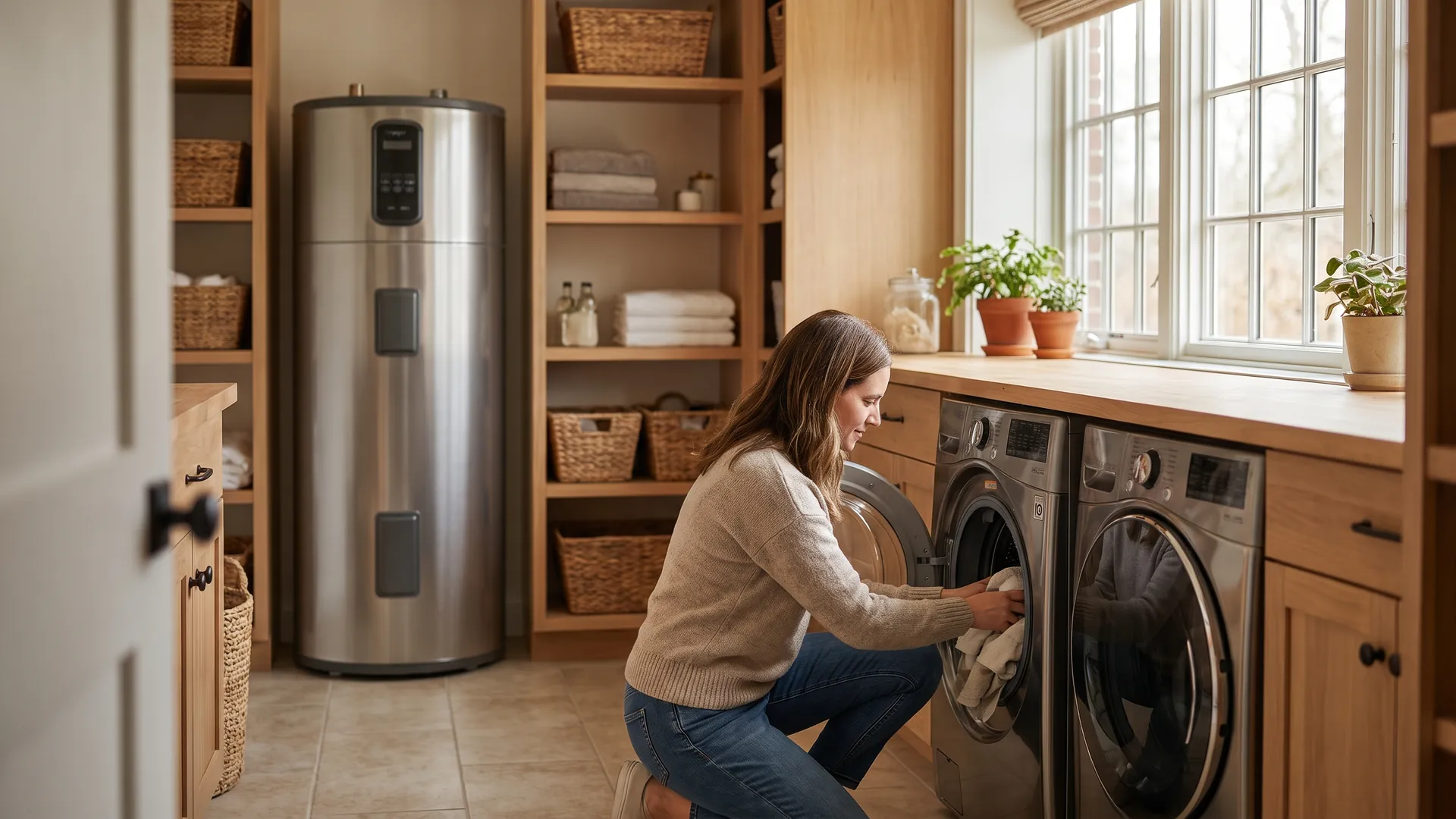
That split is the whole strategy. Replacing a 20-year-old water heater moves your bill in a way a new dishwasher never will, no matter how efficient the dishwasher is.
Learn how energy-saving appliances actually cut a utility bill, what the ENERGY STAR label does and doesn’t guarantee, which replacements to sequence first, and how to line up rebates before you buy. This guide sits inside our broader Homeownership guide.
Key takeaways:
- Three systems decide your bill: Heating and cooling account for 52% of household energy use, and water heating, lighting, and refrigeration another 25%, so those are the replacements worth budgeting around.
- The efficiency label moves on purpose: The EPA considers revising a category’s ENERGY STAR specification once roughly 50% of products on the market qualify, which keeps the label a real filter instead of a universal one.
- The federal credit lapsed; utility rebates didn’t: The federal Energy Efficient Home Improvement Credit covered qualifying property placed in service before December 31, 2025, so utility and state programs are now the practical way to close the price gap.
What are energy-saving appliances?
An energy-saving appliance is a unit built to deliver the same performance, heat water, cool food, wash clothes, while consuming less energy than the federal minimum efficiency standard for its category requires. The savings come from hardware, not from how you push the buttons: inverter motors that run at partial load instead of cycling hard, thicker insulation and better seals, sensors that size the cycle to the load, and heat pump technology that moves existing heat rather than generating new heat.
Two federal labels do the sorting for you. ENERGY STAR, administered by the U.S. Environmental Protection Agency, marks products that beat the federal standard for their category by a margin the EPA sets and periodically raises. The EPA’s WaterSense label measures water instead of energy and carries a fixed threshold: WaterSense-labeled products are certified to use at least 20 percent less water than standard products. On a dishwasher or clothes washer, both matter, because heating the water is most of the energy the machine uses.
Which appliances should you replace first?
Replace in return order, and return order starts with the water heater, it runs every day, it’s typically the least expensive of the three big systems to replace, and most homeowners run it to failure without ever pricing an alternative. Heating and cooling equipment consumes more energy overall, but costs multiples more to replace and usually isn’t due yet.
| System, in replacement order | Share of household energy use | Efficient alternative to price | What decides your savings |
|---|---|---|---|
| Water heater | Part of the 25% shared with lighting and refrigeration | Heat pump (hybrid electric) or condensing gas unit | Whether you’re replacing electric resistance, and whether the space suits a heat pump unit |
| Heating and cooling | 52%, air conditioning included | Heat pump or high-efficiency furnace | Age of the existing equipment, how leaky the house is, and correct sizing |
| Refrigerator | Part of the same 25% | A current certified model in the size you need | Age of the unit you’re retiring, and whether the old one keeps running in the garage |
| Clothes washer and dryer | Part of the remaining 23% | High-efficiency front-load washer; heat pump or condensing dryer | Loads per week and how much hot water each cycle draws |
| Dishwasher | Part of the remaining 23% | Certified model with a soil sensor | How often you run it, and whether you were pre-rinsing by hand |
1. Water heating is the highest-return single swap
A water heater runs 365 days a year with no setback and no seasonal break, so an efficiency gain there compounds daily. The largest jump available to most homeowners is replacing electric resistance heating with a heat pump water heater, which pulls heat from surrounding air instead of running a coil; gas households have a smaller but real gain in condensing units. The catch is installation, not the appliance, these units need air volume and a location inside their listed temperature range, so confirm the space before you shop models.
2. Heating and cooling is the biggest share on the longest cycle
This is the 52% line item, and sequencing saves the most money here. Sealing and insulating first shrinks the load, which lets you buy smaller equipment, an oversized furnace short-cycles, wears faster, and never delivers its rated efficiency. If you don’t know where the house is losing heat, the benefits of a home energy audit begin with that answer, often free through your utility. Glass belongs in the same conversation only when it’s already failing, and our guide to choosing energy-efficient windows covers the ratings that matter in a cold climate.
3. Refrigeration is the appliance that never turns off
Refrigerators draw power continuously, so age matters more here than anywhere else. Standards have tightened repeatedly, and a unit from the early 2000s is competing against rules written for a different era. Buy the capacity you use, and don’t move the old refrigerator to the garage, where a second unit in an unconditioned space quietly erases the new one’s savings. Many utilities will haul it away and pay a small incentive.
4. Laundry savings come mostly from the water
A clothes washer’s energy use is dominated by heating water, so a machine that uses less water per cycle saves energy twice. Dryers are the newer opportunity: heat pump and condensing models recycle heat instead of venting it, at a higher price and a longer cycle. The same water-first logic runs through the house, as improving your home’s water efficiency covers fixture by fixture, and EPA WaterSense water-efficient fixtures lists what qualifies.
5. Dishwashing delivers real savings on a small base
Modern certified dishwashers use less water and energy than washing the same load by hand, and soil sensors keep short cycles short. But dishwashing is a small slice of a small slice. Buy the efficient model when the old one dies; don’t accelerate the replacement to chase savings a water heater delivers many times over.
How much less energy does each certified appliance use?
The gain differs sharply by appliance. The table collects the per-appliance figures from ENERGY STAR’s product pages and the U.S. Department of Energy’s Energy Saver Guide.
| Appliance | What the certified or efficient version uses | Published dollar or water figure |
|---|---|---|
| Heat pump water heater | 70% less electricity than a standard electric model for the same hot water (DOE) | Water heating is about 18% of a home’s energy use (DOE) |
| Heat pump for space heating | About 50% less electricity for heating than an electric furnace or baseboard heat (DOE) | None published per unit |
| Refrigerator | About 9% more efficient than the federal minimum; an old refrigerator uses about 20% more energy than a certified one (ENERGY STAR) | About $150 over a 12-year life when the old unit is recycled and replaced (ENERGY STAR) |
| Clothes washer | About 20% less energy and 30% less water than regular washers (ENERGY STAR) | About $530 in energy costs over the product’s life (ENERGY STAR) |
| Clothes dryer | Heat pump models use around 70% less energy than conventional dryers (ENERGY STAR) | About $210 over the life of a full-size certified electric dryer (ENERGY STAR) |
| Dishwasher | Less than half the energy of washing the same dishes by hand (ENERGY STAR) | About $50 a year to run a standard-size certified model, and about 5,800 gallons of water saved over its life (ENERGY STAR) |
Sources: ENERGY STAR (U.S. EPA) product pages for refrigerators, clothes washers, clothes dryers and dishwashers, opened October 28, 2026; U.S. Department of Energy, Energy Saver Guide (2022 edition).
Two more figures explain why laundry savings run through the water heater. According to ENERGY STAR, water heating consumes about 90% of the energy it takes to operate a clothes washer, and a certified front-load washer uses about 50% less energy and water than a top-load agitator washer. The less hot water each cycle draws, the less the water heater runs.
Against hand washing, the dishwasher figures are larger: ENERGY STAR reports that washing in a new certified dishwasher instead of by hand can lower utility bills by about $220 a year, or $3,300 over the machine’s life, and saves 8,400 gallons of water a year. It also says rinsing dishes before loading increases the total water and energy used.
Heat pumps for heating carry one cold-weather condition. ENERGY STAR’s air source heat pump page says cold climate models are tested at 5°F, keep working below that temperature, and heat the home more efficiently when paired with a back-up energy source in colder weather.
How does ENERGY STAR certification work?
ENERGY STAR is a certification program administered by the EPA, not a marketing claim a manufacturer applies to its own box. The EPA writes a specification for each product category, weighing technological advances, the federal minimum standard, product availability, and whether performance can be measured and verified through testing. A product has to hit that specification to carry the mark.
The part most shoppers miss is that the bar moves. When roughly 50% or more of products in a category earn certification, the EPA considers revising the specification upward to preserve the distinction. That’s why the label is a filter rather than a promise of a specific percentage: the gap between certified and standard is modest in some mature categories and dramatic in others.
For the number that applies to the unit in front of you, read the yellow EnergyGuide label the Federal Trade Commission requires on major appliances. It shows estimated yearly energy consumption and operating cost, the figure that compares two specific models instead of two categories. Pair it with independent appliance efficiency testing for the reliability data no label carries, and use the ENERGY STAR certified product finder and rebate locator to confirm a model is currently certified.
How do you choose an energy-saving appliance?
Compare specific models, not categories, and let the EnergyGuide number break the tie. Five checks handle the decision.
- Read the yearly operating cost: Two certified models in one category can differ meaningfully in estimated annual energy use, and the EnergyGuide tag puts that difference in dollars per year.
- Size it to your household: Capacity you don’t use is energy you pay for. A right-sized refrigerator or washer beats an oversized certified one.
- Check the fuel before the features: Moving from electric resistance to a heat pump changes the math more than any feature list, but can require electrical or venting work. Get that scoped first.
- Confirm install requirements in writing: Clearances, drain access, ambient temperature range, and circuit capacity cause more surprise change orders than anything else.
- Verify the rebate before you buy: Eligibility is usually tied to a specific model number and a filing deadline, and a purchase made a day before a program opens frequently doesn’t qualify.
Once the hardware is in, controls do the rest. Thermostats, load monitoring, and scheduling are covered in smart home devices for energy savings; lighting, part of that 25% block, is the cheapest upgrade in the house, as smart lighting solutions for homeowners lays out. To tie several together, see home automation systems; outdoor water has its own answer in smart irrigation.
What keeps a new furnace or heat pump at its rated efficiency?
Upkeep and settings decide how much of the rated efficiency you actually see. According to the U.S. Department of Energy’s Consumer Guide to Home Heating and Cooling, following a regular maintenance schedule can reduce heating and cooling costs by 10% or more and prolong the equipment’s life, and you save about 1% on heating bills for each degree you set the thermostat back over an eight-hour period.
The DOE’s Energy Saver Guide adds that new heating or cooling equipment alone can reduce energy use by 20% or more, and that combining it with insulation, air sealing and thermostat settings cuts heating and cooling use further. ENERGY STAR’s Seal and Insulate page puts the gain from sealing air leaks and adding insulation at up to 10% of annual energy bills. Our guide to winterizing your home covers the seasonal sealing jobs, the seasonal home maintenance checklist puts filter changes and tune-ups on a calendar, and budgeting for home maintenance helps you set money aside for the next replacement before the old unit fails.
How do you pay for energy-saving appliance upgrades?
Work the funding sources cheapest money first: utility rebates, then state programs, then financing, and only finance work large enough to justify it. A single appliance doesn’t belong in a mortgage; a whole-system replacement inside a renovation might.
- Utility rebates and instant discounts: Your electric or gas utility is usually the fastest source, and some rebates are applied at the register by participating retailers. Programs are model-specific and can run out of funding.
- State energy office programs: States administer their own efficiency incentives, often with income tiers and contractor requirements. Availability and funding change year to year.
- Federal tax credits: The federal Energy Efficient Home Improvement Credit covered qualifying property placed in service before December 31, 2025, and does not apply to property placed in service after that date.1 Ask a tax professional what’s available for the year you do the work.
- Renovation and equity financing: When replacements are part of a larger project, renovation loan programs, a cash-out refinance, a home equity loan, or a line of credit can fund the package at mortgage-adjacent pricing.
Run the payback yourself with three numbers: the price gap after rebates, the monthly bill change, and how long you’ll stay. Hypothetical example, not an offer: if a high-efficiency model costs $600 more after a rebate and your bill drops $15 a month, that’s 40 months to break even and savings after that.2 If you’re selling in two years, the math doesn’t work. Twelve months of bills before and after the swap is the only honest measure of what you saved.
For the wider project list and what typically qualifies, see energy-efficient home upgrades. Buyers taking on a dated house should read the advantages of buying a fixer-upper, and homeowners weighing generation over conservation can read what changes when buying a home with solar panels already installed. Because Align is a broker, we compare renovation, cash-out, and home equity programs across multiple wholesale lenders instead of pitching one bank’s version.
Which loan programs can include energy improvements?
Several national programs let appliance and system costs ride inside a mortgage as part of a larger project. These are the programs’ own rules; a lender can apply stricter ones, and Align Lending is not affiliated with or endorsed by HUD, FHA, Fannie Mae or Freddie Mac.
- Fannie Mae HomeStyle Renovation: According to Fannie Mae’s Selling Guide section B5-3.2-01 (dated December 10, 2025), the loan amount can include funds for repairs, remodeling, renovations, or energy improvements, there is no minimum dollar amount for renovations, and the work must be completed within 15 months of closing.
- Fannie Mae HomeStyle Refresh: Per section B5-3.3-01 (dated August 5, 2026), eligible improvements include energy- or water-efficiency improvements, renovation funds on purchases and limited cash-out refinances are limited to 15% of the “as completed” appraised value, and the improvements must be completed within 180 days of the note date.
- Freddie Mac GreenCHOICE Mortgages: Freddie Mac’s GreenCHOICE page caps energy financing at 15% of the “as completed” value, and basic energy and water efficiency improvements with an aggregate cost of $6,500 or less need no energy report.
- FHA 203(k): HUD’s 203(k) program page says the Limited 203(k) lets homebuyers and homeowners finance up to $75,000 into the mortgage to repair, improve, or upgrade the home, while the Standard 203(k) requires at least $5,000 of rehabilitation and supports major renovations.
Our guide to what a renovation loan is explains how these programs release money as the work is done, and financing home renovations sets them beside the other ways to pay.
Should you use a HELOC, a home equity loan or a cash-out refinance for a system replacement?
Match the product to the size and timing of the work. The Consumer Financial Protection Bureau describes the main options this way:
- Home equity line of credit: Per the CFPB, a HELOC is a line of credit, like a credit card, borrowed against your equity, and it usually has an adjustable rate with a payment that varies with the balance. It suits staged work; see our HELOC guide.
- Home equity loan: The CFPB says it pays out as a lump sum, usually at a fixed rate, may carry upfront fees and costs, and lets the lender foreclose if you cannot repay. Our look at home equity loan pros and cons covers the trade-offs.
- Cash-out refinance: According to the CFPB, it replaces your mortgage with a bigger one and pays you the difference, often with closing costs, and can be more or less expensive than a HELOC depending on the terms. See what a cash-out refinance is.
Samantha Shelton frames the first question this way: “Your house isn’t an ATM. Equity is valuable. So there should be a reason behind using it.” A furnace that quits in January is a reason. Our guide to using home equity wisely goes further, and the Align calculators page lists the tools for running your own numbers on the options.
What Michigan homeowners should know
Michigan’s heating season is long enough that the heating half of that 52% dominates the cooling half, which flips the advice most national appliance guides give. A high-efficiency air conditioner is a smaller win here than a water heater.
- Your utility is required to run these programs: Under MCL 460.1077, as amended by 2023 PA 229, electric providers must achieve yearly energy savings equal to 1.5% of prior-year retail sales and natural gas providers 0.875%, each year beginning 2026; the 2016 laws had set 1% and 0.75%. That mandate funds the appliance rebates, water heater incentives, and old-refrigerator pickups DTE Energy and Consumers Energy advertise.
- Water heating and heating carry the savings: With water heating inside the 25% block and heating dominating the 52% block, a Michigan plan that starts with the water heater and the furnace captures most of what’s available before you shop a kitchen appliance.
- Michigan Saves can finance what rebates don’t cover: Michigan Saves is a Lansing-based nonprofit green bank that arranges financing for home energy improvements through authorized contractors. Rates and terms vary by lender and creditworthiness, so compare its quote against a home equity option.
One cold-climate caution: a heat pump water heater takes heat from the air around it, so check the listed operating temperature range before putting one in an unheated garage or a drafty crawlspace. A conditioned basement usually works. The rest of the project list lives in our Home Improvement & Design hub, alongside DIY home renovation projects.
How do Michigan electricity prices and rebates change the appliance math?
Michigan households pay more per kilowatt-hour than the national average, so each kilowatt-hour an efficient appliance avoids is worth more here. According to the U.S. Energy Information Administration’s Electric Power Monthly (released October 23, 2026), Michigan’s average residential electricity price was 22.99 cents per kilowatt-hour in August 2026, against 18.16 cents for the U.S. as a whole, and up from 20.73 cents in Michigan in August 2025.
Hypothetical example, not an offer: a refrigerator rated at 600 kilowatt-hours a year costs about $109 to run at the August 2026 U.S. average price in the EIA table and about $138 at Michigan’s. For any electric appliance, multiply the model’s estimated yearly kilowatt-hours by the rate on your own bill to get your number.
Which Michigan rebate programs cover appliances in 2026?
Michigan runs the federal Home Energy Rebates as MiHER, administered by the Department of Environment, Great Lakes, and Energy (EGLE). In its August 20, 2026 update, EGLE reported that each of the program’s two pathways received just over $105 million in federal funding, that MiHER aims to fund upgrades for approximately 15,000 Michigan homes, and that HEAR rebates are available to households with incomes at or below 150% of Area Median Income. The same update said participation in the Detroit district was nearing the funding cap for single-family projects, which led to a temporary pause in approvals there. The City of Grand Rapids’ Residential Climate Action Checklist 2026 also points residents to MiHER.
The U.S. Department of Energy’s Home Upgrades page lists these federal ceilings for its High-Efficiency Electric Home Rebate, which each state manages (in Michigan, through MiHER):
| Upgrade | Federal rebate ceiling |
|---|---|
| Heat pump water heater | Up to $1,750 |
| Heat pump for space heating and cooling | Up to $8,000 |
| Electric stove, cooktop, range, or oven | Up to $840 |
| Heat pump clothes dryer | Up to $840 |
| Electrical panel | Up to $4,000 |
| Electrical wiring | Up to $2,500 |
| Insulation and air sealing | Up to $1,600 |
Source: U.S. Department of Energy, Home Upgrades, opened October 28, 2026. The state program sets the amounts actually paid and the products that qualify.
The DOE’s Home Energy Rebates Programs page says households can receive up to $14,000 for efficient upgrades and up to $8,000 for whole-home upgrades based on modeled energy savings of at least 20%.
What do DTE Energy and Consumers Energy offer?
Both utilities run programs under Michigan’s energy waste reduction law. DTE Energy’s appliance recycling page pays $50 for recycling a refrigerator or freezer of 10 to 30 cubic feet and says rebate funds are first come, first served because program funds are limited. Consumers Energy’s Rebates and Discounts page offers cash back on qualified ENERGY STAR purchases, rebates on heating and cooling, insulation and windows, and water heaters, and a free home energy analysis.
How Align finances a renovation
You are not just financing the house. You are financing a plan for it. Align places HomeStyle and FHA 203(k) renovation loans, standalone HELOCs and home equity loans, so the project can be paid for the way that fits it, not the way one bank prefers.
Samantha starts with why: what the work is, what it should cost, and whether your equity or a renovation loan is the better tool. Then one application goes to multiple wholesale lenders.
FAQ: Energy-saving appliances
Here are answers to common questions about energy-saving appliances.
Are energy-efficient appliances worth the higher price?
For high-use appliances, usually yes. Water heaters, heating and cooling systems, refrigerators, and clothes washers either run constantly or heat large volumes of water, so an efficiency gain compounds daily. For low-use appliances, the premium often outlives the savings. Prioritize by how hard the appliance works, start by evaluating your home’s energy efficiency so you know which unit is actually costing you.
What does the ENERGY STAR label actually mean?
ENERGY STAR is a certification program administered by the U.S. Environmental Protection Agency. Products earning the label must meet a published efficiency specification for their category, and performance has to be measurable and verifiable through testing. It is not a claim a manufacturer can self-apply. The EPA raises a category’s specification as more products qualify, so the label marks the better end of the current market rather than a fixed percentage. Minimum standards ratchet up the same way over time, as our guide to the impact of new building codes on home purchases explains.
How much can I save each year with energy-saving appliances?
It depends on what you replace. Retiring a 20-year-old refrigerator or an electric resistance water heater produces a far bigger jump than swapping a five-year-old dishwasher, because heating and cooling, water heating, lighting, and refrigeration together account for 77% of household energy use. Compare 12 months of utility bills before and after the swap, that’s the only number reflecting your house, your rates, and your habits, and the benefits of a home energy audit include establishing that baseline.
Are there rebates for energy-efficient appliances?
Frequently, from two reliable sources: your electric or gas utility, and your state energy office. Utility rebates are often easiest to claim and are sometimes applied instantly at the retailer. Programs change year to year and can run out of funding, so confirm eligibility and documentation before purchase, many require the application within a set window after the invoice date. Generation projects follow different rules, which alternative energy products for homeowners walks through.
Can a heat pump water heater go in a Michigan basement?
Usually, if the space meets ENERGY STAR’s two conditions: an interior space that stays between 40 and 90 degrees Fahrenheit all year, and about 1,000 cubic feet of air around the unit. ENERGY STAR’s heat pump water heater page also notes the unit can cool the space it sits in and, in hot humid months, help dehumidify it.
How do you apply for a MiHER rebate in Michigan?
Per EGLE’s August 20, 2026 update, you check eligibility with the online AMI calculator, apply, then choose a prequalified contractor, whose home assessment identifies eligible upgrades and estimates the rebate. The contractor does the work and receives the rebate, so you don’t pay up front for the covered amount.
Does replacing a furnace raise my Michigan property taxes?
Not for a like-for-like replacement while you own the home. MCL 211.27(2) tells assessors not to count value added by normal repairs, replacement and maintenance until the property is sold, and its list includes replacing a furnace with one of the same type, replacing an automatic hot water heater, and insulating. It applies only to residential property. See how home improvements affect property taxes.
Do I need a permit to add a circuit for a new appliance in Michigan?
Yes. LARA’s electrical permit page says no one may add or change electrical conductors or equipment without a permit, though a homeowner may pull one for a single-family home they own and occupy. LARA’s homeowner page adds that contractors doing work of $600 or more in labor and materials must be licensed. Our renovation permits guide covers the rest.
The bottom line on energy-saving appliances
Energy-saving appliances pay off in proportion to how hard they work, which is why sequence beats enthusiasm. Space heating and air conditioning account for 52% of household energy use and water heating, lighting, and refrigeration another 25%, so the water heater, the heating and cooling system, and the refrigerator decide most of your bill, and the dishwasher decides almost none of it. Use the ENERGY STAR label to shortlist, the yellow EnergyGuide tag to compare specific models, and your utility’s rebate program to close the price gap before you buy rather than after.
If you’re ready to fold appliance and system upgrades into a renovation, refinance, or home equity plan, talk to Align Lending. We’ll shop your scenario across our lender network and show you the total cost of each option side by side. Call 248-506-5727 or start online.
Footnotes:
1. The Energy Efficient Home Improvement Credit under Internal Revenue Code Section 25C applied to qualifying property placed in service on or after January 1, 2023 and before December 31, 2025. Tax law and eligibility rules change; this is not tax advice, and you should consult a qualified tax professional about your situation. Return to text.
2. Example figures are hypothetical and for educational purposes only; they do not constitute an advertisement of credit terms or a rate quote under federal or state lending laws. Appliance prices, rebate amounts, and utility savings vary by model, retailer, utility, and household, and your financing terms will depend on your application and market conditions. Return to text.
Sources: household energy end-use shares (52% space heating and air conditioning; 25% water heating, lighting, and refrigeration; 23% all other uses, 2020 data), U.S. Energy Information Administration, Use of Energy Explained: Energy Use in Homes. ENERGY STAR administration, specification-setting criteria, and revision when roughly 50% or more of products in a category qualify, ENERGY STAR (U.S. EPA). WaterSense-labeled products certified to use at least 20 percent less water than standard products, U.S. EPA WaterSense. EnergyGuide disclosure of estimated yearly energy use and operating cost, Federal Trade Commission. Energy Efficient Home Improvement Credit eligibility dates, Internal Revenue Service. Michigan energy waste reduction standards of 1.5% (electric) and 0.875% (natural gas) each year beginning 2026, MCL 460.1077 as amended by 2023 PA 229 (1% and 0.75% under 2016 PA 342 before then), Michigan Legislature. Residential efficiency programs, DTE Energy and Consumers Energy. Nonprofit green bank status and authorized-contractor financing model, Michigan Saves.
This article is for informational purposes only and is not intended to provide legal, financial, or tax advice. Rebate eligibility, tax credit availability, and installation requirements vary by program, utility, and property, and should be confirmed with the administering program and a qualified professional before you purchase. Figures shown are illustrative, are not a rate quote or an offer of credit, and are subject to change. Align Lending is an independent Michigan mortgage broker, NMLS #2041154.
Sources
Every outside source this guide links to, in the order it appears. How we choose and check sources
- According to the U.S. Energy Information Administrationeia.gov
- EPA WaterSense water-efficient fixturesU.S. Environmental Protection Agency
- DOEU.S. Department of Energy
- ENERGY STAR
- ENERGY STAR
- ENERGY STAR
- ENERGY STAR
- Air source heat pumpENERGY STAR
- Independent appliance efficiency testingconsumerreports.org
- ENERGY STAR certified product finder and rebate locatorENERGY STAR
- Consumer Guide to Home Heating and CoolingU.S. Department of Energy
- Seal and InsulateENERGY STAR
- Selling Guide section B5-3.2-01Fannie Mae Selling Guide
- Section B5-3.3-01Fannie Mae Selling Guide
- GreenCHOICE pageFreddie Mac
- 203(k) program pageU.S. Department of Housing and Urban Development
- CFPBConsumer Financial Protection Bureau
- CFPBConsumer Financial Protection Bureau
- CFPBConsumer Financial Protection Bureau
- MCL 460.1077Michigan Legislature
- Electric Power Monthlyeia.gov
- August 20, 2026 updateState of Michigan
- Residential Climate Action Checklist 2026grandrapidsmi.gov
- Home UpgradesU.S. Department of Energy
- Home Energy Rebates ProgramsU.S. Department of Energy
- Appliance recycling pagedteenergy.com
- Rebates and Discounts pageconsumersenergy.com
- Heat pump water heater pageENERGY STAR
- MCL 211.27(2)Michigan Legislature
- Electrical permit pageState of Michigan
- Homeowner pageState of Michigan
- Internal Revenue Service
Related resources

20-minute read
Energy-efficient home upgrades: What to do first, and what it saves
See which energy-efficient home upgrades pay off first, from air sealing and insulation to heat pumps and solar, with real costs and yearly savings.

20-minute read
DIY home renovation projects: 12 upgrades you can actually finish
Discover DIY home renovation projects that upgrade your space on a budget, from peel-and-stick backsplashes to floating shelves and smart lighting.
20-minute read
The benefits of a home energy audit and what it includes
Learn what a home energy audit finds, how blower door and infrared tests work, and why the Department of Energy ties audits to 5% to 30% savings.
