
Green building standards explained: LEED, ENERGY STAR, NGBS and HERS
This article is general information about certification programs, building codes and appraisal practice, not legal, tax or investment advice. Align Lending is a Michigan mortgage broker, not a registered investment adviser, builder or appraiser.
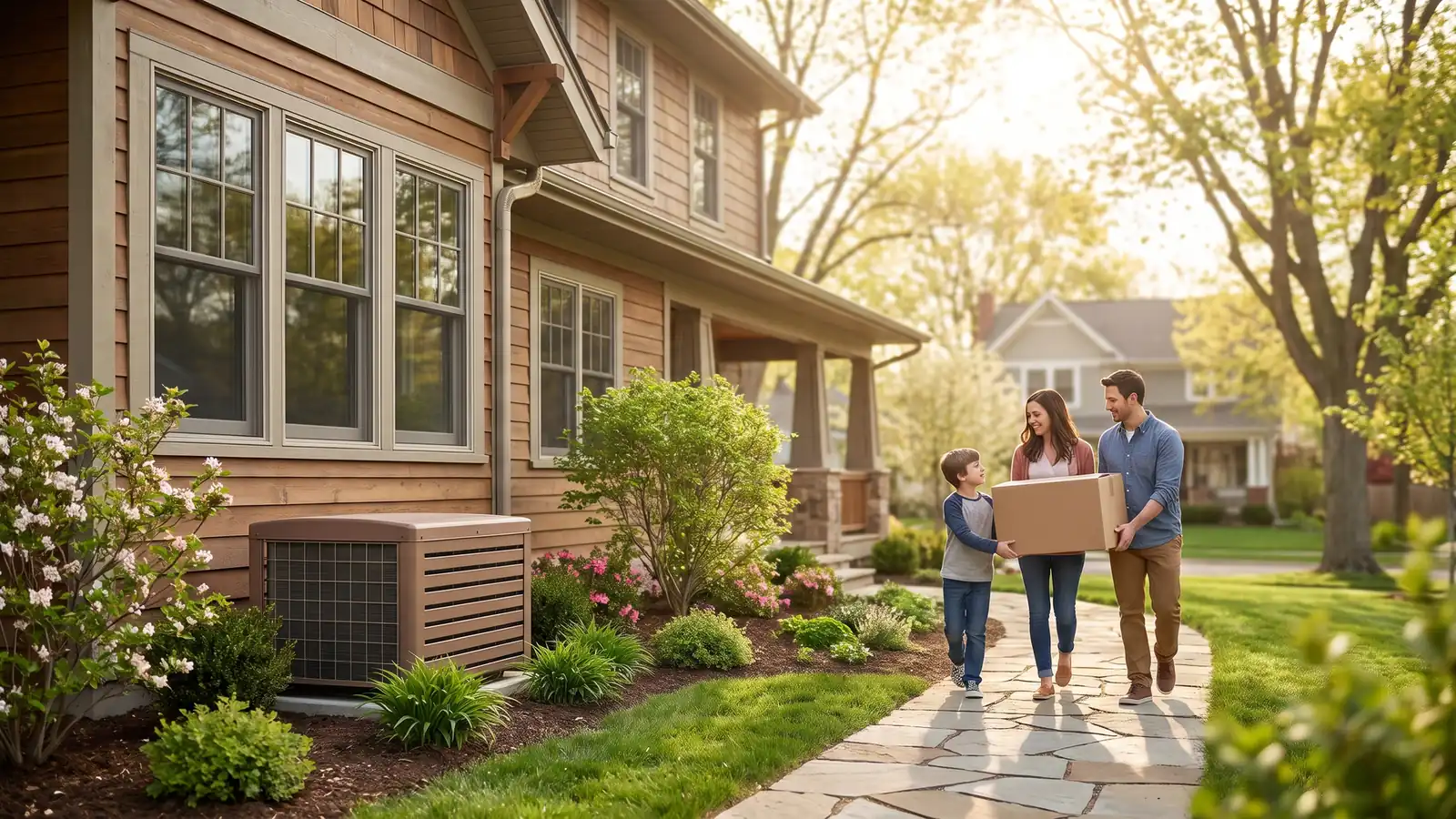
Green building standards are voluntary certification and rating programs; building energy codes are the mandatory layer, and the two get confused constantly. Nothing in federal law requires a builder to certify a home to LEED, ENERGY STAR or the National Green Building Standard, and there is no national residential energy code that applies on its own, the U.S. Department of Energy lists Michigan’s residential energy code as the 2015 IECC with amendments, effective February 8, 2016, while other states sit on far newer editions of the same model code.
Voluntary does not mean rare: the U.S. Environmental Protection Agency reports 190,000 ENERGY STAR certified homes and apartments built in 2023, 12% of all new homes built in the country that year.
Learn what LEED, ENERGY STAR, NGBS and HERS measure, what certification costs, how an energy code becomes law, and how an appraiser may treat a certificate, or start with our Real Estate Investing guide.
Key takeaways:
- Four programs, four different yardsticks: LEED certifies at 40 points and rises through Silver at 50, Gold at 60 and Platinum at 80; ENERGY STAR certifies homes at least 10% more energy efficient than minimum code levels; the HERS Index sets 100 as a home built to 2006 energy efficiency standards; NGBS scores 6 practice areas at 4 rising levels.
- The certification fee is the small number: USGBC’s published schedule charges $225 to $300 to certify one LEED single-family home and NGBS charges $200 per home with registration free. The third-party verifier’s inspections and the construction upgrades are the real spend, and the builder pays first.
- Codes are mandatory, but adoption is a state decision: After an affirmative DOE determination on a new IECC edition, each state has 2 years only to certify that it reviewed its residential code and decided whether updating is appropriate, DOE issued its 2024 IECC determination on December 20, 2024 and lists December 30, 2026 as the state certification deadline.
What are green building standards, and how are they different from a building code?
A green building standard is a published, third-party-verified rating system a builder or owner chooses to pursue; a building code is law that applies whether anyone chooses it or not.
- Voluntary certifications: LEED, ENERGY STAR, NGBS and a HERS rating are elective. A builder registers a project, pays a fee, hires an accredited third party to verify the work, and receives a certificate or a score. Skipping them carries no legal consequence.
- Mandatory codes: The energy provisions in your state’s residential construction code are enforceable law, checked by a building official at permit and inspection. They set the floor.
- How they connect: Certifications are written as a delta above whatever code requires, so the same certificate means more in a weak-code state than a strong-code one.
This post stays on the standards themselves. The investment case is covered in our guide to the benefits of investing in green housing markets, and the programs are compared in our overview of green building certifications for homes.
What does each certification actually measure?
Three of the four are multi-category certifications with pass/fail levels; one is a single number.
LEED
LEED awards points and certifies at four thresholds: Certified at 40 to 49 points, Silver at 50 to 59, Gold at 60 to 79, and Platinum at 80 or more. It is developed by the U.S. Green Building Council, a nonprofit, while project review and certification are handled by GBCI, the independent certifying body for LEED. Credits span energy, water, materials, waste and indoor environmental quality, so a LEED home makes a broad environmental claim, not only an energy claim. Residential rating systems cover single-family and multifamily projects, and LEED v5 is the current generation.
ENERGY STAR
ENERGY STAR certified homes are “at least 10% more energy efficient than new homes and apartments built to minimum code levels,” per EPA, which administers the program as a public-private partnership. It is not paperwork alone: under EPA’s Single-Family New Homes certification process, the energy analysis and on-site inspections and testing are performed by a Rater from a partner Energy Rating Company under the oversight of an EPA-recognized Home Certification Organization, working through a Rater Design Review Checklist in design and a Rater Field Checklist during construction. EPA maintains several versions of the national program requirements at once, and which version applies depends on the state and the permit date, so confirm the applicable version with EPA before pricing a build. See the ENERGY STAR program site for certified homes.
NGBS (ICC 700)
The National Green Building Standard scores 6 practice areas, Lot Design and Development, Resource Efficiency, Water Efficiency, Energy Efficiency, Indoor Environmental Quality, and Operation and Maintenance, and certifies at Bronze, Silver, Gold and Emerald depending on how many green practices a project incorporates. Designated ICC 700, it is developed by Home Innovation Research Labs with the National Association of Home Builders, and NGBS describes it as the first green building rating system for homes and multifamily buildings approved by ANSI as an American National Standard. Editions are revised on their own cycle, so confirm which edition a project is being certified under with Home Innovation. Verification is by NGBS Green Verifiers accredited by Home Innovation.
The HERS Index
HERS is a score, not a certification, and 100 is the anchor: a home built to 2006 energy efficiency standards scores 100 on the RESNET Home Energy Rating System Index, and the lower the number, the more efficient the home. RESNET states the scale plainly. A home scoring 70 is 30% more energy efficient than a standard new home, and one scoring 130 is 30% less energy efficient than a standard new home. RESNET is a not-for-profit standard-setting organization accredited by ANSI, and ratings come from certified HERS Raters under accredited providers. Because it is one comparable number rather than a badge, it is the most useful single figure when you evaluate a home’s energy efficiency.
| Program | What it measures | Who verifies | What you get |
|---|---|---|---|
| LEED | Energy, water, materials, waste, indoor air | GBCI, for USGBC | Certified / Silver / Gold / Platinum at 40 / 50 / 60 / 80 |
| ENERGY STAR | Energy performance above minimum code | Rater credentialed by an EPA-recognized certification organization | Certification, at least 10% better than code |
| NGBS (ICC 700) | 6 practice areas, lot design to operations | NGBS Green Verifier accredited by Home Innovation | Bronze / Silver / Gold / Emerald |
| HERS Index | Modeled whole-home energy use, one scale | Certified HERS Rater under a RESNET-accredited provider | A score, where 100 equals a 2006-standard home |
How many homes carry a HERS score or a green certification?
RESNET reports that over one million homes in the U.S. have been issued a HERS Index Score, according to its HERS Index page (page copyright 2026). That is a total to date, not a yearly count. For scale, the Census Bureau’s Highlights of 2025 Characteristics of New Housing, published July 1, 2026, counts 1,005,000 single-family homes completed in 2025 alone.
The Fannie Mae Selling Guide explains why the same certificate can count differently from one market to the next: the contribution of energy-saving items to value “will vary throughout the country because of climactic conditions, differences in utility costs, and overall market reaction to the cost of the feature,” per Selling Guide section B4-1.3-05 (dated June 4, 2025). If an appraisal seems to leave a feature out, our guides to the home appraisal process and how to appeal a low appraisal cover the next steps.
What does green certification cost, and who pays for it?
The certifying body’s fee is the smallest line in the budget. USGBC’s published schedule lists LEED single-family registration on projects of 1 to 25 homes at $150 for USGBC members and $225 for nonmembers, and certification of one home at $225 for members and $300 for nonmembers. The spread is membership status, not project size. NGBS charges nothing to register and $200 per home for standard new construction or renovation, $125 on build-to-rent, and $100 per home for builders certifying 400 or more homes a year.1
- Third-party verification: Every program requires an accredited outsider (a HERS Rater, an NGBS Green Verifier, a LEED review team) to inspect and document the work. That fee is negotiated privately with no published national rate, so ask for it as a line item.
- The construction upgrades: Envelope, windows, ducts and equipment earn the points, and the premium depends on the standard, the level, the climate zone and prevailing material and labor prices, the forces in our look at the impact of global economic trends on housing. Treat any national “green costs X% more” figure with suspicion unless it names a study, a year and a geography.
- Scale changes the math: Both programs price volume lower per home and publish separate multifamily tiers, relevant to shared-housing formats like those in our piece on trends in co-living housing models.
Who pays depends on timing. On new construction the builder pays and prices it into the home, so the buyer pays at closing. On an existing home the owner pays the rater and contractor directly.
Who decides which energy code a new home has to meet?
Your state does, and in most places your local building department enforces it. There is no self-executing national residential energy code.
Under Section 304 of the Energy Conservation and Production Act, DOE must determine within 12 months whether a revised edition of the International Energy Conservation Code improves residential energy efficiency. If that determination is affirmative, each state then has 2 years from Federal Register publication to certify that it “has reviewed the provisions of its residential building code regarding energy efficiency and made a determination as to whether it is appropriate for such State to revise such residential building code provisions to meet or exceed the revised code.” Read that carefully: the federal obligation is to review and decide, not to adopt. DOE issued its determination on the 2024 IECC on December 20, 2024, and DOE lists December 30, 2026 as the date by which state certifications for that edition must be submitted.2
The result is a patchwork DOE tracks state by state: different editions, different dates, state amendments, sometimes local delegation. Comparing new-construction markets means checking code vintage alongside demand data, the discipline in our guide to investor market analysis. See also the impact of new building codes on home purchases.
How much would the 2024 IECC change a new home’s energy use?
DOE estimated national savings of 7.8% in site energy, 6.8% in source energy and 6.6% in energy costs for residential buildings under the 2024 IECC, according to the DOE Building Energy Codes Program determinations page, which records the December 20, 2024 determination.
Federal financing programs briefly carried their own floor. In a final determination published in the Federal Register on April 26, 2024, HUD and USDA adopted the 2021 IECC and ASHRAE 90.1-2019 as energy efficiency standards for new construction of HUD- and USDA-financed housing. That rule no longer applies. On April 28, 2026, HUD announced a Joint Determination with USDA that rescinds the 2024 Final Determination in its entirety, and HUD says the FHA and USDA loan programs will comply with the energy efficiency standards that were in effect before it.
If you are pricing a build, our guides to new home construction, inspections for new construction, what it costs to build a house and the benefits of buying a newly constructed home cover where code questions come up during a build.
How do appraisers treat a green certification or a HERS score?
They must acknowledge it, and they are barred from monetizing it mechanically. The Fannie Mae Selling Guide is explicit on the Improvements section of the appraisal report: “Special energy-saving items must be recognized in the appraisal process and noted on the appraisal report form,” naming energy efficient ratings or certifications, solar photovoltaic systems, low-e windows and insulated ducts among the examples.
What the appraiser cannot do is the part that disappoints sellers. Fannie Mae prohibits adjusting value “on a mechanical dollar-for-dollar basis based on equipment and installation cost, or the discounted present value of expected cost savings,” and prohibits adjusting solely on the cost or income approach. The appraiser must analyze the market’s reaction to the feature, so the adjustment has to be supported by what comparable buyers actually paid. Where certified comparable sales are scarce, that support is thin.
- Documentation has to reach the appraiser early: Hand over the certificate, the HERS report and the utility history at inspection, not after the report comes back. An appraiser cannot analyze market reaction to a feature nobody mentioned.
- Ownership changes the answer on solar: Fannie Mae directs that panels “leased from or owned by a third party under a power purchase agreement or other similar financing arrangement must be considered personal property and not be included in the appraised value”. A leased array and an owned array are different assets at appraisal. See our guide to energy-efficient home upgrades.
How much can sealing and insulating cut a home’s energy bill?
EPA estimates that homeowners can save an average of 15% on heating and cooling costs, or an average of 11% on total energy costs, by air sealing and insulating, according to the ENERGY STAR methodology for estimated savings from air sealing and insulating (no date on the page). The modeled house reflects common construction from 1970 to 1989, assumes a 25% reduction in total air infiltration, and brings insulation up to 2012 IECC levels. EPA says savings are higher in northern climates than in southern ones, and Michigan’s heating-heavy climate is the northern case EPA describes.
Hypothetical example, not an offer. For example, a household that spends $2,400 a year on total home energy would see about $264 less at EPA’s 11% average. EPA’s own Seal and Insulate page frames the same work as up to a 10% savings on annual energy bills, so treat any single number as a planning range and ask for a HERS rating or an energy audit on the actual house.
Equipment and ducts matter too. Per the ENERGY STAR heating and cooling page, sealing and insulating ducts can improve a heating and cooling system’s efficiency by as much as 20%, replacing old equipment with ENERGY STAR certified units can cut an annual energy bill by nearly $140 depending on location, and improper installation of new equipment can reduce system efficiency by up to 30%.
Our guides to the benefits of a home energy audit and choosing energy-efficient windows cover how to find these gaps in a specific house.
Are there still federal tax credits for an efficient home?
Most of the familiar residential ones have run out, and repeating the old “30% through 2032” line is now wrong.3 Verify current status with the IRS.
- The two homeowner credits have run out: The IRS ended Sections 25D and 25C for property placed in service after December 31, 2025; the credit amounts, the annual caps and what is left in their place are laid out in the benefits of investing in green housing markets.
- Section 45L, the builder credit: Per EPA, it applied to homes and apartments acquired after January 1, 2023 and before July 1, 2026, required certification to an eligible version of the ENERGY STAR requirements, and was worth $2,500 for single-family and manufactured homes and $500 for multifamily, or $2,500 with prevailing wage.
State, local and utility incentives are administered separately, so a lapsed federal credit does not mean nothing is available.
Can a mortgage pay for energy upgrades?
Some agency programs build the cost into the loan. Freddie Mac’s GreenCHOICE Mortgages page sets maximum energy financing at 15% of the “as completed” value of the property, and says that for basic energy and/or water efficiency improvements with an aggregate cost of $6,500 or less, an energy report is not required. Freddie Mac lists 1- to 4-unit property types, including condos and manufactured homes and new and existing properties, and lists air sealing, added insulation and replacement windows and doors among eligible basic improvements. The page is written for the lenders that sell loans to Freddie Mac and carries no program date (viewed October 2026).
Hypothetical example, not an offer. The table applies Freddie Mac’s two published limits to made-up numbers.
| As-completed value | 15% energy financing cap | Upgrade cost | Energy report required? |
|---|---|---|---|
| $300,000 | $45,000 | $6,000 | No, at $6,500 or less |
| $300,000 | $45,000 | $18,000 | Yes |
| $450,000 | $67,500 | $6,500 | No, at $6,500 or less |
Source: the 15% cap and the $6,500 energy report threshold from Freddie Mac, GreenCHOICE Mortgages, viewed October 2026. Hypothetical example, not an offer; the lender’s own rules and the appraisal decide the actual amount.
ENERGY STAR describes an Energy Efficient Mortgage as one that can be used to purchase or refinance a home that is already energy efficient, and says the borrower typically must have a home energy rater or other trained professional conduct a home energy assessment first, per its Energy Efficient Mortgages page. The same page describes Fannie Mae’s HomeStyle Energy as financing energy improvements directly in a purchase or refinance mortgage.
For other ways to pay for the work, see our guides to what a renovation loan is, financing home renovations and construction-to-permanent loans, plus the property-type questions in condominium financing and manufactured homes.
What Michigan buyers and builders should know
Michigan’s residential and commercial energy codes are currently a decade apart, and that gap is the most useful local fact on this page.
- Residential sits on the 2015 IECC: DOE lists Michigan’s residential energy code as the 2015 IECC with amendments, adopted October 9, 2015 and effective February 8, 2016. That 2015 edition is the baseline an ENERGY STAR certification’s 10% margin is measured against here.
- Commercial moved much more recently: The same tracker lists Michigan’s commercial energy code as the 2021 IECC and ASHRAE 90.1-2019 with amendments, effective April 22, 2025, on multifamily, confirm which set applies before you budget.
- Adopted by the state, inspected locally: DOE lists the Bureau of Construction Codes within the Michigan Department of Licensing and Regulatory Affairs as the state code contact; local building departments issue permits and inspect. State amendments mean Michigan’s version is not identical to the model code, so confirm requirements with your local building official.
- Utility efficiency programs run separately: Michigan’s regulated utilities operate energy waste reduction programs with residential incentives set through the Michigan Public Service Commission. Those offers change, check with your utility and the MPSC, not a national rebate list.
Your financing is independent of any certificate. Align Lending is a mortgage broker, not a builder, rating provider or appraiser, certified new build or 1960s ranch, we shop the loan across competing lenders.
Why is Michigan’s residential energy code still the 2015 edition?
A court order paused the update. According to the Bureau of Construction Codes at the Michigan Department of Licensing and Regulatory Affairs, on its Currently Open Rules page (viewed October 27, 2026), the Michigan Court of Claims issued an order on July 7, 2025 in two cases, Home Builders Assoc et al. v LARA et al. Both rule sets would have adopted, in part, the 2021 International Residential Code and the 2021 IECC residential standards, and were set to take effect on August 29, 2025. While the order stands, LARA says the 2015 versions of the IRC and the residential provisions of the IECC “will remain valid and in effect.”
The Michigan Public Service Commission reported that Michigan’s electric and natural gas utilities spent more than $551 million on energy waste reduction programs in 2023, expected to produce savings of $1.4 billion over the 12-year lifecycle, or $2.54 of benefits for every dollar spent, in its October 25, 2024 release. The standard behind those programs was created in 2008 and amended by the Legislature in 2016 and 2023, and it requires all natural gas and electric utilities to implement customer programs that lower energy use.
The Michigan Department of Environment, Great Lakes, and Energy runs the state’s Home Energy Rebates (MiHER) program. EGLE reports Michigan received $105.7 million in federal funding for HOMES whole-home rebates and $105.3 million for HEAR rebates. EGLE says the HEAR rebates are available to households with incomes at or below 150% of Area Median Income. Rebate work must be performed by an approved MiHER Registered Contractor, and when viewed on October 27, 2026 the page listed new income-qualified applications for properties in EGLE’s Detroit, Warren, Grand Rapids, Lansing and Kalamazoo districts as temporarily unavailable.
EGLE’s MI Healthy Climate Plan sets goals to reduce emissions related to heating Michigan homes and businesses by 17% by 2030 and to limit the energy burden of powering and heating homes to not more than 6% of annual income for low-income households. Before an upgrade, also read our guides to home renovation permits and the impact of home improvements on property taxes.
How Align supports your analysis
Your analysis tells you whether a property works. Samantha tells you what it will cost to finance, using real offers from multiple wholesale lenders rather than a rate you saw online.
She lives and works in Oakland County, so local questions, including what Michigan's tax uncapping does to a rental's tax bill after you buy, are part of the conversation.
FAQ: Green building standards and certifications
Here are answers to common questions about green building standards.
Do green homes actually sell for more?
Sometimes, and only where the market supports it, and be skeptical of any single percentage. Premium figures for certified homes circulate widely without a named study, year or geography behind them, so this article does not quote one. What is verifiable is the constraint: Fannie Mae bars an appraiser from adding value on a mechanical dollar-for-dollar basis or from the present value of expected savings, so any adjustment has to be supported by what comparable buyers actually paid. See how to evaluate a home’s energy efficiency.
How much more does it cost to build to green standards?
It depends on the standard, the level and the climate zone, and no credible national figure covers all of them. The certifying bodies’ fees are knowable: $200 per home for NGBS standard new construction, $225 to $300 for one LEED single-family home. The verifier’s fee and the upgrades are negotiated project by project. Compare programs in our overview of green building certifications for homes.
What is a green mortgage and how does it work?
There is no single product by that name. The phrase covers energy-related mortgage options offered through agency and government-sponsored enterprise programs; eligibility, limits and documentation are set by those programs and by individual lenders, not by any certification body. Because Align is a broker, we can check which our wholesale lenders currently offer. See also the impact of new building codes on home purchases.
Do green building standards make housing less affordable?
Separate the two layers. Voluntary certification cannot constrain supply, because no builder must pursue it. EPA reports 12% of new homes built in 2023 were ENERGY STAR certified, meaning 88% were not. Mandatory code amendments are the real affordability debate, and that tradeoff is decided state by state. See our guide to energy-efficient home upgrades.
What is the difference between a HERS score and a Home Energy Score?
They run in opposite directions. The DOE Home Energy Score uses a one-to-ten scale where a ten represents the most efficient homes, according to the U.S. Department of Energy, while a lower HERS number is better. DOE-trained assessors can provide the Home Energy Score within an energy audit, a home inspection package or as a standalone product, and DOE describes it as a way to share efficiency information through the MLS listing, the appraisal and mortgage financing.
Does EPA label homes for water efficiency?
Yes, through WaterSense rather than ENERGY STAR. EPA says WaterSense labeled homes use at least 30 percent less water than typical new construction, per the program page last updated June 25, 2026. It is a separate EPA label with its own requirements, so ask the builder for the WaterSense paperwork the same way you would ask for an ENERGY STAR certificate or a HERS report.
What happened to the DOE Zero Energy Ready Home program?
It was renamed. DOE says the Zero Energy Ready Home program is now known as DOE Efficient New Homes, a voluntary program not intended to be adopted as a minimum building energy code. Per DOE, certified homes were eligible for the federal 45L credit of up to $5,000 per home. The One Big Beautiful Bill Act (P.L. 119-21), enacted July 4, 2025, moved the 45L end date, so the credit applied only to homes acquired before July 1, 2026.
How much of a home’s energy goes to heating and cooling?
About half. The U.S. Energy Information Administration reports that space heating and air conditioning made up 52% of a household’s annual energy consumption in 2020, water heating, lighting and refrigeration 25%, and devices such as televisions the remaining 23%. ENERGY STAR puts it as nearly half of the energy used in a home, which is why a rating or audit spends most of its time on the envelope, ducts and equipment.
The bottom line on green building standards and housing
LEED, ENERGY STAR, NGBS and HERS are voluntary programs with four yardsticks: LEED certifies at 40 points and rises to Platinum at 80, ENERGY STAR certifies homes at least 10% more efficient than minimum code levels, NGBS scores 6 practice areas at 4 levels, and the HERS Index sets 100 as a home built to 2006 energy efficiency standards. Fees are modest ($200 per home for NGBS, $225 to $300 for one LEED home) while verification and construction carry the real cost. Codes are the mandatory layer, adopted state by state: Michigan’s is the 2015 IECC with amendments, effective February 8, 2016.
If you’re financing an efficient build or an efficiency retrofit, talk to Align Lending. We shop your scenario across our lender network and show you the terms side by side. Call 248-506-5727 or start online. Take code questions to your local building official, tax questions to a CPA, and investment questions to a licensed financial advisor.
Footnotes:
1. Fee amounts are taken from the certifying organizations’ own published schedules as accessed in September 2026 and are current only as of that date; USGBC and Home Innovation Research Labs revise their fee schedules independently. The figures cited cover the certifying body’s registration and certification fees only. They do not include the third-party verifier’s or rater’s fees, design fees, testing costs, or the cost of the construction measures required to earn a level, none of which is published at a national rate. Align Lending does not administer, sponsor or profit from any certification program and is not affiliated with USGBC, GBCI, RESNET, Home Innovation Research Labs, the National Association of Home Builders or the EPA. Request a current written fee quote from the certifying body and the verifier before budgeting. Return to text.
2. Energy code adoption changes frequently and is described here only as listed by DOE’s Building Energy Codes Program status tracker as accessed in September 2026. States adopt different editions on different dates and apply their own amendments, some delegate adoption or enforcement to local jurisdictions, and a state’s adopted code may differ materially from the published model IECC. The DOE determination process described applies to the review-and-certify obligation on states under Section 304 of the Energy Conservation and Production Act; it does not require a state to adopt any edition of the IECC. Nothing here is a code interpretation. Confirm the code edition, amendments and permit requirements that apply to a specific property with the local building department having jurisdiction, and take code and contract disputes to a Michigan construction or real estate attorney. Return to text.
3. This article is not tax advice and Align Lending is not a tax adviser. Federal energy tax credit provisions changed recently, and widely circulated summaries describing the Section 25D residential clean energy credit as available at 30% through 2032 no longer reflect the dates the IRS currently publishes. Eligibility, credit amounts, placed-in-service and acquisition dates, certification requirements and recordkeeping rules are set by the Internal Revenue Code and IRS guidance, vary by taxpayer and property, and can change again. State, local and utility incentives are administered separately and are not described here. Verify the current status and your own eligibility for any credit, deduction or rebate with the IRS, the relevant program administrator and a CPA or tax attorney before filing or before relying on it in a purchase, construction or renovation decision. Return to text.
Sources: ENERGY STAR administered by the U.S. Environmental Protection Agency as a public-private partnership; and certified homes “at least 10% more energy efficient than new homes and apartments built to minimum code levels”, U.S. EPA, ENERGY STAR, New Homes homeowner benefits page. 190,000 ENERGY STAR certified homes and apartments built in 2023, 12% of all new homes built in America that year, and 2.7 million certified to date, U.S. EPA, ENERGY STAR Residential New Construction program overview. Energy analysis and on-site inspections and testing performed by a Rater from a partner Energy Rating Company “under the oversight of an EPA-recognized Home Certification Organization,” the EPA-recognized training requirement for Raters completing third-party verification, and the Rater Design Review Checklist and Rater Field Checklist, U.S. EPA, ENERGY STAR Single-Family New Homes Certification Process, accessed September 2026. Section 45L New Energy Efficient Home Credit available for homes and apartments acquired after January 1, 2023 and before July 1, 2026, requiring certification to an eligible version of the ENERGY STAR program requirements, at $2,500 for single-family and manufactured homes and $500 for multifamily or $2,500 with prevailing wage, U.S. EPA, ENERGY STAR §45L tax credit page. LEED certification thresholds of Certified 40 to 49, Silver 50 to 59, Gold 60 to 79 and Platinum 80+; LEED v5 as the current generation with v4.1 and v4 still in use; credit categories spanning energy, water, materials, waste and indoor environmental quality; development by the U.S. Green Building Council with review and certification by the Green Building Certification Institute; and residential rating systems for single-family attached and detached homes, multifamily and multifamily core and shell, U.S. Green Building Council, LEED rating system and residential rating system pages. LEED single-family registration of $150 for members and $225 for nonmembers on 1 to 25 homes and certification of a single home at $225 for members and $300 for nonmembers, U.S. Green Building Council, LEED certification fee schedule. NGBS Green certification of 6 practice areas, Lot Design and Development, Resource Efficiency, Water Efficiency, Energy Efficiency, Indoor Environmental Quality, and Operation and Maintenance, at Bronze, Silver, Gold and Emerald levels, with third-party NGBS Green Verifiers accredited by Home Innovation Research Labs; free registration, $200 per home for standard new construction or renovation, $125 per home build-to-rent, and $100 per home at 400 or more homes annually, Home Innovation Research Labs, NGBS Green certification and pricing pages. ICC 700 described as the first green building rating system for homes and multifamily buildings approved by ANSI as an American National Standard, developed by Home Innovation Research Labs in partnership with the National Association of Home Builders, NGBS Green (Home Innovation Research Labs), Why NGBS Green and Get Certified pages, accessed September 2026. HERS Index reference point of 100 for a home built to 2006 energy efficiency standards, the rule that a lower number means a more energy efficient home, and the statements that a score of 70 is 30% more energy efficient and a score of 130 is 30% less energy efficient than a standard new home, RESNET, HERS Index pages, accessed September 2026. RESNET as a national not-for-profit membership standard setting organization accredited by ANSI as a standard development organization, RESNET. DOE’s obligation under Section 304 of the Energy Conservation and Production Act to determine within 12 months whether a revised IECC edition improves residential energy efficiency; the resulting state obligation to certify within 2 years that it “has reviewed the provisions of its residential building code regarding energy efficiency and made a determination as to whether it is appropriate for such State to revise such residential building code provisions to meet or exceed the revised code”; the December 20, 2024 determination on the 2024 IECC and the December 30, 2026 state certification deadline; and state-by-state review of adoptions against the IECC for residential buildings, U.S. Department of Energy, Building Energy Codes Program, determinations and status pages. Michigan residential energy code of 2015 IECC with amendments, adopted October 9, 2015 and effective February 8, 2016; Michigan commercial energy code of 2021 IECC and ASHRAE 90.1-2019 with amendments, adopted December 23, 2024 and effective April 22, 2025; and the Bureau of Construction Codes within the Michigan Department of Licensing and Regulatory Affairs as state code contact, U.S. Department of Energy, Building Energy Codes Program, Michigan status page. Requirement that “special energy-saving items must be recognized in the appraisal process and noted on the appraisal report form,” the prohibition on adjusting value “on a mechanical dollar-for-dollar basis based on equipment and installation cost, or the discounted present value of expected cost savings” or solely on the cost or income approach, the requirement that the appraiser analyze market reaction to the energy efficient feature, and the treatment of solar panels “leased from or owned by a third party under a power purchase agreement or other similar financing arrangement” as personal property excluded from appraised value, Fannie Mae Selling Guide, Improvements Section of the Appraisal Report. Section 25D residential clean energy credit “not available for any property placed in service after December 31, 2025”, Internal Revenue Service, Residential Clean Energy Credit. Section 25C energy efficient home improvement credit allowed for qualifying property placed in service on or after January 1, 2023 and before December 31, 2025, with the Qualified Manufacturer Identification Number requirement in 2025, Internal Revenue Service, Energy Efficient Home Improvement Credit. Further reading: the ENERGY STAR program site for certified homes; Census Bureau data on new residential construction and sales, for sizing the new-construction market a certification program sits inside; and the National Association of Home Builders, co-developer of the ICC 700 National Green Building Standard.
This article is for informational purposes only and is not intended to provide legal, tax, financial or investment advice, and it is not a recommendation regarding any property, security or investment. Certification program requirements and fees, building energy codes, appraisal guidelines and tax provisions change; confirm current requirements with the certifying body, your local building department, your appraiser or lender, and the IRS. Align Lending is an independent Michigan mortgage broker, NMLS #2041154, and is not a registered investment adviser, broker-dealer, builder, home energy rating provider, appraisal firm or law firm. Consult a licensed financial advisor about investment suitability, a CPA or tax attorney about tax treatment, and a Michigan real estate or construction attorney about legal questions.
Sources
Every outside source this guide links to, in the order it appears. How we choose and check sources
- The U.S. Department of Energy lists Michigan’s residential energy codeenergycodes.gov
- The ENERGY STAR program site for certified homesENERGY STAR
- The National Association of Home BuildersNational Association of Home Builders
- NGBS describes it as the first green building rating systemngbs.com
- HERS Index pageresnet.us
- Highlights of 2025 Characteristics of New HousingU.S. Census Bureau
- Selling Guide section B4-1.3-05Fannie Mae Selling Guide
- DOE issued its determination on the 2024 IECCenergycodes.gov
- Federal Register on April 26, 2024federalregister.gov
- HUD announced a Joint Determination with USDAU.S. Department of Housing and Urban Development
- ENERGY STAR methodology for estimated savings from air sealing and insulatingENERGY STAR
- Seal and Insulate pageENERGY STAR
- ENERGY STAR heating and cooling pageENERGY STAR
- GreenCHOICE Mortgages pageFreddie Mac
- Energy Efficient Mortgages pageENERGY STAR
- Currently Open Rules pageState of Michigan
- October 25, 2024 releaseState of Michigan
- Home Energy Rebates (MiHER) programState of Michigan
- MI Healthy Climate PlanState of Michigan
- DOE Home Energy ScoreU.S. Department of Energy
- WaterSense labeled homesU.S. Environmental Protection Agency
- Zero Energy Ready Home program is now known as DOE Efficient New HomesU.S. Department of Energy
- U.S. Energy Information Administrationeia.gov
- U.S. Green Building Council, LEED rating system and residential rating system pagesusgbc.org
- RESNET, HERS Index pageshersindex.com
- Internal Revenue Service, Residential Clean Energy CreditInternal Revenue Service
- Internal Revenue Service, Energy Efficient Home Improvement CreditInternal Revenue Service
- Census Bureau data on new residential construction and salesU.S. Census Bureau
Related resources
20-minute read
How to evaluate a property’s location: A block-level checklist for investors
Discover how to evaluate a property’s location using job growth, school ratings, crime data, transit access, and zoning before you commit capital.
20-minute read
How to analyze rental market trends: A landlord’s step-by-step guide
Learn how to analyze rental market trends using vacancy rates, days on market and rent comps so you can price units competitively and cut costly vacancy.
20-minute read
Economic factors driving housing demand, and how investors should read them
Learn which economic factors drive housing demand, from 6% to 7% mortgage rates and labor market strength to migration and supply limits, so you can plan.
