
The benefits of smart irrigation systems for homeowners
A smart irrigation controller replaces a fixed watering timer with weather data and soil moisture readings, so your sprinklers run only when the landscape actually needs water. The EPA estimates that replacing a standard clock-based controller with a WaterSense labeled model can save an average home up to 15,000 gallons of water a year.
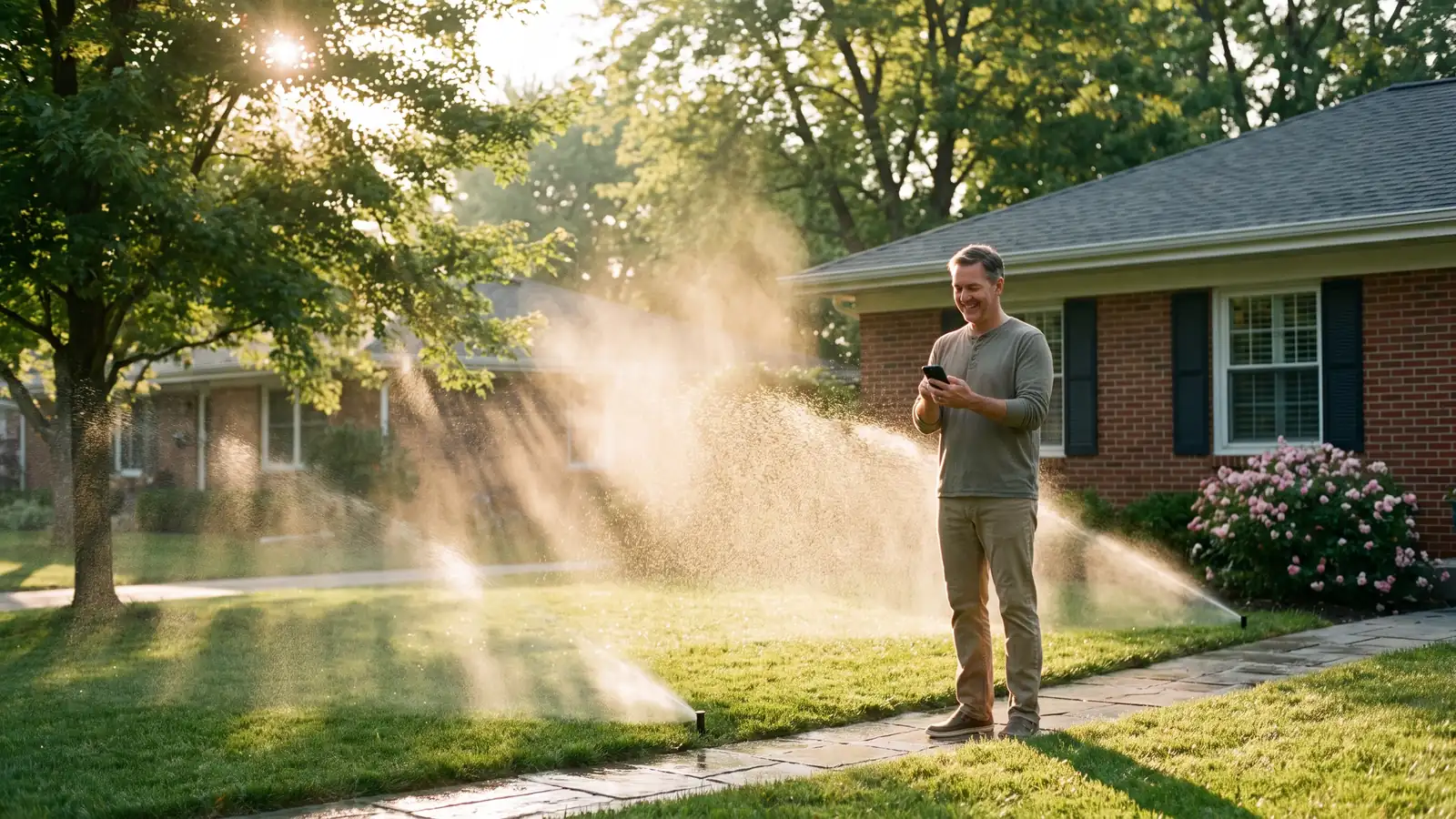
That figure matters because outdoor watering is where household water waste concentrates: outdoor use runs more than 30% of total household water use on average, and as much as 50% of it is lost to wind, evaporation, and runoff from inefficient irrigation. Most smart controllers also flag leaks and broken heads, the slow, expensive failures a fixed schedule hides all summer.
Learn how smart irrigation systems work, what they cost and how quickly they pay back, and how weather-based and soil-moisture control differ. If you’re mapping out a longer list of projects, start with our Homeownership guide.
Key takeaways:
- Watering follows weather, not a clock: EPA’s WaterSense program labels 2 kinds of smart controller, weather-based and soil-moisture-based, and both skip cycles a fixed timer would run anyway.
- The savings are measurable: EPA credits a WaterSense labeled irrigation controller with saving an average home up to 15,000 gallons of water a year compared with a standard clock-based timer.
- Outdoor use is where the waste lives: Outdoor watering is more than 30% of total household water use on average, and as much as 50% of that water never reaches a root, it’s lost to wind, evaporation, and runoff.
What is a smart irrigation system?
A smart irrigation system is an in-ground sprinkler or drip system run by a controller that adjusts its own schedule from live data, local weather, evapotranspiration readings, or soil moisture in the root zone, instead of repeating the fixed run times you programmed in April. The pipes, valves, and heads are the same hardware you already own; the intelligence lives in the box on the garage wall.
Four parts do the work:
- The controller: The wall unit that opens and closes each valve. On a smart system it also has Wi-Fi, an app, and the logic to change its own mind about tonight’s cycle.
- The data feed: Local forecast and evapotranspiration data, the moisture your landscape lost to heat, sun, and wind since the last cycle, pulled over your home network.
- The zones: Each valve waters one area with its own plant type, soil, and sun exposure. Describe each zone once, and the controller treats them differently all season.
- The sensors: Optional soil moisture probes, rain sensors, and flow meters reporting what’s happening in the yard, not what the forecast predicted.
EPA labels qualifying models under its WaterSense program, and each labeled controller is independently certified against efficiency and performance criteria, the shortcut past marketing claims. Browse EPA WaterSense labeled irrigation controllers before you shop. Our Home Improvement & Design hub shows where this upgrade sits among everything else you might do to the house, and the future of smart homes traces where connected outdoor equipment is heading.
How does a smart irrigation controller decide when to water?
It measures instead of guessing. A clock timer answers one question: is it Tuesday at 5 a.m.? A smart controller asks how much water this zone lost since the last cycle. WaterSense certifies two technologies that answer that question differently.
Weather-based controllers
Weather-based controllers, sometimes called ET controllers, pull local forecast and evapotranspiration data over Wi-Fi and recalculate run times from it. Evapotranspiration is the water your landscape loses to evaporation from the soil plus transpiration from the plants, a hot, dry, windy week produces a high number, an overcast 68-degree week a low one. The controller adds back roughly what was lost, skips cycles after rain, and stretches them in a heat run.
Soil-moisture-based controllers
Soil-moisture-based controllers skip the forecast and read the dirt. Probes buried in the root zone report moisture directly, and the controller releases or interrupts the scheduled cycle on that reading. They shine where a forecast can’t help you: clay in the back yard and sand along the drive. Many controllers combine both inputs, using weather data for the baseline schedule and sensor readings as the veto.
| Controller type | How it decides to water | Install effort | Water savings vs. a clock timer |
|---|---|---|---|
| Standard clock timer | Runs the days and run times you programmed, and changes only when you change it | Already on the wall of most existing systems | Baseline. This is what EPA measures smart controllers against |
| Weather-based (ET) controller | Pulls local forecast and evapotranspiration data and recalculates run times | Usually a same-location swap onto the existing valve wiring | Up to 15,000 gallons a year for a WaterSense labeled model, per EPA |
| Soil-moisture-based controller | Reads in-ground probes and allows or interrupts each cycle based on root-zone moisture | Controller swap plus burying a sensor per monitored zone | Same WaterSense criteria; strongest where soil and sun vary across the yard |
Either way, the pattern is what makes any connected device useful: it collects data and acts on it without waiting for you. That’s the logic behind the rest of the equipment in our guide to smart home devices for energy savings, and it’s why a smart thermostat is this controller’s closest indoor cousin.
How much water does a lawn need, and how should you set up the controller?
Start with the target. EPA’s Watering Tips page, last updated March 11, 2026, says a landscape will typically require one inch of water a week, including rainfall. It also gives a simple field test: set empty cans in a zone, time how long the sprinkler takes to fill them with a half inch of water, and run that time twice a week.
According to University of Illinois Extension, about one to 1.5 inches of water per week keeps a cool-season lawn green and actively growing; the Extension advises watering infrequently and, given a choice, early in the day, because night watering can promote turf disease and midday water is lost to evaporation.
What are the main benefits of smart irrigation systems?
The headline benefit is up to 15,000 gallons a year. Four more show up on the property, not the bill.
Less water used, without a browner lawn
Smart control cuts the cycles a landscape didn’t need, not the water it did. Because as much as 50% of outdoor water is lost to wind, evaporation, and runoff before it reaches a root, most of what a smart controller eliminates was never doing any work, a midday cycle that evaporated, a run the morning after two inches of rain, a duration long enough to sheet off a slope. Pairing it with the plant choices in our guide to landscaping for water conservation compounds the effect: a landscape that needs less water gives the controller less to schedule.
A smaller summer water bill
The dollar value depends entirely on your rate, so run the math on your own statement rather than a national average. Find your combined water and sewer rate on last August’s bill, utilities bill either per 1,000 gallons or per hundred cubic feet, and 1 CCF equals about 748 gallons. Multiply that rate by 15 to price out 15,000 gallons. At an illustrative $5 per 1,000 gallons, the EPA savings figure is worth about $75 a year; at $10, about $150.1
Two details change the answer. Some utilities calculate sewer charges from metered water use, so irrigation savings cut both lines; others meter irrigation separately and exclude sewer. And tiered summer pricing means the gallons you stop using in July are often your most expensive of the year.
Healthier turf and plantings
Overwatering is the more common failure, and it does real damage. Constantly saturated soil keeps roots shallow, because grass has no reason to reach for moisture that’s always at the surface, and shallow roots fail first in a dry August. Persistently wet blades and crowns also invite fungal problems, and runoff carries fertilizer off before it’s absorbed. A data-driven schedule builds the opposite habit on its own: deep watering, less often.
Leak and broken-head alerts before the damage shows up
A stuck valve or a snapped head can run unnoticed for weeks on a clock timer, because the system operates before dawn and the evidence is a soggy corner nobody walks past. Controllers with flow monitoring compare actual flow against expected flow for that zone and alert your phone when the two diverge. EPA puts household leaks at roughly 9,400 gallons a year for the average family, and an irrigation break loses water faster than a dripping faucet. Checking for this at spring startup is one of the higher-value items in home maintenance for first-time homeowners.
Control from your phone, wherever you happen to be
App control turns the two worst irrigation moments into 30 seconds of work: the rainstorm that starts while you’re on vacation, and the new sod that needs daily attention for 2 weeks. Pause a zone, add a soak cycle, or shut the system down from anywhere with a signal, and, on most models, from the same voice assistant that runs the rest of the house.
What does EPA’s Sprinkler Spruce-Up checklist add to a smart controller?
EPA pairs the controller upgrade with a spring checkup. Its Sprinkler Spruce-Up page, last updated March 9, 2026, uses four words: inspect, connect, direct, and select.
In EPA’s words: walk each zone for signs of waste such as broken heads, check that valves and components inside valve boxes are securely connected, turn heads spraying onto driveways, sidewalks, or walls back toward the landscape, and select a WaterSense labeled controller.
The same EPA page reports that homes with clock timer controlled irrigation systems use about 50% more water outdoors than homes without irrigation systems, and that a neglected system could lose up to 25,000 gallons of water and $280 over a six-month irrigation season. EPA’s Statistics and Facts page, updated March 11, 2026, says replacing a clock-based controller with a WaterSense labeled one can reduce an average home’s irrigation water use by up to 30%, and that proper management alone can cut a household’s irrigation use by 15%, or nearly 7,600 gallons a year.
Leaks are the other half. EPA’s Fix a Leak Week page, last updated March 13, 2026, says an irrigation system leak 1/32nd of an inch in diameter can waste about 6,300 gallons of water per month, that 9% of homes have leaks wasting 50 gallons or more a day, and that fixing easily corrected household leaks can save homeowners about 10% on their water bills. If a leak near the foundation reaches the house, see our guide to addressing water damage.
Add the four steps to the spring items in our seasonal home maintenance checklist; draining the lines before a freeze belongs with the steps in our guide to winterizing your home. Price the repairs you find into the reserve from our guide to budgeting for home maintenance.
What does a smart irrigation system cost, and how fast does it pay back?
The controller itself is typically a few hundred dollars, one of the smallest-ticket upgrades on any home improvement list. Get two written quotes before you assume a number: equipment tier, zone count, and local labor move the total more than the brand does.
What drives the price
- Zone count: Controllers are sold by the number of stations they run. Buying one size up leaves room for a future zone without a second purchase.
- Sensors and flow meters: Soil moisture probes and flow monitoring are add-ons priced per device and per zone, and they’re the parts that most often require a contractor.
- System condition: A new controller can’t fix tilted heads, mismatched nozzles, or a zone with too little pressure. Budget that separately. The smartest schedule still delivers water through the heads you have.
DIY install versus hiring an irrigation contractor
Swapping a controller is genuinely a DIY job for most homeowners: the new unit mounts where the old one did, and the station wires move over one terminal at a time. Photograph the terminal strip before you disconnect anything. Beyond a straight swap the calculus changes. Adding zones, trenching for drip lines, or touching a backflow preventer is contractor work, and many municipalities regulate backflow devices with their own testing rules, so check locally first. Our guides to DIY home renovation projects and home renovation permits cover where that line falls.
Utility rebates and payback
Some water utilities offer rebates on WaterSense labeled controllers, and EPA points homeowners toward those local programs. Availability tracks your water provider rather than your state, and programs cluster where supply is tight. Check your provider’s conservation page before you buy, and confirm the exact model qualifies, most programs pay only against an approved list.
Put it together and payback on a controller swap is often a season or two for a home with an in-ground system and a real summer water bill. Faster where rates are high, lots are large, or the system runs on a fixed daily schedule. When efficiency work grows into a project big enough to finance, refinancing for home improvements covers how homeowners fund the larger version.2
Can a renovation mortgage or home equity line pay for water-efficiency work?
Two mortgage program rules address water-efficiency work, and neither names irrigation specifically.
Fannie Mae’s Selling Guide section B5-3.3-01, HomeStyle Refresh for Improvements on Existing Properties, dated August 5, 2026, lists energy- or water-efficiency improvements among eligible improvements. Per the guide, renovation funds on a purchase or limited cash-out refinance are capped at up to 15% of the “as completed” appraised value of the property, and the improvements must be completed no later than 180 days from the date of the mortgage note.
Freddie Mac’s GreenCHOICE Mortgages page sets maximum energy financing at 15% of the “as completed” value of the property and lists low-flow water fixtures as an example of a basic energy and water efficiency improvement. According to Freddie Mac, basic improvements with an aggregate cost of $6,500 or less need no energy report. Both limits use the “as completed” value; our guides to the loan-to-value ratio and renovation loans explain how that value works.
A home equity line is the other common route. The Consumer Financial Protection Bureau describes a HELOC as a line of credit, like a credit card, except you are borrowing against the equity of your home, and notes that HELOCs usually have adjustable interest rates with a payment that varies with the outstanding balance. Our guides to the home equity line of credit, cash-out refinancing, financing home renovations and home equity compare the options.
Who gets the most out of a smart irrigation system?
The upgrade pays best for homeowners who already have an in-ground system running on autopilot. The controller buys back water you’re spending on a schedule nobody has revisited in years.
- Large irrigated lots: Savings scale with square footage under sprinklers, so the same few-hundred-dollar controller returns more on a half-acre of turf than on a courtyard.
- Households on a fixed daily schedule: Daily watering is the habit smart control corrects fastest, since most lawns do better with deep watering 1 to 3 times a week than with a short cycle every morning.
- High or tiered water rates: Payback is driven by your rate more than by the equipment, and tiered summer pricing raises the value of every gallon you stop using.
- Where it matters less: If you hand-water a small yard, have no in-ground system, or already adjust a well-tuned schedule by hand each week, a controller upgrade won’t change much. Head and nozzle repairs usually do more.
Keep the water side and the energy side separate as you shop. WaterSense is EPA’s water-efficiency label; the ENERGY STAR program site for efficient home systems covers the energy half, appliances, HVAC, water heating, and irrigation controllers aren’t part of it.
What do Michigan water rules mean for a smart irrigation controller?
Much of Southeast Michigan buys its water wholesale from the Great Lakes Water Authority, which provides water and sewer services to 112 communities across eight counties, as Michigan Public reported on February 21, 2025. The same report said GLWA proposed a 7.73% increase in water rates and a 5.39% increase in sewer rates for fiscal year 2026.
GLWA’s Outdoor Water Use Media Kit, dated May 18, 2021, lists the maximum daily water demand and the peak hour water demand for each community among the factors that set its wholesale rate. The kit asks residents to program automatic sprinkler systems to water between midnight and 5 a.m. and to avoid outdoor water use during the peak periods of 5 a.m. to 9 a.m. and 5 p.m. to 9 p.m.
Several member communities write similar hours into ordinance, as the table shows. The City of Novi says its mandatory lawn watering ordinance helps level out its Peak Day and Peak Hour factors, and the City of Troy’s outdoor water use restrictions apply to sprinkler systems on municipal water.
| Rule or guidance | Automatic sprinkler hours | Other limit |
|---|---|---|
| GLWA media kit (May 18, 2021) | Midnight to 5 a.m. | Avoid 5 a.m. to 9 a.m. and 5 p.m. to 9 p.m. |
| City of Novi ordinance | 11:00 p.m. to 5:00 a.m. | Even-numbered days for even-numbered addresses |
| City of Troy restrictions | 11 p.m. to 5 a.m. | Hoses and hand watering not affected |
Sources: Great Lakes Water Authority, Outdoor Water Use Media Kit; City of Novi, Mandatory Lawn Watering Ordinance; City of Troy, Outdoor Water Use Restrictions. Rules differ by community; check your own water provider.
Enter your community’s hours and any odd or even day rule in the controller’s schedule settings before the first season, so a weather adjustment that lengthens a cycle still finishes inside the allowed window.
How do Michigan water bills price the gallons a smart controller saves?
Detroit uses tiers. According to the Detroit Water and Sewerage Department’s Explanation of Charges for FY2026-2027, Tier 1 provides one rate for every Detroit water customer that uses roughly 4,500 gallons (6 CCF) of water or less per month, with a higher Tier 2 rate above that. DWSD bills residential sewer from Average Winter Consumption, which it says accounts for watering lawns, flowers, plants and gardens in warmer months, and it puts the average monthly bill for a residential customer at $90.59, based on 5 CCF for a family of three with a 5/8-inch meter.
Ann Arbor has four tiers. The city’s Water Rates and Charges page, effective July 1, 2026, charges Residential 1 customers $2.86 per CCF for 1 to 9 CCF, $4.58 for 10 to 18, $10.61 for 19 to 36, and $22.76 over 36. The city says summer sewer usage is calculated at the winter water use rate, so outdoor water is not charged the $6.92 per CCF residential sewer rate, and it offers a second, water-only meter for non-sewer uses such as irrigation.
Hypothetical example: the same savings on two Ann Arbor bills
Hypothetical example, not an offer. Under Ann Arbor’s Residential 1 rates effective July 1, 2026, suppose a household reaches 30 CCF in a summer billing period, so every CCF from 19 through 30 is billed at $10.61. If a smart controller trims 8 CCF, about 5,984 gallons at the 748 gallons per CCF that DWSD uses, the water charge falls by $84.88. A neighbor who uses 18 CCF and trims the same 8 CCF saves those units at $4.58 each, or $36.64. Because Ann Arbor bills summer sewer at winter use, neither sewer line changes.
What do you need to know before digging or touching a backflow device in Michigan?
Adding zones or burying probes means digging. MISS DIG 811’s homeowner FAQ says you have to contact MISS DIG 811 at least 3 business days before your project, and that if the homeowner is doing the work, contacting MISS DIG 811 is the homeowner’s responsibility. The statute behind the rule, MCL 460.725, requires notice at least 72 hours, but not more than 14 calendar days, before the start of excavation, with hours on nonbusiness days not counted, and says a ticket is valid for 21 days from the start date.
Michigan’s Department of Environment, Great Lakes, and Energy says on its Cross Connection Control page that even a residential home has risks of contamination during a backflow incident, irrigation included, and that EGLE requires water systems to develop a program for inspection, testing, and education of all customer types, including residential customers.
The Charter Township of Orion’s cross connection program page shows how that works locally: the typical testable backflow device on a residential property is a Pressure Vacuum Breaker (PVB), EGLE requires testing of these devices at a minimum of every three years, only licensed plumbing contractors can test, repair, and install them, and effective January 1, 2019 those contractors must be ASSE 5110 certified through the State of Michigan. Each water system runs its own program, so check yours before a contractor moves the device. Buying a home with an in-ground system? Ask the seller for the latest backflow test report, and add it to our home inspection checklist for buyers.
How Align finances a renovation
You are not just financing the house. You are financing a plan for it. Align places HomeStyle and FHA 203(k) renovation loans, standalone HELOCs and home equity loans, so the project can be paid for the way that fits it, not the way one bank prefers.
Samantha starts with why: what the work is, what it should cost, and whether your equity or a renovation loan is the better tool. Then one application goes to multiple wholesale lenders.
FAQ: Smart irrigation systems
Here are answers to common questions about smart irrigation systems.
How does a smart irrigation controller know when to water?
It reads data instead of a clock. Weather-based controllers pull local forecast and evapotranspiration data over Wi-Fi and calculate how much moisture the landscape actually lost since the last cycle. Soil-moisture-based controllers use in-ground sensors that report directly on how wet the root zone is. Both approaches skip cycles after rain and lengthen them in heat, and many controllers combine the two for accuracy.
Is a smart sprinkler controller worth the money?
For homes with an in-ground irrigation system and a meaningful summer water bill, the payback is often a couple of seasons. The controller itself costs a few hundred dollars and typically installs on the existing valve wiring, so labor is minimal. Payback is fastest where water rates are high, lots are large, or a household is currently watering on a fixed daily schedule. To see how it ranks against other projects competing for the same budget, compare it with the options in energy-efficient home upgrades.
Can you install a smart irrigation controller yourself?
Often yes, if you’re replacing an existing controller. The new unit mounts in the same location and the station wires transfer over one terminal at a time, which most homeowners can handle in under an hour. Adding soil moisture sensors, flow meters, or new zones is more involved and usually calls for an irrigation contractor, as does any work touching a backflow preventer. The same swap-in-place logic applies to most of the equipment in our guide to home automation systems.
Do smart irrigation systems qualify for utility rebates?
Sometimes. Some water utilities offer rebates on WaterSense labeled controllers, and rebate structures vary, a flat credit from one provider, a share of the purchase price from another. Availability depends on your local water provider rather than your state, and programs are most common in areas with supply constraints. Check your utility’s conservation page before buying, since most programs require the application to reference an approved model. A home energy audit often surfaces the equivalent incentives on the energy side of the house.
Can I water new sod or seed outside my city’s sprinkler hours?
Often, yes, for a set period. The Great Lakes Water Authority’s sample ordinance language lets new landscaping be watered whenever needed for the first 21 days after planting. Each community adopts its own version, so confirm the exception with your city before you set a daytime cycle.
Will MISS DIG mark my sprinkler lines in Michigan?
No. MISS DIG 811 is a free service that notifies utilities and does not mark lines itself, and underground sprinkler lines are private lines that the utilities do not mark; they would need to be marked by private locators for a fee. When irrigation lines are marked, MCL 460.727 assigns purple to reclaimed water, irrigation, and slurry lines, while blue means potable water.
How much does a soil moisture sensor cost?
$150 or less, according to University of Minnesota Extension guidance reviewed in 2022, which says these inexpensive sensors embed in your lawn and will not allow an irrigation system to run if soil moisture levels are adequate. The same page reports that many municipalities offer rebates, as much as $250, for installing smart irrigation devices, so check your water provider before you buy.
How much water does the average American use at home?
About 82 gallons a day. EPA’s Statistics and Facts page, last updated March 11, 2026, says each American uses an average of 82 gallons of water a day at home, citing USGS estimates for 2015. EPA’s Outdoors page adds that the average U.S. household uses more water outdoors than for showering and washing clothes combined.
How often should I inspect my sprinkler system?
Monthly during the season. EPA’s Watering Tips page says to inspect your irrigation system monthly for leaks and broken or clogged heads. If a repair is beyond you, EPA’s Outdoors page says irrigation professionals certified by a WaterSense labeled program can help you reduce your water consumption.
The bottom line on smart irrigation systems
A smart irrigation system swaps a fixed watering timer for a controller that schedules from weather data, evapotranspiration readings, or soil moisture, and EPA estimates a WaterSense labeled controller can save an average home up to 15,000 gallons of water a year against a standard clock-based timer. That matters because outdoor watering is more than 30% of household water use on average, and as much as 50% of it is lost to wind, evaporation, and runoff. For a home with an in-ground system, a controller costing a few hundred dollars often pays back in a season or two while protecting the lawn. Price it against your own water rate, and check your utility for a rebate before you buy.
If you’re ready to take on a larger efficiency project and want to know what financing it would actually cost, talk to Align Lending. We’ll shop your scenario across our lender network and show you the numbers side by side. Call 248-506-5727 or start online.
Footnotes:
1. The $5 and $10 per 1,000 gallon rates are illustrative figures used to show the arithmetic, not quoted or average utility rates. Water and sewer rates, rate tiers, and billing units vary widely by provider, and actual savings depend on your landscape, climate, system condition, and current watering habits. Use the rate printed on your own utility statement. Return to text.
2. Align Lending is an independent Michigan mortgage broker and does not sell, install, service, or endorse irrigation equipment. References to financing home improvements are general information only and are not an offer of credit, a rate quote, or a commitment to lend. Loan availability, amounts, and terms depend on your application, the property, and the guidelines of the lenders in our network. Return to text.
Sources: WaterSense labeled irrigation controller savings of up to 15,000 gallons annually for an average home, and the certification of weather-based and soil moisture-based controller types, U.S. Environmental Protection Agency, WaterSense Labeled Controllers. Outdoor water use exceeding 30% of total household water use on average, as much as 50% of outdoor water lost to wind, evaporation, and runoff from inefficient irrigation methods and systems, and average household leak losses of roughly 9,400 gallons annually, U.S. Environmental Protection Agency, WaterSense Statistics and Facts. Utility rebate availability for water-efficient outdoor products, U.S. Environmental Protection Agency, WaterSense. Program scope of ENERGY STAR, U.S. Environmental Protection Agency and U.S. Department of Energy. Hundred cubic feet (CCF) to gallon conversion, standard unit measure of 748 gallons per CCF.
This article is for informational purposes only and is not intended to provide legal, financial, or tax advice. Product costs, utility rates, rebate programs, and local rules governing irrigation and backflow prevention vary and change; confirm details with your water provider, your municipality, and a licensed irrigation contractor before you buy or install. Figures shown are illustrative, are not a rate quote or an offer of credit, and are subject to change. Align Lending is an independent Michigan mortgage broker, NMLS #2041154.
Sources
Every outside source this guide links to, in the order it appears. How we choose and check sources
- The EPA estimates that replacing a standard clock-based controllerU.S. Environmental Protection Agency
- EPA WaterSense labeled irrigation controllersU.S. Environmental Protection Agency
- Watering Tips pageU.S. Environmental Protection Agency
- University of Illinois Extensionextension.illinois.edu
- EPA puts household leaks at roughly 9,400 gallons a yearU.S. Environmental Protection Agency
- Sprinkler Spruce-Up pageU.S. Environmental Protection Agency
- Fix a Leak Week pageU.S. Environmental Protection Agency
- EPA points homeowners toward those local programsU.S. Environmental Protection Agency
- B5-3.3-01, HomeStyle Refresh for Improvements on Existing PropertiesFannie Mae Selling Guide
- GreenCHOICE Mortgages pageFreddie Mac
- Describes a HELOCConsumer Financial Protection Bureau
- The ENERGY STAR program site for efficient home systemsENERGY STAR
- Michigan Public reported on February 21, 2025michiganpublic.org
- Outdoor Water Use Media Kitglwater.org
- Mandatory lawn watering ordinancecityofnovi.org
- Outdoor water use restrictionstroymi.gov
- Explanation of Charges for FY2026-2027detroitmi.gov
- Water Rates and Charges pagea2gov.org
- MISS DIG 811’s homeowner FAQMISS DIG 811
- MCL 460.725Michigan Legislature
- Cross Connection Control pageState of Michigan
- Cross connection program pageoriontownship.org
- MCL 460.727Michigan Legislature
- University of Minnesota Extensionextension.umn.edu
- Outdoors pageU.S. Environmental Protection Agency
Related resources

20-minute read
Energy-efficient home upgrades: What to do first, and what it saves
See which energy-efficient home upgrades pay off first, from air sealing and insulation to heat pumps and solar, with real costs and yearly savings.

20-minute read
DIY home renovation projects: 12 upgrades you can actually finish
Discover DIY home renovation projects that upgrade your space on a budget, from peel-and-stick backsplashes to floating shelves and smart lighting.
20-minute read
The benefits of a home energy audit and what it includes
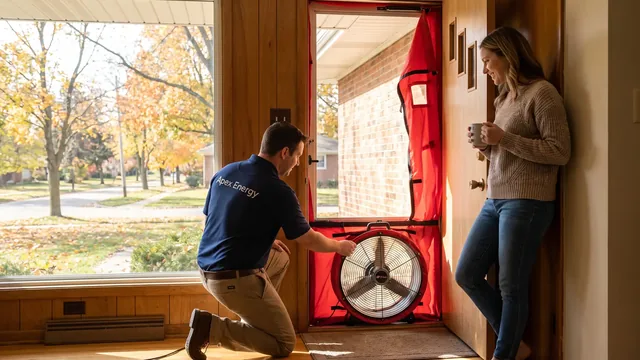
Learn what a home energy audit finds, how blower door and infrared tests work, and why the Department of Energy ties audits to 5% to 30% savings.
