
Modern design in older apartments: Upgrades renters can actually make
Modernizing an older apartment as a renter comes down to 4 reversible changes: swap the hardware, fix the lighting, simplify the furniture lines, and add one strong focal point. Cabinet pulls, peel-and-stick tile, plug-in pendant lights, and sheer window panels all install in an afternoon and come back out at move-out.

About 35% of U.S. households rent rather than own, and much of that housing stock is decades old. Dated finishes are a design problem, not a defect in your apartment. Spend on the surfaces you touch and the light you see by.
Learn how to bring modern design into an older apartment, including which upgrades are genuinely reversible, how to fix bad lighting without rewiring, and what to leave alone so your deposit comes back intact. If you eventually buy an older place, our Home Improvement & Design guide covers the permanent version.
Key takeaways:
- Lighting moves first: Swapping one harsh ceiling fixture for 3 layers of light resets how every finish reads, and ENERGY STAR certified LED lighting uses 90% less energy and lasts up to 25 times longer than incandescent.
- Hardware and peel-and-stick pay the most per dollar: New cabinet pulls and removable backsplash tile are the 2 changes that update a dated kitchen fastest, and both install with a screwdriver.
- Reversible is the strategy, not the compromise: Put the budget into the 4 categories that follow you, lighting, furniture, rugs, and art, and treat removable finishes as a small, deliberate expense.
What is modern design, and why does it work in an older apartment?
Modern design is a style built on clean lines, uncluttered surfaces, a restrained palette, and furniture that earns its footprint, function ahead of ornament. In practice: straight edges instead of carving, exposed legs instead of skirted bases, and 2 or 3 materials in a room instead of 6.
That restraint is why it works in a building with history. Older apartments already supply the ornament: crown molding, plaster arches, wide baseboards, radiator grilles, sometimes original hardwood. Fill an ornate room with ornate furniture and it reads cluttered. Fill it with straight lines and the millwork becomes the feature.
One distinction worth keeping straight: “modern” describes a specific mid-century vocabulary, while “contemporary” just means whatever is current. Most renters want a blend, and our roundup of design ideas for a modern home covers the overlap. If your building has period detail worth playing to, Art Deco interior design ideas show how to lean in.
Start with lighting: the highest-impact change in an older apartment
Lighting is the highest-return change you can make, and it’s what older buildings most often get wrong: one fixture in the center of the ceiling, throwing hard light down onto every dated surface. ENERGY STAR certified LED lighting uses 90% less energy and can last up to 25 times longer than traditional incandescent lighting, so re-lamping a whole apartment in warm LEDs costs little and rarely needs redoing.1
Build three layers of light in every room
A room lit from one source looks flat no matter what furniture is in it. Three layers fix that, and none requires an electrician.
- Ambient light: The general fill. In a rental it should come from floor lamps and a plug-in pendant rather than the ceiling box, so you control direction and brightness.
- Task light: Aimed at the work, a desk lamp, a swing-arm by the reading chair, adhesive LED strips under the upper cabinets. Those strips are what people notice most in a dated kitchen.
- Accent light: The mood layer. An uplight behind a plant or a lamp on a low shelf pulls light off the ceiling and into the corners.
Put the lamps on smart plugs or smart bulbs and you get scenes without touching a wall switch. Most of a connected home setup can be built from plug-in devices alone.
Fix the ceiling fixture without touching the wiring
Three options stop short of electrical work. A plug-in pendant hangs from a ceiling hook and runs its cord to an outlet, giving you a real fixture over a table. A clip-on shade softens a bare-bulb fixture. And some flush-mount covers twist onto the existing base with no wiring, keep the original, labeled, in a closet. Anything hardwired needs your landlord’s written agreement, and a swag hook means a hole in the ceiling.
Check color temperature before buying a case of bulbs. The Lighting Facts label puts light appearance on a Kelvin scale running from roughly 2,600K to 6,600K, where the warm end near 2,700K reads yellow and flattering and the cool end near 6,500K reads white to bluish. Warm bulbs make old wood and worn paint look intentional. See ENERGY STAR lighting and appliance guidance.
What does a lamp cost to run, and why did ENERGY STAR stop labeling most bulbs?
The Lighting Facts label answers the running-cost question. Its estimated energy cost uses the bulb’s average initial wattage, three hours of use a day and 11 cents ($0.11) per kilowatt-hour, and its life is stated in years at the same three hours a day, according to the FTC Lighting Facts questions and answers for manufacturers. Your rate and hours will differ, so use the label to compare bulbs, not to predict a bill.
Hypothetical example, not an offer. By the label’s method, a bulb drawing 9 watts uses about 9.9 kilowatt-hours a year, roughly $1.08 at $0.11 per kilowatt-hour; a bulb drawing 60 watts uses about 65.7 kilowatt-hours, roughly $7.23.
The ENERGY STAR mark is also missing from ordinary bulbs now. EPA ended the program for the most common bulbs and fixtures because inefficient bulbs can no longer be bought for most household uses, the ENERGY STAR light fixtures page explains, after more than 3 billion certified bulbs were sold in the United States from 1997 on. Certified recessed downlights still carry it, use 90% less energy than traditional incandescent models and come with a warranty of at least three years, but they are hardwired, so in a rental they are the landlord’s decision. Owners can start with our guide to energy-efficient home upgrades.
Which upgrades can renters actually make?
Four categories, in order of visual return: hardware, removable surfaces, window treatments, and plug-in lighting. Everything below comes back out with hand tools, the line separating a renter upgrade from a renovation.
| Change | Relative cost | Difficulty | Comes back out at move-out? |
|---|---|---|---|
| Cabinet knobs and drawer pulls | Low | Screwdriver; one afternoon | Yes, keep the originals and reinstall |
| Peel-and-stick backsplash tile | Low to moderate | Measuring and a utility knife | Usually, test the surface first |
| Plug-in pendant or sconce | Low to moderate | Hook plus a cord run; no wiring | Yes, patch the hook hole |
| Tension-rod curtains and sheers | Low | No tools, no holes | Yes, nothing is fastened |
| Wall paint | Moderate | Weekend project per room | Only if you repaint before you leave |
Costs move constantly by product and market, so price the exact items rather than budgeting from an article, Angi home project cost data is a starting point for anything you’d hire out.
Hardware: the one-afternoon kitchen update
Swapping knobs and pulls is the highest ratio of visual change to effort in the list. Dated hardware, brass-tone spades, oak knobs, colonial bin pulls, ages a kitchen faster than the cabinet boxes do. Matte black, brushed nickel, and unlacquered brass all read current. Measure center-to-center before ordering so the new pulls reuse the same holes, then bag the originals.
Peel-and-stick tile and wallpaper
Removable surfaces cover finishes you can’t replace: a dated backsplash, a sheet-vinyl bathroom floor, a builder-beige accent wall. Quality products generally release cleanly from smooth, fully cured paint, and are riskier on textured walls, fresh paint, and the glossy enamel common in older buildings. Test one piece in a hidden spot for a week first and photograph the original condition.
Window treatments on a tension rod
Heavy dated drapery is the other thing that ages a room instantly. Sheer panels on a tension rod inside the frame need no hardware in the wall and make the ceiling read higher when hung high and wide.
Paint, and when it’s worth it
Paint is the one item here that isn’t automatically reversible, since you’re expected to return the walls to their original color. It’s worth doing when the existing color is genuinely fighting you and you’ll stay more than a year. Get written permission, record the color code, and budget for the repaint.
Declutter and re-lay-out the room before you buy anything
This half of the project is free, and it usually delivers more than the first thing you buy. Older apartments have small, oddly proportioned rooms, and most of what dates them is density, not decor.
- Clear the horizontal surfaces: Modern rooms read modern largely because counters, sills, and tabletops are mostly empty. Pick one object per surface and store the rest.
- Float the furniture: Pushing everything to the walls is the instinct in a small room, and it makes the room feel smaller. Pull the sofa forward and let a rug define the zone.
- Add one oversized mirror: A single large mirror near a window does more for perceived size and light than several small pieces of art. Lean it rather than hang it and skip the wall anchors.
- Make storage do two jobs: Ottomans, benches with baskets, and a console with a drawer absorb the clutter older apartments have no closets for. Our guide to creating a home office space covers zoning one room for two uses.
Furniture, color, and texture that read modern
Three rules cover most of it: straight lines, raised legs, and no more than 3 colors plus one accent. Visible legs show more floor, and visible floor is what makes a small older room feel larger.
- Lines and profile: Square arms over rolled arms, tight backs over pillow backs, and a lower overall profile. Low furniture makes a standard 8-foot apartment ceiling feel taller.
- A neutral base: Keep the large pieces, sofa, rug, curtains, in white, greige, or a warm neutral, then carry color in pillows, throws, and art you can swap out.
- Metallic accents: Chrome, brushed steel, and brass in frames, lamp bases, and side tables bounce light and add crispness older finishes lack. Repeat one metal at least 3 times.
- Layered texture and one big rug: Mix a soft element against a hard one in every seating area, and size the rug so at least the front legs of each seating piece sit on it. Leave the floor itself alone.
For what’s actually current rather than merely new, see our home decor trends roundup and the broader home renovation trends shaping finishes now.
Should renters anchor furniture and TVs in an older apartment?
Yes, with the landlord’s written OK for the anchors. U.S. emergency departments treated an average of 17,800 tip-over injuries a year from 2020 to 2022, and 44% of those hurt were under 18, according to the Consumer Product Safety Commission’s February 5, 2026 release. It counts 217 tip-over deaths from 2013 to mid-2023, 71% of them children aged one to three.
A February 8, 2024 CPSC release reported that 47 percent of those deaths involved a television, and that estimated emergency department-treated injuries to adults 60 and older from furniture-only tip-overs grew from 1,800 in 2013 to 4,300 in 2022.
A tall bookcase, a leaned floor mirror and a TV on a low console can all tip. CPSC says to anchor TVs, bookcases and dressers to the wall; where you can’t, put the TV on a sturdy, low base pushed back as far as it goes and keep heavy items on lower shelves. Note each anchor hole on your move-out list. The smoke alarm checks in our fire safety tips apply to an apartment too.
Keep the character: what not to modernize in an older building
Update the accessories and leave the architecture. Original trim, plaster detail, transom windows, hardwood, and cast-iron radiators are features new construction charges a premium to imitate.
- Don’t paint over original wood trim: It’s effectively irreversible, it’s usually a lease violation, and stained millwork against a neutral wall is a look people pay for.
- Don’t box in a radiator: A vented cover is fine; a solid enclosure traps heat and can make the room harder to warm. Never drape fabric over one.
- Don’t disturb old paint: Federal law requires landlords of most pre-1978 housing to disclose known lead-based paint and hazards and to give tenants the EPA’s lead pamphlet before a lease is signed.2 Sanding, scraping, or peeling wallpaper in a pre-1978 unit is a job for the landlord and a certified contractor, not a renter with a putty knife.
Older buildings also carry sound. A rug pad, heavy curtains, and a full bookcase against a shared wall help more than people expect. Bob Vila’s guide to updating older apartments is a good companion read.
Why is original plaster worth keeping, even when it looks rough?
A three-coat plaster system is extremely durable, fire resistant and reduces sound transmission, according to the National Park Service article Should I Replace My Plaster Ceiling?, which says preservation standards strongly recommend repair over wholesale replacement. Use as few fasteners as you can and report cracked plaster in writing rather than sanding it. Our guide to Craftsman houses covers the period trim worth protecting too.
Why are old windows the place to slow down?
Windows make up about 10% of a typical home’s surface area but can account for 30 to 40% of its heat loss in winter, according to a Department of Energy article from April 20, 2023, which is why window treatments do more than their size suggests.
They are also where old paint wears hardest. The State of Michigan’s Mi Lead Safe page on paint and dust says the lead risk is greatest with windows and doors painted with lead-based paint, because surfaces that rub create dust, and that varnish, enamel, stain and primer made before 1978 may contain lead too. In a pre-1978 unit, don’t scrape or sand a sticking sash, wipe sills with soapy water, use a HEPA-filtered vacuum and report chipping paint in writing.
Which rentals does the federal lead disclosure rule leave out?
EPA’s real estate disclosure page, last updated May 27, 2026, exempts zero-bedroom units such as efficiencies and lofts, and housing for the elderly or people with disabilities, unless a child under six lives or is expected to live there. Leases of 100 days or less, housing a certified inspector found free of lead-based paint and housing built after 1977 are exempt too. Where the rule applies, the landlord keeps a signed copy of the disclosure for three years. Renting a pre-1978 studio may mean no disclosure at all, so ask before you sand or strip anything.
What Michigan renters should know
Michigan’s rental stock skews old, especially in Detroit, Grand Rapids, and Ann Arbor, where a large share of the apartment inventory predates 1970. That means radiator heat, older windows, and real winter drafts, all with renter-safe fixes.
- Your deposit is capped at 1.5 months’ rent: Michigan law caps a security deposit at one and a half months’ rent, has you complete and return a commencement inventory checklist within 7 days of taking possession, and requires the landlord to mail an itemized list of damages within 30 days after you move out. Give written notice of a forwarding address within 4 days or the landlord is relieved of sending that list.3 Fill out the checklist in detail and photograph every existing scuff.
- Work with the radiators, not around them: Keep furniture off them, use a vented cover if the look bothers you, and put a reflective panel behind any radiator on an exterior wall.
- Insulated cellular shades are the best window fix you can take with you: In heating season, tightly installed cellular shades can reduce heat loss through windows by 40% or more, worth roughly 10% in heating energy savings, and in cooling season they can cut unwanted solar heat gain through windows by up to 60%.4 Removable interior window film, draft stoppers, and lined curtains handle the rest.
- Know which problems aren’t yours to solve: Failing windows, insulation, and heating equipment are the owner’s capital expense. If you’re headed toward buying an older Michigan home, our guides to choosing energy-efficient windows and upgrading your home’s insulation cover those fixes.
Michigan landlord-tenant rules turn on specifics, so ask your local housing agency or a Michigan attorney about your lease before assuming a change is allowed.
What can a Michigan landlord charge against your deposit after design changes?
Under MCL 554.607, a deposit covers only actual damage resulting from conduct not reasonably expected in the normal course of habitation, plus rent owed, including rent due when a tenant ends the lease early, and utility bills the tenant did not pay. A reversible change removed cleanly fits that test; a backsplash that pulls paint off with it can become a claimed item. MCL 554.608 also lets you request a copy of the last termination inventory checklist, which shows what was charged to the prior tenants.
A damage notice under MCL 554.609 must tell you, in 12-point boldface type, that you must respond by mail within 7 days or forfeit the amount claimed, and it comes with payment of the difference between the deposit held and the damages claimed. Act 102 of 2026, effective September 21, 2026, lets the landlord send that difference electronically within 10 days after mailing the notice.
Under MCL 554.613, the landlord has 45 days after the tenancy ends to return the deposit or sue for damages; one who does not comply waives the claimed damages and owes double the amount retained. Those protections can be lost if the tenant gives no forwarding address or does not answer the damage notice.
How old is Michigan’s rental housing compared with the nation?
Michigan’s renter-occupied homes skew older than the nation’s, according to the Census Bureau’s American Community Survey 2024 one-year estimates (table B25036), as published on Census Reporter. Roughly three in five predate 1980, a group that includes every home the pre-1978 lead rule covers.
| Area | Renter-occupied homes | Built before 1940 | Built before 1960 | Built before 1980 | Built 2020 or later |
|---|---|---|---|---|---|
| United States | 46,101,640 | 12.1% | 24.2% | 48.7% | 3.9% |
| Michigan | 1,096,483 | 14.4% | 32.3% | 60.5% | 2.3% |
| Detroit | 131,427 | 32.2% | 68.9% | 85.2% | 0.7% |
| Grand Rapids | 37,366 | 35.4% | 46.2% | 67.4% | 1.9% |
| Ann Arbor | 26,986 | 10.2% | 17.2% | 52.2% | 5.4% |
Source: U.S. Census Bureau, American Community Survey 2024 1-year estimates, table B25036, via Census Reporter. Shares are Align’s calculation from the published counts; city estimates carry wider margins of error.
Some Michigan cities add their own inspections. Grand Rapids issues rental certificates for two, four or six years depending on the property, per its Rental Certification Program page. Ann Arbor’s code, Section 8:516(4), bars renting a unit without a Certificate of Compliance in effect, according to the city’s property registration and inspection page.
What should you check before buying an older home instead of renting one?
A renter can’t replace a drafty window or an old boiler; an owner can. Samantha Shelton, in her interview answers for Align: “Before you fall in love with the fixer-upper, make sure you understand what it’s actually going to take to turn it into the house you’re picturing.”
- Read and inspect: Start with the seller’s disclosure, our home inspection checklist for buyers and what a home energy audit includes.
- Price the work: Compare ways to finance home renovations and home insurance options before you offer.
- Run your own numbers: The rent vs. buy calculator uses only figures you enter; our first-time home buyers guide and reporting rent for a credit boost cover the next steps, and hiring movers covers the move.
How Align finances a renovation
You are not just financing the house. You are financing a plan for it. Align places HomeStyle and FHA 203(k) renovation loans, standalone HELOCs and home equity loans, so the project can be paid for the way that fits it, not the way one bank prefers.
Samantha starts with why: what the work is, what it should cost, and whether your equity or a renovation loan is the better tool. Then one application goes to multiple wholesale lenders.
FAQ: Modern design in older apartments
Here are answers to common questions about modern design in older apartments.
What renter-friendly upgrades make the biggest difference?
Lighting first, then hardware, then textiles. Replacing bare-bulb overhead fixtures with warm LED lamps and a plug-in pendant changes the whole room. New knobs and drawer pulls modernize a dated kitchen in an hour, and the originals go back on at move-out. Sheer panels, one large mirror, and a single oversized rug handle the rest. Our lifestyle and design guide covers how those pieces work together.
Will peel-and-stick tile or wallpaper damage the walls?
Quality removable products generally come off cleanly from smooth, fully cured paint, but they can pull paint from textured walls, fresh paint, or the glossy older enamel common in vintage buildings. Test a small piece in a hidden corner and leave it a week before committing. Check your lease too, since some treat adhesive products as alterations. Our overview of DIY home renovation projects covers surface prep.
How do I modernize an older apartment without losing its character?
Keep the architecture and update the accessories. Original trim, plaster arches, hardwood, and radiators are features people pay a premium for in new construction. Paint walls a neutral tone so the details stand out, choose furniture with straight lines and slim legs so it doesn’t compete with ornate millwork, and let lighting and art carry the modern read. The same instinct applies when you own the building, as our guide to buying a historic home shows.
What should I not spend money on in a rental?
Skip anything permanently attached that you can’t take with you: built-in shelving, hard-wired fixtures without landlord agreement, custom treatments cut to that specific window, and full-wall painting in a color you’ll have to repaint. Put the budget into furniture, lamps, rugs, and art that follow you. If you’re spending renovation money on someone else’s asset, our renting vs. buying financial comparison is worth reading first.
How do I find out whether my older apartment has lead paint?
Ask the landlord first: before a lease of pre-1978 housing, EPA’s rule requires the landlord to provide any lead-based paint records and reports already available. For a test, hire a certified lead inspector or risk assessor. The State of Michigan’s Mi Lead Safe site invites all Michigan residents to apply for home lead services, especially in homes built before 1978, and Michigan now requires blood lead testing for children at 12 and 24 months.
Do most homes already use LED bulbs?
Close to half did by 2020. The Energy Information Administration’s Residential Energy Consumption Survey found that 47% of U.S. households used LEDs for all or most indoor lighting in 2020, up from 4% in 2015, while compact fluorescent use fell from 32% to 12%, as EIA reported on March 31, 2022. EIA also found that 54% of renter households left three or more bulbs on for four or more hours a day, against 65% of owners.
If I buy an older home instead, do I get a chance to test for lead?
Yes, in most pre-1978 home sales. EPA’s disclosure rule requires sellers to give buyers a 10-day period to conduct a lead-based paint inspection or risk assessment, according to the agency’s real estate disclosure guidance. Buyer and seller can agree in writing to change that window, and a buyer can waive it. The rule gives renters no matching inspection period.
Where can a Michigan renter go if the landlord keeps the deposit?
Small claims court is the usual route. According to Michigan Legal Help’s security deposit guide, a tenant owed $7,000 or less can sue in small claims court, a district court division with no lawyers and no jury trial. A tenant owed more can still file there but cannot receive more than $7,000, or can file a general civil case in district court. If the landlord objects to small claims, the case moves to the general district court.
Does a Detroit rental built before 1978 need a lead inspection?
Yes. The City of Detroit’s steps for a rental Certificate of Compliance call for an initial lead inspection and risk assessment for properties built before 1978, remediation by a lead-certified contractor if hazards are found, and a lead clearance report, alongside registration and a passed rental inspection. The city issues the certificate only after the rental and lead inspections pass, so ask to see it before you sign.
The bottom line on modernizing an older apartment
Modern design works in an older apartment because restraint sets off the detail the building already has. Make 4 reversible changes, in this order: fix the lighting, swap the hardware, simplify the furniture lines, and add one strong focal point. Lighting goes first because ENERGY STAR certified LED lighting uses 90% less energy and lasts up to 25 times longer than incandescent, and because three layers of light change how every surface reads. Keep the original hardware, document the unit’s condition at move-in, and buy pieces that move with you.
If you’re ready to stop improving someone else’s asset and want to see what buying would actually cost, talk to Align Lending. We’ll shop your scenario across our lender network and show you the options side by side, and our Homeownership guide covers what comes after the keys. Call 248-506-5727 or start online.
Footnotes:
1. The 90% energy reduction and 25-times-longer service life are ENERGY STAR’s comparison figures for certified LED lighting products measured against traditional incandescent lighting. They describe the certified product category, not a guaranteed result for any specific bulb, fixture, or installation; actual energy use and lifespan depend on the product you buy, how many hours a day it runs, fixture enclosure and heat, and your utility rate. Return to text.
2. Under the federal Lead-Based Paint Disclosure Rule (Section 1018 of Title X), sellers, landlords, and their agents must disclose known lead-based paint and lead-based paint hazards in most housing built before 1978 and give buyers and renters the EPA pamphlet “Protect Your Family From Lead in Your Home” before a contract or lease is signed. Disclosure is not the same as testing, and the rule does not require a landlord to test for lead. This is general information, not legal advice. Return to text.
3. Michigan’s security deposit provisions appear in 1972 PA 348 (MCL 554.601 et seq.): a deposit may not exceed one and a half months’ rent; the landlord must furnish blank commencement inventory checklists and the tenant returns one within 7 days after receiving possession; the landlord must mail an itemized list of damages within 30 days after termination of occupancy; and the tenant must give written notice of a forwarding address within 4 days after termination of occupancy or the landlord is relieved of the notice-of-damages requirement. Summarized for general information only, consult a Michigan attorney or your local housing agency about your lease. Return to text.
4. The 40% heat-loss reduction, roughly 10% heating energy savings, and up to 60% reduction in unwanted solar heat gain are U.S. Department of Energy figures for insulated cellular shades installed with a tight fit. Loose or poorly fitted shades perform substantially worse, and results vary with window type, orientation, climate, and how consistently the shades are operated. Return to text.
Sources: share of U.S. households that rent, derived from the homeownership rate reported in the U.S. Census Bureau Housing Vacancies and Homeownership (CPS/HVS) survey, second quarter 2026. LED energy and lifespan comparison figures, ENERGY STAR. Lighting Facts label Kelvin scale for light appearance, Federal Trade Commission Energy Labeling Rule. Pre-1978 lead-based paint disclosure requirements, U.S. Environmental Protection Agency. Michigan security deposit requirements, Michigan Legislature, 1972 PA 348 (MCL 554.601 et seq.). Insulated cellular shade performance figures, U.S. Department of Energy, Energy Saver.
This article is for informational purposes only and is not intended to provide legal, financial, tax, or design advice. Product pricing, adhesive performance, and lease terms vary widely, confirm what your lease permits in writing before making any change to a rental unit, and hire licensed professionals for electrical work or any work that disturbs paint in pre-1978 housing. Align Lending is an independent Michigan mortgage broker, NMLS #2041154.
Sources
Every outside source this guide links to, in the order it appears. How we choose and check sources
- The Lighting Facts label puts light appearance on a Kelvin scalesearch.ftc.gov
- ENERGY STAR lighting and appliance guidanceENERGY STAR
- ENERGY STAR light fixtures pageENERGY STAR
- February 5, 2026 releasecpsc.gov
- February 8, 2024 CPSC releasecpsc.gov
- Bob Vila’s guide to updating older apartmentsBob Vila
- Should I Replace My Plaster Ceiling?nps.gov
- Department of Energy article from April 20, 2023U.S. Department of Energy
- Mi Lead Safe page on paint and dustState of Michigan
- Real estate disclosure pageU.S. Environmental Protection Agency
- MCL 554.607Michigan Legislature
- MCL 554.608Michigan Legislature
- MCL 554.609Michigan Legislature
- MCL 554.613Michigan Legislature
- Census Reportercensusreporter.org
- Rental Certification Program pagegrandrapidsmi.gov
- Property registration and inspection pagea2gov.org
- Mi Lead SafeState of Michigan
- EIA reported on March 31, 2022eia.gov
- Michigan Legal Help’s security deposit guidemichiganlegalhelp.org
- Steps for a rental Certificate of Compliancedetroitmi.gov
- Housing Vacancies and Homeownership (CPS/HVS) surveyU.S. Census Bureau
- Michigan Legislature, 1972 PA 348Michigan Legislature
Related resources

20-minute read
Energy-efficient home upgrades in Michigan: What to do first, and how to pay for it
See which energy-efficient upgrades pay off first in a Michigan home, what they cost, and how to pay for them in 2026 with rebates, loans and mortgages.

20-minute read
DIY home renovation projects: 12 upgrades you can actually finish
Discover DIY home renovation projects that upgrade your space on a budget, from peel-and-stick backsplashes to floating shelves and smart lighting.
20-minute read
The benefits of a home energy audit and what it includes
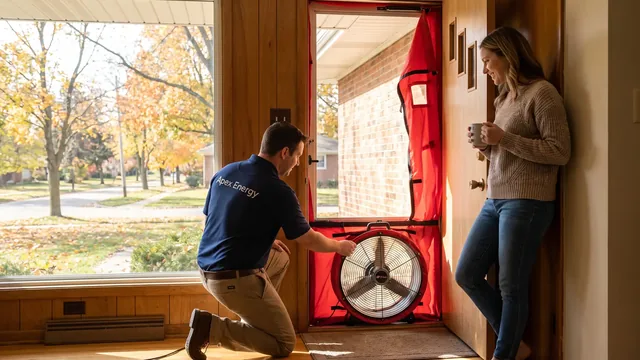
Learn what a home energy audit finds, how blower door and infrared tests work, and why the Department of Energy ties audits to 5% to 30% savings.
